Most Beautiful Abandoned Spots
There’s something captivating about places that time forgot. Buildings, towns, and structures that once buzzed with life now sit silent, slowly being reclaimed by nature.
These abandoned spots have transformed into hauntingly beautiful spaces that tell stories of the past while creating scenes that look almost unreal.
Let’s explore some of the most stunning abandoned places around the world where decay has turned into unexpected beauty.
Pripyat, Ukraine

The ghost city near Chernobyl stands frozen in time since the 1986 nuclear disaster forced everyone to leave in a hurry. Trees now grow through apartment floors, and the famous Ferris wheel in the amusement park has become an eerie symbol of interrupted lives.
Nature has taken over the streets where 50,000 people once lived, creating an odd mix of crumbling Soviet architecture and wild greenery. Moss covers the bumper cars, and vines wrap around playground equipment that was never used.
The whole city serves as a reminder of how quickly nature reclaims what humans leave behind.
Kolmanskop, Namibia
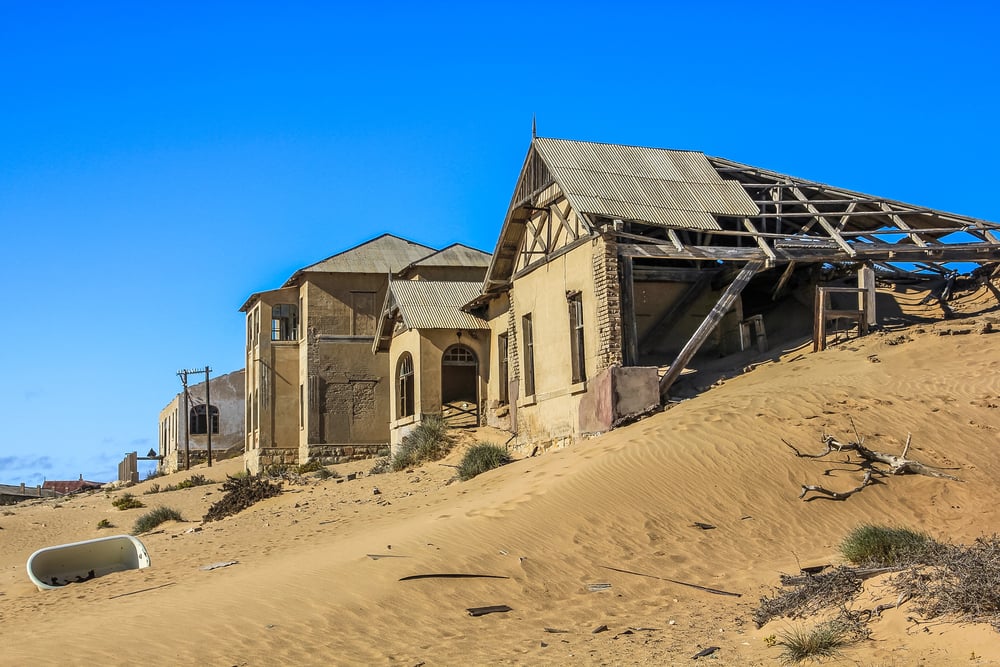
This diamond mining town in the Namib Desert flourished in the early 1900s when gems were so plentiful you could supposedly pick them up off the ground. Workers built fancy homes with ballrooms, a hospital, and even a bowling alley right in the middle of the desert.
But when richer diamond fields opened up elsewhere, everyone packed up and left by 1954. Now sand dunes flow through the doorways and pile up against colorful walls, creating rooms half-filled with the desert itself.
The contrast between the elegant architecture and the encroaching sand makes every photograph look surreal.
Hashima Island, Japan
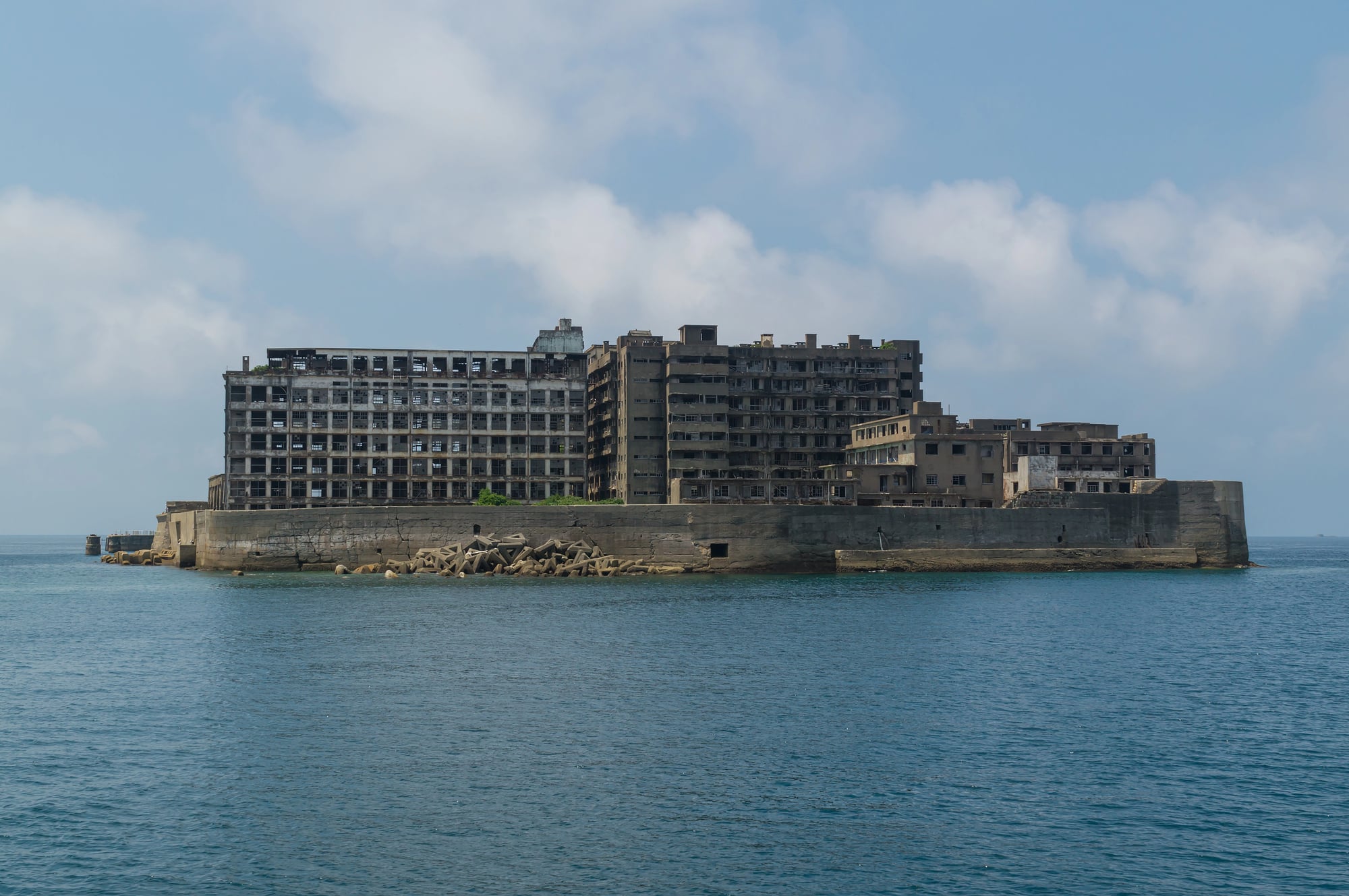
Nicknamed ‘Battleship Island’ because of its shape, this tiny island off Nagasaki once held one of the most densely populated areas on Earth. Coal miners and their families lived in towering concrete apartment blocks that covered nearly every inch of the island.
At its peak in 1959, over 5,000 people crammed into this space smaller than a city block. When the coal ran out in 1974, the island emptied in weeks.
Today, the crumbling buildings stand like a concrete forest, with empty windows staring out at the ocean and staircases leading nowhere.
Bodie, California
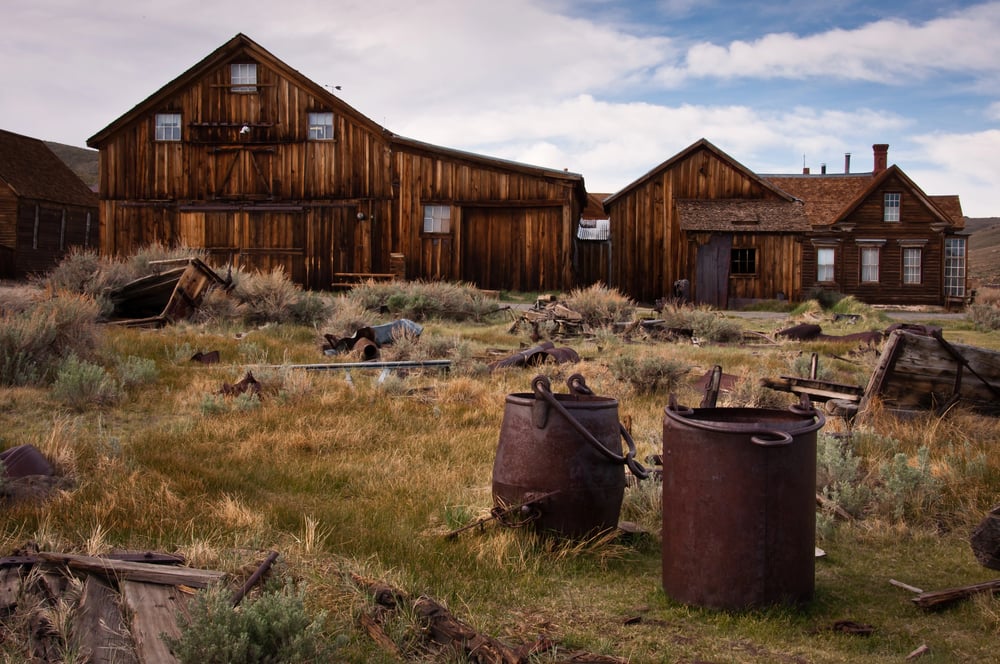
This Wild West gold rush town sits high in the Sierra Nevada mountains, preserved in a state of ‘arrested decay’ since it was abandoned in the 1940s. Walking down the dusty streets feels like stepping onto a movie set, except everything is real.
Bottles still sit on shelves in the general store, and furniture remains in homes as if people just stepped out for the day. The dry climate has kept the wooden buildings remarkably intact despite decades of weather and wind.
About 200 structures remain out of the 10,000 people who once called this place home during its heyday.
Craco, Italy
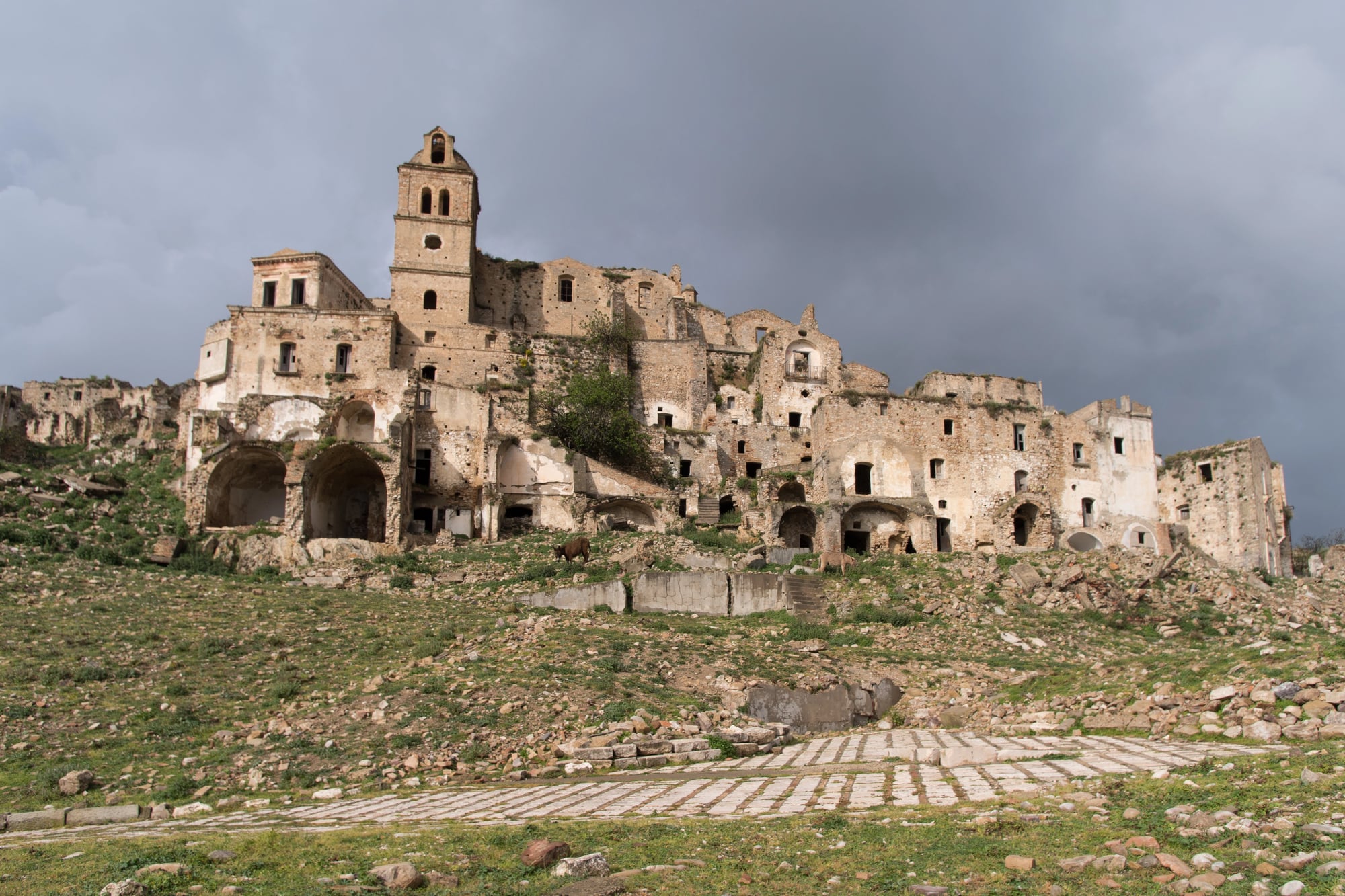
Perched on a steep hill in southern Italy, this medieval village looks like something from a fairy tale gone wrong. Landslides and earthquakes forced residents to abandon their homes in the 1960s, leaving behind a cluster of ancient stone buildings teetering on the clifftop.
The old watchtower still stands guard over empty streets and crumbling churches. Hollywood has used Craco as a filming location because it captures that perfect blend of beautiful and haunting.
The whole village appears to be slowly sliding down the hill, making it both fascinating and a bit unsettling to visit.
Michigan Central Station, Detroit
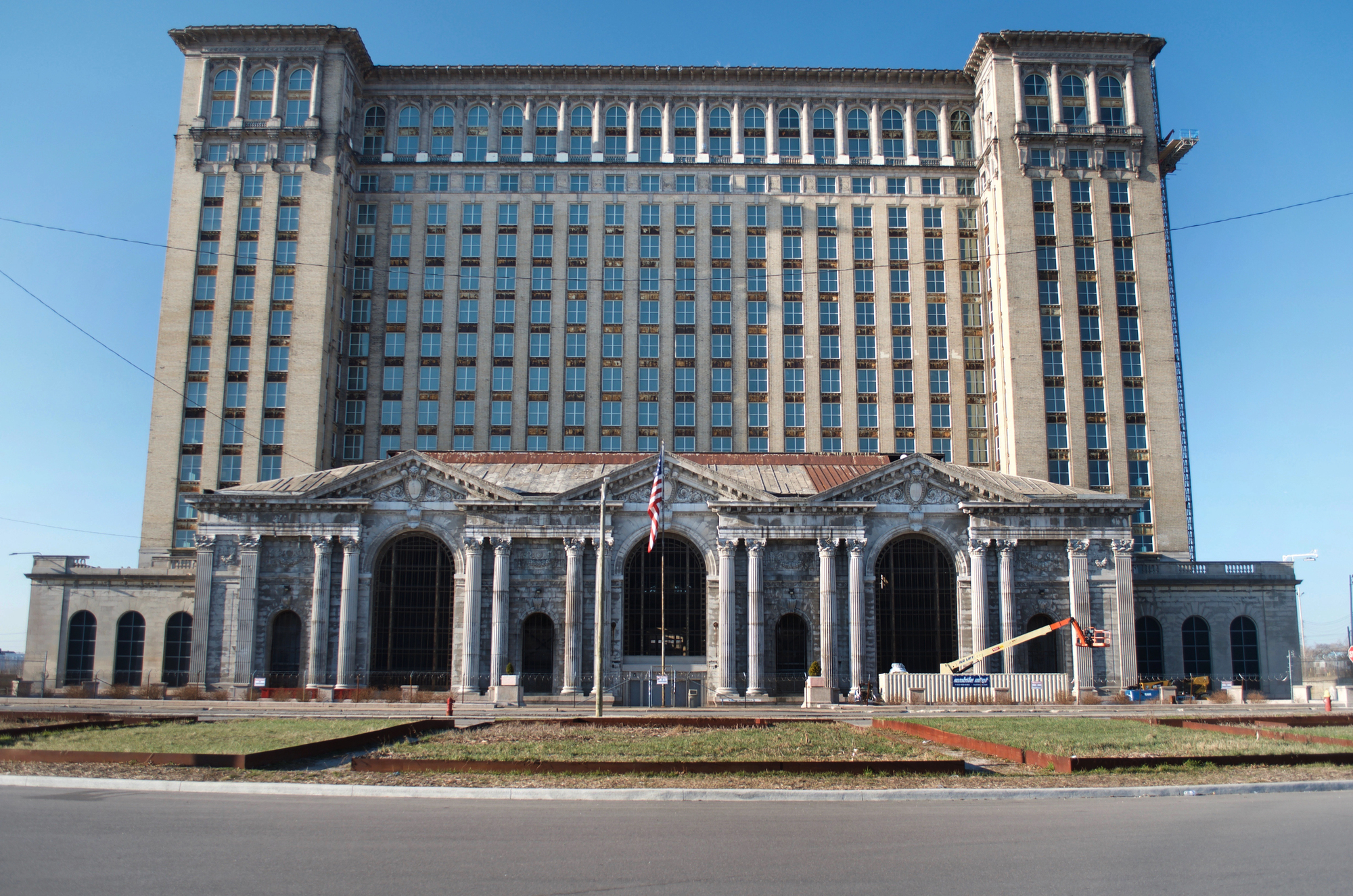
This massive train station in downtown Detroit once served as a grand gateway to the city during the age of rail travel. The 18-story building opened in 1913 with ornate details, soaring ceilings, and enough space to handle thousands of passengers daily.
After the last train left in 1988, the building deteriorated rapidly. Graffiti artists turned empty halls into galleries, and photographers captured the contrast between the once-grand architecture and the decay.
Ford Motor Company has recently begun restoring it, so this beautiful ruin will soon have a new life.
Angkor Wat temples, Cambodia
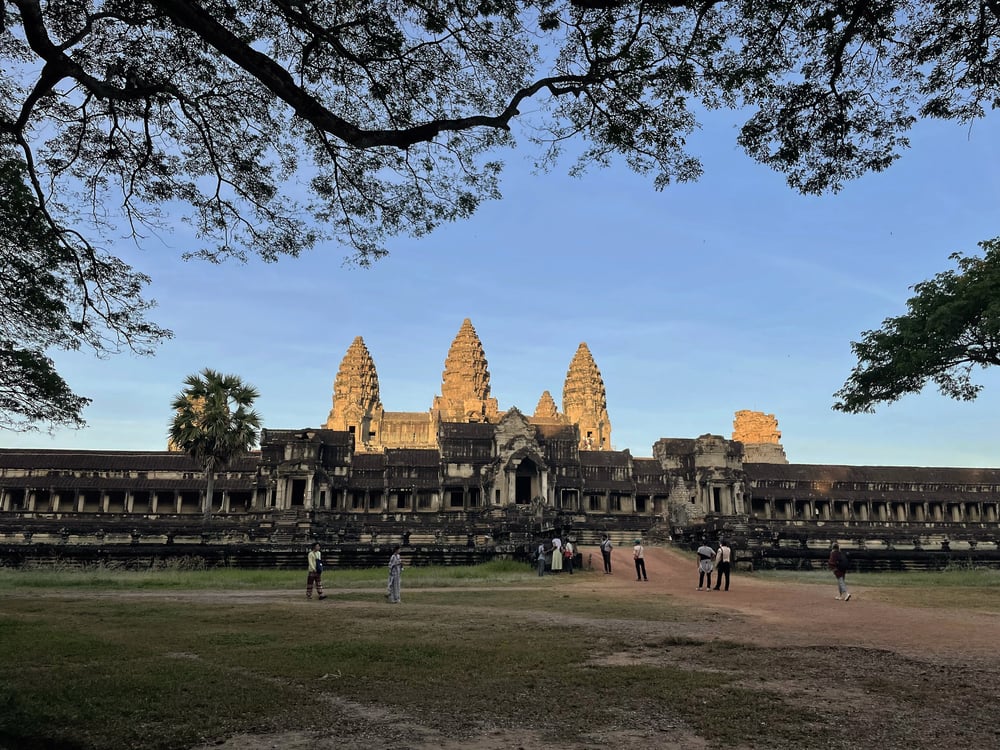
While the main temple complex gets millions of visitors, many surrounding structures sit abandoned deep in the jungle. Giant tree roots have grown over and through the ancient stone walls, creating a blend of architecture and nature that’s hard to believe.
Ta Prohm temple is the most famous example, where massive silk-cotton trees seem to be both destroying and holding up the 12th-century buildings. The roots flow over doorways and wind through courtyards like slow-motion rivers.
Archaeologists have left many of these temples partially reclaimed by the jungle because trying to separate the trees from the stones would destroy both.
Gunkanjima apartment complex, Russia
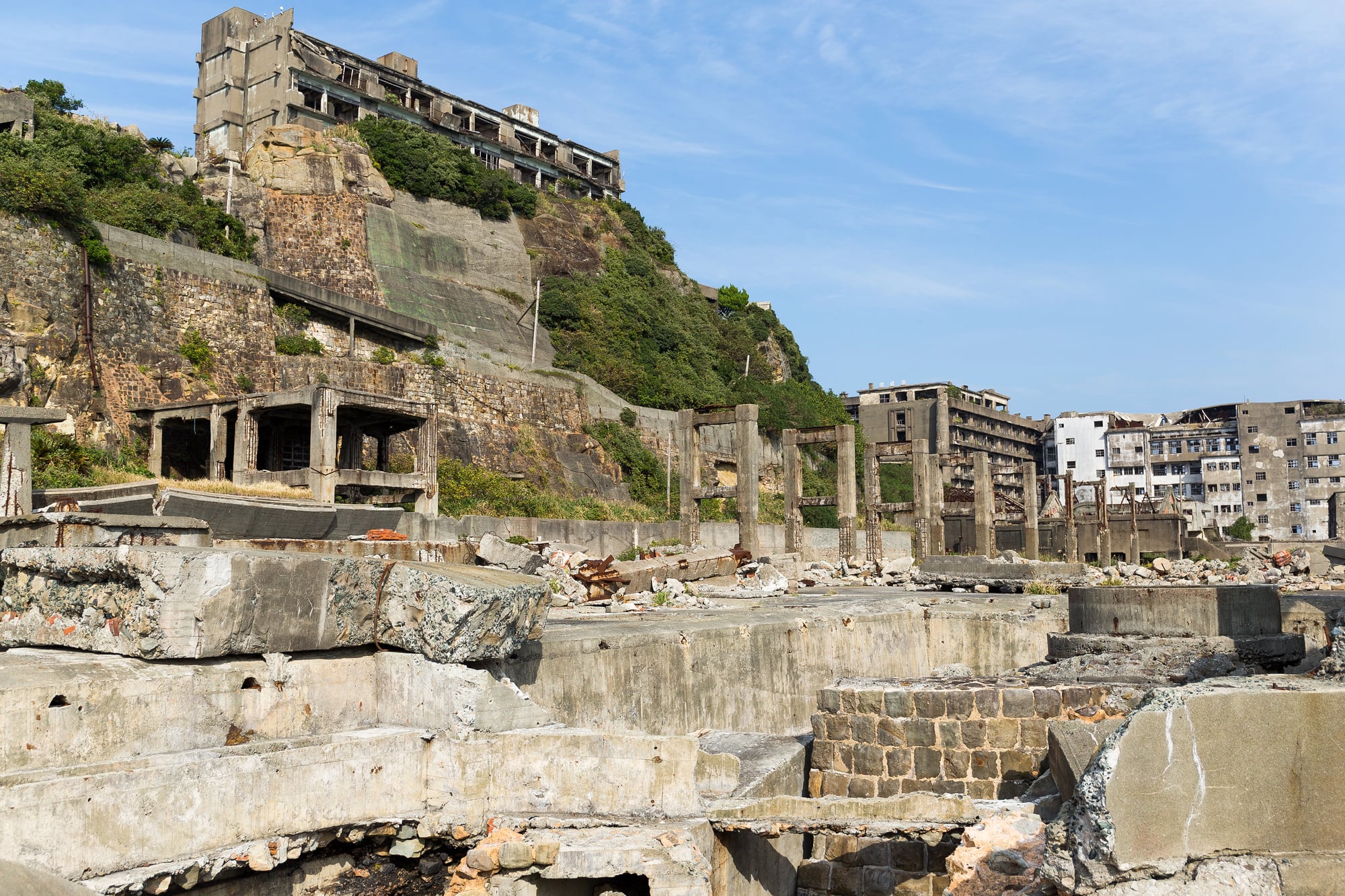
Not to be confused with Japan’s Hashima Island, this Soviet-era housing project stands empty near Vladivostok after being abandoned shortly after construction finished. The buildings form a massive circular complex that was meant to house thousands of military families.
Budget problems and the fall of the Soviet Union meant the project never got completed. Now the towering structures create an enormous concrete ring slowly being overtaken by vegetation.
The sheer scale of the place makes it feel like walking through a giant’s abandoned fortress.
Varosha, Cyprus
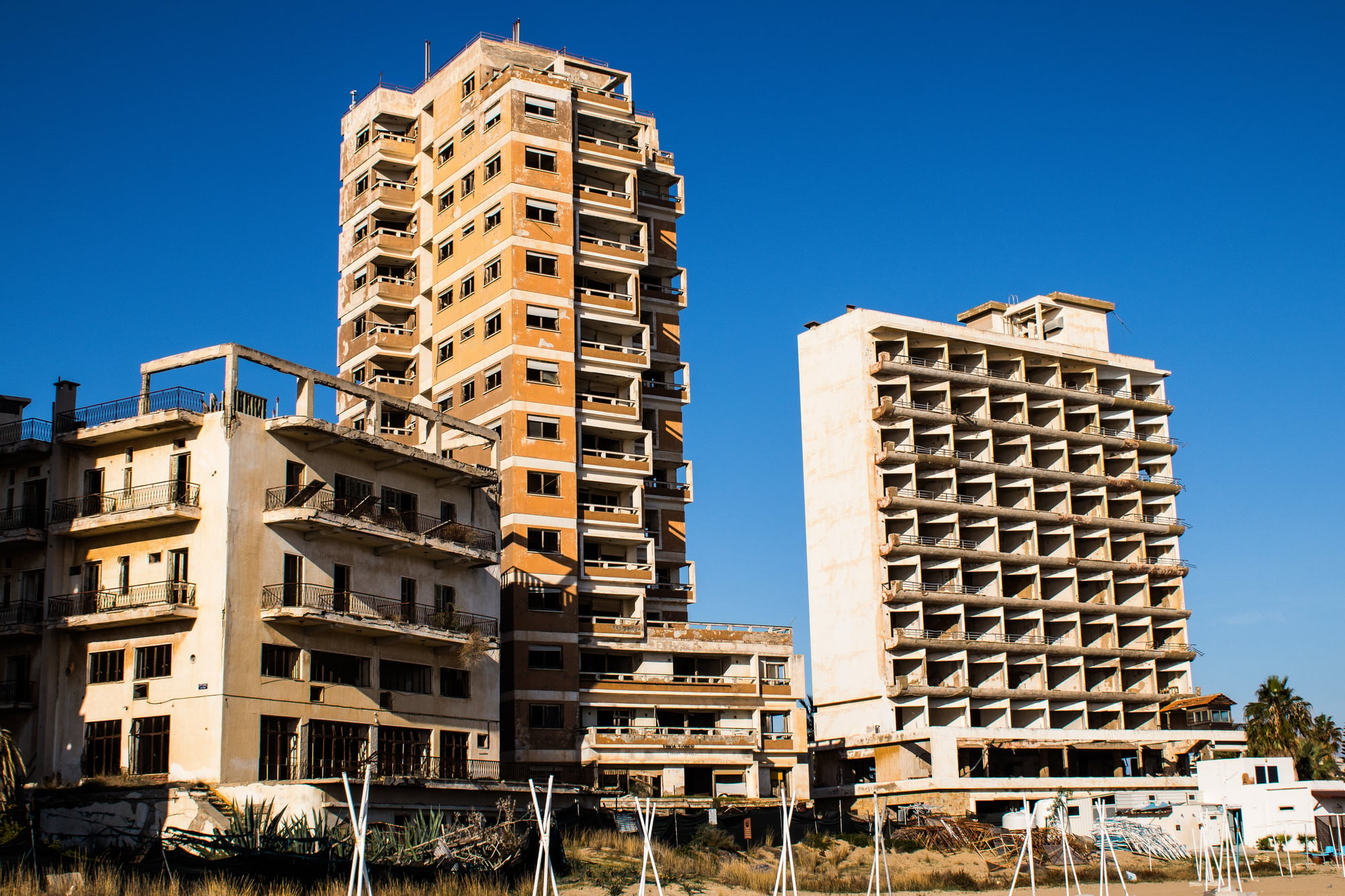
This beach resort town became a ghost city overnight when Turkey invaded Cyprus in 1974 and residents fled for safety. Hotels, shops, and homes have sat untouched behind fences for nearly 50 years while a political stalemate keeps everyone out.
Cars from the 1970s still park on streets where weeds push through the pavement. The turquoise Mediterranean waters lap against beaches where resort chairs still sit in rows, waiting for tourists who never came back.
It’s one of the strangest time capsules on Earth, showing exactly what a booming resort looked like the day everyone vanished.
Thurmond, West Virginia
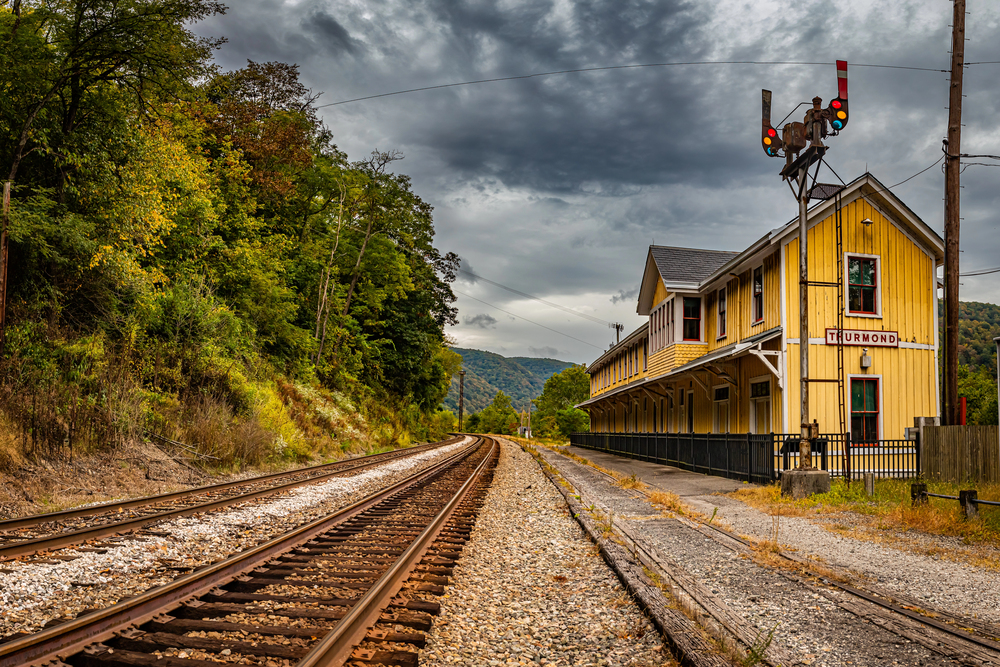
This once-thriving coal town along the New River used to have 14 saloons, multiple hotels, and constant train traffic bringing miners and supplies. The population peaked around 500 people, which seems small now but made Thurmond a bustling hub in the early 1900s.
When coal declined, so did the town, and now only about five people still live there. Historic buildings line the main street, and the old train depot has become a museum.
The town sits in such a narrow valley that there’s barely room for a road, making the whole place feel like it’s trapped in another era.
Buzludzha Monument, Bulgaria
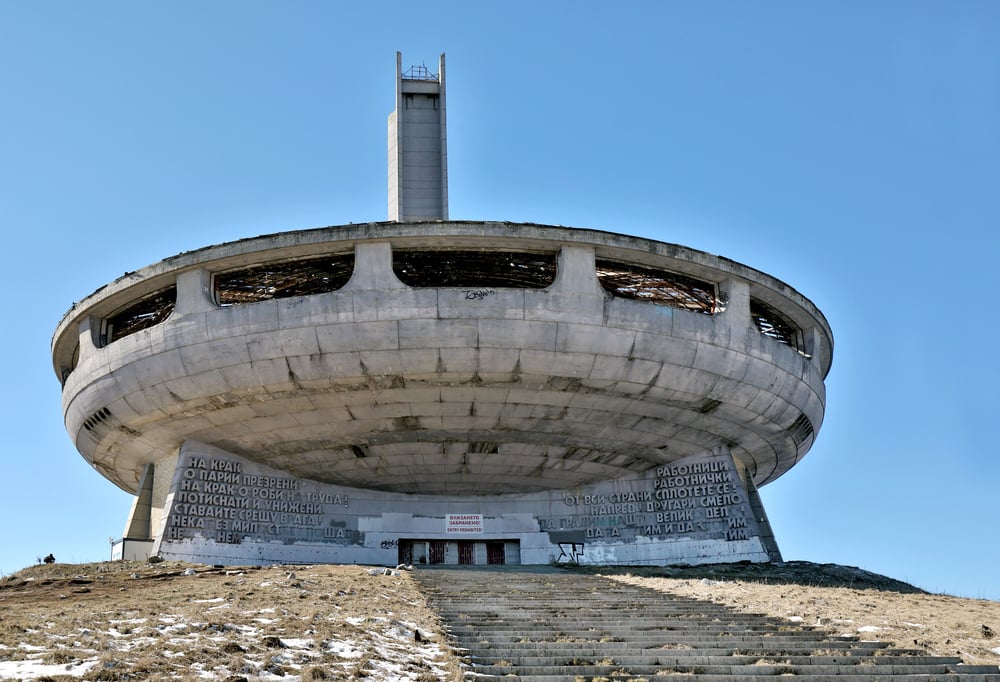
This UFO-shaped building on a mountain peak once served as a grand monument to communism, built in 1981 to celebrate Bulgarian socialist history. The circular structure featured enormous murals, colored glass, and a red star on top that lit up the night sky.
After communism fell, the building got abandoned and vandalized. Now snow and ice blow through broken windows, and graffiti covers walls that once displayed propaganda art.
The futuristic design makes it look like an alien spacecraft crash-landed on the mountaintop and got left to rot.
Canfranc train station, Spain
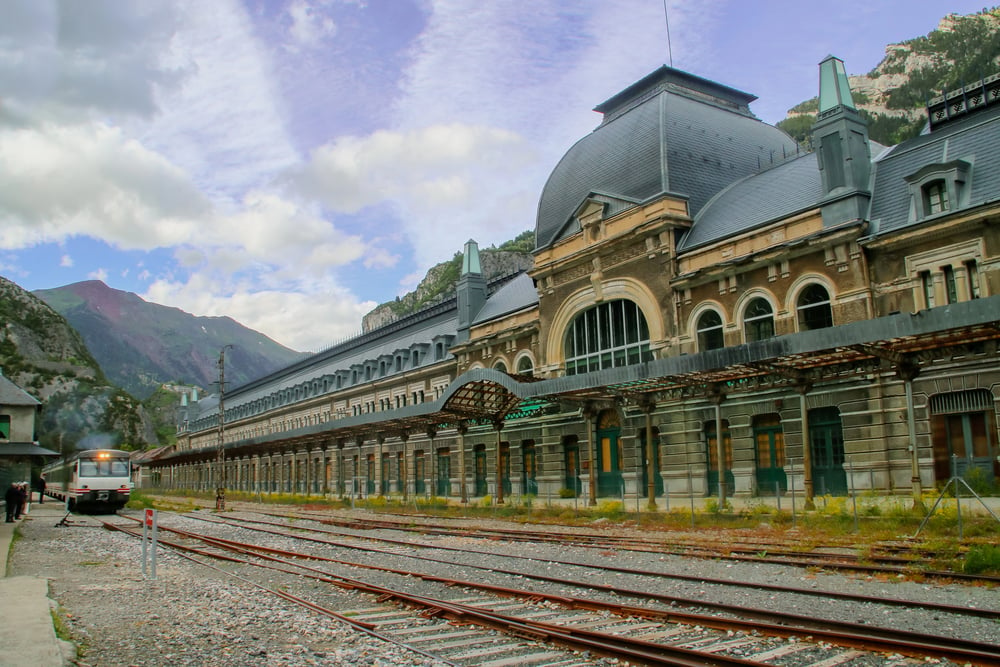
Built in 1928 on the border with France, this enormous train station in the Pyrenees Mountains could handle international rail traffic between the two countries. The building stretches over 800 feet long with grand halls and enough platforms for heavy use.
A bridge collapse in 1970 stopped all train service, and the massive structure has sat mostly empty since then. The ornate architecture and remote mountain setting create a scene that feels like it belongs in a grand adventure movie.
Parts have been used for films and urban exploration, while local groups fight to preserve what remains.
Six Flags Jazzland, New Orleans
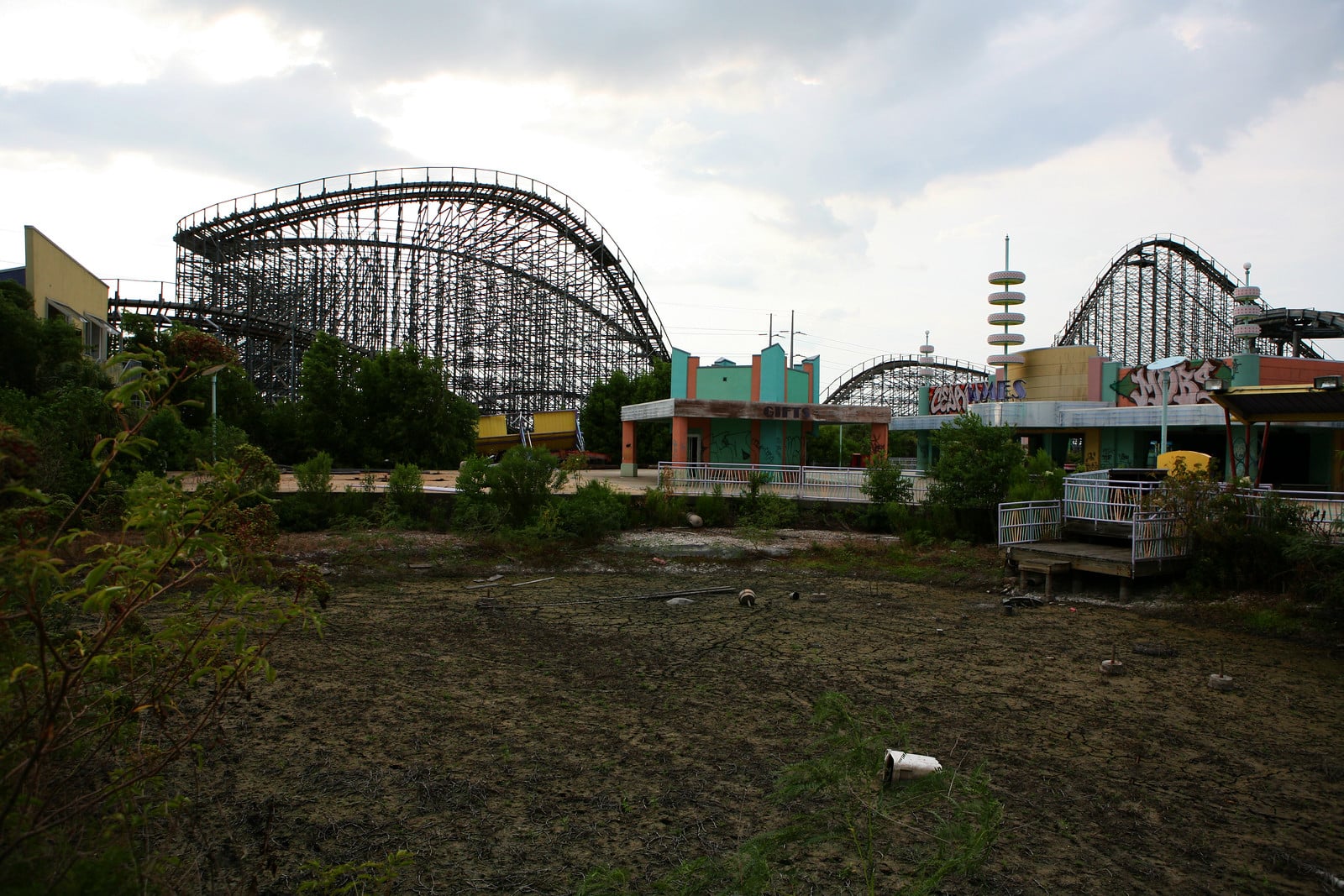
Hurricane Katrina flooded this amusement park in 2005, and it never reopened. Roller coasters stand silent with vines growing up the tracks, and ticket booths slowly collapse under Louisiana’s humidity and heat.
The Ferris wheel has become a rusted skeleton, and murky water still sits in some areas years after the storm. Nature has been incredibly aggressive here, turning what was once a place of fun and laughter into something that looks post-apocalyptic.
The park sits as a stark reminder of the storm’s destruction and the complicated process of rebuilding a city.
Ryugyong Hotel, North Korea
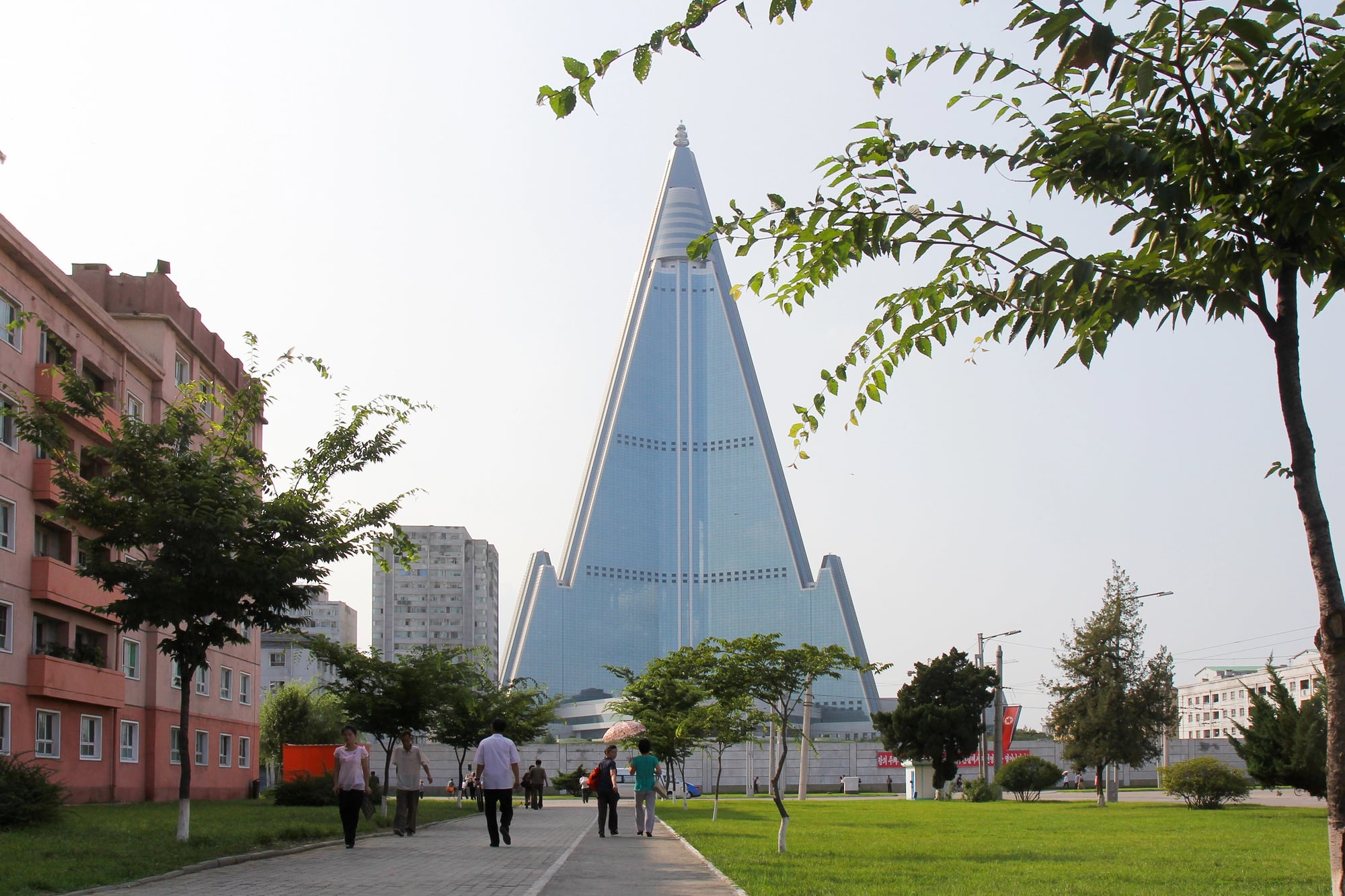
This 105-story pyramid-shaped building towers over Pyongyang, unfinished since construction stopped in 1992. The government started building it as a show of strength, planning to make it the world’s tallest hotel.
Money ran out before they could complete the interior, leaving just the concrete shell standing empty for decades. The building appears in some city skyline photos but gets edited out of others, depending on what message North Korea wants to send.
Some exterior work was done in the 2000s, but the hotel still doesn’t operate and remains one of the tallest abandoned buildings anywhere.
Oradour-sur-Glane, France
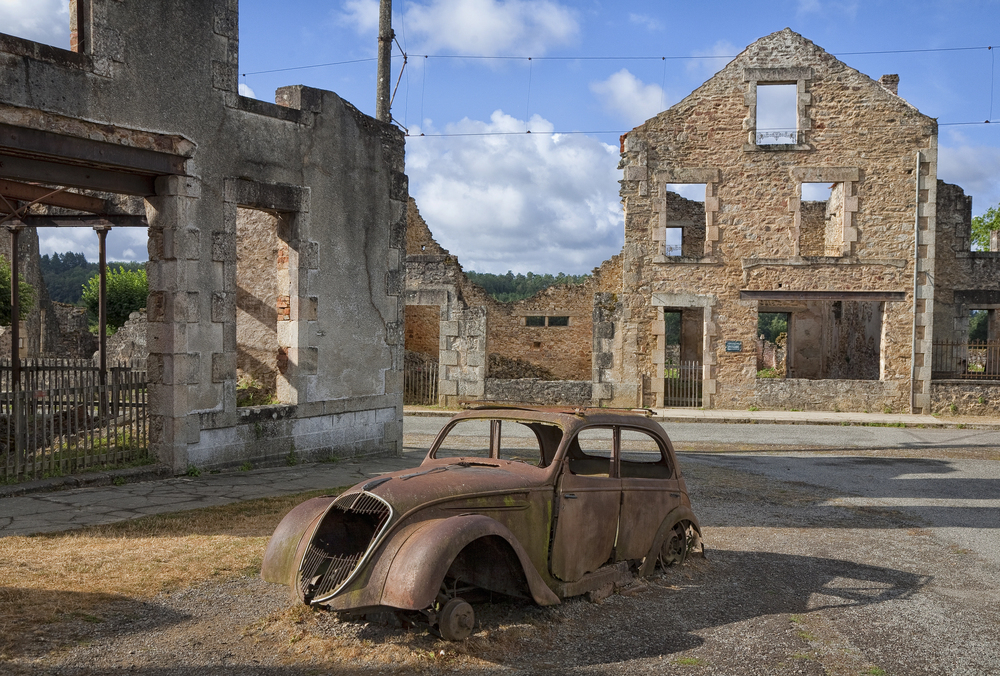
This French village remains exactly as it was after German soldiers destroyed it in 1944, killing most of the residents. France decided to leave the ruins untouched as a memorial rather than rebuilding.
Burned-out cars still sit where they were left, and the church where many people died stands with its walls scorched and windows gone. Rusted sewing machines sit in what used to be shops, and the trolley tracks still run down the main street.
Walking through feels different from other abandoned places because of the heavy history and the deliberate choice to preserve rather than restore.
Fordlandia, Brazil
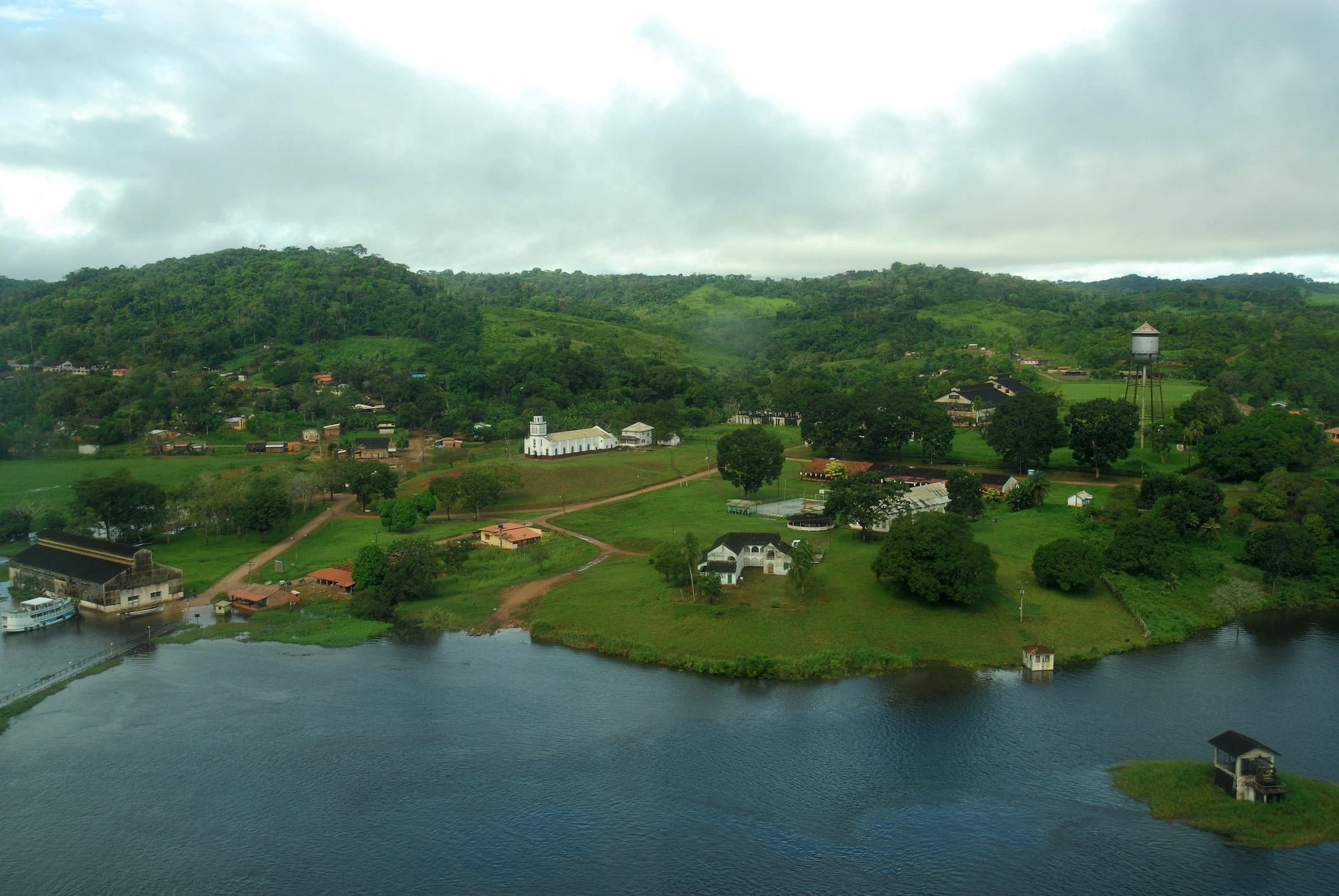
Henry Ford tried to build a perfect American-style town deep in the Amazon rainforest to supply rubber for his cars. The town had neat rows of houses, a hospital, restaurants, and everything Ford thought workers needed.
The problem was that Ford didn’t understand tropical agriculture or local culture, and the rubber trees got diseases while workers rebelled against the strict American lifestyle rules. The town failed by the 1940s, and now the jungle slowly swallows the buildings.
Remnants of the water tower, warehouses, and homes still stand as proof that you can’t just drop one culture into a completely different environment and expect it to work.
Humberstone and Santa Laura, Chile
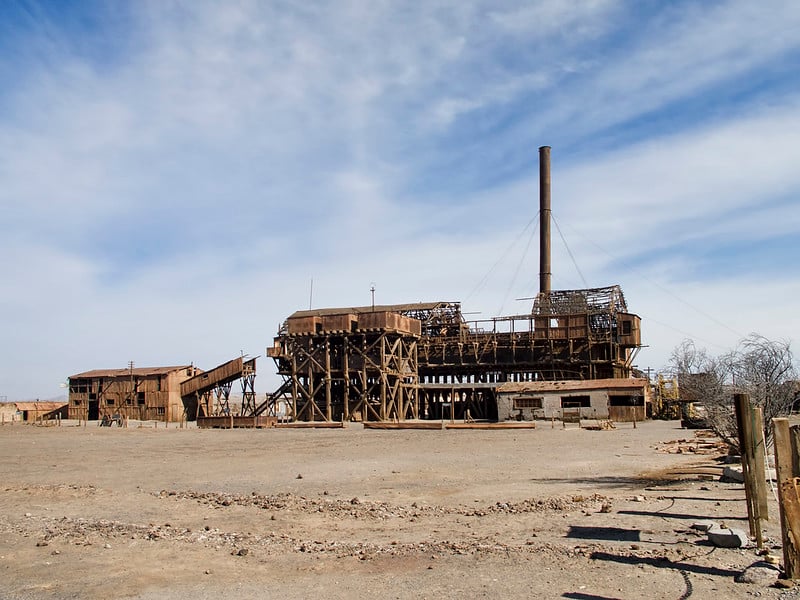
Far out past cracked salt flats, towns grew around digging up saltpeter when demand was high. Machines clattered, lives settled in despite sand everywhere, even inside cups and books.
A cinema stood next to rows of small homes where children played under blinding sun. Water came from distant pipes, yet they filled a pool just for cooling off now and then.
After factories learned how to make fake fertilizer, these spots lost reason to exist. By the time silence took over, doors were left open, tools mid-task.
Sunlight bakes every wall evenly year after year, slowing decay like nowhere else. Benches in the old auditorium wait, angled toward a dusty wooden platform.
Inside what used to be shops, cans sit lined up as if tomorrow someone returns. Few empty places speak so clearly about who lived there doing ordinary things.
Centralia, Pennsylvania
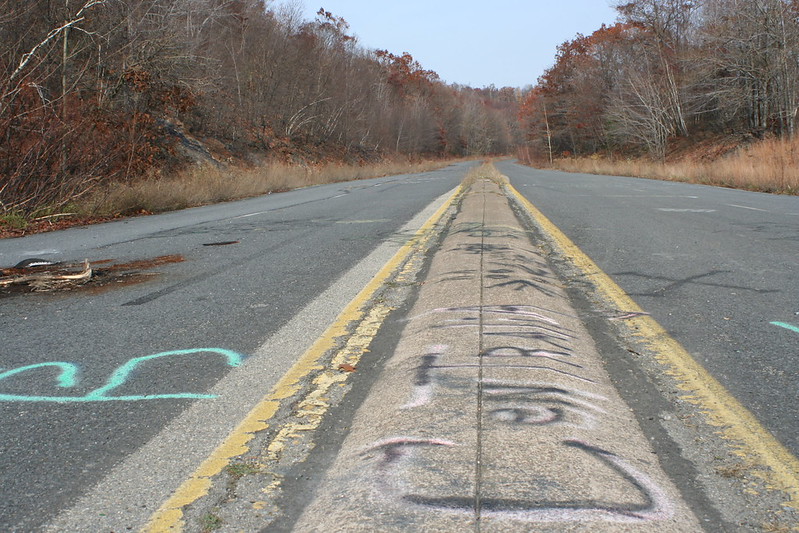
A fire smolders under the streets here, lit by accident back in sixty two. Smoke curls up where the pavement splits open, proof something fierce burns below.
This heat made living risky, so most packed up during the eighties – buyouts helped them go. Still, a handful refused to leave, holding on despite warnings.
That stretch of road known for painted messages and wild murals? Covered over last year without much fuss. Yet quiet rules now, broken only by hissing vents in the soil.
Warmth lingers underground regardless of season, defying frost above. Just five remain in what once held more than a thousand souls.
Artistry Shows Up Where Things Get Left Behind
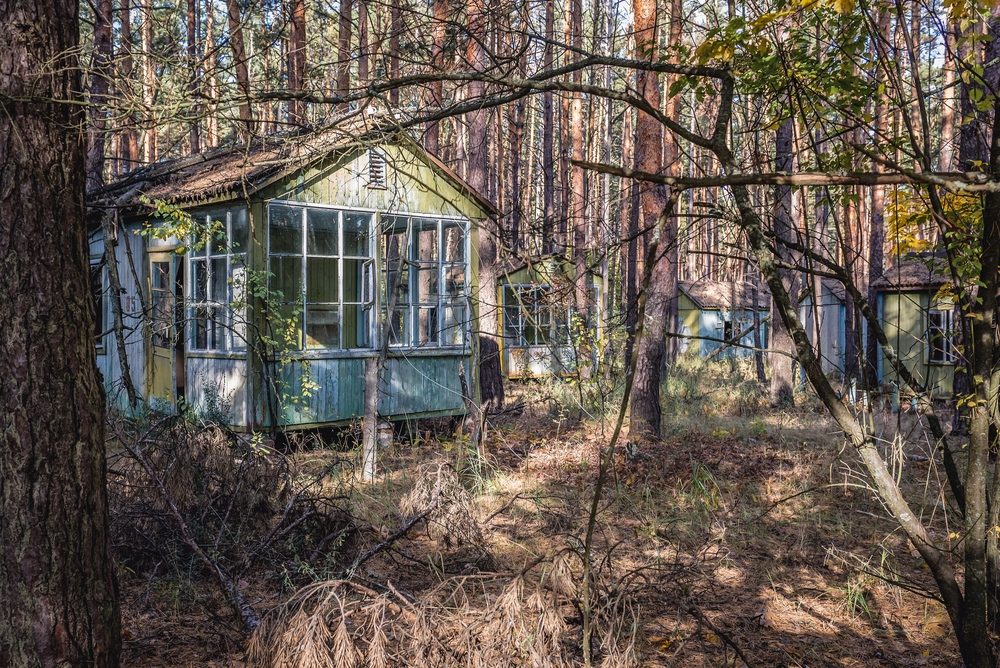
Endings might surprise you – some carry beauty like old walls wearing moss. One by one, these silent spots speak of dreams too big, sudden collapse, money lost, or years slipping past without notice.
Nature moves in slow motion, creeping where people once rushed through doors every morning. Beauty hides not in rot, but in knowing all things fade while life pushes ahead regardless.
Left behind, they become quiet markers of shifts nobody planned. Even emptiness holds moments that catch your eye, make you pause, stay awhile.
More from Go2Tutors!

- The Romanov Crown Jewels and Their Tragic Fate
- 13 Historical Mysteries That Science Still Can’t Solve
- Famous Hoaxes That Fooled the World for Years
- 15 Child Stars with Tragic Adult Lives
- 16 Famous Jewelry Pieces in History
Like Go2Tutors’s content? Follow us on MSN.