15 Tallest Buildings Built Before 1900
Back then, tall wasn’t about speed or shine. Stone by stone, people stacked ambition into the sky.
Whole lifetimes passed while arches climbed higher. Each level demanded grit more than tools.
Time bent to patience, not deadlines. Heights grew like stories told across centuries.
Effort piled up where machines never reached. A few hundred years before most folks think it started, builders were already reaching up, up, higher.
Not merely towering above their era’s standards. Each one stretched past what many believed buildings could actually do.
Here’s a closer look at 15 of the tallest buildings completed before 1900 and the ambition that lifted them.
Washington Monument

Completed in 1884 and officially dedicated in 1885, the Washington Monument in Washington, D.C., reaches 555 feet. At the time, it became the tallest structure in the world, surpassing centuries of European cathedral dominance.
Even so, its construction was anything but smooth. Funding issues and the Civil War caused long pauses, resulting in a visible color change in the marble partway up.
Its clean, obelisk design marked a shift from Gothic ornamentation toward monumental simplicity.
Ulm Minster

Finished in 1890, Ulm Minster in Germany stands at approximately 530 feet. Its spire remains the tallest church spire in the world.
Construction began in 1377 but stretched across more than 500 years. That said, its completion in the industrial age required modern engineering reinforcement.
The structure bridges medieval design and 19th-century finishing techniques, making it a rare architectural time capsule.
Cologne Cathedral
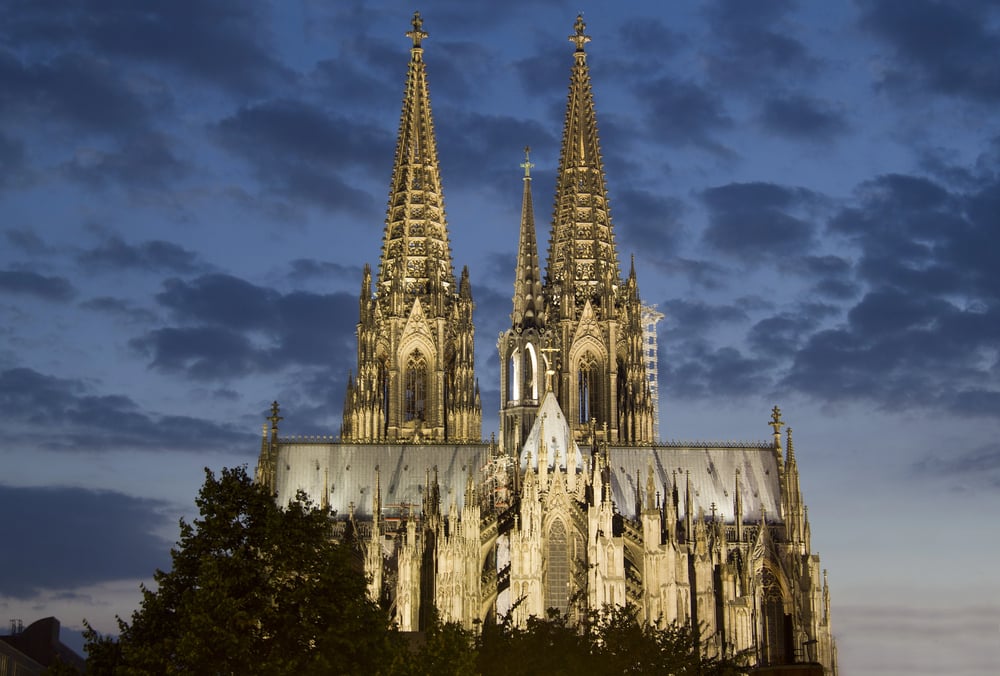
Cologne Cathedral was completed in 1880, finally finishing work that began in 1248. At roughly 515 feet, it briefly held the title of the world’s tallest building.
Still, the cathedral’s long pause in construction meant 19th-century builders relied on medieval plans. The final result is one of the most dramatic Gothic façades ever constructed.
With twin spires that defined the skyline for decades.
Rouen Cathedral

Rouen Cathedral in France reached approximately 495 feet after the addition of its cast-iron spire in 1876. For a short period, it was considered the tallest building in the world.
Even so, its iron spire reflected changing materials. Stone gave way to industrial metal, signaling a transition between eras.
The cathedral became a symbol of both tradition and technological adaptation.
Strasbourg Cathedral

Completed in 1439, Strasbourg Cathedral stands at around 466 feet. For over two centuries, it was widely regarded as the tallest building in the world.
That said, its single spire design gives it a distinctive silhouette. Visitors in the Renaissance described it as nearly impossibly tall.
A reaction that feels understandable even today.
St. Nicholas Church, Hamburg

Finished in 1874, St. Nicholas Church once reached 482 feet, making it one of the tallest buildings of its era. It stood as a symbol of Hamburg’s prosperity.
Still, the church was heavily damaged during World War II and remains partially in ruins. Its surviving tower now serves as a memorial.
A reminder that height alone does not guarantee permanence.
St. Peter’s Basilica

Completed in 1626, St. Peter’s Basilica in Vatican City rises to about 448 feet at the top of its dome. For centuries, it was among the tallest domed structures in the world.
Even so, its height is matched by scale. The dome’s engineering influenced countless later churches.
The structure represents Renaissance ambition translated into stone.
Milan Cathedral
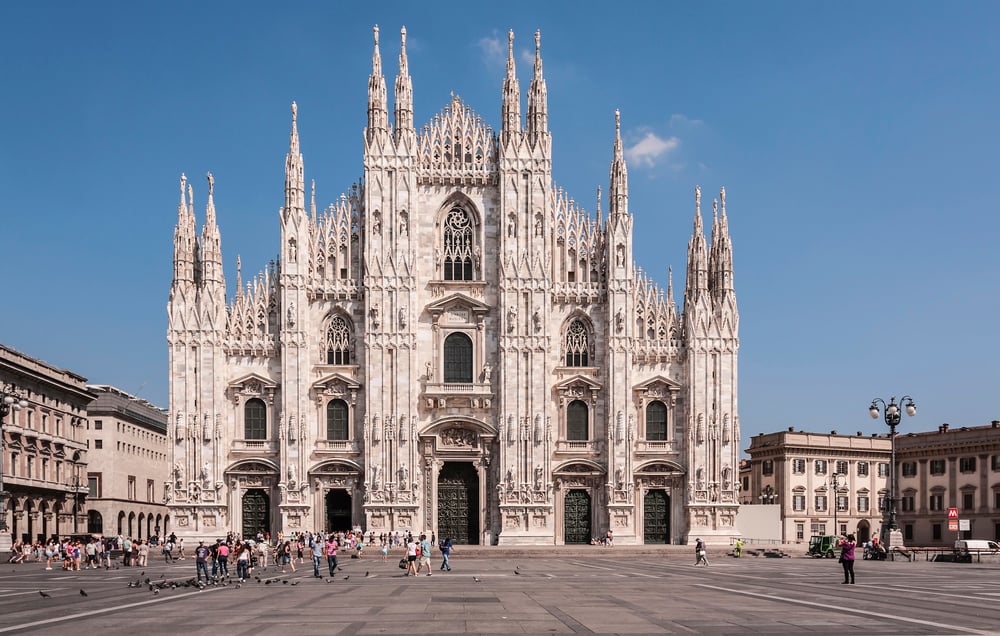
Milan Cathedral reached completion in 1965, but its main structural height of roughly 354 feet was established centuries earlier. Construction began in 1386 and continued in phases well before 1900.
That said, its forest of spires gives the impression of even greater height. The building’s vertical emphasis reflects Gothic design principles.
Aimed at drawing the eye heavenward.
Florence Cathedral

The Cathedral of Santa Maria del Fiore, completed in 1436 with Brunelleschi’s dome, rises to approximately 376 feet. The dome itself was an engineering marvel of the Renaissance.
Still, the structure’s scale stunned contemporaries. Brunelleschi’s double-shell design solved a problem that had puzzled architects for decades.
It remains a landmark in architectural innovation.
Salisbury Cathedral

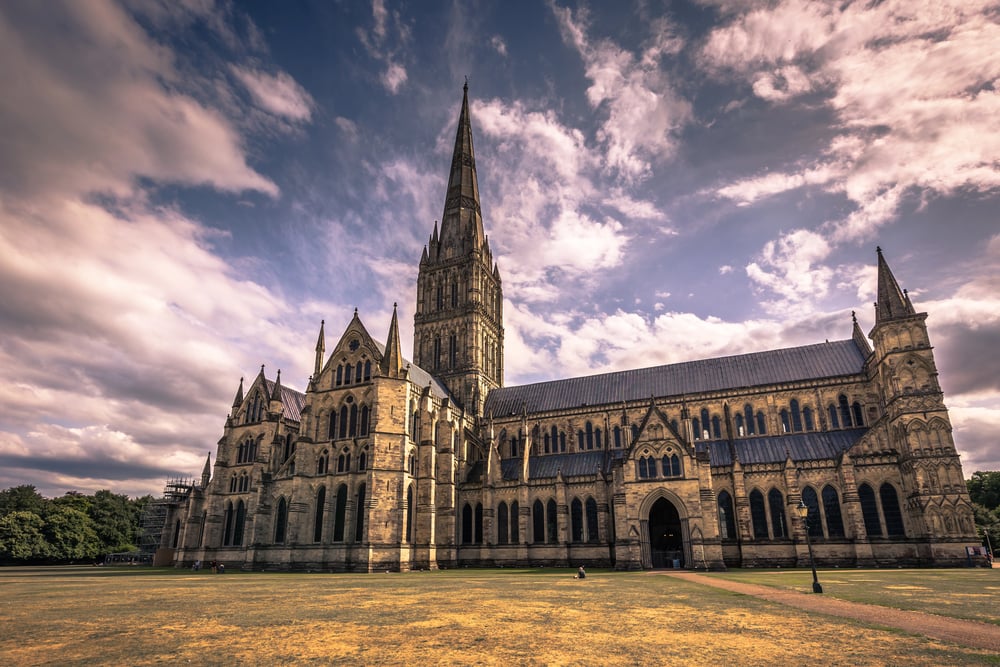
Completed in 1258, with its spire added later in the 14th century, Salisbury Cathedral reaches about 404 feet. It remains the tallest church in the United Kingdom.
Even so, the spire’s weight caused structural concerns almost immediately. Reinforcements were added to prevent collapse.
Illustrating the risks that came with vertical ambition.
Lincoln Cathedral

Lincoln Cathedral once reportedly reached around 525 feet after the addition of its central spire in 1311. If estimates are accurate, it may have been the tallest building in the world for over two centuries.
That said, the central spire collapsed in 1549 during a storm. Its earlier height remains debated among historians.
But the claim alone reflects medieval engineering daring.
Antwerp Cathedral

The Cathedral of Our Lady in Antwerp, completed in stages through the 16th century, stands at approximately 404 feet. Its delicate spire dominates the Belgian skyline.
Even so, financial constraints and religious conflict delayed parts of construction. The cathedral’s height symbolized both civic pride and spiritual aspiration.
Mole Antonelliana

Completed in 1889 in Turin, Italy, the Mole Antonelliana rises to around 548 feet. Originally intended as a synagogue, it evolved into a civic monument.
Still, its unusual proportions and ambitious height made it structurally complex. The building required multiple reinforcements.
Underscoring the experimental nature of 19th-century design.
Philadelphia City Hall

Construction began in 1871 and continued until 1901, though the tower structure was largely completed before 1900. The building rises to 548 feet including the statue of William Penn.
Even so, it became one of the tallest habitable buildings of its time. Built primarily of masonry rather than steel.
It represents the peak of traditional construction methods before skyscrapers took over.
The Singer Building’s Predecessors

Before the Singer Building redefined New York’s skyline in the early 20th century, earlier 19th-century towers such as the New York World Building reached heights above 300 feet. Completed in 1890, the World Building stood at about 349 feet.
Still, these newspaper towers signaled a new era. Steel framing began allowing buildings to climb faster and higher.
The 19th century closed with cities preparing to enter the skyscraper age.
When Height Meant Everything
Back then, reaching high meant taking your time. Faith pushed some upward.
Others climbed toward glory, stone by stone. Steel changed everything later.
Before that, people built with stubborn hope. Whole lifetimes went into a single spire.
Ambition shaped skylines without cranes or speed. Even by 1900, rooftops stood near a shift no one had fully seen coming.
Steel skeletons began replacing thick stone walls, while reaching new heights turned into its own kind of race. Still, those first towering builds set the stage.
Built without today’s machines, they showed what happens when people keep lifting their eyes skyward, wondering just how far up might go.
More from Go2Tutors!

- The Romanov Crown Jewels and Their Tragic Fate
- 13 Historical Mysteries That Science Still Can’t Solve
- Famous Hoaxes That Fooled the World for Years
- 15 Child Stars with Tragic Adult Lives
- 16 Famous Jewelry Pieces in History
Like Go2Tutors’s content? Follow us on MSN.



