Fascinating Secrets of the World’s First Computers
The history books got it wrong. For decades, everyone thought they knew which computer came first, who built it, and why it mattered.
But the real story involves secret war projects, forgotten inventors, and six women whose groundbreaking work was dismissed as clerical. The earliest computers weren’t sitting in university labs or corporate research centers.
They were hidden in basements, locked behind security clearances, and sometimes destroyed on purpose. Their creators fought legal battles that lasted decades, and some never received credit during their lifetimes.
ENIAC Wasn’t Actually First
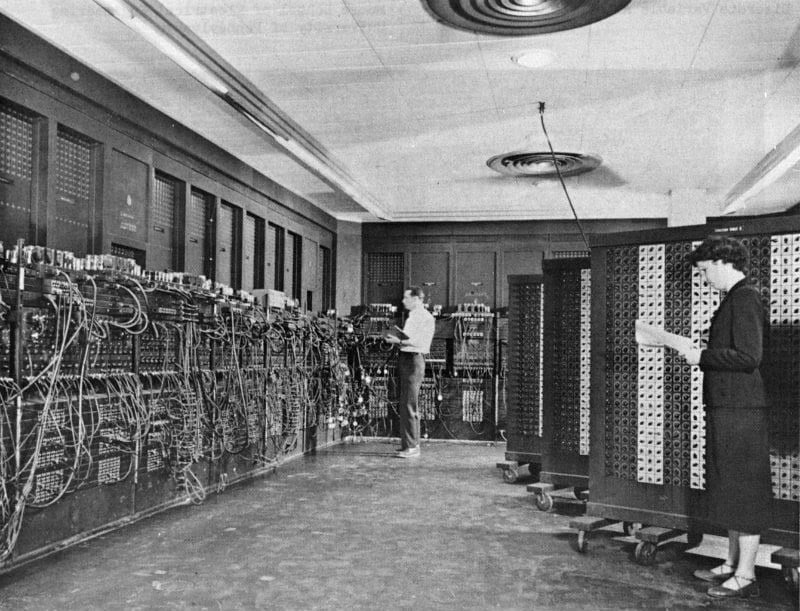
When ENIAC debuted in February 1946, newspapers called it the first computer. The government threw a massive publicity event.
Reporters watched in amazement as this room-sized machine calculated in seconds what would take humans months. But ENIAC wasn’t first. Not by a long shot.
The British had been running Colossus computers since 1943. Ten of them, actually.
They cracked Nazi codes and shortened World War II, but Winston Churchill ordered most of them destroyed. He wanted pieces no larger than a human hand.
The designer was told to burn all documentation, which he did. The remaining two Colossus machines kept working in secret until the 1960s, decrypting Soviet messages.
Nobody knew about Colossus for thirty years. During that time, ENIAC got all the glory.
The Roadhouse Napkin That Changed Everything
John Atanasoff was frustrated. As a physics professor at Iowa State College in 1937, he spent endless hours grinding through mathematical calculations on a Monroe calculator. His research required solving huge systems of equations, and the process was painfully slow.
One winter night, he drove across the Iowa border into Illinois. He stopped at a roadhouse for a drink.
While sitting there, ideas started flowing. He grabbed a napkin and sketched out the basic design for an electronic computer.
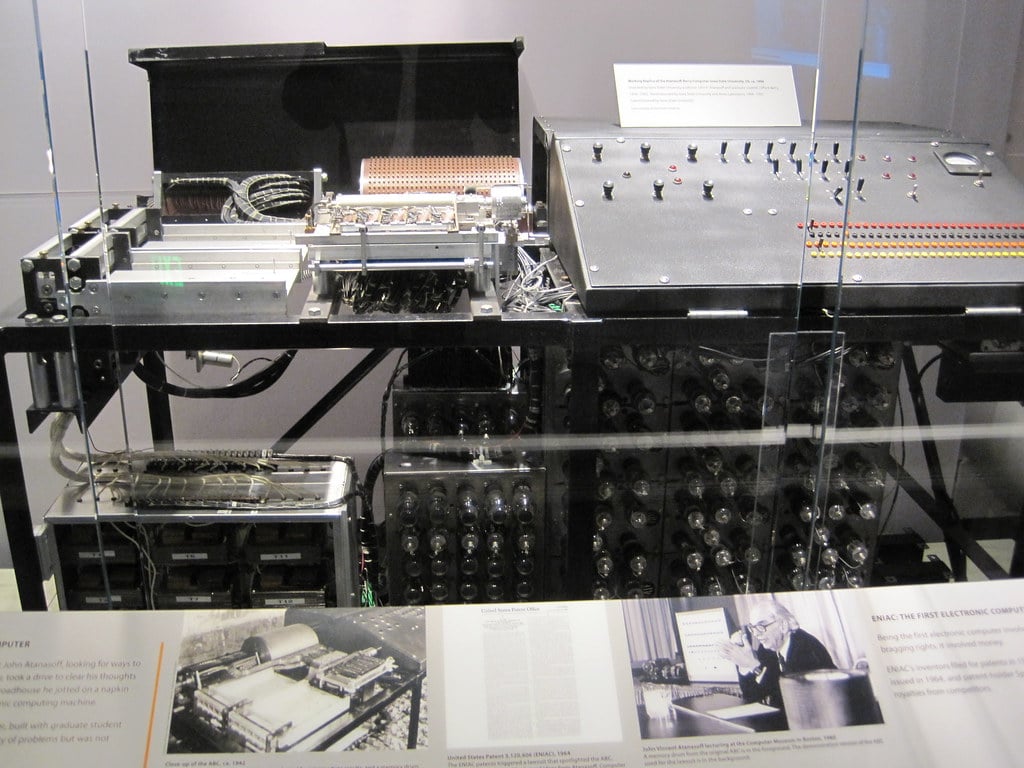
That napkin became the ABC (Atanasoff-Berry Computer). Atanasoff built it in a basement with his graduate student Clifford Berry.
It cost them about five thousand dollars, weighed seven hundred pounds, and could solve systems with up to 29 variables. The ABC used vacuum tubes for digital computation before anyone else.
It pioneered binary arithmetic. But World War II interrupted everything.
Atanasoff left for naval work. Berry took a defense job. Iowa State College dismantled the machine without telling them.
The Patent Battle That Nobody Remembers
In June 1941, a man named John Mauchly visited Atanasoff. He stayed as a houseguest for five days.
During his visit, Mauchly examined the ABC thoroughly. He read the design manual.
He asked detailed questions. A few years later, Mauchly and his partner Eckert built ENIAC.
They got a patent. Their company sold the patent rights to Sperry Rand, which then demanded royalties from every computer manufacturer in America.
Honeywell fought back. They argued the ENIAC patent was invalid because Mauchly had stolen ideas from Atanasoff. The court case dragged on for years.
Atanasoff testified. Berry had died suddenly in 1963, so he couldn’t.
In October 1973, a federal judge ruled that ENIAC derived its key concepts from the ABC. The patent was invalid.
Atanasoff won, legally at least. But hardly anyone noticed because the verdict came out the same weekend as the Saturday Night Massacre, when President Nixon fired the Watergate special prosecutor.
Atanasoff never made money from his invention. History books continued crediting ENIAC as the first computer.
Most people still do.
The Machine That Kept Breaking Down
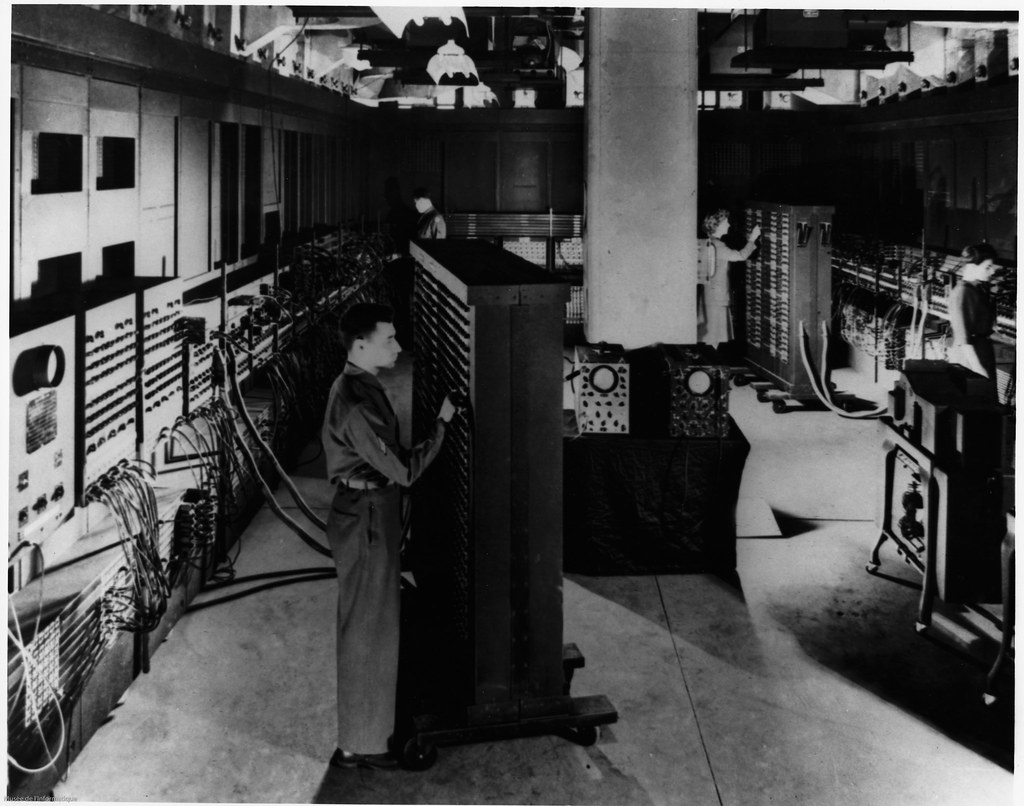
ENIAC filled an entire basement. It measured 50 by 30 feet. Forty panels arranged in a U-shape along three walls.
Each panel stood eight feet tall. Inside were 17,468 vacuum tubes.
These tubes failed constantly. Engineers worried the machine would never stay running long enough to complete a calculation.
They ran it continuously, hoping that would extend tube life. It generated so much heat they installed a dedicated air conditioning system.
The longest ENIAC ever ran without stopping was five days. Most of the time it only worked about half the hours in a day.
Someone was always replacing tubes or fixing connections. When it did work, ENIAC performed five thousand additions per second.
This was orders of magnitude faster than anything mechanical. The machine consumed 174 kilowatts of power and contained 70,000 resistors, 10,000 capacitors, 6,000 switches, and 1,500 relays.
Programming it meant physically rewiring the machine. You had to connect cables and set thousands of switches by hand.
Changing the program could take days.
Six Women Created Modern Programming
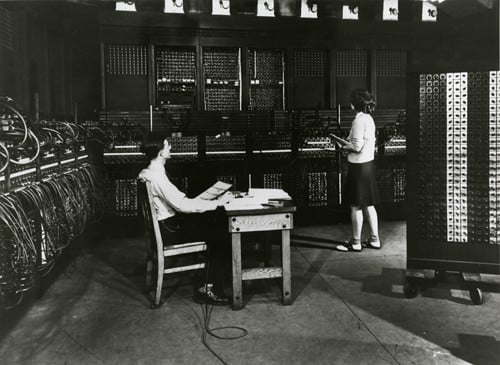
The ENIAC programmers weren’t engineers. They were mathematicians hired to do calculations by hand during the war.
Over 200 women worked as human computers at the Moore School of Engineering. Their job was grinding through ballistics equations with desktop calculators.
In 1945, six of them got selected for something different. Betty Holberton, Kay McNulty, Marlyn Wescoff, Ruth Lichterman, Jean Jennings, and Fran Bilas were told they’d work with a new machine.
They weren’t allowed in the room at first. Security clearances took time.
So they learned to program ENIAC using only paper diagrams. No instructions existed.
No programming languages. No manuals.
They had to figure it out themselves. When they finally got access to the actual machine, they discovered the diagrams barely helped.
ENIAC was nothing like what they expected. They spent months learning how it worked, testing it, debugging it, replacing failed tubes.
These women invented fundamental programming techniques. They developed subroutines. They figured out nesting.
When ENIAC ran too slowly, they found ways to make it process multiple calculations simultaneously, turning it into a parallel processor. They created breakpoints for debugging.
When checking if a program worked, they developed methods to jump to specific points instead of starting over from the beginning every time.
The Unveiling That Ignored Them

February 14, 1946. The Army revealed ENIAC to the press.
Reporters crowded around this massive electronic brain. Flashbulbs popped.
The machine performed a ballistics calculation that would have taken human computers twenty hours. ENIAC did it in thirty seconds.
The six women programmers were there. They’re visible in the photographs.
But nobody introduced them. Nobody mentioned their names in the announcements.
They weren’t invited to the celebratory dinner that night. The engineers got awards and fame.
Mauchly and Eckert gave lectures about the birth of computing. None of the women were invited to attend.
For decades, people looking at ENIAC photographs assumed the women in the pictures were models. Just pretty faces posed next to the machine for publicity shots.
Even at the 50th anniversary celebration in 1996, most of the programmers weren’t invited.
The Researcher Who Uncovered Their Story
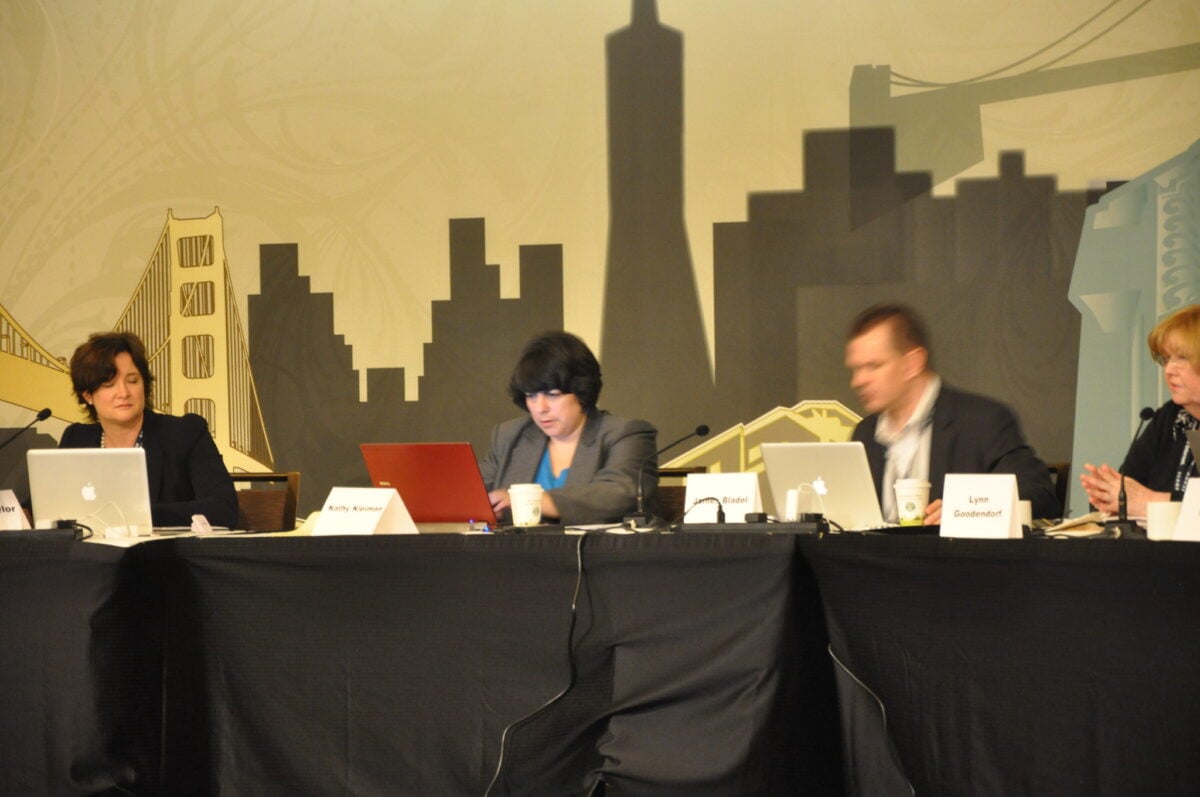
In the 1980s, a computer science student named Kathy Kleiman was researching computing history. She kept seeing women in ENIAC photographs.
Nobody could tell her who they were. One historian told her they were just refrigerator ladies.
Models hired to make the machine look good. Kleiman didn’t believe it.
She spent years tracking down the women. By the time she found them in the 1990s, they were in their seventies and eighties.
She recorded twenty hours of interviews. She helped them get recognition they should have received fifty years earlier.
The women were shocked that anyone cared. They felt thrilled to finally be acknowledged, but sad about being ignored for so long.
In 1997, all six were inducted into the Women in Technology Hall of Fame. Kleiman produced a documentary in 2014. She wrote a book in 2022 telling their complete story.
The Secret Computer That Won the War
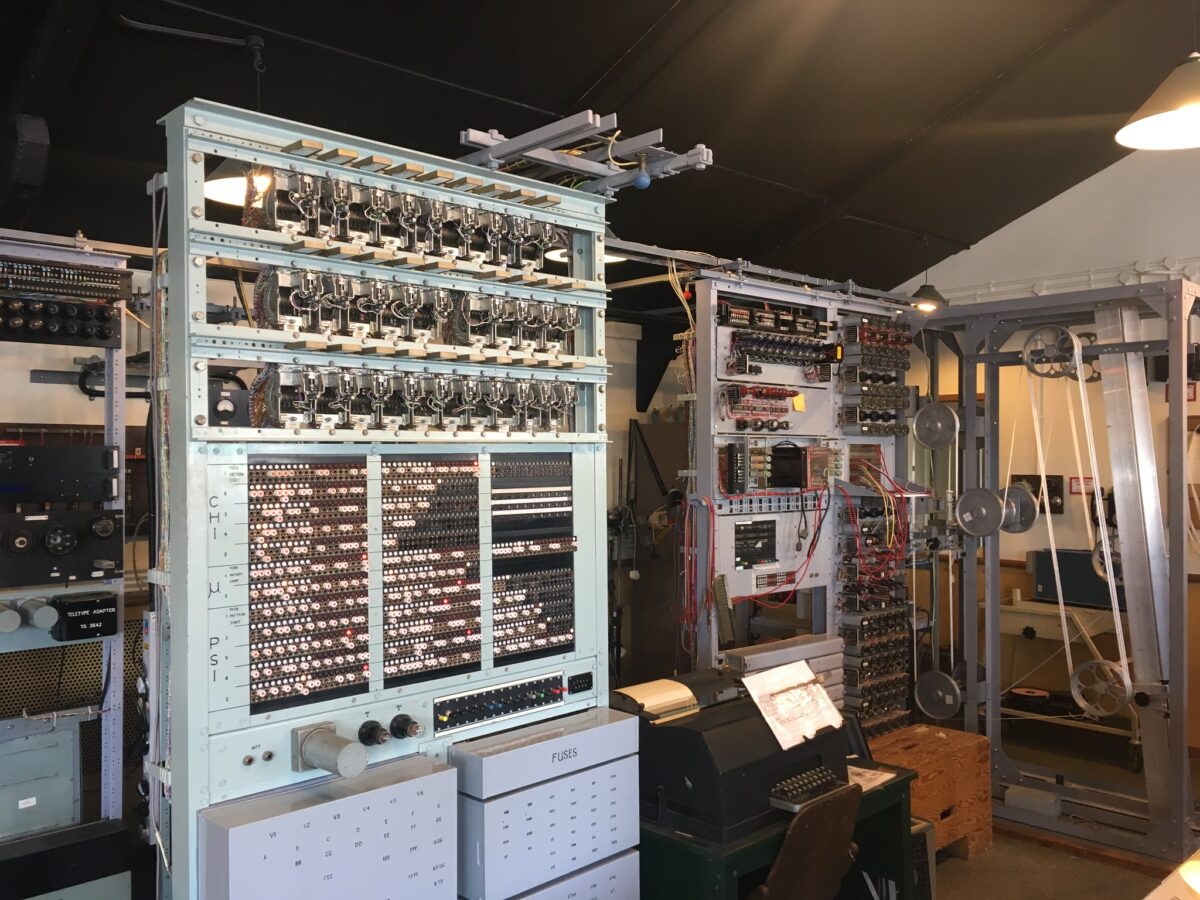
While ENIAC was being built in Philadelphia, something else was happening at Bletchley Park in England. Tommy Flowers, a telephone engineer, designed Colossus to crack the Lorenz cipher used in Nazi high-command communications.
The first Colossus went operational in early 1944, months before D-Day. It used 1,500 vacuum tubes.
The later models had 2,500. These machines read encrypted messages from paper tape at 5,000 characters per second.
Colossus worked differently than ENIAC. It generated one part of the cipher electronically instead of using two paper tapes.
This made it much faster and more reliable. The electronic generation of the cipher stream makes Colossus arguably more important than people realize.
Ten Colossus machines ran during the final 16 months of the European war. They gave Allied commanders crucial intelligence about Nazi plans.
Historians estimate Colossus and the codebreaking work at Bletchley Park shortened the war by two years. Then Churchill ordered them destroyed. Eight were dismantled and broken into pieces.
Two were kept and used to read Soviet communications until 1960, then dismantled. The existence of Colossus remained classified until the late 1970s.
Even then, full details stayed secret for years longer.
The Machine Rebuilt From Memory
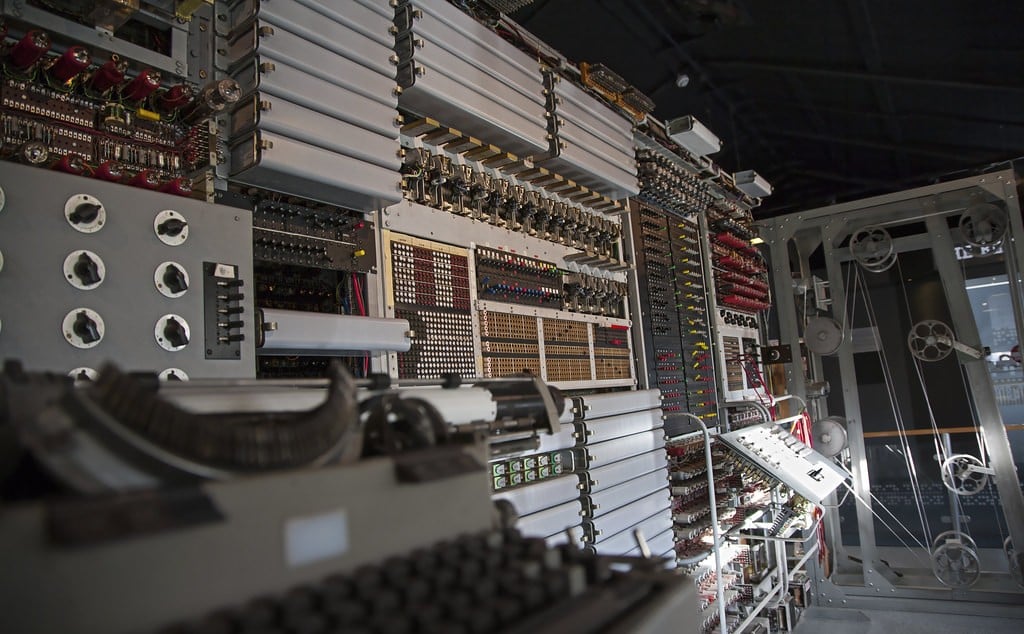
By 2007, most people who worked on Colossus were dead or very old. But a few remembered. Engineer Tony Sale led a team to rebuild a working Colossus from scratch.
They had only eight photographs and a few hidden diagrams. The original designer was dead, but he’d written some notes that survived.
Using these scraps, volunteers spent years reconstructing one of computing’s most important machines. The rebuilt Colossus now stands at The National Museum of Computing at Bletchley Park. It works.
You can watch it run. Visitors walk around the massive machine that was nearly lost to history.
In 2007, they held a Cipher Challenge. The rebuilt Colossus competed against radio amateurs worldwide to decode three Lorenz-encrypted messages first.
The computer that was supposed to be forgotten proved it still had something to say.
When Men Took Over Programming

After World War II, computing boomed. More machines were built.
More programmers were needed. Women continued entering the field in higher numbers than other technical disciplines.
But something changed in the 1960s and 70s. Companies started viewing programming as prestigious and well-paid.
Men began crowding out women. Job descriptions emphasized traits stereotypically associated with men.
Hiring managers created personality tests that screened women out. Programming had been considered clerical work when women dominated it.
As soon as it became seen as important and intellectual, it became a male field. The percentages flipped.
By the 1980s and 90s, computer science became one of the most male-dominated areas in STEM. Today, universities and companies struggle to attract women back to a field that women helped create.
The six ENIAC programmers lived to see this transformation. Some of them spent their later years teaching and trying to inspire young women to enter computing.
They knew what the history books had forgotten.
The Computer Built in a Physics Basement
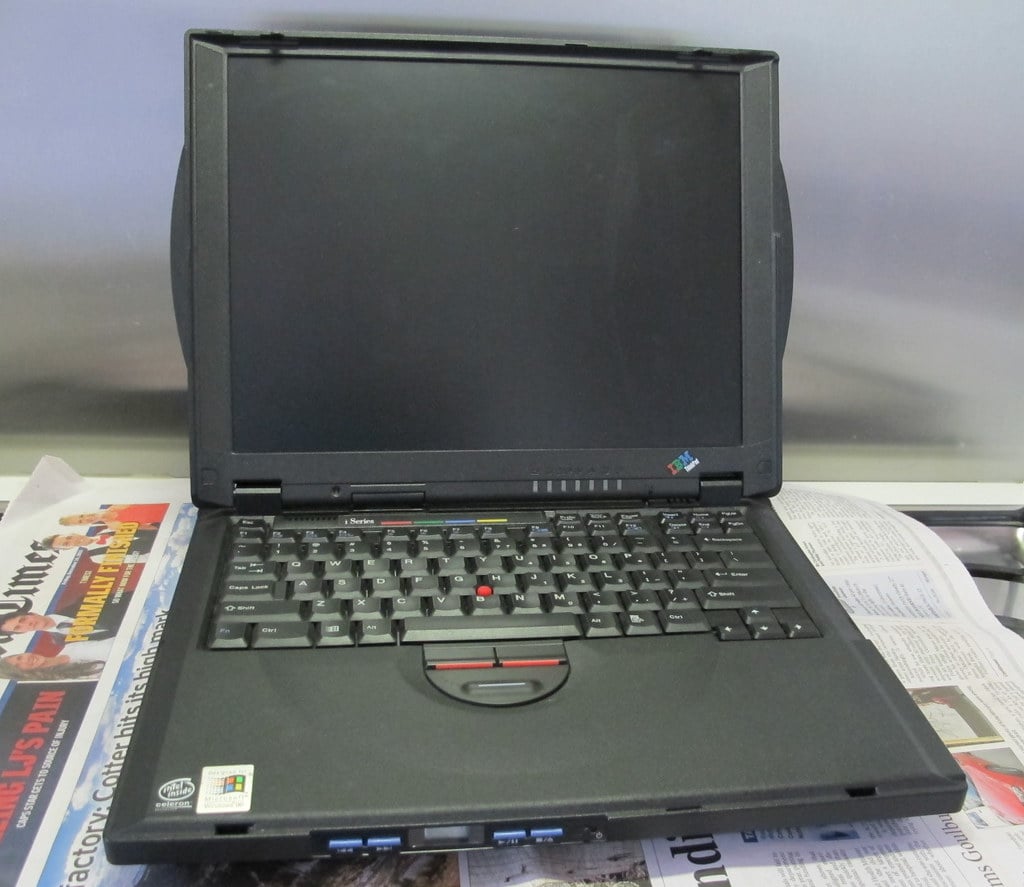
The ABC sat on a desk-sized frame in the basement of the physics building at Iowa State College. It contained about 300 vacuum tubes and nearly a mile of wire.
It used capacitors to store numbers in binary form. The machine could handle one specific task:
solving systems of simultaneous linear equations. Feed it the equations, and it would eliminate variables one at a time until it found the solution.
This might sound limited, but these types of calculations were crucial for physics research in the 1930s. Scientists needed them constantly.
Doing them by hand took forever and introduced errors. The ABC never got finished properly.
Its paper card reader and writer mechanism still needed work when Atanasoff left for the Navy. When he tried to return after the war and continue development, he discovered Iowa State had dismantled everything.
No patent was ever filed. The college had promised to handle the patent application but dropped it.
For decades, nobody outside Iowa State knew the ABC existed.
The Programmer Who Started It All
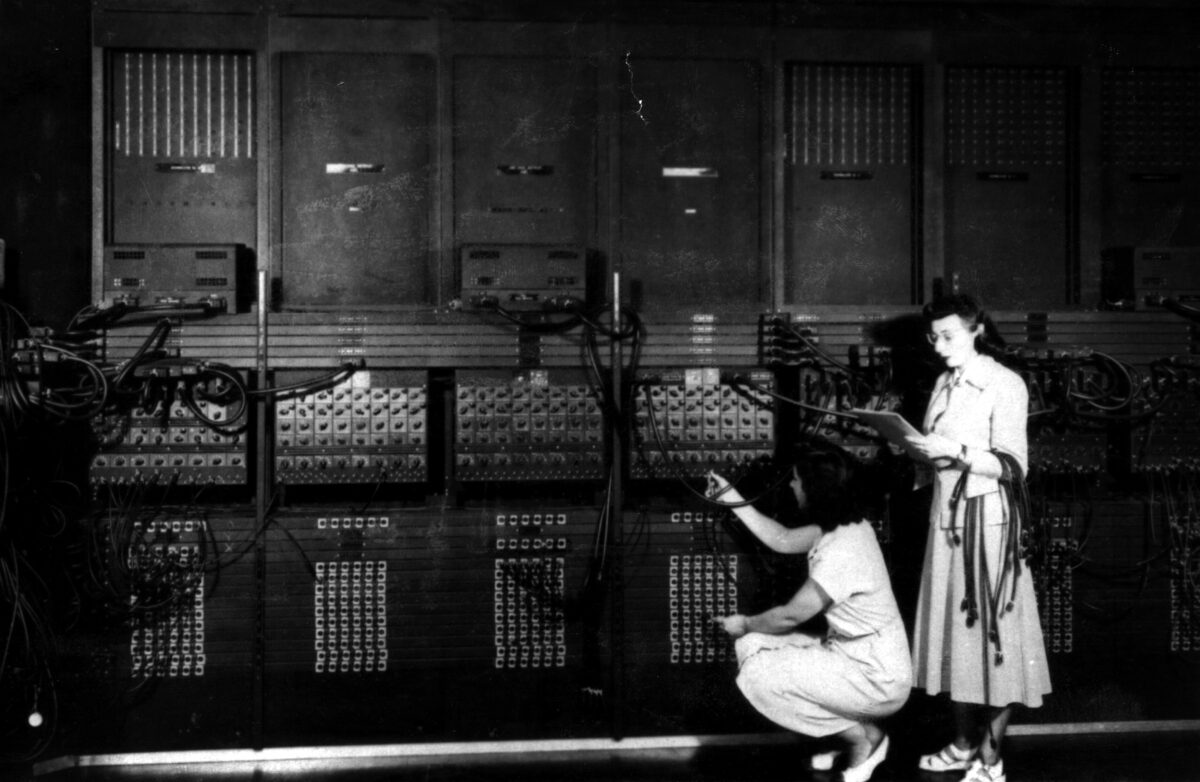
Betty Holberton was born in Philadelphia in 1917. She wanted to study journalism but her guidance counselor said journalism wasn’t for women.
So she studied math instead. After working as a human computer and then becoming one of the ENIAC programmers, Holberton went on to do even more pioneering work.
She helped convert ENIAC into a stored-program computer in 1947. This made it the first stored-program computer in the world.
She invented breakpoints for debugging. She created the first software application.
Later, she worked with Grace Hopper developing standards for COBOL and FORTRAN, two programming languages that dominated computing for decades. Holberton’s career spanned from the earliest days of computing through the personal computer revolution.
She helped write the story of programming itself. But most computing textbooks never mentioned her name.
The Machine Made of Telephone Parts

Tommy Flowers designed Colossus using technology from his day job at the General Post Office.
He was a telephone engineer. Telephone exchanges in the 1940s used relay switches and vacuum tubes.
Flowers understood these components better than almost anyone. He knew their limitations and capabilities.
When asked to build a machine for codebreaking, he applied telephone engineering principles to computing. This gave Colossus unusual reliability. While ENIAC struggled with tube failures, Colossus ran more smoothly.
Flowers knew tricks for keeping tubes working. He kept them powered continuously.
He understood thermal management.
The British government should have recognized his genius. Instead, they classified his work and made him destroy the evidence.
Flowers spent years after the war unable to explain what he’d accomplished. When the secrecy finally lifted in the 1970s, Flowers was still alive but elderly.
He finally got some recognition before he died. Not nearly enough for what he’d achieved.
Numbers That Changed History
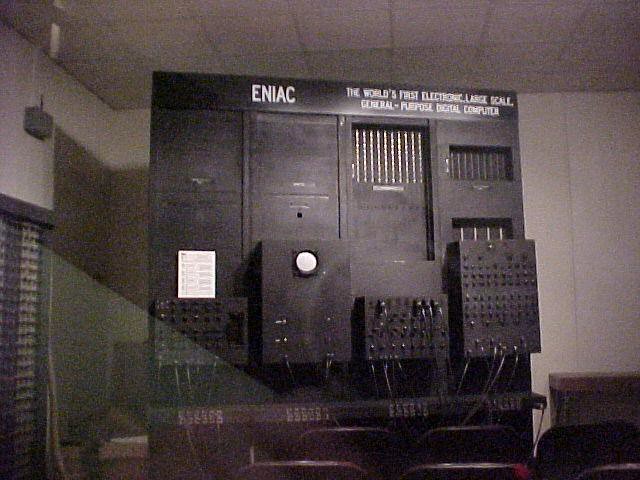
The calculations ENIAC performed for the Army weren’t just academic exercises. They determined where shells would land when fired from artillery.
Get the calculations wrong and shells miss their targets. During World War II, the Army’s Ballistic Research Laboratory fell desperately behind.
Requests for new firing tables arrived six times faster than human computers could calculate them. Aberdeen Proving Ground employed 200 human computers working constantly.
They couldn’t keep up. This is why the Army funded ENIAC.
Not for abstract mathematics. For killing people more efficiently.
After the war ended, ENIAC’s first major task was running calculations for the hydrogen bomb. The machine designed to calculate ballistic trajectories was repurposed for nuclear weapons design.
The six women who programmed ENIAC knew exactly what their work was for. They weren’t naive.
They were helping develop weapons. They made their peace with it.
When Documentation Gets Burned

Imagine being Tommy Flowers. You’ve just helped win World War II.
Your machines read Hitler’s orders. Your designs are brilliantly innovative.
You’ve pushed the boundaries of what’s possible with electronics. Then your boss tells you to burn everything.
All the circuit diagrams. All the specifications.
All your notes. Every scrap of paper related to Colossus must be destroyed.
Flowers did it. He burned years of work.
The British government wanted no trace of these machines to exist. They worried other countries might learn their codebreaking capabilities.
This decision haunted computing history. Colossus influenced the development of British computing in ways that stayed invisible for decades.
Researchers working on early computers in Britain knew about Colossus but couldn’t mention it. They had to pretend certain ideas came from nowhere.
When the story finally emerged in the 1970s, historians realized huge gaps existed in what they thought they knew about computing’s birth.
Where the Pieces Ended Up
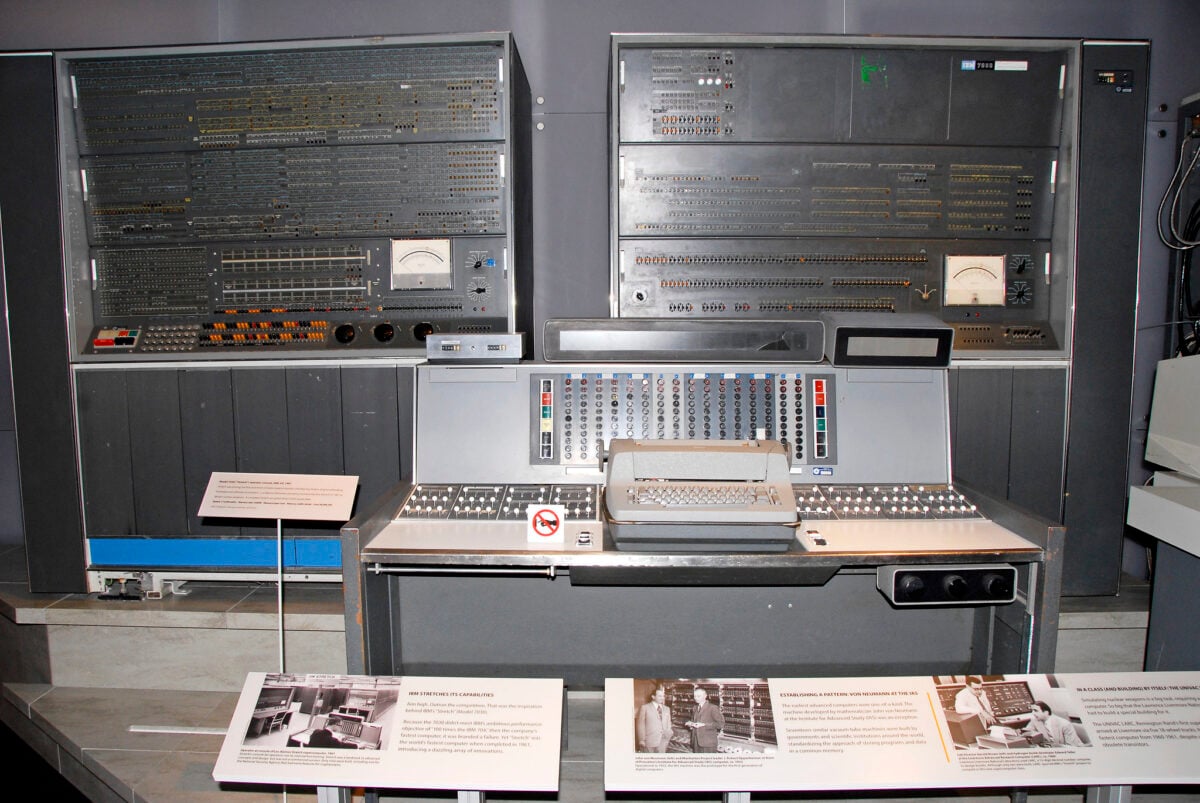
You can see parts of ENIAC today if you know where to look. The University of Pennsylvania has four original panels.
The Smithsonian has five more. The Science Museum in London has a receiver unit.
The Computer History Museum in Mountain View has three panels. Nobody has all of ENIAC in one place.
It’s scattered across museums like ancient ruins spread across different countries. For the ABC, you can see a replica at the Computer History Museum in California.
The original was destroyed. The replica was built decades later by people trying to recreate what Atanasoff and Berry achieved.
The Colossus at Bletchley Park is also a reconstruction. But it’s built to the original specifications, in the original location, by people who worked on the original machines or had access to surviving documentation.
These fragments and reconstructions are all that remain of machines that changed the world.
The Story Still Being Written

Today’s smartphones have more computing power than ENIAC, Colossus, and the ABC combined. Millions of times more.
Your phone can do in microseconds what those room-sized machines struggled with for hours. But you can trace a direct line from those early machines to your pocket.
The binary arithmetic Atanasoff pioneered. The programming techniques the six women developed.
The electronic circuits Flowers designed. They all contributed to computing as we know it.
The history of computers isn’t really about machines. It’s about people fighting to solve problems, make discoveries, get recognition, and not be forgotten.
Some succeeded. Some died before anyone knew what they’d accomplished.
Some watched men take credit for their work. Some had their achievements literally burned.
The story continues. Every day, programmers and engineers build on foundations laid by people whose names they’ll never know.
The early pioneers would probably find that fitting. They built machines that processed information.
The machines didn’t care who programmed them or why. They just computed.
More from Go2Tutors!

- The Romanov Crown Jewels and Their Tragic Fate
- 13 Historical Mysteries That Science Still Can’t Solve
- Famous Hoaxes That Fooled the World for Years
- 15 Child Stars with Tragic Adult Lives
- 16 Famous Jewelry Pieces in History
Like Go2Tutors’s content? Follow us on MSN.