17 Unusual Customs That Define Each Nation
Every corner of our planet harbors traditions that might seem downright bizarre to outsiders yet hold profound meaning for those who practice them. These customs, passed down through generations, reveal the fascinating diversity of human culture and the creative ways societies have developed to mark important moments, express values, and build community bonds.
From festivals involving flying tomatoes to greeting rituals that would make your grandmother blush, the world is packed with practices that showcase humanity’s incredible imagination. Here is a list of 17 unusual customs that perfectly capture the unique spirit of different nations.
La Tomatina Festival

Spain transforms the small town of Buñol into a massive battlefield every August, where thousands of people gather to hurl overripe tomatoes at each other in pure, chaotic fun. This tomato-throwing festival turns the streets into a sea of red, creating what’s essentially the world’s largest food fight.
The origins of this unusual tradition date back to the 1940s, and it has since become one of Spain’s most famous and iconic events.
Slurping Noodles Loudly

In Japan, making slurping sounds while eating has an entirely different meaning than in western cultures. Making slurping sounds when eating noodles in Japan is a way of indicating that you’re really enjoying them.
Some scientists even argue slurping invites air into the palate and actually enhances the noodles’ flavor, turning what many would consider rude behavior into a compliment to the chef.
Spitting for Good Luck

Spitting in Greek cultures is a kind of good luck charm that is supposed to help ward off the devil. Today, the custom doesn’t involve wedding guests spitting on the bride.
Instead of inflicting damage on the bridal gown, the gesture evolved into the more hygienic and symbolic act of guests forcefully uttering ‘ftou ftou ftou’. Greeks also do this on other special occasions such as baptisms to acknowledge the baby’s good health and beauty.
Cinnamon Dousing for Singles

In Denmark, if you turn 25 and are unmarried, not only do you have to face Valentine’s Day alone, but you also must endure your friends and family submerging you in a cloud of cinnamon. It’s thought that the tradition stems from when spice salesmen used to travel around the country and remain bachelors.
The aromatic assault serves as both a birthday celebration and a gentle (or not so gentle) reminder about relationship status.
Cemetery Socializing

While cemeteries are the sites of spooky lore in many countries, this is not so much the case in the ever so secular Denmark. Many people might prefer to hang out in parks, but the Danes find it easier to convert their cemeteries into areas for socializing, a rather pragmatic use of space.
These cemeteries are well manicured and teeming with locals when the weather finally begins to warm up.
Polterabend Dish Smashing
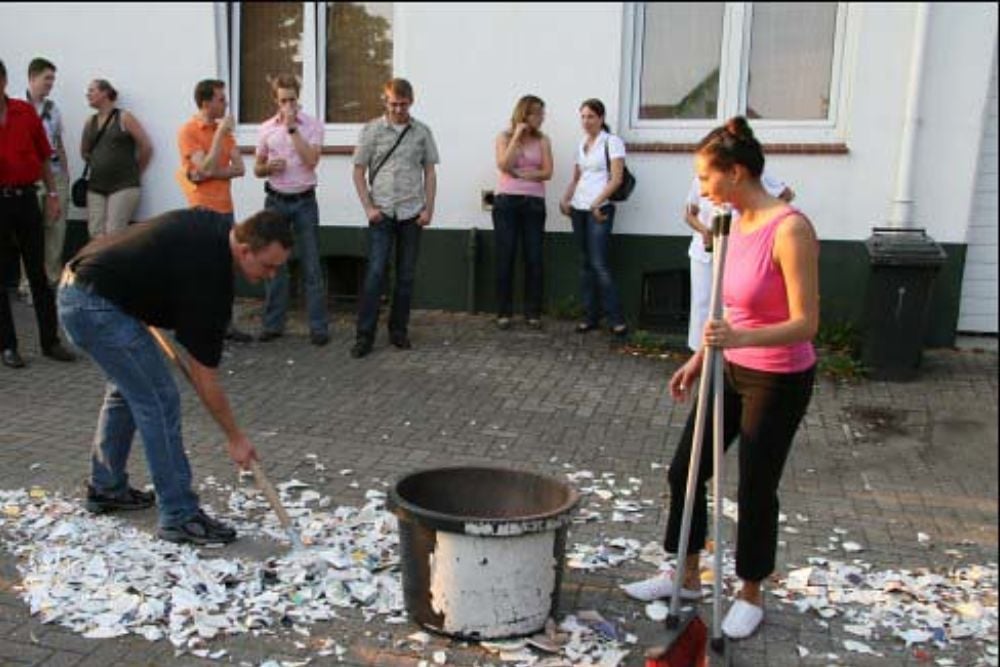
Polterabend, coming from the German verb poltern, making a lot of noise, and abend, evening, is a unique tradition in Germany that is generally held the day before a bride and groom are due to wed. It’s a big party where friends and family gather at the front of the house and smash things on the floor such as, plates, flowerpots, tiles, anything that makes a lot of noise.
Once the dish breaking is done the bride and groom then work together to clean it up as preparation for the future.
Complex Cheek Kissing Rules

The French seem to take this to a whole new level with the number of nuances involved in their kissing rituals. The French people are expected to kiss-greet each person arriving at a gathering, whether they know them or not.
The number of kisses required to complete the greeting varies from region to region. For one, the rules vary for men and women, making French social gatherings a complex dance of calculated affection.
No Glass Clinking

Hungarian forces were severely and savagely defeated during their war with Austria in 1849 and they witnessed Austrian generals celebrating the occasion by drinking beer and clinking their glasses. Hungarians swore not to clink their glasses when having a drink for 150 years. The vow ended in 1999 but a majority of Hungarians continues the cultural tradition.
This historical grudge turned into a lasting custom that still influences how Hungarians toast today.
National Day of Conception

Russia has declining birth rates, an unequal proportion of women to men, and alarmingly short male lifespans. To help solve this issue, the Russian government instituted a public holiday on September 12 to give couples time off from work to procreate.
Prizes are given out to successful parents whose babies are born approximately nine months later. Talk about government incentives getting personal.
Blackening the Bride

In some parts of Scotland, a pre-wedding tradition known as ‘blackening the bride’ involves covering the bride-to-be in a mixture of flour, eggs, molasses, and other messy substances. Friends and family then parade the bride around town, making as much noise as possible.
This bizarre and messy ritual is thought to prepare the bride for the challenges of married life. If you can handle this treatment, marriage should be a breeze.
Finger Cutting Mourning

The Dani tribe of Papua, Indonesia, practice a unique and painful form of grieving. When a loved one dies, female members of the family will cut off a portion of their own fingers as a sign of mourning and to appease the spirits of the deceased. This extreme form of body modification symbolizes the deep connection between the living and the dead in Dani culture. The physical pain represents the emotional anguish of loss in the most literal way possible.
Pointing with Lips

In Nicaragua, it is common to point with the lips instead of the thumb or index finger like the majority of the world. This mouth-based gesture demonstrates how even the most basic human actions can develop unique cultural variations.
While many cultures probably think that pointing a finger isn’t very nice, some countries like Indonesia and Malaysia view this gesture as incredibly offensive, making lip pointing a more universally polite alternative.
Workplace Tooth Brushing

As strange as it may sound, people in Brazil carry their toothbrush and toothpaste everyday in their office bags and brush their teeth after lunch. This dedication to dental hygiene has become so normalized that office bathrooms often feature lines of colleagues maintaining their pearly whites.
The practice reflects Brazilian culture’s emphasis on personal appearance and cleanliness throughout the day.
Eating Sandwiches with Utensils

Be sure to brush up on how to eat with a knife and fork before you travel to Norway. In this Scandinavian country, even sandwiches are eaten using a fork and a knife. What most of the world considers handheld food becomes a formal dining experience in Norway.
This commitment to proper table etiquette extends to virtually every meal, regardless of how casual the food might seem.
La Mordida Birthday Tradition
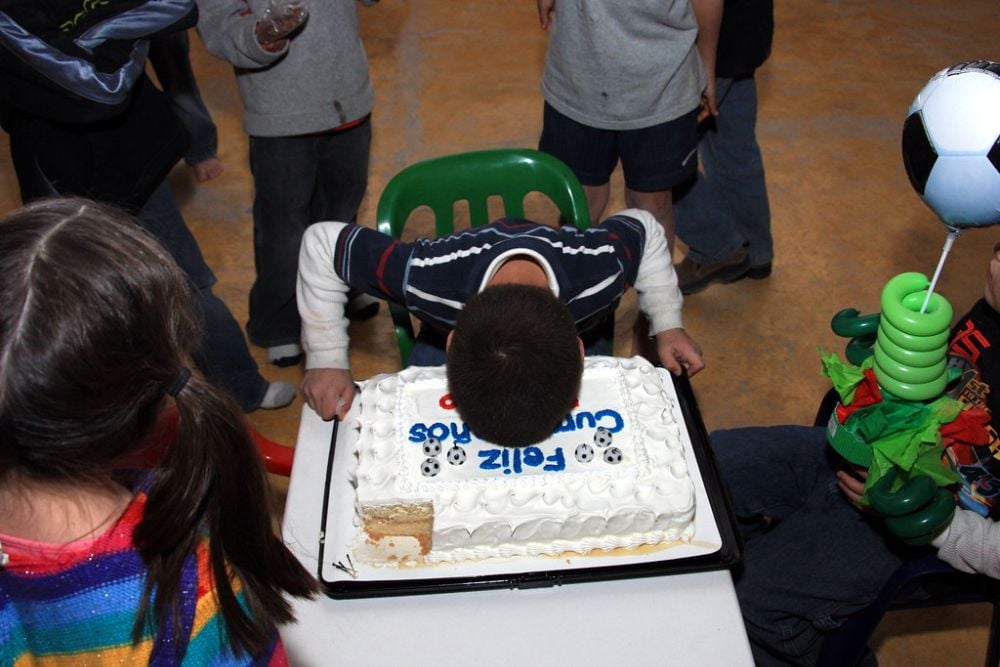
Perhaps one of the best traditions on this list is ‘La Mordida’, a Mexican birthday tradition. The birthday girl or boy will have their hands tied behind their back and when they go to take the first bite of cake, they will have their face pushed right into it whilst the rest of the party guests shout ‘Mordida!’
This playful ambush ensures that every Mexican birthday celebration includes at least one guaranteed laugh and a very messy birthday person.
Scrambled Egg Festival

Whereas in the UK we might celebrate the start of Spring by picking some daffodils or doing a spring clean, in Zenica, Bosnia they mark the start of the season with an unusual tribute to scrambled eggs known as the Čimburijada festival. They start the day as they mean to go on with a large breakfast of eggs cooked in a city park near the Bosna River.
Hundreds of eggs are cooked at the same time in giant pans and then distributed to the festival attendees. The rest of the day involves partying, barbecuing, and jumping into the river.
Tossing Teeth on Roofs

For many cultures, children are told to keep their baby teeth under their pillow and the Tooth Fairy will give them money in exchange for their teeth. But Greek children are told to toss their teeth onto their roofs.
The cultural tradition is meant for the child to have a healthy tooth as well as good luck to the family. Instead of waiting for a magical visitor, Greek kids get the satisfaction of a good throw and the hope for strong adult teeth.
The Thread That Binds Us All

These strange and wonderful customs remind us that beneath our surface differences, humans share the same fundamental needs for celebration, connection, and meaning. Whether we’re throwing tomatoes in Spain or tossing teeth in Greece, each tradition represents a community’s creative solution to life’s universal experiences.
These strange traditions and unique practices highlight the essence of our shared humanity. The next time you encounter a custom that seems bizarre, remember that it probably makes perfect sense to someone else and adds another colorful thread to the rich tapestry of human culture.
More from Go2Tutors!

- The Romanov Crown Jewels and Their Tragic Fate
- 13 Historical Mysteries That Science Still Can’t Solve
- Famous Hoaxes That Fooled the World for Years
- 15 Child Stars with Tragic Adult Lives
- 16 Famous Jewelry Pieces in History
Like Go2Tutors’s content? Follow us on MSN.



