Why the Ice Cream Truck Jingle Hits Different When You Hear It as an Adult
There’s a particular cruelty in how clearly you can remember being seven years old the moment you hear that tinny, looping melody drifting down the street. You’re not even outside.
You’re at your kitchen table paying a bill or unloading groceries, and then — there it is. The jingle. And for about two full seconds, something in your chest just unlocks.
Then you look down at the utility bill and the moment passes. That gap between those two seconds and everything after is worth examining.
The Melody Itself Is Engineered to Reach You
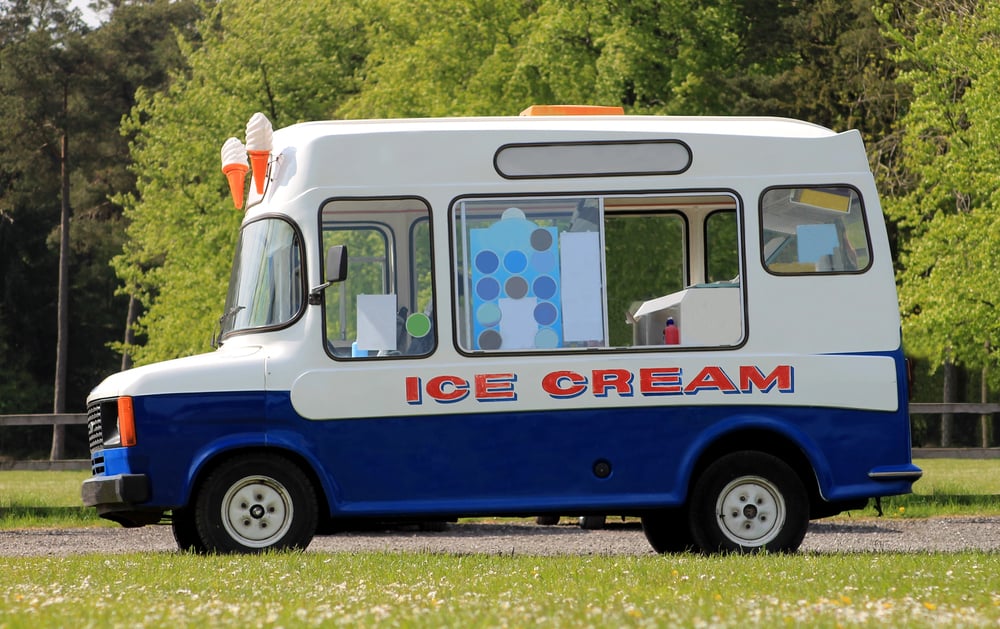
The tune most ice cream trucks play — typically a variation of “The Entertainer” or an old folk song called “Turkey in the Straw” — was never chosen for its beauty. It was chosen for its range: high, bright, and capable of cutting through summer noise from well over a block away.
That specific tinny quality isn’t a limitation of the equipment — it’s deliberate, designed to travel. So when it reaches you on a Thursday afternoon in your thirties, it doesn’t land gently.
It arrives like something that was always going to find you.
What Nostalgia Actually Does to the Brain
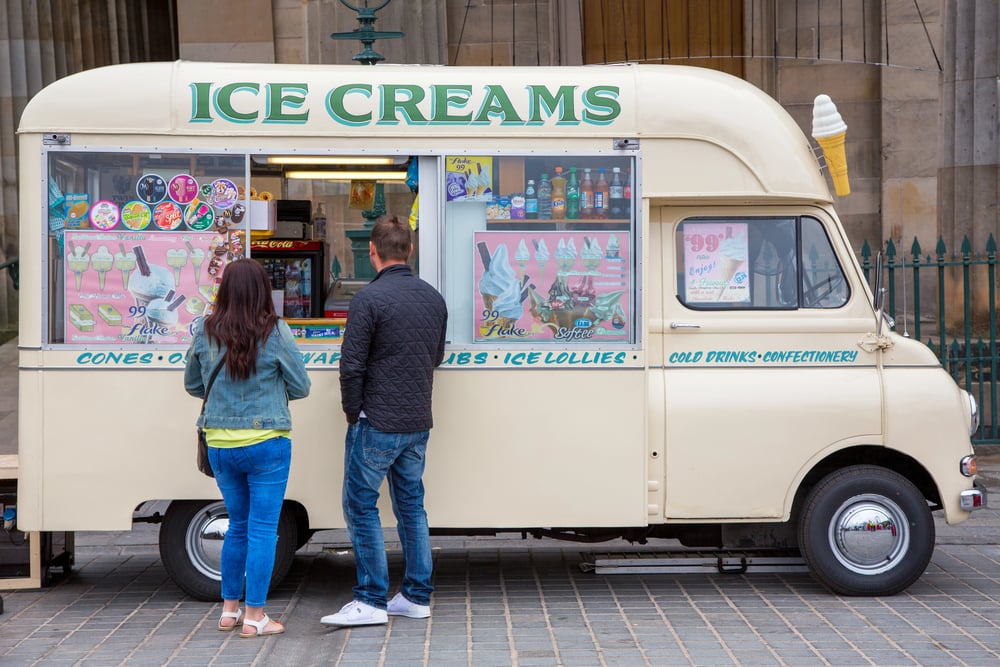
Nostalgia isn’t a soft feeling — it’s neurologically aggressive, which is saying something for an emotion most people treat like background noise. Studies in psychology have found that nostalgia activates the reward circuitry in the brain with a specificity that ordinary pleasant memories don’t match, pulling up not just the memory but the emotional temperature of the original experience.
You’re not remembering the ice cream. You’re re-inhabiting the afternoon it came from.
The Jingle as a Time Capsule
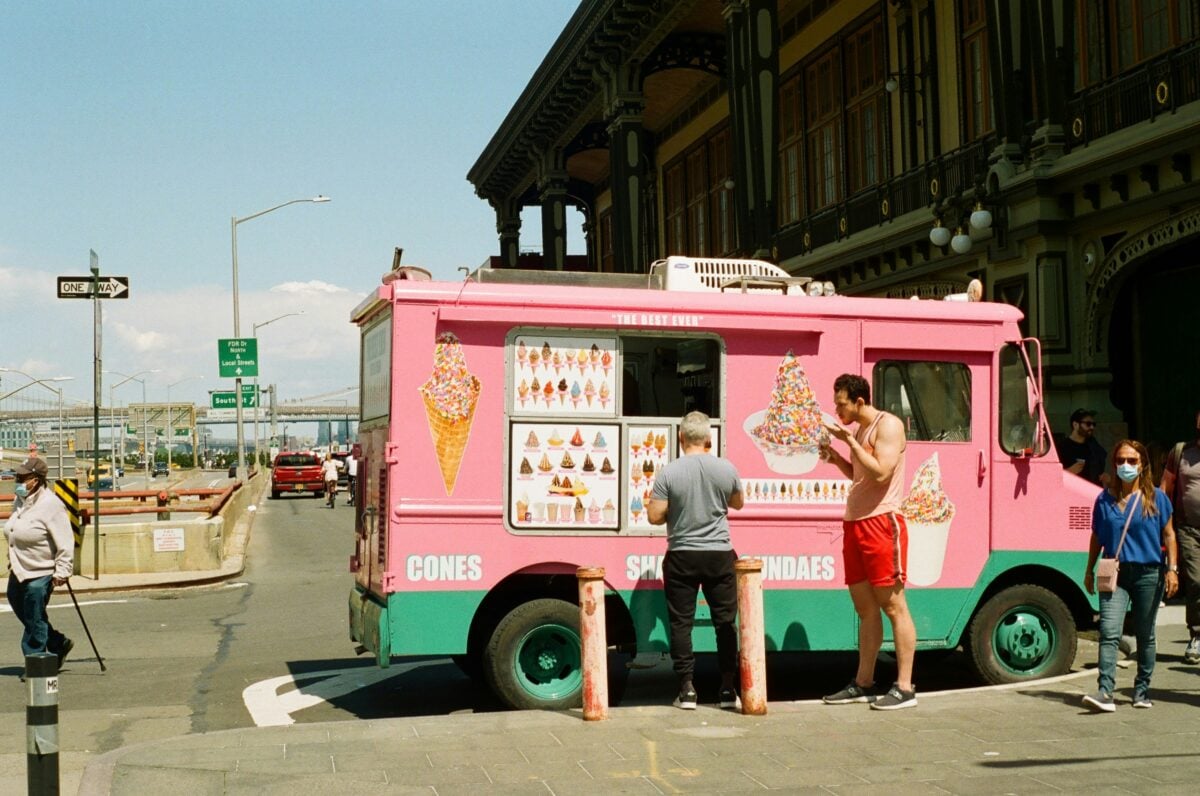
Summer, when you were a child, had a specific texture — the pavement warm through sneaker soles, the particular boredom of a long July afternoon with nowhere to be, the way five dollars felt like enough for everything. The jingle doesn’t just remind you of those things; it functions like a key slid into a lock you forgot was still there, opening a room in your memory that smells faintly of sunscreen and cut grass.
What hits different as an adult isn’t the song — it’s the sudden, involuntary access to a version of time that no longer exists.
The Contrast with Your Current Circumstances
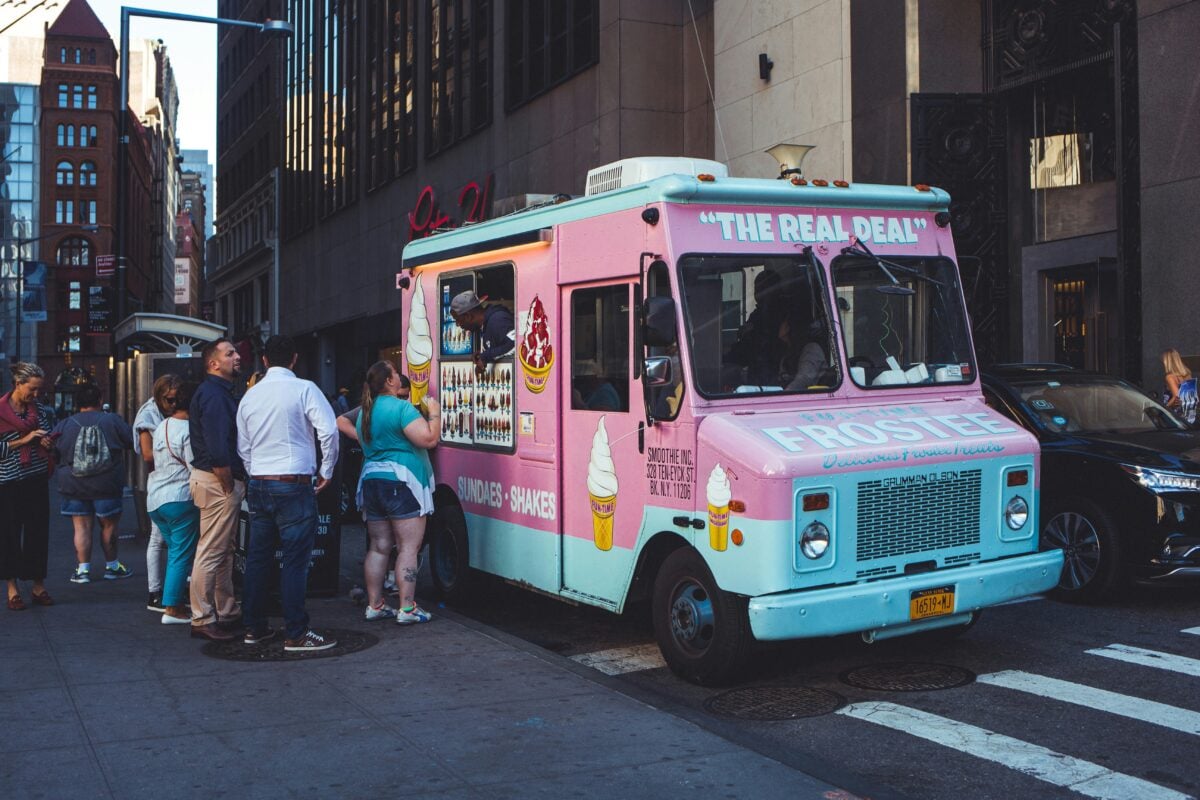
Hearing the jingle as a kid meant one thing: go get money, go outside, go. Hearing it as an adult means something has interrupted whatever obligation you were in the middle of.
The contrast isn’t subtle — it’s a four-note summary of the distance between childhood and adulthood, delivered at moderate volume through a truck speaker. To be fair, few sounds on earth can do that in under three seconds.
The Ice Cream Truck’s Peculiar Staying Power

The ice cream truck, as a delivery mechanism, should probably be obsolete — there are convenience stores on every corner, grocery store freezer sections stocked year-round, and apps that will bring frozen novelties to your door in under an hour. And yet the truck persists, not because it’s the most efficient way to get a Creamsicle but because efficiency was never the point.
What it sells, turns out, has always been the experience of stopping whatever you were doing and deciding that something small and cold and sweet was worth running for.
“Turkey in the Straw” and Its Complicated History
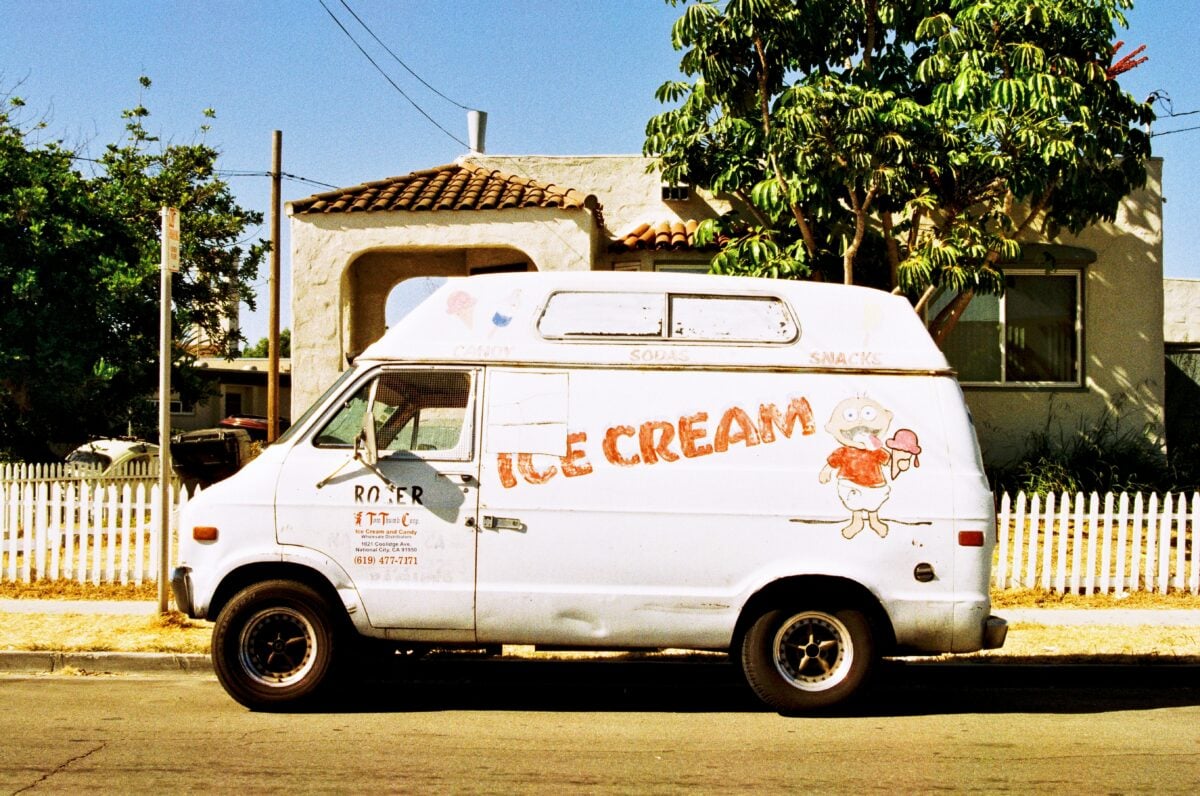
“Turkey in the Straw” — the melody most commonly associated with the American ice cream truck — dates back to at least the early 19th century, adapted from older folk songs brought over by European immigrants and later widely distributed through minstrel shows in the 1820s and 1830s. That history is uncomfortable, and it’s worth knowing: the song carries a racial context that many people have pushed to retire from public use.
Several cities and advocacy groups have formally called for ice cream trucks to move to different music, and a handful of companies have already switched.
Why Adults Don’t Run Toward It Anymore
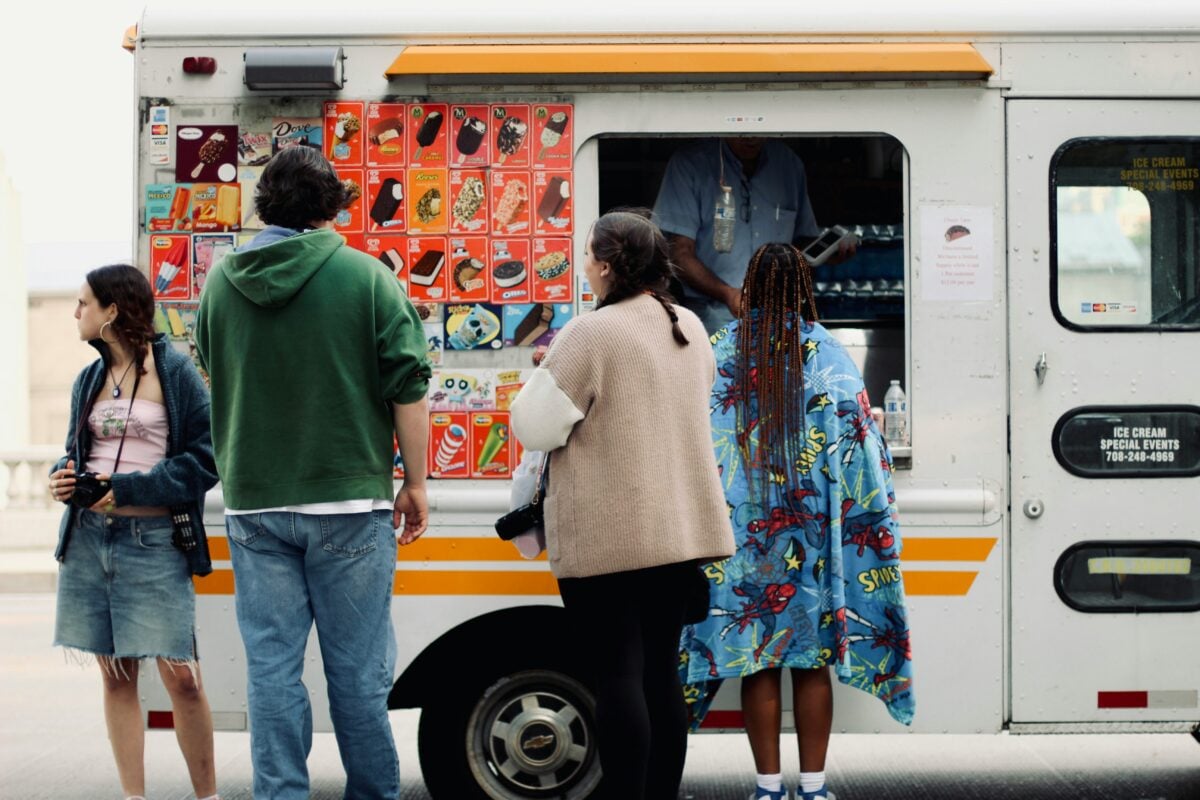
Children run toward the ice cream truck without deliberating. Adults hear it and experience a small internal negotiation involving: do they have cash, is it worth walking outside, whether buying ice cream at 3pm is somehow embarrassing.
That negotiation is the whole story of adulthood compressed into about eight seconds — the instinct arrives intact, and then seventeen layers of self-consciousness descend on top of it like a weighted blanket. The child version of you would find this baffling.
The Role of Repetition in the Jingle’s Power

The jingle loops — that’s essential. It doesn’t play once and stop; it repeats until the truck has passed through the neighborhood completely, which means you hear it several times in succession whether you seek it out or not. Repetition is what burned the melody into you in the first place, and repetition is what keeps reopening the same memory every time it returns.
There’s something almost stubborn about it: the truck isn’t asking for your attention so much as insisting on it.
What It Feels Like If You Have Kids Now

For parents, the ice cream truck jingle operates on two frequencies simultaneously — the adult one (mild wistfulness, a quick internal calculation about sugar before dinner) and the reflected one, watching your own kid hear it for the first time and absolutely lose their mind. That second frequency is strange and specific: you’re watching your own childhood memory form in real time inside someone else. It’s one of those parenting moments that arrives before you’re ready for it and doesn’t announce itself.
The Specific Ice Cream Items You Wanted Then
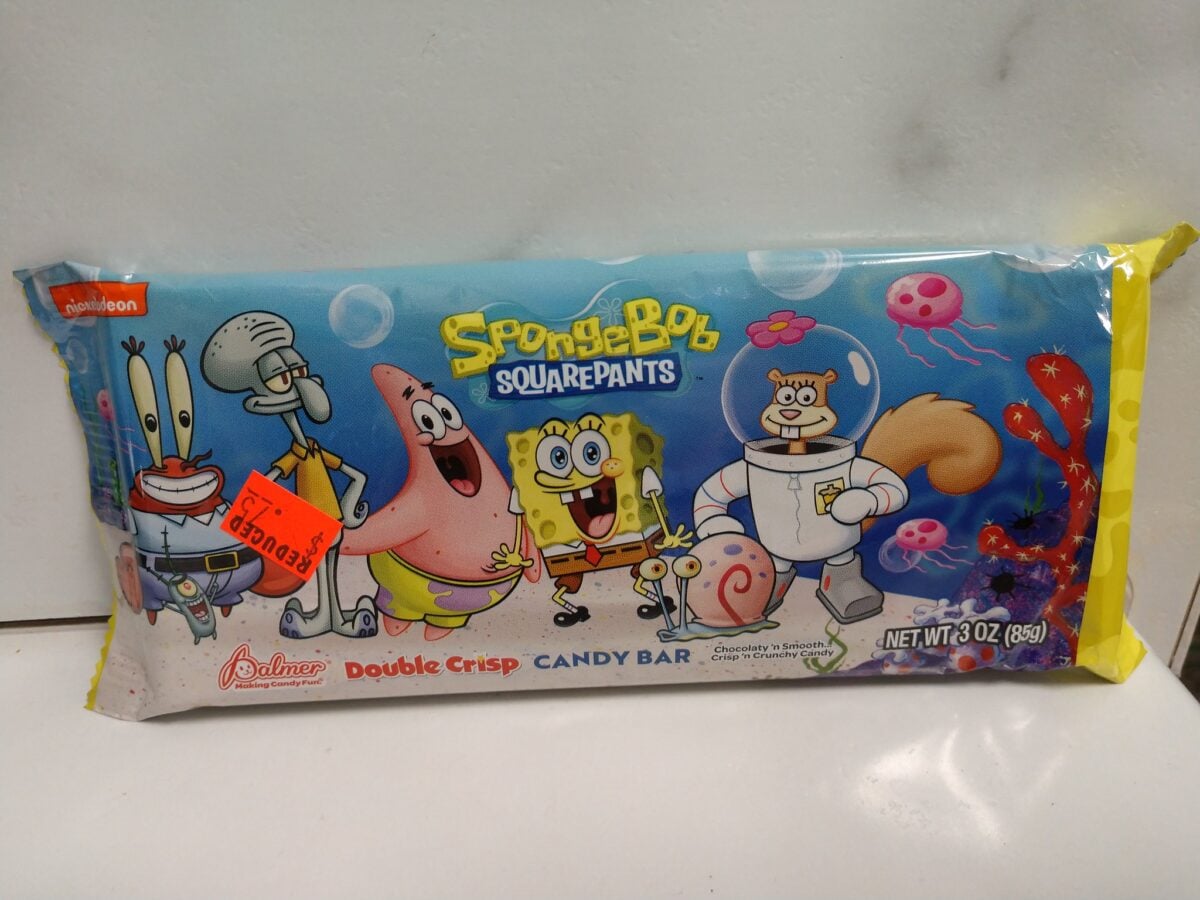
The SpongeBob SquarePants bar with the gumball eyes. The Screwball cup with the gumball at the bottom.
The Rocket Pop with its red, white, and blue layers that stained your teeth for an hour. These weren’t sophisticated choices — they were weapons-grade sugar engineered for maximum visual appeal and zero subtlety — but the specificity with which most adults can recall their preferred truck item is striking.
Memory is indifferent to quality. It just keeps what it keeps.
Ice Cream Trucks as a Geography of Childhood

Ice cream trucks didn’t appear everywhere with equal frequency — they had routes, rhythms, and habits, which meant that whether you heard the jingle often or rarely depended entirely on where you grew up. Kids in dense suburban neighborhoods with long summers heard it constantly; kids in rural areas or in cities with less permissive street vending laws might have heard it only a handful of times.
So the jingle carries a geography inside it: not just a season but a specific kind of childhood, with a specific kind of street outside a specific kind of front door.
Why the Sound Carries So Far

The music box mechanism — or in modern trucks, a digitized version of the same sound — produces tones in a frequency range that the human ear is particularly sensitive to, which is part of why it feels so intrusive in the best possible way. High-frequency sounds travel farther and remain intelligible even over ambient summer noise: lawnmowers, other kids, sprinklers.
The fact that the jingle can reach you from several blocks away isn’t an accident of cheap equipment — it’s acoustic strategy, and it works the same way on you at forty as it did at seven.
The Melancholy Inside the Cheerfulness
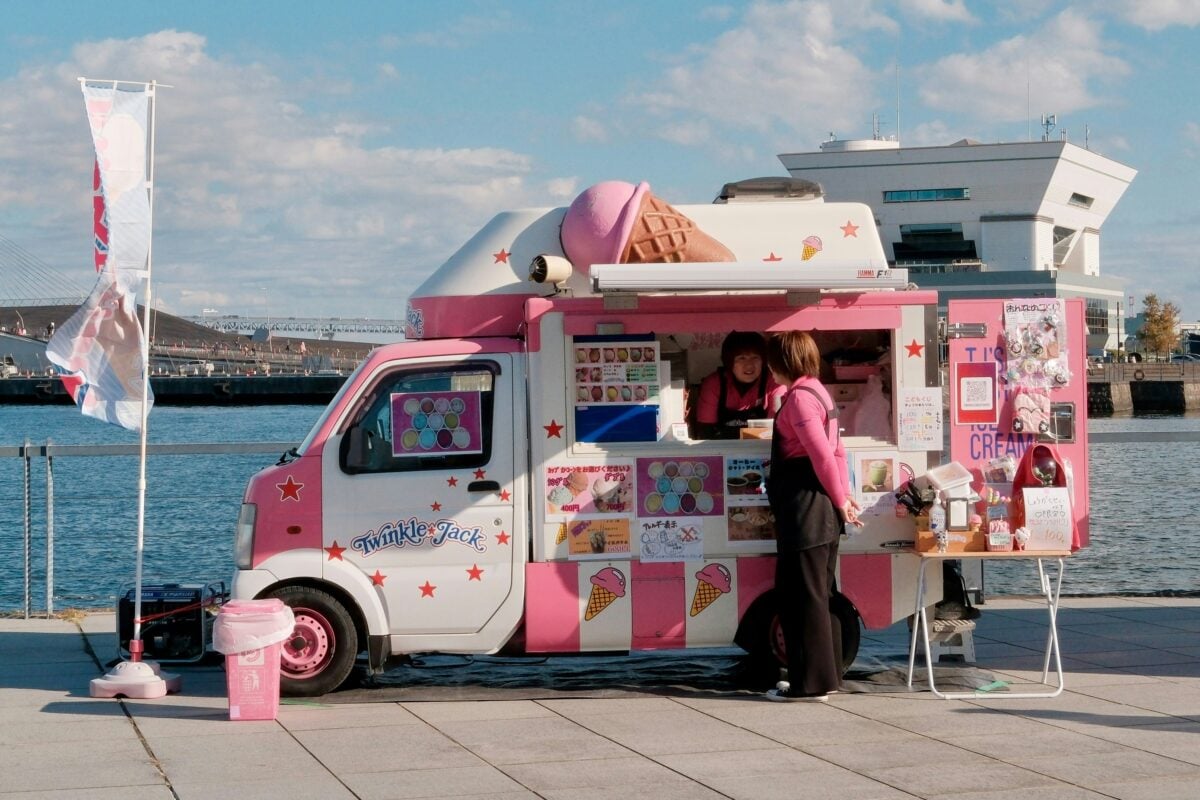
The jingle is written in a major key, bouncy and unambiguous in its cheerfulness — and yet, as an adult, there’s something faintly melancholy about it that children simply don’t hear. It marks the season.
It belongs to summer in a way that makes it a small announcement of time passing, which is not a thought that occurs to a seven-year-old sprinting down the driveway with crumpled dollar bills. The same melody that signals pure joy when you’re young begins to signal something more complicated once you’re old enough to understand that summers are finite.
The Truck Driver’s Perspective
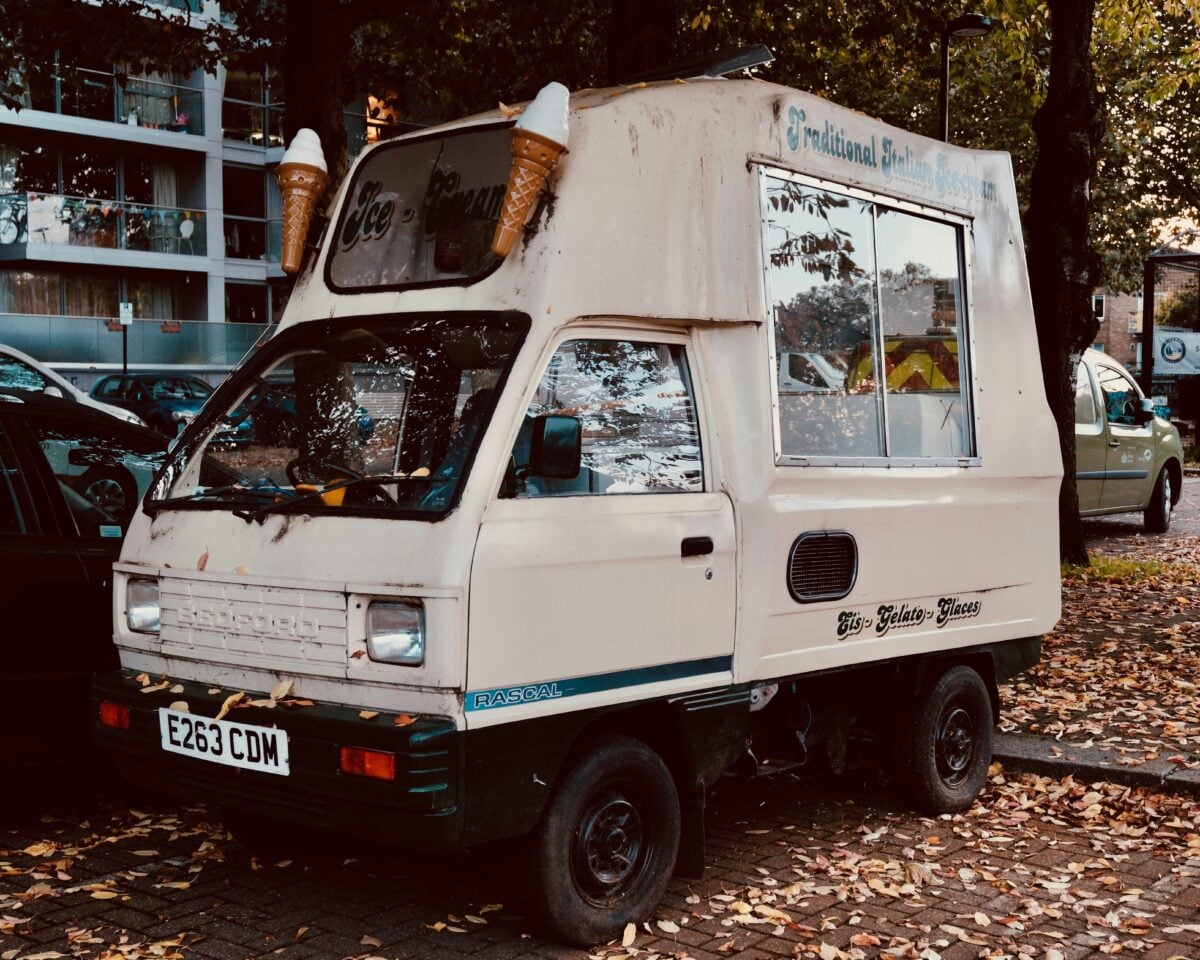
Behind every ice cream truck jingle is someone who has listened to that loop for eight to twelve hours a day for an entire summer season, which is a form of endurance that doesn’t get nearly enough acknowledgement. Ice cream truck drivers navigate tight residential streets, handle cash transactions through a small window, and keep a mental map of which neighborhoods move product and which ones don’t — all while the same 30-second musical loop plays on repeat.
The jingle is magic for everyone except the person closest to it.
How It Sounds at Dusk Versus Midday
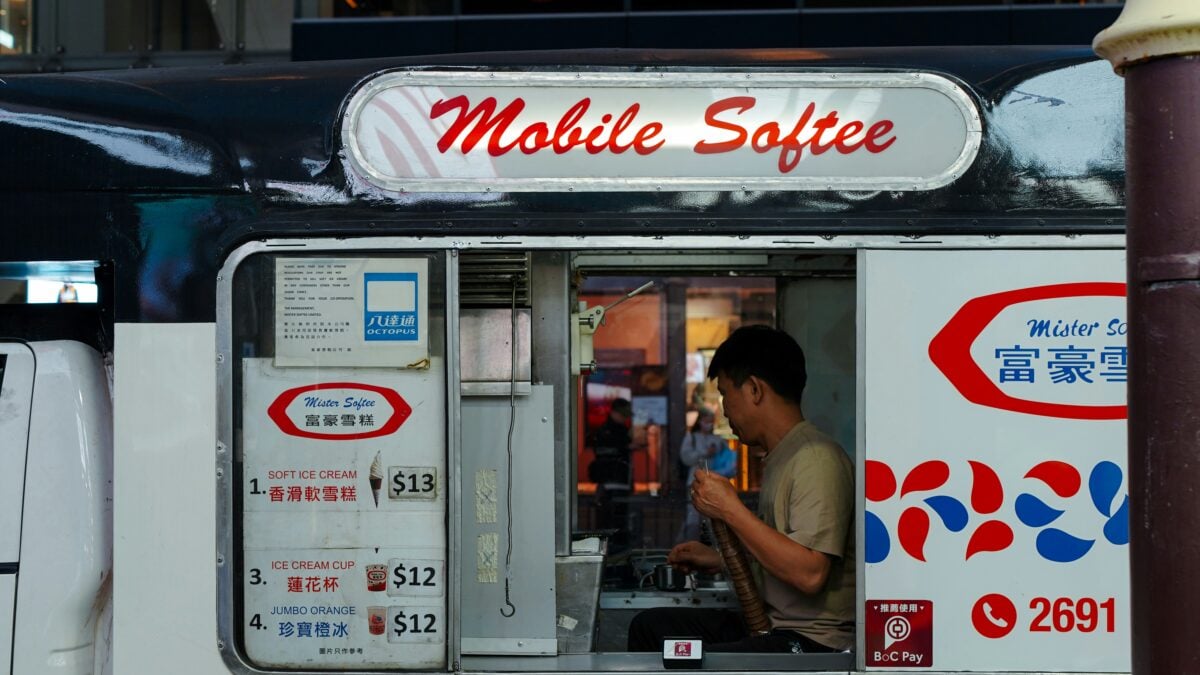
The same jingle sounds different depending on when you hear it. At noon on a Saturday in July, it’s a pure, uncomplicated invitation.
At dusk, when the light goes orange and the air cools slightly and you can hear the truck from somewhere down the block playing its loop into the quiet, it becomes something else — not sad exactly, but heavier, the way a familiar song sounds after something in your life has changed. Time of day is doing something to the signal, filtering it through the specific emotional weather of the moment.
The Brief Window When the Jingle Works on Everyone
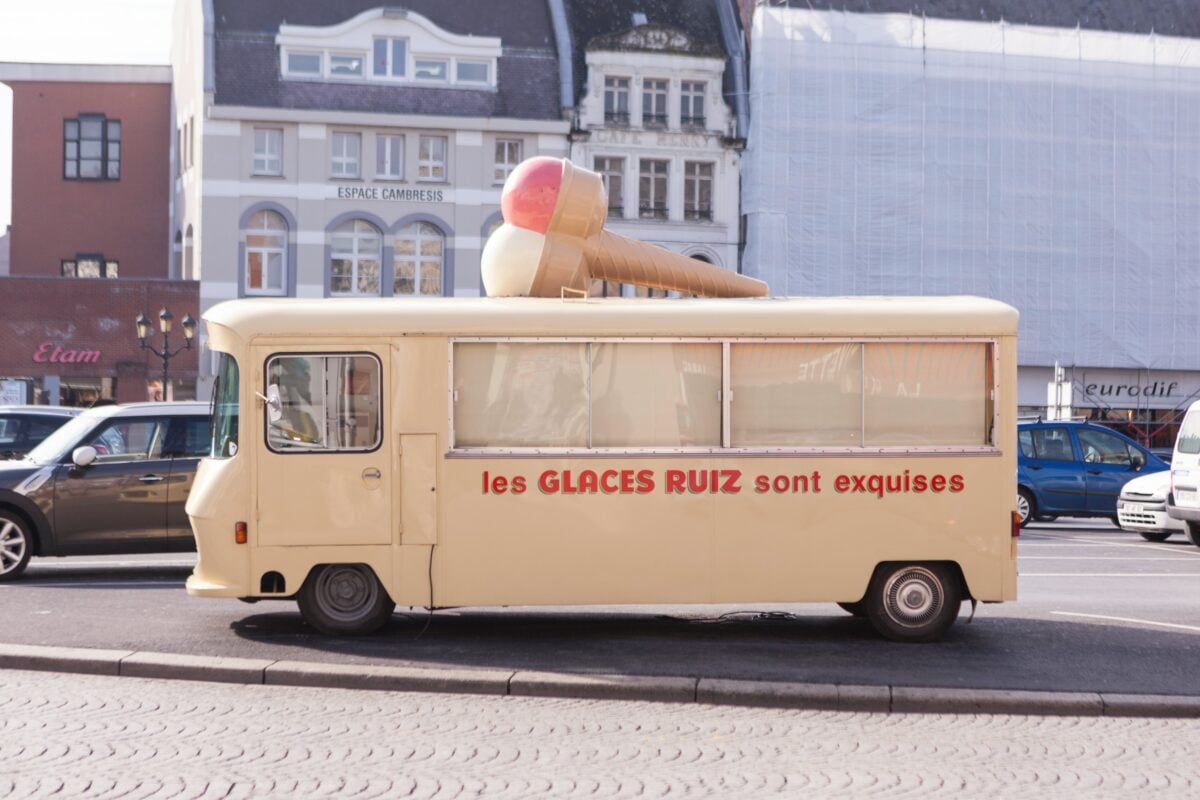
For about three seconds after the jingle first registers, every adult is a child again — no qualifications, no caveats. The conditioning is that complete, and the sound is that specific to a particular era of life.
And then the adult mind reasserts itself, which is probably necessary for the continuation of society but is not, in that moment, welcome.
When the Jingle Doesn’t Hit the Same Way

Not everyone carries warmth toward the ice cream truck. For kids who grew up without the spare change to chase it down, the jingle could land as exclusion rather than invitation — a cheerful announcement of something just out of reach.
The same melody that functions as pure nostalgia for some adults carries a different residue for others, and the feeling it triggers depends entirely on which version of the story you lived. Memory is like that: the same input, radically different output.
The Jingle in Pop Culture and Horror
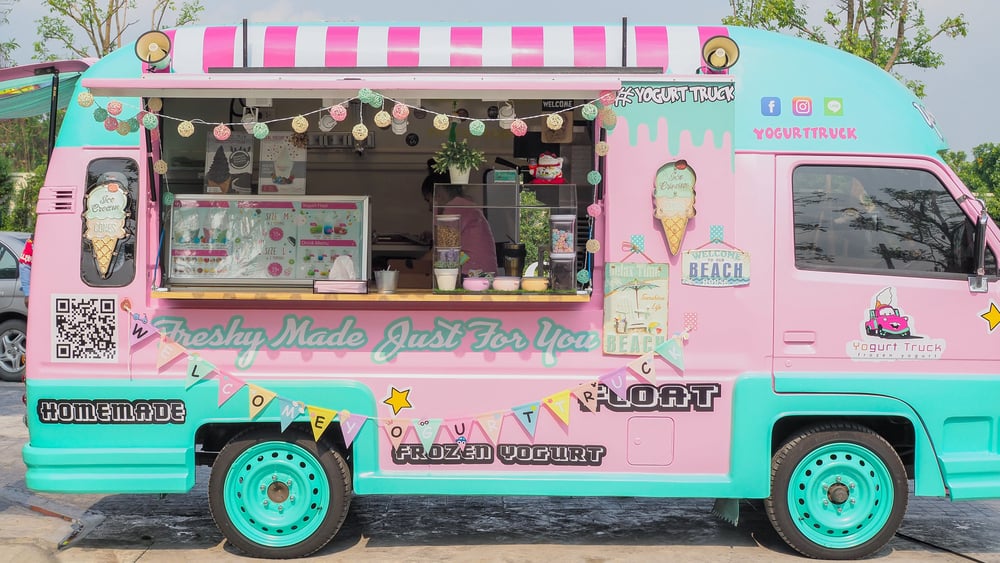
Horror filmmakers and unsettling storytellers have long understood that the ice cream truck jingle is one of the most reliable tools for manufacturing dread. Remove it from its context — play it at night, slow it down slightly, run it under the wrong kind of scene — and the same melody that signals joy becomes something genuinely disturbing.
That’s not an accident of genre convention; it’s a recognition that the jingle’s power comes from its deep emotional charge, and deep emotional charges are neutral. They amplify whatever surrounds them.
Why It’s Louder on the First Warm Day of the Year

The first time you hear the ice cream truck each summer, it hits harder than any subsequent hearing — not because the jingle has changed, but because you forgot it was coming. The return of the truck is one of the more honest signals that winter has finally released its grip, a small seasonal marker that doesn’t appear on any calendar.
You hear it and something in your body registers: summer is structurally possible again.
What You Would Have Bought Today
— Photo by fotografamardelplata
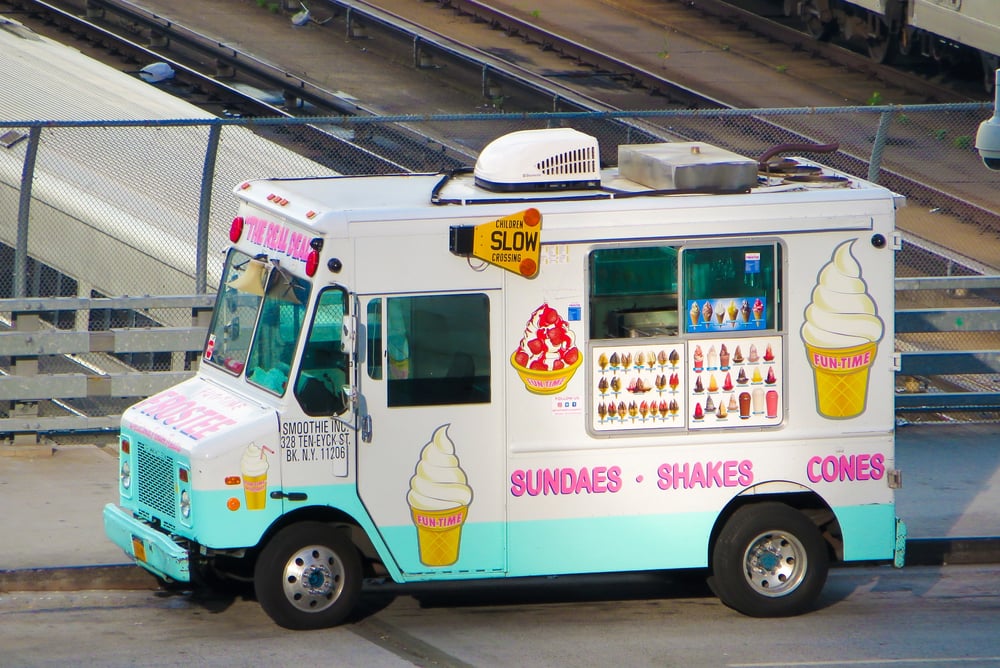
Part of the strange emotional texture of hearing the jingle as an adult is the involuntary mental movement toward the truck’s menu — not what you’d buy now, but what you would have bought then, with the specific certainty of a child who has thought about this exact decision many times. The Creamsicle.
The Chipwich. The Missile Pop. These decisions feel more available than most, retrieved with an ease that more recent memories don’t match, which probably says something worth sitting with about how the brain files experience.
The Jingle as a Shared Reference
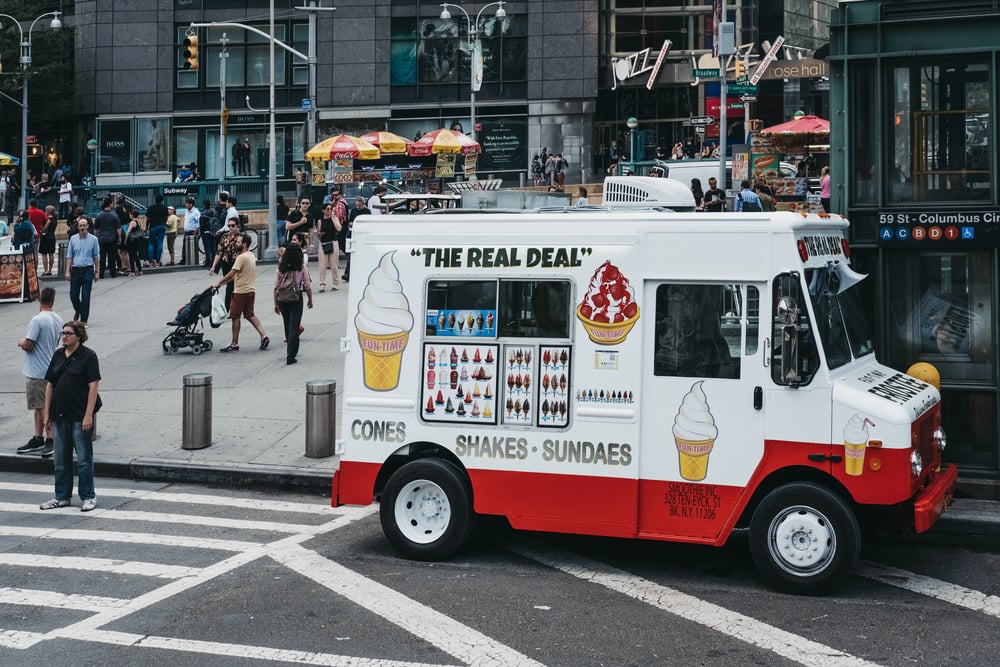
The ice cream truck jingle functions as shorthand in a way that few other sounds manage — mention it in a room full of adults who grew up in American suburbs and watch what happens. Faces shift. People finish each other’s sentences about which items they always got, which neighborhoods had the best trucks, whether the truck ever came down their specific street or always seemed to stop just short of it.
It’s a reliable entry point into collective memory, a melody that belongs to a whole generation of people who never formally agreed that it would.
How the Jingle Compares to Other Nostalgia Triggers
— Photo by joasouza
The smell of sunscreen, the sound of a screen door, the specific visual of a Slip ‘N Slide on a backyard lawn — these are all potent nostalgia triggers with well-documented power. But most of them are passive: they find you when circumstances align.
The ice cream truck jingle is mobile, it announces itself from a distance, and it comes looking for you. It doesn’t wait for you to encounter it; it sends the melody ahead of itself like a scout, which makes the emotional ambush feel less like coincidence and more like the past actively refusing to stay where you put it.
The Sound the Truck Makes as It Pulls Away
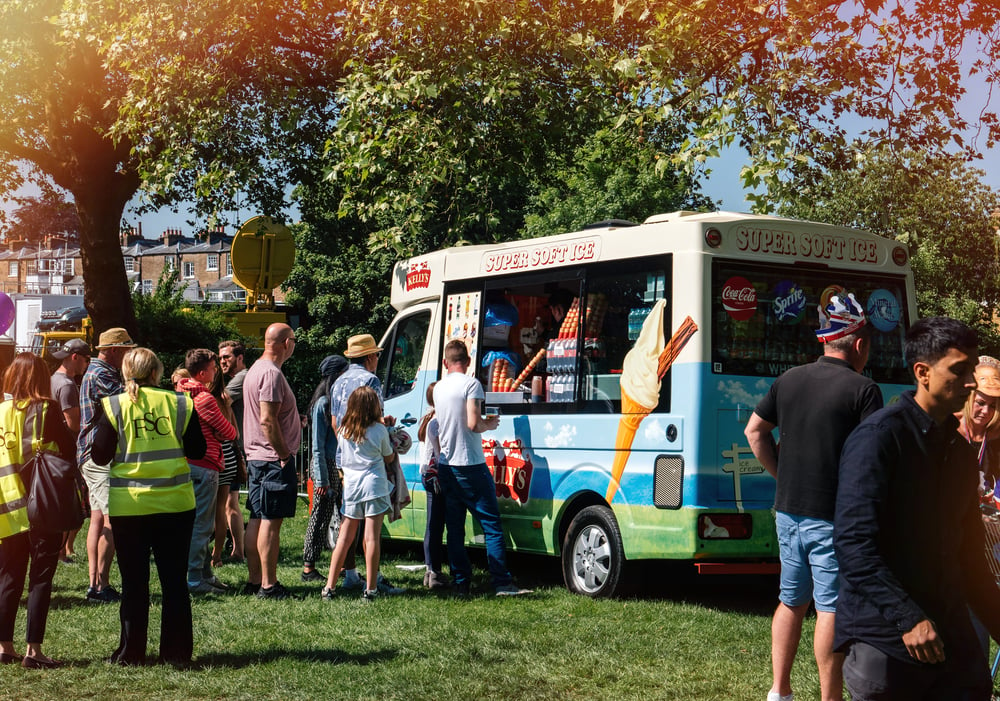
There’s a specific version of the jingle that you only hear as an adult, which is the one that’s already leaving. The truck has rounded the corner, the melody is doppler-shifting slightly as it moves away, and by the time you’ve registered what it was, it’s already down the block and fading.
That version — already leaving, already at a distance — is the one that carries the most weight, and it’s almost never the version children hear, because children are already outside and already running.
The Sound That Time Leaves Behind
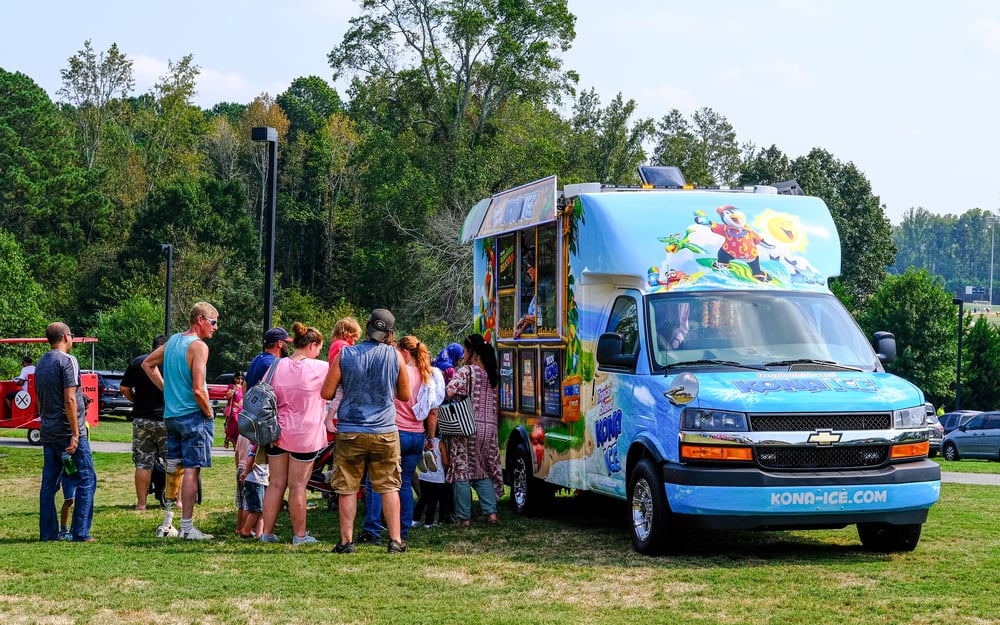
Some sounds accumulate meaning the longer they live in the world — they gather decades of association like barnacles until the sound itself becomes almost secondary to everything it carries. The ice cream truck jingle is that kind of sound now, at least for anyone who grew up hearing it through an open window on a summer afternoon.
It’s not just a melody anymore. It’s a record of every version of yourself that summer has held — the one who ran, the one who watched it go, the one who heard it from a kitchen table and felt, for two seconds, like none of the years had happened at all.
More from Go2Tutors!

- The Romanov Crown Jewels and Their Tragic Fate
- 13 Historical Mysteries That Science Still Can’t Solve
- Famous Hoaxes That Fooled the World for Years
- 15 Child Stars with Tragic Adult Lives
- 16 Famous Jewelry Pieces in History
Like Go2Tutors’s content? Follow us on MSN.



