27 Toy Soldiers and Army Men Worth Real Money
Toy soldiers were the most democratic toy of the twentieth century, sold in boxed regiments for the well-off and by the bagful at the dime store for everyone else. Most were lined up on a carpet, knocked over, lost in the garden, and melted or thrown away, which is why the survivors have become a serious collecting field with its own auction houses.
Value depends on maker, era, rarity, and above all condition and completeness, since a boxed set with every figure is worth many times a loose handful. The entries below span lead, composition, rubber, and plastic, and the prices range from a few dollars a figure to five figures for a set.
Britains Set 72 Life Guards Past and Present
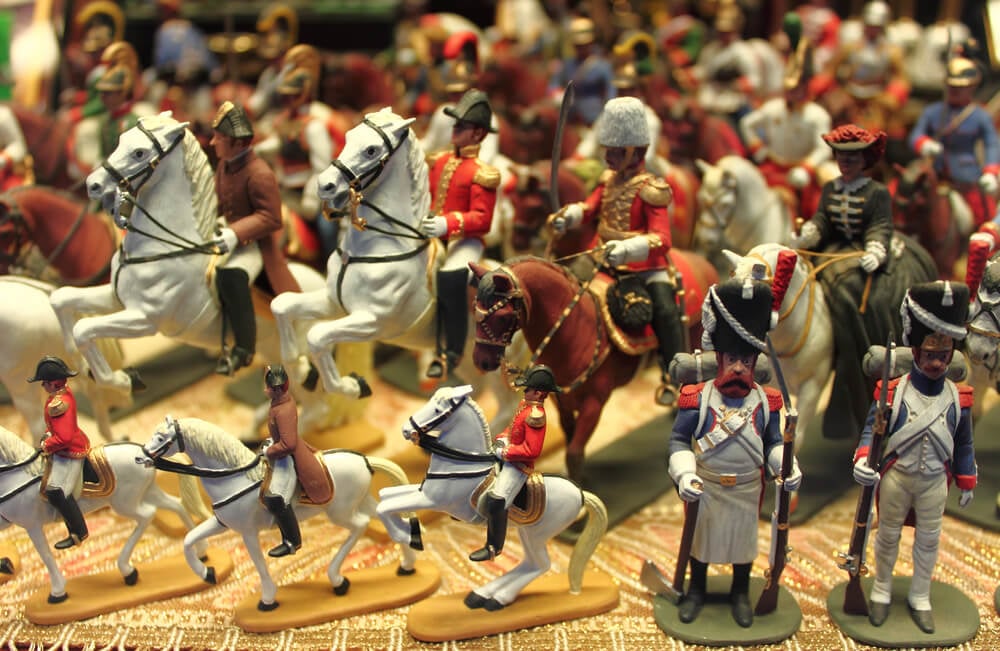
Britains made this set in 1897 to mark Queen Victoria’s Diamond Jubilee, pairing Life Guards in period uniforms with their modern counterparts in a specially marked box. It is regarded as the top set in the hobby, and a pristine boxed example sold at Old Toy Soldier Auctions in Pennsylvania for $15,600.
Any first-version Britains set from the 1890s is a major find, and this one is the summit.
Britains Hollowcast Figures
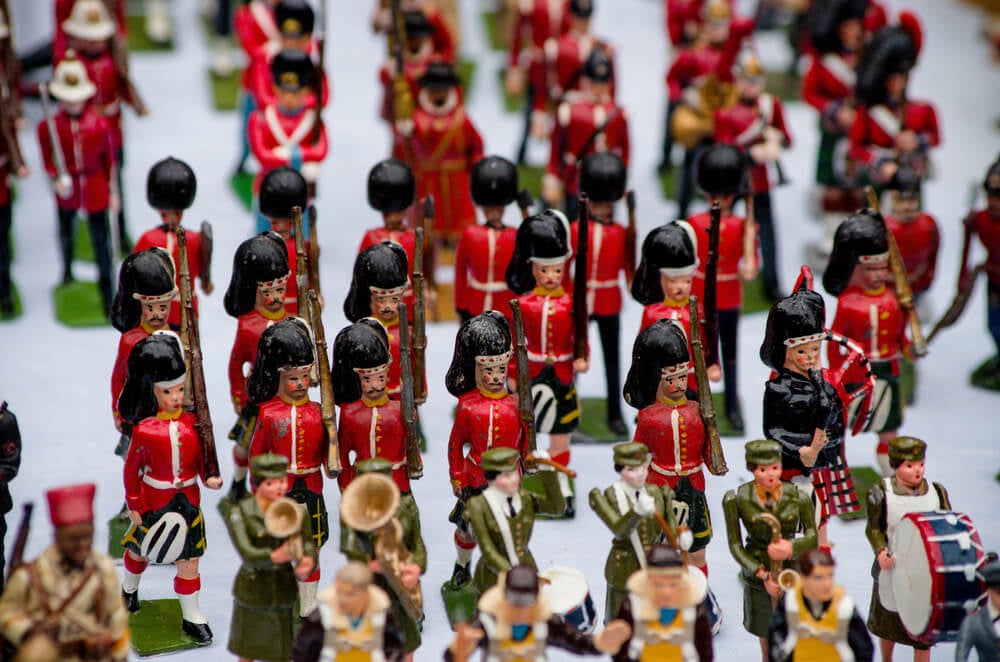
William Britain perfected the hollowcast method in 1893, pouring lead alloy into a mold and tipping out the excess to leave a light, cheap figure, and the company dominated the market until hollowcast production ended in 1966. Boxed sets from before the First World War are the most valuable, and the company’s accuracy in uniforms and equipment gave it credibility with adult collectors from the beginning.
Condition and the original box matter more than almost any other factor.
Britains Deetail
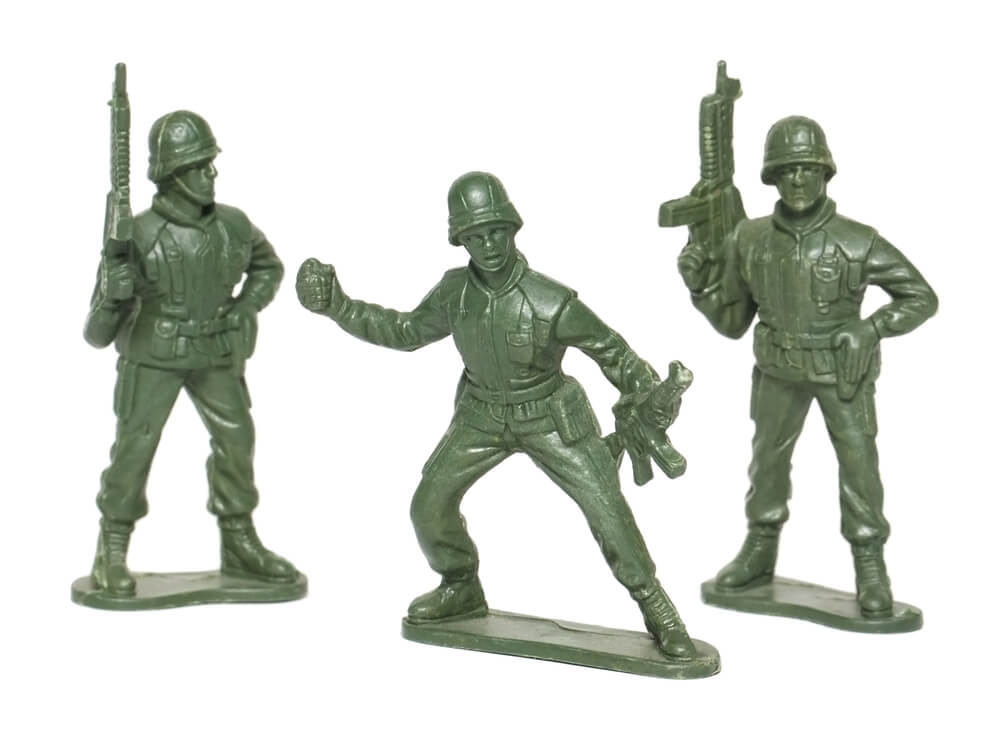
Britains Deetail figures, introduced in the 1970s, were plastic figures on metal bases with crisp sculpting and hand-painted detail, covering the Second World War, the American West, knights, and more. The line was a bestseller and remained in production for decades.
Early boxed sets and the harder-to-find subjects are collectible, while loose common figures remain affordable.
Britains Herald Plastics
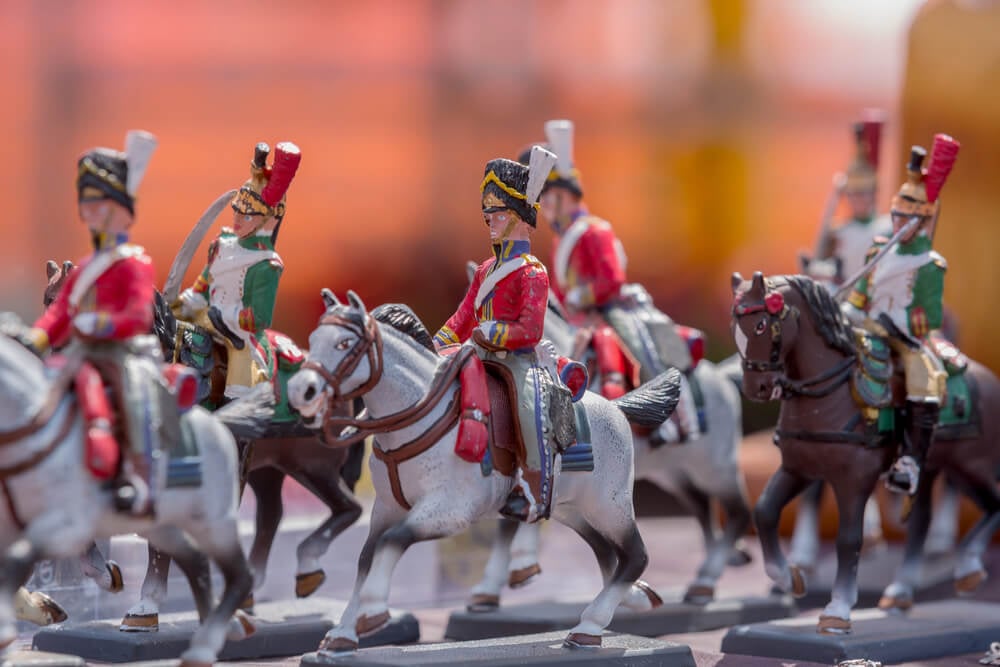
Herald was the plastic line Britains acquired in the 1950s, producing hand-painted figures of guardsmen, cowboys, and Highlanders that bridged the gap between lead and modern plastic. The early English-made Herald figures are preferred over later production from Hong Kong.
Boxed sets from the 1950s and early 1960s bring the most.
Marx Fort Apache Playset
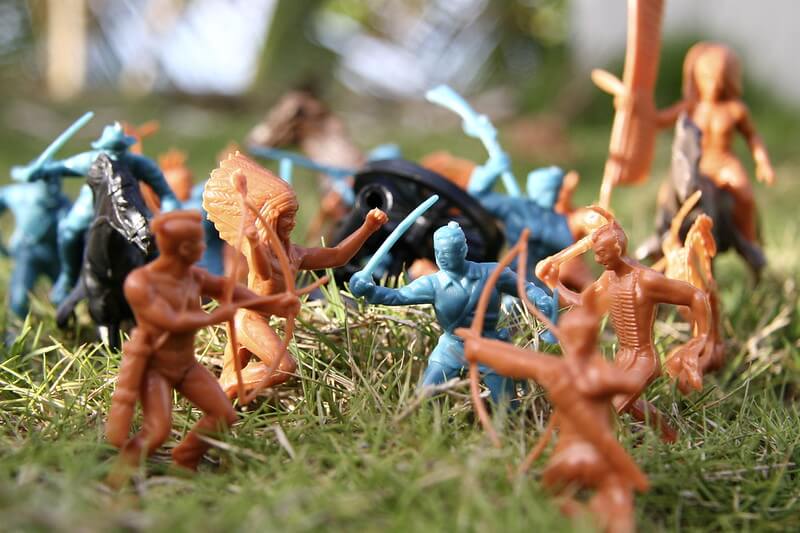
Marx playsets of the 1950s and 1960s came in a flat box with a tin fort, plastic figures, horses, and accessories, and Fort Apache was the best seller. The early versions with the lithographed tin fort and the full complement of figures are the valuable ones.
Complete boxed sets with the instruction sheet and all the small accessories have sold for well into the hundreds.
Marx Battleground Playset
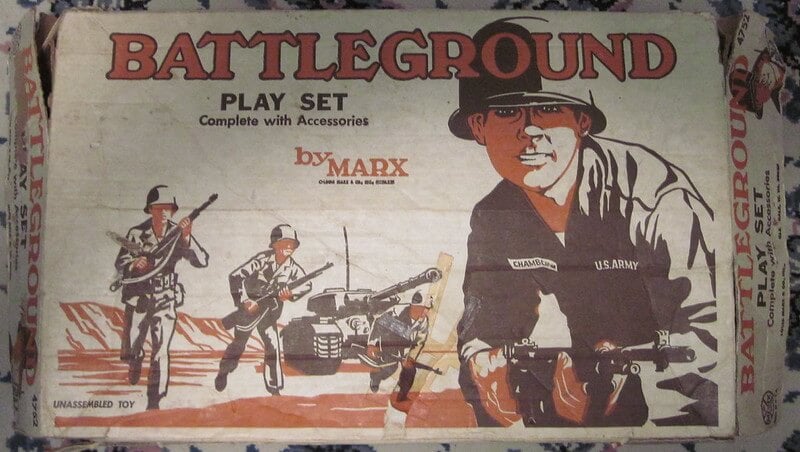
Battleground was the Marx Second World War playset, with American and German soldiers, tanks, a bombed building, and terrain pieces. The sets were revised repeatedly, and collectors track the versions by the box number and contents.
A complete early set with the metal vehicles and all the figures is a strong seller.
Marx 54mm Army Men
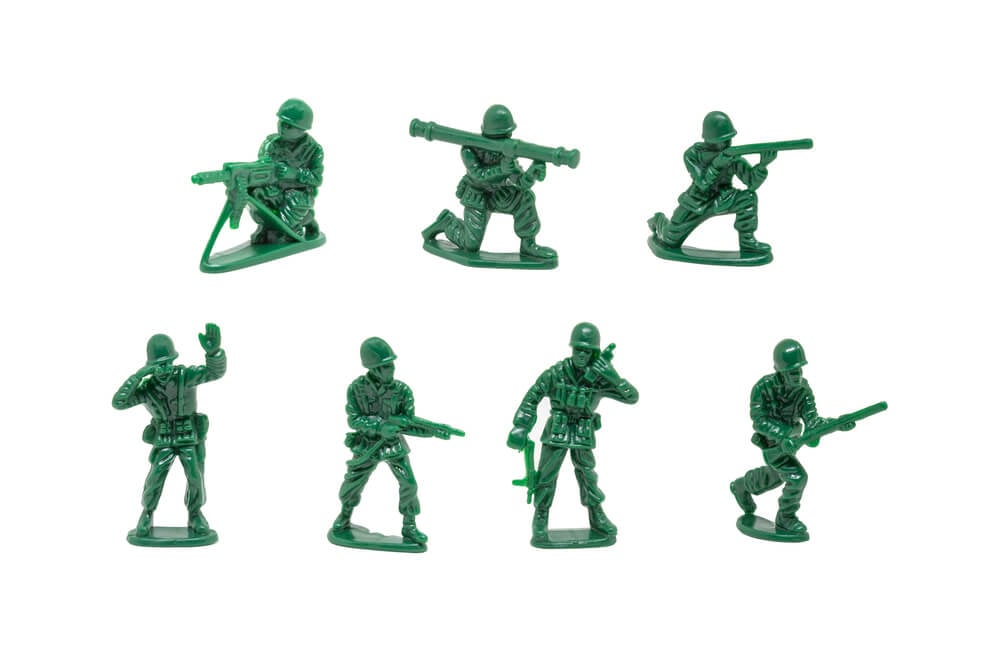
Marx produced the classic green plastic army men of the 1950s and 1960s in a range of poses that became the template for every imitator. The early Marx figures are better sculpted and more detailed than the knock-offs that followed.
Bagged or boxed sets with the original header card bring the most, while loose figures are collected by pose.
Marx Blue and Gray
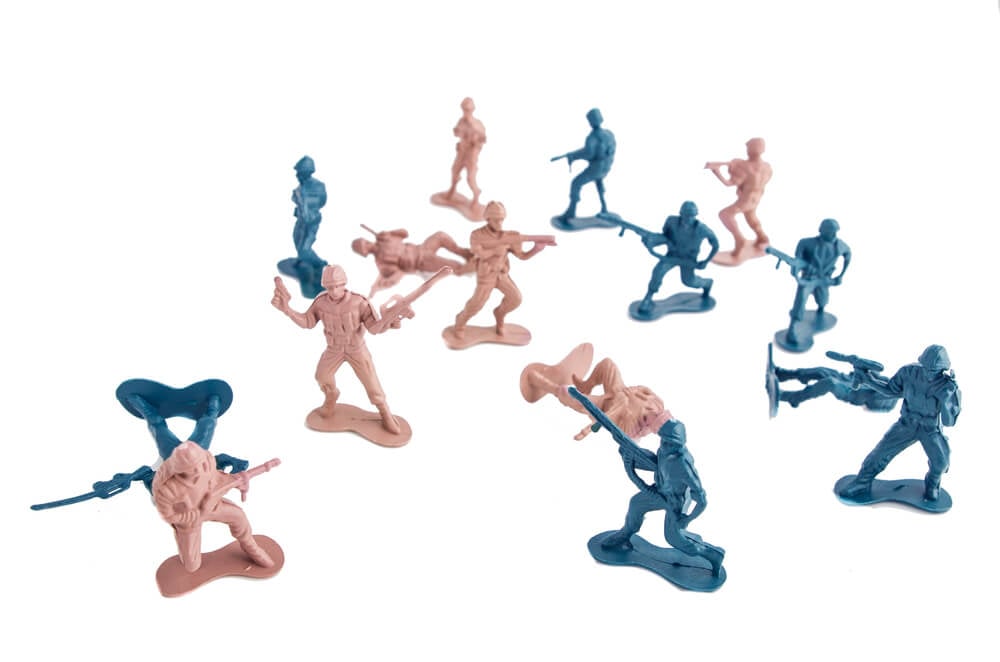
The Marx Blue and Gray playset recreated the Civil War with Union and Confederate figures, cannons, a farmhouse, and terrain, and it was reissued in several versions through the 1960s. The Centennial Edition of the early 1960s is the one collectors want most.
Complete boxed sets with the tin buildings and all the small pieces are scarce.
MPC Ring-Hand Soldiers
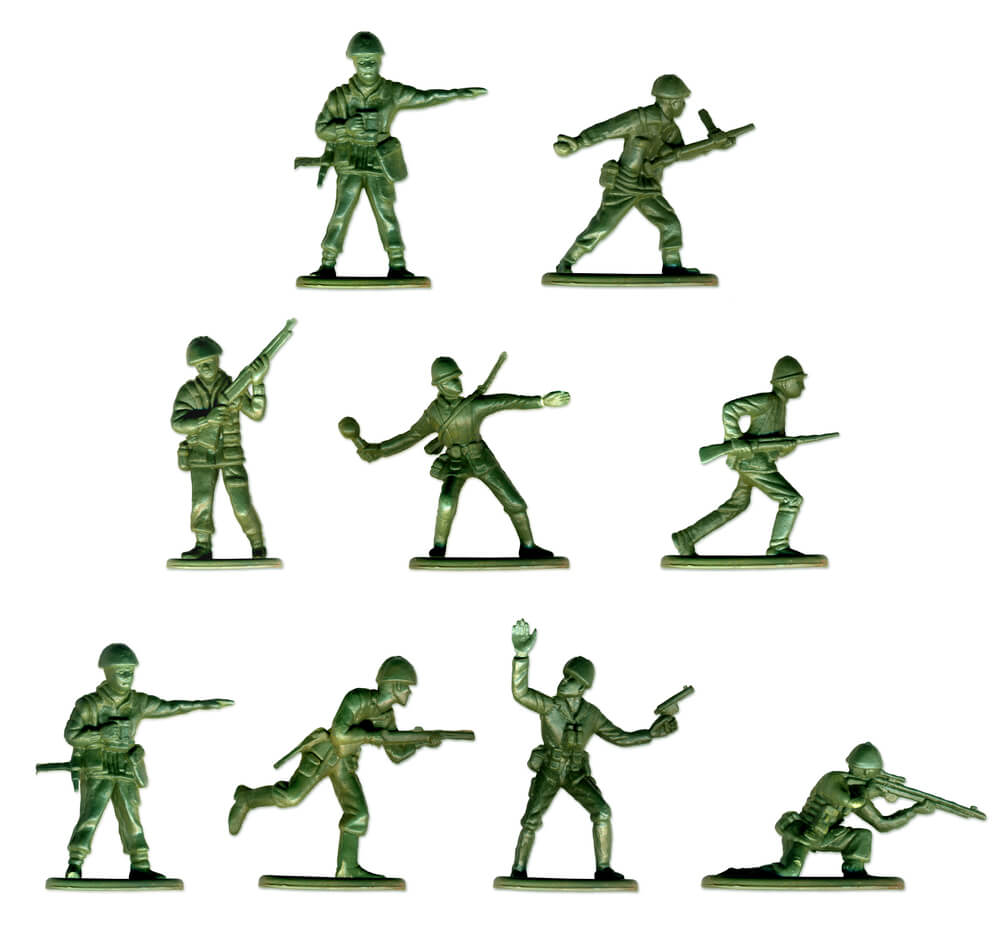
MPC made soldiers with ring-shaped hands that could hold separate plastic weapons and accessories, which made them more versatile than the fixed-pose Marx figures. The figures were sold in bags with a variety of weapons and gear.
Complete sets with the accessories are collectible, and the unusual colors bring more.
Tim-Mee Toys Army Men
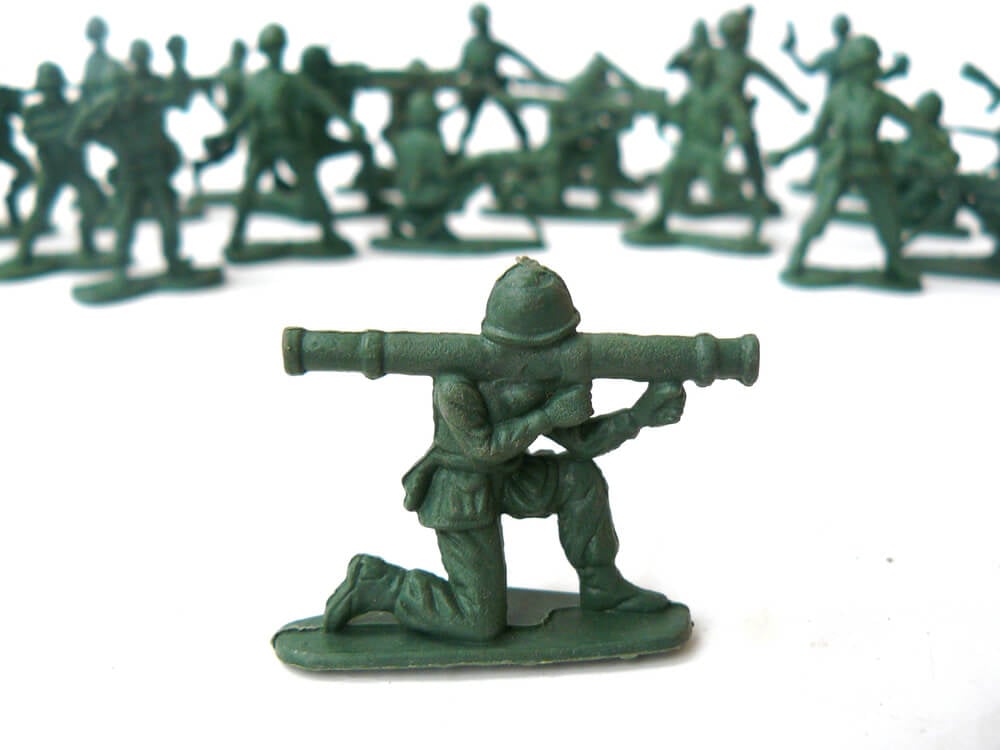
Tim-Mee made army men in Illinois from the 1950s onward, including the distinctive figures with the raised rifle and the kneeling bazooka man that filled countless toy boxes. The company’s figures were sold in bags and in playsets with vehicles.
Early American-made Tim-Mee figures and the original bagged sets are collectible, and the brand has a loyal following.
Lido and Ajax Army Men
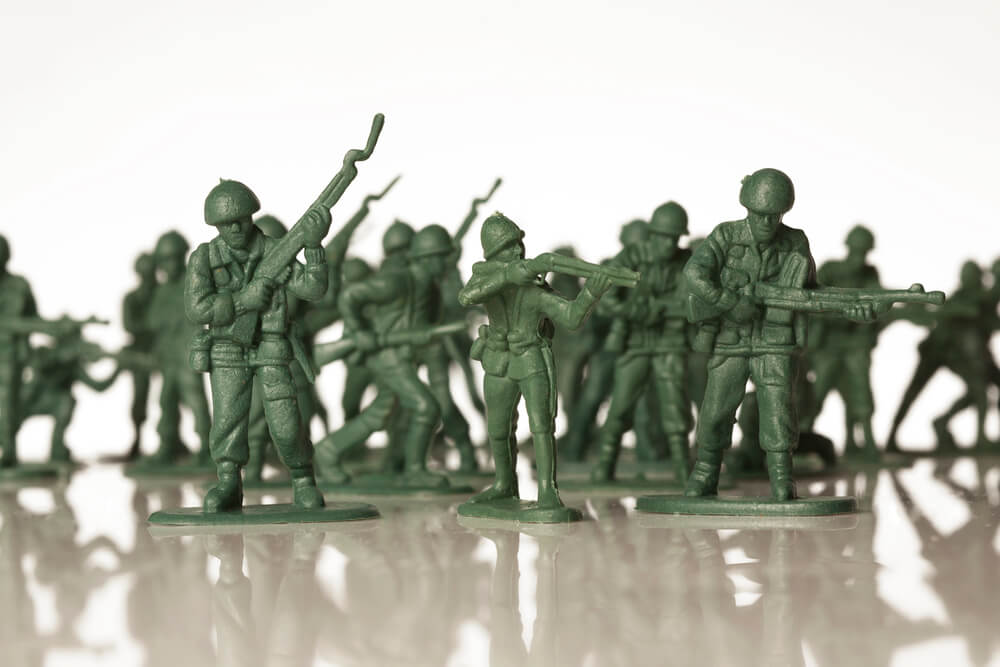
Lido and Ajax were two of the many American makers of cheap plastic soldiers in the 1950s, sold by the bagful at dime stores and in cereal promotions. The figures were often copied from Marx and Britains poses.
Original bagged sets with header cards are the collectible form, and the scarcer poses have found a market.
Auburn Rubber Soldiers
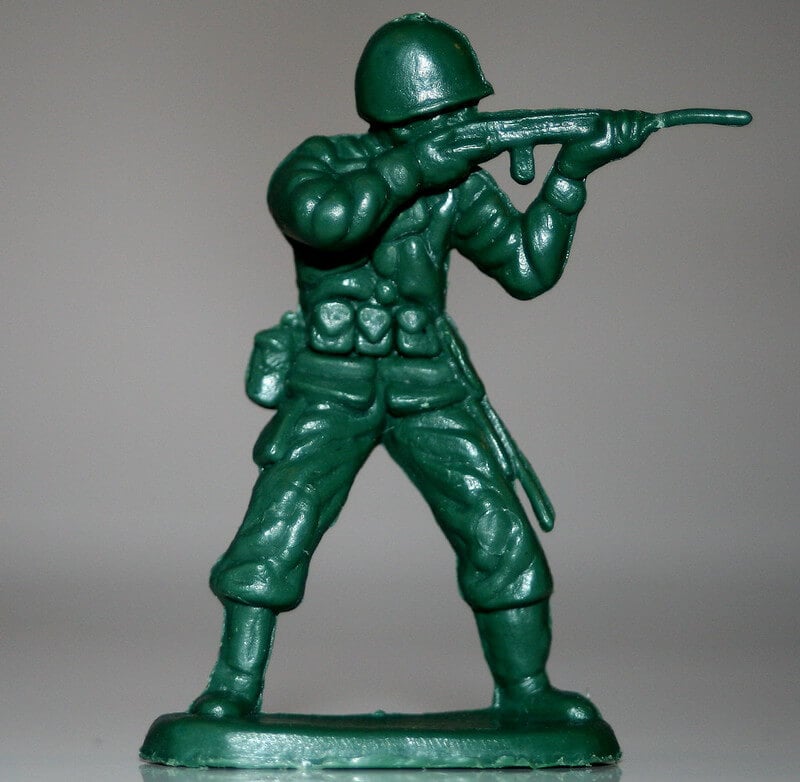
Auburn Rubber of Indiana made soldiers and civilians in molded rubber from the 1930s through the 1950s, in bright paint on a flexible body that survived rough play. The rubber hardens and cracks with age, so supple examples with intact paint are prized.
The prewar figures and the rarer poses bring the most.
Barclay Dimestore Soldiers
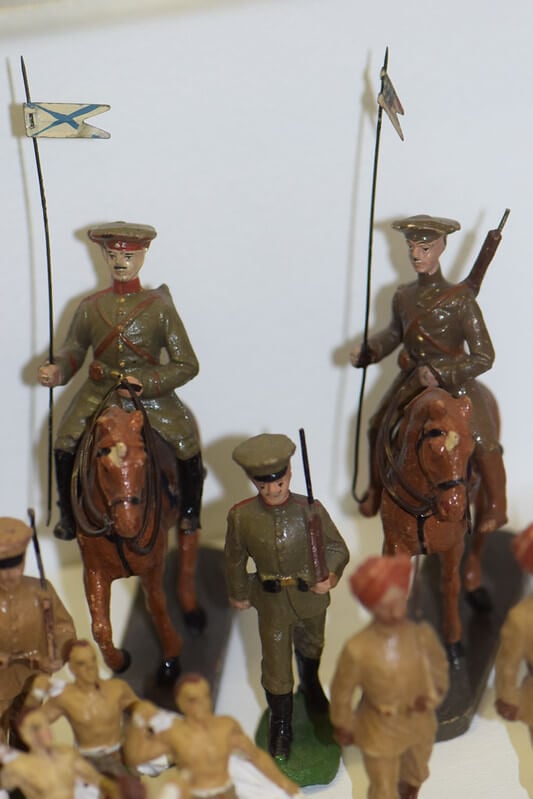
Barclay was the largest American maker of hollowcast lead dimestore soldiers in the 1930s and 1940s, sold loose for a nickel at Woolworth’s and Kresge’s. The figures with the removable tin helmets, known as podfoot figures, are a collecting specialty.
Clean examples with original paint are affordable, and the rare poses and civilian figures bring more.
Manoil Dimestore Soldiers
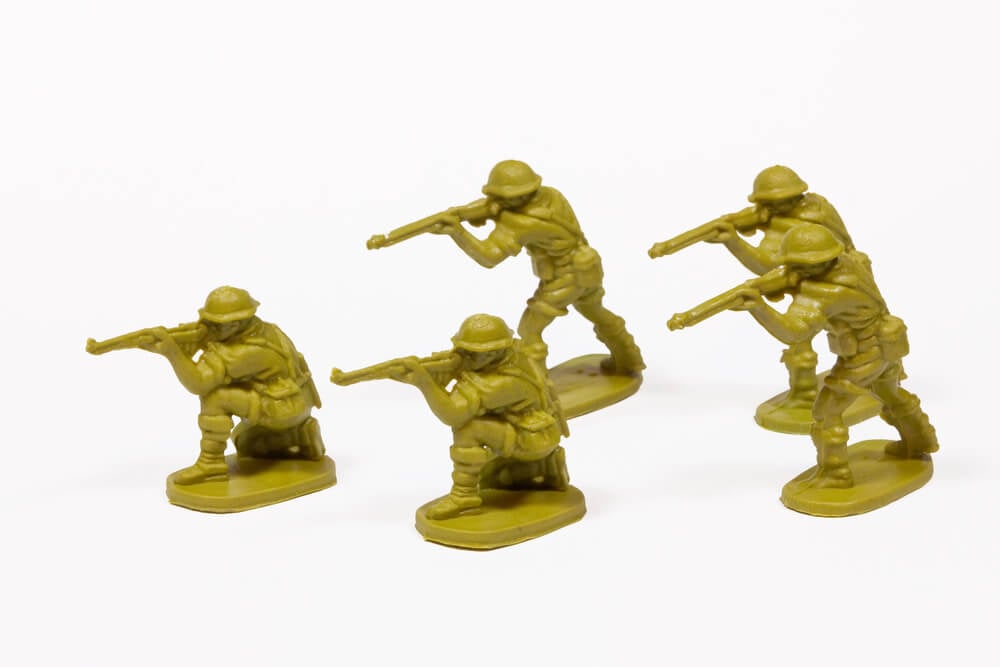
Manoil was Barclay’s main rival, and its dimestore soldiers of the 1930s and 1940s are recognizable by their stylized, slightly cartoonish sculpting. The company also made a line of civilian “Happy Farm” figures that are collected alongside the soldiers.
Original paint and the scarcer poses are what matter.
Grey Iron Cast Iron Soldiers
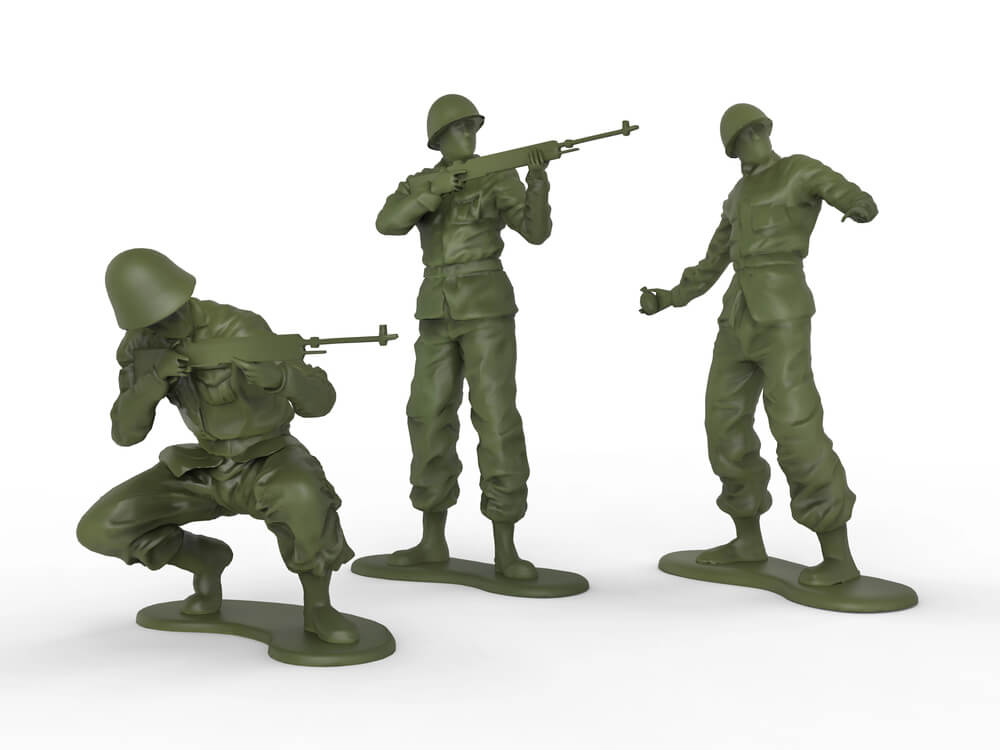
Grey Iron of Pennsylvania made cast iron soldiers in the 1930s, heavier and more durable than the hollowcast lead of its competitors. The figures were painted in simple colors and sold at dime stores.
They are scarcer than Barclay and Manoil, and examples with good paint are sought by dimestore collectors.
Heyde Solid Lead Figures
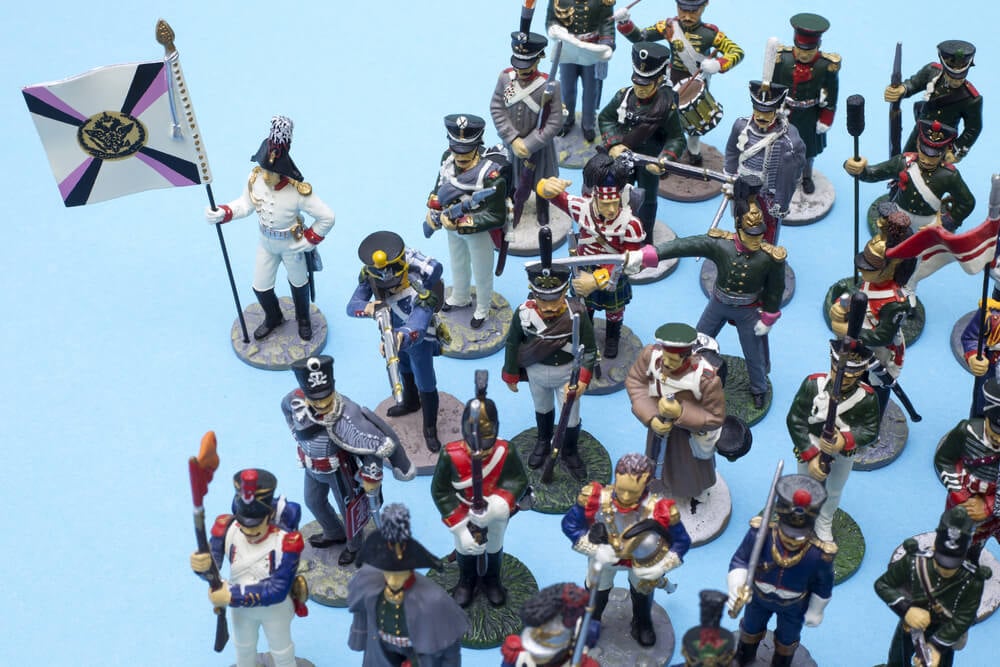
Georg Heyde of Dresden produced solid-cast lead figures from the 1870s until the factory was destroyed in 1945, covering armies, civilians, and elaborate sets like circuses and Roman triumphs. The sets were sold in wooden boxes and were expensive when new.
Complete Heyde sets in their boxes are among the most valuable toy soldiers in the world.
Elastolin Composition Figures
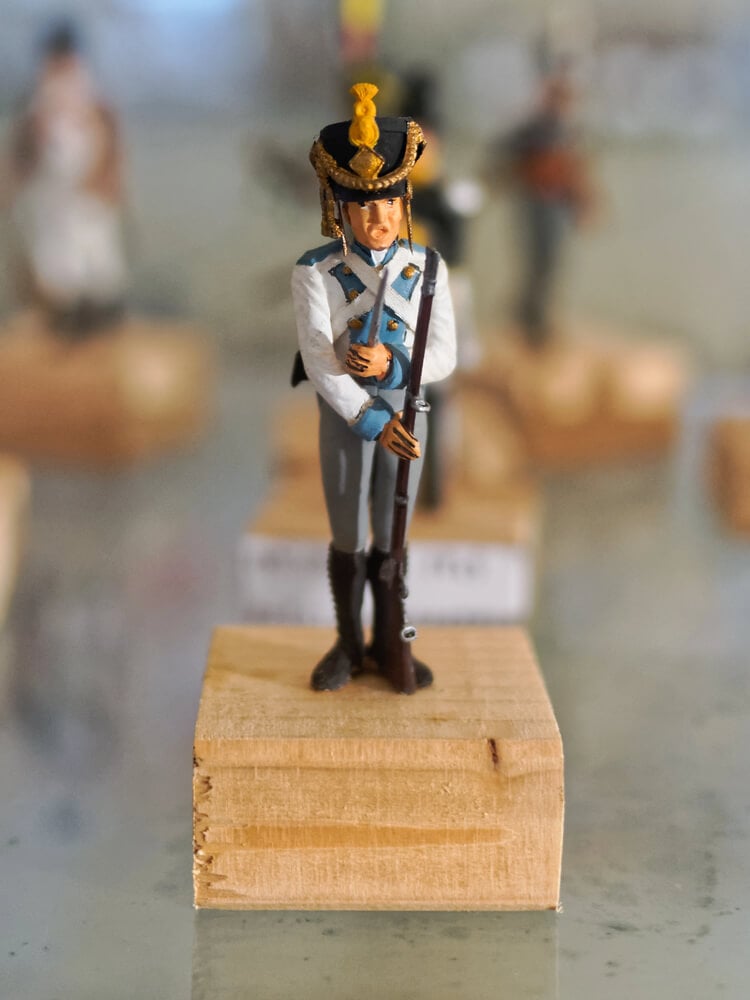
Elastolin was the trade name of the German firm Hausser, which made figures from a composition of sawdust and glue over a wire armature from the 1920s through the 1950s. The prewar German army figures and the civilian and animal sets are collected, though some subject matter is restricted in Germany.
Composition deteriorates, so examples without cracks and with original paint are the ones with value.
Lineol Composition Figures
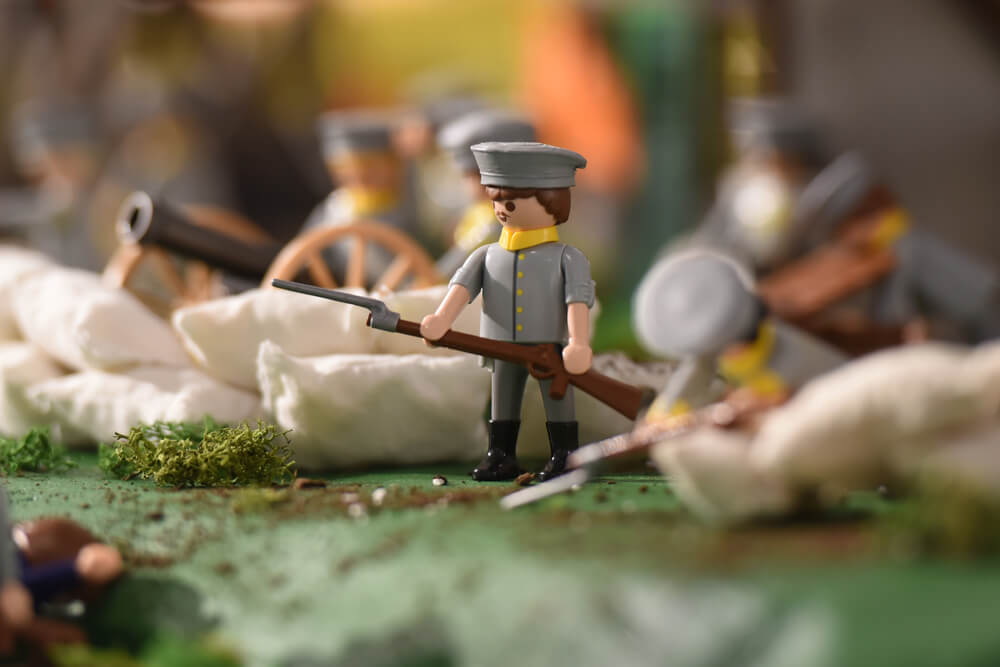
Lineol was Elastolin’s main competitor, producing composition figures of similar construction with distinctive sculpting and tin helmets. The prewar figures, particularly the larger scale pieces and the vehicles, are the collectible ones.
Condition is critical, since the composition cracks and the wire armature rusts from within.
Mignot French Figures
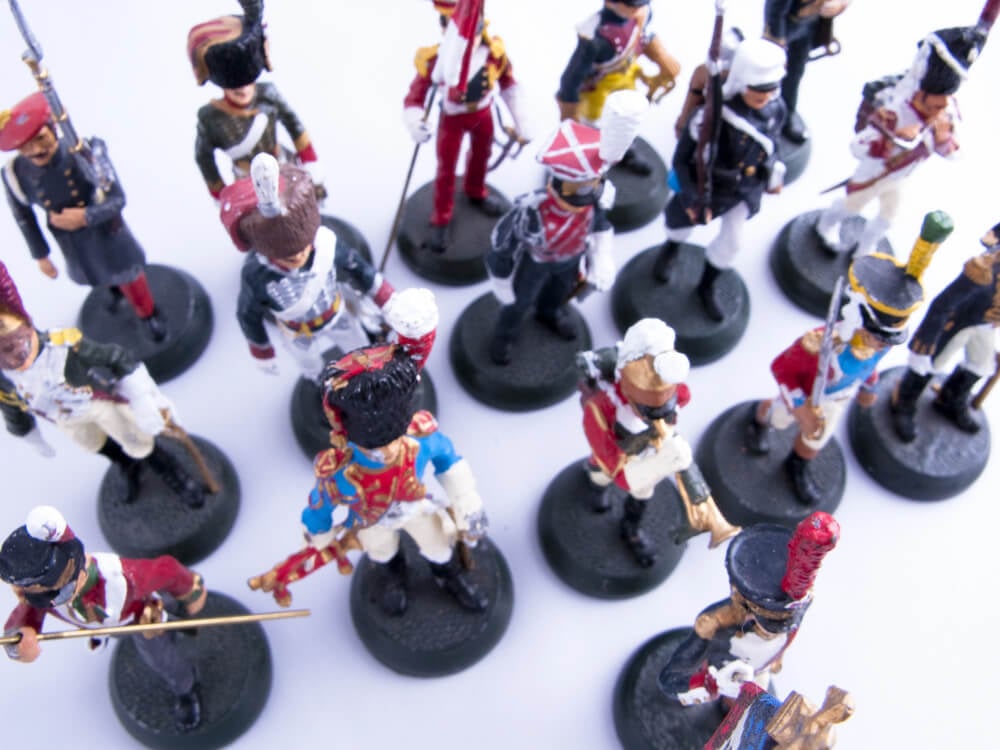
CBG Mignot of Paris has made solid lead figures since the nineteenth century, specializing in the French army across its history, from Napoleon’s Grande Armee to the First World War. The early boxed sets with the original labels are the valuable ones.
The company is still in business, so collectors distinguish the antique production from modern pieces.
Timpo Swoppets
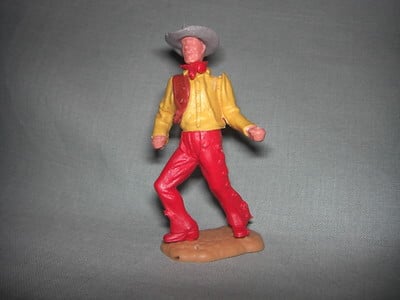
Timpo’s Swoppets of the 1960s were plastic figures with interchangeable heads, torsos, and legs, which let a child swap parts between figures. The cowboys, knights, and soldiers were brightly colored and well made.
Complete figures with all their accessories and the rarer variations are collected, and boxed sets bring a premium.
Crescent Toy Soldiers
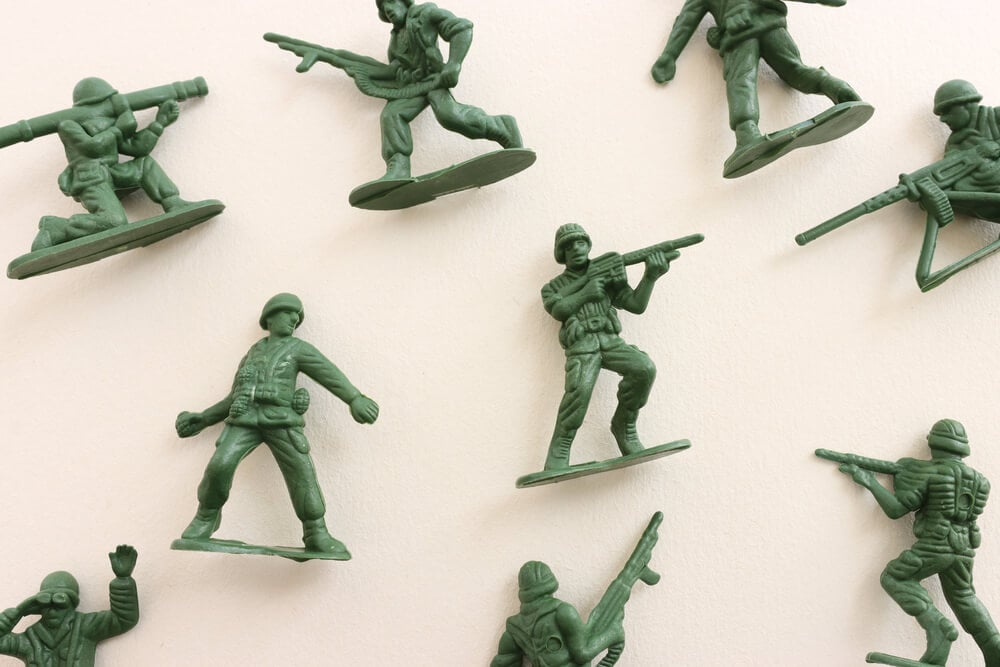
Crescent was a British maker of hollowcast and later plastic figures from the 1920s through the 1970s, producing soldiers, cowboys, and space figures like the Dan Dare line. The hollowcast military figures are collected alongside Britains, and the plastic space figures have a following of their own.
Original boxes are scarce.
Johillco Soldiers
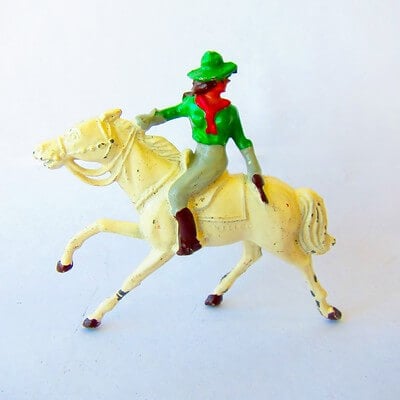
John Hill and Company, known as Johillco, was Britains’ main British rival in hollowcast lead, producing figures in a slightly cruder but more animated style from 1898 to the 1960s. The company’s output was large and varied, and the rarer regiments and civilian figures bring the most.
Johillco figures are more affordable than Britains, which makes them a popular entry point.
Airfix 1/72 Figures
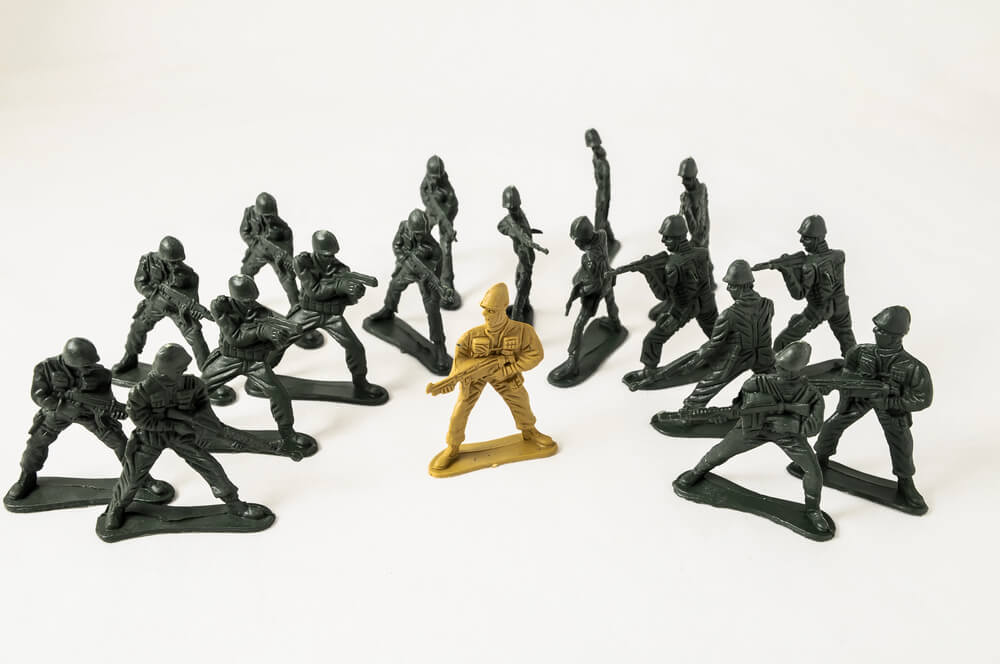
Airfix began producing small-scale plastic figures in the late 1950s, and the early sets in the original boxes with the first artwork are collectible. The 1/72 soldiers were sold cheaply and painted by hobbyists, so unpainted figures on the original sprues are what collectors want.
The first issues of discontinued sets bring a premium.
1964 Hasbro G.I. Joe
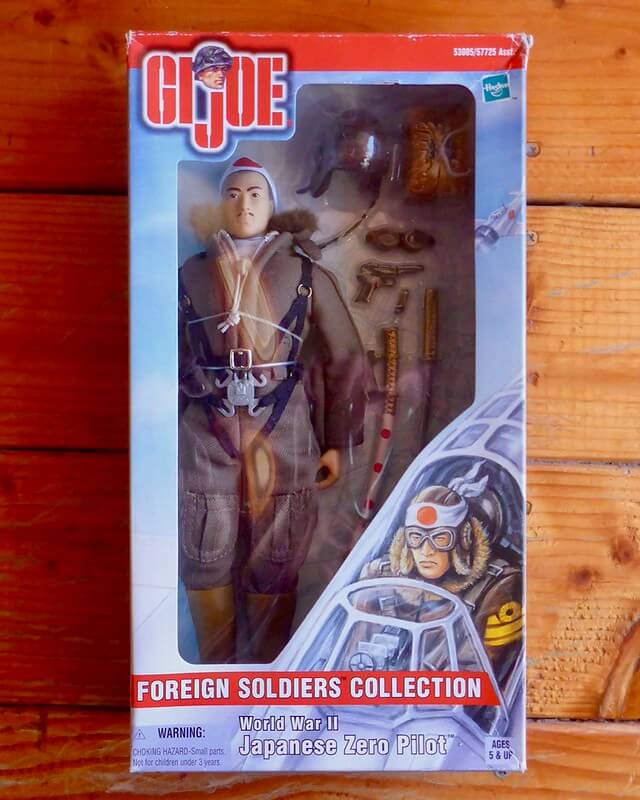
Hasbro introduced the twelve-inch G.I. Joe in 1964, and the first-year figures with the original boxes, uniforms, and accessories are the most valuable in the line. The early figures are identified by details like the hand design and the marking on the lower back.
Complete boxed first-year sets have sold for thousands, and rare accessories and uniforms are collected on their own.
Action Man
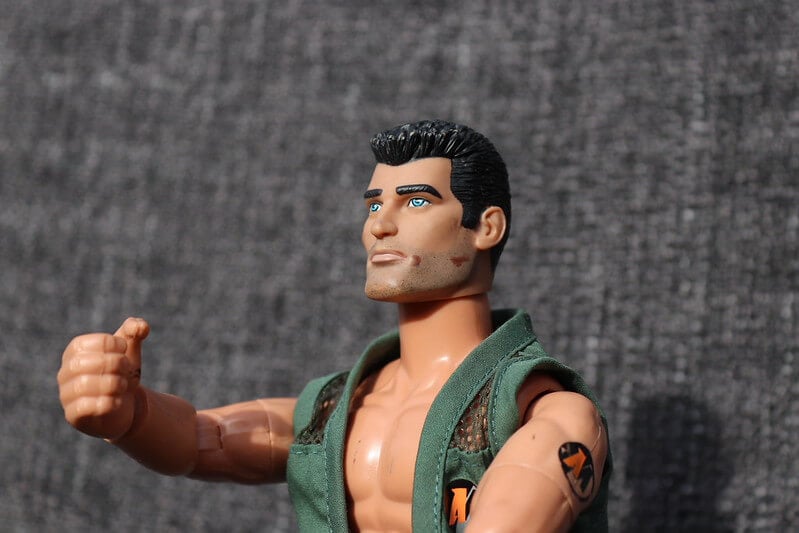
Action Man was the British version of G.I. Joe, produced by Palitoy under license from 1966, and it developed its own range of uniforms and equipment. The early figures with painted hair and the later ones with flocked hair and gripping hands are both collected.
Boxed early examples and the rarer uniform sets bring the most.
Starlux French Figures
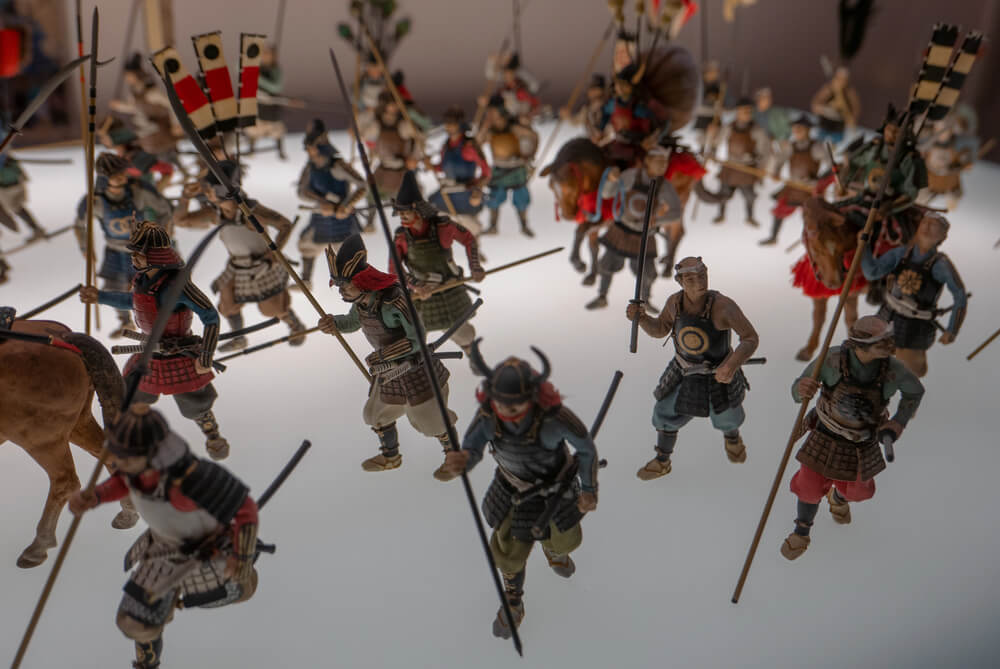
Starlux made plastic figures in France from the 1950s onward, with a distinctive style and an unusually wide range of subjects, including prehistoric scenes, knights, and the French Foreign Legion. The hand-painted figures were sold loose and in boxed sets.
The scarcer subjects and complete boxed sets are the ones with value.
King and Country
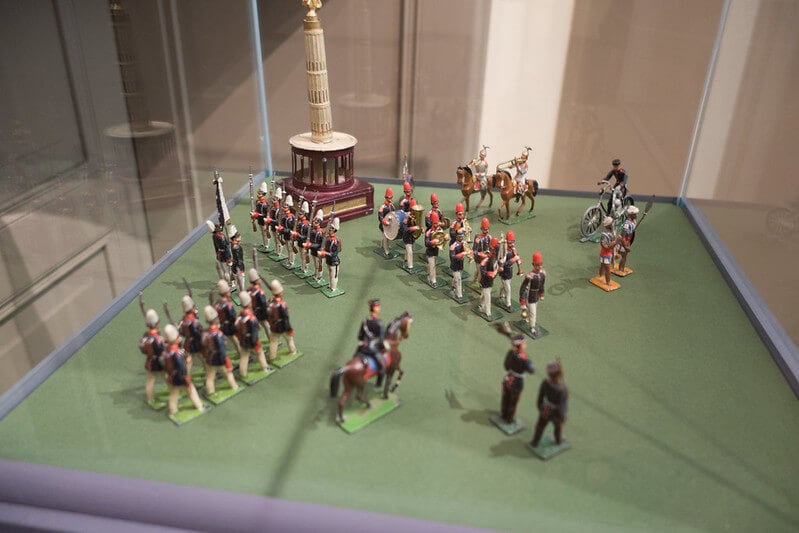
King and Country was founded in Hong Kong in 1983 and makes hand-painted metal figures in a matte finish aimed at adult collectors rather than children. Early releases that have been retired are collected, and some early sets have appreciated well beyond their issue price.
The company’s limited production runs and retirement schedule drive the secondary market.
The Regiment That Never Got Lost
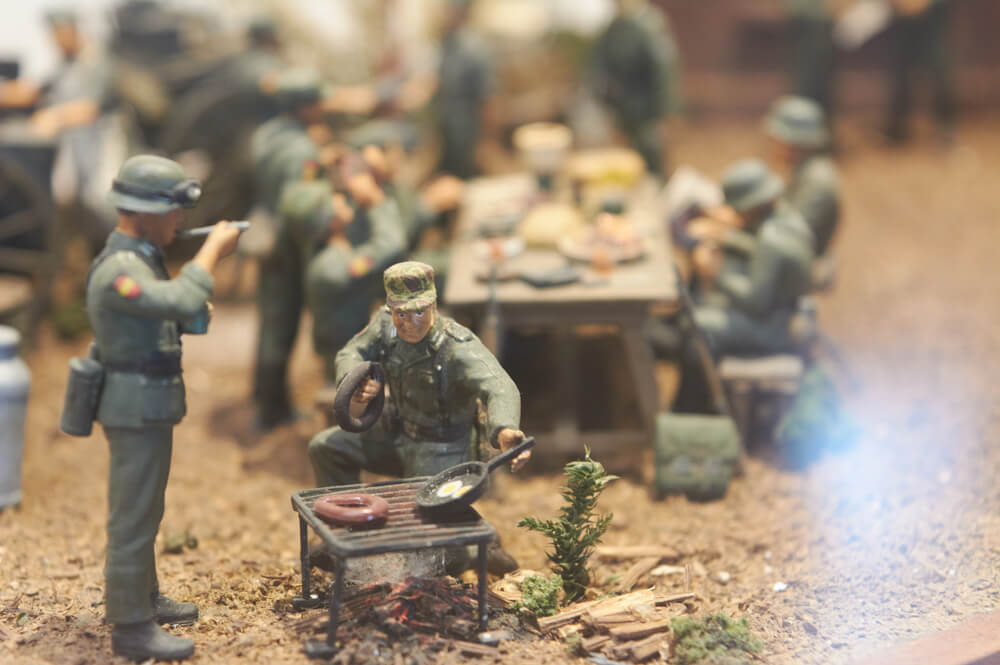
Every figure on this list was designed to be played with, and the overwhelming majority were, which is why a complete boxed set from any maker is such an unlikely survival. The value is a direct measure of how rarely a child resisted the urge to open the box and line up the troops.
What collectors are buying is not really the lead or the plastic but the improbability of a set having survived intact through a century of carpet battles and attic cleanouts. The soldiers that got played with did their job.
The ones that did not are the ones worth money.
More from Go2Tutors!

- The Romanov Crown Jewels and Their Tragic Fate
- 13 Historical Mysteries That Science Still Can’t Solve
- Famous Hoaxes That Fooled the World for Years
- 15 Child Stars with Tragic Adult Lives
- 16 Famous Jewelry Pieces in History
Like Go2Tutors’s content? Follow us on MSN.