Knights’ Armor and Weapons Through the Centuries
A medieval knight was the most expensive fighting machine of his age, and every piece of his kit was a bet on survival. Each generation of metalworkers answered the last generation’s weapons, and the weapons answered back.
The result was a five-century arms race fought in iron and steel.
What follows traces that race from the mail shirts of the Norman conquest to the polished harnesses of Tudor courts. Some pieces were brilliant, some were awkward, and a few were mostly for show.
The Mail Hauberk of the Norman Horseman
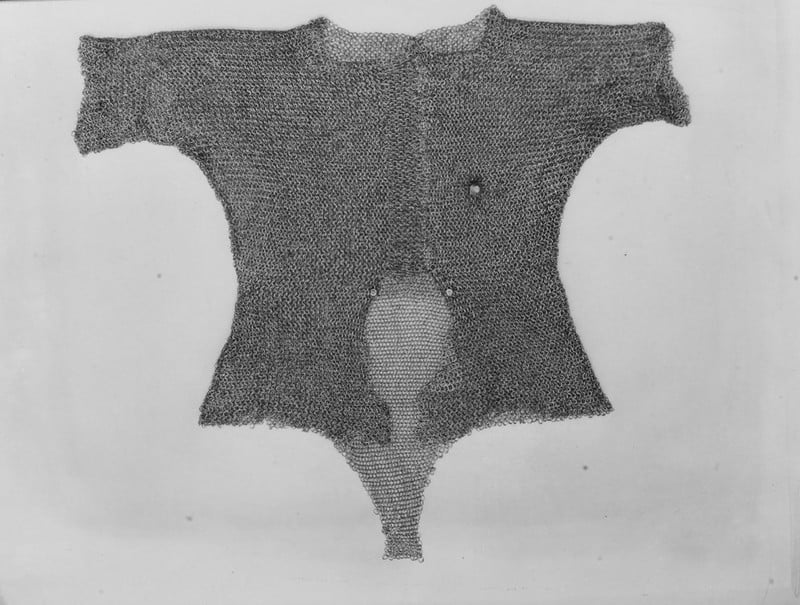
The hauberk was a shirt of interlinked iron rings, and at the Battle of Hastings in 1066 it was the defining garment of a mounted warrior. The Bayeux Tapestry shows knee-length versions with split skirts so a rider could straddle a horse.
Each shirt was built from thousands of individual rings, and a finished hauberk could weigh roughly 25 pounds. One tapestry scene shows mail shirts being carried to the ships on poles, with a pair of men to each load.
Gambeson, the Padded Layer Nobody Photographs
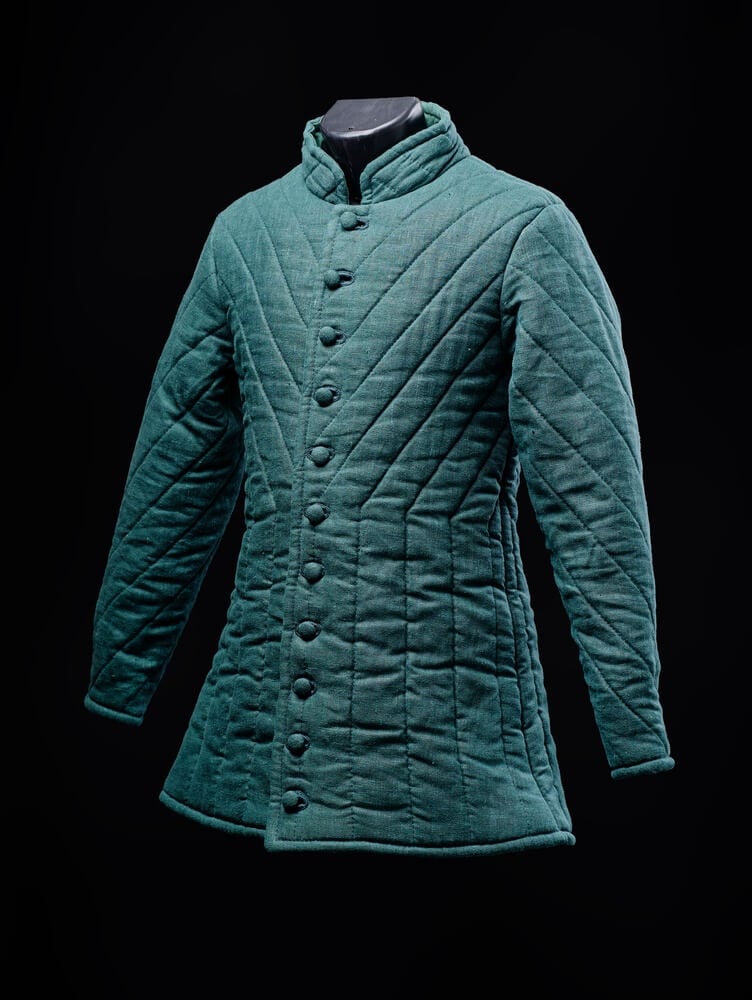
Under the glamorous mail went a humble quilted garment called a gambeson or aketon. Mail stops a blade from cutting but does little about the force of the blow, and the padding of layered cloth soaked up that impact.
Wearing mail without it risked bruising, broken bones, and rings pressed into the skin. Later armorers kept the idea alive, since plate harnesses were worn over arming doublets built to the same principle.
The Mail Coif and Its Padded Cap
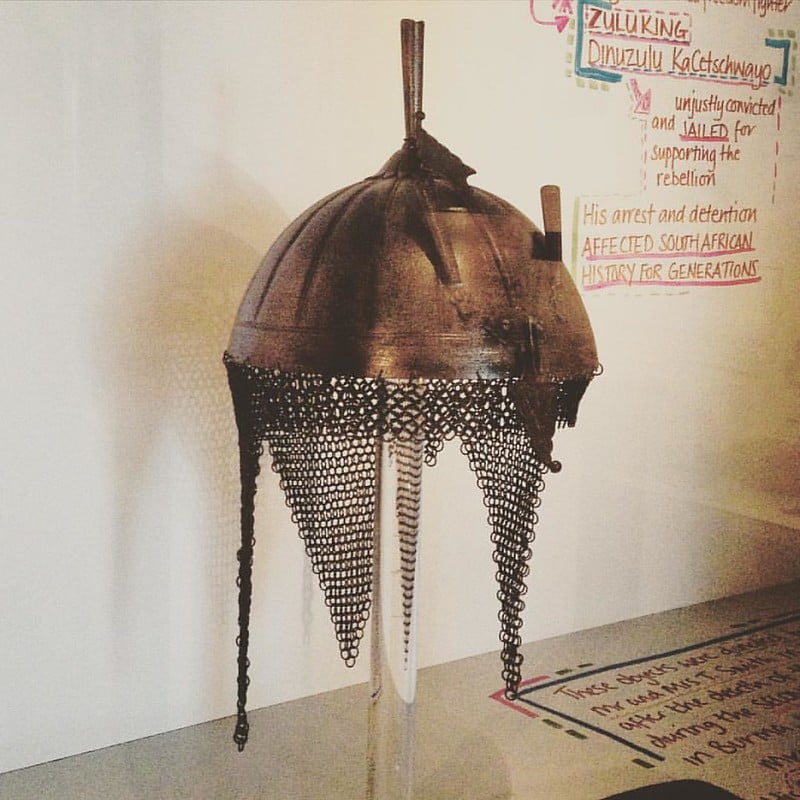
The coif was a hood of mail that covered the head, neck, and often the throat, and on early hauberks it was frequently made as one piece with the body of the shirt. A padded cap went underneath, because mail alone offered little against a skull-cracking hit.
Bayeux Tapestry figures show the rounded shapes of coifs tucked under their helmets. The design survived for generations, eventually becoming the base on which later helmets were fitted.
The Nasal Helm and a King’s Famous Gesture
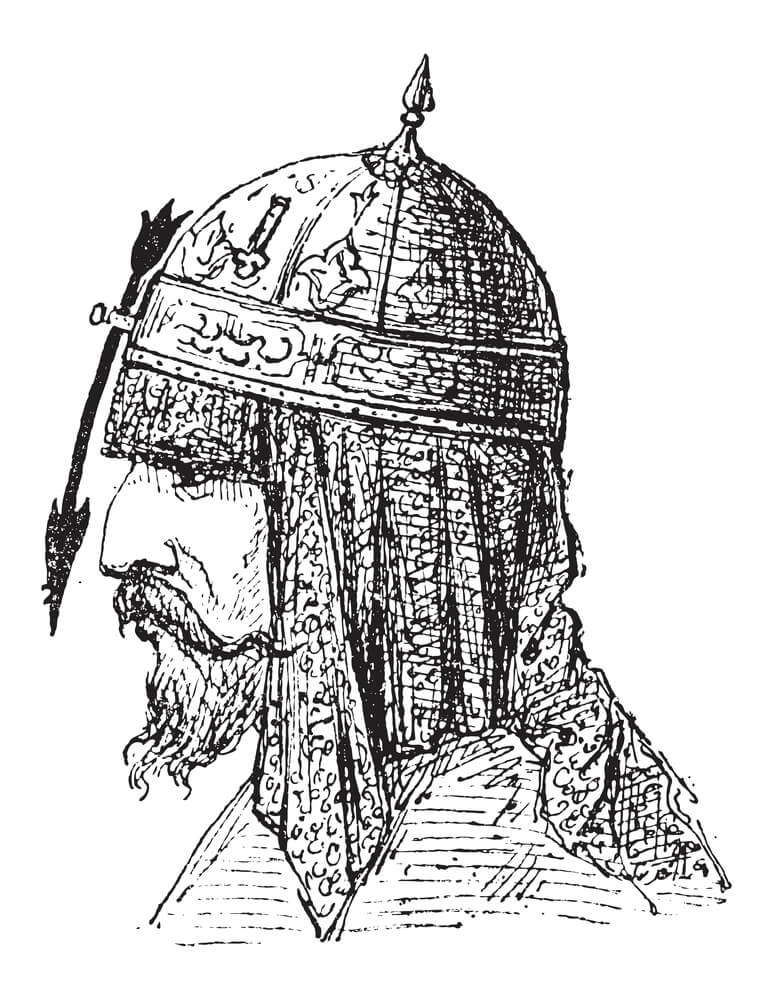
The nasal helmet was a conical iron cap with a flat bar projecting down over the nose, and it was the standard headgear of Norman knights. The bar blocked a sword cut to the face while leaving the eyes and ears open.
Its drawback was plain, since a knight in a nasal helm looked much like every other knight on the field. The tapestry shows Duke William lifting his helmet during the confusion at Hastings so his men could see he was still alive.
The Kite Shield, Built for the Saddle
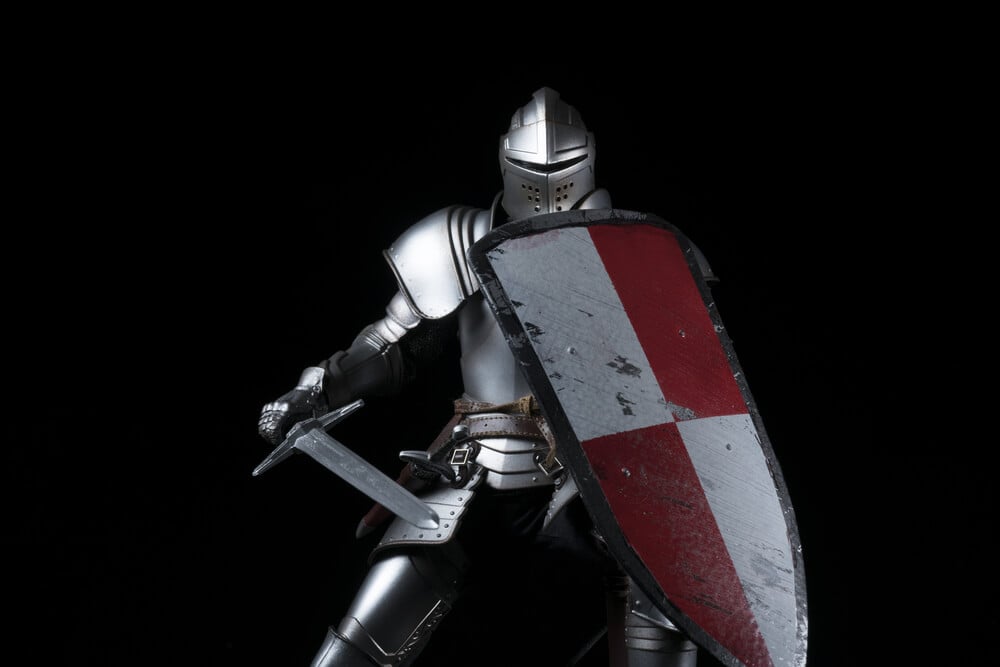
The kite shield was long, tapered, and curved to shield a mounted man from shoulder to knee, especially the exposed left leg. Its upper edge was wide enough to cover the body while the rounded top allowed room for the chin.
Straps on the back, called enarmes, held it on the forearm, and a longer strap let the rider sling it over his shoulder. As leg defenses improved, the shield shrank into the shorter heater shape that dominated the thirteenth century.
The Arming Sword and the Art of Balance
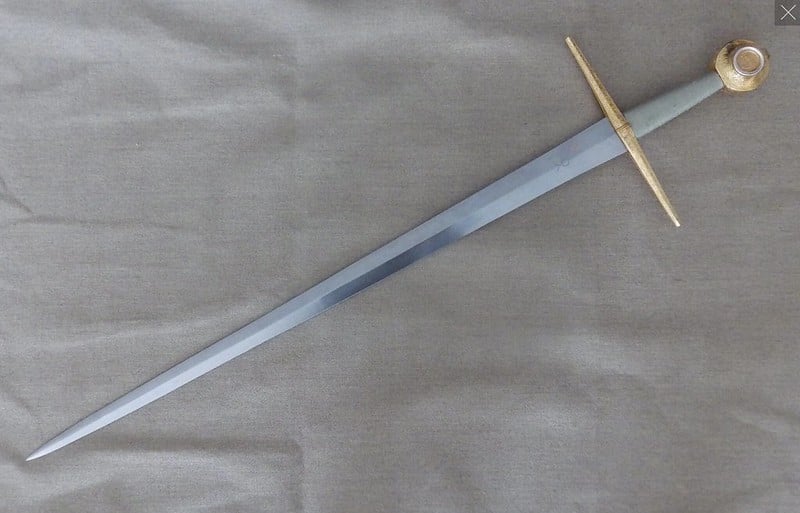
The knight’s standard sword was straight, double-edged, and single-handed, with a cross-shaped guard and a heavy pommel at the grip’s end. That pommel was not decoration; it counterweighted the blade so the sword’s balance point sat close to the hand.
A well-made example felt much lighter and quicker than its length suggested. Paired with a shield, it was used for cuts and thrusts against mail, and it remained a knight’s sidearm long after armor changed beyond recognition.
The Great Helm and Its Narrow View of the World
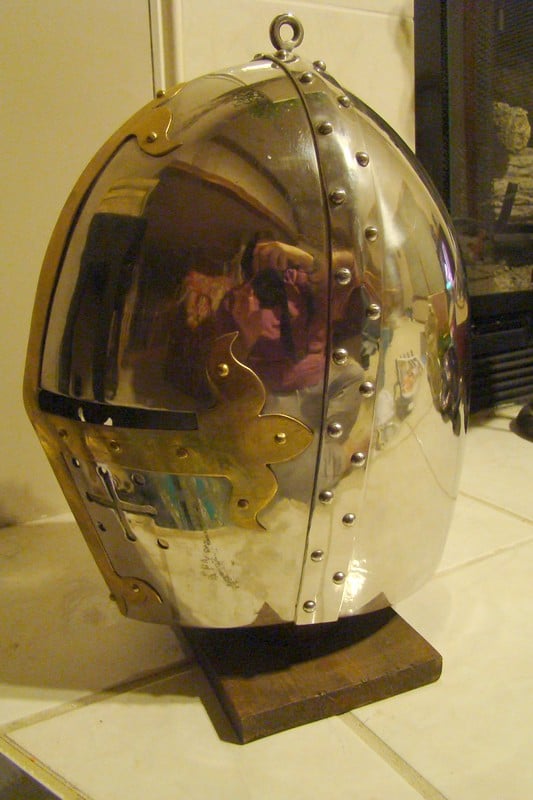
By the late twelfth and thirteenth centuries, knights were pulling flat-topped, cylindrical great helms over their heads, with just a thin slit for sight. The helm sat over a mail coif and padded cap, and wearing it must have been like looking through a letterbox with the lid half closed.
Hearing and ventilation were poor, so knights often put it on only at the last moment before charging. Crests and fan shapes were later added to help identify friend from foe.
The Surcoat That Gave Heraldry Its Coat of Arms
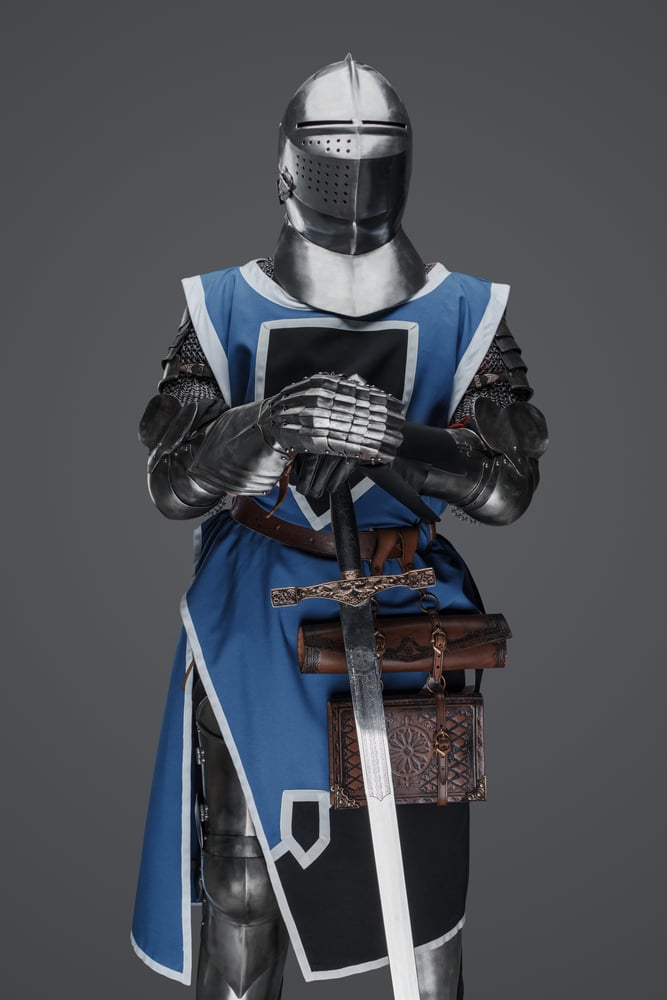
A cloth surcoat worn over mail became fashionable among knights in the 1200s, and it is often credited with shielding metal from sun and rain. Its lasting importance was visual.
With faces hidden behind helms, knights needed to be recognized, and emblems painted on the shield and stitched onto the surcoat made that possible. The phrase coat of arms is a direct descendant of that garment.
The Crossbow and the Church’s Disapproval

The crossbow could be spanned and aimed by a peasant with little training, yet its bolt could pierce a knight’s mail at close range. That alarmed contemporaries so much that the Second Lateran Council of 1139 is traditionally cited as condemning its use against Christians.
The prohibition changed little on the battlefield. King Richard I of England, a fierce user of the weapon himself, died in 1199 after being struck by a crossbow bolt at the siege of Chalus.
The Flanged Mace Against Hardened Defenses
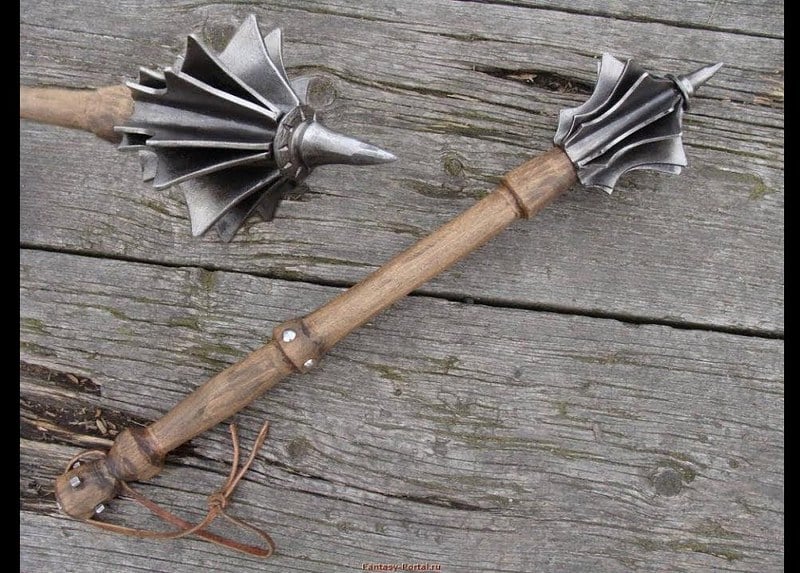
Mail turned blades but not bludgeons, so the mace stayed in the knight’s arsenal for centuries. By the thirteenth century iron-headed maces carried protruding flanges that focused force onto small areas, helping to dent helmets and shock the man beneath. A mace was short enough to swing on horseback and cheap enough to forge in bulk. Bishop Odo of Bayeux appears on the tapestry carrying a club, and a later legend that churchmen favored such weapons to avoid cutting flesh followed him down the ages.
The Coat of Plates Found Beneath Gotland
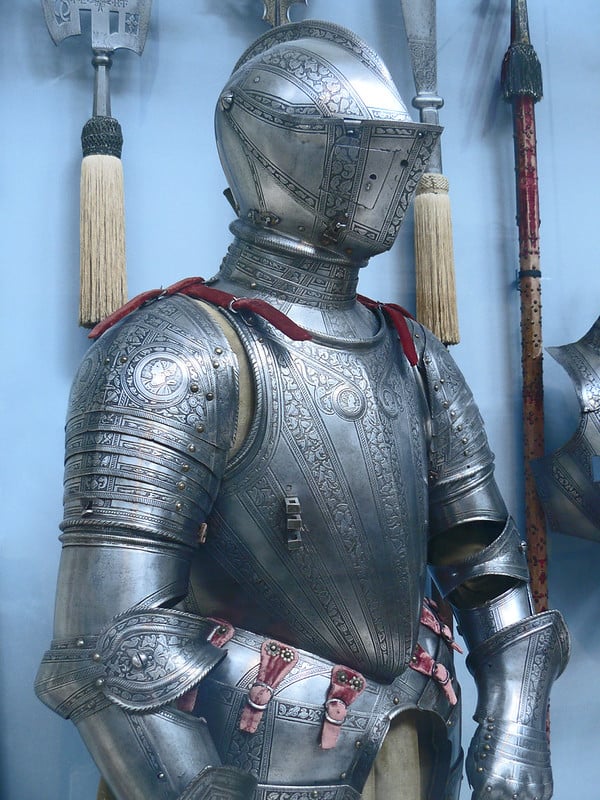
Around the thirteenth century, armorers began riveting iron plates inside a fabric covering, creating a coat of plates worn over mail. The best surviving evidence comes from the Battle of Visby on the Swedish island of Gotland in 1361, where Danish forces defeated local defenders.
Mass graves dug at the site in the early twentieth century yielded armor in a surprising range of qualities. Some coats were solid work, while others were hurriedly patched together, which hints at how unevenly the island’s defenders were equipped.
The Bascinet and Its Curtain of Mail
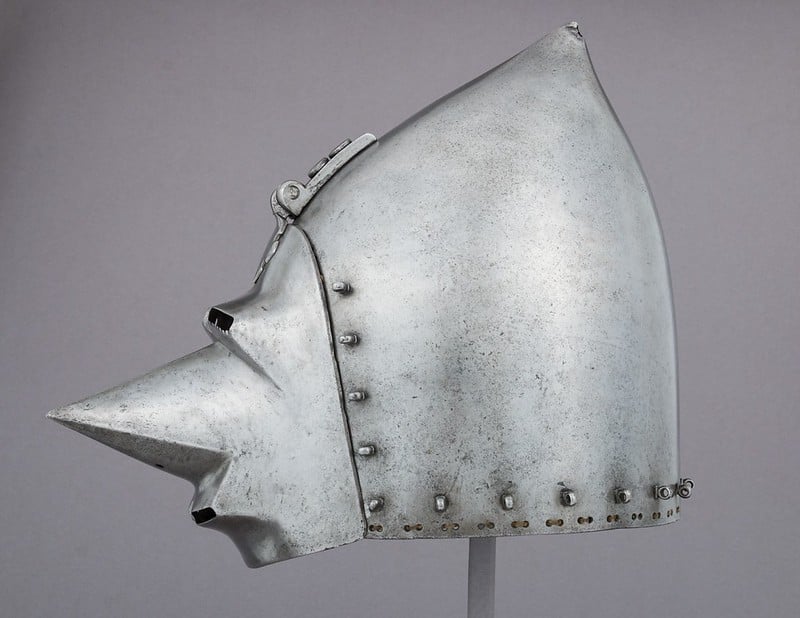
The bascinet was a close-fitting steel skull with a pointed profile, and in the fourteenth century it became the knight’s favored helmet. A fringe of mail called a camail hung from its lower rim, laced on through a row of fittings to protect the neck and shoulders.
Visors were soon added, and some pointed snout-like versions earned a nickname in modern times that refers to the hog. The combination offered better protection than a great helm and let a man see considerably more.
Gauntlets, the Plate Glove That Became an Idiom
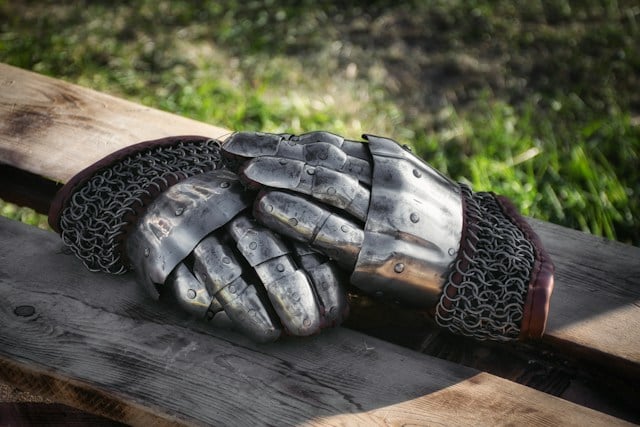
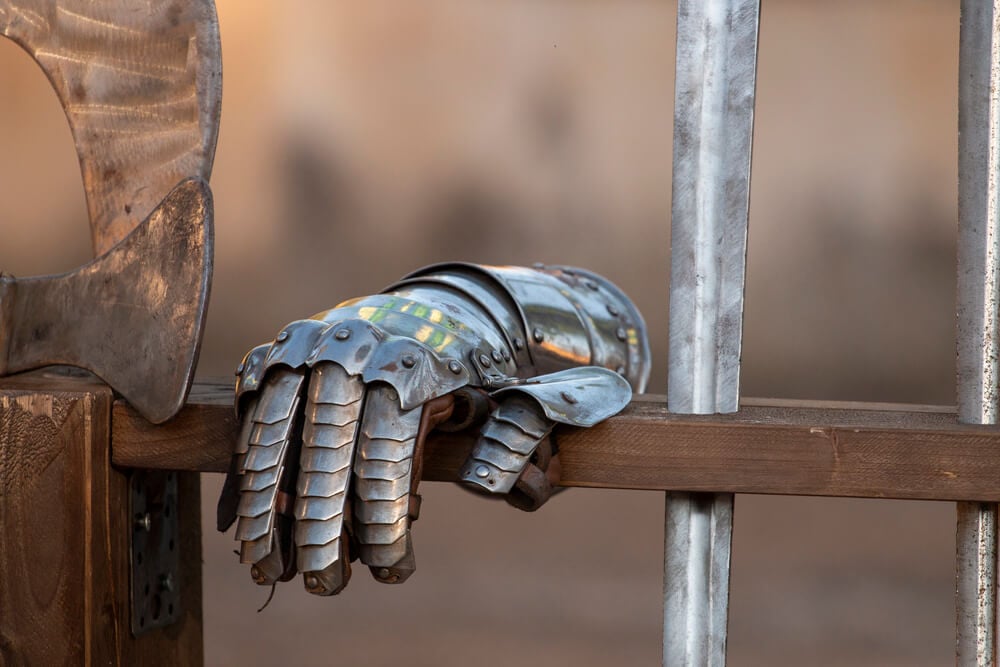
Hands were hard to protect, since a knight needed to grip a weapon but also survive a blow to his fingers. By the fourteenth century, armorers solved the problem with articulated gauntlets, including hourglass-shaped types with flaring cuffs.
Engineered fingers were built of small overlapping plates, and some designs allowed an armored hand to close firmly around a sword hilt. To throw down a gauntlet became the classic way to issue a challenge, a phrase that survives in everyday English.
The Longbow Changes Who Wins at Agincourt
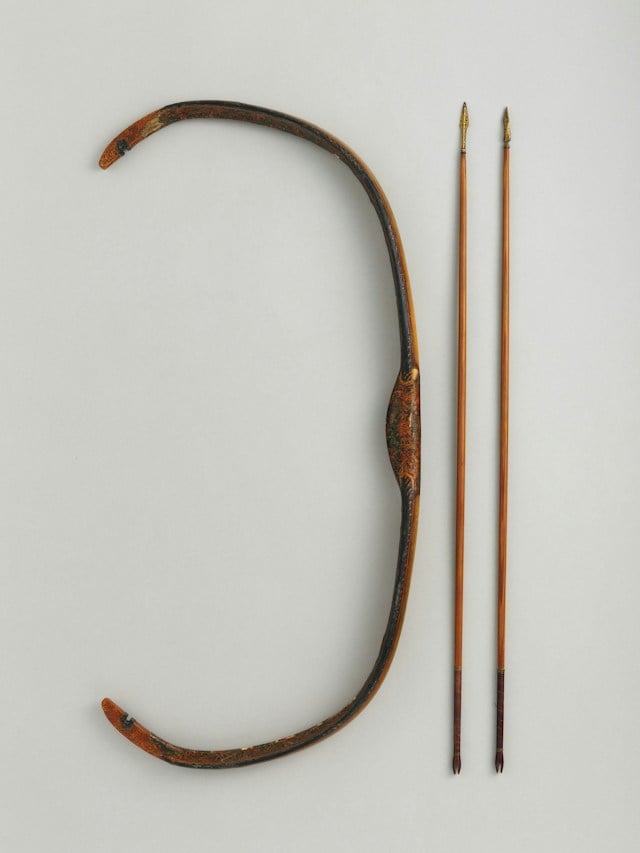
On October 25, 1415, a smaller English army met the French near Agincourt, and the longbow decided the battle. French men-at-arms advanced across soft, muddy ground toward archers who could loose arrows far faster than a crossbowman could reload.
The heaviest fighting was reserved for closing in, because plate was most vulnerable when fatigue and crowding set in. Knights who survived the arrow storm found themselves struggling in a packed, slippery mass.
Full Plate Harness by About 1420
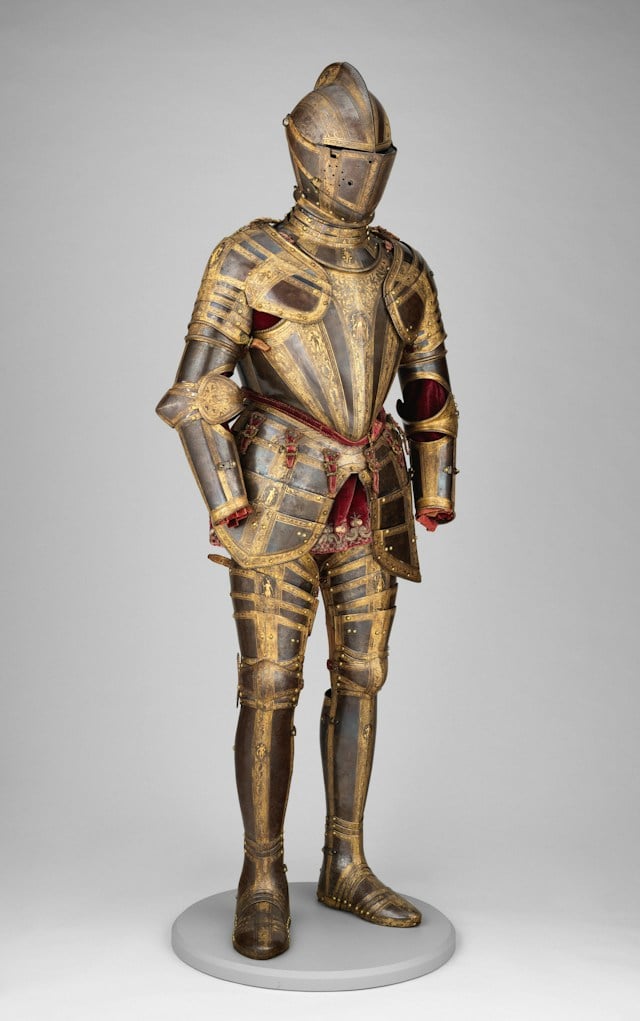
By roughly 1420, Italian workshops were producing complete suits of plate that covered a man from head to foot in articulated steel. A well-fitted harness weighed in the neighborhood of 45 to 55 pounds, and because the weight was spread across the entire frame, a trained wearer could run, mount, and fight in it.
That figure is often less than the kit carried by a modern infantry soldier. The Milanese armorers became so celebrated that the city’s name turned into a mark of quality across Europe.
The Armet and Its Hinged Cheeks
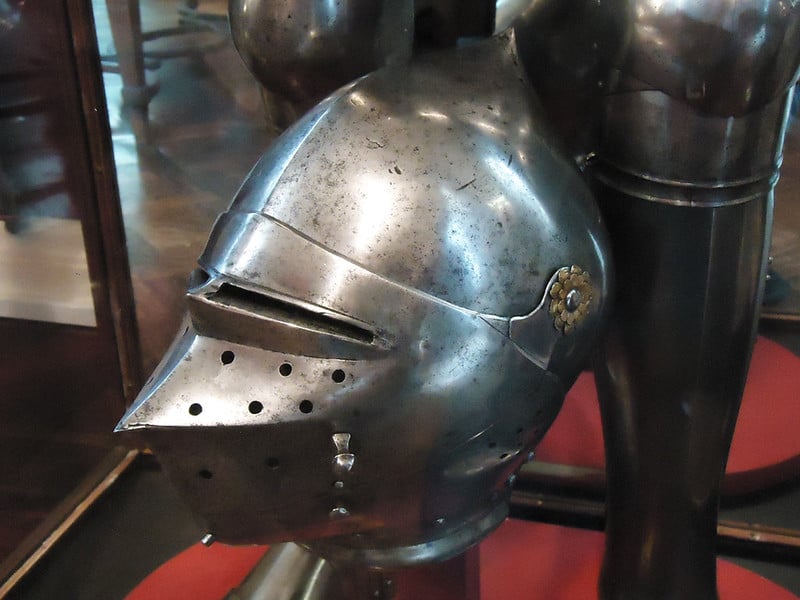
The armet appeared in the fifteenth century as a helmet that sealed the head completely. Its cheek pieces swung open on hinges so the wearer could slide it on, then closed and locked at the chin.
A small plate called a rondel at the back sealed the gap between helmet and neck. Compared with the great helm it replaced, the armet was lighter, tighter, and far more comfortable in a fight.
The Rondel Dagger and the Mercy Stroke
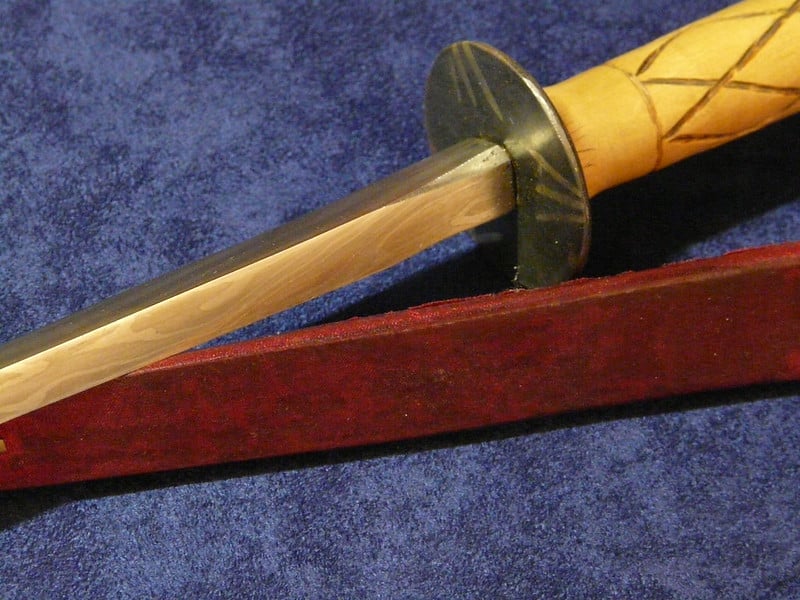
When two plate-clad men grappled, swords became clumsy and a slim dagger became the weapon of choice. The rondel dagger had a disk-shaped guard and pommel, and its stiff blade could slip through a visor or any gap in the armor.
It was also used as a finishing weapon, and one form is called the misericorde, from the Latin word for mercy. The name reflects its job of ending a fallen opponent’s suffering.
The Longsword and the Half-Swording Trick
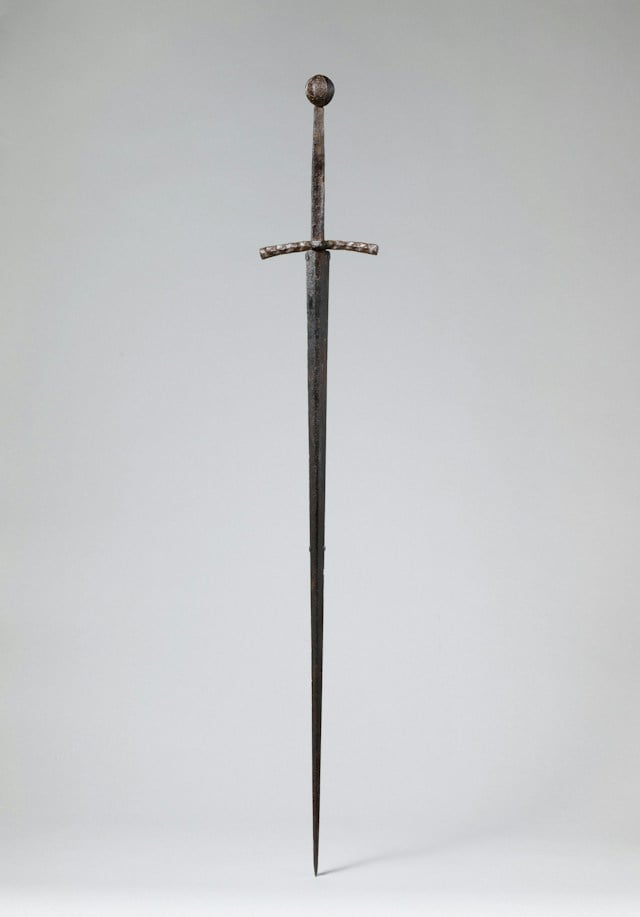
As plate improved, cutting with a sword lost its punch and thrusting at weak points gained value. Longswords with long grips and slender, pointed blades appeared, and fighting manuals such as Fiore dei Liberi’s from around 1409 show the technique.
In half-swording, a fighter gripped the blade with his armored hand and used the weapon like a short spear. Advice that sounds reckless in a fencing hall worked well when your palm was covered in steel.
The Poleaxe, the Knight’s Can Opener
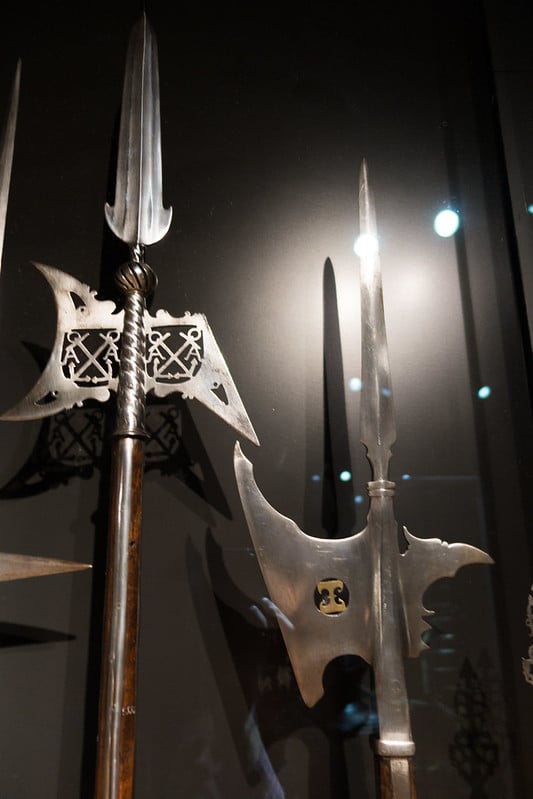
Dismounted combat among armored men called for something heavier than a sword, and the poleaxe filled the role. It combined an axe blade, a hammer, and a spike on a haft that was often around five feet or longer.
A fifteenth-century French manual known as Le Jeu de la Hache describes how to use it, including striking with the butt end and thrusting the spike. It was favored in formal combats on foot, where knights fought in full armor on carefully prepared grounds.
The War Hammer That Punched Through Plate
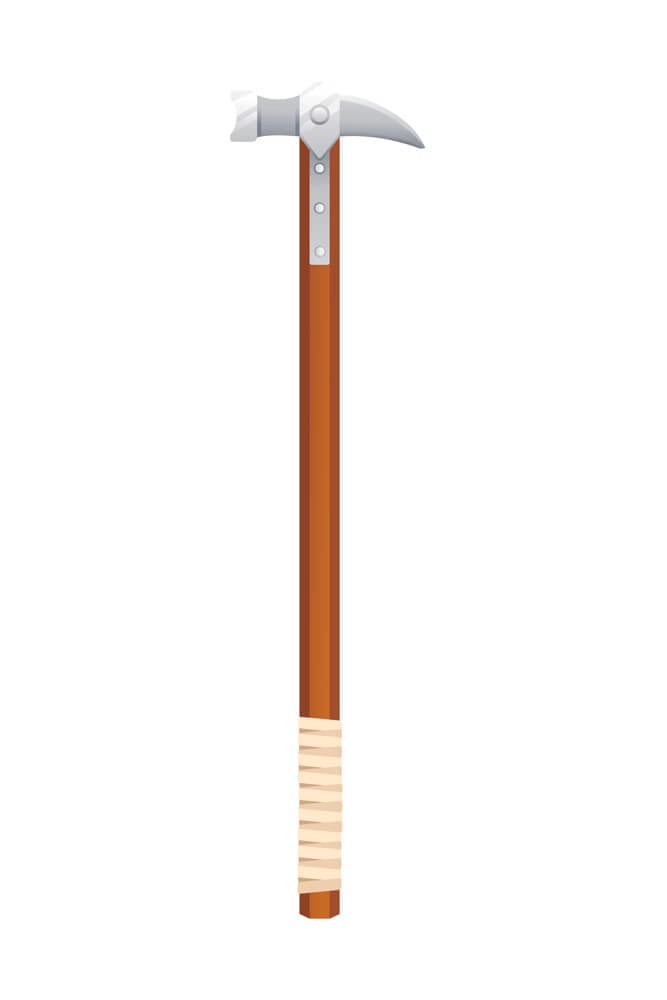
A war hammer paired a blunt striking face with a beak, and the beak concentrated enormous force onto a tiny point. Against plate, a sharp enough spike could punch or twist through steel where an edge would simply skate off.
The hammer face delivered shock to the body inside even when the metal held. It was short, quick, and cheap, which kept it popular with knights and foot soldiers throughout the later Middle Ages.
The Lance and Its Breastplate Rest
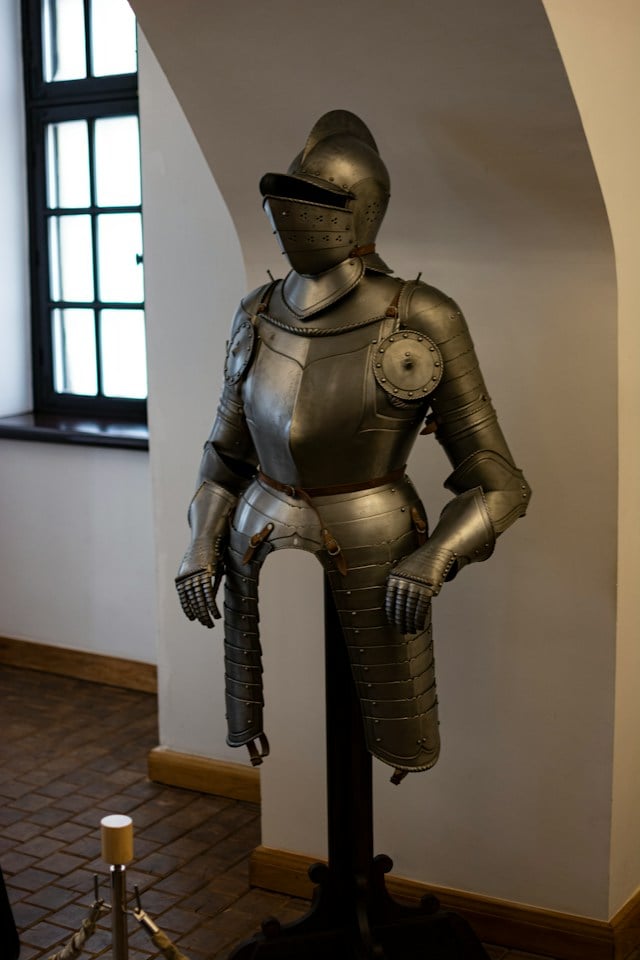
The couched lance, tucked under the arm and aimed by the combined weight of horse and rider, was the knight’s signature charge weapon. By the fourteenth century, armorers added a hook or bracket on the breastplate called a lance rest, which took the weight and steadied the aim.
Tournament lances could be well over twelve feet long. The risks were real, and in 1559 King Henry II of France died after a lance splinter pierced his eye during a joust.
Tournament Armor, Built to Be Hit
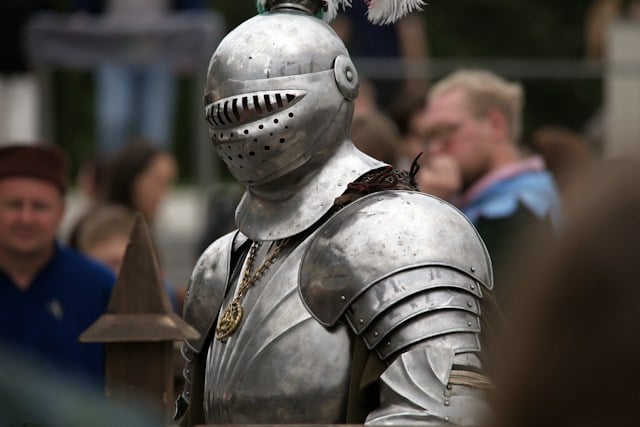
Jousting armor evolved into a specialized kit quite separate from what a knight wore in war. Germany’s Stechzeug and related armor for the joust featured a heavy helm with a narrow sight slit, reinforcements on the left side where the lance would land, and sometimes a helm bolted to the breastplate.
The aim was to survive a full-speed impact, so comfort and mobility took second place. Such armor often outweighed battlefield armor, and wearers were not expected to walk far in it.
Gothic Fluting and Maximilian’s Ribbed Steel
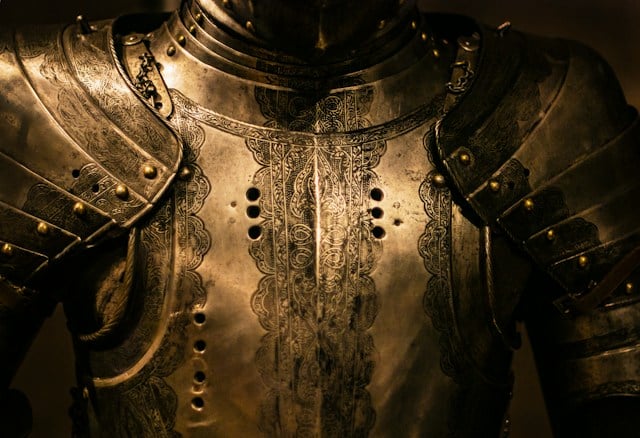
In the late fifteenth and early sixteenth centuries, German armorers produced Gothic armor, with sharp points and many narrow ridges. The ribbing, called fluting, stiffened thin steel without adding much weight.
Emperor Maximilian I gave his name to a later style that kept the fluted surfaces but dropped some of the spiky Gothic shapes. Museum collections in Vienna, New York, and London still hold examples that look as sharp as the day they were polished.
Gunpowder and the Armorer’s Dent
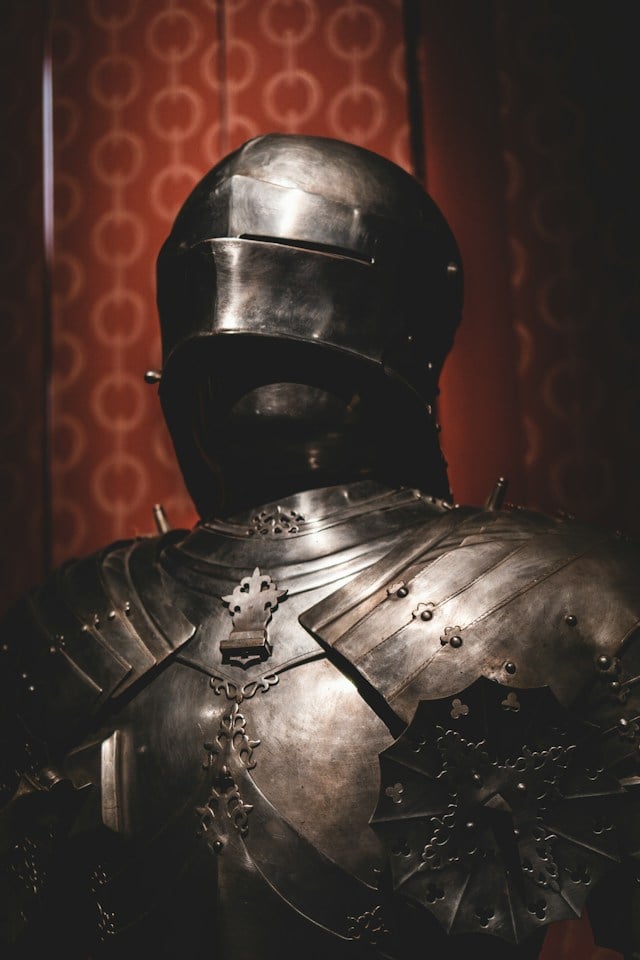
Handguns did not kill armor overnight; they pushed it to evolve. Armorers began test-firing breastplates and leaving a visible dent as proof the plate had survived the shot.
Plates were thickened to resist bullets, and weight crept upward as protection grew. By the seventeenth century, many soldiers wore only a breastplate and helmet because full harness had become too costly and too heavy to justify.
The Greenwich Garnitures of a Tudor King
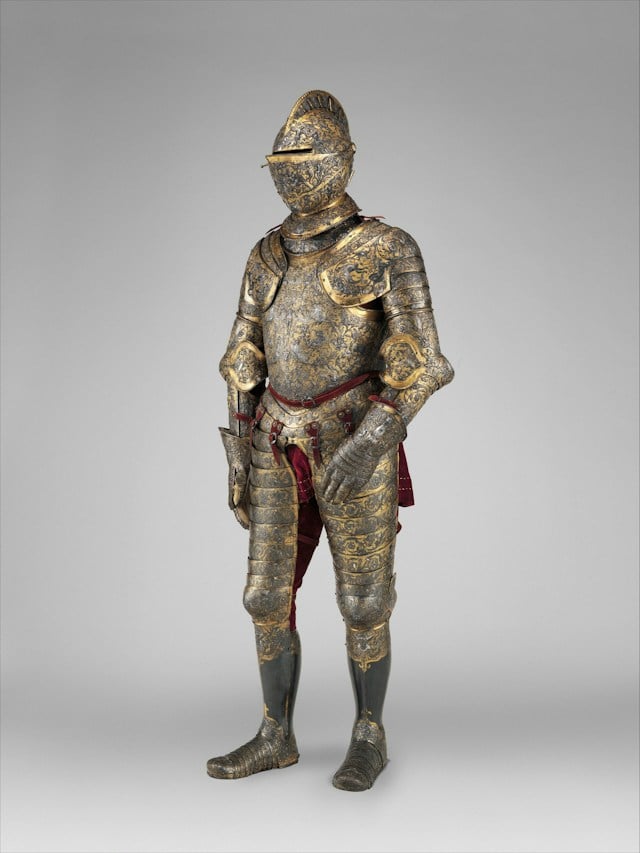
Henry VIII established an armor workshop at Greenwich in the early sixteenth century, staffed by skilled craftsmen drawn from continental Europe. Its finest products were garnitures, sets of interchangeable parts that could be rearranged for battle, jousting on horseback, or fighting on foot.
A single set might consolidate several specialized suits, saving the cost of buying each separately. The king himself wore such armor, and a surviving example attributed to him is held in the Metropolitan Museum of Art.
When Steel Outlived Its Purpose
The decline of armor was never a single event, and it took bullets, drilled infantry, and cost to finish the job. By the time a Tudor king ordered his garnitures, the knight’s greatest strength had already shifted from battlefield utility to status.
Armor became a language of rank, as readable as a crown.
Yet the underlying engineering was real, and each leap in protection came from a lesson learned the hard way. Mail, plate, and the weapons designed to defeat them formed a conversation across centuries.
Museums still hold the evidence, and the dents in those breastplates tell the story better than any chronicle.
More from Go2Tutors!

- The Romanov Crown Jewels and Their Tragic Fate
- 13 Historical Mysteries That Science Still Can’t Solve
- Famous Hoaxes That Fooled the World for Years
- 15 Child Stars with Tragic Adult Lives
- 16 Famous Jewelry Pieces in History
Like Go2Tutors’s content? Follow us on MSN.