14 Staplers With Distinctive Designs and Maker Marks
A stapler gets used thousands of times in its life and almost never looked at. Turn one over, though, and the base usually carries a maker’s name, a patent date, or a city, and those small stamps tell a surprisingly detailed story about who built it and when.
The designs below range from German stitching machines of the 1920s to Japanese staple-free models that cut and fold the paper itself. Each one changed how an office worked, or at least how a desk looked.
The Skrema Stitching Machine
The Skrema came out of the Skrebba Works in Freiburg, Germany, and was patented in 1924. It was a compact paper stitcher, and it reached American offices through the Parrot company, which imported it and advertised it from 1925 to 1928.
The name stamped on the casting is the main clue to its European origin, and it marks the point where the desktop stapler began to cross oceans.
Parrot Speed Fastener Corporation
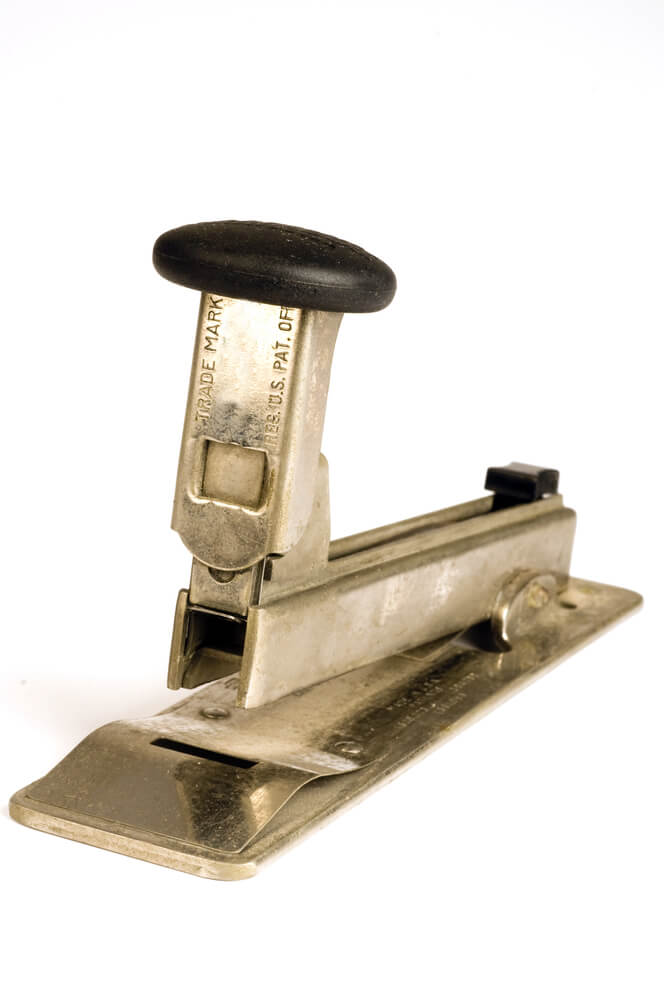
Parrot was incorporated in 1925 and began manufacturing in the United States in 1931, at a plant in Long Island City, New York. The company renamed itself Speed Products in 1939, then became Swingline in 1956, so a stapler’s marking can usually be matched to a particular chapter in that sequence.
Collectors rely on the corporate name stamped into the base to date these early machines.
The Swingline Speed Stapler No. 3 and No. 4
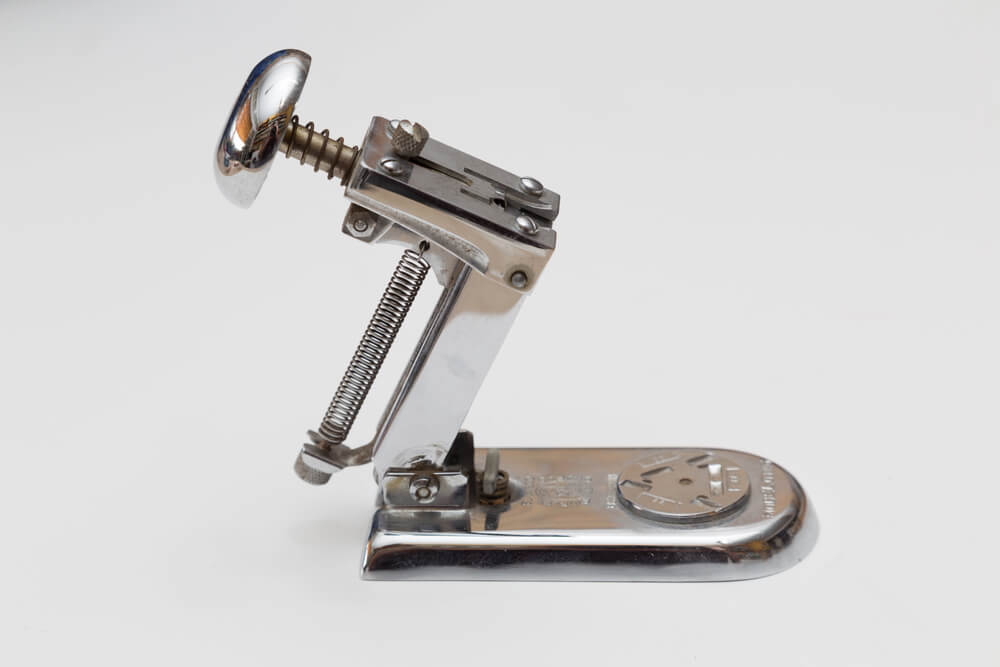
These models arrived in 1938 and 1939, built around a top-loading design backed by patents from 1937. Jack Linsky had visited Europe and been struck by the open-channel idea, which let a user drop a strip of staples straight in from above.
His son-in-law Alan Seff later recalled that earlier machines were so awkward “you practically needed a screwdriver and a hammer to put the staples in.” The top-loading approach became the standard for desk staplers that followed.
Swingline in Long Island City
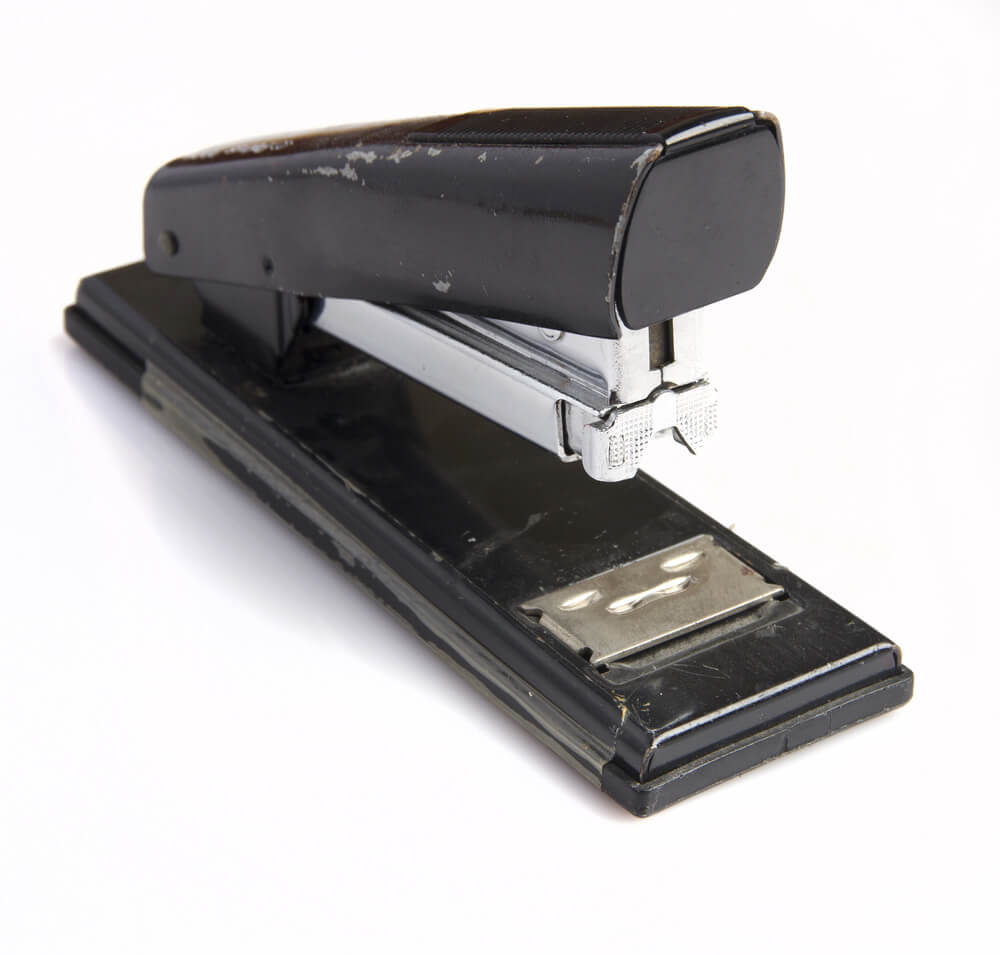
Swingline’s headquarters on Skillman Avenue in Long Island City opened in 1950, and the plant became one of the most recognized industrial buildings in Queens. In 1970 Linsky sold the company to American Brands for $210 million, having owned about 19 percent of the shares himself.
Production later left New York, and the plant moved to Nogales, Mexico, in 1999.
The Boston Wire Stitcher
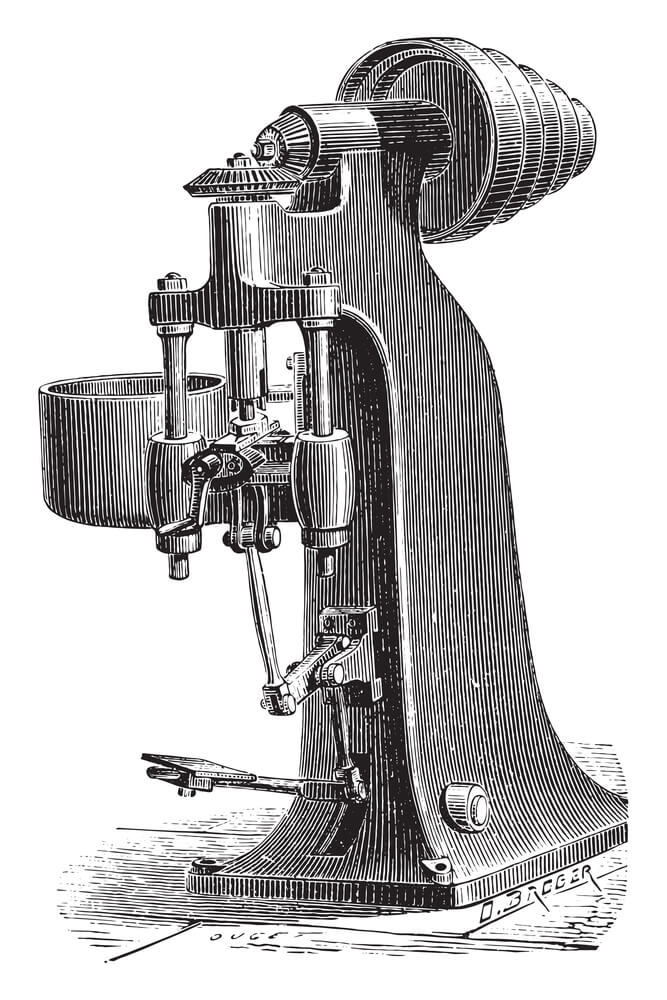
Bostitch traces its beginnings to 1896, when Thomas Briggs launched the Boston Wire Stitcher in Arlington, Massachusetts. The machine stitched books using wire drawn from a coil, rather than from pre-formed staples.
The company name that later became Bostitch is a contraction of “Boston” and “stitch,” which is still readable in the maker marks of early machines.
The Bostitch B-1 Desk Stapler
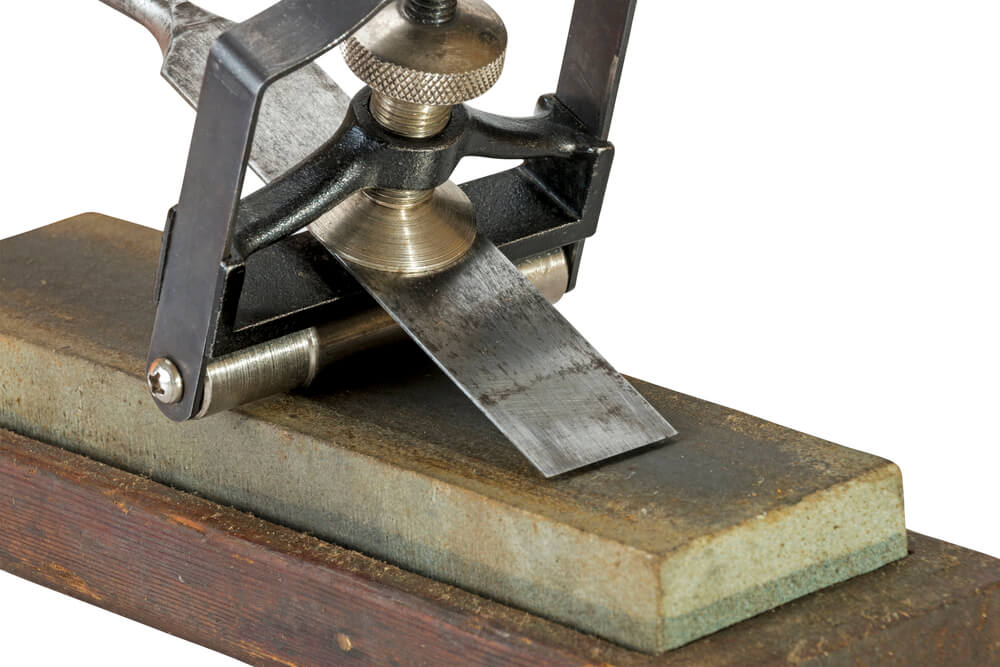
The B-1 used stamped steel and a coiled pusher spring, a combination that made it light enough for a desk yet sturdy enough to last decades. Production moved to East Greenwich, Rhode Island, in 1917, where about 80 workers were employed to build it.
The East Greenwich address on later bases helps collectors place a specimen in the right decade.
The 1941 Bostitch Electric Stapler
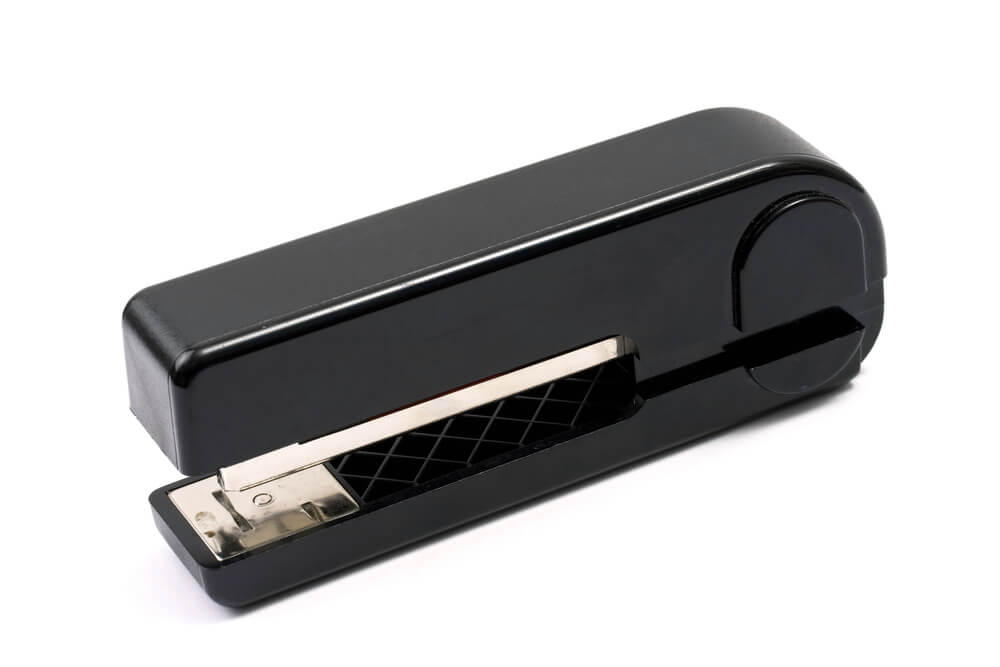
In 1941 Bostitch introduced a 20-sheet electric desktop model, advertised as three times faster than manual alternatives. It was an early example of the office machine that replaced hand pressure with a motor, and it looked more like a small appliance than a desk tool.
Surviving examples show how quickly the stapler had grown from a simple lever into a piece of machinery.
The E. H. Hotchkiss Company
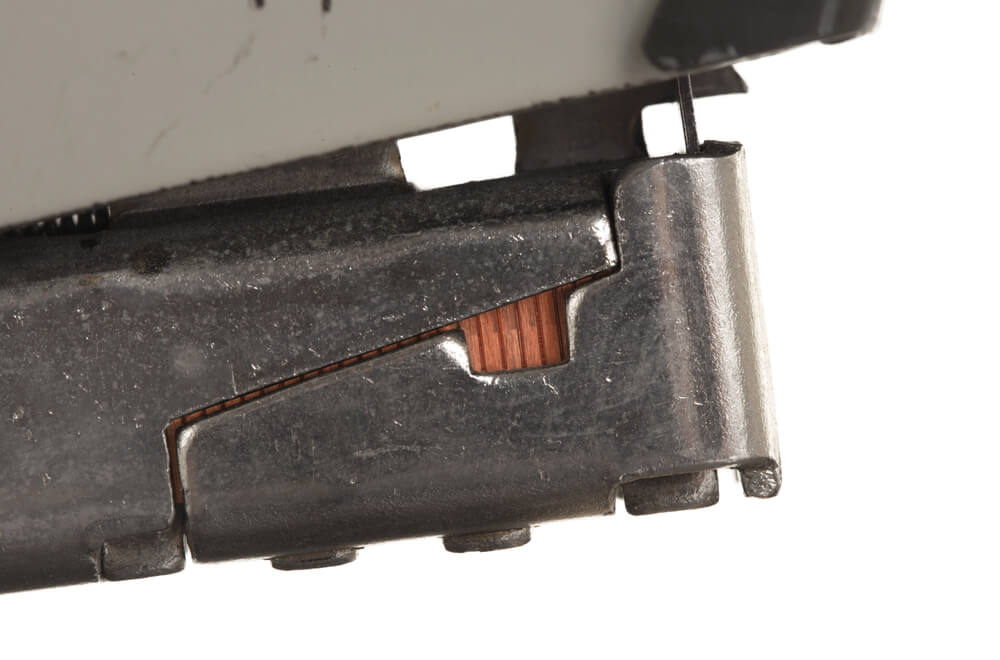
The E. H. Hotchkiss Company of Norwalk, Connecticut, advertised its staplers between 1925 and 1930, and its name had an outsized afterlife. In Japan, a stapler is still commonly called a hotchkiss, a linguistic fossil of that early American import.
Few company names have outlasted the company itself so thoroughly in everyday speech.
Max and the SYC-10
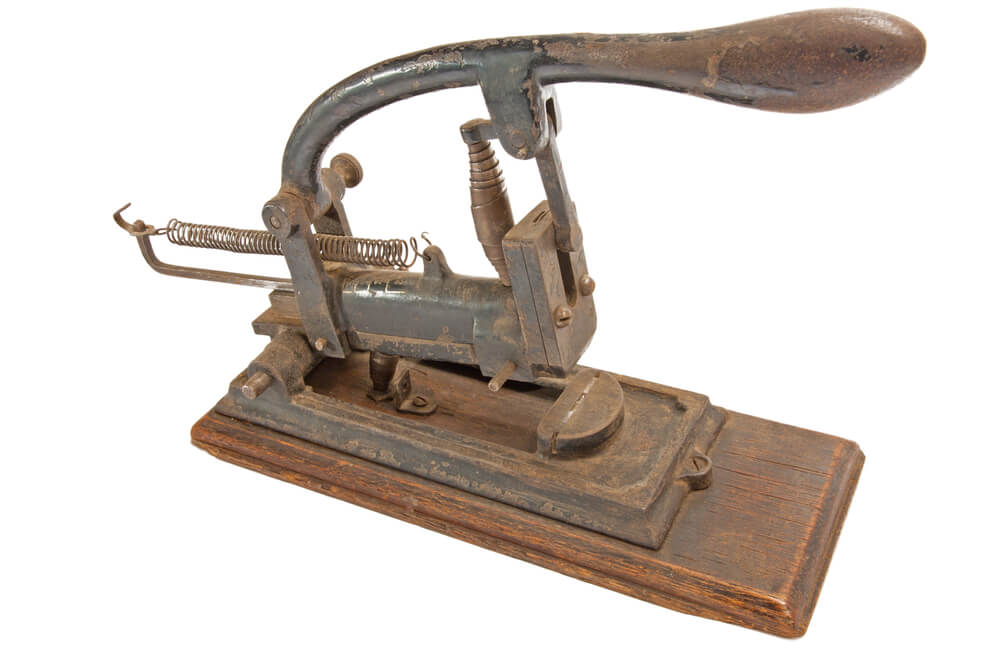
Japan’s Max Co. introduced the SYC-10 in 1952, the country’s first small handheld stapler, built around the No. 10 staple. By a 2005 profile, Max held roughly 75 percent of the Japanese stapler market and about 80 percent of the staplers used inside copiers worldwide.
The Max HD-10 remains the classic model of the line, a design so familiar that its shape is practically shorthand for a Japanese desk stapler.
Kokuyo’s Harinacs
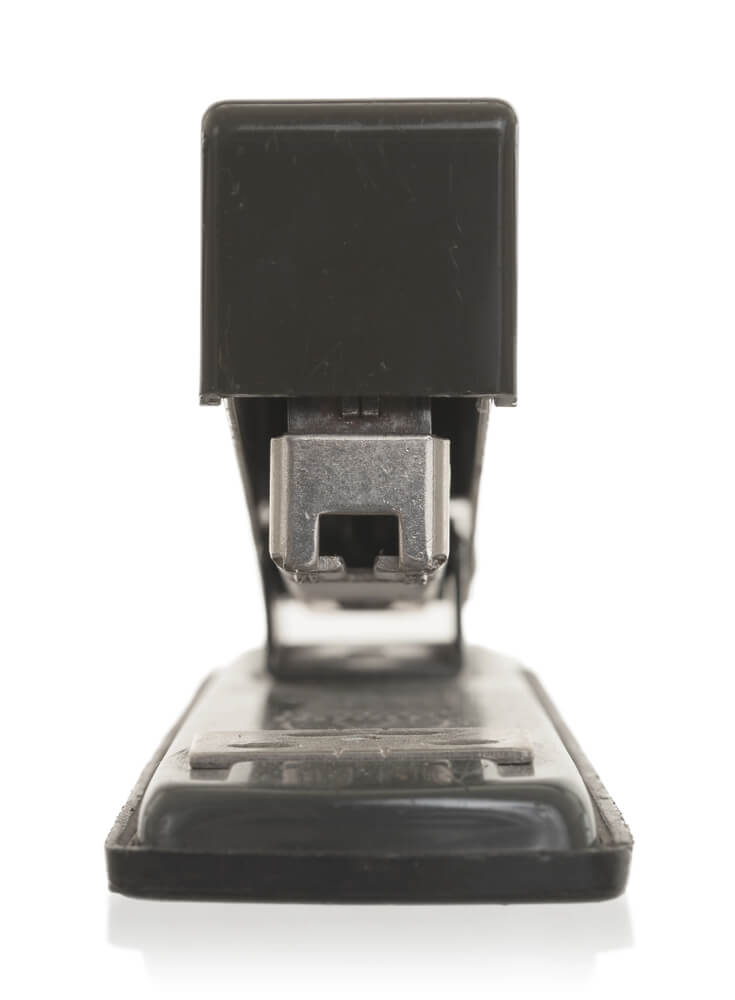
Kokuyo’s Harinacs, which appeared in 2009, abandons the staple entirely. The device makes two incisions in the paper and folds the strip between them through the cut, binding the sheets without metal.
The result recycles more easily and leaves no raised ridge on the page, though it holds fewer sheets than a conventional stapler.
The Rapid K1
Rapid of Sweden introduced the K1 in 1936 as a compact steel stapler, followed by a hammer stapler in 1950 and a professional manual stapler in 1957. The company’s range grew from a simple desk model into tools for upholsterers and builders.
A Rapid mark on the base points to a Swedish tradition of industrial design that valued durability over decoration.
Novus of Germany
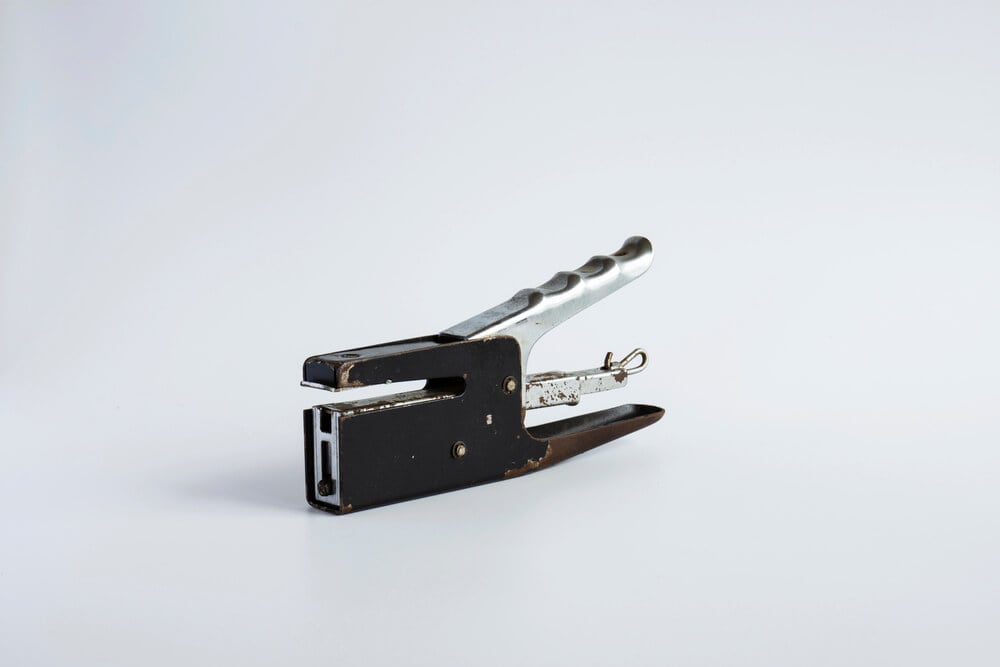
Novus began in 1949 and became part of the Erwin Müller Group, and in 1953 it released the first fully encased stapler. The enclosed body keeps dust and mechanical parts out of sight, and the later flat-clinch mechanism folds the staple legs flat against the paper for stacking.
Novus staplers are a clear example of the German habit of pairing engineering with a clean, minimal look.
The Zenith 520/E
Made by Balma, Capoduri & C. of Voghera, Italy, the Zenith 520/E uses a curved body that dates to 1943 and was nominated for the Compasso d’Oro design award in 1954. Each one is hand tested and sold with a lifetime guarantee, which is unusual for a mass-market desk tool.
The same company makes Coccoina glue, a stationery staple in Italy since 1927.
The Zenith 501
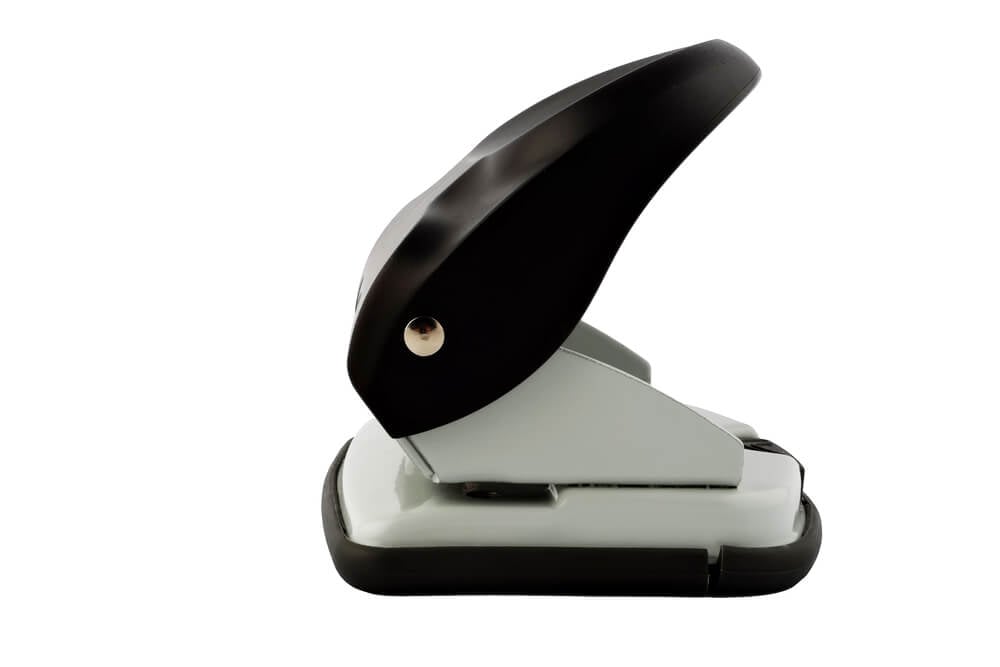
Launched in 2003, the 501 carries a Memphis-inspired look, with bright colors and playful geometry. It staples up to 20 sheets, holds 100 staples, and includes an anti-jam device.
It shows that even a modern stapler can still be a statement piece on a desk.
Small Objects, Long Memories
A stapler’s maker marks work like a timeline. A patent date places the design, a corporate name places the year, and a city of manufacture places the factory, so a battered specimen can often be traced with surprising precision.
The marks also show how an everyday tool crossed borders: a German patent became an American product, an American brand name became a Japanese noun, and a Swedish design ended up on desks far from Sweden.
The next time a stapler jams, the base is worth a glance. Behind the stamped metal sits a century of small design decisions, each one built on a competitor’s idea and each one still working on someone’s desk.
More from Go2Tutors!

- 27 Silver Dollars and Half Dollars Worth Keeping
- 28 Restaurant Menu Items Nobody Orders Anymore
- 17 Places Built in Seemingly Impossible Spots
- 27 Vintage Rings Worth More Than They Look
- 25 Restricted Sites Tourists Can’t Enter
Like Go2Tutors’s content? Follow us on MSN.