13 Old Magnifying Glasses Worth Another Look
A magnifying glass is one of the few tools that looks nearly the same after three thousand years. The lens does the work, and the frame around it records who was holding it and what they needed to see.
Old ones turn up in museum cases, jewelers’ drawers, and estate sale boxes. The thirteen below are worth a second look for what they reveal about the people who squinted through them.
The Nimrud Lens
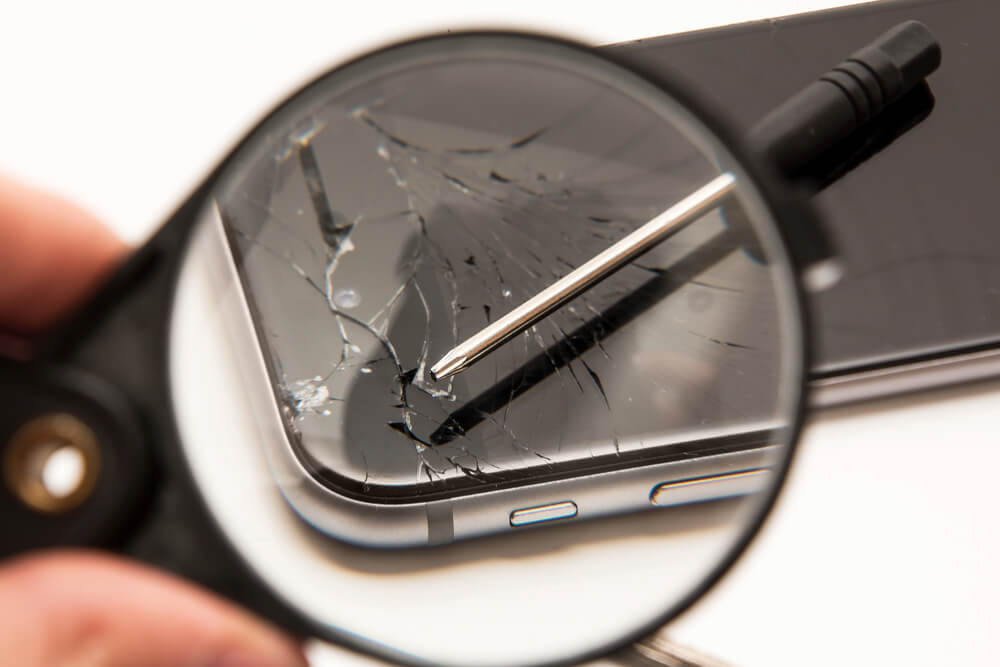
Austen Henry Layard found a lens of polished rock crystal at Nimrud, in present-day Iraq, in 1850. It dates to roughly the eighth century BC, measures about 38 millimeters across, and now sits in the British Museum.
Scholars still argue over whether it served as a magnifier, a burning glass, or decorative inlay, and the debate has never been settled.
The Visby Lenses
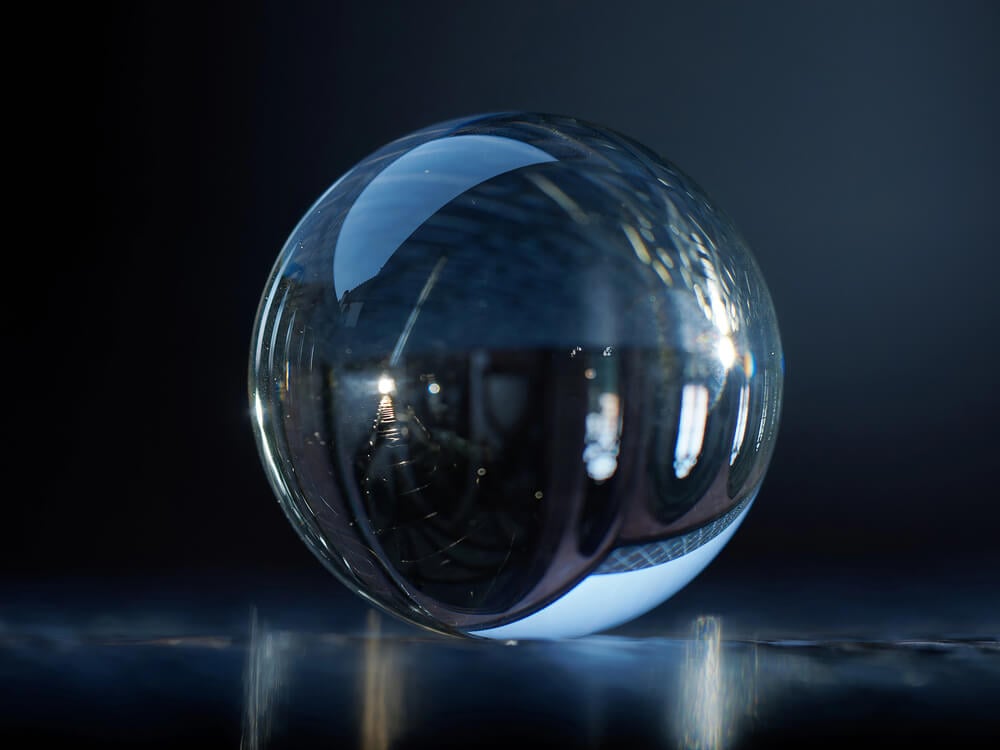
Roughly a hundred rock crystal lenses have come from the Swedish island of Gotland, most of them dating to the eleventh and twelfth centuries. Their curves are precise enough to magnify and to focus sunlight, and some sit in silver mounts that suggest jewelry or status objects rather than workshop tools.
Finds at Fröjel point to local manufacture, which means Gotland craftsmen were grinding lenses long before spectacles appeared in Europe.
Roger Bacon’s Reading Stone
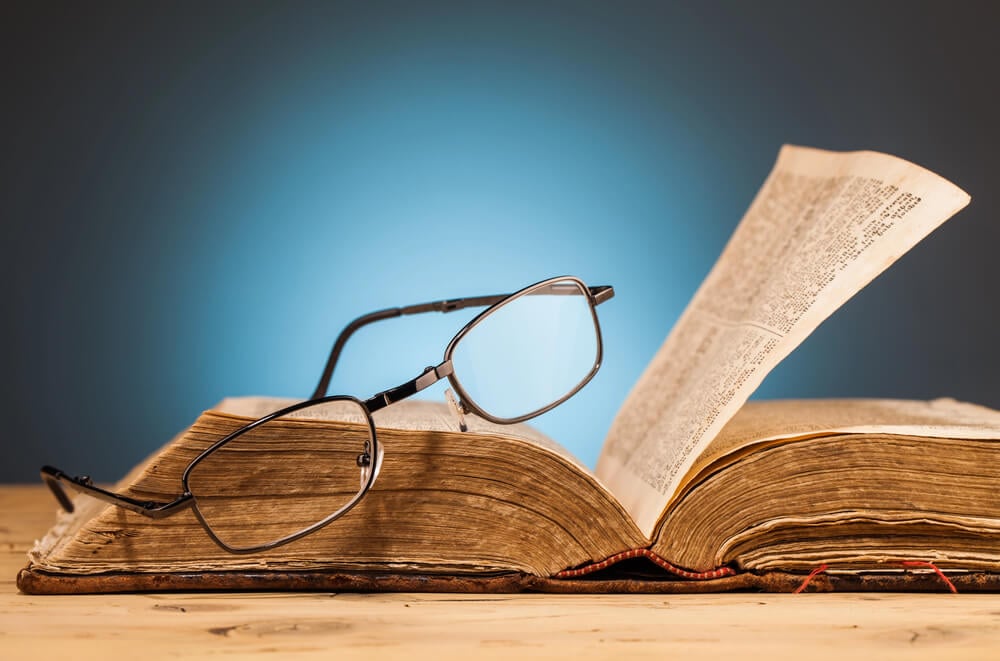
In the Opus Majus, written around 1267, the English friar Roger Bacon described how a segment of a glass sphere laid on a page makes small letters larger. He recommended the trick to older readers whose eyes had weakened.
The flat side against the text and the curved side up is the same arrangement later sold as the dome paperweight magnifier.
Leeuwenhoek’s Single-Lens Microscopes
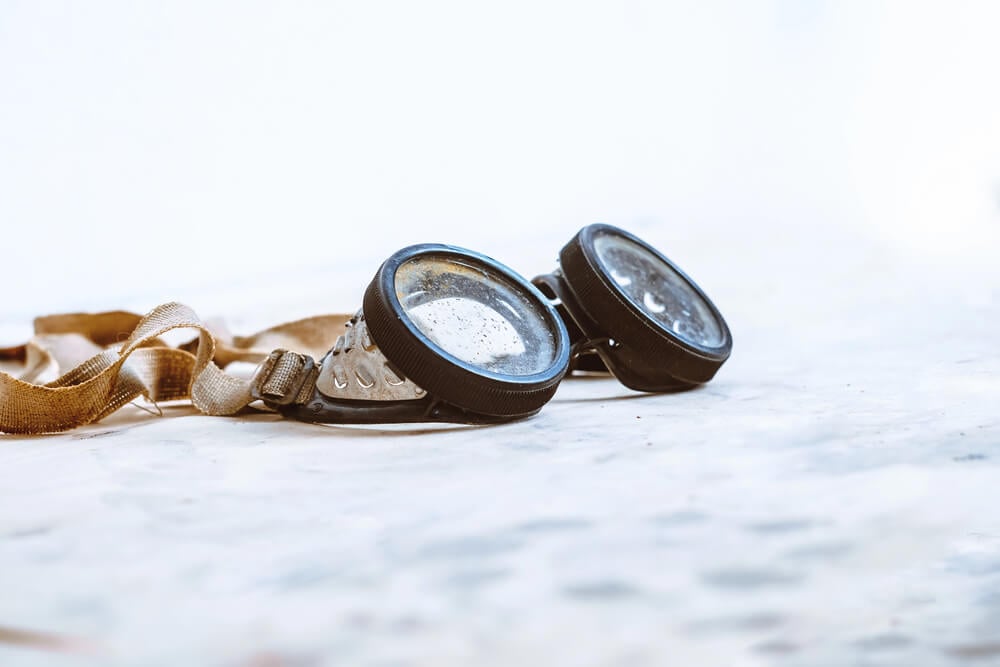
Antonie van Leeuwenhoek ground tiny beads of glass, smaller than a lentil, and clamped each one between two metal plates. The best surviving examples magnify somewhere around 270 times, a figure that surprised modern researchers who tested them.
He mounted specimens on a pin and held the instrument up to his eye, then sent descriptions of what he saw to the Royal Society in London.
The Coddington Magnifier
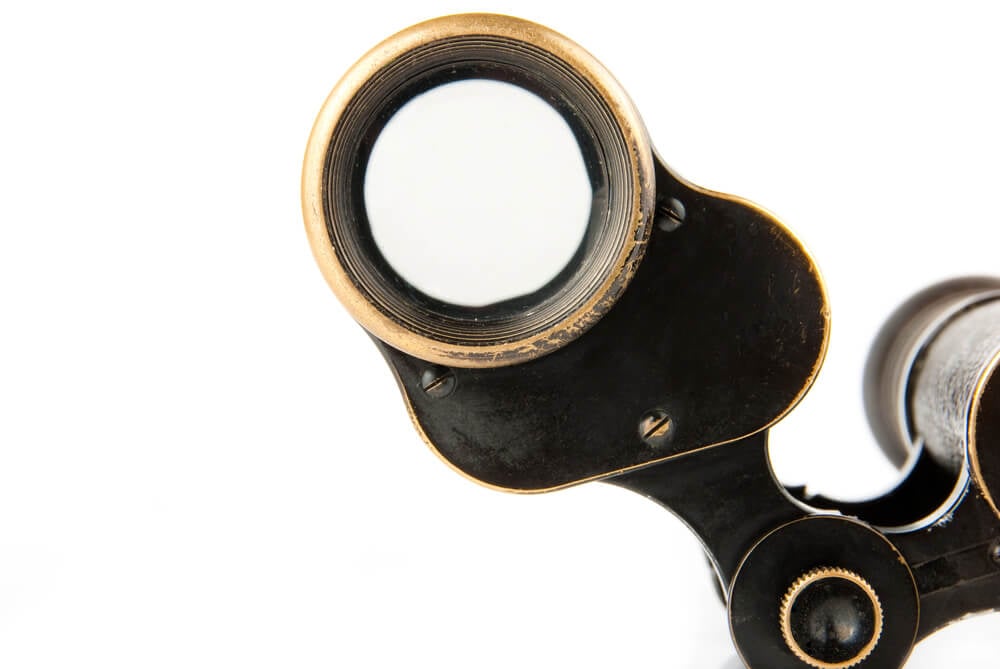
A thick glass sphere with a groove ground around its middle, the Coddington lens reduces the distortion that plagues simple magnifiers. Henry Coddington described the design in 1829, building on earlier work by William Hyde Wollaston.
Common strengths run from about 10 to 20 times, and old examples in brass or tortoiseshell housings command higher prices when the glass is free of chips.
The Hastings Triplet
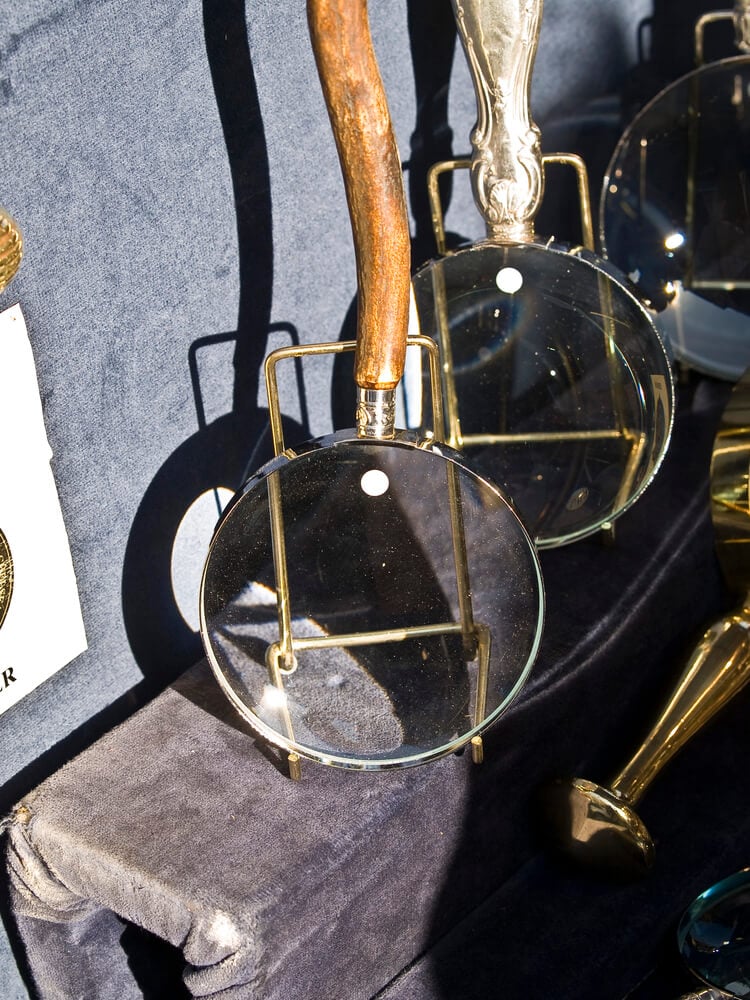
Three cemented glass elements make the Hastings triplet sharp across its entire field, correcting the color fringing that blurs cheaper lenses. The design is credited to the American physicist Charles Hastings, and it became the standard loupe for geologists and jewelers.
Vintage models in black enameled brass fetch the most when the cement between the elements has not yellowed or separated.
Stanhope Lenses
A Stanhope is a short rod of glass with one end ground into a lens and the other end holding a photograph smaller than a grain of rice. The type is named for the third Earl Stanhope, who lived from 1753 to 1816, and the French photographer René Dagron patented microphotograph charms built on the idea in 1859.
Collectors find them inside pen holders, letter openers, and souvenir charms, and prices depend heavily on whether the image still comes into focus.
The Lacemaker’s Water Flask
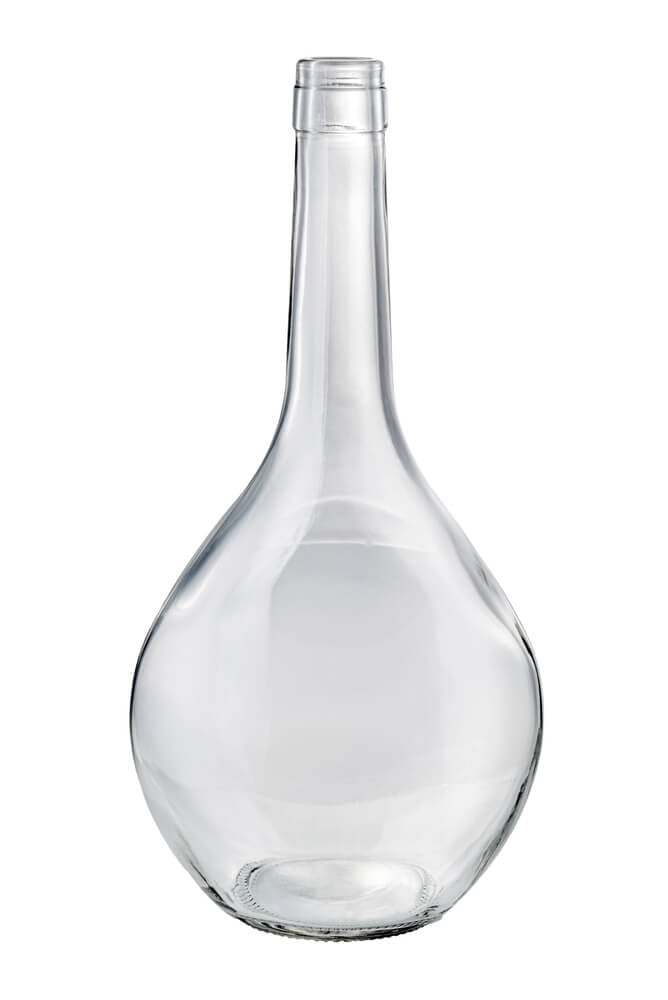
Before electric light, lacemakers and other fine-work craftspeople set a glass flask of water between a candle and their work. The globe gathered the flame’s light into a bright pool on the fabric and slightly enlarged the stitches beneath it.
Several workers could share a single candle by arranging their flasks around it, which made one flame do the job of many.
Fresnel’s Flat Lens
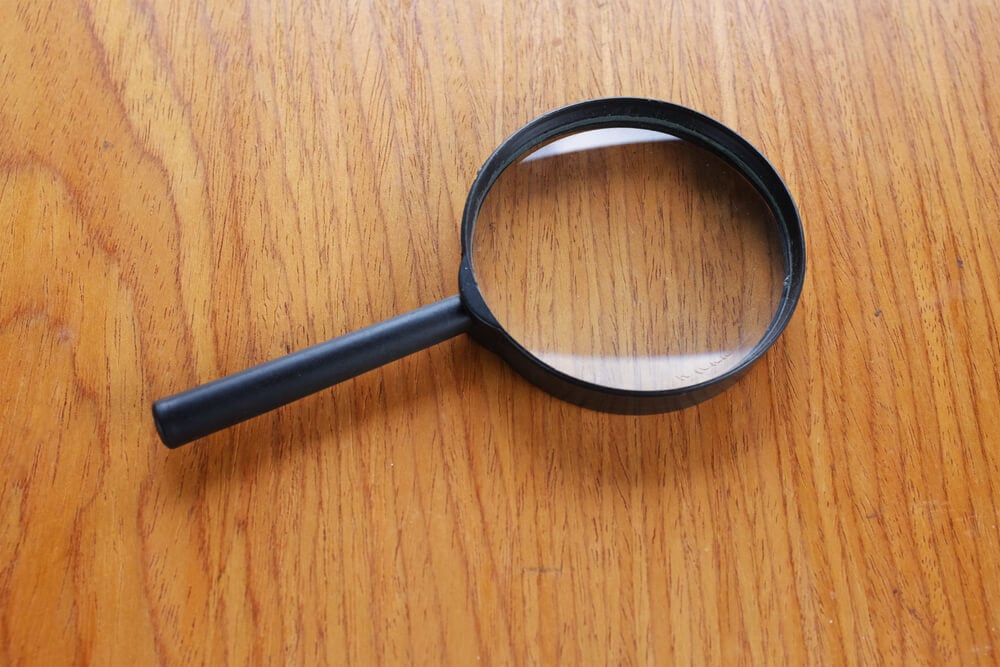
Augustin-Jean Fresnel designed a lens built from concentric rings in 1822 so that lighthouses could use a fraction of the glass a solid lens required. The first one lit the Cordouan lighthouse in 1823.
The same ring pattern later gave the world the thin plastic sheet magnifier that slips into a book or a wallet, and the faint ridges are still visible on every one.
Sherlock Holmes’s Round Lens
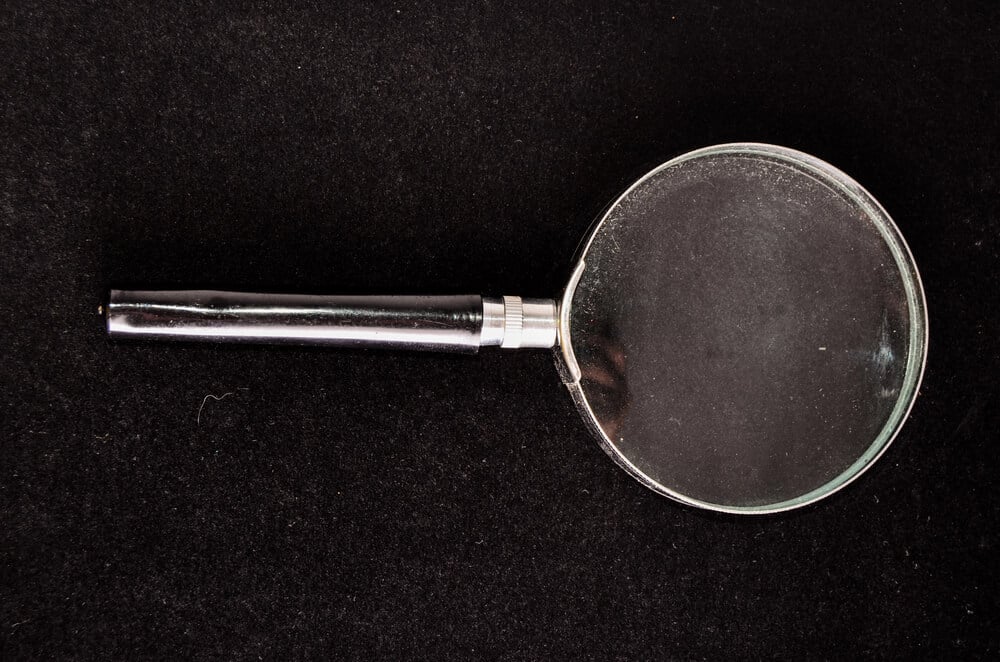
In A Study in Scarlet, published in 1887, Holmes pulls a tape measure and a large round lens from his pocket and goes over the crime scene on hands and knees. The scene helped fix the magnifying glass in the public mind as the symbol of detection.
Reproductions of that round brass-handled type remain among the most common old magnifiers sold today.
The Donegan OptiVISOR
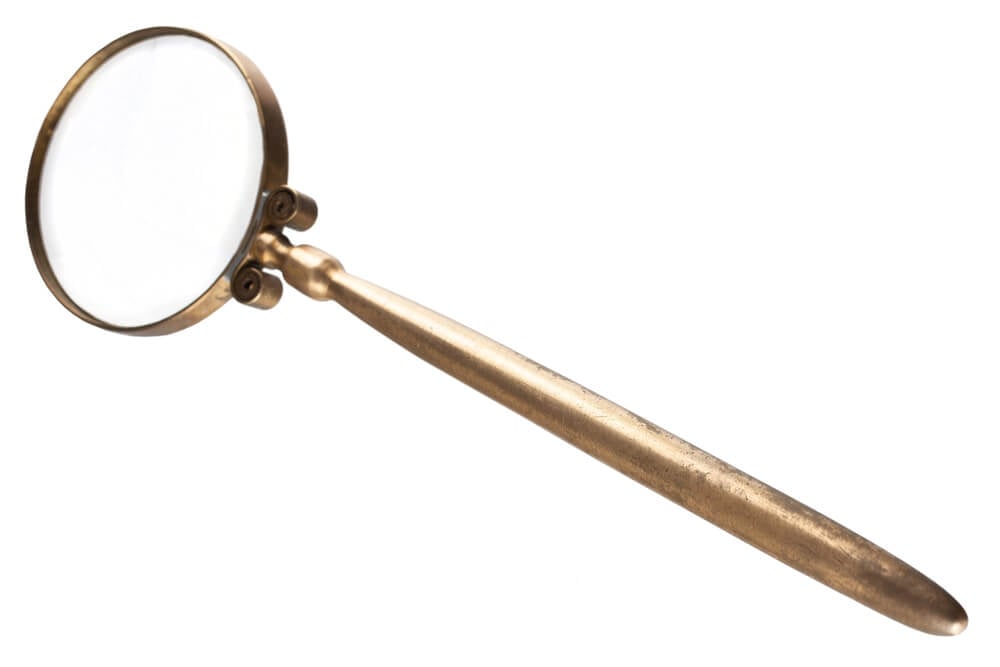
The Donegan Optical Company of Lenexa, Kansas, has made headband magnifiers since 1952, freeing both hands for work. The design flips lenses down over the eyes and was adopted by watchmakers, dentists, and model builders.
Vintage visors with intact straps and unscratched lenses sell best, since the plastic headbands tend to crack with age.
Davy and Faraday’s Diamond Burn
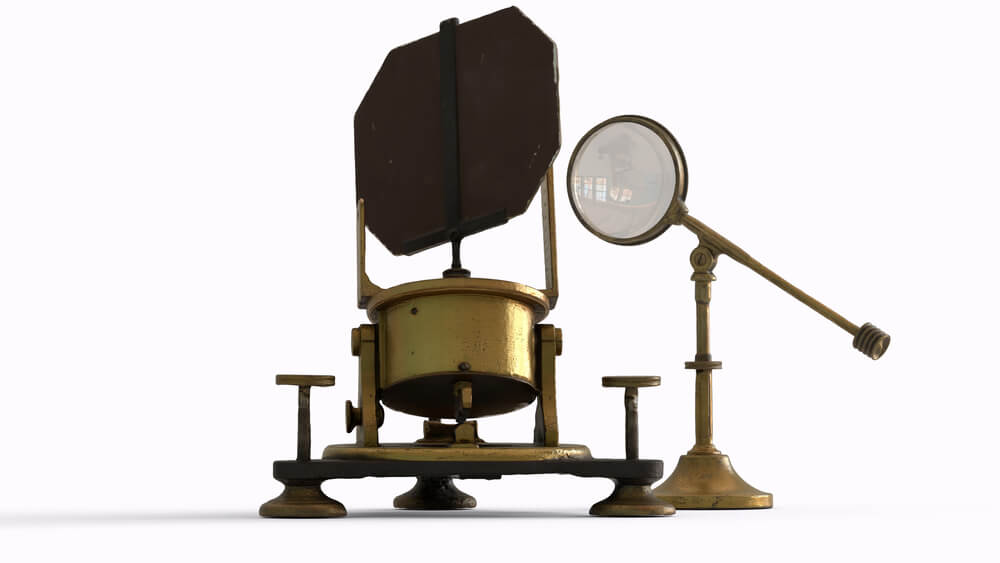
In 1814 Humphry Davy and Michael Faraday used the great burning lens of the Grand Duke of Tuscany in Florence to focus sunlight on a diamond sealed in a container of oxygen. The diamond burned away, and the experiment showed that it is a form of carbon.
Faraday recorded the date as 27 March, and the lens remains one of the more consequential magnifiers ever pointed at a gem.
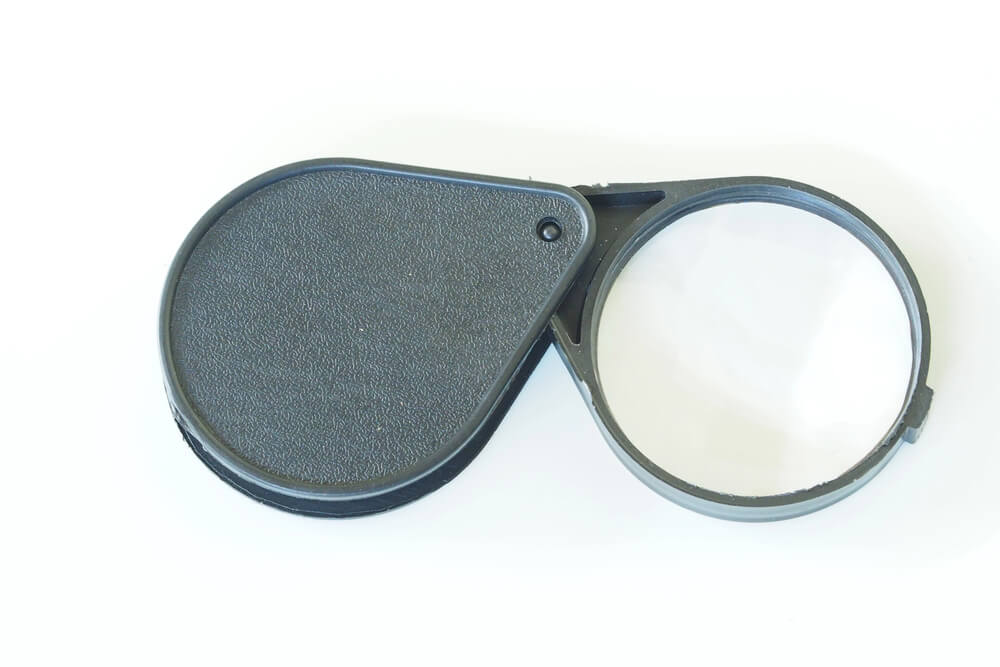
The Ten-Power Jeweler’s Loupe
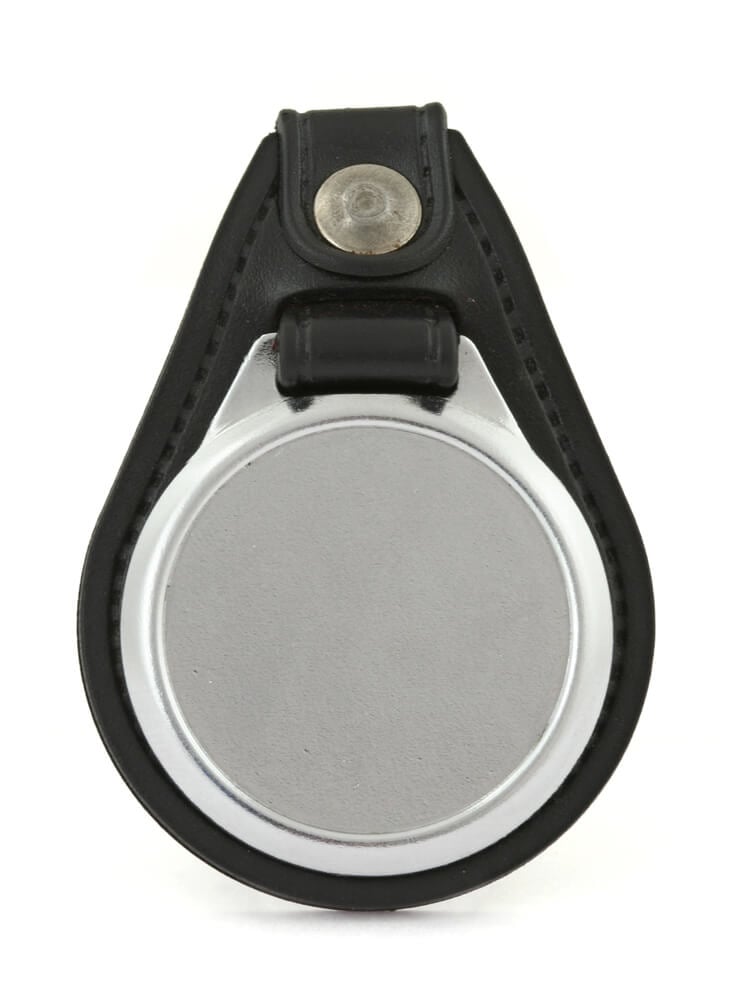
The folding 10x triplet loupe is still the working standard for judging a diamond, and the grading term “loupe-clean” assumes exactly that magnification. Old versions arrive in horn, brass, or leather cases, and a dealer will hold the stone in tweezers and the loupe against the cheekbone to steady it.
Prices for antique loupes track the condition of the glass and the smoothness of the hinge.
What a Lens Remembers
Every item here solved a plain problem: a word too small, a stitch too fine, a flaw too faint. The solutions changed from rock crystal to ground glass to molded plastic, but the basic bargain never did, which is that a curved piece of transparent material makes the world easier to see.
That consistency is what makes old magnifiers satisfying to pick up. The scratches near the rim show where thumbs held it, and the worn case shows how often it was reached for.
More from Go2Tutors!

- 27 Silver Dollars and Half Dollars Worth Keeping
- 28 Restaurant Menu Items Nobody Orders Anymore
- 17 Places Built in Seemingly Impossible Spots
- 27 Vintage Rings Worth More Than They Look
- 25 Restricted Sites Tourists Can’t Enter
Like Go2Tutors’s content? Follow us on MSN.