Retro Telephones That Made Ringing Stylish
For most of the 20th century, the telephone wasn’t just a communication device—it was a statement piece. These weren’t the sleek, anonymous slabs of glass and metal we carry today.
Vintage telephones had personality, weight, and presence. They came in colors that matched your curtains, featured dials that glowed in the dark, and boasted shapes so distinctive they earned their own nicknames.
Some became so iconic they ended up in museum collections, while others simply became fixtures in millions of homes, defining what a telephone looked like for entire generations. The evolution of telephone design paralleled broader shifts in consumer culture, industrial design, and interior decoration.
As telephones transitioned from utilitarian equipment to consumer products, manufacturers discovered that style could sell as effectively as function. The result was an era of telephone design that produced some of the most recognizable objects of the mid-century modern period.
Here’s a closer look at the retro telephones that didn’t just ring—they made a statement.
Western Electric 500
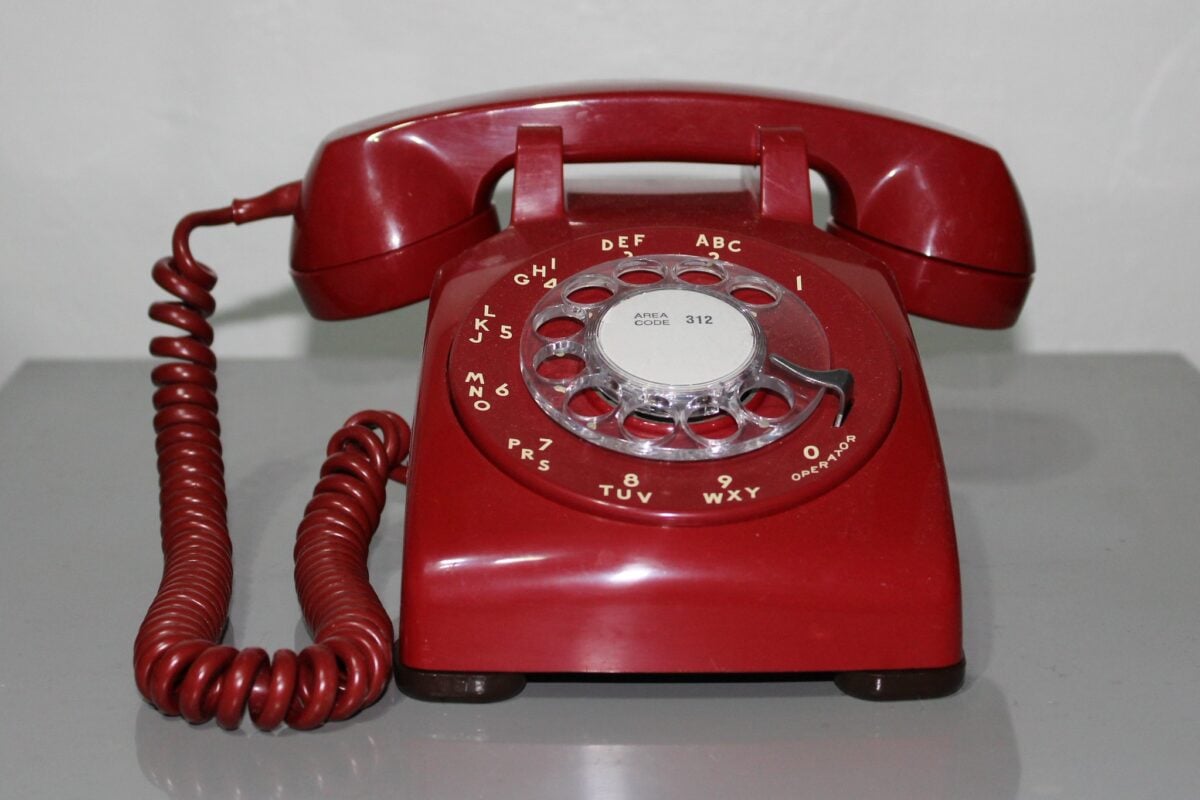
If one telephone could claim to define American homes from the 1950s through the 1980s, the Western Electric 500 would take that title without much argument. Designed by industrial designer Henry Dreyfuss in 1949, this rotary dial telephone became the Bell System’s workhorse for more than three decades.
Its angular handset replaced the curves of earlier models, while the dial markings were placed outside the finger pits for improved readability—a small detail that made a significant difference in usability.The 500’s slightly larger base accommodated an adjustable bell ringer and enhanced electronics, making it more versatile than its predecessor, the 302 model.
What really set it apart, though, was the introduction of ‘designer colors’ in the early 1950s. For the first time, customers could order telephones in shades beyond basic black—light blue, beige, pink, turquoise, and more.
The Bell System charged a one-time fee for these colored models, turning telephone selection into an interior design decision rather than a purely functional choice.The 500 even featured special variants, like rare models with mushroom-shaped night lights built into the dial.
This telephone stayed in production so long that it evolved internally to accommodate touch-tone technology in 1964, though its external appearance remained largely unchanged. That longevity speaks to how thoroughly Dreyfuss got the design right the first time.
Princess Phone
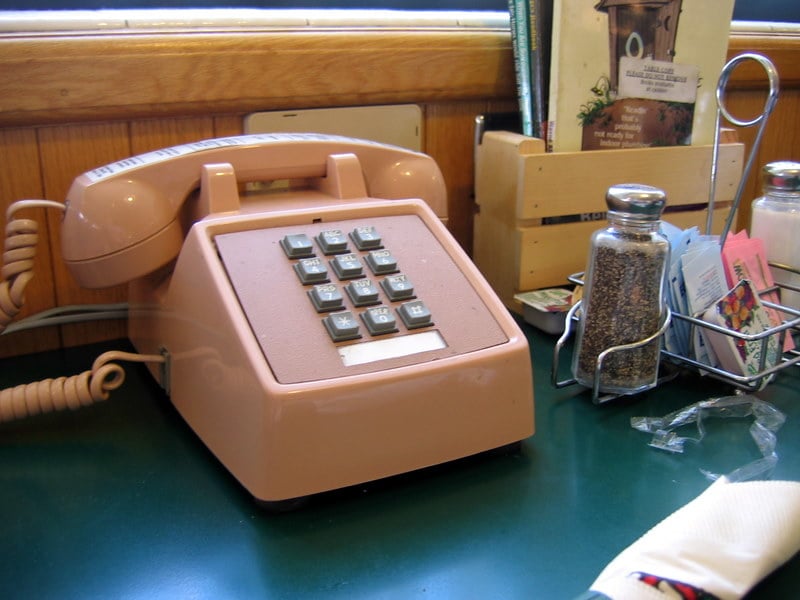
The Princess telephone arrived in 1959 with a marketing campaign that made its target audience crystal clear. ‘It’s little…It’s lovely…It lights’ went the slogan, coined by AT&T employee Robert Karl Lethin. This compact bedside phone was explicitly marketed to women, hence its feminine name and the advertising imagery that accompanied it.
The Princess represented a shift in telephone marketing—this wasn’t just utility equipment anymore, but a consumer product designed to appeal to specific demographics.Designed by Henry Dreyfuss, who had created the 500 series, the Princess featured a lighted dial that doubled as a night-light for bedroom use.
Its smaller size made it convenient for nightstand placement, though early models had an interesting quirk—they were so light that they’d slide across surfaces while dialing. Western Electric eventually added an optional lead weight to solve the problem, and later models incorporated internal ringers once the company developed a mechanism small enough to fit inside the compact case.
The Princess came in a broad range of colors—pink, red, yellow, moss green, turquoise, white, beige, and more. It was one of the first phones to be available in 12 different color options, reflecting the growing consumer demand for products that coordinated with interior design schemes.
The telephone moved from black utility object to colorful accessory, and the Princess led that transformation.
Trimline
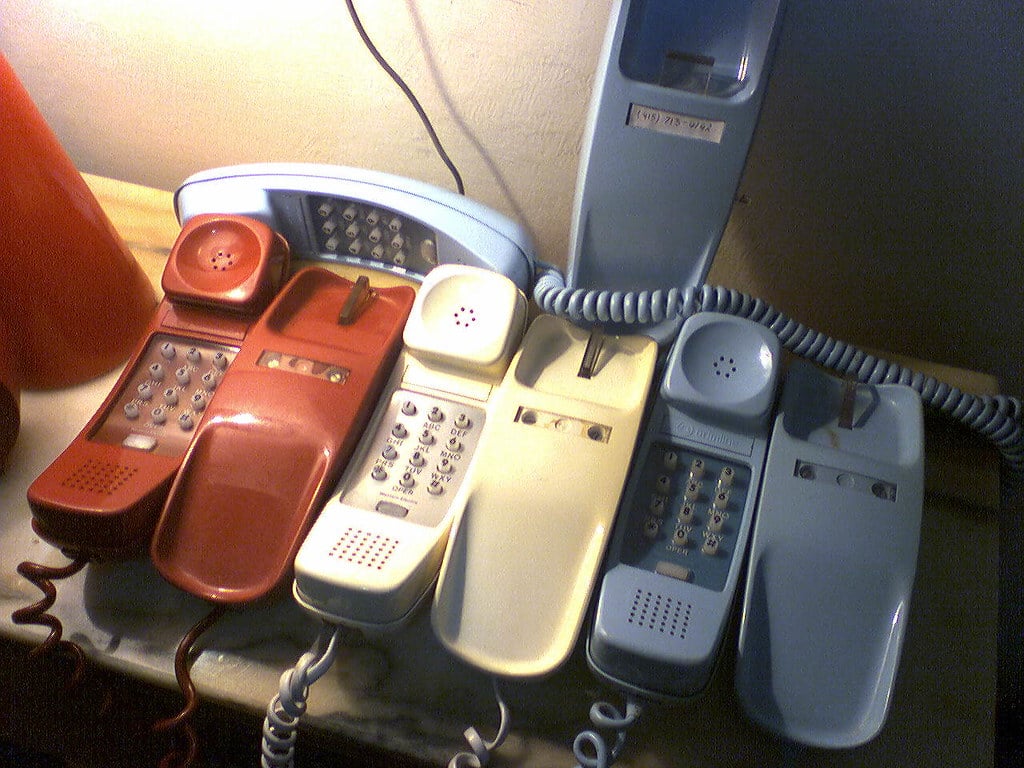
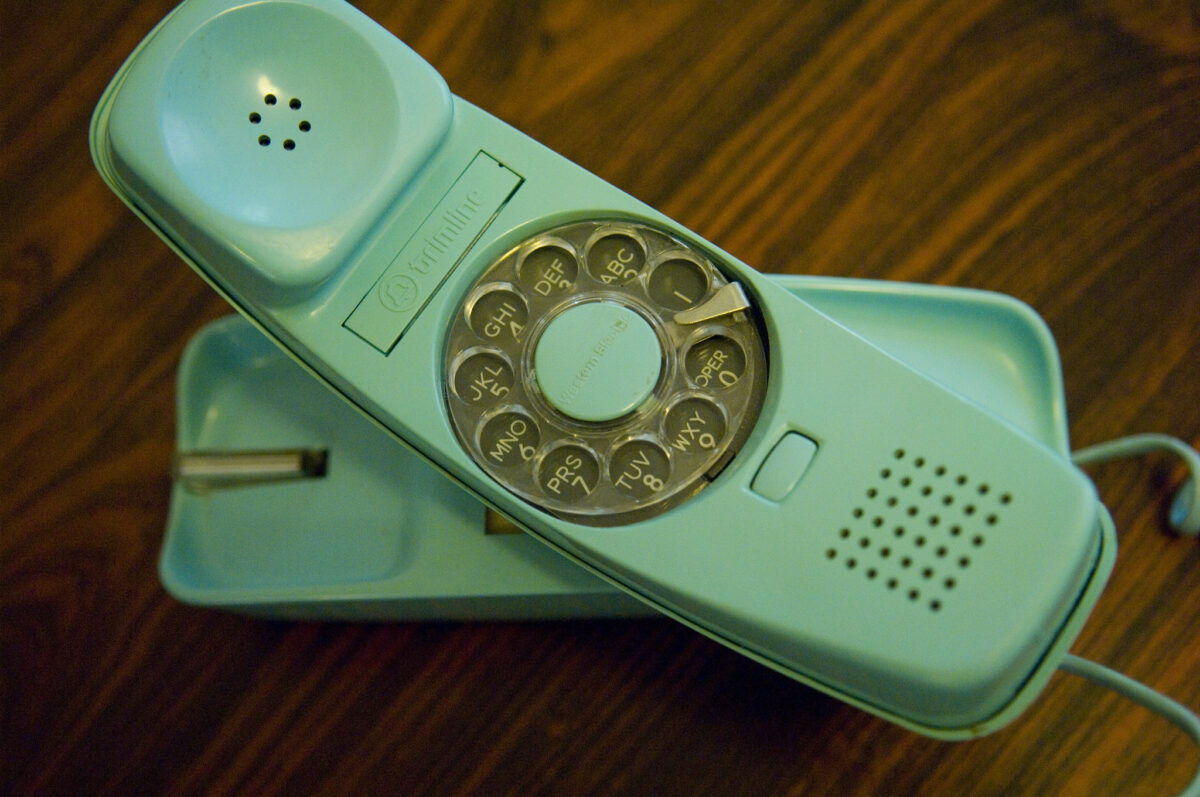
By 1965, Bell System and Henry Dreyfuss Associates had pushed telephone miniaturization to its logical conclusion with the Trimline. This sleek design featured the dial built into the handset itself—a radical departure from traditional telephone architecture.
The Trimline’s curved, streamlined body took up minimal space, making it popular for modern interiors where bulky desktop phones felt out of place.The Trimline incorporated several innovations beyond its compact form.
Like the Princess, it featured a lighted dial, though early models required an external transformer to power the incandescent bulb. This created a small practical headache—the bulky transformer needed an electrical outlet, which consumers found inconvenient.
Western Electric eventually redesigned the Trimline to use a low-power LED that drew current from the telephone line itself, eliminating the transformer entirely. The Trimline was also among the first phones to use modular connectors, the predecessor to the now-ubiquitous RJ11 jack.
This made installation and replacement significantly easier than the hardwired systems that preceded it. The phone came in both rotary and touch-tone versions, with production of the rotary model beginning in late 1965 and touch-tone following in mid-1966.
Its sleek design was widely copied by other manufacturers, establishing the dial-in-handset concept that would influence cordless and cellular phone design decades later.
Ericofon Cobra
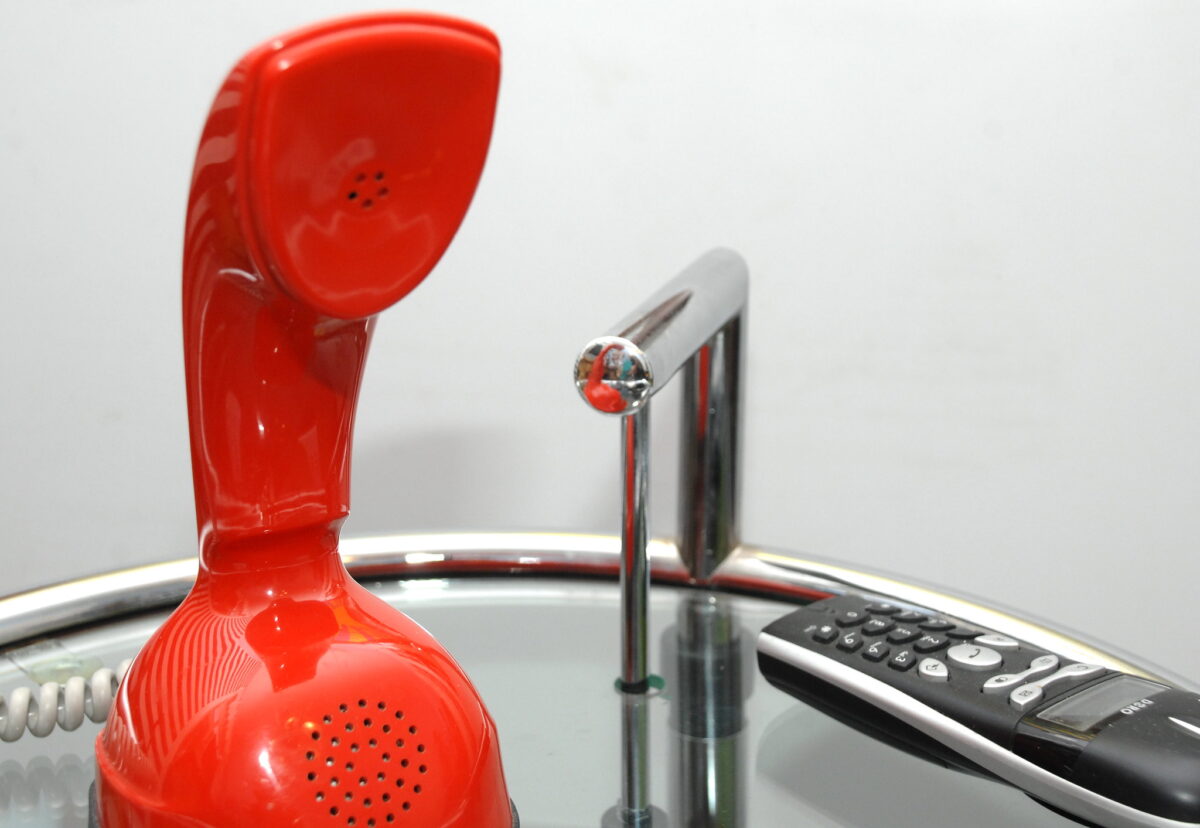
While American manufacturers refined traditional telephone forms, Swedish company Ericsson took a radically different approach. The Ericofon, designed in the late 1940s by Ralph Lysell, Gösta Thames, and Hugo Blomberg, combined the dial and handset into a single sculptural unit.
Nicknamed the ‘Cobra’ for its snake-like silhouette, this one-piece telephone represented a complete break from the heavy black Bakelite devices that dominated earlier decades. The Ericofon’s development began in 1941, though production didn’t start until 1954.
The breakthrough came with the availability of ABS plastic, which could be molded in any color—unlike Bakelite’s standard black. The final design featured the rotary dial on the phone’s underside, with a red button in the center that served as the hook switch.
Users would pick up the entire phone to dial, a design that anticipated cordless and cellular phones by several decades. Originally offered in 18 colors, the Ericofon was marketed with explicit appeals to design-conscious consumers.
A 1958 advertisement proclaimed that ‘architects, interior decorators, designers and style conscious home-makers have acclaimed the Ericofon as the first truly decorative phone.’ This wasn’t hyperbole—the phone’s striking appearance made it a favorite in modern interiors, and it eventually entered the permanent collection of the Museum of Modern Art in New York.
Ericofon’s influence extended beyond design circles. It appeared frequently in television shows and films throughout the 1960s and 70s, often listed by name in episode credits.
Its distinctive silhouette made it instantly recognizable, turning it into a cultural signifier of modernity and sophistication. Between 1956 and 1982, Ericsson produced over 2.5 million units, with only about 20 percent reaching the Swedish market—the rest were exported worldwide.
Western Electric 302
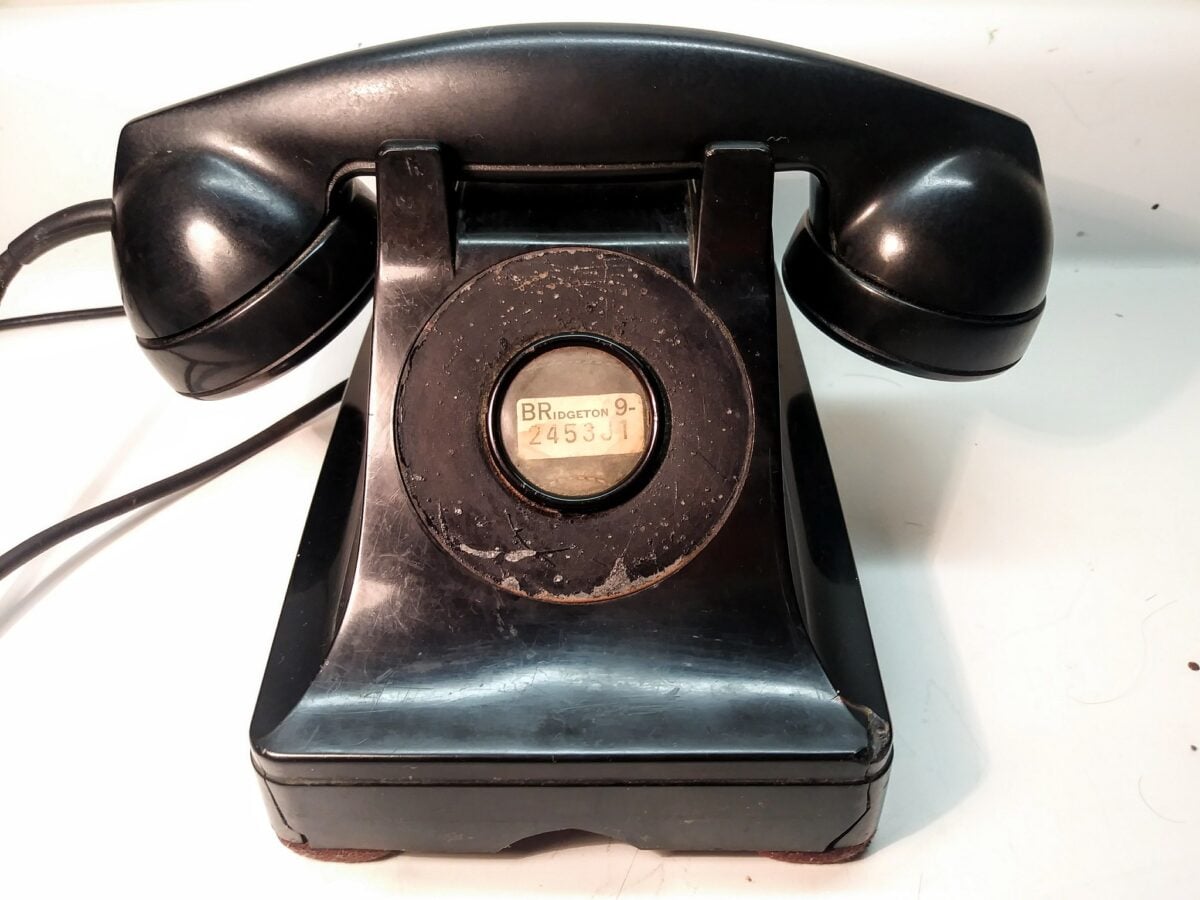
Before the 500 series redefined telephone aesthetics, the Western Electric 302 established the template. Introduced in the 1930s and designed by Henry Dreyfuss’s industrial design firm, the 302 featured smooth, streamlined curves that reflected Art Deco influences.
This model became known as the ‘Lucy phone’ because it appeared regularly on the television show ‘I Love Lucy,’ embedding it in American popular culture.The 302 represented an important transition in telephone design.
It moved away from the separate handset and base configuration toward a more integrated look. The rounded forms and compact footprint made it suitable for residential use in a way that earlier candlestick phones never achieved.
After World War II, metal shortages forced Western Electric to switch from metal bodies to thermoplastic, which opened up possibilities for color variations that would fully flower in later models.
The Designer Behind the Designs
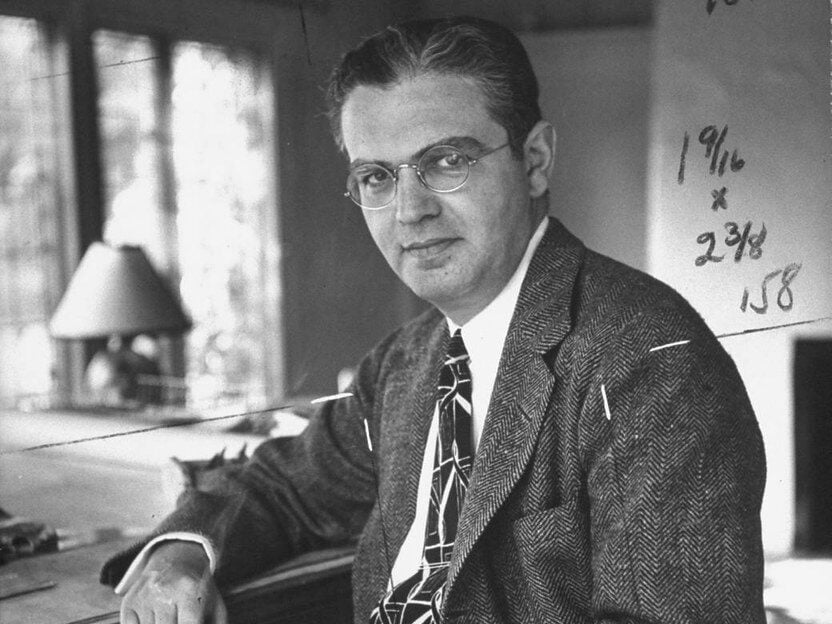
Henry Dreyfuss deserves recognition as the single most influential figure in American telephone design. His work with Western Electric and the Bell System stretched from 1937 to 1982, producing over 161 million telephone sets.
Dreyfuss approached telephone design with careful attention to ergonomics and user experience—he studied how people actually held phones, which fingers they used to dial, and how telephone shapes fit into domestic spaces. His design philosophy emphasized that form should serve function, but that didn’t mean phones had to be ugly or purely utilitarian.
The progression from the 302 to the 500 to the Princess to the Trimline shows a consistent design language evolving to meet changing consumer expectations and technological capabilities. Dreyfuss understood that telephones occupied prominent positions in homes and businesses, making them ideal candidates for thoughtful industrial design.
The Color Revolution
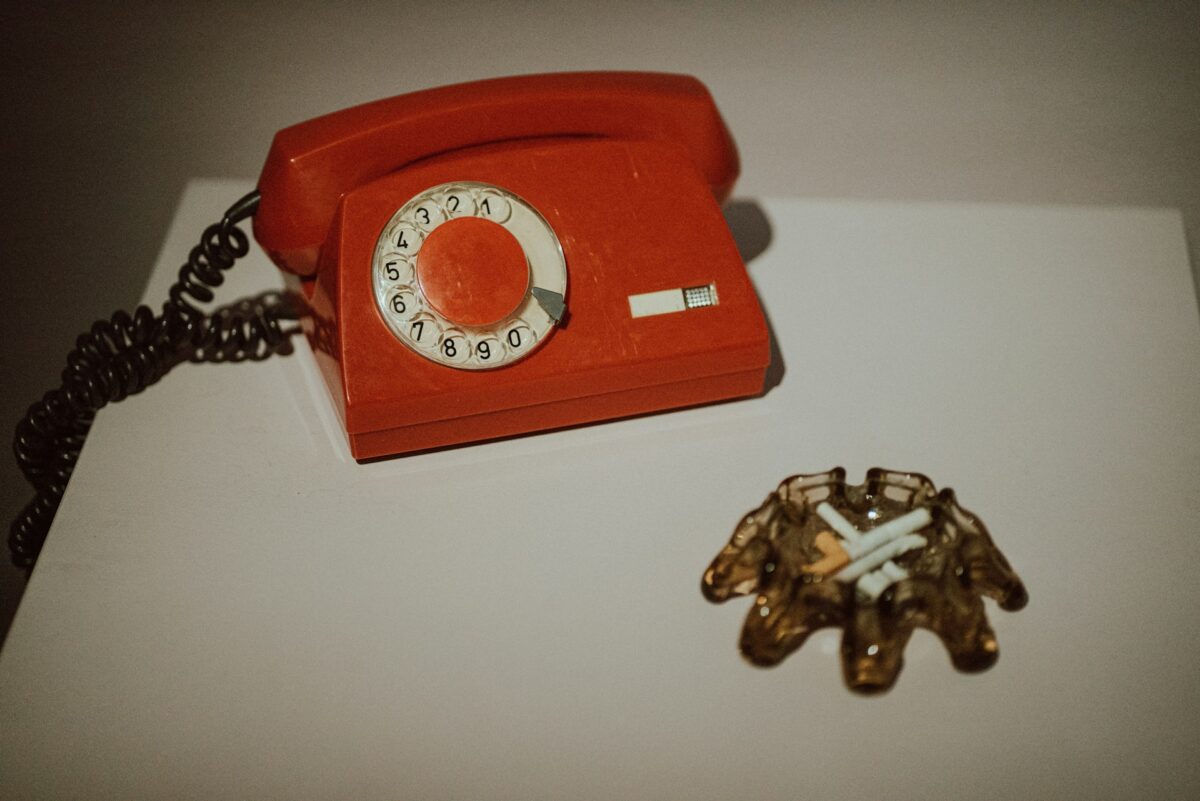
The shift from ‘any color you want as long as it’s black’ to a rainbow of options marked a crucial transition in telephone history. When Western Electric began offering designer colors in the early 1950s, it acknowledged that telephones had become consumer goods subject to fashion and personal taste.
Colors like ‘Wedgewood Blue,’ ‘Princess Pink,’ and ‘Persian Gray’ aligned telephone aesthetics with interior design trends.This color explosion reflected broader cultural shifts.
The post-war period saw unprecedented prosperity and a booming housing market. Homeowners decorated with increasing sophistication, and telephone colors became part of coordinated design schemes.
A turquoise phone might match kitchen appliances, while a beige model complemented living room furniture. Some colors proved short-lived, discontinued after just a few years as tastes changed—evidence of how rapidly interior fashions evolved during this period.
Marketing and Cultural Impact
Telephone companies discovered that marketing mattered as much as engineering. The Princess phone’s feminine positioning and the Trimline’s emphasis on modern sophistication showed how manufacturers segmented markets and targeted specific demographics.
These weren’t just phones—they were lifestyle accessories that signaled taste and modernity.Television and film amplified certain models’ cultural resonance.
Ericofon’s appearances in shows like ‘Mission: Impossible’ and films like ‘Casino Royale’ associated it with sophistication and international glamour. The Western Electric 500’s ubiquity made it invisible yet essential, the default telephone that appeared in countless productions simply because that’s what phones looked like to most Americans.
The Technology Inside

While design evolution is visually obvious, the technology inside these phones also progressed significantly. Early rotary dials used mechanical governors to regulate pulse timing as the dial returned to rest position.
The bells that rang incoming calls evolved from simple electromagnetic clappers to quieter electronic buzzers. Touch-tone technology, introduced in 1963, offered faster dialing and opened possibilities for automated phone systems.
Even within models that looked similar externally, internal components improved over time. The Western Electric 500 maintained its basic appearance for decades while incorporating better electronics, different ringer mechanisms, and eventually touch-tone keypads.
This approach—stable external design with evolving internals—allowed manufacturers to maintain brand recognition while adopting new technologies.
Why They Still Matter
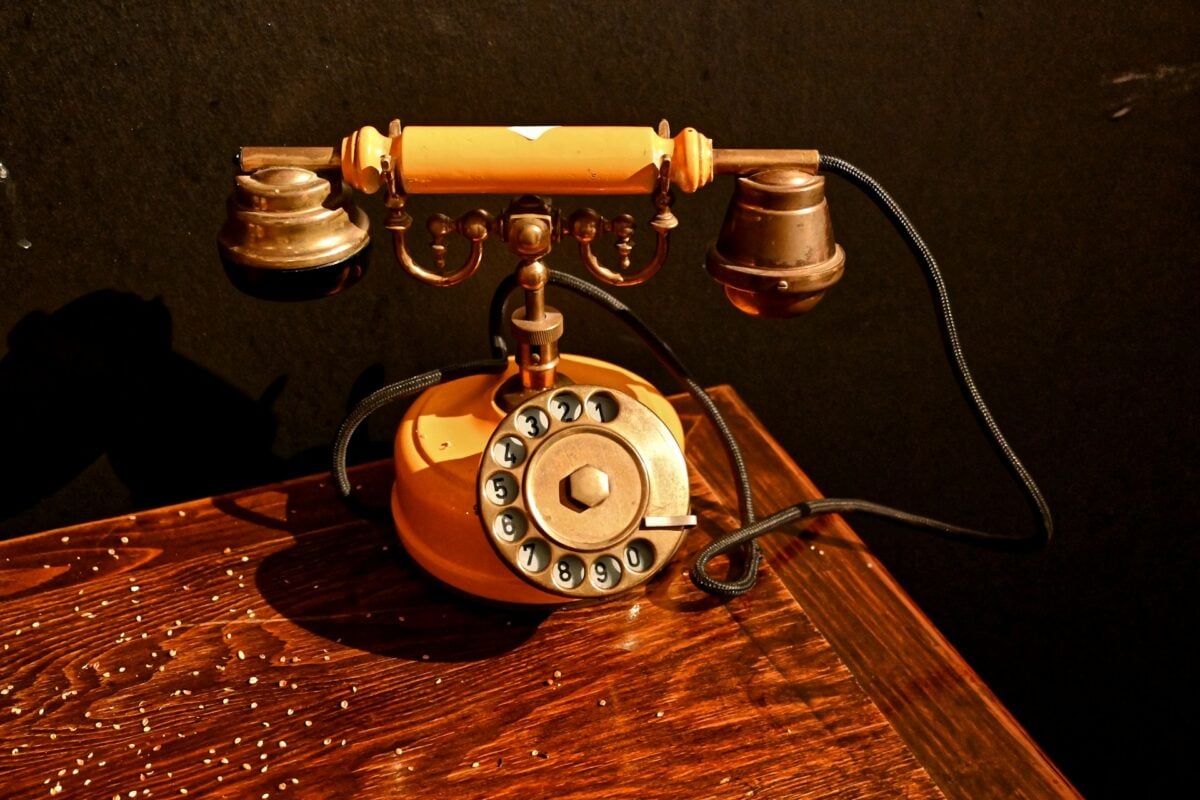
These vintage telephones represent a particular moment when consumer electronics were built to last, designed with care, and expected to occupy permanent places in homes. The rotary dial’s satisfying mechanical action, the substantial weight of a well-made handset, and the clear, resonant ring of a proper bell ringer all contributed to a tactile experience that modern phones have abandoned in favor of functionality and portability.
The design principles these phones embodied—that utility objects deserve beautiful form, that consumer goods should coordinate with their surroundings, that ergonomics and aesthetics can coexist—remain relevant. The Western Electric 500 served homes reliably for 30-plus years.
The Ericofon entered museum collections as a significant industrial design achievement. The Princess and Trimline anticipated modern consumer electronics marketing by recognizing that different users have different needs and preferences.
Today, these phones have become collectibles, decorative objects, and cultural touchstones. They appear in vintage-themed spaces, get restored by enthusiasts, and serve as reminders of an era when phones stayed in one place, conversations required commitment, and answering meant you actually had to be home.
The satisfying click-click-click of a rotary dial returning to position, the weight of a proper handset, the glow of a Princess phone’s nightlight—these sensory experiences defined telephone use for generations. That’s a style worth remembering.
More from Go2Tutors!

- The Romanov Crown Jewels and Their Tragic Fate
- 13 Historical Mysteries That Science Still Can’t Solve
- Famous Hoaxes That Fooled the World for Years
- 15 Child Stars with Tragic Adult Lives
- 16 Famous Jewelry Pieces in History
Like Go2Tutors’s content? Follow us on MSN.