Thanksgiving Myths People Still Believe
Every November, millions of Americans celebrate a holiday they believe they understand, gathered around tables laden with turkey, stuffing, and cranberry sauce.
The tale appears simple enough: In 1621, a friendly feast was held for all, marking the beginning of a centuries-old custom, after Pilgrims in funny hats landed on Plymouth Rock and Native Americans taught them how to plant corn.
It’s mostly fiction, patriotic, and endearing.
Compared to the sanitized version we were taught in elementary school, the true history of Thanksgiving is messy, stranger, and much more fascinating.
Victorian-era paintings, romanticism from the 19th century, and a tenacious magazine editor who spent decades lobbying presidents are the main sources of our beliefs about the holiday.
Our celebration today is very different from the actual events of 1621.
Here’s what really happened, and why so many Thanksgiving ‘facts’ are anything but.
Plymouth Rock
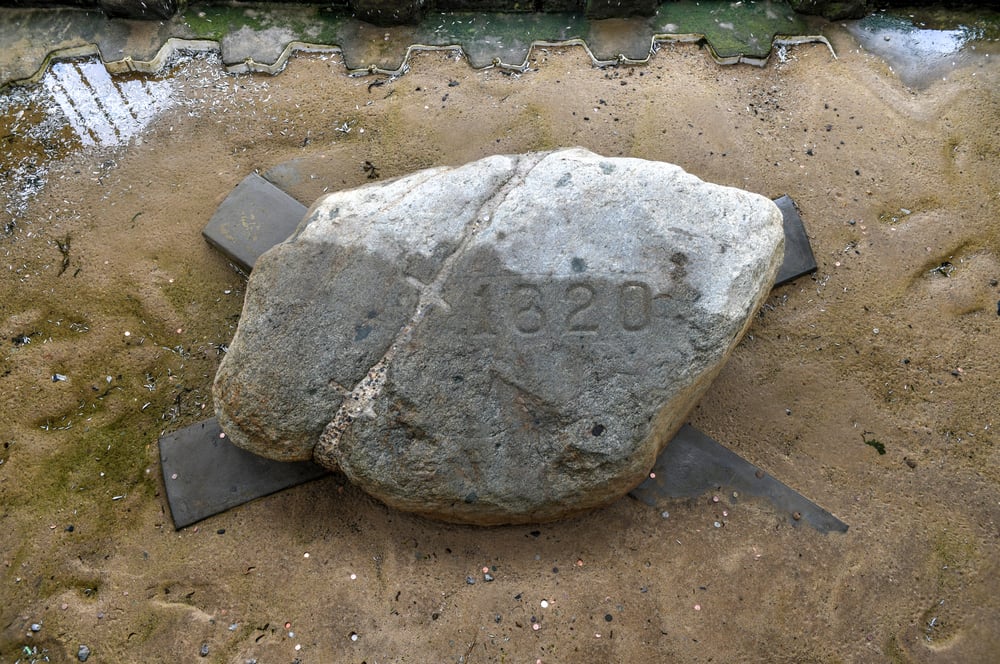
The iconic image of Pilgrims stepping off the Mayflower onto a massive boulder makes for great storytelling.
There’s just one problem: it never happened.
Not a single person who was actually there mentioned landing on any rock.
William Bradford, the colony’s governor who kept detailed records, never wrote about it.
Edward Winslow, who left one of only two firsthand accounts of the 1621 feast, didn’t mention it either.
The Plymouth Rock legend didn’t surface until 1741 — more than a century after the Mayflower arrived.
An elderly man named Thomas Faunce, who was 95 years old at the time, suddenly announced that his father (an original colonist) had told him about the rock.
Townspeople rallied around the story, especially during the Revolutionary War when they needed patriotic symbols.
The rock became so revered that when workers tried to move it, the thing broke in half.
Today, the two pieces sit reunited under a fancy canopy in Plymouth Harbor, and the whole boulder is surprisingly small and unimpressive.
Historians widely agree it’s probably just a random coastal rock that got lucky with good PR.
Those Buckled Hats

If you picture Pilgrims wearing black clothes with giant buckles on their hats, shoes, and belts, you’ve been misled by centuries of bad costume design.
Buckles were expensive luxury items that didn’t become fashionable in England until the 1660s — decades after the Mayflower landed.
The Pilgrims fastened their shoes with simple leather ties because that’s what poor people could afford.
The all-black wardrobe is equally wrong.
Pilgrims wore colorful clothing most of the time, just like everyone else in early 17th-century England.
Historical records, including wills that described clothing being passed down, show they owned garments in red, green, blue, violet, brown, and orange.
One Pilgrim named Brewster left behind a wardrobe that included a blue suit, green drawers, a violet coat, black silk stockings, sky-blue garters, a red suit, and a tawny-colored suit with silver buttons.
They only wore predominantly black and white on Sundays and formal occasions, because achieving a deep black dye was difficult and expensive.
So where did the buckle myth come from? Historians blame 19th-century artists who confused Pilgrims with later Puritans and simply painted them wearing whatever looked charmingly old-fashioned.
Buckles became a visual shorthand for ‘quaint historical figure’ — the same reason illustrators put buckles on Santa Claus and leprechauns.
The First Thanksgiving

Americans have been taught that the 1621 harvest celebration was ‘the first Thanksgiving’ and the beginning of an annual tradition.
Neither claim is true.
The Pilgrims themselves never called it Thanksgiving, and they didn’t repeat it the following year or establish any tradition at all.
To them, a thanksgiving was a solemn religious day spent in church praying and fasting.
The recreational activities that happened in 1621 — games, shooting contests, feasting — would have been completely inappropriate for a proper thanksgiving.
The event wasn’t even called ‘the first Thanksgiving’ until 1841, when Reverend Alexander Young published Edward Winslow’s account and added a footnote declaring it ‘the first Thanksgiving, the harvest festival of New England.’
People latched onto that footnote, and the idea stuck.
Even then, it took another 22 years before President Abraham Lincoln declared Thanksgiving a national holiday in 1863, during the Civil War.
He was trying to foster national unity, not commemorate Pilgrims.
In fact, the Pilgrims didn’t become central to the holiday until late in the 19th century, when anxious white Protestants wanted to assert cultural authority over incoming Catholic and Jewish immigrants.
Before 1621, other groups had already held thanksgiving celebrations in North America.
Spanish explorers in Texas held one in 1598 — 23 years earlier.
Virginia colonists at Berkeley Plantation celebrated one in 1619.
There were thanksgivings in Florida in 1565 and in Maine in 1607.
The Plymouth event wasn’t first, wasn’t called Thanksgiving, and wasn’t the start of anything.
Turkey and All the Trimmings
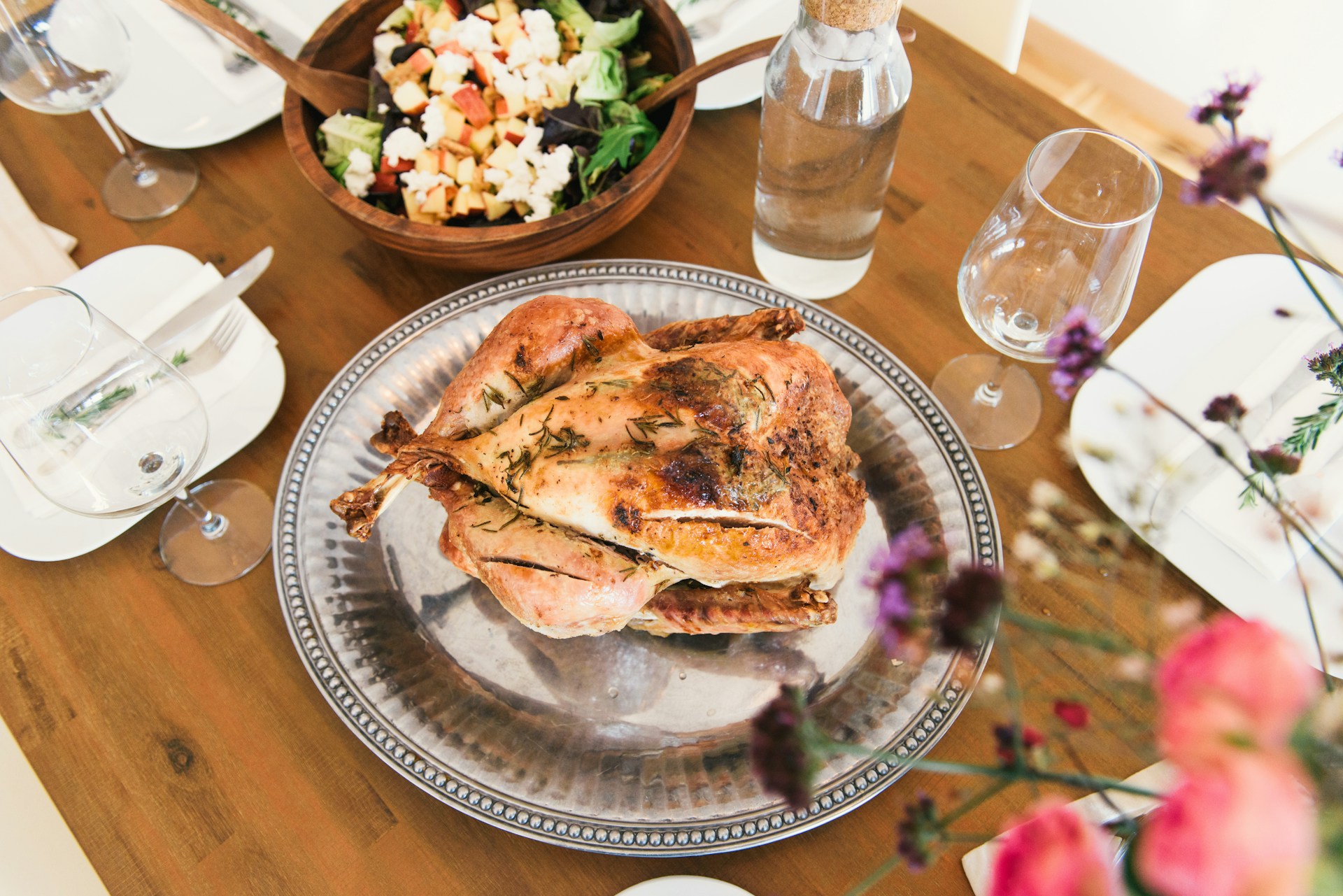
That golden-brown turkey taking center stage on your table? Probably wasn’t at the original feast.
Edward Winslow’s letter mentions that Governor Bradford sent four men hunting and they returned with enough fowl to feed the colony for a week, but he never specified what kind of birds.
Historians believe the harvest included ducks, geese, and possibly swans — not turkey.
Turkey was available in the area and Pilgrims did eat it sometimes, but there’s no evidence it was served in 1621.
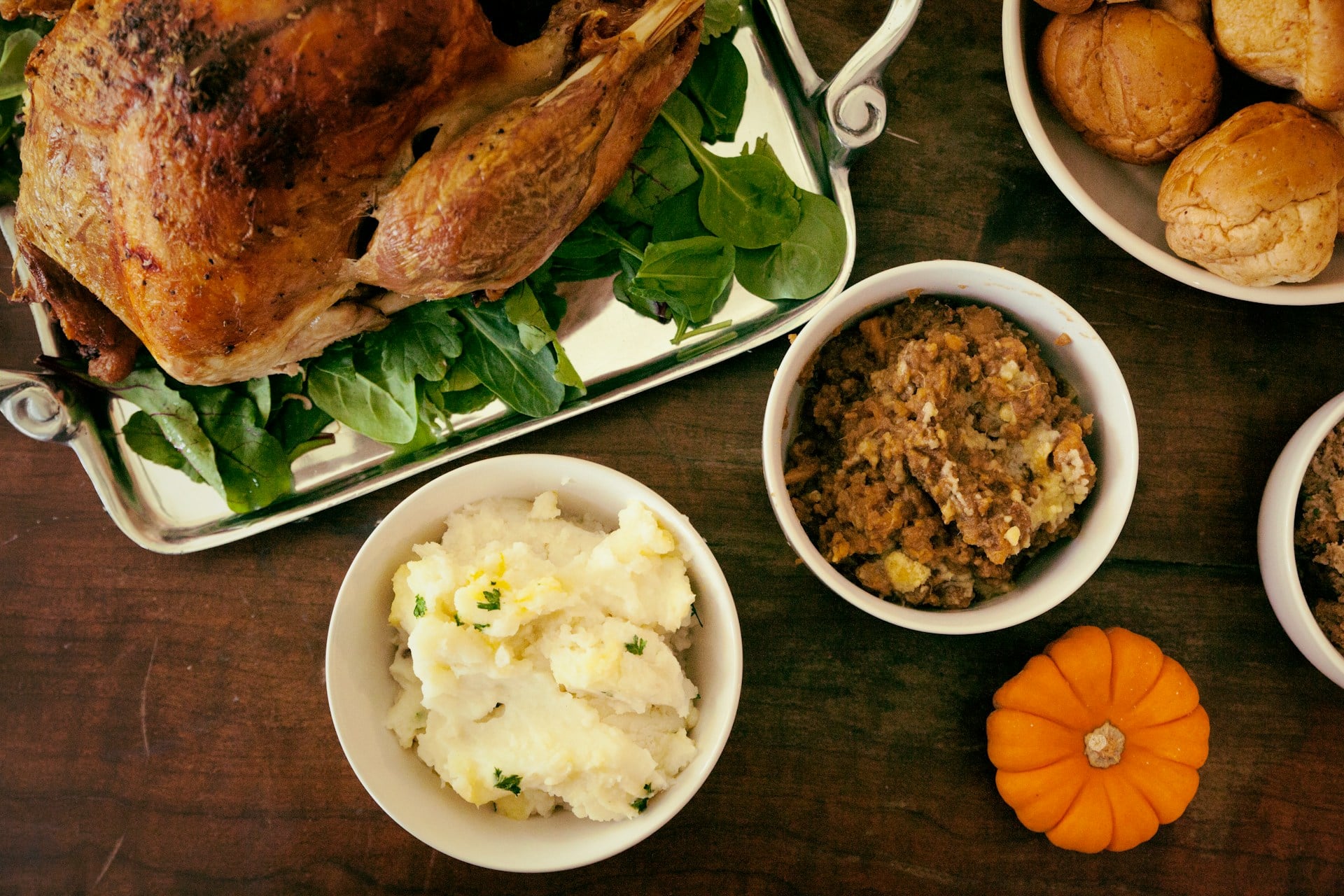
The menu looked nothing like modern Thanksgiving dinner.
There was no cranberry sauce, no pumpkin pie, no mashed potatoes, no sweet potato casserole.
Potatoes hadn’t even been introduced to New England yet.
Pumpkin was available, but the colonists lacked butter and wheat flour to make pie, so they likely made a savory pumpkin stew instead.
Corn on the cob wasn’t served either.
The Wampanoag guests brought five deer, which were probably turned into venison stew.
The meal likely included fish, possibly lobster, and various vegetables, but it bore little resemblance to the feast we eat today.
Most of our Thanksgiving food traditions came much later.
Author Jane G. Austin popularized elaborate fictional menus in the 1880s, inventing confections that would have been impossible with the supplies available in 1621.
Southern foods like sweet potatoes and pecans joined Northern traditions in the late 19th century.
The modern Thanksgiving menu is an amalgamation of regional American cuisine, not a historical recreation.
The Friendly Invitation
The cherished image of Pilgrims warmly inviting Native Americans to share their harvest feast is almost certainly false.
There’s no historical record of any invitation.
What probably happened is far less idyllic.
The Wampanoag leader Massasoit and about 90 of his men showed up — possibly because they heard gunfire from the colonists’ shooting competitions and thought the settlement was under attack.
Some historians think Massasoit happened to be making a diplomatic visit that day.
Either way, the Wampanoag vastly outnumbered the roughly 50 surviving colonists.
The Wampanoag didn’t show up empty-handed or needing charity.
They brought five deer and had their own rich traditions of harvest celebrations that predated European arrival by thousands of years.
The myth that Native Americans needed Pilgrims to teach them about thanksgiving reflects the same condescending attitude that spawned Manifest Destiny.
Indigenous peoples had complex societies, sophisticated agriculture, and established cultural practices long before Europeans showed up.
The relationship between colonists and the Wampanoag was primarily political, not friendly.
Massasoit’s people had been decimated by disease epidemics in the years before the Mayflower arrived.
He saw an alliance with the English as protection against rival tribes.
The arrangement was pragmatic, not warm and fuzzy.
That alliance eventually collapsed into King Philip’s War in 1675, one of the bloodiest conflicts in colonial American history.
The war devastated the Wampanoag people and shifted power permanently to European colonizers.
None of that makes it into the Thanksgiving myth.
Squanto the Helpful Guide
Most Americans know Squanto as the friendly Native American who spoke English and taught Pilgrims to fertilize corn by burying fish with the seeds.
What they don’t teach in school is how Squanto learned English.
He was kidnapped by English explorers in 1614 and sold into slavery in Spain.
He escaped, made his way to England, learned English there, and finally returned to his homeland in 1619 — only to discover that everyone in his tribe had died from smallpox while he was gone.
The Pilgrims built their colony on the cleared land where his village once stood.
Squanto’s assistance to the colonists came from a place of profound trauma and isolation.
He was the sole survivor of his people, living among strangers who occupied his former home.
That’s a far cry from the cheerful helper of Thanksgiving pageants.
His story is remarkable and tragic, not the simple tale of cross-cultural friendship we’ve been told.
What This Means Now
Because they influence how Americans view their history and their relationship with Indigenous peoples, the Thanksgiving myths are significant.
Colonization, illness, violence, and displacement are all eliminated in the sanitized version.
It transforms a complex political agreement into a charming fairy tale.
Thanksgiving continues to be a painful reminder of what many Native Americans, especially the Wampanoag, lost.
That doesn’t mean we need to cancel Thanksgiving or stop gathering with family.
However, it does mean that we have a responsibility to ourselves and the Wampanoag descendants to understand the truth.
The myths are not as rich or complex as the actual history.
The Pilgrims weren’t funny-hatted cartoon characters.
The Wampanoag were not your average “helpful Indians” who disappeared after supper.
Both groups were real people navigating impossible circumstances, making difficult choices, and shaping events that still echo today.
Despite its messiness, that story is worthy of being told.
More from Go2Tutors!

- The Romanov Crown Jewels and Their Tragic Fate
- 13 Historical Mysteries That Science Still Can’t Solve
- Famous Hoaxes That Fooled the World for Years
- 15 Child Stars with Tragic Adult Lives
- 16 Famous Jewelry Pieces in History
Like Go2Tutors’s content? Follow us on MSN.