Drummers Who Defined Rock History
Rock and roll runs on rhythm. Strip away the guitars, the vocals, the bass lines, and you still have the pulse underneath it all.
The drummers who shaped this music did more than keep time. They invented new ways to hit things, pushed their bands into unexplored territory, and turned the drum kit into something more than a support instrument.
Some died young. Others kept playing for decades.
But all of them changed how we hear music.
John Bonham and the Sound of Thunder

When Led Zeppelin recorded their debut album in 1968, John Bonham announced himself with the opening track. His playing on that record changed what rock drums could sound like.
Born in Redditch, England, Bonham started banging on coffee tins at age five and got his first proper snare drum at ten. He never learned to read music.
He just played. What set Bonham apart was the combination of raw power and surprising groove.
His right foot worked the bass drum with a speed that still mystifies drummers today, all achieved with a single pedal when most of his contemporaries needed two. The triplet patterns he used became his signature, showing up on tracks that ranged from hard-charging rock to delicate acoustic pieces.
He drew heavily from jazz drummers like Gene Krupa and Buddy Rich, bringing a swing feel to music that could easily have been just loud. Rolling Stone named him the greatest drummer of all time in 2016.
Modern Drummer called him the king of rock drumming. But the praise came after his death in September 1980, at age 32.
The remaining members of Led Zeppelin decided they couldn’t continue without him. They were probably right.
Keith Moon and Controlled Chaos

The Who’s Keith Moon played drums like he was trying to demolish the kit while simultaneously creating art with the wreckage. Born in London in 1946, he joined The Who in 1964 and immediately redefined what a rock drummer could do.
Where most drummers locked into a groove and stayed there, Moon treated every song like an opportunity for melodic conversation with his bandmates. His style emphasized tom-toms and cymbal crashes over the traditional backbeat.
He threw drum fills into places where no one expected them, sometimes in the middle of vocal phrases. His bass player John Entwistle once noted that Moon tried to play with everyone in the band at once.
This created a sound that was unpredictable and alive, though it also meant his tempo could wander. The band eventually used synthesizer tracks to keep things anchored.
Moon hated drum solos and refused to play them in concert. When his bandmates once tried to force one by stopping mid-song, he played for a few seconds and then stopped, declaring that drum solos were boring.
He preferred to be part of the ensemble, even if his idea of ensemble playing was barely controlled mayhem.
Ginger Baker and Jazz Meets Rock

Before rock drummers started calling themselves rock drummers, Ginger Baker was playing jazz in London clubs. Born in 1939, he studied with Phil Seamen, one of Britain’s finest jazz drummers, and developed a technique rooted in bebop and African rhythms.
When he formed Cream with Eric Clapton and Jack Bruce in 1966, he brought all of that into a blues-rock context. Baker pioneered the use of two bass drums in rock, inspired by watching Duke Ellington’s drummer Sam Woodyard.
His five-minute solo on the song from Cream’s debut album became one of the first extended drum features in rock history. But calling him a rock drummer annoyed him until the day he died in 2019.
He considered himself a jazz musician who happened to play in loud bands. His influence spread far.
John Bonham, Neil Peart, Stewart Copeland, and dozens of other prominent drummers cited Baker as foundational to their approach. Neil Peart put it simply: every rock drummer since has been influenced by Ginger Baker, whether they know it or not.
Neil Peart and Technical Mastery

Rush needed a new drummer in 1974 when a mutual friend suggested a young Canadian named Neil Peart try out. He got the job two weeks before the band’s first American tour.
Over the next four decades, he became one of the most respected drummers in rock history. Peart approached drumming like a composer. His parts weren’t just rhythmic foundations.
They were carefully constructed pieces that wove through the band’s complex arrangements. Songs moved through multiple time signatures, and his fills connected sections like punctuation marks.
He played massive kits with dozens of drums and electronic pads, and he used every piece. But the technical skill only tells part of the story.
Peart kept studying throughout his career. In his forties, he sought out jazz instructor Freddie Gruber and essentially rebuilt his technique from scratch, incorporating swing and traditional grip into his playing.
He wrote all of Rush’s lyrics and published several books about his motorcycle travels across North America. Peart retired from touring in 2015, citing the physical demands of three-hour shows.
He died in January 2020 from brain cancer. The drummers who grew up studying his records spoke of losing someone who changed what they thought was possible.
Ringo Starr and Serving the Song

For decades, people made jokes about Ringo Starr’s drumming. Was he even the best drummer in the Beatles? The answer, according to virtually every professional drummer who has studied his work, is that he was exactly what those songs needed.
Starr played a right-handed kit as a left-handed drummer, which gave his fills an unusual quality. He tuned his drums lower than was common at the time and developed a way of playing that emphasized feel over flash.
His parts on songs from across the Beatles catalog are so distinctive that drummers can identify them without hearing the rest of the music. Producer George Martin noted that Starr rarely caused recording breakdowns due to mistakes.
The vast majority of stopped takes came from the other three Beatles. Session drummer Steve Smith, who was inducted into the Modern Drummer Hall of Fame, has argued that Starr changed how drummers thought about their role.
Before him, drum stars were measured by their solos and technical flash. Starr showed that composing the perfect part mattered more.
Charlie Watts and the Power of Restraint
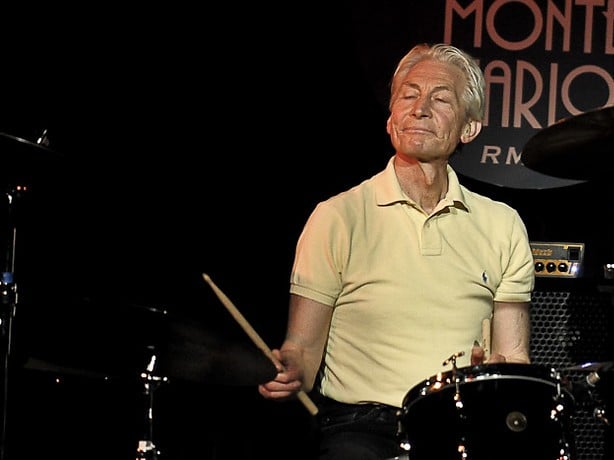
The Rolling Stones’ Charlie Watts wanted to play jazz. He ended up becoming one of rock’s most essential drummers by refusing to overplay.
Born in London in 1941, he came to the Stones from the British blues scene, where he had absorbed the music of jazz players like Charlie Parker and Thelonious Monk. Watts played behind the beat rather than on top of it, creating a lazy feel that gave Keith Richards’ guitar work room to breathe.
He kept his kit simple and his volume reasonable even as the band played to stadium crowds. Most rock bands follow the drummer.
The Stones followed Richards, with Watts reacting to the guitar rather than driving it. He stayed with the band for 58 years, never missing a concert until illness forced him to step back in 2021, shortly before his death at age 80.
During that time, he recorded ten jazz albums of his own, exploring the music he loved alongside his work with rock’s longest-running band.
Stewart Copeland and Global Rhythms

The Police emerged from the punk scene in 1977, but their drummer brought something different. Stewart Copeland had grown up in the Middle East, attended school in Lebanon, and absorbed musical influences from Arabic traditions, reggae, and jazz.
When he formed the Police with Sting, he created a sound that nobody else could replicate. Copeland played a right-handed kit left-handed, tuned his drums high and tight, and incorporated splash cymbals in ways that became instantly recognizable.
His approach to reggae rhythms didn’t simply copy Jamaican drummers. He filtered those patterns through his own sensibility, creating grooves that emphasized unexpected accents and rhythmic displacement.
The hi-hat work on songs from the Police catalog remains studied by drummers decades later. Copeland would leave space where other drummers filled, then play where others rested.
After the Police disbanded in 1986, he became a prolific film and video game composer, applying his rhythmic intelligence to orchestral contexts.
Dave Grohl and Punk Power

Kurt Cobain needed a drummer for Nirvana in 1990, and Dave Grohl got the audition through a friend. Within a year, the band had released an album that changed rock music.
Grohl’s drumming on that record combined punk ferocity with an unexpected influence: disco. Grohl has talked openly about studying drummers from The Gap Band and Chic, particularly Tony Thompson.
The grooves underneath Nirvana’s guitar distortion borrowed heavily from funk and dance music, creating a physical immediacy that made people want to move. He hit hard and played with a controlled chaos that matched the band’s aesthetic.
After Cobain’s death in 1994, Grohl recorded a solo album playing every instrument, then formed the Foo Fighters with himself on guitar and vocals. He rarely plays drums professionally anymore, but his work with Nirvana earned him induction into the Rock and Roll Hall of Fame in 2014.
A second induction with the Foo Fighters came in 2021.
Phil Collins and the Sound of the Eighties

Before he became a pop star, Phil Collins was a progressive rock drummer. He joined Genesis in 1970 after answering a classified ad, and spent years navigating complex time signatures and elaborate arrangements.
His playing on albums from that period influenced countless drummers who came after, including Neil Peart. When Genesis moved toward more accessible music in the late seventies, Collins took over as lead vocalist while continuing to drum.
He also developed a production technique that would define the sound of an era. The gated reverb drum sound on his 1981 solo debut came about partly by accident, the result of heavy compression and noise gates creating a punchy, decaying snare hit.
That sound appeared on recordings across every genre for the rest of the decade. Collins won eight Grammy Awards and sold over 150 million records between his solo work and Genesis.
Health issues eventually forced him to retire from drumming, but his influence on both progressive rock technique and mainstream pop production remains audible.
Clyde Stubblefield and the Foundation of Funk

In 1965, James Brown saw a young drummer playing in Macon, Georgia, and asked him to audition. Clyde Stubblefield joined Brown’s band and spent the next six years creating rhythms that would shape music for decades after.
Stubblefield had no formal training. He grew up in Chattanooga hearing rhythm in factory machinery and passing trains, and he translated those industrial patterns into his playing.
Brown gave him freedom to create, famously saying little about what to play beyond telling him to keep the groove. The result was a catalog of classic recordings that defined funk music.
The most significant came in 1969 with a recording that barely charted at the time. Stubblefield’s drum break on that track became the most sampled musical segment in history, appearing in well over a thousand songs across hip-hop, pop, and electronic music.
Artists from Public Enemy to Ed Sheeran built hits on those eight bars of drums. Stubblefield never received royalties for the samples.
He spent his later years playing clubs in Madison, Wisconsin, and struggling with medical bills. When he died in 2017, fellow musicians mourned the loss of someone who had, without much recognition, invented the rhythmic foundation of modern popular music.
Taylor Hawkins and Pure Joy

Taylor Hawkins joined the Foo Fighters in 1997 after playing with Alanis Morissette, and quickly became more than just the band’s drummer. His presence behind the kit combined technical ability with showmanship that rivaled any frontman.
He looked like a rock star and played like someone who couldn’t believe his luck. Hawkins wore his influences openly.
He idolized Queen’s Roger Taylor, Rush’s Neil Peart, and the Police’s Stewart Copeland, and he talked about them constantly in interviews. He eventually became friends with several of his heroes, including Copeland, who wrote warmly about Hawkins after his death in 2022.
At the Foo Fighters’ Rock and Roll Hall of Fame induction in 2021, four prominent drummers sat in the audience watching Hawkins play: Taylor Hawkins’ drumming heroes Danny Carey, Chad Smith, and others who had come specifically to see him. The tribute concerts after his death drew dozens of musicians from across rock history, all gathered to honor someone who had approached drumming with infectious enthusiasm.
The Beat Goes On

Drums existed long before rock and roll, and they’ll outlast whatever comes next. But the drummers who defined this particular music did something specific.
They took an instrument designed for timekeeping and turned it into a voice. They pushed boundaries while serving songs.
They inspired generations of kids to pick up sticks and start hitting things. Some of them became famous.
Others played on records heard by millions while remaining largely anonymous. But all of them understood something fundamental about rhythm: it doesn’t just support music.
It drives it forward. And in the right hands, a drum kit becomes as expressive as any instrument ever invented.
More from Go2Tutors!

- 16 Historical Figures Who Were Nothing Like You Think
- 12 Things Sold in the 80s That Are Now Illegal
- 15 VHS Tapes That Could Be Worth Thousands
- 17 Historical “What Ifs” That Would Have Changed Everything
- 18 TV Shows That Vanished Without a Finale
Like Go2Tutors’s content? Follow us on MSN.