10 Jobs That’ll Get Replaced By AI And 10 That Won’t
Speed surprises many. Inside everyday work software, artificial intelligence runs quietly.
Certain roles face changes today. Others see it as nothing more than a shiny number machine.
Not everyone believes it can truly take their place. Truth is, things have changed – your job might be on shaky ground without you noticing.
This list shows what roles are fading versus those keeping steady footing. Not every path leads the same way anymore.
Some careers bend with change others break under it. Spotting the difference matters more than ever now.
Jobs AI Might Take Over
Data Entry Clerk

First to go, really. Since it just repeats the same steps without needing any real thinking, computers handle data entry easily.
While someone fills out a single sheet, machines chew through heaps of forms. Firms have started dropping these jobs at speed.
Telemarketer

Cold calling always felt like a chore, yet machines now do it faster, at lower cost. Starting conversations automatically, voice programs follow set lines, answer common pushbacks, running nonstop with zero fatigue.
Workers seem less necessary once you see software dial five hundred times in sixty minutes.
Bank Teller

Phones and ATMs took over most bank tasks long ago, clear signs of what was coming. When it comes to moving money or asking questions, apps run by artificial intelligence step in – no humans needed.
Branches shut down everywhere, leaving just a handful of tellers behind, their jobs fading slowly.
Travel Agent

Websites such as Expedia and Google Flights handle nearly every task once done by travel agents. With AI stepping in, entire trip plans form quickly, deals pop up fast, while choices get weighed almost instantly.
Over the last ten years, fewer people have turned to personal agents – this trend shows no sign of slowing. Though some still prefer talking to a person, machines now manage most details without pause.
Proofreader
Instant fixes now come from apps such as Grammarly or fresh AI systems that spot mistakes with surprising skill. Without pause, these programs deliver results – low price tags tag along, each check nearly free.
Breaks mean nothing to them; they never step away. Publishers and companies turn more toward automatic helpers, leaving less room for human editors who once handled every correction.
The demand shrinks, inch by quiet inch.
Warehouse Picker

Robots now handle much of the lifting inside Amazon’s massive storage buildings, moving boxes without pause. Year by year, their movements grow sharper, their timing tighter.
Not one takes a day off, not even when temperatures rise or lights dim. Where people once rushed down aisles grabbing items, metal arms reach instead.
The shift happens quietly – yet fast enough to notice if you’re paying attention.
Cashier

Walking into a store might soon mean no lines at all. Places such as Amazon Go already run without cashiers, where people simply take items and go.
These spots rely on sensors instead of staff scanning goods. Grocery aisles now feel quieter, missing the familiar beep of checkout scanners.
Even drugstores see fewer workers behind counters. Fast food spots are swapping faces at registers for screens that track orders silently.
One by one, human hands fade from daily shopping moments.
Paralegal

Faster than flipping through dusty binders, some programs sort through heaps of old rulings in moments. One minute you’re staring at blank pages; next thing, there’s a clean write-up ready.
These systems spot past cases like sharp-eyed assistants who never blink. Before noon hits, machines finish work that used to stretch into afternoon hours.
Offices have begun relying on them daily. Fewer beginners are getting hired since the software handles so much upfront legwork.
Customer Service Representative

Once clunky and annoying, chatbots now respond in ways that feel almost human. When faced with refund requests or angry messages, today’s versions reply without missing a beat.
Some businesses rely on these digital helpers more than live agents, especially after sunset. Round-the-clock availability makes them hard to ignore, even if you once swore they’d never work.
Radiologist (Routine Screening)
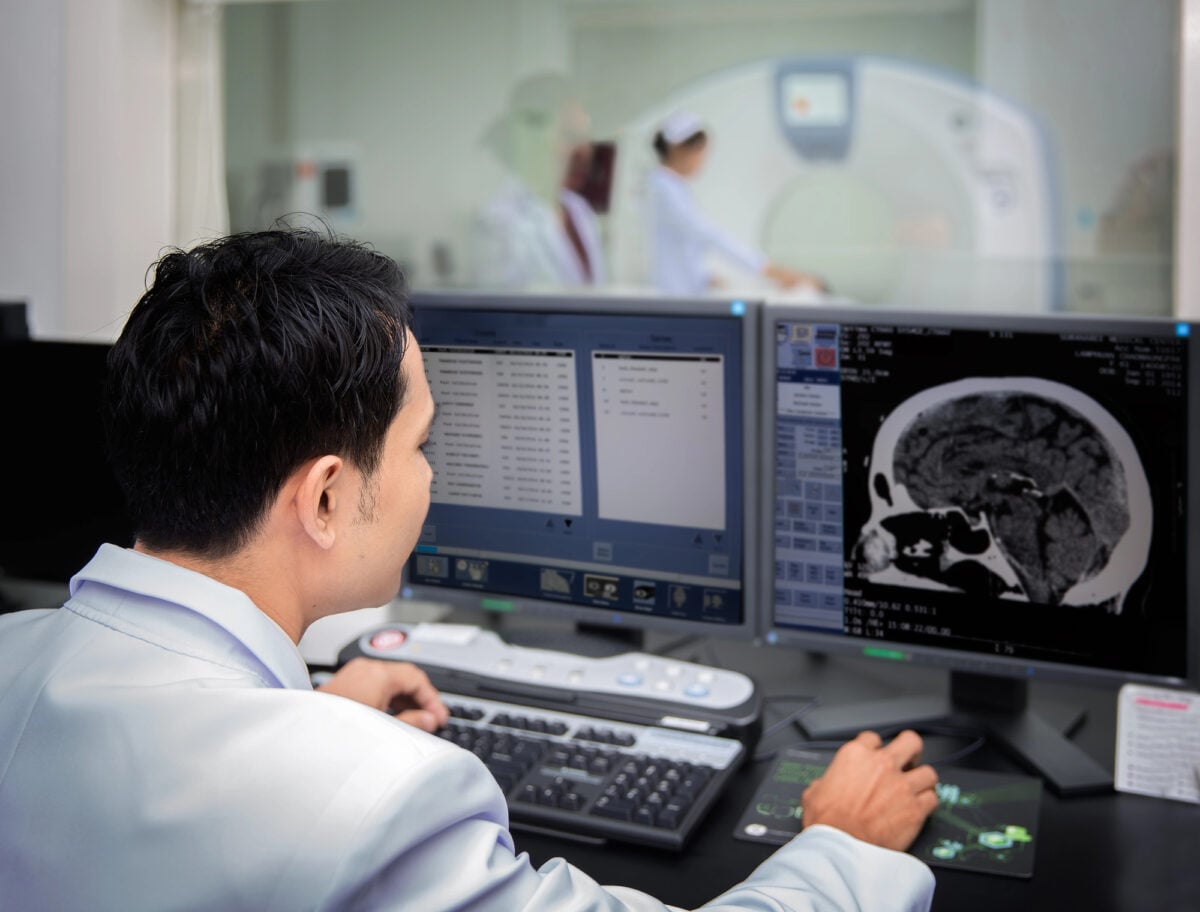
AI is now reading certain medical scans with accuracy that rivals experienced radiologists, particularly for routine screenings like chest X-rays and mammograms. Tools trained on millions of images can flag abnormalities faster than a human and without fatigue affecting the result.
This does not mean radiologists disappear entirely, but the volume of routine work they handle is shrinking as AI takes on more of it.
Jobs AI Won’t Replace
Nurse

Nursing is built on human connection, fast judgment, and physical presence, none of which AI can replicate in a hospital room. A nurse reads a patient’s mood, notices subtle changes in behavior, and provides comfort in ways that go far beyond clinical data.
The physical and emotional demands of the job keep it firmly in human hands.
Therapist

Mental health care depends entirely on trust, empathy, and the ability to read a person in real time. A therapist picks up on tone, body language, and unspoken tension in ways that AI simply cannot.
People opening up about their struggles need a real human on the other side of that conversation, and that need is not going away.
Plumber

No robot is crawling under a house at midnight to fix a burst pipe in a tight, unpredictable space. Plumbing requires physical problem-solving in environments that change every single time, which makes it extremely hard to automate.
Skilled tradespeople like plumbers, electricians, and HVAC technicians are in high demand and are not going anywhere.
Teacher

Great teaching is not just about delivering information. It is about reading a classroom, adjusting in real time, motivating a struggling student, and building relationships that shape how a child sees learning.
AI can support teachers with resources and grading tools, but the human at the front of the room is still the engine of real education.
Social Worker

Social workers deal with some of the most complex and sensitive human situations imaginable, including family crises, child welfare, and mental health emergencies. The job requires trust, judgment, and the ability to navigate systems on behalf of vulnerable people.
An algorithm cannot sit across from a family in crisis and figure out the right path forward.
Chef

A truly skilled chef is not just following a recipe. Chefs create, adjust on the fly, respond to feedback, and bring a personal style to their food that keeps people coming back.
While AI can suggest recipes and robots can flip burgers in fast food settings, high-level culinary work remains deeply human.
Athlete

No AI is suiting up and running onto a football field anytime soon. Professional sports depend on human physical performance, competition, and the unpredictability that makes watching sport exciting in the first place.
The entire industry, from players to coaches to sports medicine professionals, is grounded in human bodies doing extraordinary things.
Priest, Pastor, Or Religious Leader

Spiritual guidance is one of the most personal things a human can offer another. People turn to religious leaders during grief, confusion, and major life decisions, seeking wisdom from someone who shares their faith and lived experience.
AI can answer theological questions, but it cannot shepherd a community or sit with someone through genuine loss.
Surgeon

While AI assists in operating rooms with imaging and precision tools, the surgeon remains in charge. Complex surgeries require real-time decisions, adaptability, and a level of responsibility that only a trained human professional can carry.
The stakes are simply too high to hand the scalpel to an algorithm.
Crisis Negotiator

Talking someone down from a dangerous situation requires reading every word, pause, and shift in emotion in real time. Crisis negotiators use years of training and genuine human instinct to de-escalate situations where lives are on the line.
This is not a job where a chatbot gets a trial run.
The Bigger Picture
AI replacing jobs is not a distant possibility. It is already happening, quietly and steadily, across industries that once seemed untouchable.
The jobs that survive are not necessarily the fanciest or the highest-paid. They are the ones built around human presence, unpredictability, and trust.
The smartest move anyone can make right now is to understand where their work sits on this spectrum and start building skills that machines genuinely cannot copy.
More from Go2Tutors!

- The Romanov Crown Jewels and Their Tragic Fate
- 13 Historical Mysteries That Science Still Can’t Solve
- Famous Hoaxes That Fooled the World for Years
- 15 Child Stars with Tragic Adult Lives
- 16 Famous Jewelry Pieces in History
Like Go2Tutors’s content? Follow us on MSN