15 Artifacts Found in Greece’s Museum of Archeology
Walking through Greece’s National Archaeological Museum feels like stepping into a conversation that’s been going on for thousands of years. The marble speaks, the bronze whispers, and the pottery holds secrets that archaeologists are still deciphering.
Each artifact represents not just an object, but a moment frozen in time—a glimpse into lives lived, wars fought, and civilizations that rose and fell long before our modern world took shape.
The Mask of Agamemnon
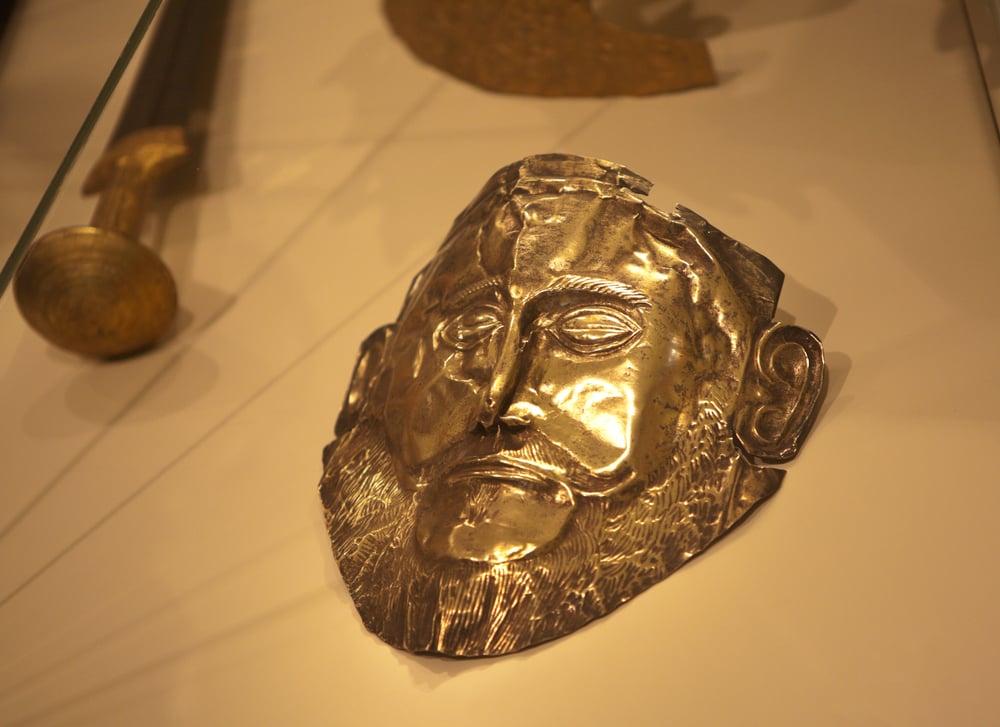
This golden funeral mask stopped Heinrich Schliemann in his tracks when he found it at Mycenae in 1876. He claimed he’d gazed upon the face of Agamemnon himself.
Turns out the mask predates the legendary king by centuries. The beaten gold still carries the weight of whoever actually wore it—some Mycenaean noble whose name history forgot but whose face it preserved forever.
The Antikythera Mechanism
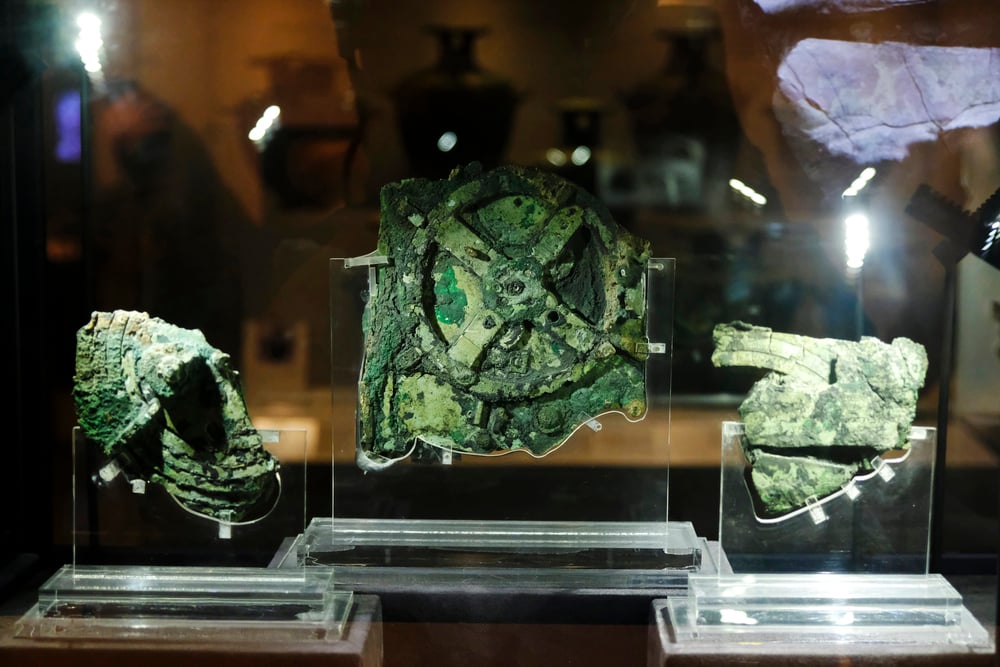
Think of it as the world’s first computer, pulled from a Roman shipwreck off the Greek coast. This bronze contraption of interlocking gears could predict eclipses, track Olympic games, and calculate the positions of planets with startling accuracy.
It’s the kind of discovery that makes you wonder what else we’ve gotten wrong about ancient civilizations (and there’s probably quite a bit, if we’re being honest). The Greeks weren’t just building temples and writing philosophy—they were engineering machines that wouldn’t look out of place in a Renaissance workshop.
Athena Varvakeion
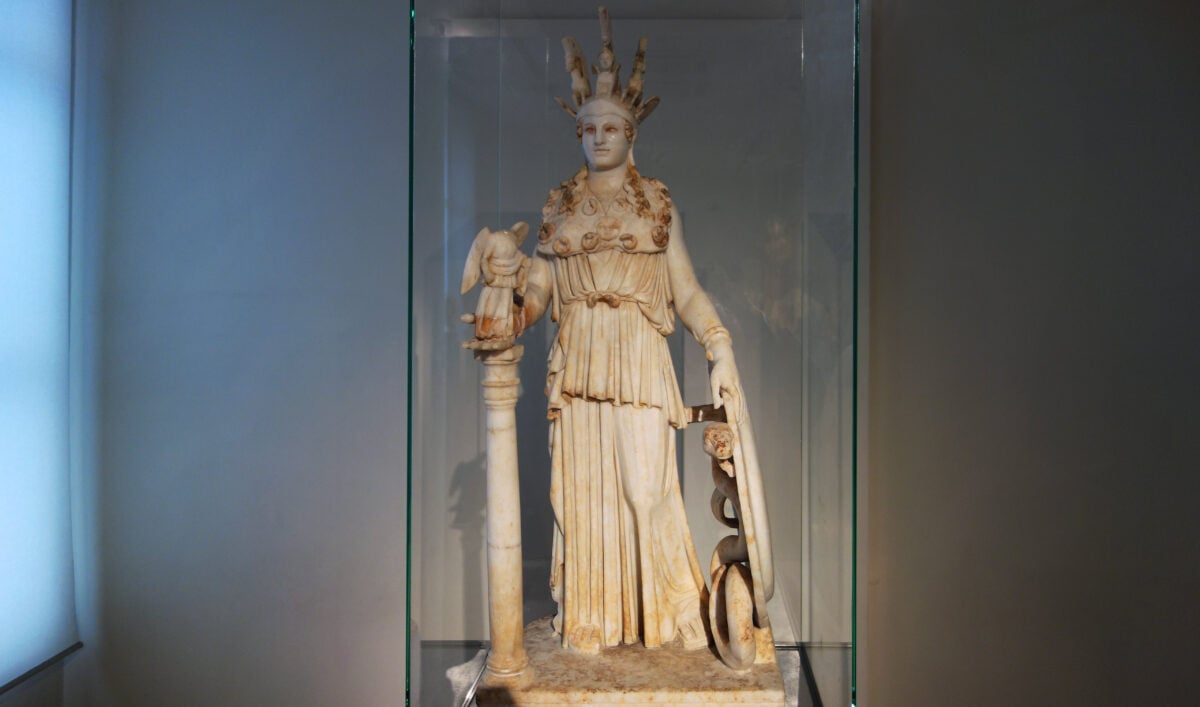
When the original Athena Parthenos—Phidias’s masterpiece that once stood forty feet tall in the Parthenon—disappeared into history, this small Roman copy became our only window into what pilgrims once traveled across the Mediterranean to see. She stands just over three feet tall, a ghost of her former glory, but there’s something almost more moving about her diminished state.
The ivory and gold are long gone, replaced by marble that carries its own quiet dignity. And yet (even in this reduced form) she manages to convey the presence that must have filled that great temple—the sense that wisdom itself had taken physical form and decided to make Athens its home.
The snake coiled at her feet still seems ready to strike; the Nike in her palm still seems poised for flight, as if the sculptor understood that some gestures transcend their materials, that power can survive even when its original context crumbles to dust.
The Bronze Jockey of Artemision
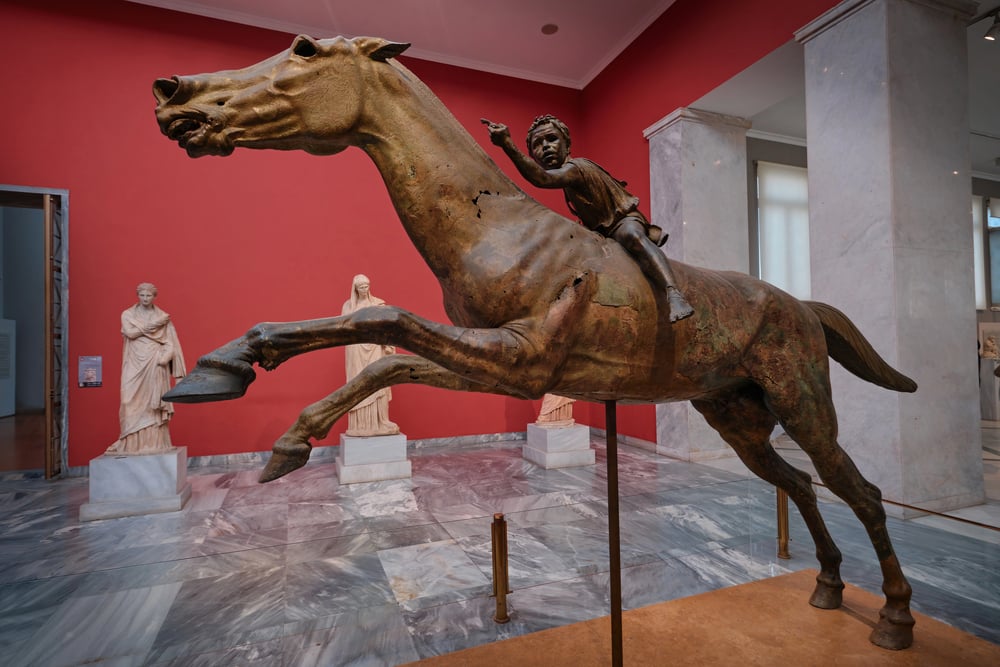
This jockey owns his horse completely. Every muscle tense, reins pulled tight, the boy leans into a turn that happened two thousand years ago.
The horse beneath him vanished somewhere along the way—probably melted down during one of history’s more practical moments. So the jockey rides alone now, forever frozen mid-race, which is somehow more dramatic than the complete statue ever could have been.
Cycladic Figurines
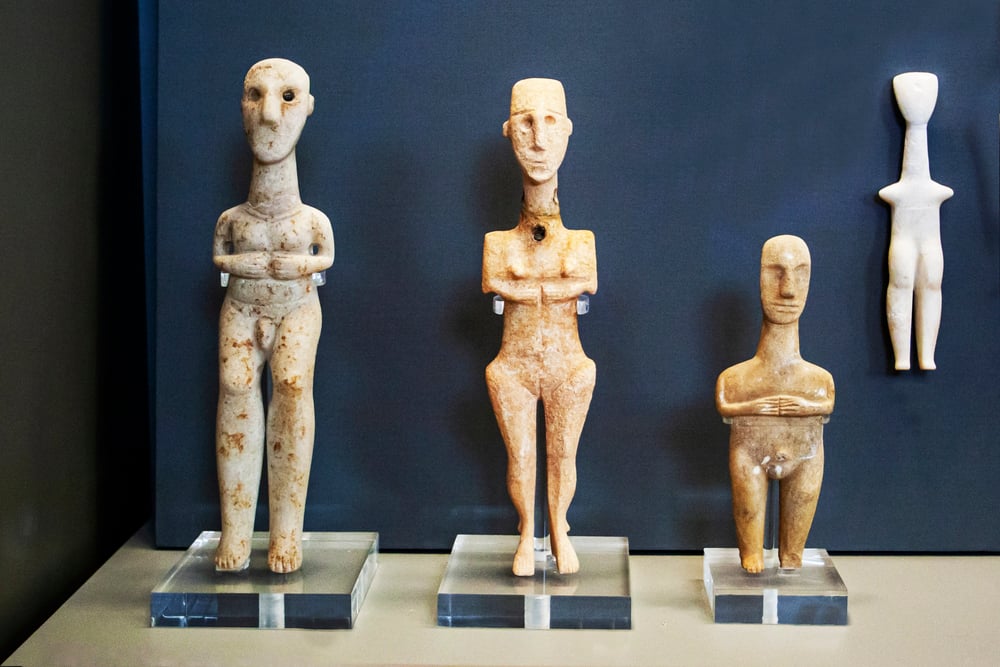
The Cycladic islands produced these marble figures between 3200 and 2000 BCE, and nobody knows what they were thinking. The figurines are abstract in ways that wouldn’t look out of place in a modern art gallery—folded arms, tilted heads, faces reduced to the suggestion of a nose.
Some were found in graves, others in settlements. Were they gods? Ancestors? Companions for the afterlife? The silence is part of their appeal.
They feel contemporary and ancient simultaneously, which is saying something given how much art from that period feels locked in its own time.
The Artemision Bronze
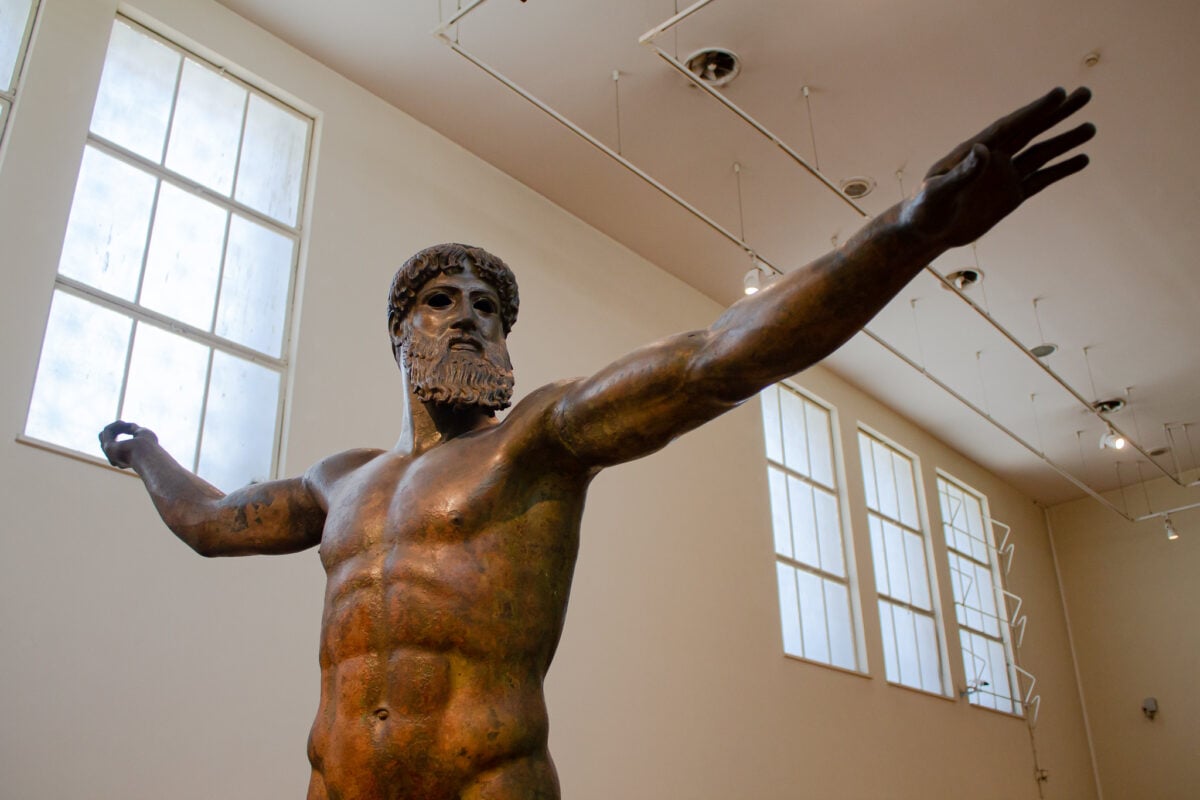
Here stands either Zeus hurling a thunderbolt or Poseidon gripping a trident—scholars can’t seem to agree, and the statue isn’t telling. What matters is the presence: seven feet of bronze that commands attention from across the room.
The figure balances on the rounds of his feet, arm drawn back, ready to unleash whatever divine punishment seems appropriate. Found in pieces on the sea floor off Cape Artemision, he was probably traveling to Rome when his ship went down.
The Romans had a thing for collecting Greek masterpieces, though this one never made it to its destination.
The Mycenaean Dagger Blades
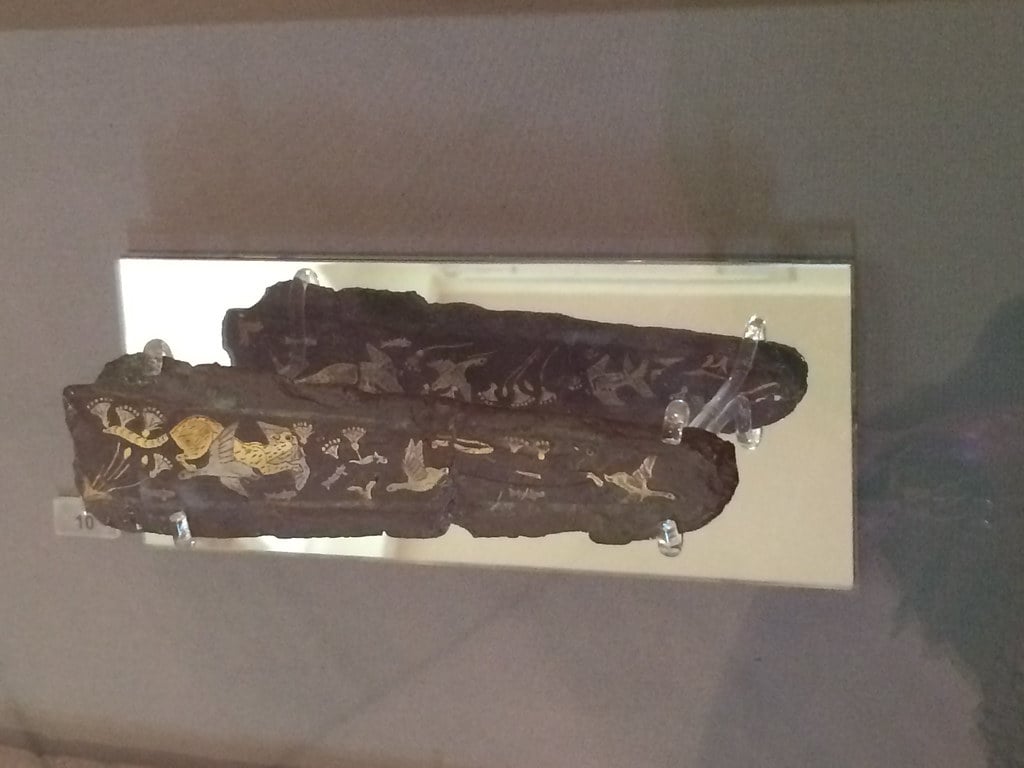
These bronze daggers from the shaft graves at Mycenae tell stories in gold and silver inlay. Lions hunt, warriors fight, and leopards prowl across blades that were probably never meant to see actual combat.
The metalwork is so intricate it requires magnification to fully appreciate—entire scenes playing out across surfaces no bigger than your palm. Someone spent months creating art that would be buried with its owner, which suggests the Mycenaeans took the afterlife seriously enough to pack entertainment for the journey.
The Phaistos Disk
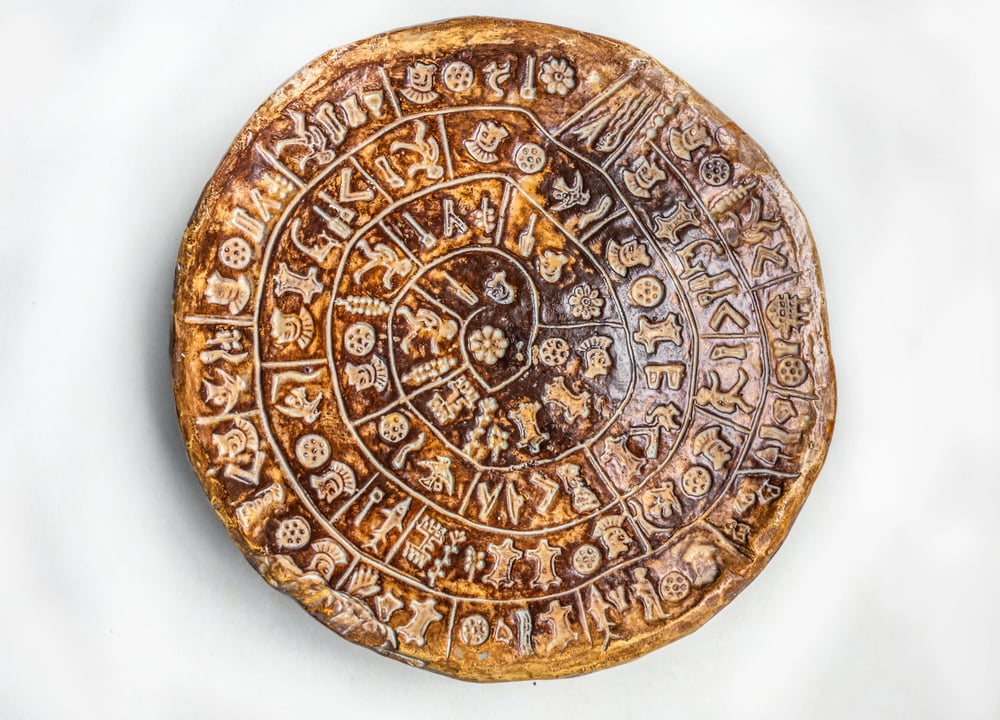
This clay disk from Crete might be the world’s oldest example of movable type, or it might be an elaborate ancient hoax. The spiral of symbols stamped into the clay has resisted every attempt at translation for over a century.
The disk sits behind glass like a puzzle that’s given up trying to be solved. Forty-five different symbols, 241 impressions total, arranged in a spiral that reads from outside to center.
Or maybe center to outside (nobody knows that either). It’s either profound wisdom or the ancient equivalent of Lorem ipsum text—and both possibilities are equally fascinating.
Marathon Boy
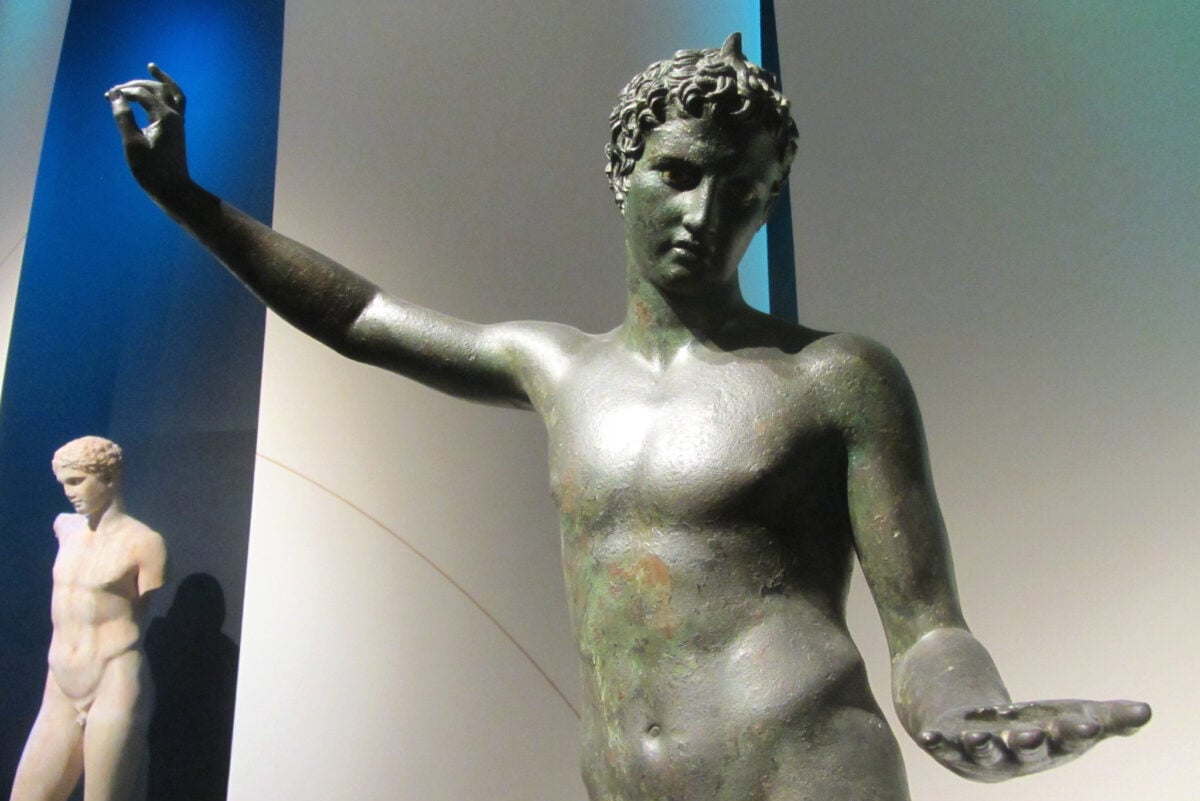
This bronze statue of a young athlete was hauled up from the sea floor near Marathon in 1925, and he looks like he just finished a workout rather than spending two millennia underwater. The bronze has acquired a green patina that makes him seem more alive rather than less.
He might be adjusting a victor’s wreath or simply running his fingers through his hair—the gesture is ambiguous enough to feel natural. Classical sculpture often aims for idealized perfection, but this figure captures something more elusive: the momentary pause between one movement and the next, the kind of unconscious gesture that makes marble seem to breathe.
The Eleusinian Relief
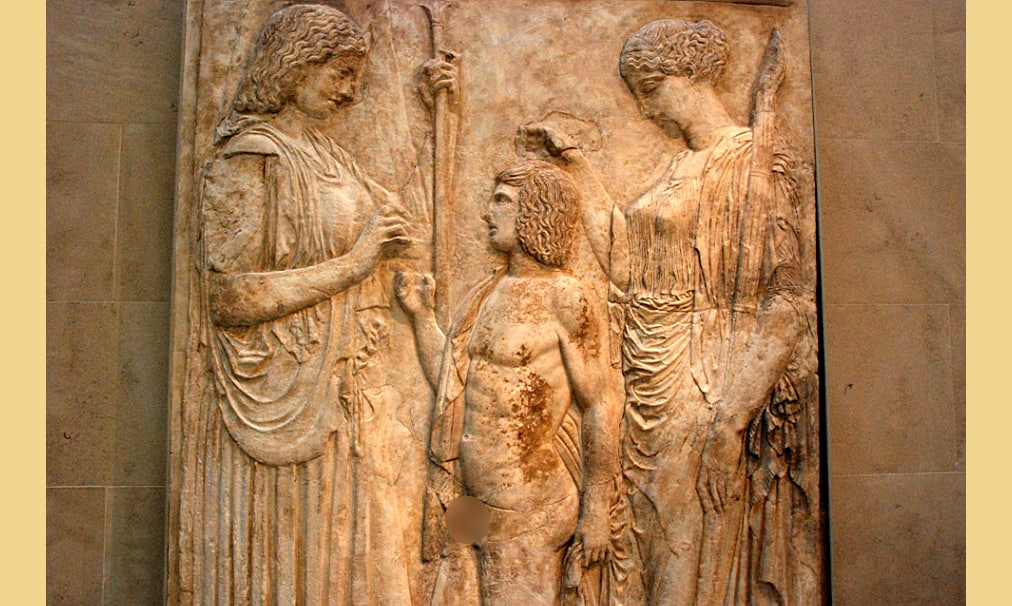
This marble relief shows Demeter handing wheat to Triptolemus while Persephone looks on—the moment when agriculture was supposedly given to humanity. The carving achieves that perfect balance between divine grandeur and human tenderness that the Greeks managed better than anyone else.
Demeter’s robes fall in folds that seem to move in an invisible breeze. Persephone’s hand rests on Triptolemus’s shoulder with the kind of casual intimacy that makes mythological figures feel like people you might actually know.
The whole scene radiates the quiet satisfaction of a gift well given, which is appropriate given what the gift turned out to be.
Poseidon of Melos
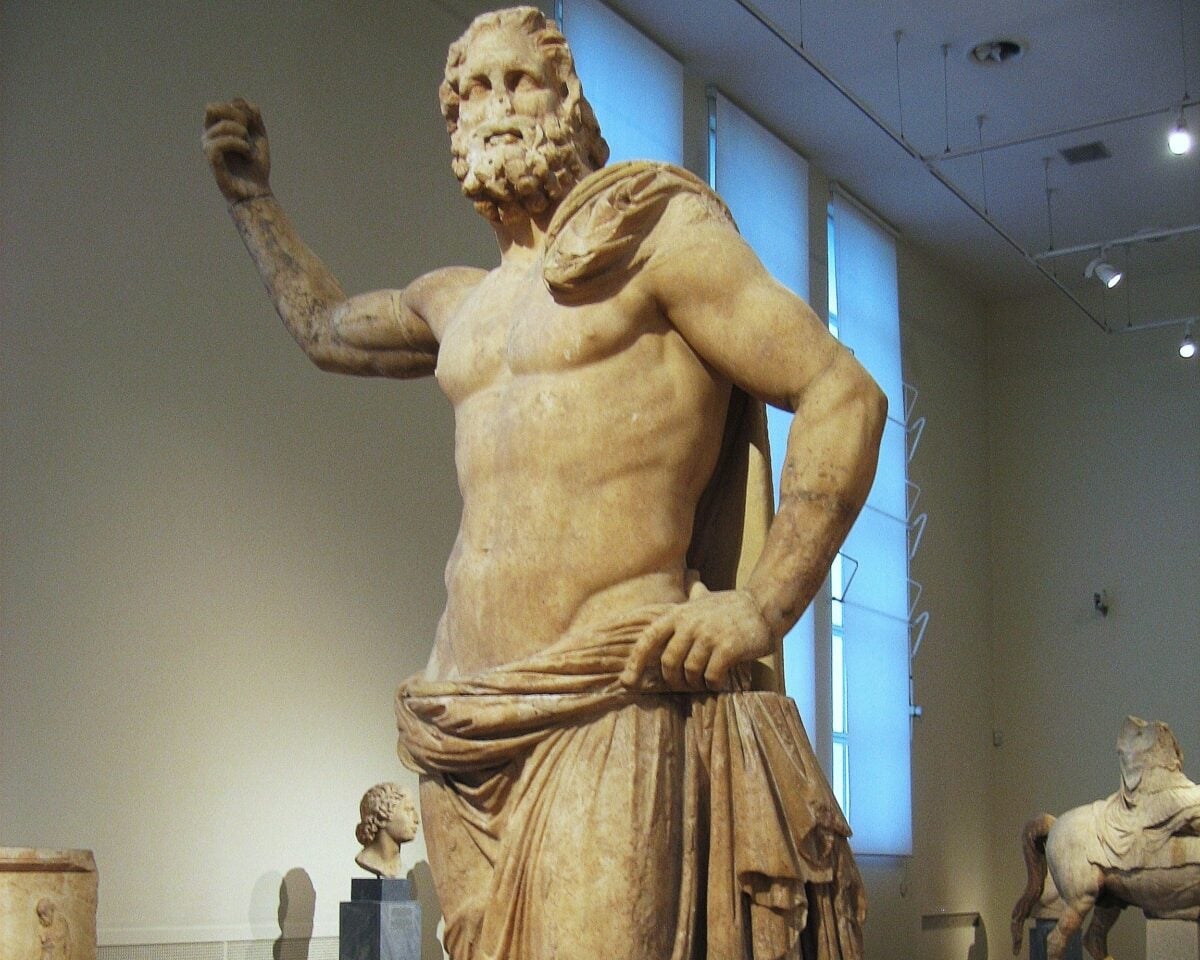
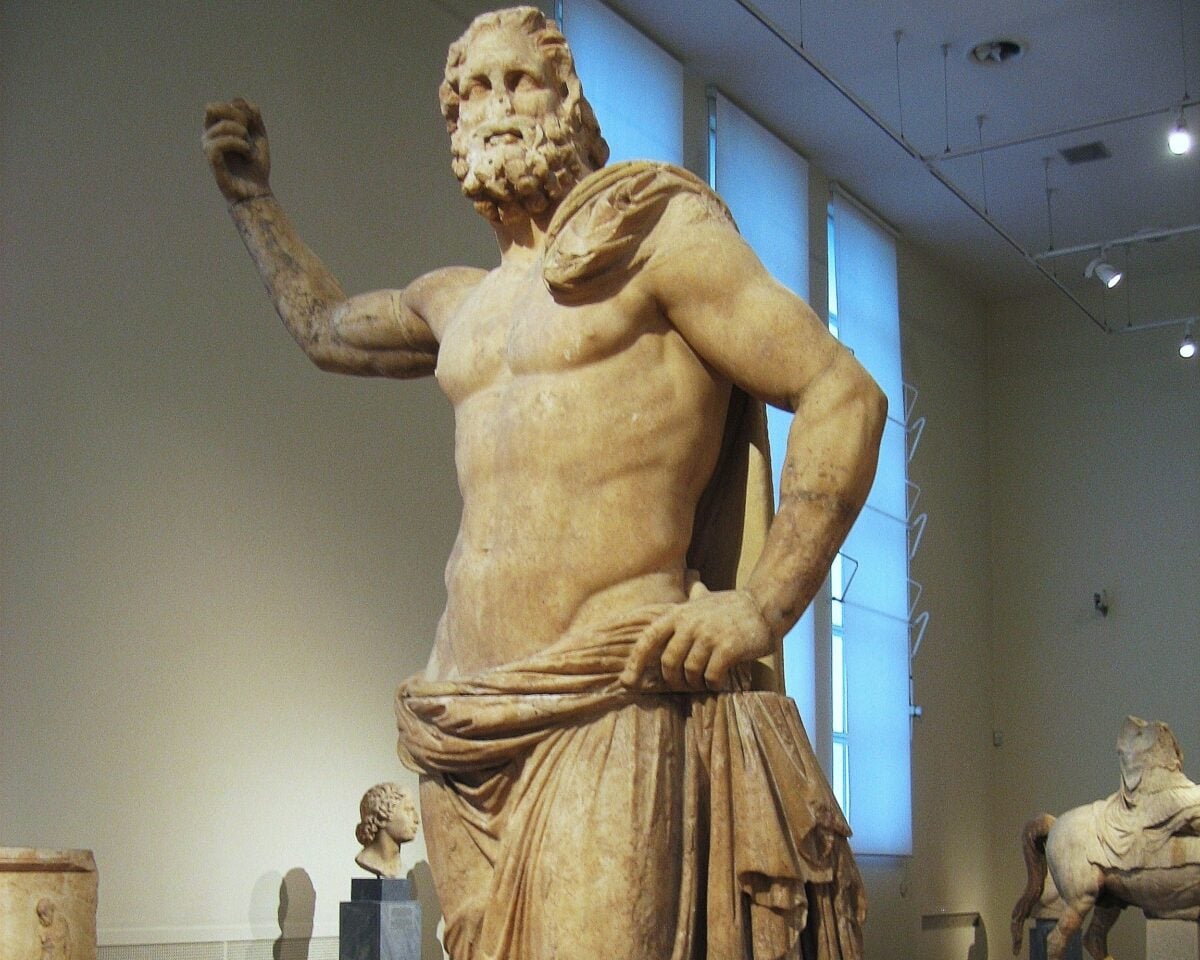
This statue has an attitude. Even missing his arms, Poseidon radiates the kind of confidence that comes from controlling the seas and causing earthquakes when the mood strikes.
The contrapposto stance, the slight turn of the head, the way the himation drapes across his hip—every detail reinforces his divine status without making him seem remote. He’s approachable in the way that Greek gods often were: powerful enough to matter, human enough to understand.
The Mourning Athena Relief
Sometimes called the “Contemplating Athena,” this marble relief shows the goddess in an unexpectedly quiet moment. She leans on her spear, head bowed, reading what appears to be a casualty list carved on a stone slab.
The relief strips away all the usual symbols of power and wisdom, leaving only a figure absorbed in thought. The drapery falls in simple lines; the pose suggests exhaustion rather than divine authority. It’s Athena as she might appear after a particularly brutal battle, tallying the cost of victory in human terms.
The Vaphio Cups
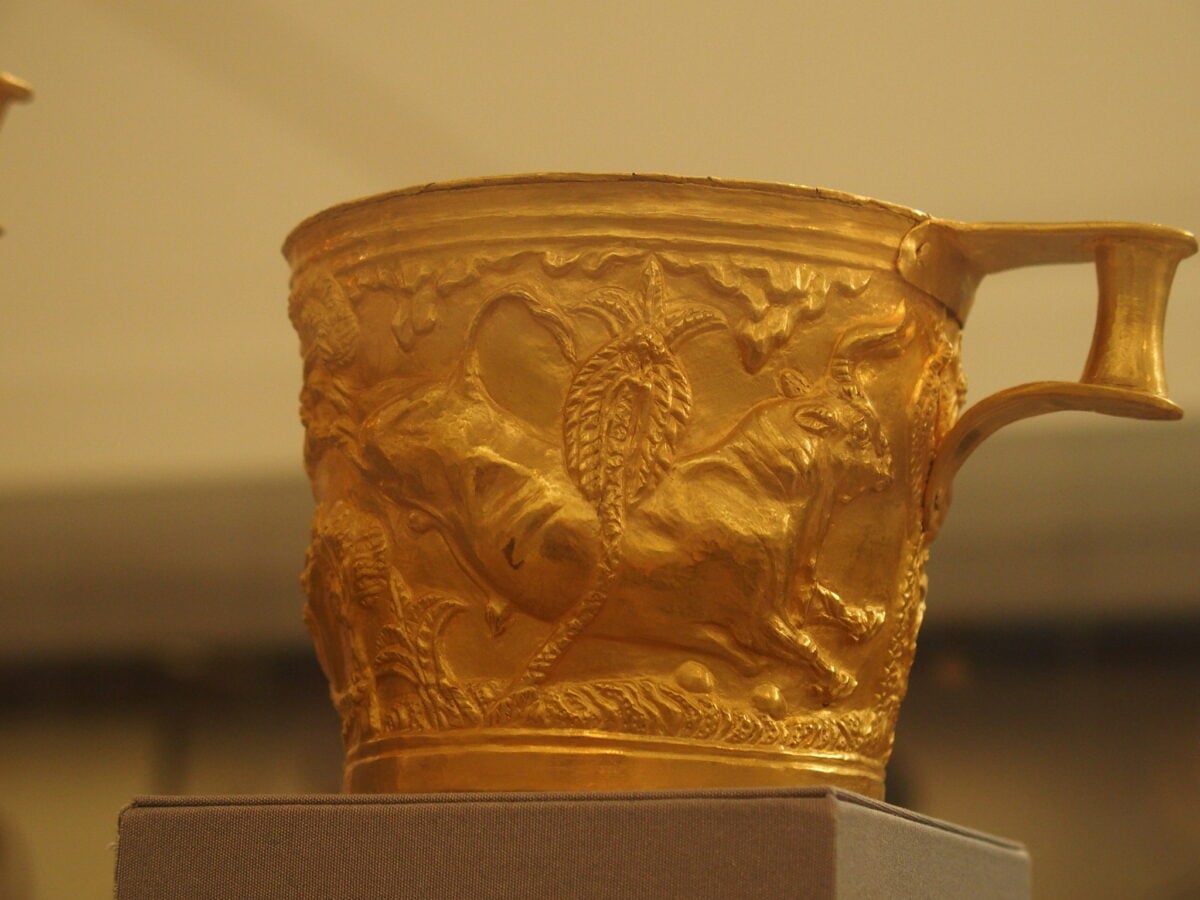
These gold cups from a Mycenaean tomb near Sparta show bulls being captured—but the artistry is so fine that the animals seem to move across the surface. One cup shows a peaceful scene with bulls grazing among olive trees; the other depicts a violent capture using nets and ropes.
The repoussé technique creates shadows and highlights that give the scenes genuine depth. The bulls have individual personalities—some docile, others thrashing against their captors. Whoever made these cups understood that great art lies in the details that don’t have to be there but somehow are anyway.
Aphrodite of Milos Arms
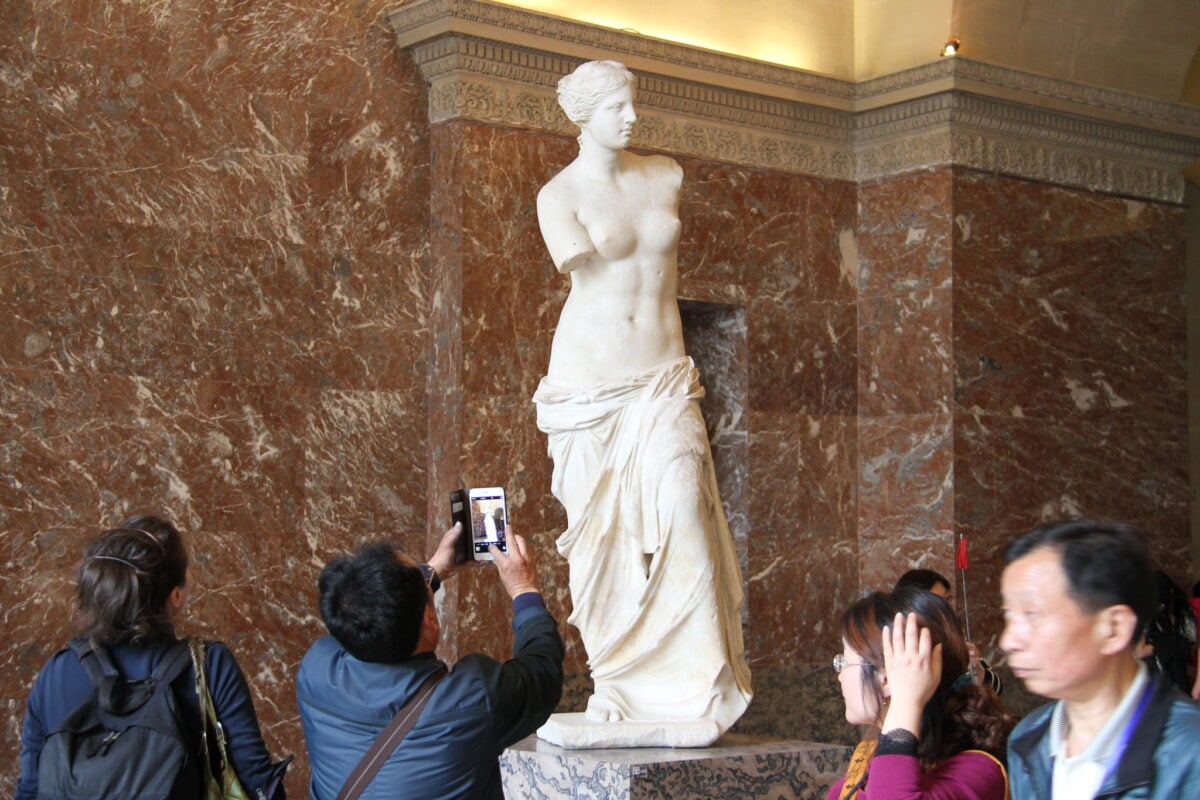
Wait—those were never found. But Venus de Milo herself, when she occasionally returns to Athens on loan, reminds visitors that sometimes what’s missing becomes more important than what remains.
The absent arms have generated more speculation than most complete statues ever receive. Was she holding an apple? Adjusting her drapery?
Embracing a lover? The mystery keeps her contemporary in ways that complete figures rarely manage to achieve.
The Dipylon Amphora
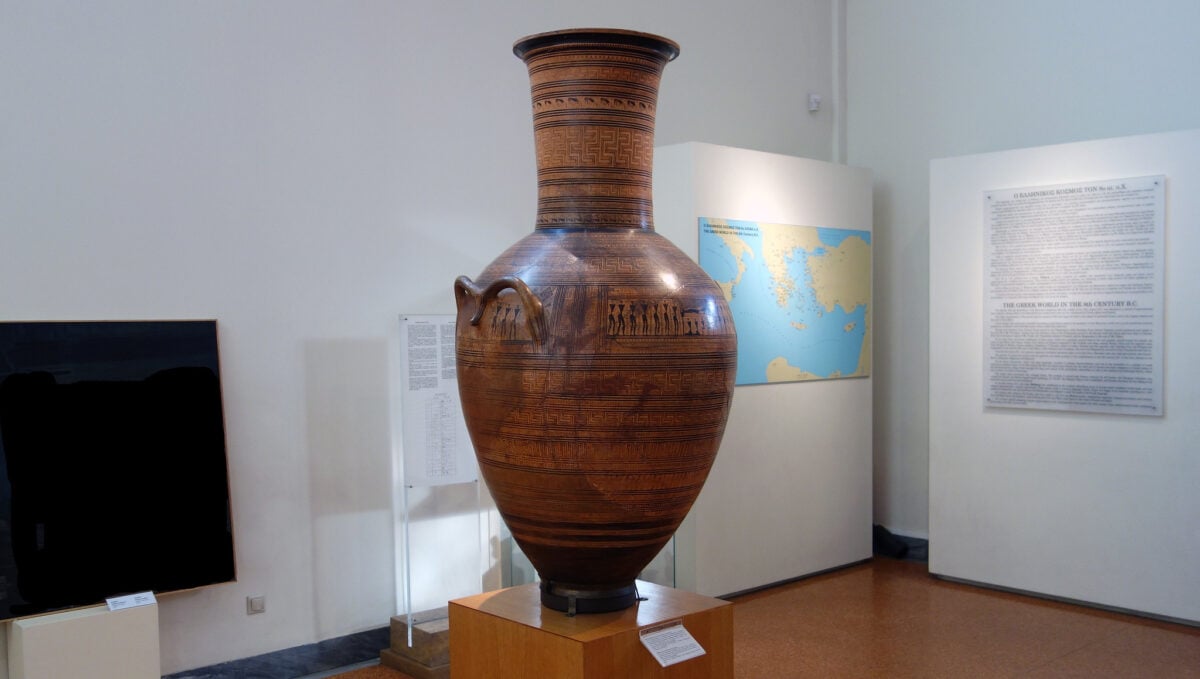
This geometric-period vase from the 8th century BCE shows Greek art in the process of remembering how to tell stories. The funeral scene painted around the vessel’s belly depicts mourners with their arms raised in grief, but they’re rendered as stick figures—human emotion filtered through geometric abstraction.
The amphora marked a grave in the Dipylon cemetery, and its size (over five feet tall) announced the importance of whoever lay beneath it. The geometric patterns that cover every surface create a visual rhythm that feels almost musical, as if grief itself had been translated into mathematics and then back into art.
Where Time Stands Still
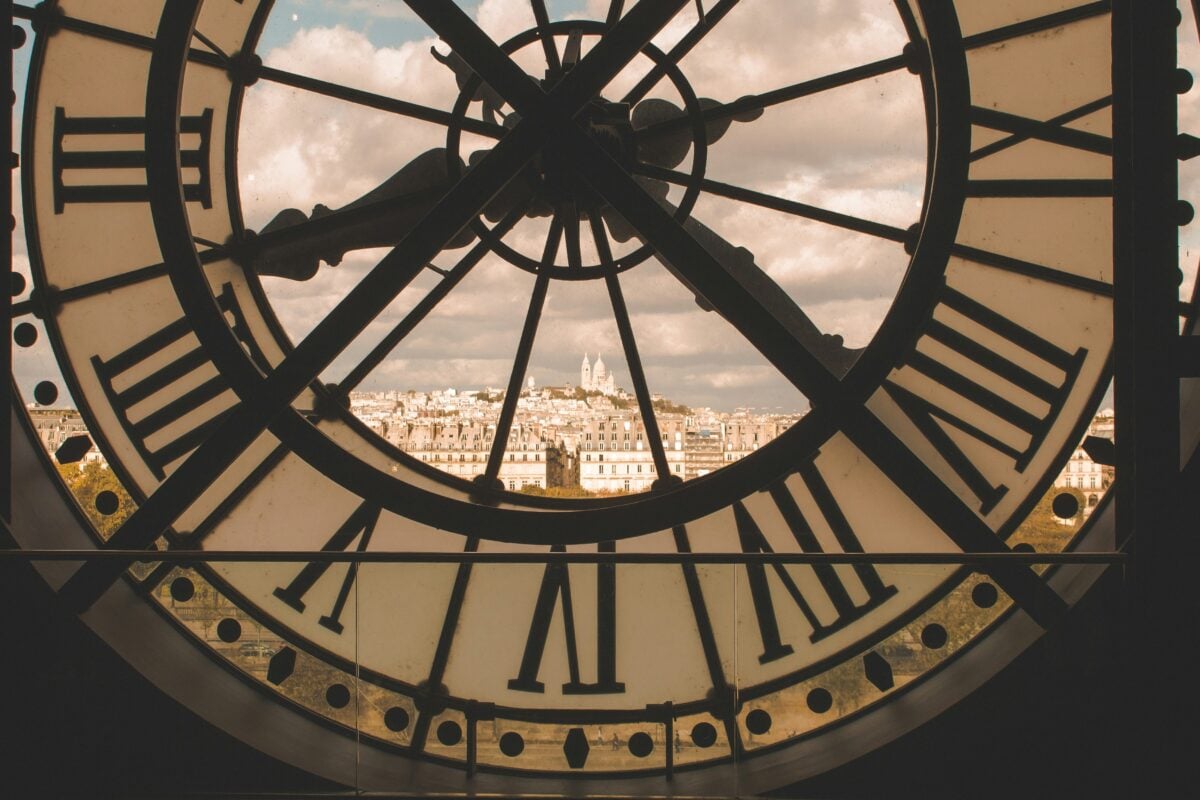
These artifacts don’t just represent ancient Greece—they are ancient Greece, preserved in bronze and marble and gold. Each piece carries forward something that would otherwise be lost: a gesture, a story, a moment when someone decided that beauty mattered enough to make it permanent.
Standing among them, you realize that museums aren’t just repositories for old things. They’re places where the past refuses to stay buried, where human creativity echoes across millennia, proving that some conversations never really end—they just find new voices to continue them.
More from Go2Tutors!

- The Romanov Crown Jewels and Their Tragic Fate
- 13 Historical Mysteries That Science Still Can’t Solve
- Famous Hoaxes That Fooled the World for Years
- 15 Child Stars with Tragic Adult Lives
- 16 Famous Jewelry Pieces in History
Like Go2Tutors’s content? Follow us on MSN.