15 Candid Photos Of American Streets in the 1940s
There’s something about old street photography that stops you cold. Not the posed portraits or the official records — the candid stuff.
The man reading a newspaper on a stoop. The kids chasing each other between parked cars.
The woman in a wool coat waiting for a bus that’s running late. These are the images that survive from American streets in the 1940s, and they feel more honest than almost anything else from that era.
The decade was a strange one. It opened with the country still clawing out of the Depression, swung hard into wartime, and ended with a strange, complicated peace.
The streets carried all of it — the rationing, the victory gardens, the yellow telegrams, the men coming home changed. Here are 15 of the most striking candid street images from that time.
A Soldier Kissing a Stranger in Times Square
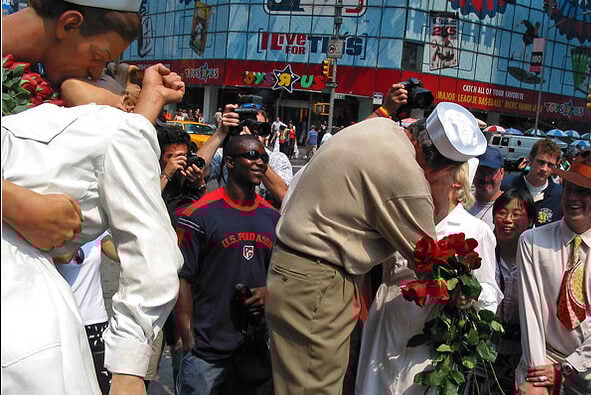
You’ve probably seen this one. Shot in 1945 on V-J Day, it shows a sailor grabbing a nurse on the street and kissing her while the crowd around them barely registers it.
For decades it got treated as pure romance. More recently, people have had harder conversations about what it actually shows.
Either way, the photograph captures something true about that moment — the release of years of fear all at once, pouring out into the streets of New York.
Children Playing Stickball in a Brooklyn Alley
Before organized leagues and scheduled practices, kids found their own games in whatever space the city gave them. This shot from 1947 shows four boys playing stickball in a narrow Brooklyn alley, a broomstick for a bat, a manhole cover for home plate.
The buildings press in close on both sides. Nobody’s watching.
Nobody needed to.
A Diner Counter in Chicago, 1943

The photograph is shot from the side, catching a long row of people hunched over coffee and plates of eggs. Most of them are alone.
The counter is one of those places where city strangers agree not to look at each other, and the photographer caught that unspoken rule perfectly. The war was still running.
Everyone looks tired in a specific way that the years after didn’t quite repeat.
A Newsstand on a Rainy Night in Manhattan

Rain made the streets into mirrors, and good photographers knew it. This shot from around 1946 catches a newsstand operator under a single bare bulb, the wet pavement reflecting the light back in every direction.
A woman in a dark coat reaches for a paper without breaking her stride. The headlines are visible but blurry — the kind of detail that keeps pulling your eye back.
Two Women Talking Outside a Laundromat in Harlem
The photographer was probably just passing by. The two women are deep in conversation, leaning slightly toward each other, bags on the ground at their feet.
One of them is laughing. The street behind them is full of life — kids, cars, storefronts — but the frame holds entirely on those two people who aren’t performing anything for anyone.
A Shoeshine Boy on a Philadelphia Corner

He looks about twelve. He’s got a wooden box and a rag, and he’s in the middle of working on a man’s shoe while the man reads a folded paper and pays exactly no attention to him.
The boy is looking directly at the camera with an expression that’s hard to read — not quite annoyance, not quite pride. Just presence.
This image gets reproduced a lot. People project a lot onto it.
The boy himself was never identified.
The Street-Level View of a Victory Garden in Detroit

The government pushed hard for people to grow their own food, and in Detroit, some neighborhoods took it seriously. This shot from 1943 catches a small lot that’s been turned into rows of vegetables, hemmed in on both sides by brick buildings.
An older man kneels at the far end with a trowel. The contrast between the industry of the city and this small patch of green is almost absurd — and yet it worked.
Millions of pounds of produce came out of places like this.
A Bus Stop in Los Angeles at Dusk
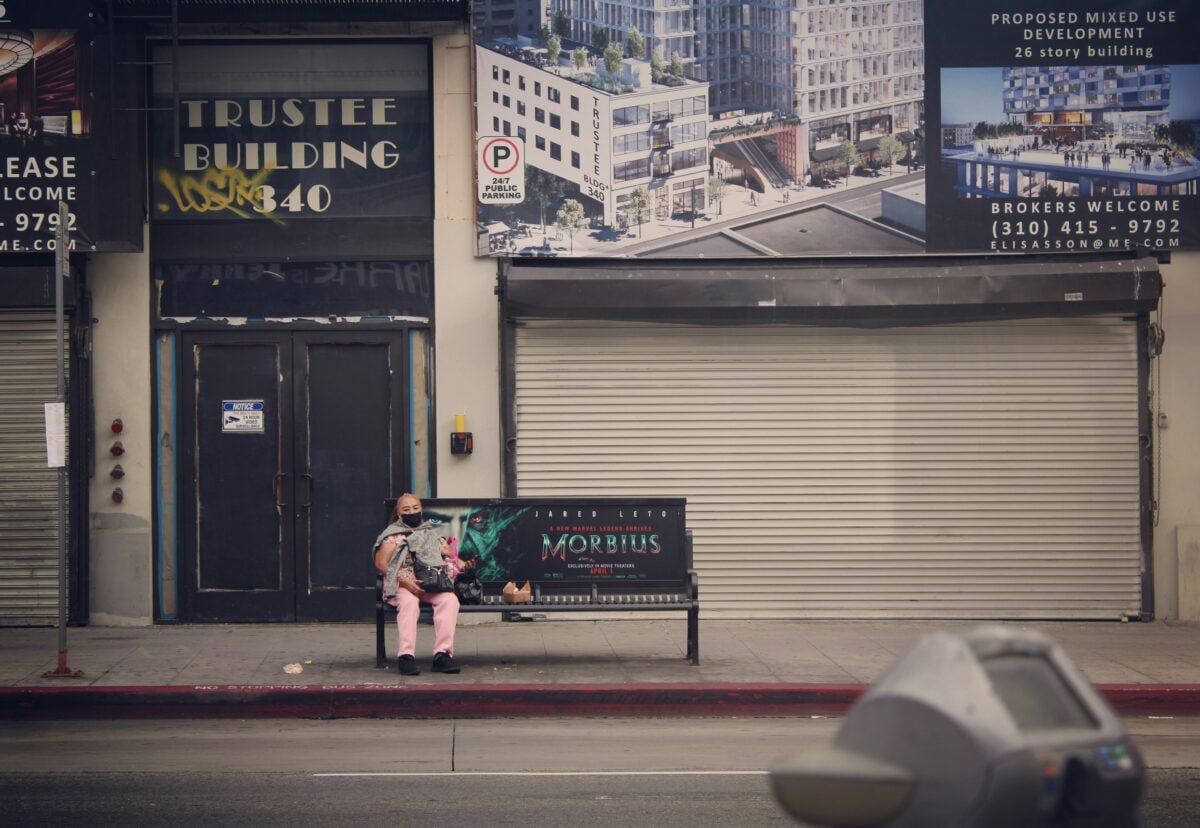
The light is the whole point of this photograph. It’s that hour just before dark when everything turns amber, and the people waiting at the stop are lit from the side, their shadows long and sharp.
A woman holds a shopping bag. A man in a hat checks his watch.
Nobody looks at anyone else. The buses in Los Angeles were still the main way people moved around the city then, before the freeways came.
A Street Peddler on the Lower East Side
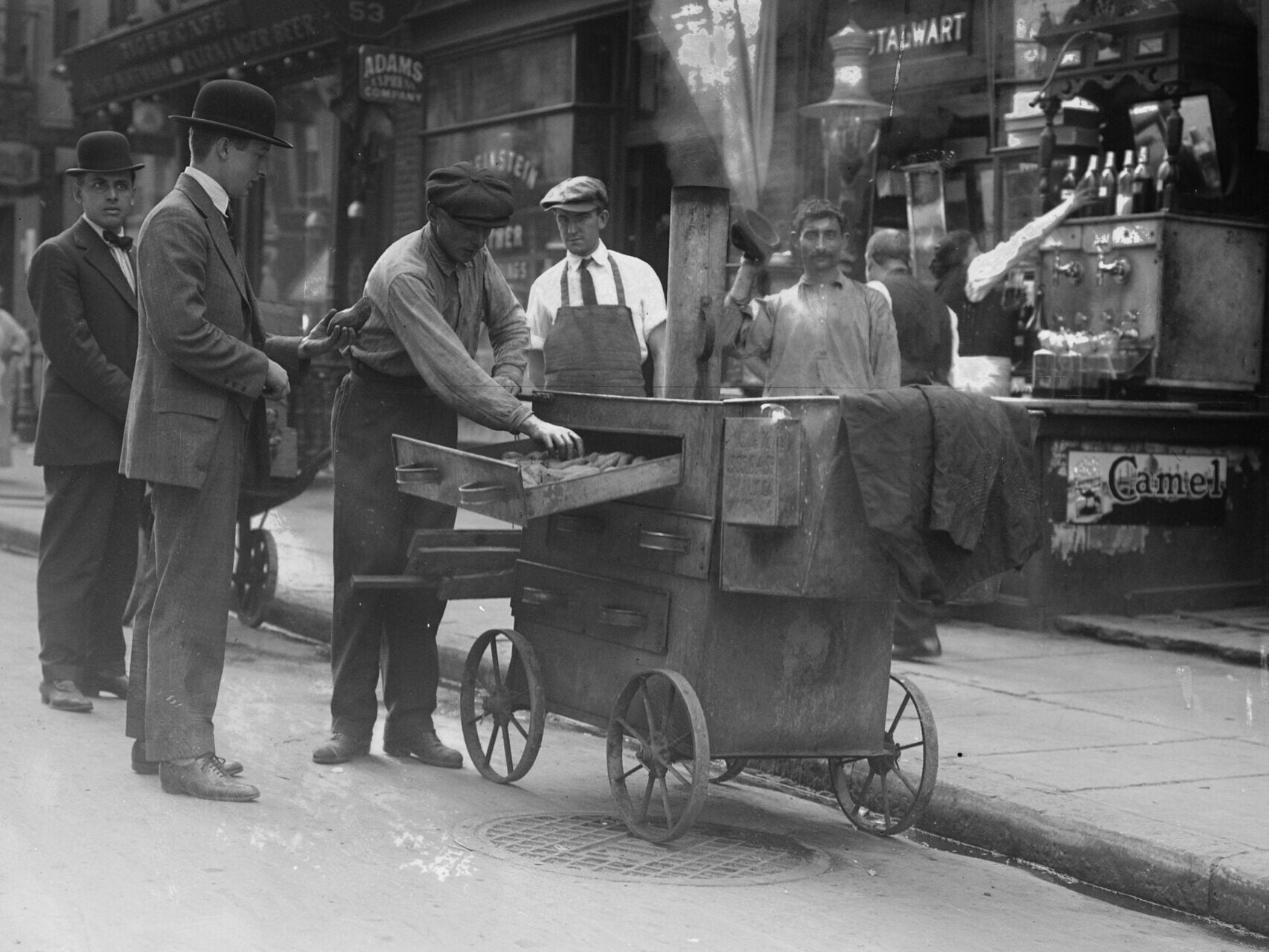
He’s got a cart piled with what looks like scarves and belts, and he’s in the middle of making a case to a woman who has her arms crossed and her chin tilted up. The negotiation is obviously in progress.
The Lower East Side in the 1940s was still thick with this kind of commerce — everything moving on the street, prices argued over, nothing fixed.
A Bar in New Orleans on a Saturday Afternoon
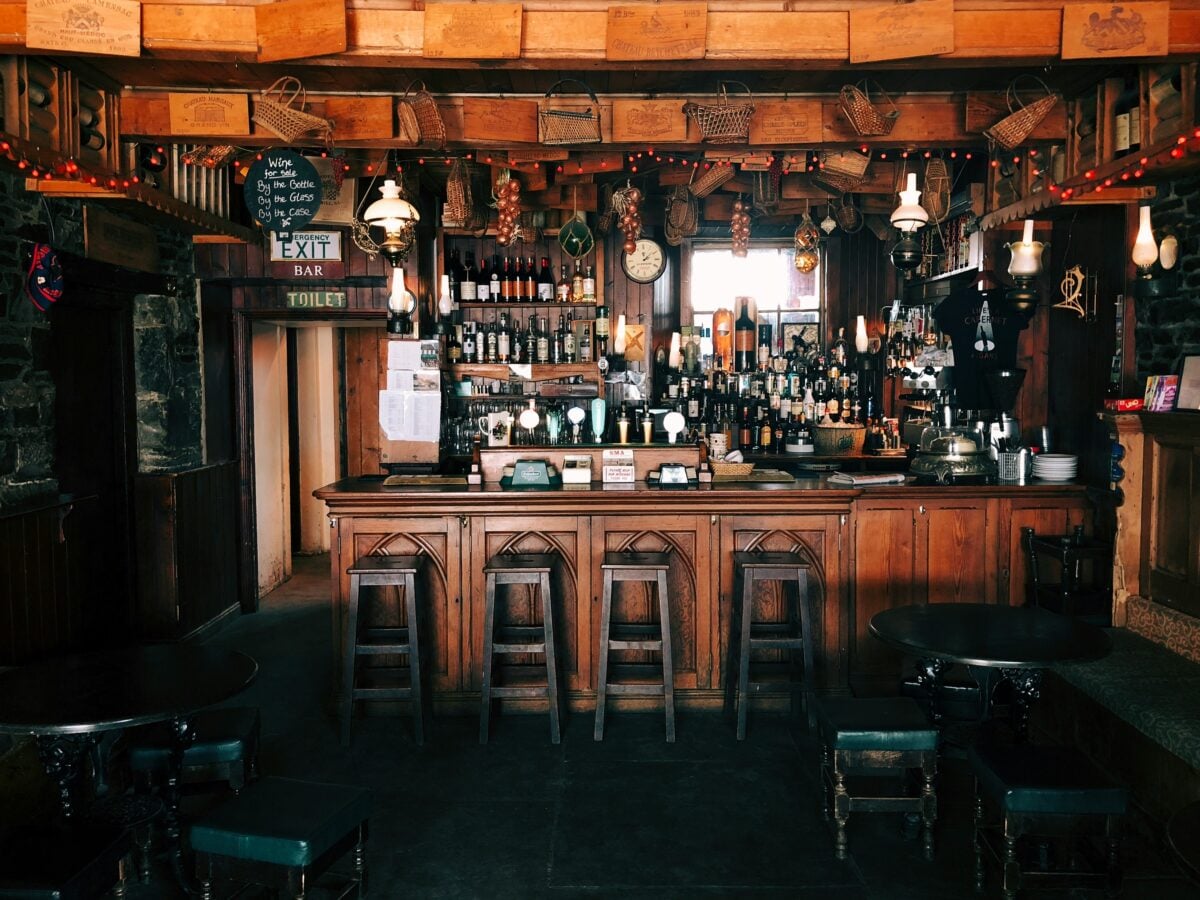
The door is open and the photograph is taken from outside, looking in. Men are at the bar, some standing, some sitting.
A ceiling fan turns overhead. The street behind the camera is visible in the reflection on the bar’s back mirror, doubling the world inside with the world outside.
New Orleans bars in the 1940s had a reputation for being their own kind of institution, and this image makes that reputation easy to believe.
Kids on a Fire Escape in the Bronx

Three children on a narrow iron fire escape, leaning over the railing and watching something in the street below. You can’t see what they’re looking at.
The frame cuts off there. But their posture is identical — all three of them leaning the same way, completely absorbed.
Whatever is happening down on the street, it’s worth watching.
A Sailor Waiting for a Train in Penn Station
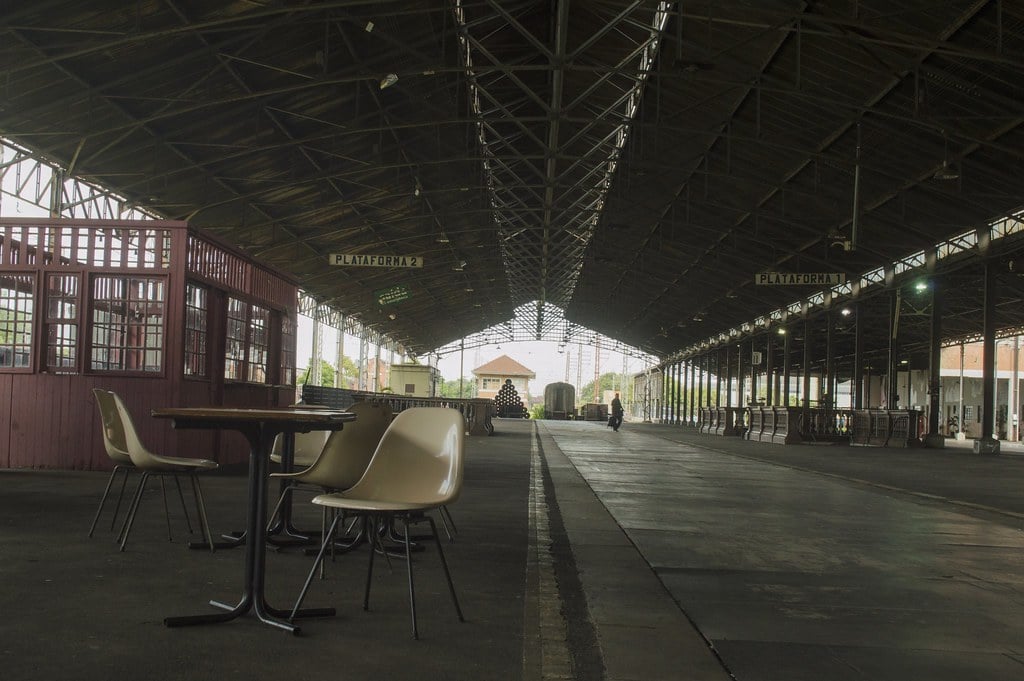
That big arch looming overhead? It makes the guy below look even smaller. This shot captures Penn Station back when it still had that old kind of weight to it.
A lone sailor rests on a bench right in the center, framed by stone and sky. Sunlight cuts across the floor through tall windows, sharp and bright.
His suitcase stays planted near his boots. You can see it in his face – youth, yes, but also that pause people get when they’re stuck between places, unsure what comes next.
A Grocery Store in Brooklyn Following a Late Delivery

A quiet moment, yet strangely truthful compared to others. A small shop sits near what might be 1944, wooden boxes left out front from a recent drop-off.
Standing in the entrance is the person who runs it. On the opposite side of the road, two people pass by, eyes ahead, not turning.
Not much occurs here. Just that.
Yet this scene holds a deeper sense of ordinary existence than those carefully arranged shots ever could.
A Woman Applies Lipstick With The Car Window Reflecting Her Face
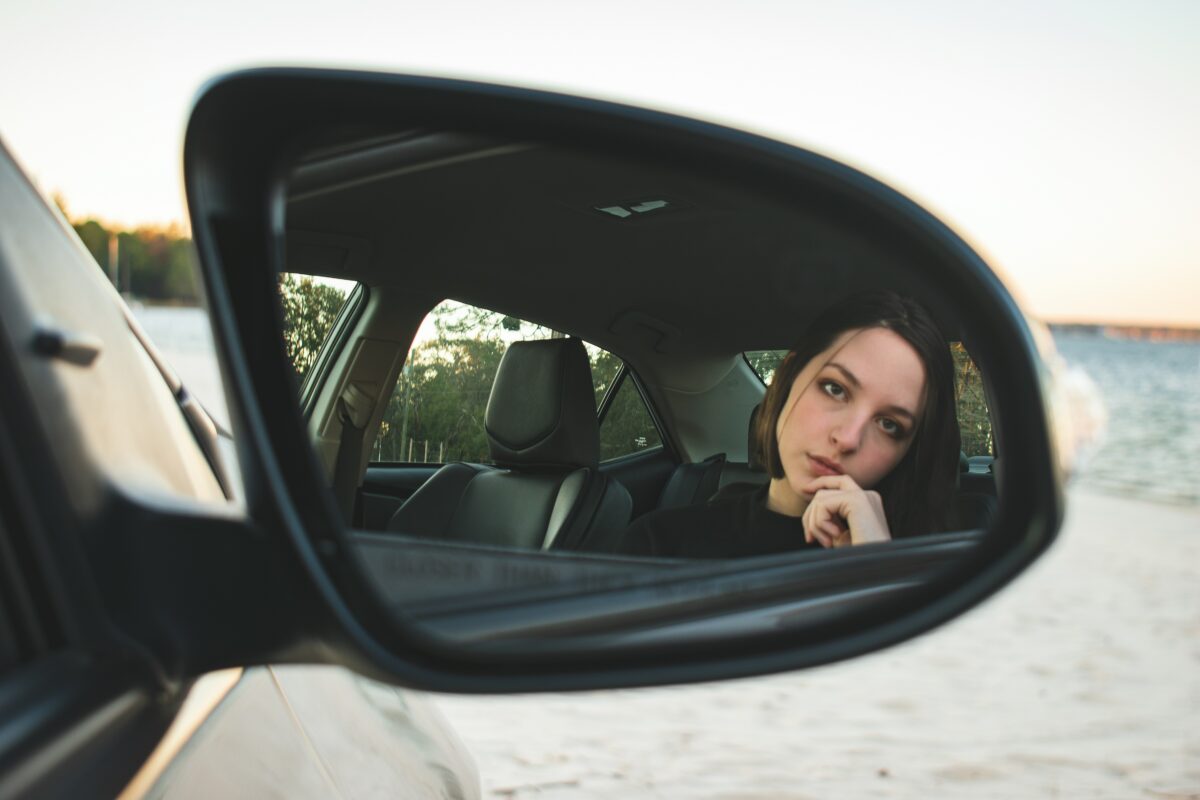
A shape appears in the glass of the car door – her profile, faint but sure. Behind it, the road stretches, blurred by motion and distance.
Not posing. Not aware.
Just passing through. A quiet second, caught despite the crowd around.
Often, that is where real moments hide – in open spaces, unseen. Dark fabric drapes her shoulders, edged with a flash of white at the neck.
Movement pulls her forward, fast, like something urgent waits ahead.
Children Gathered Around A Street Musician In San Francisco

A tune drifts through the air, played by someone whose instrument sits half out of sight at an angle. Eight children stand close in a loose arc, drawn toward the sound.
A single one bounces lightly on bare feet. The rest stay still, eyes wide, jaws relaxed as if caught mid-thought.
Behind them, grown-ups walk by without turning heads, steps steady, uninterested. It is 1948.
Houses line the street with paint intact, porches holding chairs, signs of ease – more than there had been back in 1938. Most little ones have no clue about it.
Yet their ears perk up, waiting for what comes next in the tune.
What People on the Street Were Really Saying

These photos, seen side by side, reveal quiet moments history often walks past. Major happenings found their way into records.
Speeches unfolded. Battles raged.
Announcements thundered – each moment saved. Yet daily American existence from that time lives mainly through snapshots such as these, captured by folks simply watching closely.
Walking city blocks back then meant dodging crowds, hearing chatter, sharing sidewalks without fences. You saw faces up close, strangers passing shoulder to shoulder under streetlights.
Cameras caught those moments between movements – no staged smiles, just people doing their thing. Nothing hidden behind glass or speed.
Life happened where it could be seen, messy and moving together.
More from Go2Tutors!

- The Romanov Crown Jewels and Their Tragic Fate
- 13 Historical Mysteries That Science Still Can’t Solve
- Famous Hoaxes That Fooled the World for Years
- 15 Child Stars with Tragic Adult Lives
- 16 Famous Jewelry Pieces in History
Like Go2Tutors’s content? Follow us on MSN.