15 Everyday Achievements That Deserve a World Record
Life happens in small victories that no one bothers to track. The moments when you perfectly parallel park on the first try, or remember someone’s name months after meeting them once.
These tiny triumphs slip past without fanfare, but they’re the stuff that actually makes up your days. Maybe it’s time someone started keeping score.
Successfully Untangling Christmas Lights on the First Attempt

Christmas lights tangle themselves. It’s physics, probably.
Every year, the same careful storage ritual, and every year, the same impossible knot emerges from the box like a holiday punishment. But some people have the touch.
They pull one strategic strand and the whole mess falls into perfect formation. No swearing, no throwing things, no calling it quits and buying new ones.
Just pure, inexplicable competence when it matters most.
Remembering Where You Parked at the Mall

The modern shopping mall parking lot exists as a deliberate test of human memory, and most people fail it spectacularly (which explains why car alarms go off every thirty seconds as confused shoppers wander the asphalt clicking their key fobs desperately). But there are those rare individuals who emerge from three hours of shopping and walk directly to their vehicle without hesitation, without that telltale pause where you try to remember if you parked near the lamp post or the cart return — they just know, and they walk there with the confidence of someone who has figured out something the rest of us haven’t.
The mental geography required for this feat shouldn’t be underestimated, considering that most mall parking lots are designed by people who clearly believe that visual landmarks are for the weak. And yet some people master this skill so completely that they never experience that moment of panic when the familiar car shape you’ve been walking toward turns out to be a different make and color entirely.
They just park, they remember, they return. Simple as that.
Folding a Fitted Sheet Properly

There’s something almost ceremonial about watching someone fold a fitted sheet correctly. The fabric that normally fights back and bunches into frustrated lumps suddenly becomes orderly, cooperative.
Corners find their places like puzzle pieces clicking home. Most people have made peace with the fitted sheet situation.
It goes in the linen closet as a vaguely rectangular bundle, and that’s good enough. But the sheet folders move through the process with a quiet authority that suggests they’ve figured out something fundamental about imposing order on chaos.
The sheet doesn’t fight them because it knows better.
Parallel Parking in One Smooth Motion

Parallel parking is a skill that shouldn’t impress anyone. Every licensed driver supposedly knows how to do it.
The reality is different. Most parallel parking involves multiple attempts, some creative cursing, and at least one moment where you seriously consider just walking from six blocks away.
The people who slide into tight spaces like their car was designed specifically for that spot aren’t showing off. They’re demonstrating something that looks suspiciously like actual competence, which is saying something in a world where most of us are just winging it most of the time.
Loading the Dishwasher to Perfect Capacity
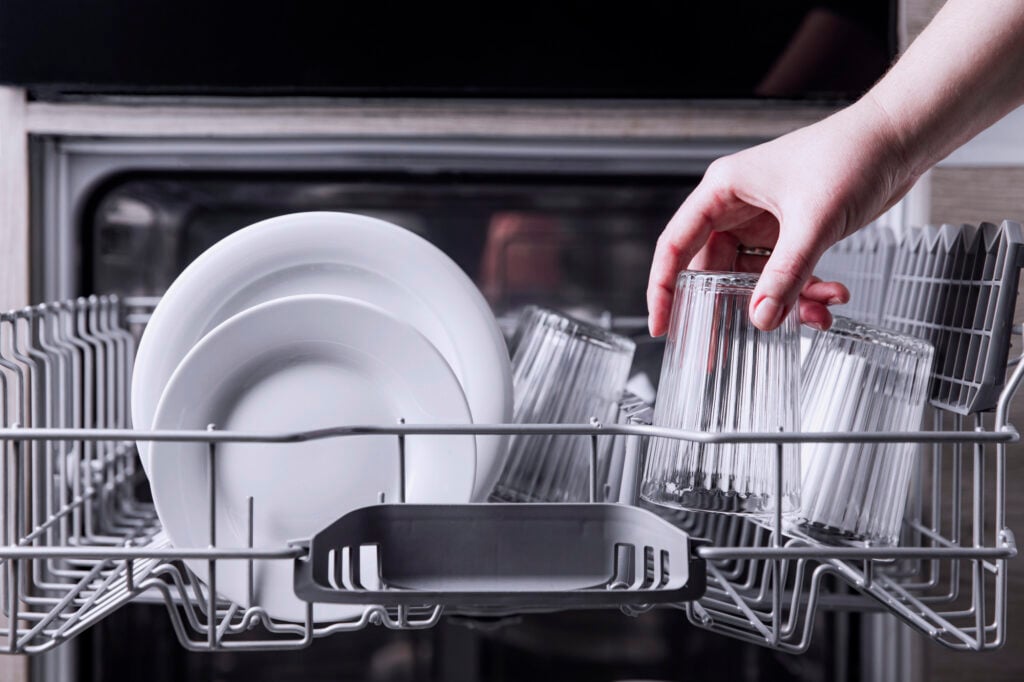
The dishwasher is a three-dimensional puzzle that resets itself twice a day, and most people solve it poorly (leaving half the counter still covered in dirty dishes because “there wasn’t room” despite the obvious gaps where a bowl or plate could have fit with just a minor adjustment to the arrangement). But watch someone who understands spatial relationships and dish architecture at work: they see possibilities where others see limitations, finding space for that last coffee mug by rotating a plate just so, or creating room for the cutting board by repositioning the silverware basket with the precision of someone who has thought deeply about the physics of clean dishes.
There’s something almost meditative about watching an expert dishwasher loader work, the way they consider each item and find its optimal position without having to rearrange everything they’ve already placed. And the final result — every dish secure, every surface getting proper water circulation, the door closing with that satisfying click that means you’ve used every available cubic inch — represents a small victory over household chaos that deserves more recognition than it gets.
So the dishwasher hums to life, and you know that when it’s done, every single item will emerge spotless and ready for action.
Getting USB Cables Right on the First Try

USB cables exist in a quantum state of wrongness. The first insertion attempt fails.
The second fails. The third attempt, somehow, works perfectly with the exact same orientation as the first try.
But there are people who look at a USB port and know. They don’t flip the cable around or try different angles.
They just slide it in correctly the first time, every time. They’ve cracked some fundamental code about the universe that the rest of us are still struggling with.
The cable goes where it belongs, and they move on with their day like this is normal behavior.
Successfully Removing Items from Packaging Without Destroying Anything

Modern packaging seems designed by people who assume everyone owns industrial cutting tools and has unlimited patience for plastic welded to cardboard that’s been sealed with what might be actual cement. Most people approach a new purchase with the grim determination of someone preparing for battle, knowing that casualties are inevitable — the box will be shredded, the inner packaging will be scattered across three rooms, and something important will probably be accidentally punctured in the process.
But some people have mastered the art of clean extraction, finding those hidden perforation lines that actually work, locating the single tab that releases the entire assembly without requiring an engineering degree and a set of specialized tools. They open packages the way they were theoretically designed to be opened, which is to say: neatly, completely, and without creating a crime scene of cardboard and twisted plastic ties that will somehow end up stuck to your socks three days later.
The package opens. The contents emerge intact.
The materials can actually be recycled properly instead of thrown away in frustration. And somewhere, a packaging designer feels briefly vindicated before returning to their ongoing mission of making everything more difficult than it needs to be.
Perfectly Timing the End of a Song While Parking

Radio songs don’t care about your schedule. They start their three-and-a-half minute journey whenever they want, completely indifferent to where you need to be or when you need to be there.
Most people either sit in parked cars waiting for songs to finish or walk away mid-chorus like some kind of monster. But occasionally, the universe aligns.
You pull into your parking space just as the final notes fade, achieving a synchronicity so perfect it feels like the day was choreographed specifically for you. The engine turns off in the silence between the song ending and the DJ’s voice beginning.
Assembling IKEA Furniture Without Leftover Parts
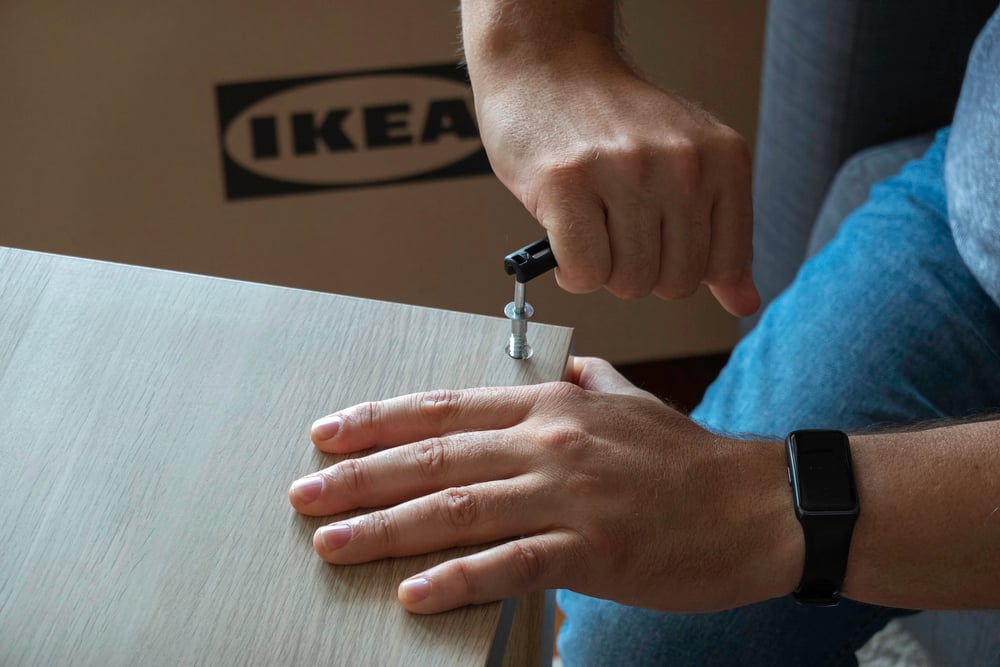
IKEA instructions exist in a wordless realm of stick figures and arrows that somehow suggest more complexity than actual blueprints for skyscrapers. Most people end up with functional furniture and a small collection of screws that supposedly weren’t necessary, despite the nagging certainty that everything is one strong breeze away from catastrophe.
But furniture assembly masters read those hieroglyphic instruction sheets like they’re written in their native language. Every part finds its purpose.
Every screw gets used. The final product stands solid and complete, ready for years of reliable service.
No leftover hardware, no structural concerns, no need to flip through the instructions wondering what went wrong. Just a bookshelf that looks exactly like the picture, assembled by someone who apparently speaks fluent Swedish design philosophy.
Waking Up One Minute Before the Alarm

The internal clock ticks along quietly, mostly ignored until it proves itself with startling accuracy (managing to rouse you from deep sleep just moments before that jarring alarm sound would have torn through the peaceful morning, leaving you feeling oddly accomplished despite having technically done nothing except exist with better timing than usual). This isn’t just waking up early — plenty of people do that and then lie there dreading the approaching alarm like some kind of acoustic punishment for the crime of needing to be somewhere at a specific time.
No, this is precision waking, the ability to surface from unconsciousness with just enough time to appreciate the quiet moment before obligation kicks in, but not so much time that you start thinking about everything you need to do today and work yourself into a pre-coffee anxiety spiral. And somehow the people who master this skill never look smug about it, which is remarkable considering they’ve essentially achieved low-level time travel through the power of circadian rhythm management and what can only be described as biological punctuality.
The alarm never gets the chance to do its job. The day starts gently, on your terms, with your internal chronometer proving once again that it’s more reliable than most of the technology you depend on.
Keeping Plants Alive for Over a Year

Plants want to live. That’s their whole thing.
They’ve been surviving on this planet for millions of years without human intervention. Yet somehow, bringing them indoors turns them into fragile, needy organisms that die if you look at them wrong.
Plant killers have good intentions. They water religiously (which usually means too much).
They find the perfect spot by the window (which turns out to be either too bright or not bright enough). They buy the good soil and the fancy pots and the plant food that promises to solve everything.
The plants die anyway, often with dramatic flair that suggests they’re protesting the entire concept of domestication. Plant parents understand something different.
They know when to water and when to wait. They recognize the difference between a plant that’s thriving and one that’s just surviving.
Most importantly, they don’t take it personally when a plant dies, because they know that keeping something alive for over a year means they’ve figured out the fundamentals.
Opening Jars That Others Cannot

Jar lids follow their own rules of physics. Sometimes they open easily.
Sometimes they require the strength of three people, a rubber grip pad, and a brief moment of questioning whether you’ve somehow gotten weaker since yesterday. But jar openers never struggle.
They grab the lid with quiet confidence and it surrenders immediately. No running it under hot water, no tapping around the edges with a knife, no recruiting help from anyone with larger hands. Just grip, twist, open.
The jar knows it’s been defeated by superior technique and doesn’t bother putting up a fight. It’s not about strength.
Plenty of strong people still wrestle with stubborn lids. It’s about understanding leverage and grip and the precise angle that makes a sealed jar remember it’s supposed to open when asked politely.
Finding the Perfect Gift Without Overthinking It

Gift-giving turns most people into amateur psychologists, second-guessing every choice and wondering if this says the right thing about the relationship while simultaneously worrying that it’s either too personal or not personal enough (which leads to hours of wandering through stores picking up items and putting them back down while trying to calculate the exact level of thoughtfulness that won’t be misinterpreted in either direction). The whole process becomes an exercise in overthinking what should be a simple gesture of appreciation, resulting in gifts that feel safe but forgettable, or adventurous but potentially wrong.
But some people have an instinct for gift selection that cuts through all the psychological complexity and lands on exactly the thing that makes sense — not because they’ve analyzed the recipient’s personality and cross-referenced it with current trends and price points, but because they see something and know it belongs with that person. And the recipient opens it with that particular expression that means you’ve understood something about them that they might not have even articulated to themselves.
The gift hits exactly right. No returns, no awkward thank-you notes for something that’s clearly headed for a closet.
Just the simple satisfaction of connecting two things that were meant to be together.
Successfully Estimating How Much Food to Cook

Most home cooking involves either making way too much food and eating leftovers for a week, or making too little and supplementing dinner with whatever random items are available in the pantry, creating meals that technically qualify as food but don’t quite live up to what anyone was hoping for when the cooking process began.
Food estimation masters look at the raw ingredients and see the finished portions with mathematical precision. They cook exactly the right amount of pasta for the number of people eating.
The rice doesn’t overflow the pot or disappear into a sad, insufficient layer at the bottom. There are no leftover vegetables wilting in the refrigerator, but nobody leaves the table still hungry either.
This isn’t just cooking skill — it’s spatial reasoning applied to appetite prediction. They’ve somehow figured out the conversion rate between raw ingredients and satisfied diners, which is more complicated than it sounds when you consider that hunger varies by person, time of day, and what everyone ate for lunch.
Untangling Earbuds on the First Pull

Earbuds tangle themselves through what must be active malice. You can put them away carefully, wound in neat loops, only to find them the next day twisted into configurations that seem to defy the laws of physics.
The tangling happens in pockets, in bags, in drawers — anywhere earbuds exist, chaos follows. Most people approach tangled earbuds like a puzzle that’s probably going to end in frustration, pulling gently at various loops and hoping something gives without making the situation worse.
The process usually involves at least one moment of seriously considering just buying new ones rather than dealing with this again. But earbud whisperers see the pattern immediately.
One strategic pull at exactly the right spot and the whole mess unravels into perfect working order. No patience required, no systematic untangling process, no moment of defeat where you consider whether music is really that important anyway.
Just the quick confidence of someone who understands that every tangle has a solution, and they happen to know what it is.
The Small Victories That Actually Matter

These aren’t the achievements that change the world or appear on anyone’s resume. They’re the tiny moments of competence that make ordinary days run a little smoother.
The skills that no one teaches but everyone wishes they had. Maybe that’s what makes them worth celebrating.
In a world that keeps score on the big things, these quiet victories happen without fanfare or recognition. But they add up to something that feels suspiciously like having your life together, one small success at a time.
More from Go2Tutors!

- The Romanov Crown Jewels and Their Tragic Fate
- 13 Historical Mysteries That Science Still Can’t Solve
- Famous Hoaxes That Fooled the World for Years
- 15 Child Stars with Tragic Adult Lives
- 16 Famous Jewelry Pieces in History
Like Go2Tutors’s content? Follow us on MSN.



