15 Instruments That Shaped Civilizations
Picture attempting to construct today’s world without any tools whatsoever. No hammers. No wheels. Not even basic writing implements. The notion seems absurd because it is absolutely impossible.
Throughout human history, specific instruments have proven so transformative that they didn’t merely alter work methods—they fundamentally restructured entire societies, ignited innovative thought patterns, and launched civilizations toward radically different trajectories. These instruments weren’t random conveniences that simplified daily tasks.
They represent genuine game-changers: the innovations that transformed nomadic hunter-gatherers into settled farmers, turned isolated communities into interconnected global networks, and converted abstract concepts into tangible realities. Here is a list of 15 instruments that fundamentally shaped the course of human civilization.
The Plow

Agriculture revolutionized human existence, though the plow amplified that transformation exponentially. Prior to plowing technology, farming involved surface scratching with primitive sticks while hoping for favorable outcomes.
The plow enabled people to penetrate resistant soil and establish deeper planting—resulting in substantially larger harvests and increased food production. This surplus meant certain individuals could abandon farming to become specialized craftsmen, religious leaders, or governing authorities.
The Wheel

While the wheel simplified transportation, it actually established the fundamental basis for all machinery. Consider this: every gear mechanism, each pulley system, and all rotating devices trace their origins to this elegant circular design.
Ancient Mesopotamian inventors likely couldn’t have predicted they were creating the essential blueprint for everything from pottery wheels to contemporary engines when they first mounted wheels onto carts around 3500 BCE.
Like Go2Tutors’s content? Follow us on MSN.
The Compass

Before magnetic compass technology emerged, sailors remained confined to coastal routes—getting lost at sea meant certain death. The compass transformed maritime navigation from a deadly gamble into manageable risk assessment.
Chinese innovators developed this technology around 1000 CE, yet within several centuries, European explorers were utilizing it to ‘discover’ new continents and establish extensive global trade networks.
The Printing Press
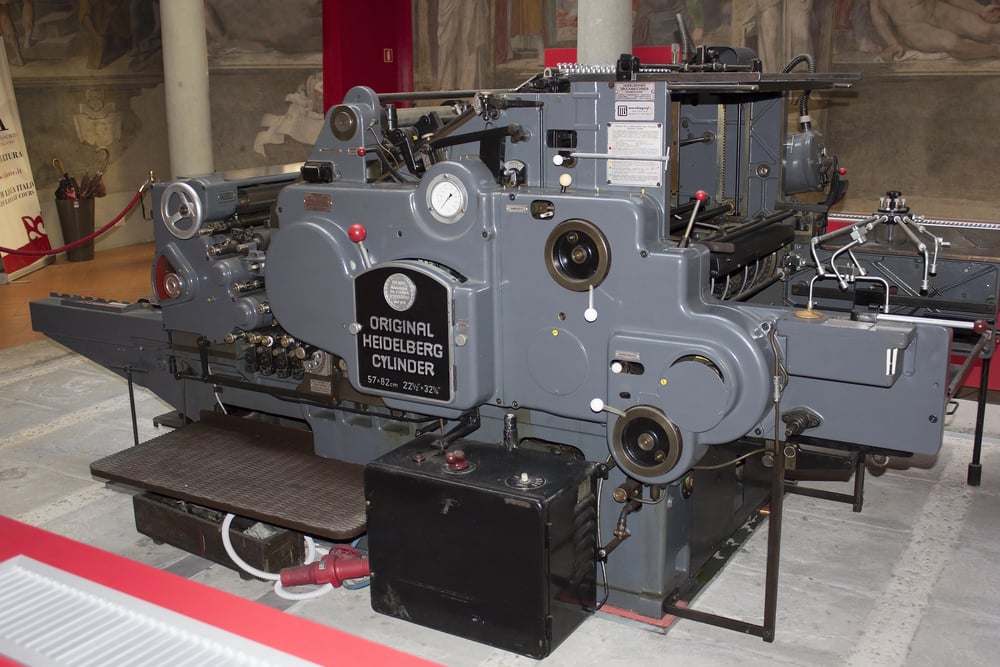
Johannes Gutenberg’s printing press innovation around 1440 CE accomplished far more than reducing book costs—it effectively democratized knowledge access itself. Before printing technology, hand-copying books was so prohibitively expensive that only wealthy individuals and religious institutions could maintain libraries.
Suddenly, ideas could propagate rapidly, ultimately leading to the Renaissance, the Reformation, and widespread literacy.
Gunpowder

Originally developed by Chinese alchemists who were seeking immortality elixirs, gunpowder ended up transforming warfare permanently. It rendered castle fortifications obsolete, shifted power away from heavily armored cavalry, and enabled smaller military forces to defeat numerically superior armies.
European powers utilized gunpowder weapons to dominate crucial trade routes and conquer distant territories.
Like Go2Tutors’s content? Follow us on MSN.
The Steam Engine

James Watt’s enhanced steam engine converted muscle-dependent societies into machine-powered civilizations. Factories could now be constructed anywhere—not exclusively near rivers for water power generation.
Steam locomotives connected previously isolated cities, while steamships made oceanic travel faster and significantly more dependable. This singular invention jumpstarted the entire Industrial Revolution.
The Telescope

Although Galileo didn’t invent the telescope, he directed it toward celestial bodies and completely shattered humanity’s understanding of its cosmic position. Suddenly, people could observe that Earth wasn’t the universe’s center, that lunar surfaces contained mountains, and that Jupiter possessed its own satellite moons.
The telescope enabled space exploration and fundamentally altered human self-perception.
The Clock

Mechanical timekeeping devices accomplished more than simple time indication—they created the precise scheduling concepts upon which modern life absolutely depends. Before clock technology, people worked according to solar patterns and seasonal changes.
With dependable timekeeping, factories could coordinate worker shifts, trains could operate on strict schedules, and society could organize itself around shared temporal standards rather than natural rhythms.
Like Go2Tutors’s content? Follow us on MSN.
The Microscope

Microscopic technology revealed an entire universe invisible to human eyes. It led to bacterial and viral discoveries, revolutionizing medical practice and public health initiatives.
Understanding microorganisms meant comprehending disease mechanisms—leading to sanitation systems, vaccination development, and modern hospital facilities. Entire plague outbreaks could now be prevented rather than merely endured.
Paper

Chinese inventors created paper around 100 CE, though its global impact spread gradually over many centuries. Lighter and more economical than clay tablets or parchment materials, paper simplified record-keeping and made it more widespread.
Governments could maintain superior records, businesses could track commercial transactions more efficiently, and knowledge could be preserved and shared more extensively.
The Stirrup

This addition to horseback riding might appear minor, but stirrups revolutionized both warfare and social structures. They allowed mounted riders to remain stable during combat while using weapons more effectively.
This development led to heavy cavalry dominance, which controlled medieval battlefields and contributed significantly to European feudal systems.
Like Go2Tutors’s content? Follow us on MSN.
Concrete

Roman concrete wasn’t simply durable; it was genuinely revolutionary. It enabled Romans to construct massive architectural marvels like the Pantheon with its enormous dome, aqueducts that delivered fresh water to urban centers, and roadways that have lasted for millennia.
The capacity to build large, permanent structures facilitated empire expansion and administrative control across vast territories.
The Loom

Weaving technology transformed both economic systems and social hierarchies. Advanced looms meant accelerated textile production, which fostered trade networks spanning entire continents.
The textile industry frequently pioneered mechanization during industrialization periods, drawing people from rural farms to urban centers and creating the working class that would define modern society.
The Lever
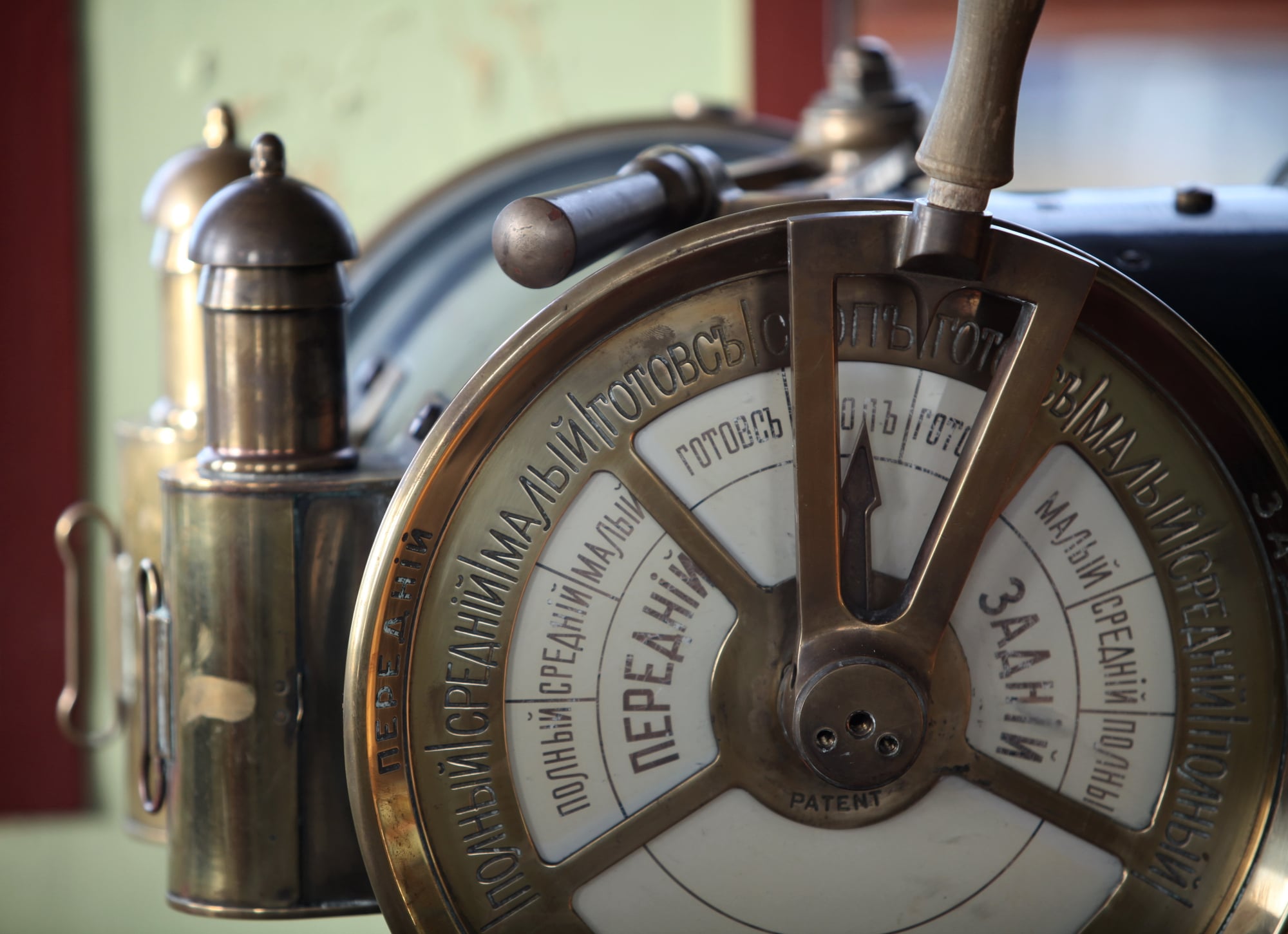
The lever amplified human physical strength and enabled the construction of monumental structures. Ancient Egyptians employed levers to relocate massive stone blocks for pyramid construction, and this principle became essential to countless subsequent machines.
Archimedes famously declared he could relocate the Earth itself if provided with a sufficiently long lever and an appropriate fulcrum point.
Like Go2Tutors’s content? Follow us on MSN.
The Pendulum Clock

Precise chronometry revolutionized everything from navigation to scientific research. Accurate timepieces allowed maritime navigators to calculate longitude while at sea, making global navigation considerably safer and more dependable.
Within scientific disciplines, precise timing facilitated superior experimental procedures and observations, establishing foundations for modern physics and chemistry.
Tools That Built Tomorrow

These fifteen instruments accomplished far more than task simplification—they fundamentally transformed how societies organized themselves, how individuals perceived their world, and how civilizations evolved.
From the agricultural plow that facilitated the first urban centers to the printing press that disseminated revolutionary concepts, each tool generated cascading effects that continue shaping our contemporary world.
Whenever you utilize any modern device, remember that it builds upon these ancient innovations that first taught humanity to extend its capabilities beyond what nature alone provided.
More from Go2Tutors!

- 16 Restaurant Chains That Went Too Fast
- 12 Things Sold in the 80s That Are Now Illegal
- 15 Strange Things People Have Tried to Ban (And Failed)
- 16 Collectibles People Tossed Out Too Soon
- 17 Myths from Your Childhood That Were Actually Based on Real Things
Like Go2Tutors’s content? Follow us on MSN.



