18 Inventions That Came Close to Being Lost
Throughout history, countless brilliant ideas have teetered on the edge of oblivion. Some disappeared into dusty archives, forgotten by the very people who needed them most.
Others survived by the slimmest of margins — a chance discovery in an attic, a patent filing found just before the deadline, or a stubborn inventor who refused to let their creation die. These near-miss stories remind us how fragile innovation can be, and how easily the tools that shape our world might never have existed at all.
The Printing Press

Gutenberg’s printing press almost vanished before it changed the world. The man himself was broke, constantly dodging creditors who wanted to seize his equipment.
His business partner sued him in 1455, right as the first Bibles were rolling off the press. The lawsuit nearly killed everything.
Gutenberg lost his workshop, his tools, his life’s work — all of it handed over to pay debts. But his techniques had already leaked out.
Other craftsmen had seen enough to keep the idea alive, spreading it across Europe just as Gutenberg himself faded into obscurity.
Steam Engine Technology
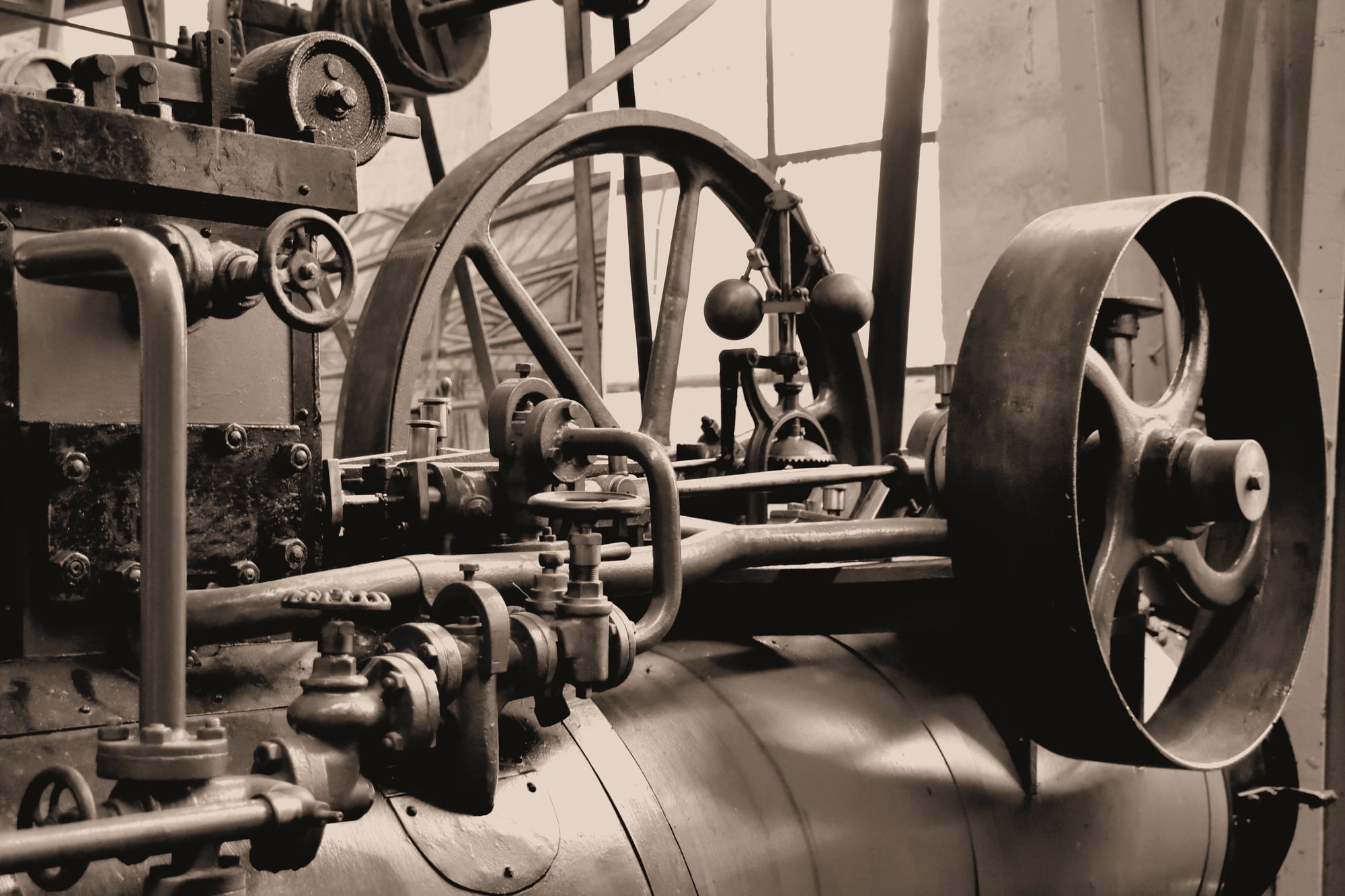
Here’s the thing about the steam engine: it was actually invented twice, maybe three times, because people kept losing track of how to build the damn thing. Hero of Alexandria had a working steam engine in the first century AD — a clever little device that spun when heated water created steam pressure — but when the Roman Empire fell, so did most of the technical knowledge needed to recreate it.
Fast forward to the 1600s, and inventors were basically starting from scratch (though some historians argue a few medieval manuscripts preserved fragments of the original concepts, passed down through Islamic scholars who had translated the Greek texts, which is how these things often survived the Dark Ages anyway). Thomas Newcomen built his atmospheric engine in 1712, but even that design nearly disappeared when newer, more efficient models made people forget the earlier versions.
And here’s the strange part: if James Watt hadn’t stumbled across one of Newcomen’s engines that needed repair — he was just a university instrument maker at the time, not even particularly interested in steam power — he might never have developed the improvements that launched the Industrial Revolution. Sometimes the most important inventions survive purely by accident.
Anesthesia

The discovery of anesthesia reads like a cautionary tale about how easily medical breakthroughs can slip away. Crawford Long used ether to perform painless surgery in 1842, but he was a small-town Georgia doctor who didn’t bother publishing his results for years.
Meanwhile, other doctors were experimenting with the same compounds — ether, chloroform, nitrous oxide — without knowing what their colleagues had already figured out. The knowledge existed in scattered pockets, unreported and unrecorded.
If William Morton hadn’t finally demonstrated ether anesthesia at Massachusetts General Hospital in 1846, making it impossible to ignore, surgical anesthesia might have remained a local curiosity in rural Georgia. Which is a terrifying thought when you consider how many people suffered needlessly because information traveled so slowly.
Penicillin
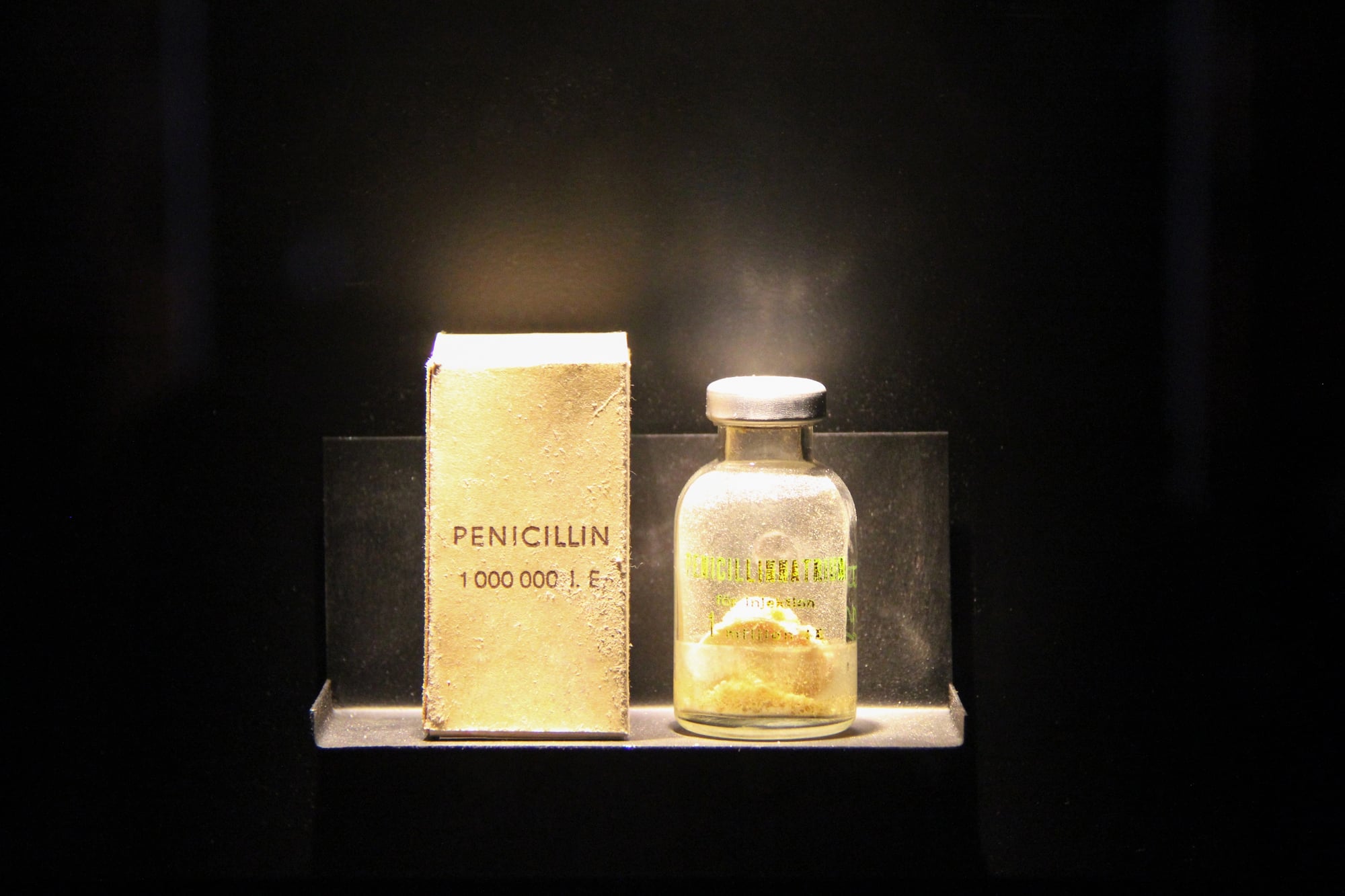
Alexander Fleming’s penicillin sat forgotten on a laboratory shelf for over a decade. Fleming discovered the mold’s antibacterial properties in 1928, published a paper about it, then moved on to other projects when nobody seemed particularly interested.
The medical establishment shrugged. Antiseptics already existed.
Infection was just part of medicine — something doctors had learned to work around rather than eliminate. So penicillin gathered dust while people continued dying from infections that could have been easily treated.
It wasn’t until World War II created an urgent need for better infection control that researchers finally revisited Fleming’s old notes and realized what they’d been ignoring.
The Computer Mouse

Douglas Engelbart invented the computer mouse in 1964, but it nearly disappeared into the same technological graveyard that swallows most ahead-of-its-time innovations. The device made perfect sense to Engelbart — a simple way to navigate computer interfaces that didn’t require memorizing dozens of keyboard commands — but the computing world wasn’t ready for it.
Most computers still filled entire rooms and required trained operators who communicated through punch cards and text terminals. The idea of individual users casually pointing and clicking seemed almost frivolous.
Engelbart’s mouse patent expired in 1987, just as personal computers were becoming common enough for the device to finally find its audience. By then, other companies had refined his design and reaped the commercial benefits he never saw.
But here’s what strikes me about Engelbart’s story: he wasn’t just inventing a pointing device, he was imagining an entirely different relationship between humans and computers — one where technology adapted to natural human gestures rather than forcing people to adapt to machine logic. The mouse was really a philosophy made tangible, a small rebellion against the idea that computers had to be intimidating and complex.
And that philosophy nearly died along with the patent, saved only because a few engineers at Xerox and Apple recognized something profound in what everyone else had dismissed as a novelty.
Intermittent Windshield Wipers

Robert Kearns invented intermittent windshield wipers after a champagne cork injured his eye on his wedding night. The injury left him with impaired vision that made driving in light rain nearly impossible — regular wipers moved too fast, but without them he couldn’t see clearly enough to drive safely.
His solution was elegant: a variable-speed wiper system that could handle everything from light mist to heavy downpour. But when Kearns approached the major automakers in the 1960s, they showed polite interest, then developed their own versions using his basic concept.
Kearns spent the next thirty years in court, fighting patent battles that nearly bankrupted him while the entire auto industry used technology he’d invented. The intermittent wiper became standard equipment, but its creator remained largely unknown.
The Fax Machine
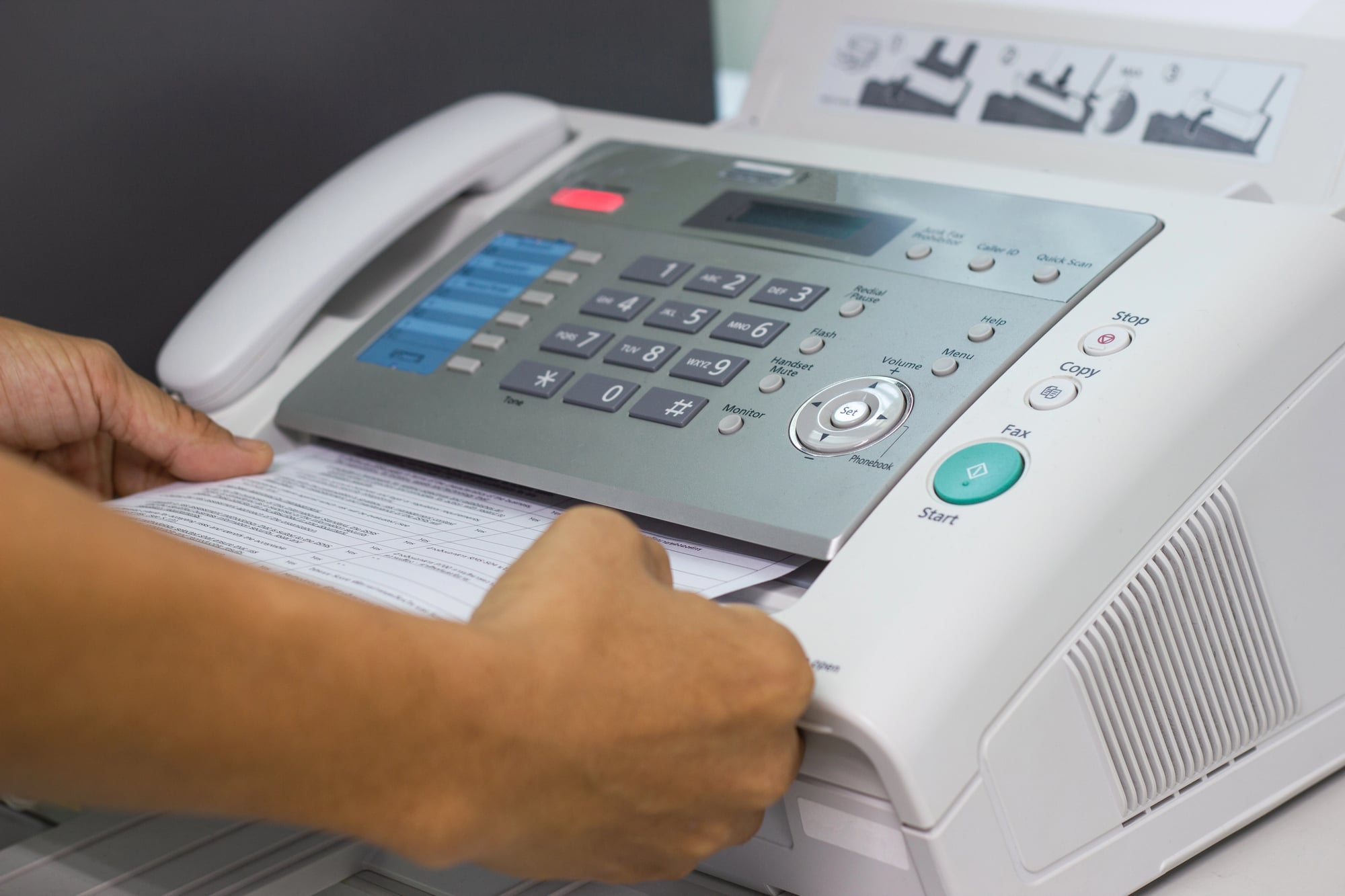
The fax machine has a peculiar history of being invented, forgotten, and reinvented multiple times across more than a century. Alexander Bain created the first working fax system in 1843 — decades before the telephone — but the technology was too far ahead of the infrastructure needed to support it.
Giovanni Caselli improved on Bain’s design in the 1860s and actually established commercial fax service between Paris and Lyon, but the Franco-Prussian War destroyed the network and interest faded. The technology kept resurfacing every few decades, each time refined but still not quite matching what people needed.
It wasn’t until the 1980s that fax machines finally became indispensable office equipment, nearly 140 years after the original concept proved it could work.
Velcro

George de Mestral spent eight years developing Velcro after getting annoyed with burrs sticking to his dog’s fur during walks in the Swiss Alps. The concept seemed obvious once he examined the burrs under a microscope and saw the tiny hooks that grabbed onto fabric loops — nature had already solved the problem of reversible fastening.
But obvious doesn’t mean easy to manufacture. De Mestral struggled to find textile companies willing to produce the hook-and-loop fasteners, and when he finally succeeded, most people saw Velcro as a novelty item.
The fashion industry dismissed it as too casual, too utilitarian. It took NASA’s adoption of Velcro for space suits to finally legitimize the technology and demonstrate its practical value.
Without the space program’s endorsement, Velcro might have remained a curious footnote in fastening technology.
Antibiotics Before Penicillin

Long before Fleming’s famous mold contamination, folk healers and traditional physicians had been using naturally occurring antibiotics for centuries, though they didn’t understand the mechanism behind their effectiveness. Honey, certain plant extracts, and even specific types of soil were known to prevent infection and promote healing.
The knowledge was scattered, unscientific, often mixed with superstition that made it easy for modern medicine to dismiss entirely. When germ theory emerged in the late 1800s, it swept away both the useful traditional remedies and the useless ones, leaving doctors with antiseptics and surgery as their primary tools against infection.
Some of those discarded folk remedies contained genuine antibiotic compounds that could have saved lives if anyone had bothered to study them systematically instead of rejecting them wholesale.
The Transistor’s Predecessors
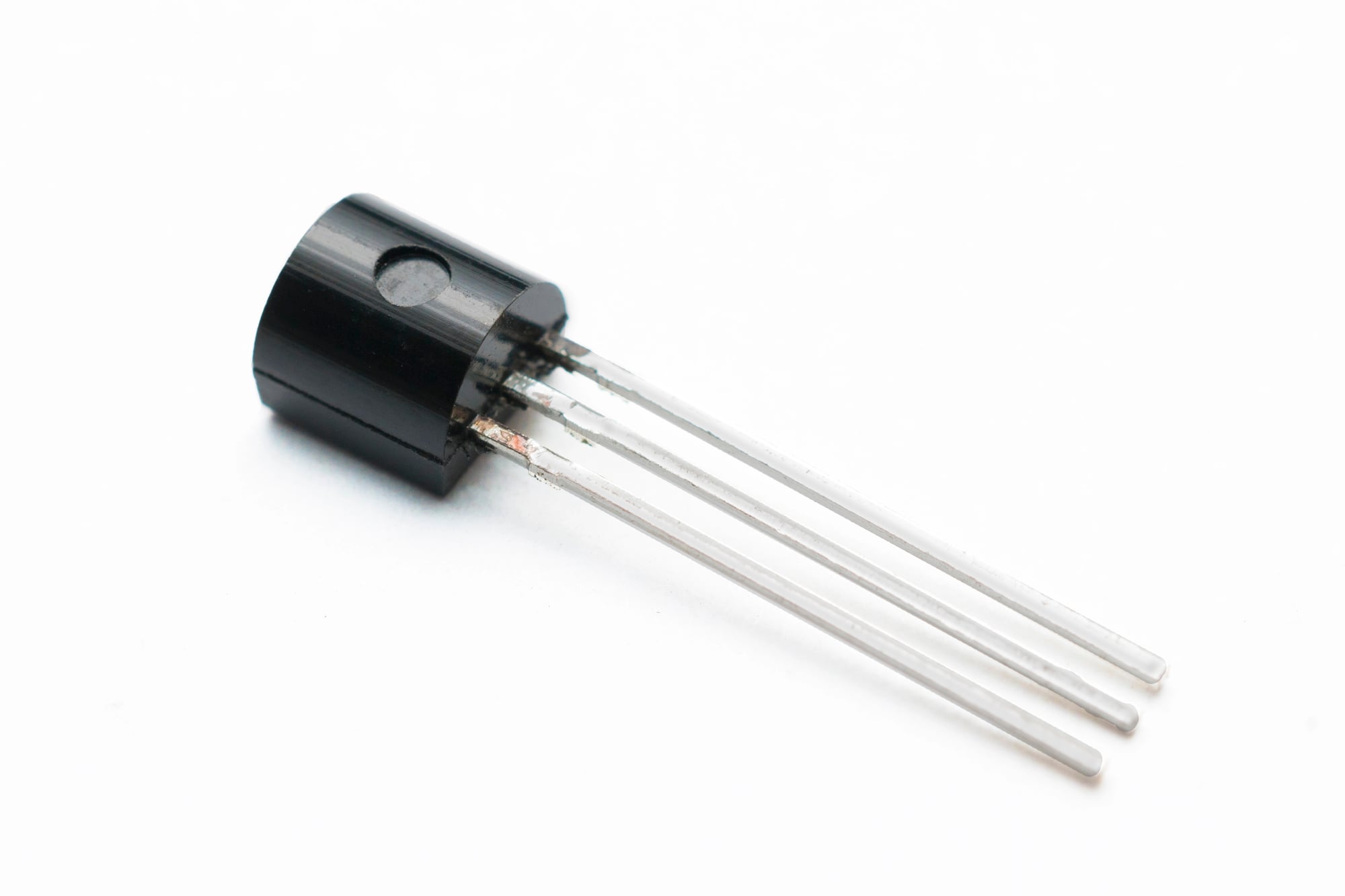
The transistor didn’t emerge from nowhere in 1947 — it built on decades of earlier work with crystal detectors and vacuum tube alternatives that had been largely abandoned by mainstream electronics research. Crystal radio detectors, popular in the early 1900s, used semiconductor properties that were barely understood but definitely worked.
Most engineers moved on to vacuum tubes because they were more reliable and predictable, even though they were also bulkier and consumed more power. The semiconductor research continued in small pockets, driven by curiosity more than commercial demand.
If Bell Labs hadn’t maintained a theoretical physics group willing to explore seemingly impractical materials science, the transistor revolution might have been delayed by decades. And without transistors, there would be no microchips, no personal computers, no smartphones — the entire digital age hanging on the thread of a few researchers who refused to abandon an apparently obsolete technology.
This pattern keeps repeating throughout technological history: the breakthrough innovations often emerge from the discarded approaches, the roads not taken, the experiments that seemed like dead ends until someone found a way to make them useful.
Early Television Systems

John Logie Baird’s mechanical television system was actually broadcasting regular programs in the 1920s, years before electronic television became practical. His spinning-disk approach produced crude but recognizable images, and the BBC used Baird’s system for the world’s first regular television service.
But mechanical television hit fundamental limits — the images were small, dim, and required precise synchronization between transmitter and receiver. When electronic television emerged in the 1930s, offering larger, brighter pictures, mechanical systems were abandoned almost overnight.
Baird’s entire approach became obsolete so quickly that most people forgot television had ever worked any other way. The mechanical system that launched television broadcasting disappeared into historical footnotes.
Jet Engine Concepts

Frank Whittle patented his jet engine design in 1930, but the British government showed so little interest that they let him pay for the patent renewal himself. Meanwhile, Hans von Ohain was developing similar technology in Germany, unaware of Whittle’s work.
Both inventors understood that propeller-driven aircraft were approaching their speed limits and that jet propulsion offered a way past those barriers. But jet engines required new metallurgy, new manufacturing techniques, new approaches to combustion — the kind of comprehensive innovation that seemed too risky during peacetime.
It took World War II to create the urgency needed to solve those technical challenges and turn jet propulsion from an interesting idea into operational aircraft.
Lithium-Ion Batteries

Stanley Whittingham developed the first lithium-ion battery at Exxon in the 1970s, but the oil company abandoned the project when crude prices dropped and alternative energy research lost its urgency. The technology sat dormant while consumer electronics grew increasingly power-hungry and portable devices remained tethered to wall outlets or limited by short-lived batteries.
John Goodenough improved Whittingham’s design at Oxford, but it took Akira Yoshino’s work at Sony to finally create commercially viable lithium-ion batteries in the 1990s. By then, the market was desperate for better portable power — laptops were becoming common, cell phones were shrinking, and the digital revolution needed batteries that could keep up with increasingly sophisticated electronics.
Fiber Optics

Fiber optic communication has roots going back to the 1840s, when researchers demonstrated that light could be guided through curved glass rods. But the optical losses were enormous — signals degraded so quickly that fiber optics seemed useful only for novelty lighting effects and short-distance medical applications.
The technology languished for over a century because nobody could figure out how to make glass pure enough for long-distance communication. Corning Glass finally solved the purity problem in 1970, reducing optical losses to the point where fiber could compete with copper wire for telephone transmission.
Without that breakthrough in materials science, the internet as we know it couldn’t exist — fiber optic cables carry the vast majority of long-distance data traffic.
GPS Technology

The Global Positioning System grew out of military satellite navigation research that nearly died multiple times due to budget cuts and technical skepticism. Early satellite navigation systems like Transit worked but required long signal acquisition times and only provided position updates every few hours.
The concept of continuous, real-time positioning seemed almost impossibly complex — dozens of satellites in precise orbits, atomic clocks accurate to nanoseconds, receivers capable of processing multiple simultaneous signals. Defense Department officials questioned whether the system would ever work reliably enough to justify its enormous cost.
GPS became operational just as civilian applications were exploding, transforming everything from surveying to agriculture to personal navigation.
Touch Screen Interfaces

E.A. Johnson developed the first touch screen in 1965 for air traffic control systems, but the technology remained confined to specialized applications for decades. Early touch screens required significant pressure and weren’t accurate enough for detailed work, making them seem like an expensive solution to problems that keyboards and mice already solved perfectly well.
The technology kept improving incrementally — better sensors, more responsive surfaces, software that could interpret gestures — but touch screens remained niche products until mobile devices created demand for interfaces that didn’t require keyboards or pointing devices. The iPhone’s capacitive touch screen finally demonstrated what Johnson had envisioned forty years earlier: a direct, intuitive way to interact with computers using natural human gestures.
Magnetic Resonance Imaging

Paul Lauterbur’s early MRI experiments were rejected by the journal Nature and received minimal funding because the medical establishment couldn’t see how magnetic resonance would be useful for imaging living tissue. The physics worked in theory, but translating nuclear magnetic resonance spectroscopy into medical imaging required innovations in computing, signal processing, and magnet design that seemed impossibly complex.
Lauterbur and Raymond Damadian continued their work despite institutional skepticism, gradually proving that magnetic fields could produce detailed images of soft tissue without the radiation risks of X-rays or CT scans. MRI eventually became one of medicine’s most valuable diagnostic tools, but it nearly died in the research phase because few people could imagine its potential applications.
Laser Technology
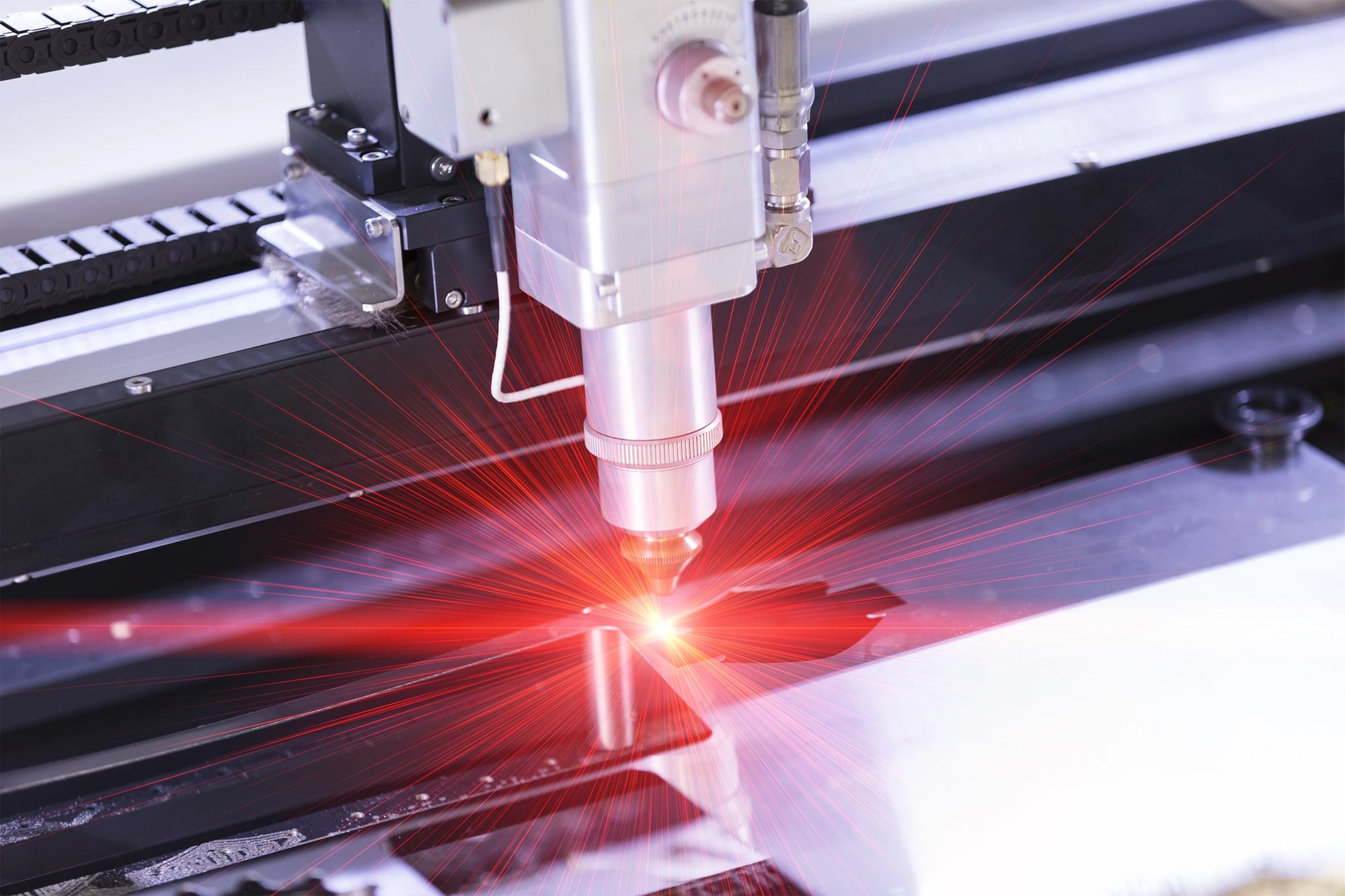
Charles Townes and Arthur Schawlow faced widespread skepticism when they proposed the laser concept in the late 1950s. Distinguished physicists dismissed it as “a solution looking for a problem” — an interesting demonstration of quantum mechanics principles but without obvious practical applications.
The first working lasers were inefficient, expensive, and seemed useful mainly for highly specialized scientific measurements. It took years of development to create lasers powerful enough for industrial cutting, precise enough for surgery, or compact enough for consumer electronics.
Now laser technology is everywhere — fiber optic communication, barcode scanners, DVD players, medical procedures, manufacturing processes — but it began as an apparently impractical curiosity that survived mainly because a few researchers found it intellectually fascinating.
The Thread That Connects Them All

These near-misses share a common thread: they all required someone to believe in an idea before the world was ready to understand its value. The printing press seemed like an expensive way to copy books when scribes were already doing the job.
Anesthesia looked unnecessary when surgery was supposed to hurt. The computer mouse appeared pointless when computers were room-sized machines operated by specialists.
Innovation isn’t just about having good ideas — it’s about keeping those ideas alive long enough for the world to catch up with them. And that’s a more fragile process than we like to admit.
More from Go2Tutors!

- The Romanov Crown Jewels and Their Tragic Fate
- 13 Historical Mysteries That Science Still Can’t Solve
- Famous Hoaxes That Fooled the World for Years
- 15 Child Stars with Tragic Adult Lives
- 16 Famous Jewelry Pieces in History
Like Go2Tutors’s content? Follow us on MSN.