18 Quirky Facts About the US Dollar
The humble US dollar might seem like just another piece of paper in your wallet, but it’s actually packed with fascinating secrets, hidden symbols, and surprising quirks that most people never notice. From its unusual material composition to mysterious design elements that fuel conspiracy theories, the dollar bill has stories to tell that go far beyond its face value.
Here is a list of 18 quirky facts about the US dollar that reveal just how extraordinary this everyday currency really is.
It’s Not Actually Made of Paper

Despite what everyone calls it, ‘paper money’ isn’t made of paper at all. US dollar bills are crafted from a special blend of 75% cotton and 25% linen, which is why they feel so different from regular paper.
This unique fabric blend is patented by Crane & Co. and makes the bills incredibly durable – they can survive being folded over 4,000 times before tearing.
The First Dollar Featured a Different Face

The first dollar bill didn’t include an image of George Washington anywhere on it; instead, on the front of the note was the likeness of then-Treasury Secretary Salmon P. Chase. Chase later admitted he put his own face on the currency because ‘as the engravers thought me rather good looking, I told them they might put me on the end of the one-dollar bills.’
Washington didn’t appear until 1869.
Like Go2Tutors’s content? Follow us on MSN.
It Costs More to Make a Penny Than a Dollar

While it costs the U.S. government 2.8 cents to produce a ‘George Washington’, making a penny actually costs 2.06 cents. This means the government technically loses money every time they mint a penny, but makes a profit on every dollar bill they print.
The Number 13 Appears Everywhere

The number 13 appears throughout the design of the dollar bill, symbolizing the original thirteen colonies. If you look closely at the eagle on the back of your $1 bill you will see 13 arrows in its left talon.
The Great Seal has 13 stripes and 13 stars. There are 13 letters at the base of the pyramid. Even the pyramid itself has exactly 13 steps.
There’s a Mysterious Tiny Creature Hidden in Plain Sight

Depending on the eye of the beholder, a white speck perched on the top left border of the top right ‘1’ on the front of the bill appears to be a spider or an owl when magnified. While conspiracy theorists love to debate its meaning, other sharp-eyed observers have pointed out that this alleged symbol is more likely part of the dollar’s webbed background design.
Like Go2Tutors’s content? Follow us on MSN.
Dollar Bills Can Survive the Washing Machine

Thanks to their cotton-linen composition, dollar bills are surprisingly tough. This so-called paper money is in fact a cotton and linen blend, with red and blue minute silk fibers running through it.
It is actually material. We’ve all washed it without it falling apart. You can even iron wrinkled bills using a regular clothes iron – just spritz them with water first and sandwich them between towels.
The Bureau Prints 38 Million Notes Daily

The U.S. Bureau of Engraving and Printing produces 38 million notes every day, worth $541 million. The two facilities, located in Washington, D.C. and Fort Worth, Texas use 9.7 tons of ink per day.
That’s enough ink to fill a small swimming pool every month.
Different Bills Have Vastly Different Lifespans

The one dollar has an average life span in circulation of 6.6 years according to the Federal Reserve. Compare that to the $100 bill, which has an average life span of 22.9 years because it doesn’t pass between users as frequently.
Surprisingly, the $5 bill has the shortest average lifespan, coming in at only 4.7 years.
Like Go2Tutors’s content? Follow us on MSN.
Secret Codes Reveal Where Your Money Was Born

Look closely and you’ll spot tiny letters and numbers that identify which printing plate was used and where the bill was made. Ever see a tiny ‘F6’ on a $1? That means it was printed in Atlanta, Georgia.
Each Federal Reserve Bank has its own identifying letter system hidden on every bill they process.
The Eye Above the Pyramid Isn’t What You Think

While conspiracy theorists love to connect it to secret societies, the Eye of Providence had already been a well-known Christian symbol of God’s benevolent watchfulness by the time the Great Seal of the United States was created in 1782. The incorporation of both the eye and the pyramid into the Great Seal predated their widespread use among the Freemasons.
Benjamin Franklin Hated the Eagle Symbol

Famously, Benjamin Franklin objected to the choice of an eagle as the national symbol; the statesman wrote that he preferred the ‘more respectable’ turkey. Franklin thought eagles were lazy scavengers, while turkeys were industrious and truly American birds.
Imagine having a turkey on your dollar bill instead.
Like Go2Tutors’s content? Follow us on MSN.
The Unfinished Pyramid Has Deep Meaning

The pyramid on the $1 bill has 13 steps to represent the original colonies. However, the pyramid remains unfinished to symbolize that our country can constantly be improved upon.
Charles Thompson said it denoted ‘Strength and Duration’ and represented America’s potential for growth.
Martha Washington Once Graced Currency

The dollar bill featured an image of Martha Washington, America’s original First Lady, over it. Well, when? Mrs. Washington’s portrait graced the bill in the 1800s.
Today, one of these rare Martha Washington silver certificates could be worth over $1,000 to collectors.
In God We Trust Wasn’t Always There

The current one dollar bill first came off the presses in 1957 in its present design. According to the U.S. Treasury Department, that is when the motto, ‘In God We Trust’ started being used on paper money.
That phrase didn’t become mandatory on U.S. currency until 1955 during the Cold War.
Like Go2Tutors’s content? Follow us on MSN.
There Was Once a $100,000 Bill

The largest bill ever produced by the U.S. Bureau of Engraving and Printing was the $100,000 gold certificate. The currency notes were printed between December 18, 1934, and January 9, 1935, with the portrait of President Woodrow Wilson on the front.
However, it was never circulated, it was used to transfer money between banks during the Great Depression.
The Dollar Sign Has Multiple Origin Stories

The sign was perhaps the result of a late 18th-century evolution of the scribal abbreviation ps for the peso, the common name for the Spanish dollars that were in wide circulation in the New World from the 16th to the 19th centuries. Another theory suggests it came from the Pillars of Hercules on Spanish coins, while some believe it represents the letters U and S overlapped.
Old Bills Become Building Materials

When dollar bills are taken out of circulation or become worn, they are shredded by Federal Reserve banks. In some cases, the federal government has sold the shredded currency to companies that can recycle it and use it for the production of building materials such as roofing shingles or insulation.
Your old money might literally be keeping someone’s house warm.
Like Go2Tutors’s content? Follow us on MSN.
The $2 Bill Still Exists and Confuses Everyone

Yep, that mysterious $2 bill featuring Thomas Jefferson isn’t a collector’s fantasy. It’s still produced today (though rarely), and the reverse shows the Signing of the Declaration of Independence.
People tend to save them, thinking they’re rare, but you can spend them just like any other bill. Many cashiers have never seen one and sometimes refuse to accept them.
From Greenbacks to Global Dominance
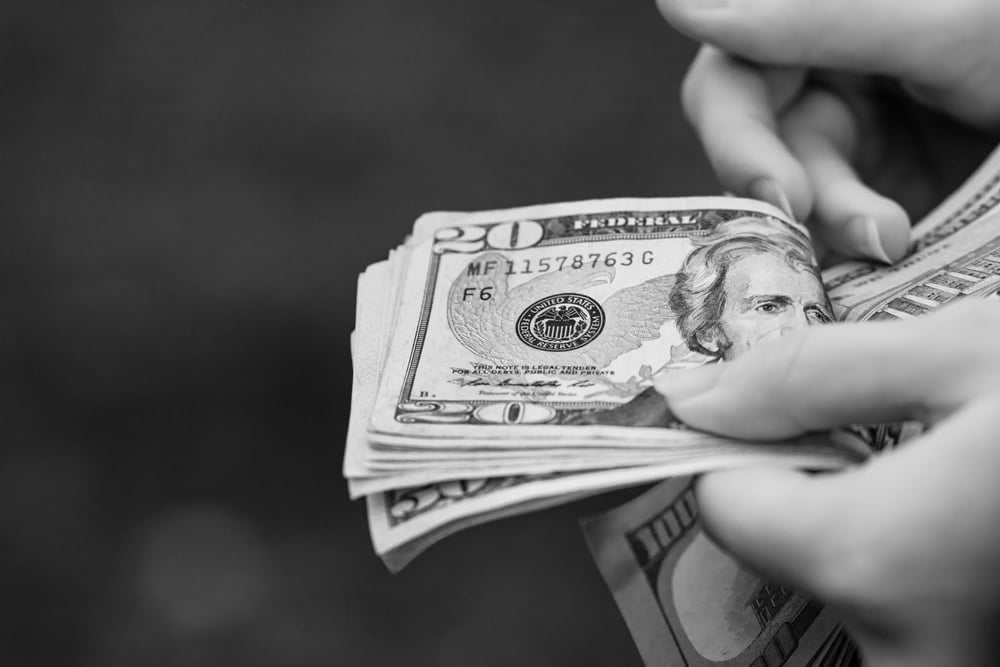
The dollar has come a long way from its humble beginnings as Continental currency that became practically worthless during the Revolutionary War. Today’s dollar bills represent centuries of evolution in design, security, and manufacturing.
What started as an emergency wartime currency has become the world’s primary reserve currency, found in wallets from New York to Tokyo. The next time you handle a dollar bill, remember that you’re holding a small piece of American history – complete with hidden symbols, secret codes, and enough quirky details to keep conspiracy theorists busy for decades.
More from Go2Tutors!

- 16 Historical Figures Who Were Nothing Like You Think
- 12 Things Sold in the 80s That Are Now Illegal
- 15 VHS Tapes That Could Be Worth Thousands
- 17 Historical “What Ifs” That Would Have Changed Everything
- 18 TV Shows That Vanished Without a Finale
Like Go2Tutors’s content? Follow us on MSN.



