30 Birthstone Rings Worth Keeping
Most people know their birthstone the way they know their zodiac sign: vaguely, and mostly from a greeting card. A ring changes that relationship fast, because a stone sitting on a finger gets scratched, sunned, knocked against doorframes, and admired every day.
The modern American list was standardized in Kansas City in 1912, and it has been quietly revised since, with newcomers such as alexandrite, citrine, tanzanite, and spinel joining the older names. What follows pairs particular stones with particular settings, because the mount often decides whether a birthstone ring lasts a lifetime or a season.
Bohemian Garnet Cluster From the Victorian Era
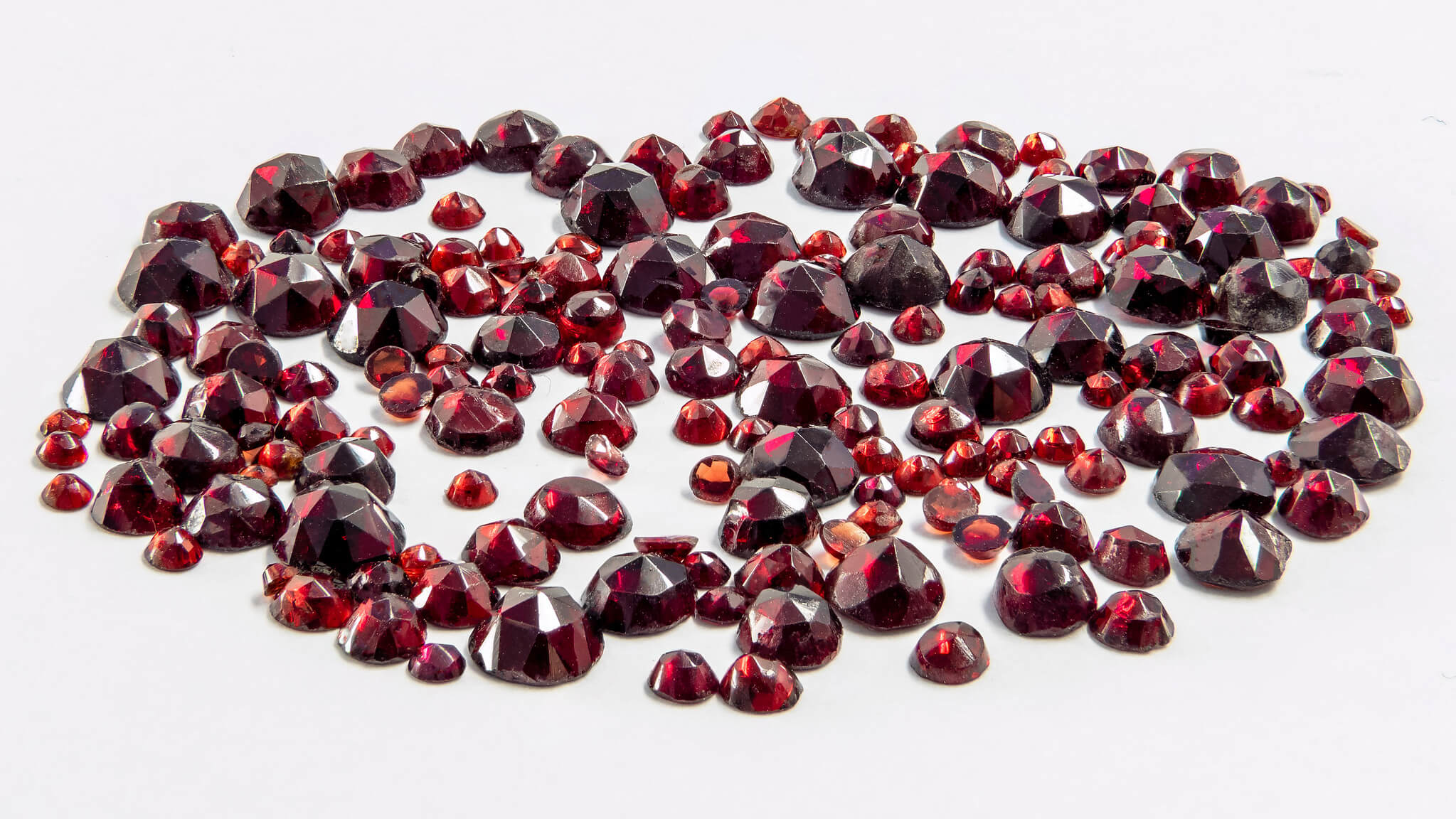
January’s garnet takes its name from the Latin word for pomegranate, and nowhere does that comparison land harder than in Bohemian garnet clusters. Victorian jewelers in the Czech lands set dozens of tiny pyrope garnets, often rose-cut, in tight gold clusters that look like a split fruit.
The deep red-black color reads almost wine-dark indoors and flares in sunlight. Antique examples vary widely in appeal depending on missing stones, repairs, and how much of the original gilding survives.
Tsavorite Garnet in a Bezel
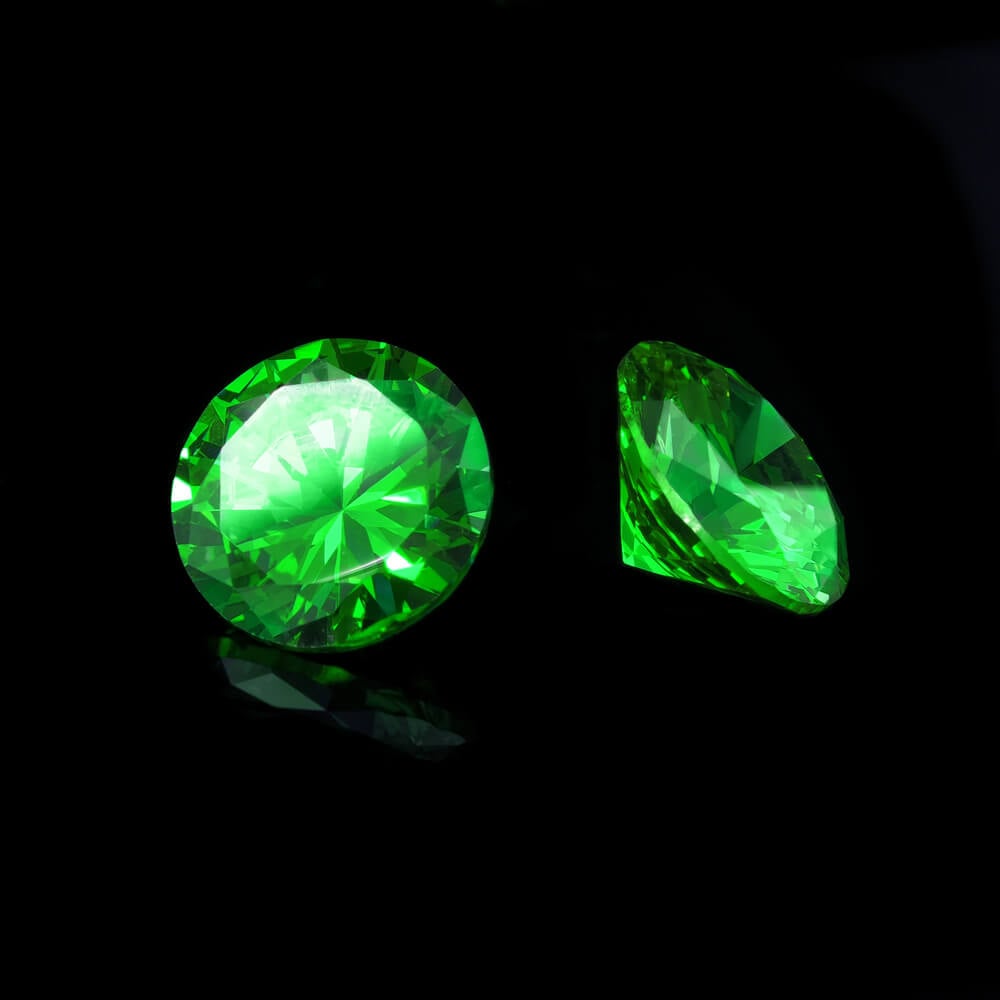
Not every garnet is red, which surprises people who assume January means one color. Tsavorite, a vivid green garnet found in East Africa in the late 1960s, was named for Tsavo National Park in Kenya, and Tiffany & Co. helped carry the name into jewelry stores.
It sits at 7 to 7.5 on the Mohs scale, tough enough for daily wear, and a bezel setting wraps that green in a smooth rim of metal. Fine stones over a couple of carats are scarce, so size alone tells a buyer little.
Amethyst in a Cathedral Solitaire
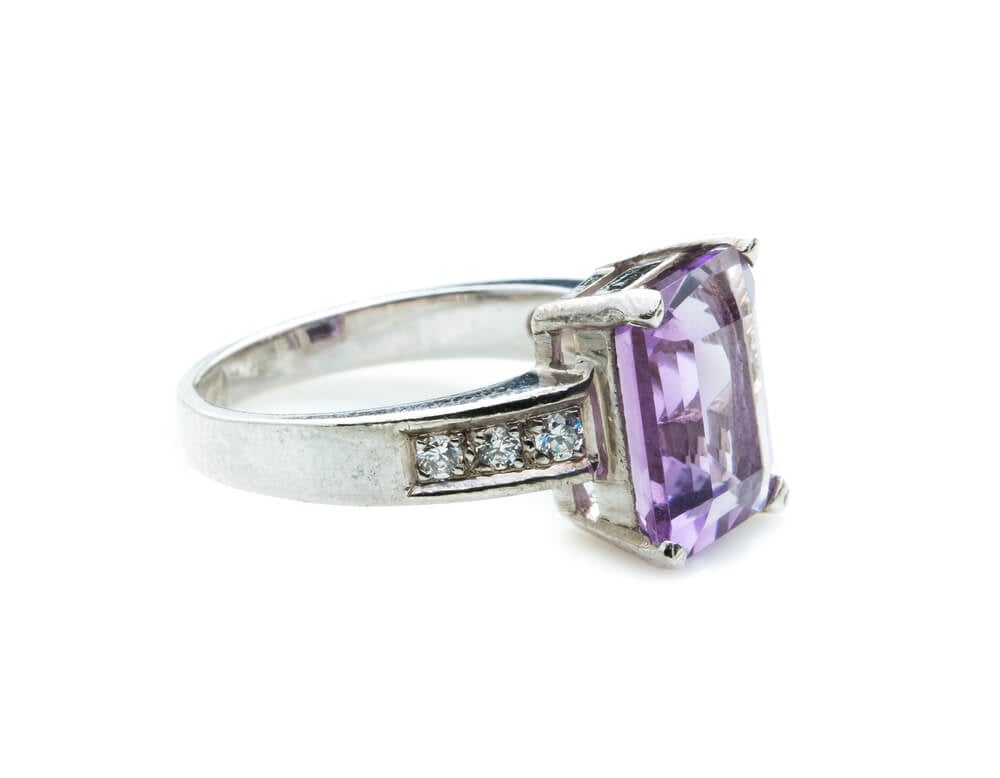
Amethyst was once ranked among the cardinal gems alongside diamond, ruby, emerald, and sapphire, until large Brazilian deposits made it plentiful in the 1800s. Its name comes from a Greek word meaning not intoxicated, a reference to an old belief that the stone prevented drunkenness.
A cathedral setting lifts the stone on a pair of sweeping arches, which shows off deep violet color and protects the girdle from knocks. At 7 on the Mohs scale, it handles daily wear with reasonable grace, though long sun exposure can fade paler specimens.
Emerald-Cut Aquamarine in Art Deco Platinum
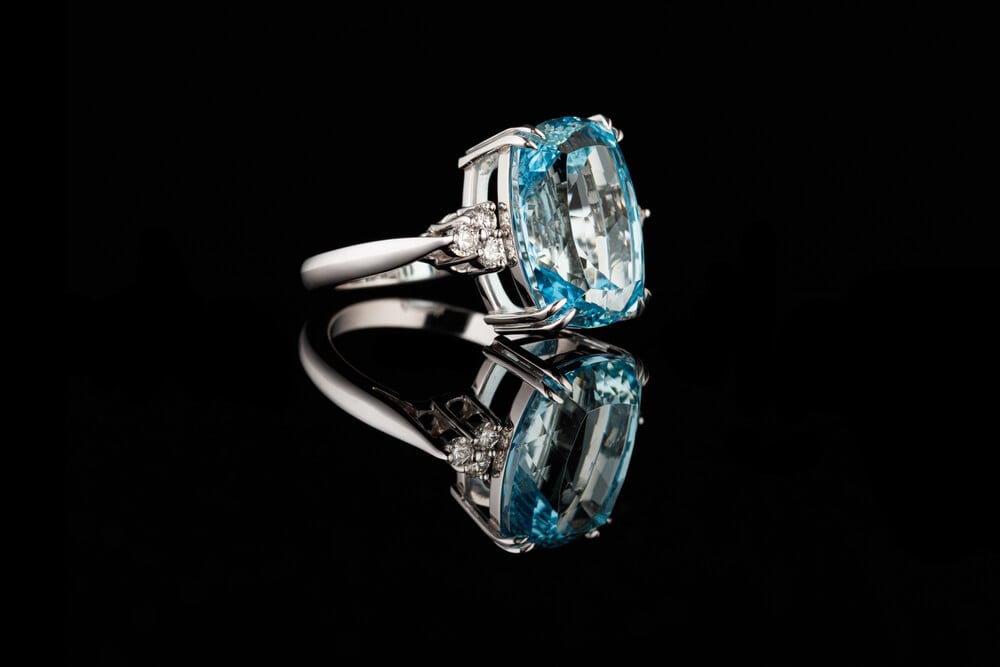
March’s aquamarine is a beryl, the same mineral family as emerald, and its name comes from the Latin for sea water. The long step facets of an emerald cut suit the stone, because aquamarine is usually clean and the cut turns it into a pane of pale blue ice.
Jewelers of the 1920s and 1930s paired such stones with platinum, geometric shoulders, and baguette diamonds. On a vintage piece, original platinum work and matching side stones matter more to long-term appeal than the aquamarine itself.
Bloodstone Gentleman’s Signet
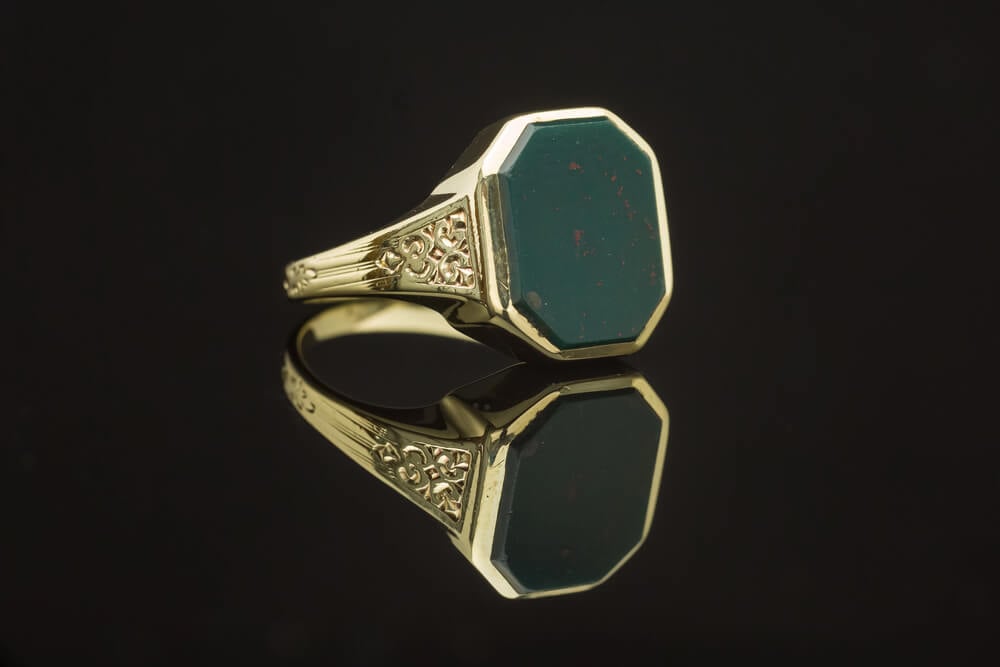
Bloodstone, March’s older alternate, is a dark green chalcedony flecked with red iron-rich jasper, and it was once called heliotrope. The speckled, matte-to-glossy surface takes engraving beautifully, which is why it turns up in signet rings with carved crests and initials.
A flat oval face gives a jeweler room to cut a seal deep enough to press into wax. The stone sits around 6.5 to 7 on the Mohs scale, and the engraving wears softer over decades of use.
Diamond in the Tiffany Setting
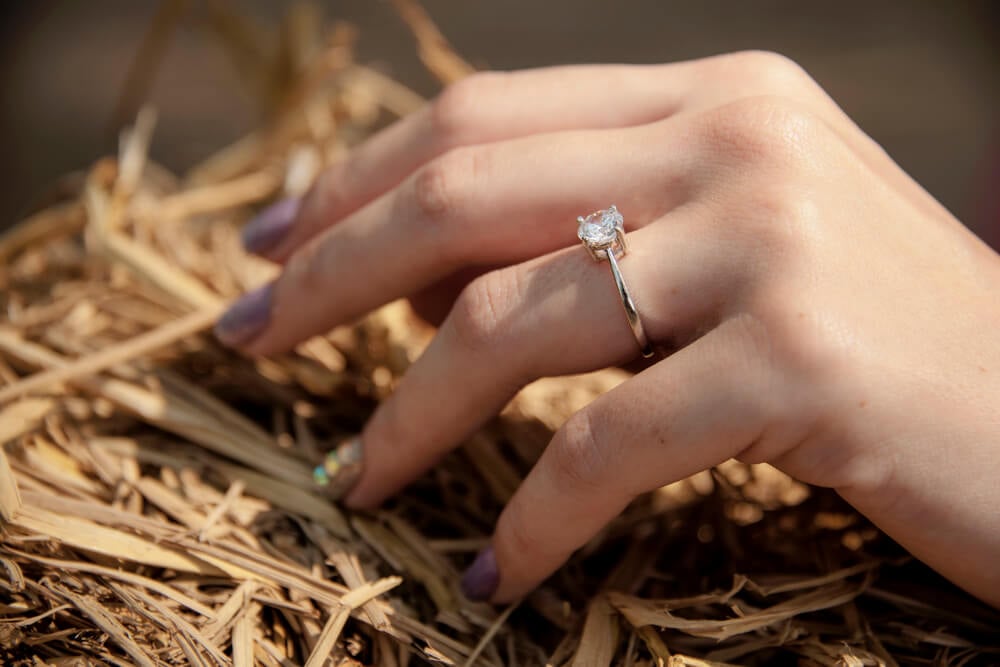
April’s diamond reaches 10 on the Mohs scale, the hardest natural material known, so the setting rather than the stone is the weak point. Tiffany & Co. introduced its six-prong Tiffany Setting in 1886, lifting the diamond high above the band so light enters from the sides as well as the top.
That raised profile also catches on sweaters and gloves, which is the trade-off every wearer learns early. Prongs wear down over the years, so a periodic check with a jeweler counts as basic maintenance.
White Sapphire in an Edwardian Filigree Mount
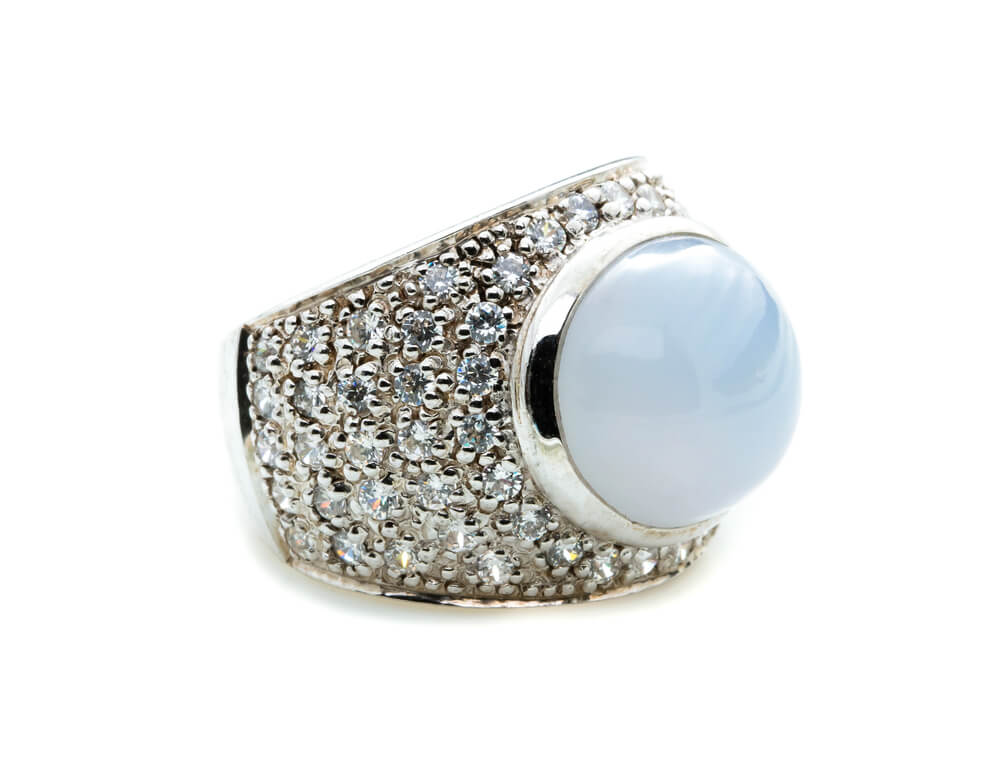
White sapphire is colorless corundum, the same mineral as ruby, and it is a common alternate for April. It sits at 9 on the Mohs scale, only one step below diamond, with a softer, silvery glow instead of fiery sparkle.
Edwardian jewelers of the early 1900s favored such stones in platinum filigree, with tiny beaded edges called milgrain. The lacework is delicate by nature, so a surviving ring in sound condition with its original openwork intact is worth seeking out.
Emerald in a Protective Bezel
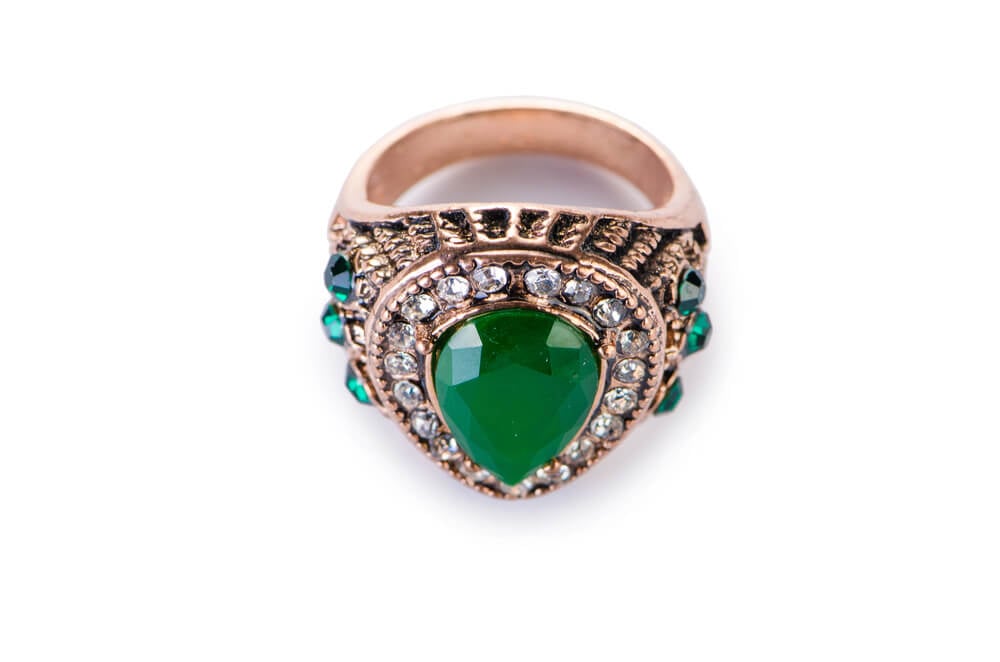
May’s emerald is one of the few gems where flaws are expected, and the web of tiny inclusions is often called the jardin, French for garden. Colombian stones from the Muzo region have long set the standard for rich green.
Emeralds rate 7.5 to 8 on the Mohs scale yet are brittle, and many are treated with oils or resins to improve clarity. A full bezel guards the corners of an emerald cut, which is where chips tend to begin.
Pearl Solitaire on an Open Shank
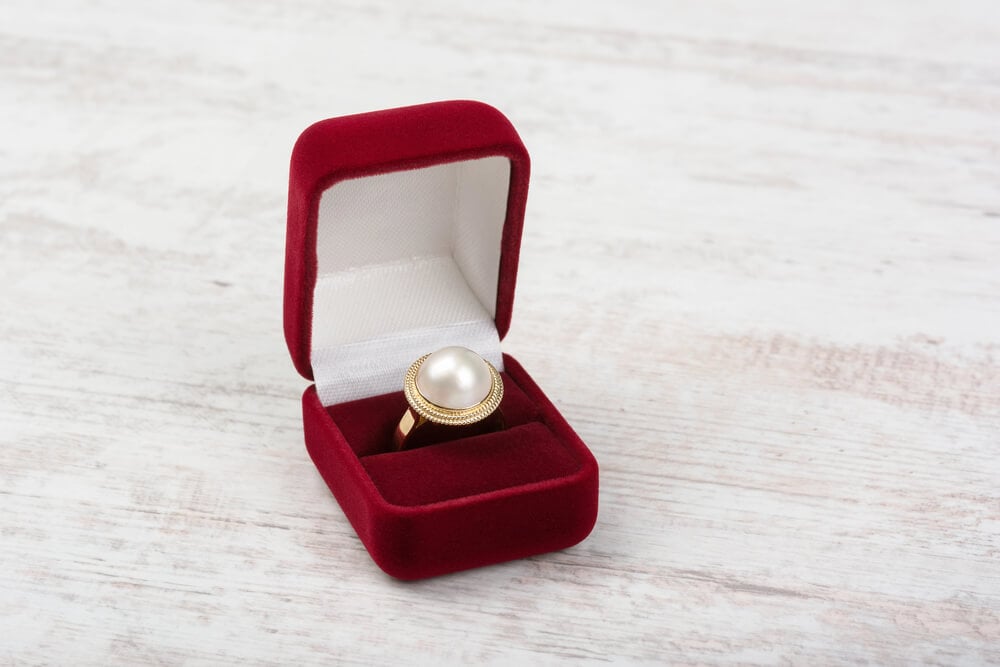
June’s pearl is the only traditional birthstone grown inside a living animal, and it measures just 2.5 to 4.5 on the Mohs scale, so it asks for gentle treatment. Kokichi Mikimoto of Japan developed cultured pearl methods around the turn of the 20th century, which turned a luxury once reserved for royalty into something far more reachable.
A single pearl on a raised post, kept clear of abrasive surfaces, avoids most of the scuffing a ring pearl faces. Perfumes, hairspray, and sweat slowly dull the surface, so wearers wipe it clean after use.
Alexandrite in Yellow Gold
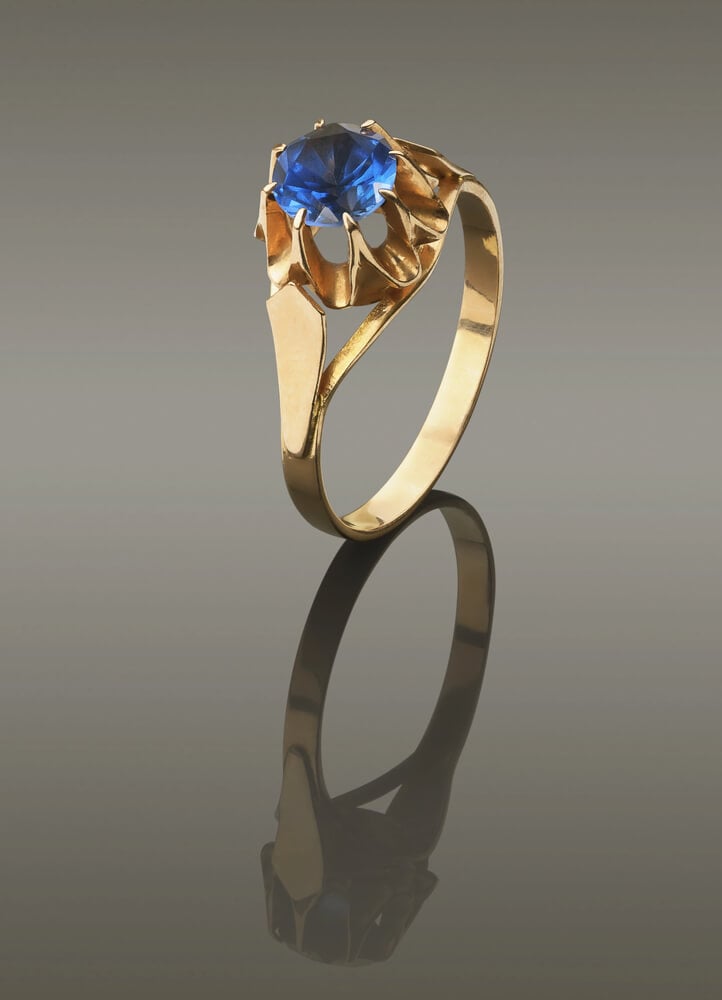
Alexandrite was found in the Ural Mountains of Russia in the 1830s and named for the future Czar Alexander II. Its trick is a color change from bluish green in daylight to purplish red under incandescent light, a behavior few gems can match.
As a chrysoberyl, it reaches 8.5 on the Mohs scale, tough enough for everyday use. Natural stones with a strong shift are far scarcer than lab-grown versions, so a gemological report is worth requesting before buying.
Moonstone in an Arts and Crafts Silver Ring
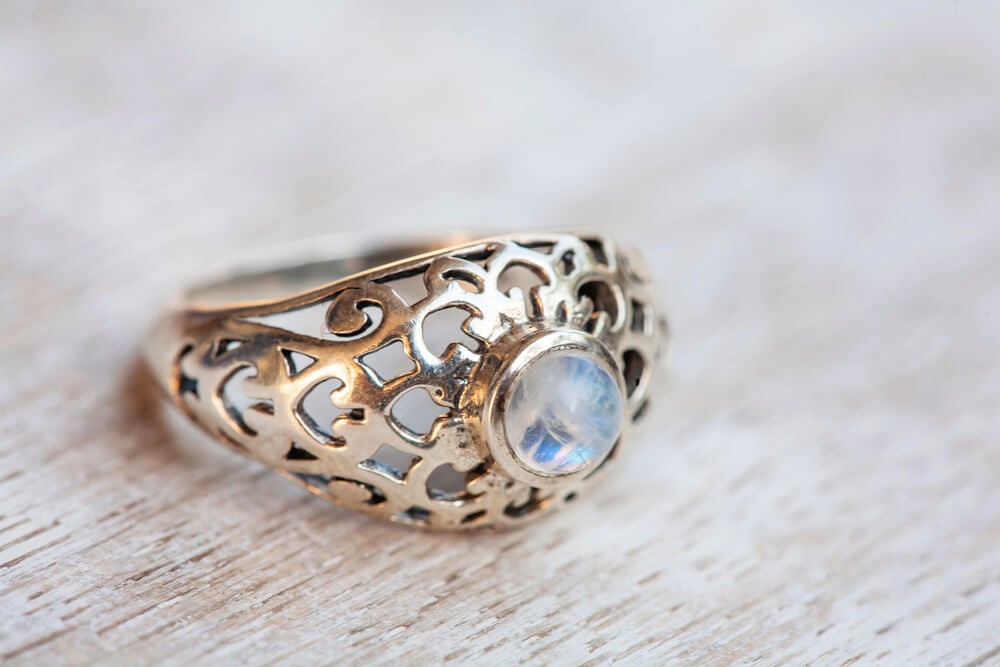
Moonstone is a feldspar that shows adularescence, a floating blue-white glow that drifts across the dome as the stone moves. Arts and Crafts silversmiths of roughly 1890 to 1920 loved it, setting smooth cabochons in handwrought silver with hammered texture.
The stone is only 6 to 6.5 on the Mohs scale and has cleavage planes, so a sharp knock can crack it. Good vintage examples keep a clean, even glow with no cloudy patches or chips along the edge.
Burmese Ruby in a Diamond Halo
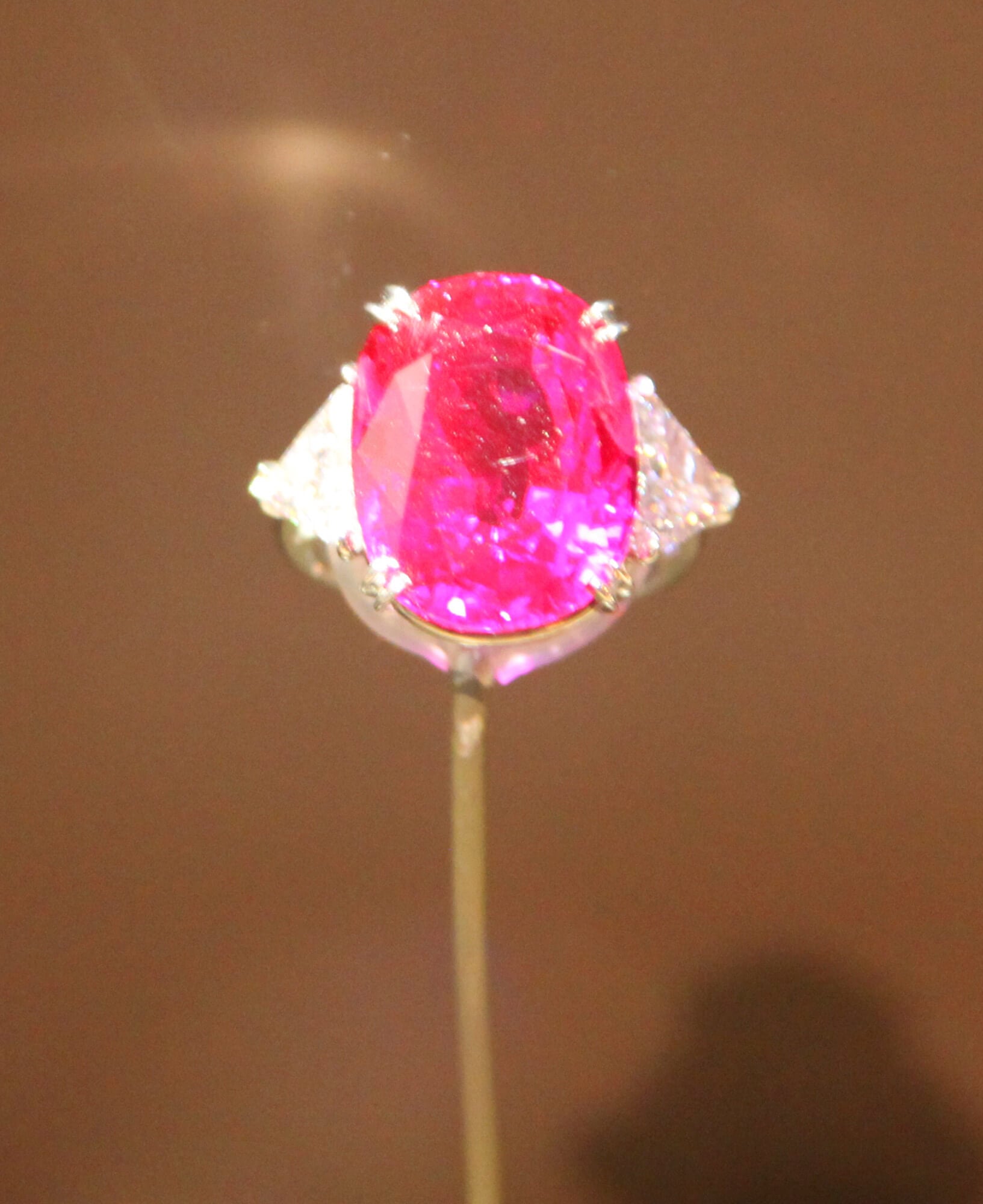
July’s ruby is red corundum, colored by chromium, and the mines around Mogok in Myanmar are the benchmark for color. Fine Burmese stones can glow red even in dim light, thanks to a natural fluorescence that adds an inner flare.
At 9 on the Mohs scale, a ruby stands up to daily wear better than almost any colored gem. A halo of small diamonds makes a modest stone look larger, though the origin of the ruby, not the surrounding sparkle, determines much of its worth.
Peridot Set East-West
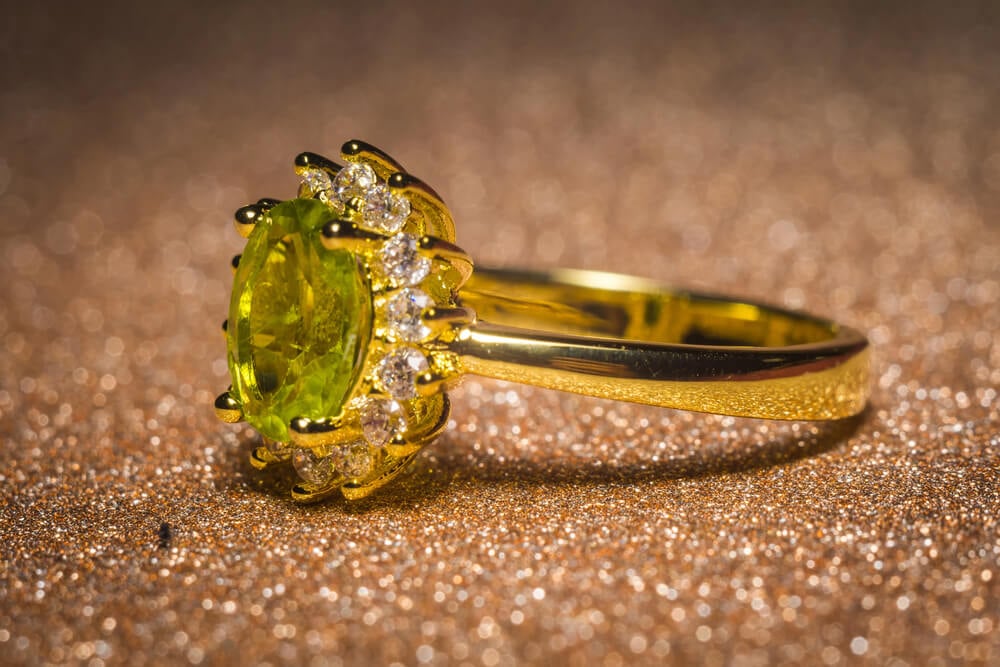
August’s peridot is the gem form of olivine, and its green comes from iron in the crystal, so it never varies much from lime and olive. It has even been found inside pallasite meteorites that fell to Earth, which gives a ring a fairly cosmic family tree.
At 6.5 to 7 on the Mohs scale, it needs some care around hard knocks. Turned sideways in an east-west oval and bezel-set in rose gold, it lies low on the finger and shrugs off more bumps than a tall prong setting would allow.
Red Spinel Three-Stone Ring
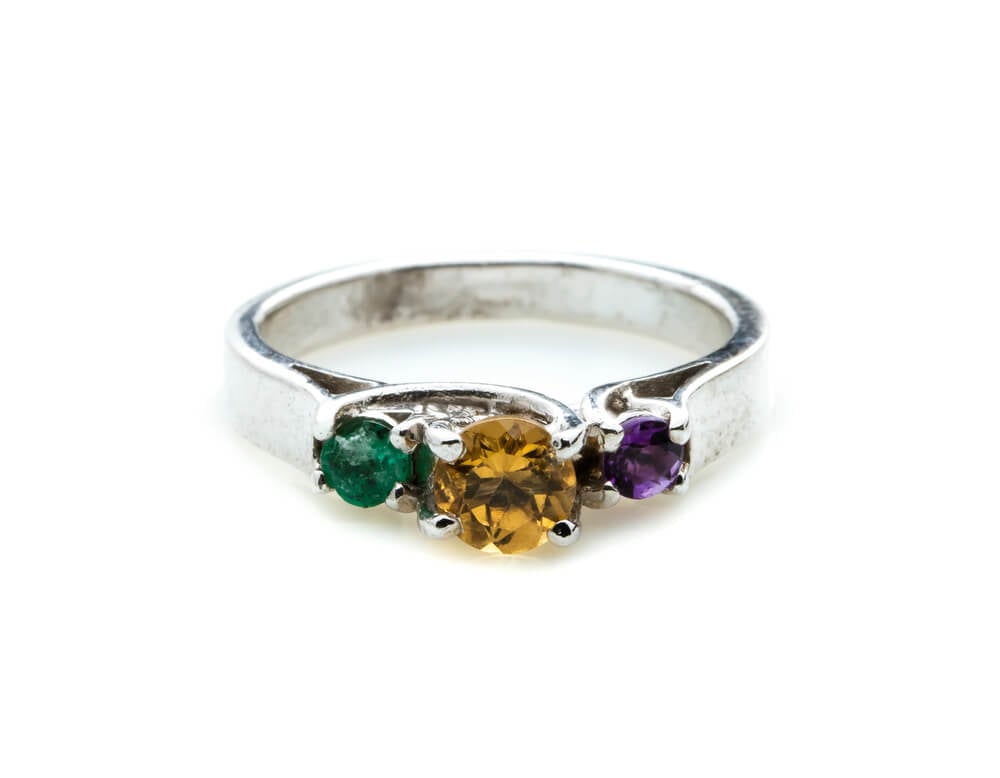
Spinel joined the August list in 2016, but its reputation is far older. The Black Prince’s Ruby in Britain’s Imperial State Crown is actually a spinel, a case of mistaken identity that lasted centuries because red spinel and ruby look so alike.
Spinel measures 8 on the Mohs scale and is usually clean, so a three-stone ring with diamond companions shows its color well. Stones with vivid red color command a premium, while paler or heavily included material is much cheaper.
Sardonyx Cameo in a Gold Frame
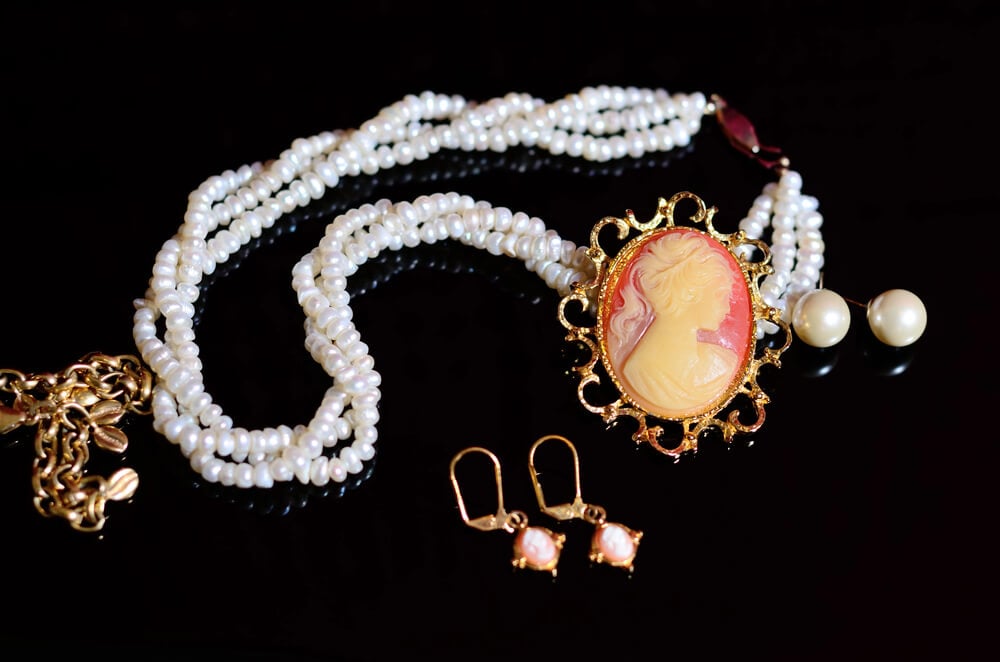
Sardonyx is banded stone, layers of reddish sard alternating with white onyx, and it is August’s oldest traditional birthstone. Roman carvers used those layers on purpose, cutting figures from a pale band to stand against a darker ground.
A cameo ring built on that tradition reads as a tiny sculpture rather than a sparkler. Antique carvings vary in value depending on crispness of detail, and chips along the edge of the relief cost an old piece much of its charm.
Oval Sapphire Cluster in the Garrard Style
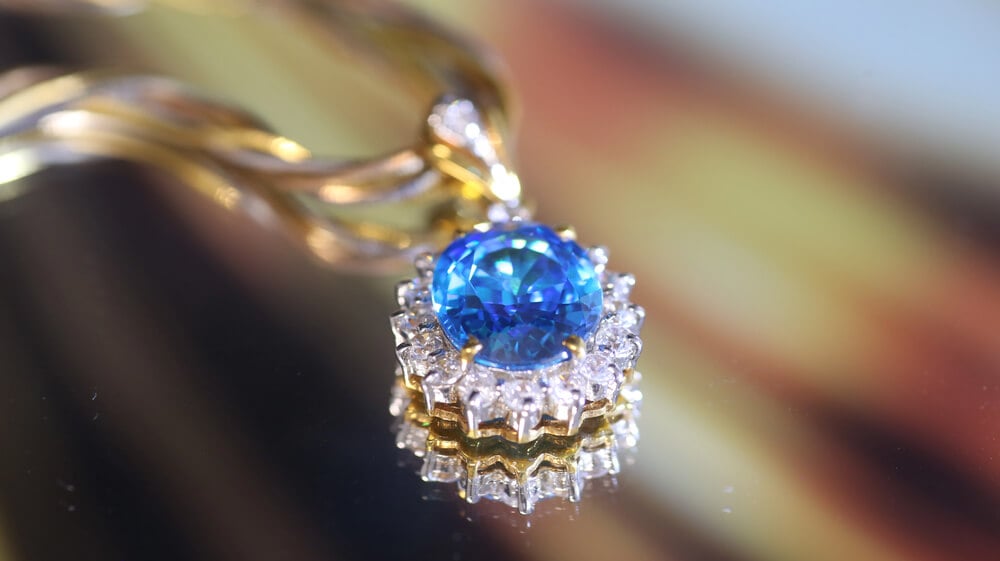
September’s sapphire is corundum like ruby, and the Ceylon sapphire from Sri Lanka has long been prized for a classic cornflower blue. The best-known cluster ring of modern times is the 12-carat oval sapphire surrounded by diamonds that Garrard made for Princess Diana, later worn by Catherine, Princess of Wales.
The halo of diamonds does two jobs, enlarging the center visually and cushioning its edges. At 9 on the Mohs scale, the stone itself is unlikely to scratch, which is exactly why this design endures.
Lapis Lazuli Scarab in Egyptian Revival Gold
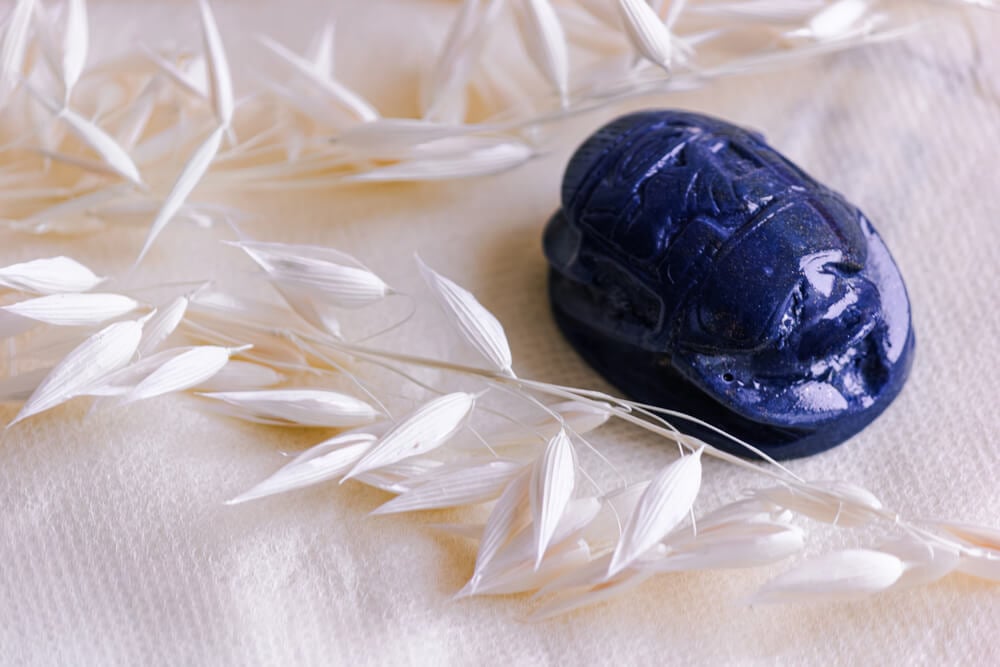
Lapis lazuli is technically a rock, a blend of lazurite, white calcite, and sparkling flecks of pyrite, and the mines of Afghanistan have supplied it for thousands of years. After Howard Carter opened Tutankhamun’s tomb in 1922, designers rushed out Egyptian Revival pieces, and carved lapis scarabs became a favorite motif.
The deep blue makes a September alternate to sapphire, at a softer 5 to 5.5 on the Mohs scale. Gold on the shoulders adds contrast, but contact with household chemicals can dull the surface.
Black Opal in a Bezel
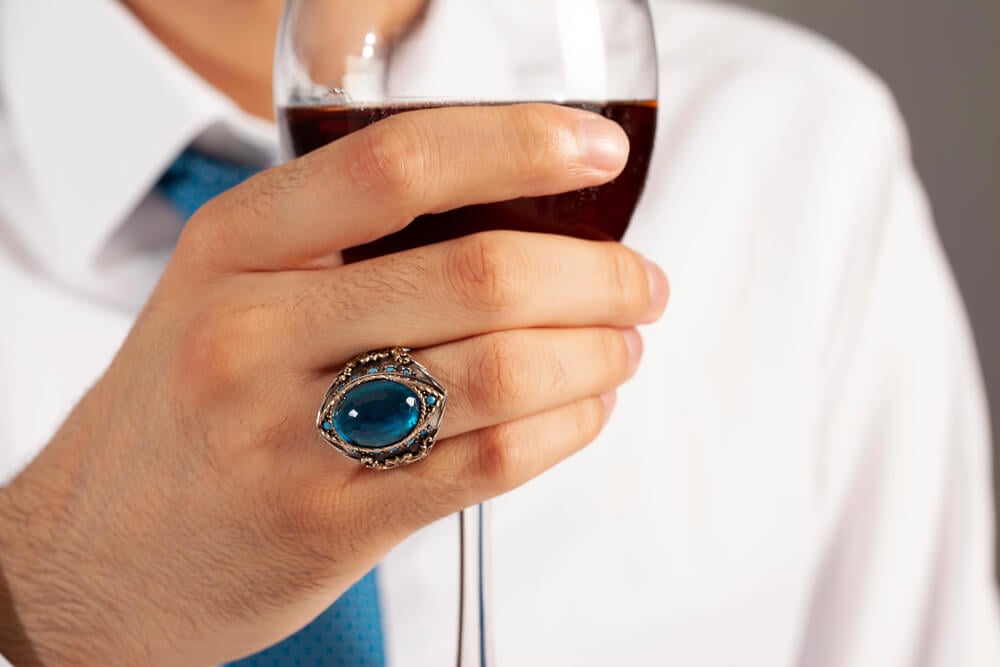
October’s opal is made of stacked silica spheres that bend light into flashes of green, red, and blue, a display called play of color. The black opals of Lightning Ridge in New South Wales are the benchmark, with a dark body tone that makes the colors blaze.
Opal holds up to about 20 percent water and measures only 5.5 to 6.5 on the Mohs scale, so it cracks if dried out or struck. A bezel guards the edge, while heat, dryness, and ultrasonic cleaners are best avoided.
Watermelon Tourmaline Bar Ring
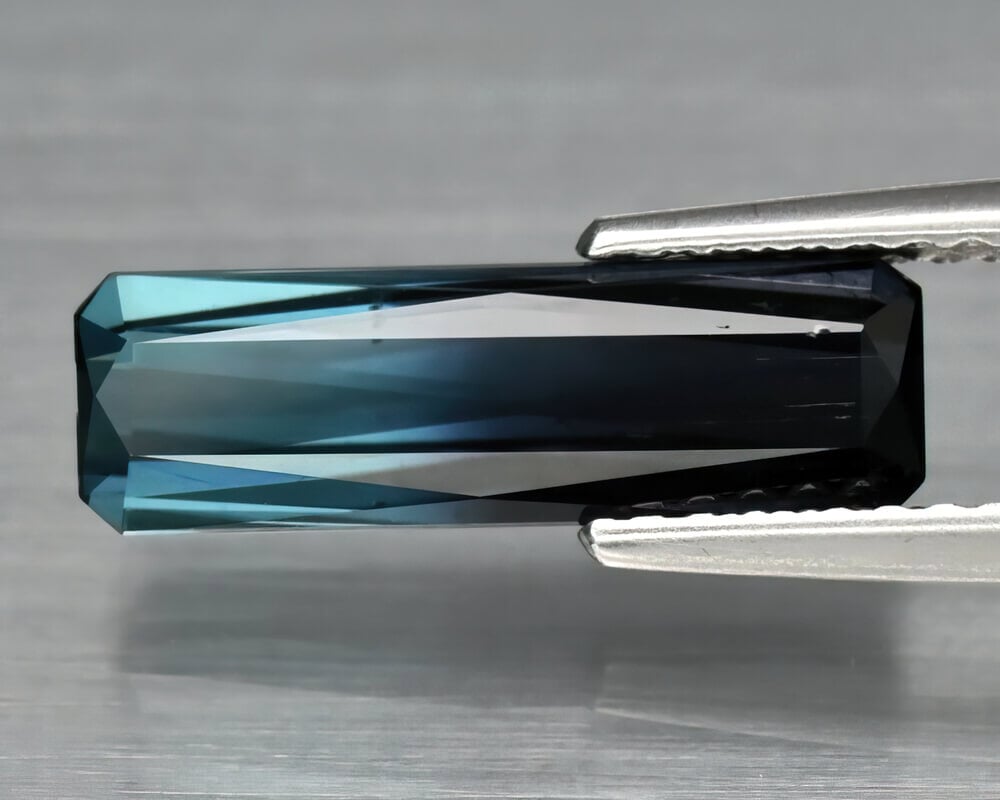
Tourmaline’s name comes from a Sinhalese word, turamali, and the mineral comes in nearly every color. Watermelon tourmaline grows with a pink core and a green rind, and slices cut across the crystal look exactly like the fruit.
An east-west bar setting turns that bi-color band into a clean stripe across the finger. A hardness of 7 to 7.5 makes it a decent candidate for everyday wear, as an alternate for October.
Imperial Topaz Tharee-Stone Ring
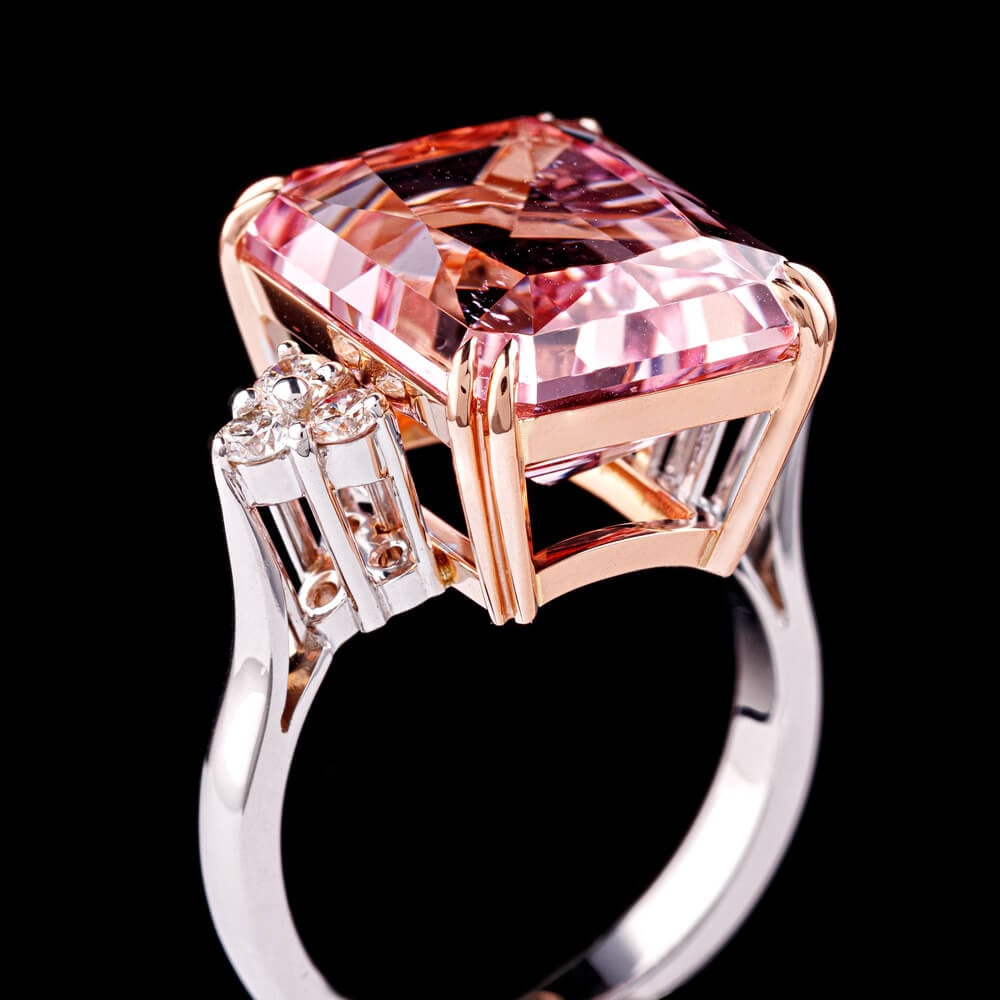
Imperial topaz glows in warm shades of orange, pink, and peach, and the town of Ouro Preto in Minas Gerais, Brazil, is its classic source. November’s topaz sits at 8 on the Mohs scale, but it has perfect cleavage, so a hard blow along the wrong plane can split it.
A three-stone setting flanks the center with smaller diamonds that frame the warm color and shield its edges. The golden-peach tones are especially flattering in yellow and rose gold.
Citrine Cocktail Ring From the Retro Era
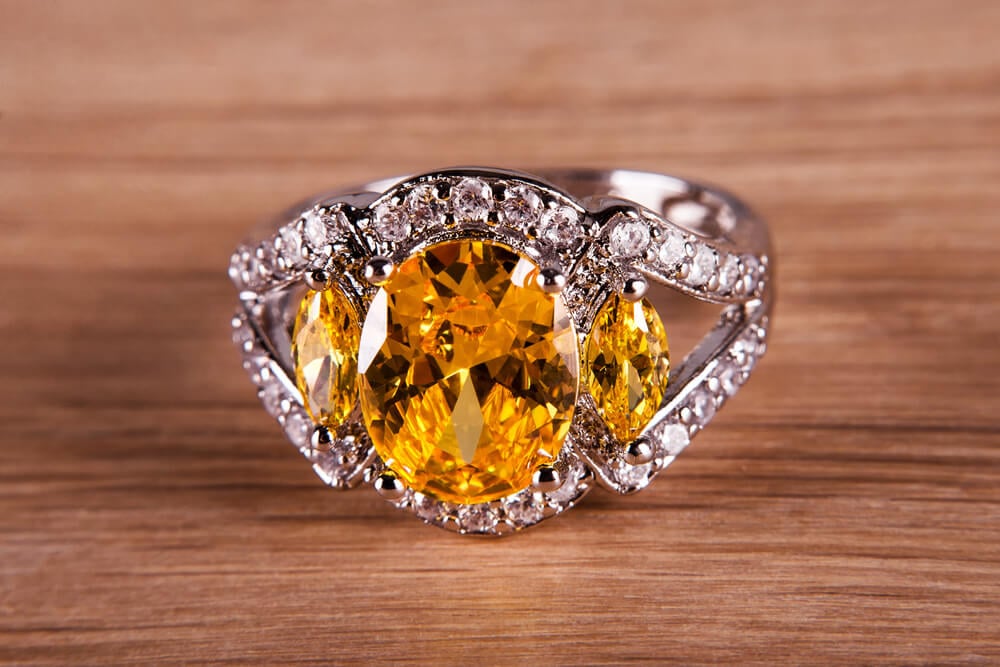
Citrine takes its name from the French word citron, and much of the golden material sold today is actually heat-treated amethyst. During the Retro era of the late 1930s and 1940s, wartime limits on platinum pushed jewelers toward rose and yellow gold, and oversized citrines fit that bold style.
The result was the cocktail ring, a chunky, curved cluster that wears like a small sculpture. Vintage examples depend on condition, with original stones, undented gold, and clean shanks driving their appeal.
Tanzanite Halo Ring
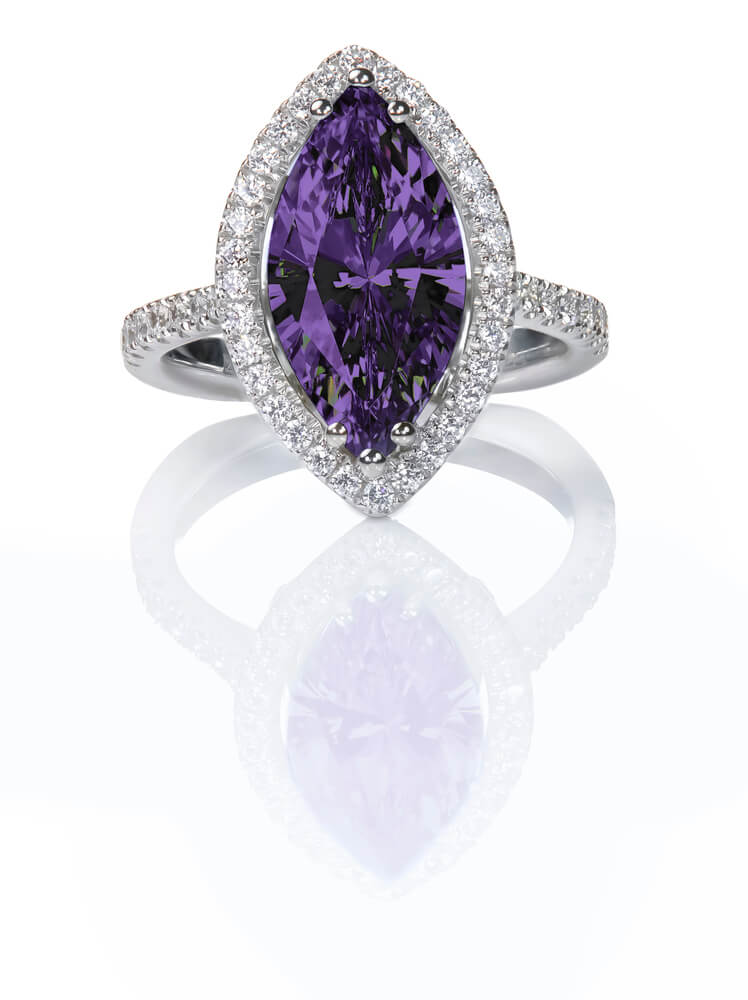
Tanzanite comes from the Merelani Hills near Mount Kilimanjaro in Tanzania, found in 1967 and named by Tiffany & Co. the following year. It later joined December’s list, giving the month a blue-violet option unlike any other.
The stone is pleochroic, showing different shades depending on viewing angle, and measures just 6.5 to 7 on the Mohs scale. A halo of diamonds protects the perimeter, but wearers should still remove it before heavy work.
Turquoise in Southwestern Silver
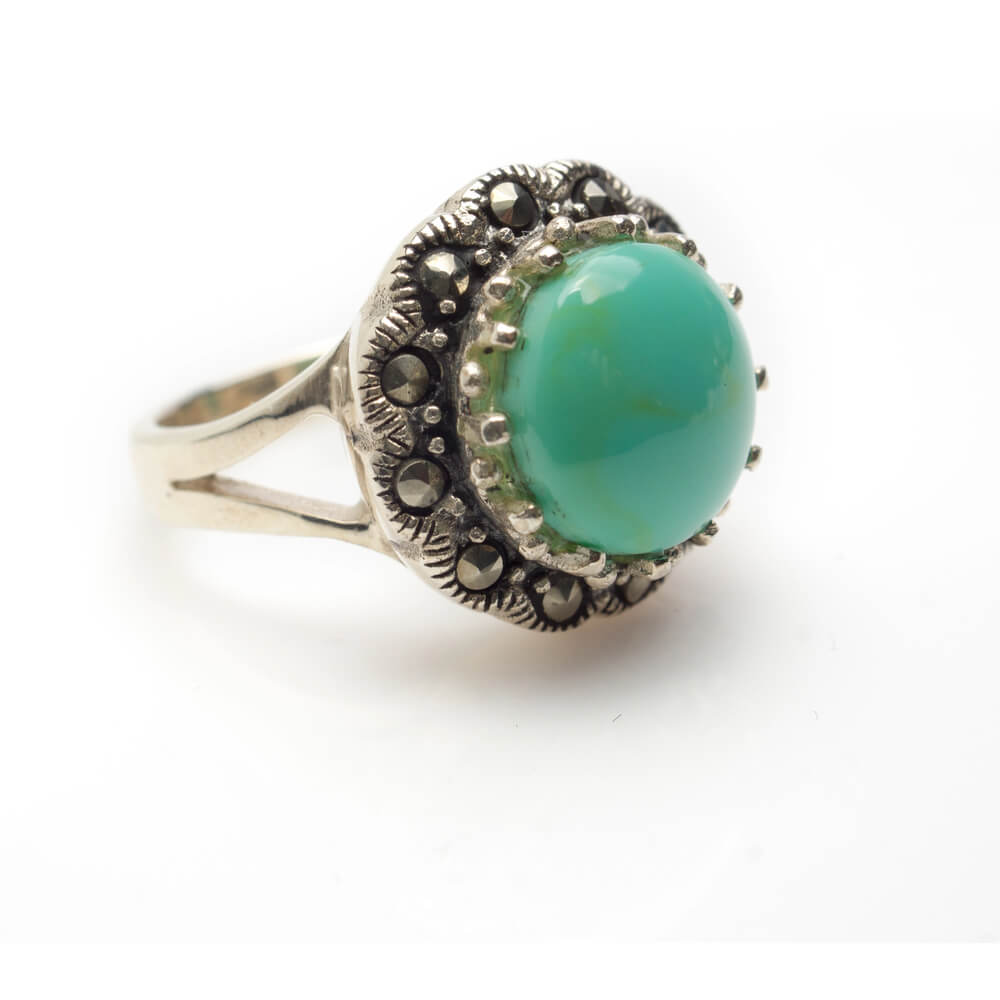
Turquoise is a porous mineral, and skin oils, soaps, and sunlight can gradually alter its color, so wearers keep it clean and dry. December’s oldest birthstone looks right at home in the silver work of Navajo and Zuni artists, with stamped bands and a simple bezel holding a smooth cabochon.
The matrix, those dark veins running through the stone, gives each ring a signature pattern. Natural untreated turquoise is far scarcer than stabilized stone, and that difference shows up in the price.
Blue Zircon With Diamond Shoulders
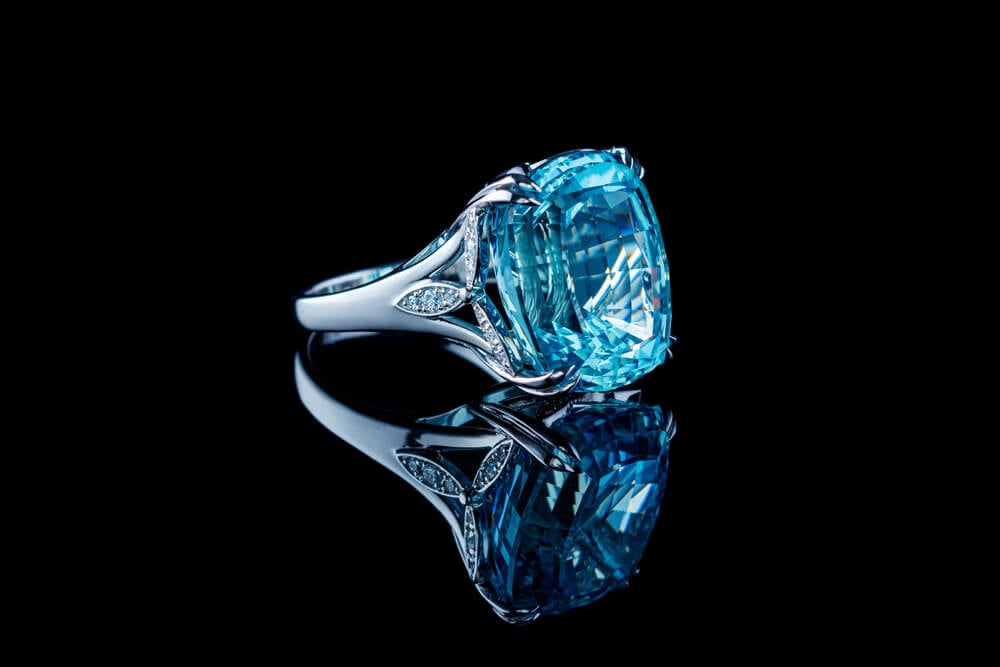
Zircon is a natural gemstone with no relation to cubic zirconia, a mix-up that keeps the stone undervalued. Blue zircon, usually produced by heating brown crystals, has a high refractive index that gives a sharp, almost diamond-like flash.
Tiny zircon grains from the Jack Hills in Western Australia, about 4.4 billion years old, are among the oldest known pieces of Earth. A ring with diamond shoulders suits the blue, though zircon can chip at the edges.
London Blue Topaz Emerald-Cut Solitaire
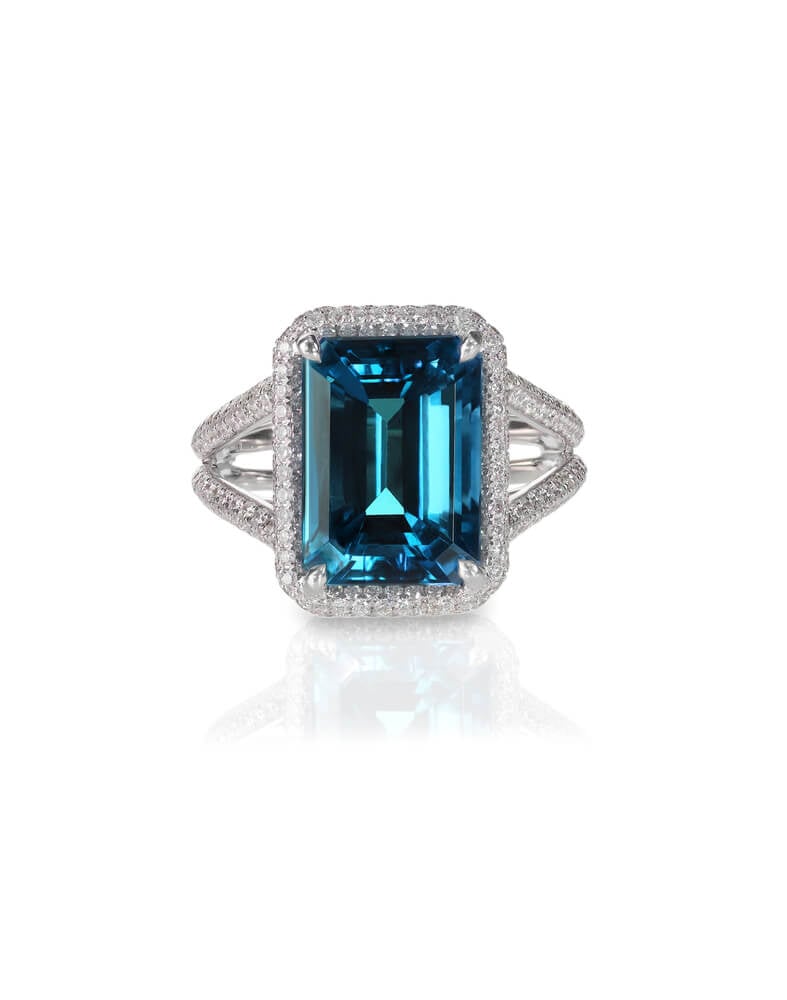
Most blue topaz on the market began as colorless topaz that was irradiated and heated to produce its color, and London blue is the deepest steel-toned version. As a modern December stone, it offers a large, clean gem at a friendly price compared with sapphire.
An emerald cut in a white-gold solitaire shows off its glassy depth. Topaz ranks 8 on the Mohs scale, though its cleavage means a firm knock against a counter edge can chip a corner.
Mother’s Ring With a Stone for Each Child
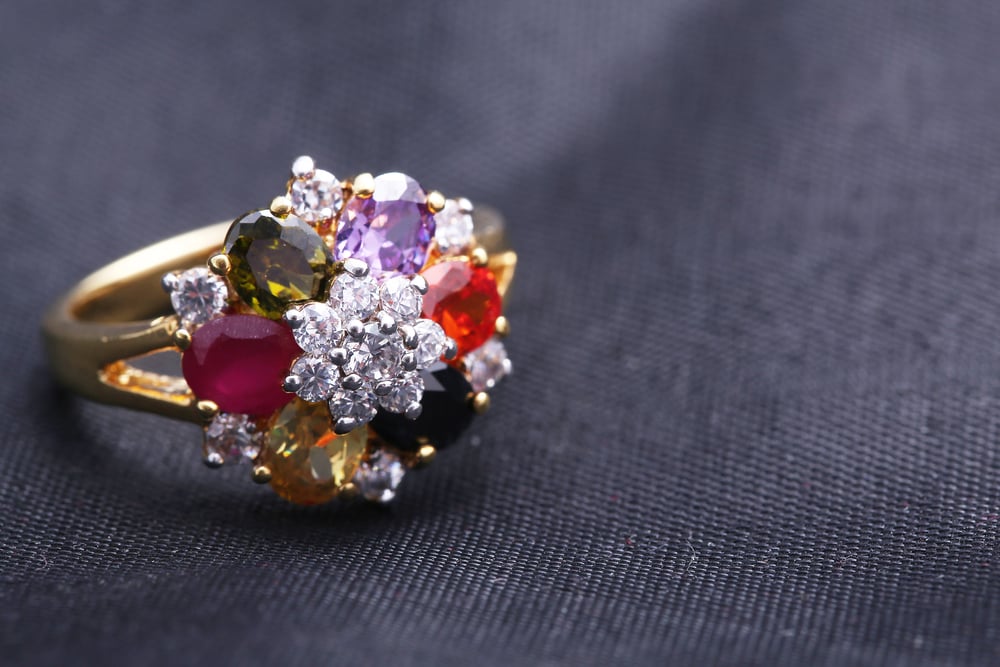
A mother’s ring carries one birthstone for each child, usually set in a row or cluster on a gold band. Grandmothers’ versions often add stones for grandchildren, so the ring grows as the family does.
Because the stones vary in hardness, a soft pearl or opal beside a hard sapphire is common, and the softer gems wear faster. Adding a stone later can be tricky if the original band has no spare settings, so jewelers often suggest leaving room.
Class Ring With a Month Stone at thae Center
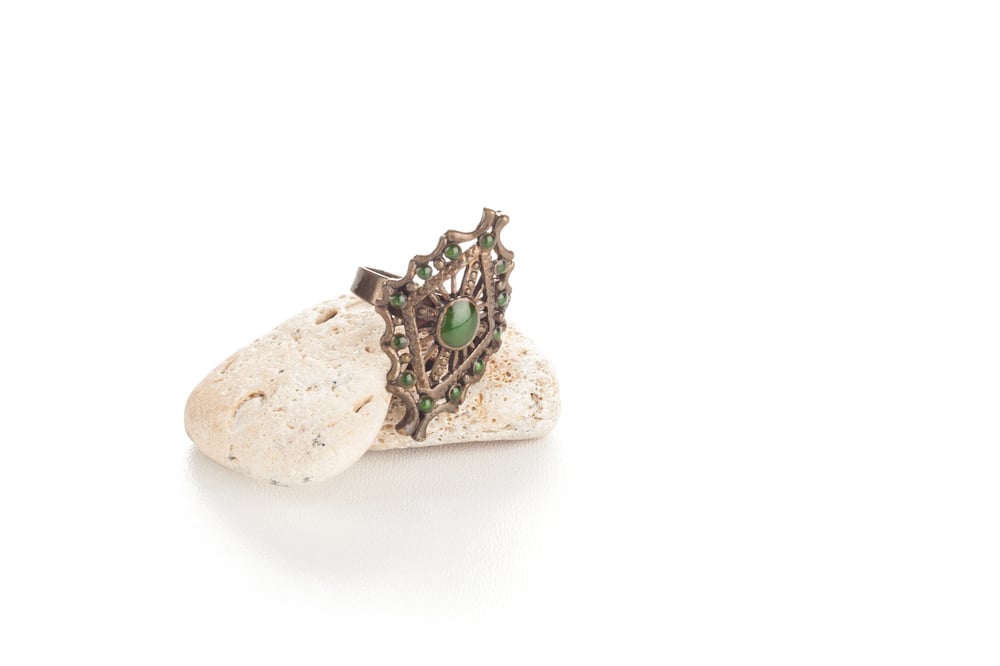
The American class ring tradition began at West Point with the Class of 1835, and the modern version often lets students choose a birthstone for the center. Makers such as Jostens and Balfour offer a menu of month stones, which are frequently lab-created or simulated rather than natural.
The result is a heavy ring with a school crest on one side and a personal color on the other. Long after graduation, the stone often matters less than the engraving inside the band.
Stackable Birthstone Bands
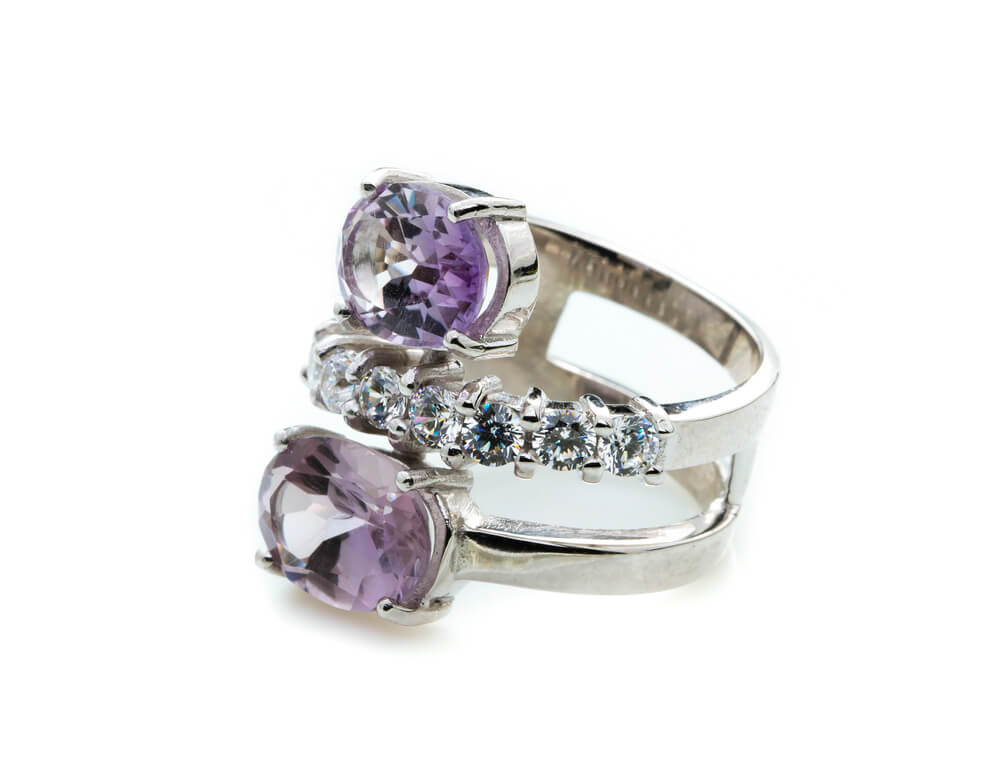
Stackable rings put one small stone on each thin band, so a wearer can pile on a personal collection and rearrange it daily. The idea runs headlong into the Mohs scale, devised by Friedrich Mohs in 1812, because a soft opal or pearl band sitting beside a diamond or sapphire band gets abraded with every movement.
Separating soft stones with plain metal spacers reduces the damage. Thin shanks can also bend, so heavier gauges last longer for daily wear.
Regard Ring Spelling Out a Word in Gems
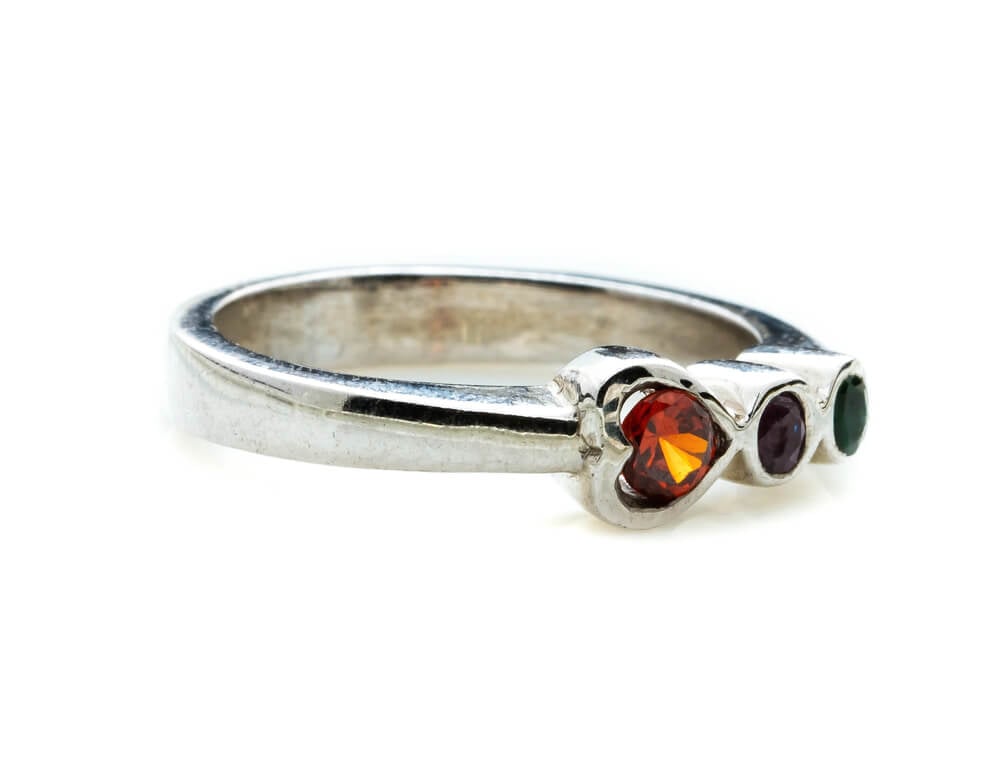
A regard ring spells the word REGARD with its stones: ruby, emerald, garnet, amethyst, ruby, diamond. Georgian and Victorian jewelers made them as love tokens, and a related design called a dearest ring used the same trick for that word.
Several of the stones double as birthstones, so a ring could carry personal meaning too. Surviving antiques depend heavily on completeness, because a replaced stone can break the hidden message.
Toi et Moi Ring Pairing Two Birthstones
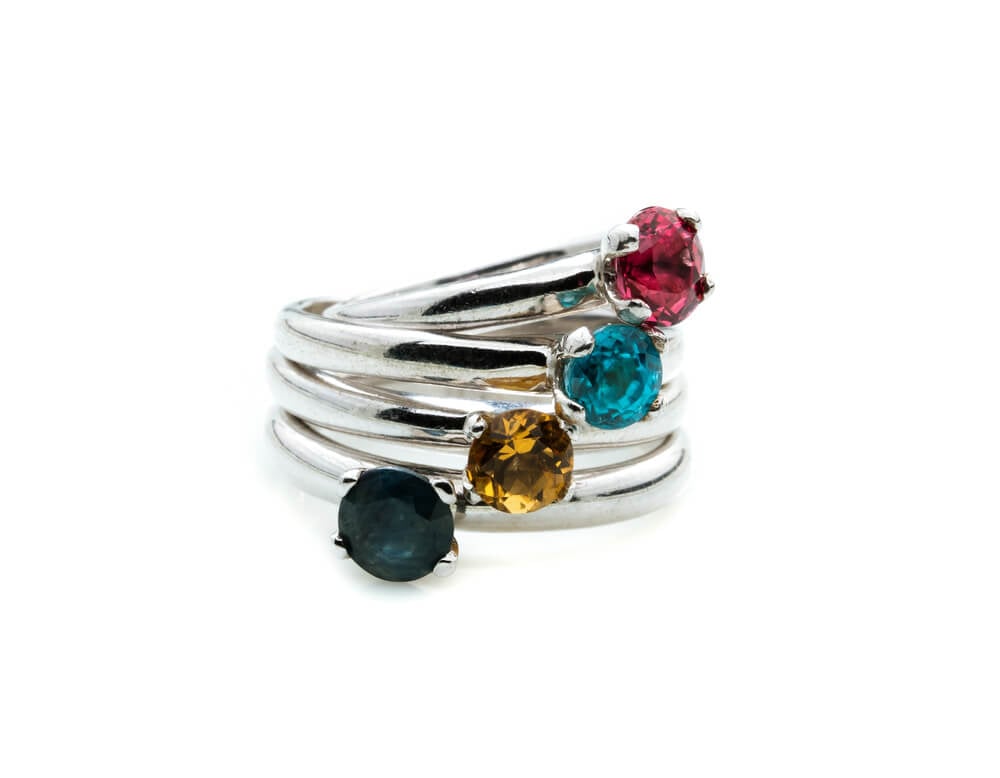
The toi et moi design sets two stones side by side on a crossing band, a form made famous when Napoleon gave Josephine one with a diamond and a sapphire in 1796. Modern versions swap in two birthstones, one for each partner, angled toward each other.
The pairing works best when the stones have similar hardness, since a ruby beside a pearl will wear unevenly. A pear or oval shape for both stones lets the two lines meet in a soft V.
Stones That Carry a Date
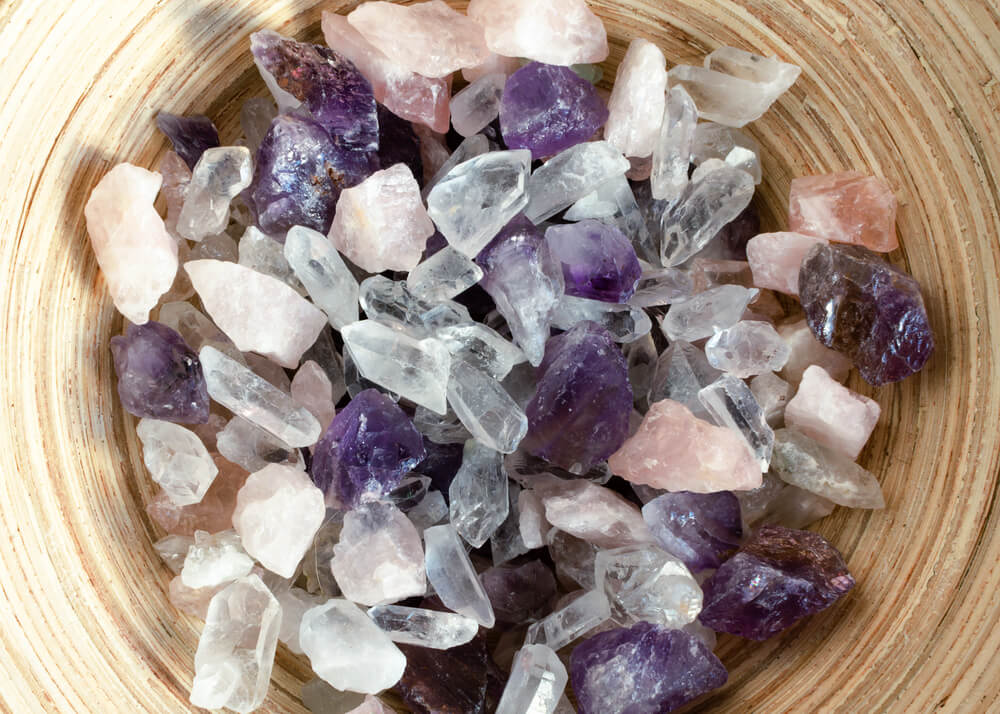
A birthstone ring is one of the few pieces of jewelry with a built-in reason to exist. The stone is chosen by the calendar rather than by taste, which is why the best examples pair it with a setting that suits its strengths and weaknesses.
A soft opal needs a bezel, a brittle emerald needs shelter, and a hard sapphire can handle nearly anything. Lists change, names get added, and fashions swing between cocktail bulk and stackable delicacy.
The rings worth keeping are the ones that match a stone to the life it has to live on a hand. Treat the stone fairly, and it will outlast the greeting card.
More from Go2Tutors!

- 27 Silver Dollars and Half Dollars Worth Keeping
- 28 Restaurant Menu Items Nobody Orders Anymore
- 17 Places Built in Seemingly Impossible Spots
- 27 Vintage Rings Worth More Than They Look
- 25 Restricted Sites Tourists Can’t Enter
Like Go2Tutors’s content? Follow us on MSN.