17 Historical Facts That Sound Made Up But Are Completely True
History has a way of being stranger than fiction. The past is filled with moments so bizarre, so unlikely, and so perfectly absurd that they read like the work of an overly imaginative storyteller.
Yet these events actually happened — documented, verified, and as real as anything else we know about human civilization.
Some historical facts sound too ridiculous to believe because they involve coincidences that would make a novelist blush. Others seem impossible because they showcase human behavior at its most peculiar.
The best ones combine both: real people doing real things that were so wonderfully weird they’ve survived in the historical record for centuries.
These seventeen facts will make anyone question what else might be lurking in the dusty corners of history books, waiting to surprise us with their delightful strangeness.
Napoleon Was Once Attacked by Rabbits
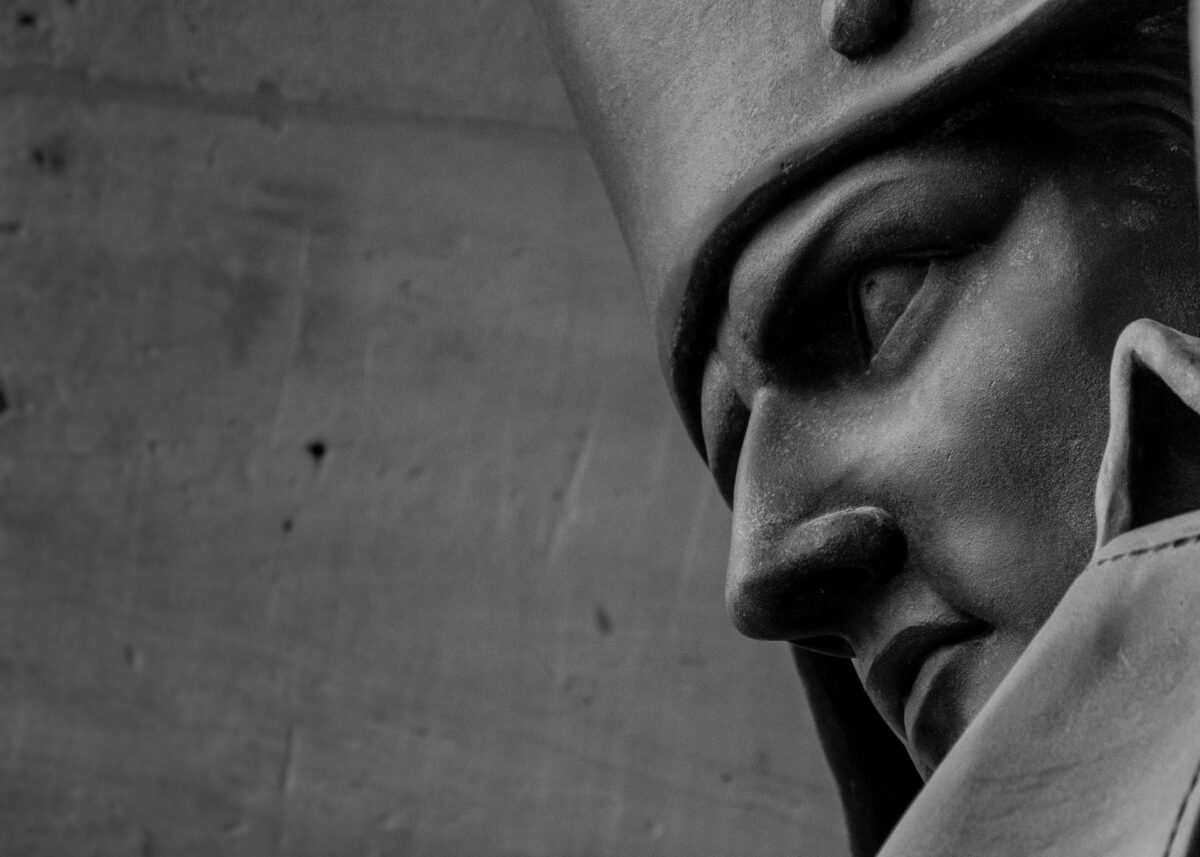
Napoleon faced many enemies during his reign. Rabbits weren’t supposed to be one of them.
In 1807, after signing the Treaty of Tilsit, Napoleon wanted to celebrate with a rabbit hunt. His chief of staff arranged for hundreds of rabbits to be collected for the event.
The plan was simple: release the rabbits, then hunt them down in a display of imperial marksmanship.
But someone made a crucial mistake. Instead of wild rabbits, they collected tame, domesticated ones.
When the rabbits were released, they didn’t run away in fear.
They ran toward Napoleon and his men, expecting to be fed. Hundreds of fluffy rabbits swarmed the Emperor of France, climbing up his jacket and refusing to retreat.
Napoleon fled to his carriage while being pursued by an army of hungry rabbits.
The Great Molasses Flood of 1919
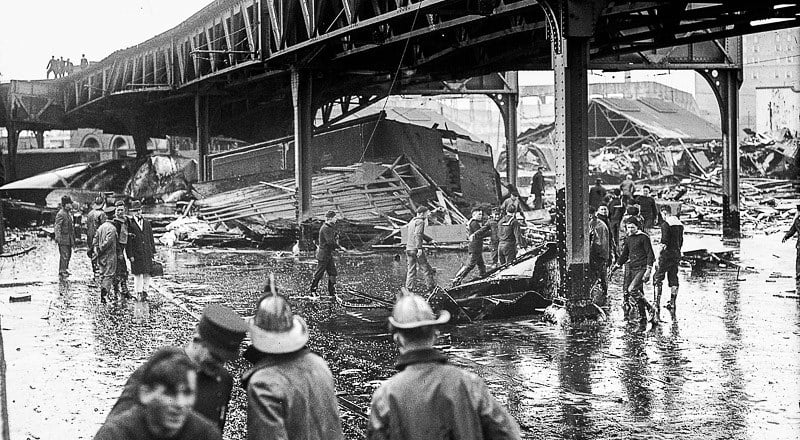
Boston has seen its share of disasters, but few as sticky as this one.
On January 15, 1919, a massive storage tank containing 2.3 million gallons of molasses burst in Boston’s North End. The resulting flood moved at 35 miles per hour — fast enough to knock buildings off their foundations and trap anyone caught in its path.
The wave of molasses was 25 feet high and 160 feet wide.
Twenty-one people died, and 150 were injured. The cleanup took weeks, and the smell lingered for decades.
For years afterward, residents claimed they could still smell molasses on hot summer days. The disaster led to stricter building codes and regulations — a sweet lesson learned the hard way.
Ancient Romans Used Urine as Mouthwash

Before modern dentistry, people got creative with oral hygiene. The Romans got particularly creative.
Wealthy Romans believed that urine — particularly Portuguese urine, which they considered the finest — was the best way to whiten teeth and freshen breath. The poet Catullus even mocked a Spanish acquaintance for this practice, suggesting it was common enough to be worth ridiculing.
The ammonia in urine did actually have some cleaning properties, so the practice wasn’t entirely without merit.
Roman women would import bottled urine from Portugal, treating it like a luxury beauty product. They’d swish it around their mouths each morning, convinced they were maintaining the height of dental fashion.
The practice was so widespread that it continued well into the 18th century in various forms across Europe.
A Man Survived Two Atomic Bombs
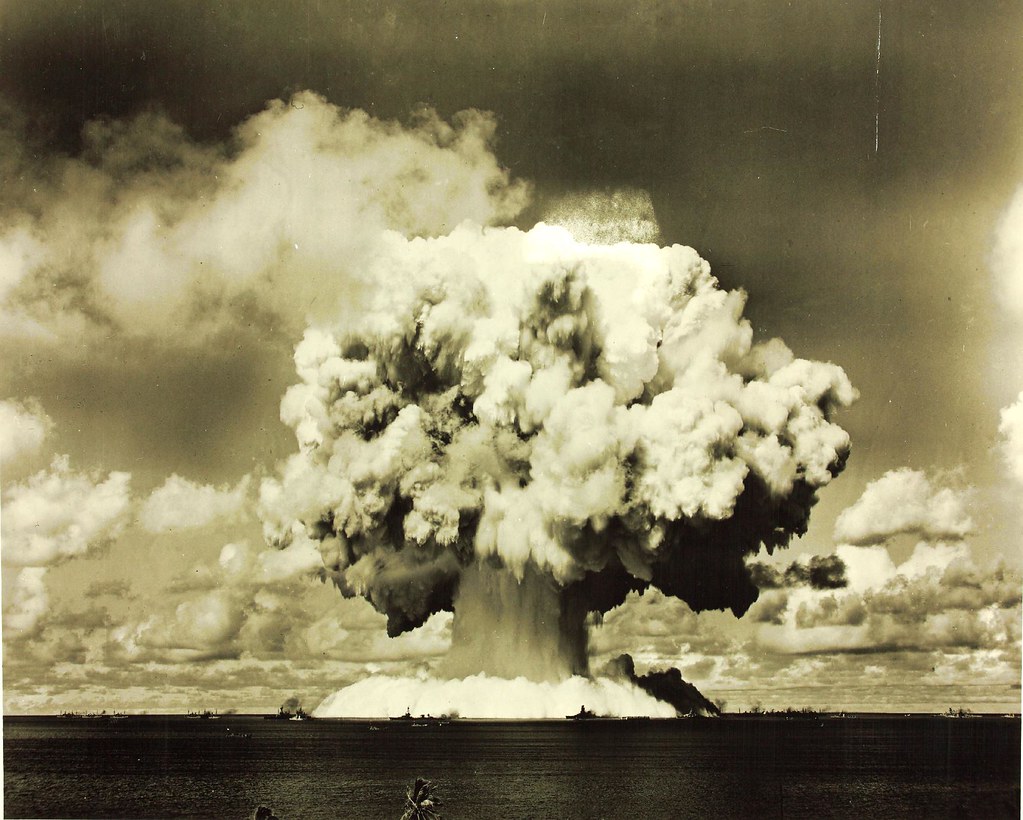
Most people would consider surviving one atomic bomb a miracle (and when considering such events that affected thousands of innocent people, the word “miracle” requires careful handling — but individual survival against impossible odds does deserve recognition). Tsutomu Yamaguchi managed to survive two, which moves beyond miracle into the realm of statistical impossibility.
Yamaguchi was in Hiroshima on a business trip when the first bomb dropped on August 6, 1945. He was badly burned but alive.
So he did what anyone would do: he went home to Nagasaki to recover. Three days later, the second atomic bomb dropped — on Nagasaki, where Yamaguchi was telling his supervisor about the Hiroshima bombing when the flash lit up the sky again.
And yet somehow, despite being within the blast radius of both explosions, Yamaguchi survived both attacks and lived to be 93 years old (passing away in 2010). His story stands as one of the most extraordinary examples of human resilience and sheer luck in recorded history.
Cleopatra Lived Closer to the Moon Landing Than to the Building of the Great Pyramid
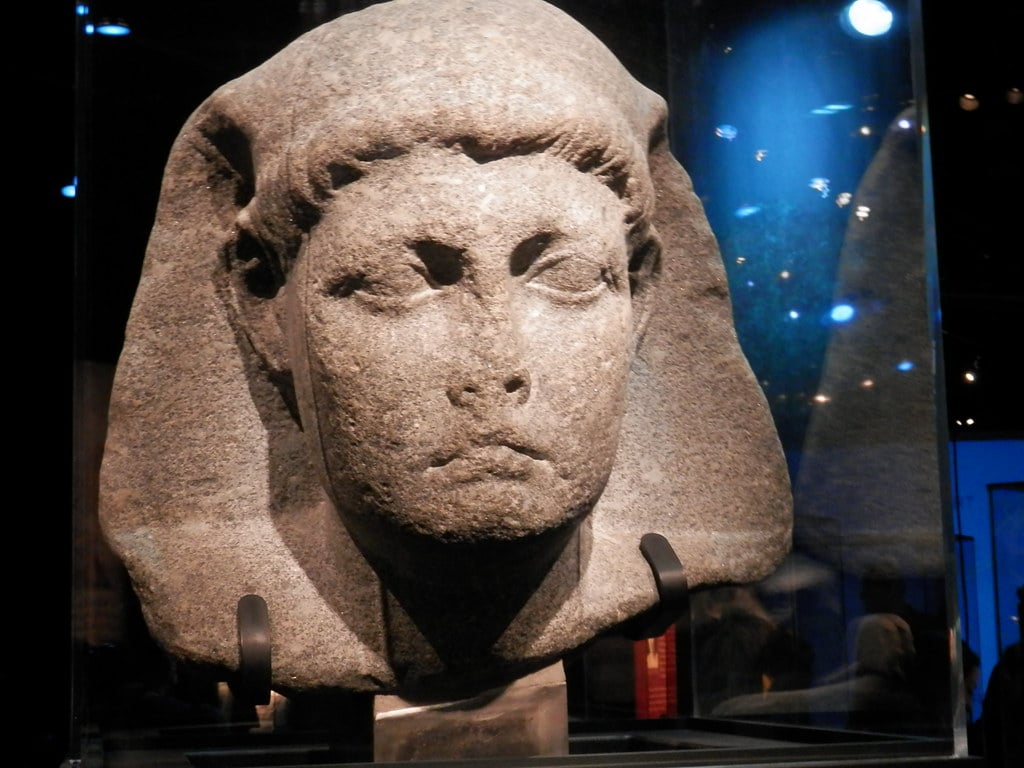
Time has a way of folding in on itself when seen from a distance, like a landscape where distant mountains appear closer than nearby hills (until someone points out the actual measurements, and suddenly the familiar world rearranges itself in your mind). The ancient world feels uniformly ancient, as if all those marble statues and sandstone monuments existed in the same historical moment — pharaohs and Roman emperors sharing the same temporal neighborhood.
But Cleopatra VII, the last active pharaoh of Egypt, lived in 69-30 BCE. The Great Pyramid of Giza was completed around 2560 BCE.
That puts roughly 2,500 years between Cleopatra and the pyramid builders — while only about 2,000 years separate Cleopatra from Neil Armstrong’s first steps on the lunar surface. To Cleopatra, the Great Pyramid was already an ancient relic from a civilization so distant it might as well have been mythical (which explains why she, like the Greek and Roman tourists of her era, would visit it as a historical curiosity, running her fingers along stones that were already weathered by millennia).
Oxford University Is Older Than the Aztec Empire

Teaching began at Oxford University around 1096. The Aztec Empire wasn’t established until 1428.
This means Oxford was already over 300 years old when the Aztecs founded Tenochtitlan. While the Aztecs were still a nomadic tribe wandering around central Mexico, Oxford scholars were already debating theology and natural philosophy in medieval England.
The university had been granting degrees for centuries before the Aztec Empire even existed.
When Cortés arrived in the Americas in 1519, he was encountering an empire that was younger than many European institutions. Oxford had been continuously operating for over 400 years by that point, making it not just older than the Aztec Empire, but older than most nation-states that exist today.
The Shortest War in History Lasted 38 Minutes

The Anglo-Zanzibar War of 1896 holds the record for the shortest war in human history.
The conflict began at 9:02 AM on August 27, 1896, when the Sultan of Zanzibar died and his nephew took power without British approval (this was during the era when Britain felt entitled to approve such things).
The British demanded he step down. He refused.
So the British decided to settle the matter with naval bombardment.
The Zanzibari forces consisted of one royal yacht, a few guards, and a wooden palace. The British brought three cruisers, two gunboats, and 150 marines.
At 9:02 AM, the British opened fire. By 9:40 AM, the palace was in ruins, the royal yacht was sunk, and roughly 500 Zanzibaris were dead or wounded. The British had suffered exactly one injury — a sailor who was hurt, though not seriously.
The new sultan was installed immediately, and everyone went home for lunch.
Charlie Chaplin Once Lost a Charlie Chaplin Look-Alike Contest

Celebrity impersonation reached peak absurdity in 1915 when Charlie Chaplin — already one of the most recognizable faces in the world — decided to enter a Charlie Chaplin look-alike contest in San Francisco. The contest was held at a theater, with dozens of hopeful Chaplins waddling around in bowler hats and fake mustaches, perfecting their signature walk.
Chaplin entered anonymously, figuring this would be the easiest contest win of his life. He performed his routine alongside the other contestants, doing the walk that had made him famous, twirling his cane with the precision that came from actually being Charlie Chaplin.
But apparently being yourself isn’t enough when people expect you to be a caricature of yourself, because when the judges made their decision, the real Charlie Chaplin came in third place (though some accounts say he came in twentieth, which somehow makes it even better). The winner was someone who had studied Chaplin’s movements so closely that he had become more Charlie Chaplin than Charlie Chaplin — at least according to judges who were presumably experts in recognizing Charlie Chaplin.
Liechtenstein Accidentally Invaded Switzerland

Military precision matters, especially when the countries involved are small enough that getting lost can constitute an international incident.
In 2007, a company of 170 Liechtenstein soldiers were conducting a training exercise in the dark. They were supposed to march to a checkpoint within their own borders, but someone misread the map.
The entire unit crossed into Switzerland and marched about a mile into Swiss territory before realizing their mistake.
Switzerland didn’t notice the invasion until the next day, when Liechtenstein called to apologize. Swiss officials were reportedly amused rather than alarmed, probably because Liechtenstein doesn’t exactly pose a significant military threat.
The incident was resolved with apologies and better maps for future training exercises.
The Dancing Plague of 1518
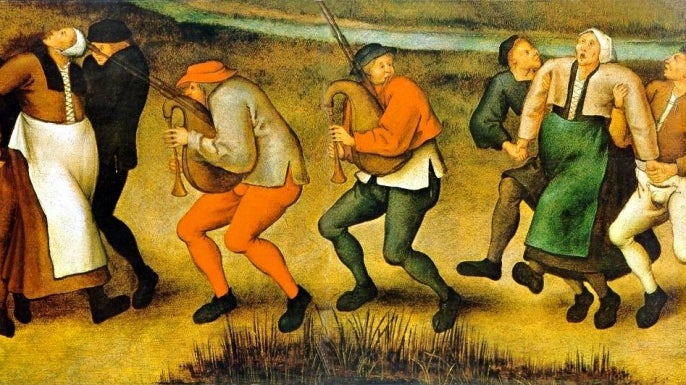
In July 1518, a woman in Strasbourg started dancing in the street and couldn’t stop (and this wasn’t the joyful, celebratory kind of dancing that spreads through crowds at festivals — this was compulsive, desperate, and physically devastating). Within days, dozens of others joined her, dancing frantically without rest, and within a month, around 400 people were caught in the same inexplicable dancing mania that seemed to spread like a contagion through the city.
The authorities, convinced that the cure for too much dancing was more dancing, hired musicians and built a stage to encourage the dancers (because 16th-century medical theory was often exactly as logical as it sounds). But the dancing continued for weeks, and people began collapsing from exhaustion — some reportedly danced themselves to death from heart attacks and strokes, though the exact death toll remains uncertain since medical records from 1518 weren’t exactly comprehensive.
Modern historians suspect the outbreak was caused by ergot poisoning from contaminated grain (ergot being a fungus that produces compounds similar to LSD) combined with mass hysteria and the social stresses of the time. So the Dancing Plague of 1518 was likely the result of an entire city accidentally getting high while dealing with economic hardship and religious upheaval — which explains both the dancing and why it took authorities so long to figure out that more music wasn’t the solution.
Vincent van Gogh Only Sold One Painting During His Lifetime
Van Gogh is now considered one of the greatest painters in history. During his lifetime, the art world was decidedly less impressed.
He created over 2,000 works of art in just over a decade, painting with an intensity that bordered on obsession. His brother Theo supported him financially, buying his paint and canvases while Vincent struggled to find anyone else willing to purchase his work.
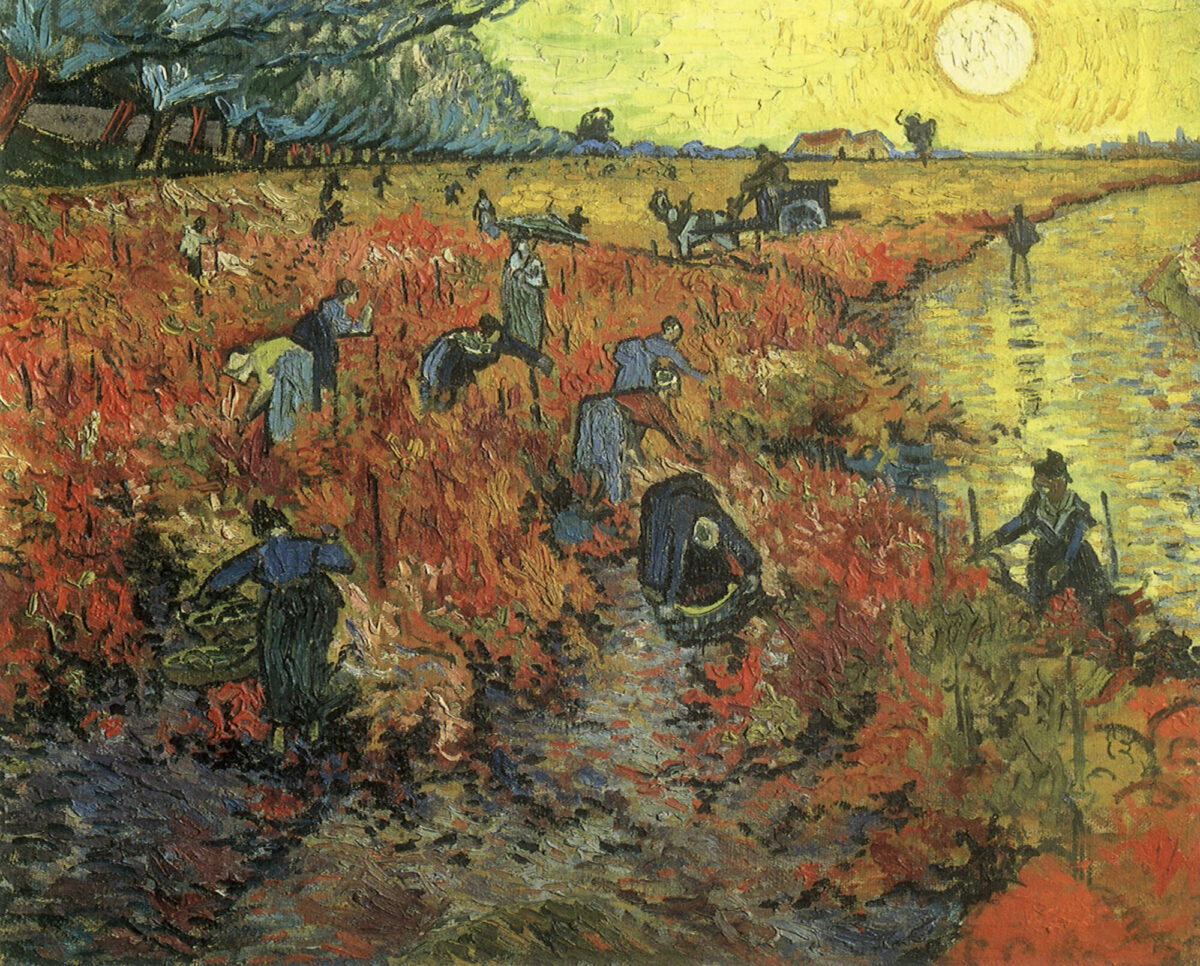
The single painting van Gogh sold was “The Red Vineyard,” purchased by Anna Boch for 400 francs in 1890, just months before his death.
Today, his paintings sell for tens of millions of dollars. “The Starry Night” is one of the most recognizable images in art history.
But van Gogh died thinking he was a failure, never knowing that the world would eventually catch up to his vision.
There Was a War Fought Over a Bucket

The War of the Bucket sounds like something out of a fairy tale, but it was a very real conflict between two Italian city-states in 1325 (though calling it a war “over” a bucket is like saying World War I was fought over the assassination of one archduke — technically true, but missing the larger context of decades of political tension, territorial disputes, and rivalry between the Holy Roman Empire and the Papal States that had been simmering in medieval Italy for generations).
The actual bucket incident occurred when soldiers from Modena raided the city of Bologna and, among other acts of provocation, stole a wooden bucket from a well. Bologna demanded its return and, when Modena refused, declared war.
But the bucket was really just the final insult in a long series of conflicts between the two cities, each representing different political factions in the broader struggle for control of northern Italy.
So while historians agree that the War of the Bucket was indeed fought, and that a bucket was indeed involved, the bucket itself was more symbol than cause — though that somehow makes it even more absurd. Two armies meeting on a battlefield, thousands of soldiers risking their lives, all because someone stole a bucket and nobody was willing to admit that maybe, just maybe, this whole thing had gotten a little out of hand.
Australian Prime Minister Harold Holt Went Swimming and Disappeared Forever

Political careers end in many ways. Harold Holt’s ended with a swim.
On December 17, 1967, Australian Prime Minister Harold Holt went to Cheviot Beach near Melbourne with friends. Despite rough surf conditions, Holt decided to go swimming — something he’d done at this beach many times before.
He entered the water around 12:15 PM. His friends watched him swim out beyond the breakers.
Then he vanished. No body was ever found, despite one of the largest search operations in Australian history involving navy divers, helicopters, and boats.
Holt simply disappeared into the ocean while serving as the country’s leader. Conspiracy theories emerged — some claimed he was a Chinese agent who was picked up by submarine, others suggested he faked his death to escape political pressure.
The truth is probably much simpler: a strong swimmer underestimated dangerous conditions and drowned in waters known for their unpredictable currents. But the mystery remains unsolved over 50 years later.
The Eiffel Tower Was Supposed to Be Temporary

Paris almost dismantled its most famous landmark after 20 years.
The Eiffel Tower was built for the 1889 World’s Fair as a temporary structure. The plan was to tear it down in 1909 when the fair’s permit expired.
Parisians initially hated the tower, calling it an eyesore and a blight on their beautiful city. Prominent artists and writers signed a petition calling it “a useless and monstrous Eiffel Tower” that would dominate Paris “like a gigantic black smokestack.”
What saved the tower was its usefulness for radio transmission. By 1909, the tower had become essential for military and civilian communications.
The city decided to keep it for practical reasons rather than aesthetic ones. Over time, public opinion shifted, and the temporary eyesore became the symbol of Paris.
Today, the Eiffel Tower attracts nearly 7 million visitors annually. The same structure Parisians once demanded be torn down is now unthinkable to remove — though it still requires repainting every seven years to prevent rust.
John Adams and Thomas Jefferson Died on the Same Day

July 4, 1826, marked the 50th anniversary of the Declaration of Independence. It was also the day both John Adams and Thomas Jefferson chose to die.
Adams and Jefferson had been friends, political allies, then bitter enemies, then friends again through a remarkable correspondence in their later years. Both were founding fathers, both had served as president, and both had helped create the country they were leaving behind.
Adams died in the late afternoon at his home in Massachusetts. His last words were reportedly “Thomas Jefferson survives.”
He was wrong — Jefferson had died several hours earlier at Monticello in Virginia, though news traveled slowly in 1826. Neither man knew the other had died on the same day.
The coincidence struck the nation as almost supernatural. That two of the most important figures in American history would die on the exact anniversary of their greatest achievement seemed too meaningful to be mere chance.
Rome Had a Four-Emperor Year
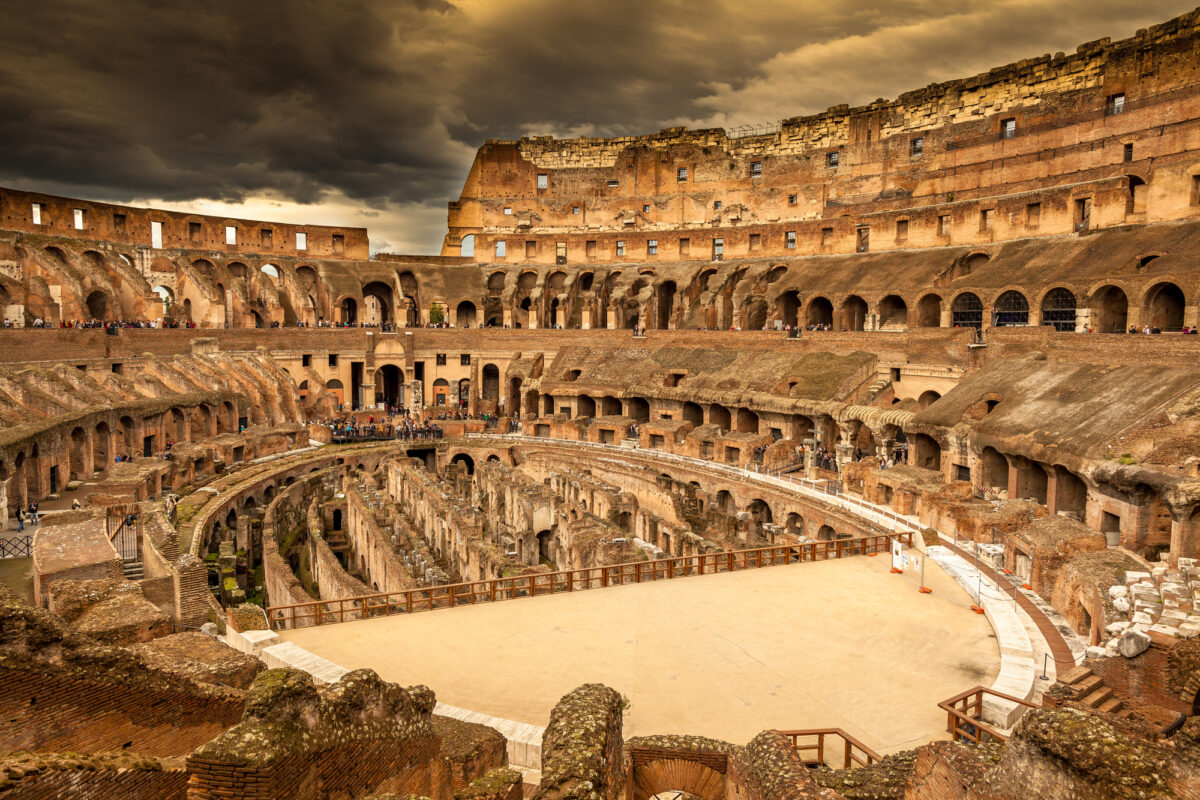
The Year of the Four Emperors (69 CE) was when the Roman Empire discovered that political stability is harder to maintain than it looks, especially when the army decides it gets to choose who’s in charge (and different parts of the army have different opinions about what constitutes good leadership).
It started when Emperor Galba, who had overthrown Nero the previous year, proved to be unpopular with just about everyone who mattered in Roman politics. In January, Otho arranged for Galba’s assassination and became emperor himself, figuring that eliminating the competition was more efficient than running a campaign.
But Otho’s reign lasted only three months because Vitellius, who commanded the armies in Germany, decided he’d make a better emperor and marched on Rome with his legions (which turned out to be a persuasive argument).
So Vitellius became emperor in April, but by December, Vespasian — who had been putting down a rebellion in Judaea — decided that he should be emperor instead. And since Vespasian had the largest army and the most military experience, he won the final round of this deadly game of musical thrones, establishing a dynasty that would rule for decades.
The Great Emu War of 1932

Australia declared war on birds. The birds won.
After World War I, Australian veterans were given farmland in Western Australia. By 1932, they faced a problem: thousands of emus were migrating through their wheat fields, destroying crops.
The farmers asked the government for help, so the military decided to solve the problem with machine guns.
Major G.P.W. Meredith led the operation with two soldiers, two Lewis guns, and 10,000 rounds of ammunition. The plan was straightforward: shoot the emus and save the crops.
But emus are fast, smart, and surprisingly difficult to hit with machine guns. They scattered when fired upon, regrouped elsewhere, and continued eating wheat.
After several weeks of “combat,” the military had used most of their ammunition but killed relatively few emus. Major Meredith reported that the emus displayed guerrilla tactics and were worthy opponents.
The operation was called off, and the farmers were left to deal with the emus on their own.
Looking Back at the Impossible

History proves that truth doesn’t need to sound reasonable to be real. The past is filled with rabbit attacks and molasses floods.
More from Go2Tutors!

- The Romanov Crown Jewels and Their Tragic Fate
- 13 Historical Mysteries That Science Still Can’t Solve
- Famous Hoaxes That Fooled the World for Years
- 15 Child Stars with Tragic Adult Lives
- 16 Famous Jewelry Pieces in History
Like Go2Tutors’s content? Follow us on MSN.