Fictional Ideas That Stayed Fiction
Science fiction has always promised us flying cars, time machines, and cities on Mars. Some of these dreams became reality — we have video calls, satellites, and computers in our pockets.
But others never quite made the leap from imagination to invention, despite decades of trying. These ideas captured our collective imagination so completely that we keep expecting them to show up any day now.
Flying Cars
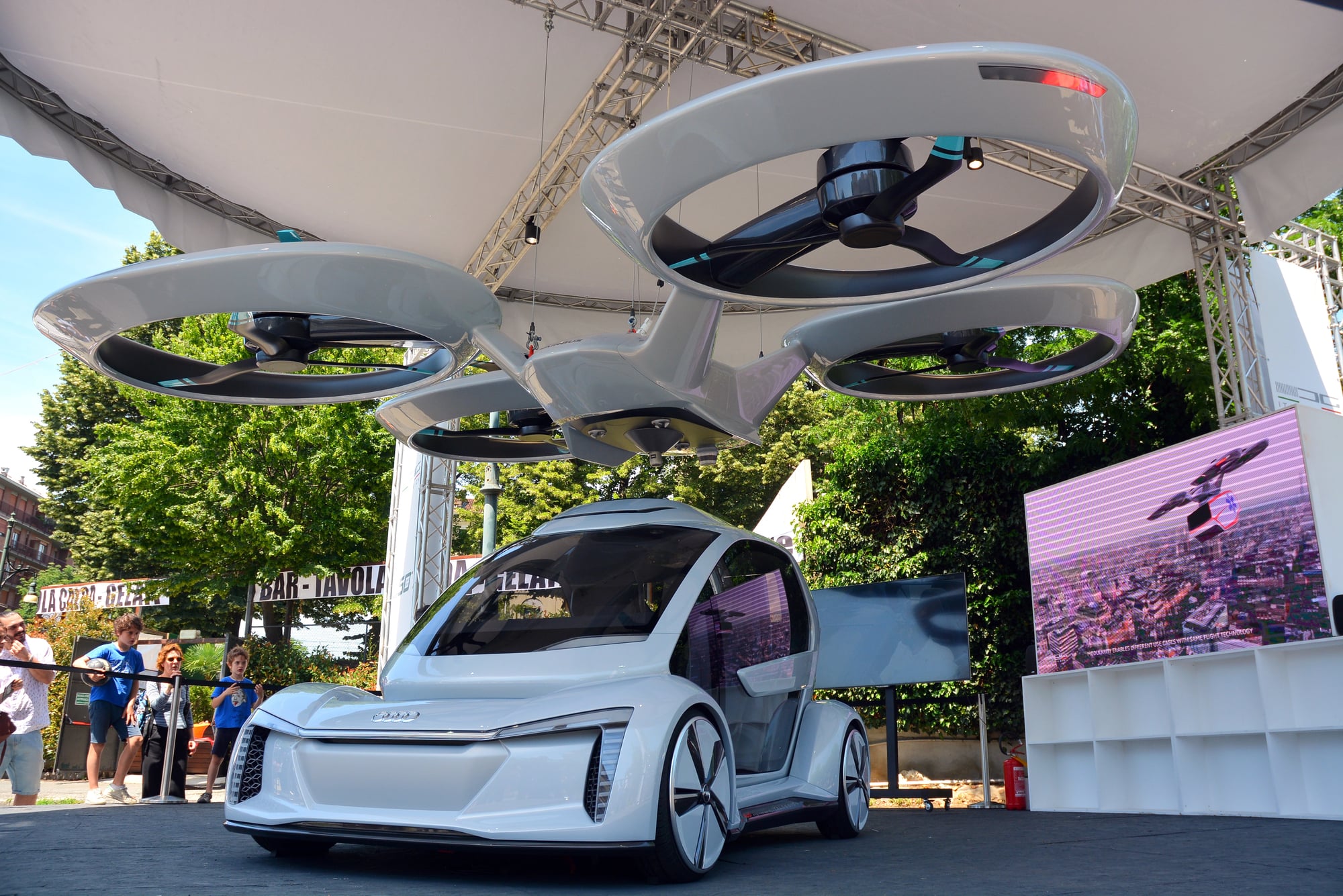
Flying cars don’t exist because the sky isn’t empty. The roads are crowded enough — imagine that chaos three-dimensional.
Plus, most people can barely parallel park. Aviation regulations exist for good reasons.
Air traffic control works because commercial flights follow strict rules and professional pilots know what they’re doing. Hand that responsibility to someone who texts while driving and the results become predictable.
Time Travel

Time travel breaks every rule physics has spent centuries establishing. The grandfather paradox alone (where changing the past creates logical impossibilities that would prevent you from making those changes in the first place) makes most scientists shake their heads whenever the topic comes up.
And yet the idea refuses to die because we all have moments we’d like to revisit — or skip entirely. Even if someone cracked the temporal mechanics, the practical problems multiply faster than the theoretical ones.
So you travel back to 1955, but now you’re stranded without identification, currency that won’t be considered counterfeit, or any way to prove you belong there — which is assuming you can even survive the diseases your immune system has never encountered. But science fiction glosses over these mundane details because they’re less exciting than the philosophical implications of meeting your younger self.
Teleportation

Think of teleportation as the ultimate magic trick: making something disappear completely in one place and reappear instantly in another. But unlike stage magic, this version requires dismantling every atom in your body, transmitting that information across space, and rebuilding you perfectly somewhere else.
The technical challenges make flying cars look simple. Even if the physics worked, you’d face a disturbing question: is the person who reappears actually you, or just a copy who thinks they’re you while the original died in the disintegration process?
Jetpacks

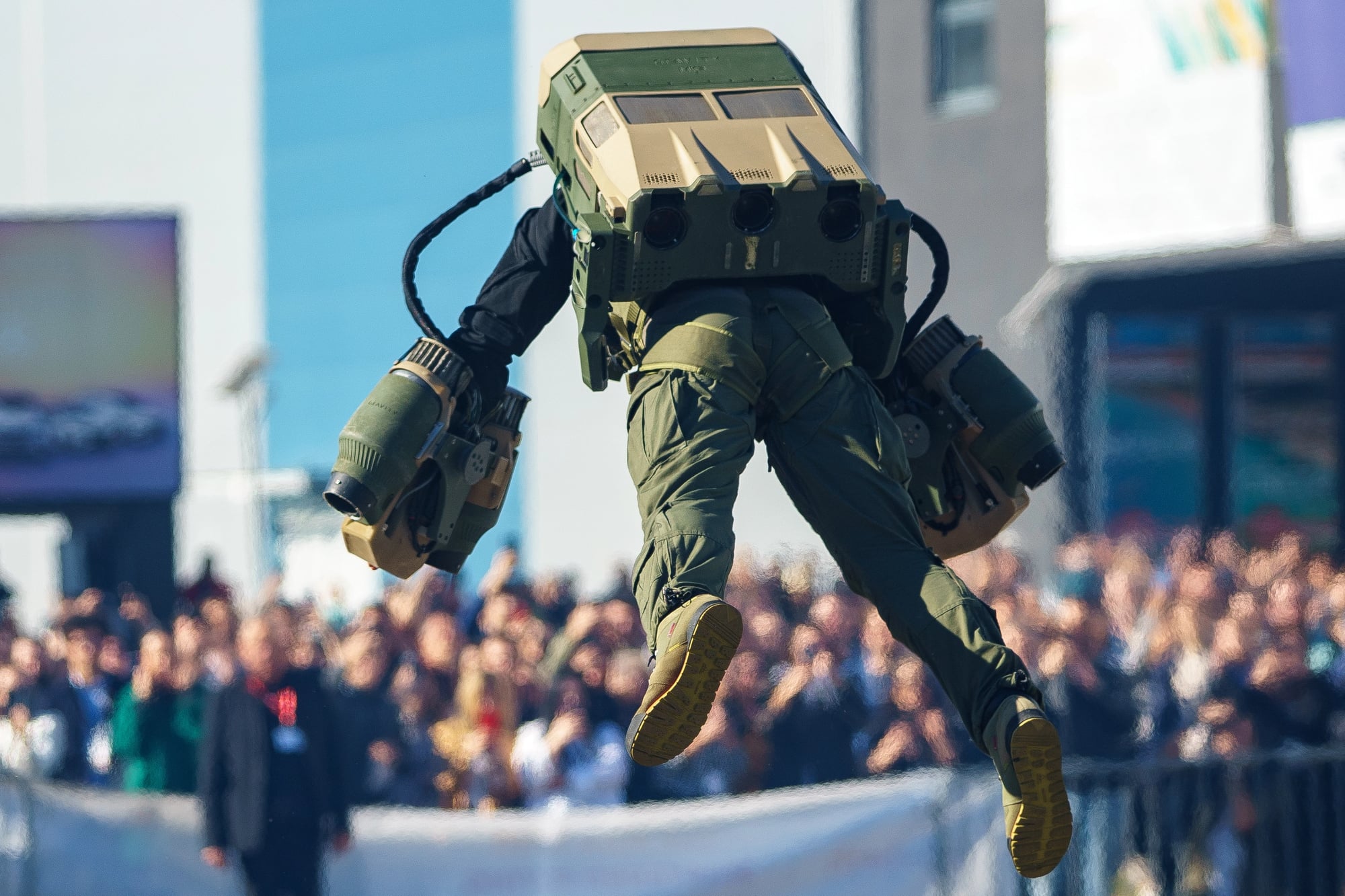
Jetpacks suffer from a fuel problem that never gets solved. The amount of energy needed to lift a human body vertically burns through fuel so fast that most jetpack flights last minutes, not hours.
The weight of carrying enough fuel for a useful journey defeats the purpose of personal flight. They also turn every user into a flying torch — one small malfunction and you’re wearing an explosive device while airborne.
To be fair, early cars weren’t exactly safe either, but cars don’t fall out of the sky when they break down. The romance of personal flight keeps the idea alive, but physics remains stubbornly unromantic about the whole thing.
Underwater Cities

The ocean floor seemed like prime real estate back when we thought land was getting scarce. Underwater cities appeared in countless stories — domed metropolises where humans could live and work beneath the waves, protected from storms and connected to the surface by submarines.
Building underwater presents problems that building on land never considers. Water pressure increases dramatically with depth.
Corrosion attacks everything metal. Supply lines stretch thin when your nearest neighbors live miles above your head.
And if something goes wrong — a hull breach, a power failure, a fire in an oxygen-rich environment — escape routes become limited quickly.
Robot Servants
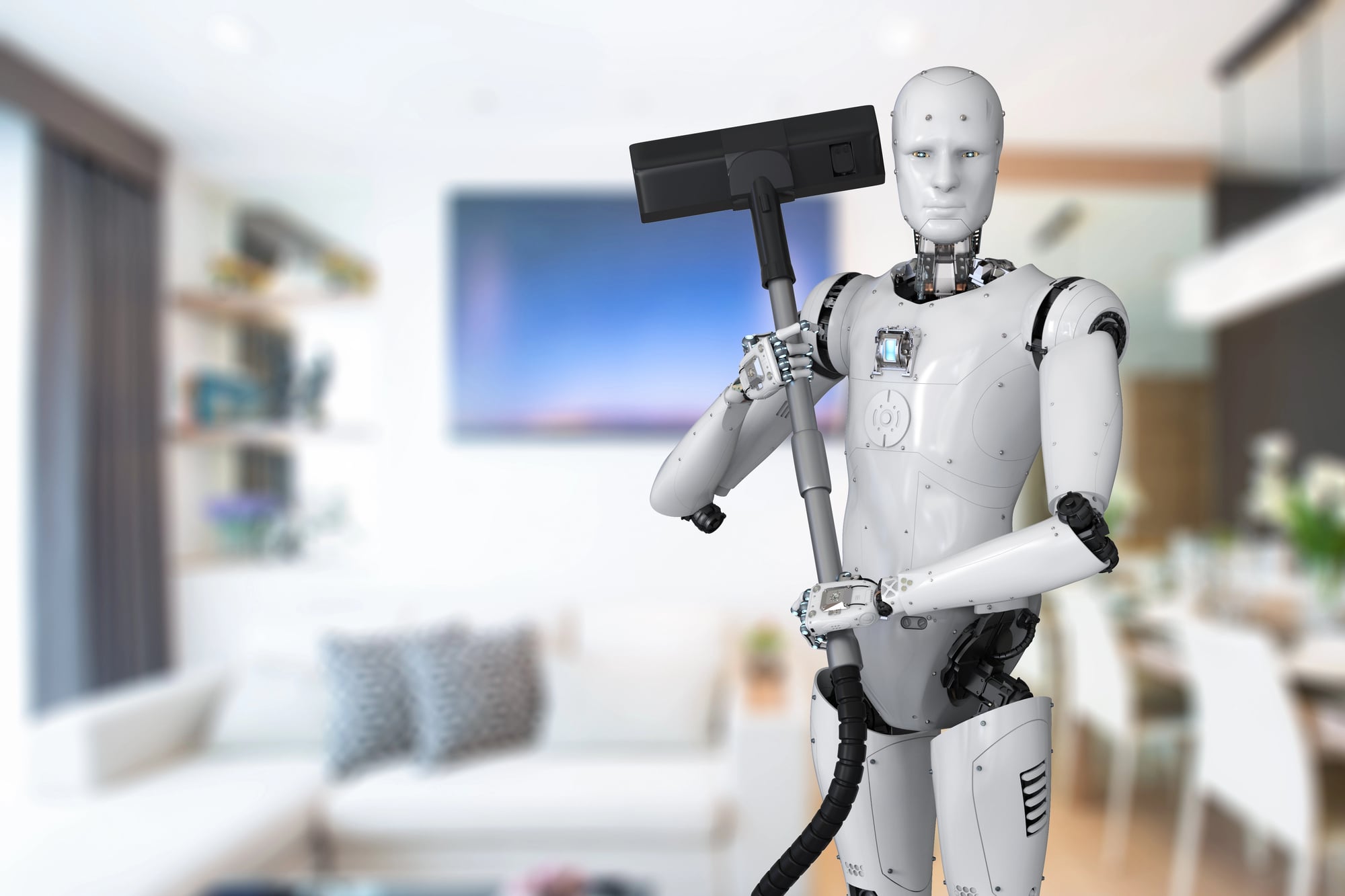
Personal robots that clean your house and follow verbal commands hit a wall that programmers call the “common sense problem.” Humans navigate daily life using thousands of unspoken assumptions about how the world works.
Teaching a robot to distinguish between a mess that needs cleaning and a craft project in progress turns out to be remarkably difficult. The robots we do have excel at specific tasks: vacuuming floors, assembling cars, playing chess.
But the versatile household assistant that can adapt to new situations and understand context the way a human housekeeper would remains beyond current technology. So instead of robot butlers, we got robot vacuum cleaners that occasionally eat shoelaces.
Cities in Space

Space cities were supposed to solve overpopulation by moving excess humans to orbital colonies. These massive rotating structures would create artificial gravity and house thousands of people in a controlled environment among the stars.
The concept ignored several inconvenient realities about living in space. Everything needed to sustain human life — air, water, food, medical supplies — has to be launched from Earth at enormous cost.
A single failure in life support systems becomes catastrophic when you’re floating in vacuum. And humans didn’t evolve for low-gravity environments; extended space habitation causes bone loss, muscle atrophy, and cardiovascular problems that we still don’t know how to prevent.
Invisibility Cloaks

True invisibility requires bending light around an object so completely that it becomes undetectable to the human eye. Scientists have created materials that can bend light in unusual ways — metamaterials that can make small objects invisible to specific wavelengths under laboratory conditions.
But scaling up from hiding a paperclip under controlled lighting to making a person disappear in normal daylight involves challenges that multiply exponentially. The technology exists in limited forms, but the invisibility cloak that works like Harry Potter’s remains firmly in the realm of fiction.
Memory Wiping

The ability to selectively erase memories appeals to anyone who’s experienced trauma or embarrassing moments they’d rather forget. Science fiction treats memory like computer files that can be deleted cleanly, leaving everything else intact.
Real memory doesn’t work that way. Memories interconnect in complex networks throughout the brain.
Removing one memory risks damaging others. The brain stores the same information in multiple locations and rebuilds memories each time they’re accessed, making them surprisingly resilient to attempts at precise deletion.
Current techniques for affecting memory are too crude for the surgical precision that fiction imagines.
Faster-Than-Light Travel

Einstein’s theory of relativity sets the speed of light as an absolute cosmic speed limit. Nothing with mass can accelerate to light speed, much less beyond it.
This creates a problem for space exploration: even the nearest star is over four years away at light speed. Science fiction works around this with warp drives, hyperspace jumps, and wormholes — theoretical concepts that might allow faster-than-light travel without violating relativity.
The math occasionally works on paper, but requires exotic matter with negative energy density that probably doesn’t exist. So interstellar travel remains limited to generation ships and very patient passengers.
Mind Reading

Brain scanning technology can detect which general areas become active during different types of thinking, but translating neural activity into specific thoughts remains impossible. The brain processes information through patterns of electrical and chemical activity spread across billions of neurons.
Even if technology could monitor every neuron simultaneously, interpreting that data requires understanding how individual brains encode information — and every brain does it slightly differently. Reading emotions from facial expressions and body language works better than any attempt to directly access thoughts, which is why psychology developed those skills instead of waiting for mind-reading machines.
Artificial Gravity
Spacecraft in science fiction routinely feature artificial gravity that works exactly like Earth’s — people walk normally through ship corridors without floating around. Real spacecraft create artificial gravity through rotation, but this produces side effects that fiction usually ignores.
Rotating spacecraft create centrifugal force that mimics gravity, but the effect varies depending on your distance from the center of rotation. Moving your head quickly in a rotating environment causes disorientation.
The engineering challenges of building structures large enough to rotate comfortably while maintaining structural integrity under those forces make artificial gravity impractical for most spacecraft designs.
Personal Force Fields

Force fields that can stop bullets, deflect energy weapons, and protect their user from environmental hazards show up everywhere in science fiction. The concept requires projecting some form of energy barrier around a person or object that can selectively block harmful things while allowing beneficial ones to pass through.
Physics offers no known mechanism for creating such selective barriers using projected energy. Magnetic fields can deflect charged particles but won’t stop bullets.
Electric fields can repel objects with the same charge but affect everything equally. The kind of programmable energy barrier that fiction imagines — one that somehow knows the difference between air you want to breathe and projectiles you want to block — remains beyond current scientific understanding.
The Fiction That Shapes Reality
These ideas persist not because they’re achievable, but because they solve problems we recognize. Flying cars address traffic.
Time travel offers second chances. Teleportation eliminates commutes.
The fact that they remain fictional doesn’t diminish their power to inspire real solutions — just different ones than we originally imagined.
More from Go2Tutors!

- The Romanov Crown Jewels and Their Tragic Fate
- 13 Historical Mysteries That Science Still Can’t Solve
- Famous Hoaxes That Fooled the World for Years
- 15 Child Stars with Tragic Adult Lives
- 16 Famous Jewelry Pieces in History
Like Go2Tutors’s content? Follow us on MSN.



