15 of the Unluckiest People in History
Some people seem cursed by fate itself. Throughout history, certain individuals have faced such extraordinary misfortune that their stories defy belief.
These aren’t tales of poor judgment or reckless choices — these are accounts of people who encountered the kind of catastrophic bad luck that makes you wonder if the universe has a twisted sense of humor. From ancient rulers to modern-day civilians, these fifteen souls experienced misfortune so profound that their names have become synonymous with the worst possible timing, circumstances, and cosmic cruelty.
Gaius Valerius Maximus

Roman consul. Struck by lightning twice in one day during separate ceremonies.
Died on the second hit. His own soldiers refused to carry his body, believing he was cursed by Jupiter himself.
Ann Hodges

The only confirmed person struck by a meteorite. November 1954, Alabama. She was napping on her couch when a chunk of space rock crashed through her roof and hit her hip.
Survived, but spent years fighting legal battles over meteorite ownership while dealing with constant media attention.
Roy Sullivan

Seven lightning strikes over twenty-seven years (and here’s where the universe really seems to be making a point about persistence, because this man just kept getting hit despite taking every reasonable precaution, moving to different locations, and changing his routine — lightning followed him like some kind of atmospheric stalker that refused to take a hint, and each strike brought new injuries that ranged from burned eyebrows to a burned chest, yet somehow he survived all seven, which is either incredibly lucky or the cruelest kind of unlucky, depending on how you look at it). Park ranger in Virginia. But the lightning wasn’t done with irony — Sullivan eventually died by his own hand, reportedly over relationship troubles. Lightning couldn’t kill him, but heartbreak could.
Violet Jessop

There’s something unsettling about a person whose presence seems to attract maritime disaster like a magnet draws iron filings. Jessop sailed on the Olympic when it collided with HMS Hawke in 1911, survived the Titanic sinking in 1912, and was aboard the Britannic when it sank in 1916.
Three sister ships, three disasters, one woman. She worked as both a stewardess and nurse, drawn to the ocean despite its apparent hostility toward any vessel she boarded.
The sea kept trying to claim her, and she kept slipping away, as if fate couldn’t decide whether she was meant to be saved or lost.
Frane Selak

Selak holds the unofficial record for surviving the most transportation disasters. Train derailment, plane crash, bus crash into a river, car fires, more car crashes — seven major accidents over forty years.
The man couldn’t board anything with wheels or wings without something going catastrophically wrong. Then, at age 73, he won the lottery. Sometimes the universe has a sense of humor after all.
Tsutomu Yamaguchi

Present in Hiroshima on business when the first atomic bomb dropped (and if that alone weren’t enough to secure a place in the annals of historically terrible timing, what happened next pushes his story into the realm of almost impossible coincidence — he survived the blast, was treated for his burns, and then made his way home to Nagasaki, arriving just in time for the second atomic bomb to fall, making him quite possibly the only person to experience both nuclear attacks firsthand). He lived to age 93, spending decades advocating for nuclear disarmament.
So both bombs failed to kill him, but condemned him to carry the weight of witnessing humanity’s most destructive moments. And yet he chose to use that buroden as a platform for peace — which might make him lucky after all.
The Crew of the Essex

Picture a whaling ship in 1820, hunting sperm whales in the Pacific, when suddenly the hunters become the hunted in the most literal sense imaginable. An enormous whale attacked their vessel — not accidentally, but deliberately, ramming the Essex until it sank.
The crew spent months adrift in small boats, facing starvation so severe that they resorted to cannibalism. Only eight of the twenty men survived.
Their ordeal inspired Herman Melville’s famous whale, which means their suffering at least achieved immortality in literature.
Archduke Franz Ferdinand

Franz Ferdinand mastered the art of being in precisely the wrong place at the worst possible moment. His driver took a wrong turn in Sarajevo, stopped directly in front of assassin Gavrilo Princip, who shot him and his wife Sophie.
This single moment of navigational confusion triggered World War I. Millions died because of a driver’s mistake that put the Archduke within arm’s reach of a man with a gun and a political agenda.
The Passengers of Malaysian Airlines Flight 17

Flying from Amsterdam to Kuala Lumpur on July 17, 2014 (and among those passengers were delegates heading to an AIDS conference in Australia, researchers who had devoted their careers to fighting disease and improving global health, families on vacation, business travelers — people whose only crime was choosing a particular flight on a particular day). The plane was shot down over eastern Ukraine, killing all 298 people aboard.
They were caught in someone else’s war, flying through airspace that had become a battlefield without their knowledge. The delegates alone represented decades of AIDS research experience, setting back global health efforts in ways still being calculated.
The Citizens of Pompeii

Vesuvius had been quiet for centuries. The fertile soil around its base supported thriving communities that had no memory of the mountain’s violent potential.
When it erupted in 79 AD, the people of Pompeii faced a disaster they couldn’t have imagined — volcanic ash and gas moving faster than they could run, preserving them in their final moments like a snapshot of catastrophe. Entire families were found huddled together, frozen in time.
Their bad luck became archaeology’s good fortune, but that hardly seems like adequate compensation.
Henry Ziegland

Ziegland thought he’d dodged a bullet — literally. In 1883, his girlfriend’s brother shot at him after she took her own life.
The bullet grazed Ziegland’s face and lodged in a tree behind him. The brother, thinking he’d killed Ziegland, turned the gun on himself.
Twenty years later, Ziegland decided to cut down that same tree and used dynamite to remove the stump. The explosion sent the bullet flying — straight into Ziegland’s head, killing him instantly.
Eben Byers

Byers was a wealthy American socialite and amateur golfer who, in 1927, began taking a patent medicine called Radithor for minor aches and pains (because this was the era when radioactivity was considered beneficial, when companies marketed radium as a health tonic, and when the dangers of radiation exposure were not just unknown but actively dismissed by the very people profiting from these products). Radithor contained radium.
He drank it daily for years, eventually consuming over 1,400 bottles. The radium literally ate away his jaw and bones from the inside.
But his death helped expose the dangers of radium products, potentially saving thousands of other lives. And his jaw fell off during the legal proceedings — which is both horrifying and somehow perfectly symbolic of how thoroughly radioactive medicine had failed him.
The Donner Party

Perfect timing for the worst possible weather. The 1846 wagon train left Missouri for California just late enough to get trapped in the Sierra Nevada mountains during one of the harshest winters on record.
What started as a routine journey west became a nightmare of starvation, death, and cannibalism. About half the group died, and those who survived had to eat the dead to stay alive.
Their bad luck created one of the most infamous survival stories in American history.
Terry Kath

Kath was the guitarist for Chicago, known for his incredible talent and reckless personality. On January 23, 1978, he was playing with guns at a roadie’s house, showing off by putting a .38 revolver to his head and pulling the trigger.
He’d done this before — the gun wasn’t loaded. Except this time, he forgot about the bullet in the chamber.
His last words were reportedly, “Don’t worry, it’s not loaded.” The most talented member of one of America’s most successful bands killed himself with what amounted to the world’s most tragic magic trick.
The Crew of Apollo 1
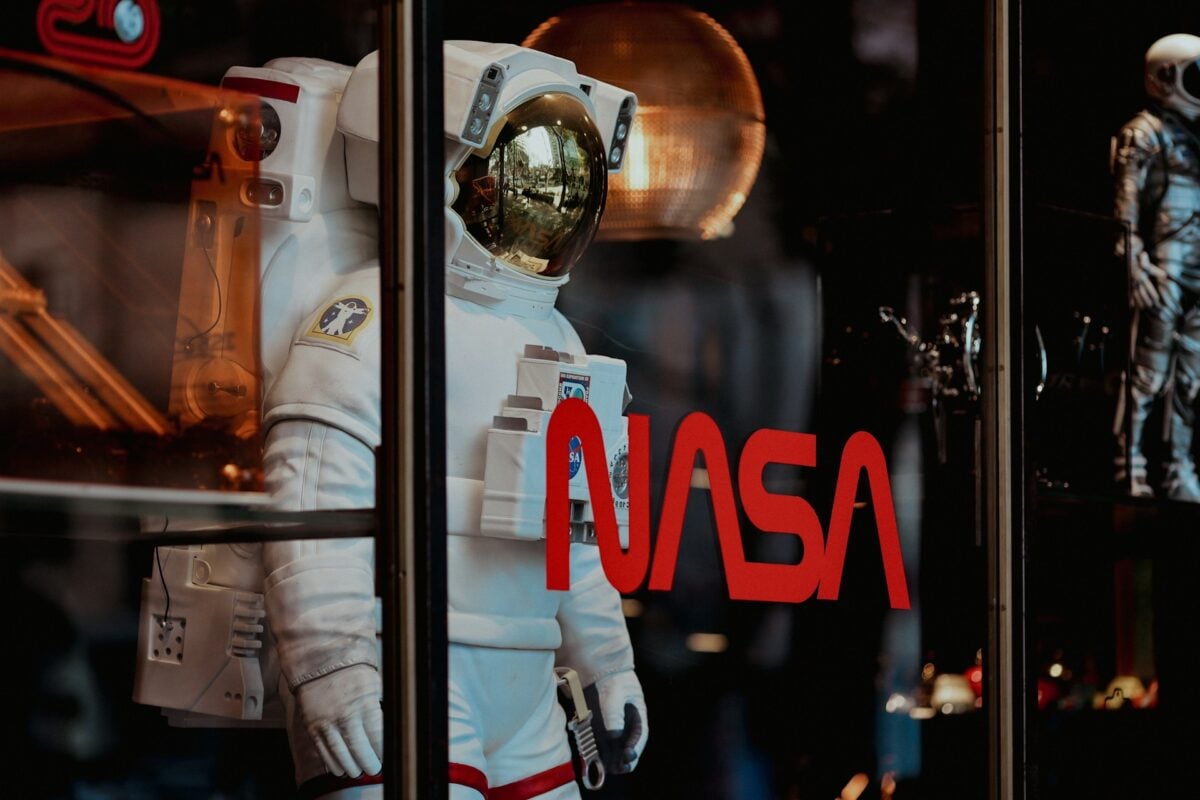
Three astronauts — Gus Grissom, Ed White, and Roger Chaffee — died in a fire during a routine ground test in 1967 (and what makes their deaths particularly cruel is that they weren’t even flying, weren’t pushing the boundaries of space exploration or taking the calculated risks that come with rocket launches, but were simply sitting in their capsule during what should have been a mundane systems check when faulty wiring sparked a fire that spread with terrifying speed through the pure oxygen atmosphere). The hatch was designed to open inward, making escape impossible once the fire started pressurizing the cabin.
But their deaths led to critical safety improvements that likely saved future astronauts’ lives. And they never got to see the moon landing their sacrifice helped make possible.
When Fortune Finally Finds Balance

Reading through these accounts of extraordinary misfortune reveals something unexpected about human resilience. Nearly every story contains a thread of meaning that emerged from the disaster — scientific discoveries, safety improvements, artistic inspiration, or simple proof that survival is possible under impossible circumstances.
Perhaps the cruelest irony isn’t that these people faced such terrible luck, but that their suffering often benefited others in ways they never lived to see. The universe may not be fair, but it rarely wastes tragedy entirely.
More from Go2Tutors!

- The Romanov Crown Jewels and Their Tragic Fate
- 13 Historical Mysteries That Science Still Can’t Solve
- Famous Hoaxes That Fooled the World for Years
- 15 Child Stars with Tragic Adult Lives
- 16 Famous Jewelry Pieces in History
Like Go2Tutors’s content? Follow us on MSN.