15 Popular Sayings That Mean the Exact Opposite of What People Think
Language has a funny way of evolving. Phrases that once carried specific meanings drift over time, sometimes ending up in places their creators never intended.
Worse yet, some expressions have been so thoroughly misunderstood that they now mean the opposite of what they were supposed to convey. These linguistic mix-ups happen more often than you’d expect, and chances are good that you’ve been using at least a few of these backwards your entire life.
Blood is thicker than water

Everyone knows this one means family comes first. Blood relatives matter more than friends or chosen relationships.
That’s what people think, anyway. The original phrase was “the blood of the covenant is thicker than the water of the womb.”
It meant bonds forged through shared experience and choice run deeper than accidents of birth. Your squad matters more than your siblings.
Money is the root of all evil

This gets quoted whenever someone wants to sound wise about greed or materialism. Money itself is evil, the thinking goes.
The actual biblical quote reads “the love of money is the root of all evil.” Big difference.
Money is neutral. Obsessing over it causes problems.
But somehow that distinction got lost in translation, and now people think having money makes you morally suspect.
Curiosity killed the cat

Parents love this one for shutting down questions they don’t want to answer. Stop being curious, they’re saying (which is terrible advice, but that’s another conversation entirely).
The thing is, the original saying didn’t stop at the killing part — it included “but satisfaction brought it back.” So curiosity might get you into trouble temporarily, but it’s worth the risk because you learn something valuable.
The second half completely changes the meaning, yet most people have never heard it.
Jack of all trades

This phrase gets thrown around as an insult, suggesting someone who can’t focus or commit to mastering anything specific. But the complete saying was “jack of all trades, master of none, though oftentimes better than master of one.”
It was actually praised for versatility and adaptability (qualities that matter more now than ever, incidentally). Someone who knows a little about everything often solves problems that specialists miss entirely.
And yet we’ve turned it into a way to dismiss people who refuse to put themselves in narrow boxes. The shift happened gradually, as these things do — people started dropping the positive ending and kept only the part that sounded like criticism.
Great minds think alike

People say this when they agree on something, as if agreement proves intelligence. Two smart people reaching the same conclusion feels validating.
The full phrase includes “but fools seldom differ.” The point was that thinking identically isn’t necessarily a sign of brilliance — it might just mean everyone’s being lazy or following the crowd.
Sometimes the smartest move is disagreeing with the consensus.
Pull yourself up by your bootstraps

This became the ultimate advice for self-reliance and personal responsibility. Work harder.
Stop making excuses. Figure it out yourself.
But pulling yourself up by your bootstraps is literally impossible. That was the point.
The phrase originally described an absurd, futile task — something that defies physics. Now it’s used to shame people for needing help with genuinely impossible situations.
Rome wasn’t built in a day

Everyone uses this to counsel patience with long-term projects. Good things take time.
Don’t rush the process. The original meaning was actually a warning about the speed of destruction (and the original phrasing was often “Rome wasn’t built in a day, but it burned in one”).
The saying meant that while creation requires patience and care, everything you’ve worked for can disappear quickly if you’re not careful. It was about protecting what you’ve built, not just about being patient during construction.
The focus has completely flipped from preservation to process, which changes how people apply the lesson.
The customer is always right

Retail workers hear this constantly from difficult customers who think it grants them unlimited authority. Whatever they want, they should get, because this saying proves it.
The original business principle meant that market demand determines what succeeds — if customers consistently choose one product over another, the market is telling you something valuable. It wasn’t about individual customers being infallible or deserving special treatment in disputes.
It was about reading aggregate consumer behavior to make better business decisions. Somehow it morphed into “give unreasonable people whatever they demand,” which helps nobody.
Imitation is the sincerest form of flattery
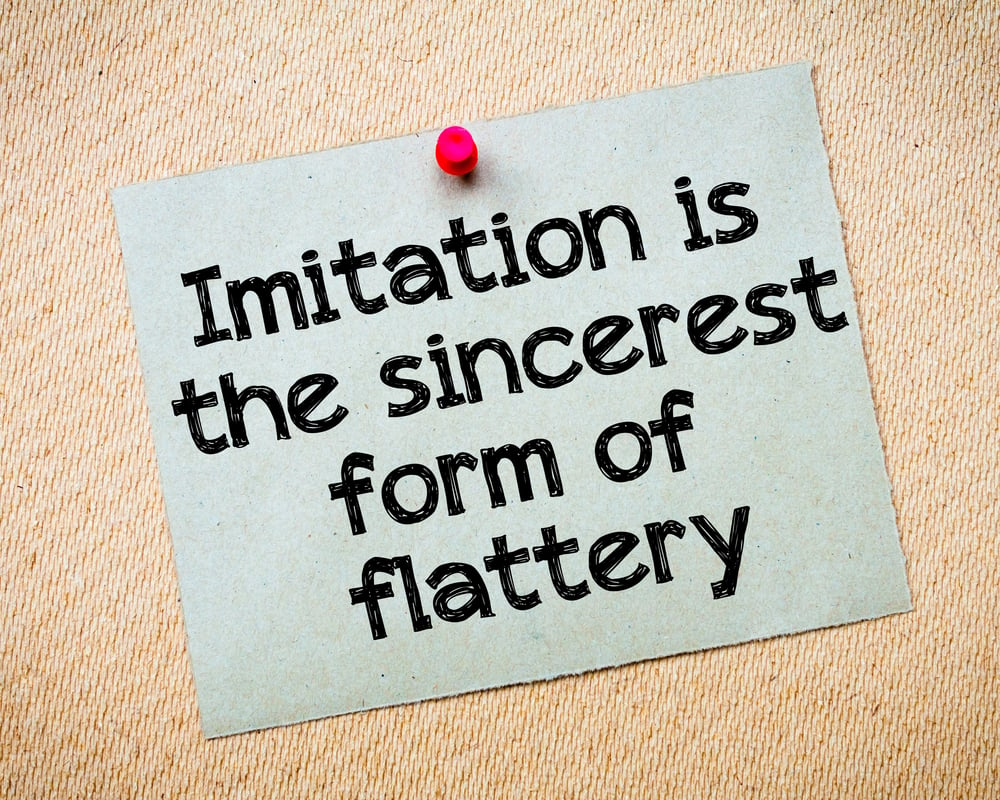
This gets used to brush off copying or theft. Someone stole your idea? They were just flattering you. Don’t be upset.
The full quote from Charles Caleb Colton reads: “Imitation is the sincerest form of flattery that mediocrity can pay to greatness.” The key word is mediocrity.
Colton was saying that unoriginal people copy great work because they can’t create anything worthwhile themselves. It’s not a compliment — it’s a pointed observation about the difference between genuine talent and lazy copying. The “flattery” is backhanded at best.
A few bad apples

This phrase now gets used to minimize problems within organizations. Sure, there might be one or two bad people, but most of the group is fine.
Don’t judge everyone by the worst examples. “A few bad apples spoil the bunch” was the original warning.
Bad apples literally release chemicals that cause other apples to rot faster. The saying meant that problematic people contaminate entire groups if left unchecked — you have to remove them quickly or they’ll corrupt everyone else.
It was about taking decisive action against bad actors, not about tolerating them because they’re supposedly isolated cases.
Begging the question

In casual conversation, this has come to mean “raising the question” or “prompting us to ask.” Something happens, and people say it “begs the question” of what comes next.
But “begging the question” is a specific logical fallacy. It means assuming the thing you’re trying to prove — circular reasoning. When someone says “we need stricter laws because the current laws aren’t strict enough,” they’re begging the question.
The phrase was never supposed to mean “raises a question.” It was meant to identify bad arguments that go in circles without proving anything.
I could care less

People say this when they want to express complete indifference. They care so little that they’re announcing their lack of interest to anyone within earshot.
“I couldn’t care less” means you’ve hit rock bottom on the caring scale — there’s nowhere to go but up. “I could care less” means you care at least somewhat, since you have room to care even less than you currently do.
The meanings are opposite, but somehow the wrong version caught on and now most people say it backwards without realizing the logical problem they’ve created.
The proof is in the pudding

This gets used to mean that results speak for themselves. You’ll know if something works by seeing how it turns out.
The proof — the evidence — is right there in the finished product. The original phrase was “the proof of the pudding is in the eating.”
You don’t know if a pudding is good by looking at it — you have to taste it. The saying meant you can’t judge something without experiencing it firsthand.
It was about the difference between theory and practice, not about obvious results. “The proof is in the pudding” misses that distinction entirely and suggests that evidence is visible rather than experiential.
Frankly, my dear, I don’t give a damn

This line from “Gone with the Wind” has become shorthand for dismissive indifference. Rhett Butler supposedly couldn’t care less about Scarlett’s problems.
But in context, he clearly cared deeply — too much, in fact. That’s why he was leaving. The line was about emotional self-preservation, not genuine indifference.
He was protecting himself from caring too much about someone who didn’t appreciate it. The “frankly” part was about honesty, not cruelty.
People quote it as if it’s about not caring when it’s actually about caring so much that you have to stop.
Nice guys finish last

This phrase gets used to explain why being decent doesn’t pay off. Good people get taken advantage of while jerks succeed.
It’s cynical wisdom about how the world really works. Leo Durocher, the baseball manager who coined the phrase, was actually talking about a specific team that was too polite and accommodating to be competitive.
He wasn’t making a general statement about morality and success — he was criticizing players who wouldn’t do what it took to win games. The phrase was about athletic aggression, not life philosophy.
But it got adopted as a universal truth about virtue being punished, which wasn’t the point at all.
Words Become What We Make Them

Language changes because people use it differently, not because dictionaries decide to update definitions. These phrases shifted meaning through repeated misuse until the new versions became standard.
Some changes happened through honest confusion — parts of sayings got dropped, or context was lost over time. Others shifted because the new meaning felt more useful than the original.
The interesting thing isn’t that these phrases changed, but how completely they flipped. Most language evolution is gradual, with meanings expanding or shifting slightly.
But these examples show how expressions can end up meaning exactly the opposite of what they started with, and most people never notice the difference.
More from Go2Tutors!

- The Romanov Crown Jewels and Their Tragic Fate
- 13 Historical Mysteries That Science Still Can’t Solve
- Famous Hoaxes That Fooled the World for Years
- 15 Child Stars with Tragic Adult Lives
- 16 Famous Jewelry Pieces in History
Like Go2Tutors’s content? Follow us on MSN.