25 Horror Movies Based on Events That Actually Happened
There’s something about a horror movie that ends with “based on a true story” that changes everything. Suddenly the monster isn’t just a monster — it’s a record.
The haunted house isn’t a set — it’s an address someone still drives past. Real horror has a weight that fiction, no matter how well-crafted, simply can’t manufacture on its own.
These 25 films all drew from actual events: murders, hauntings, disappearances, and disasters that left enough of a mark on the world that filmmakers felt compelled — sometimes obsessively so — to put them on screen. Some stay close to the facts.
Others wander. But the roots are real, and that’s what lingers long after the credits roll.
The Texas Chain Saw Massacre
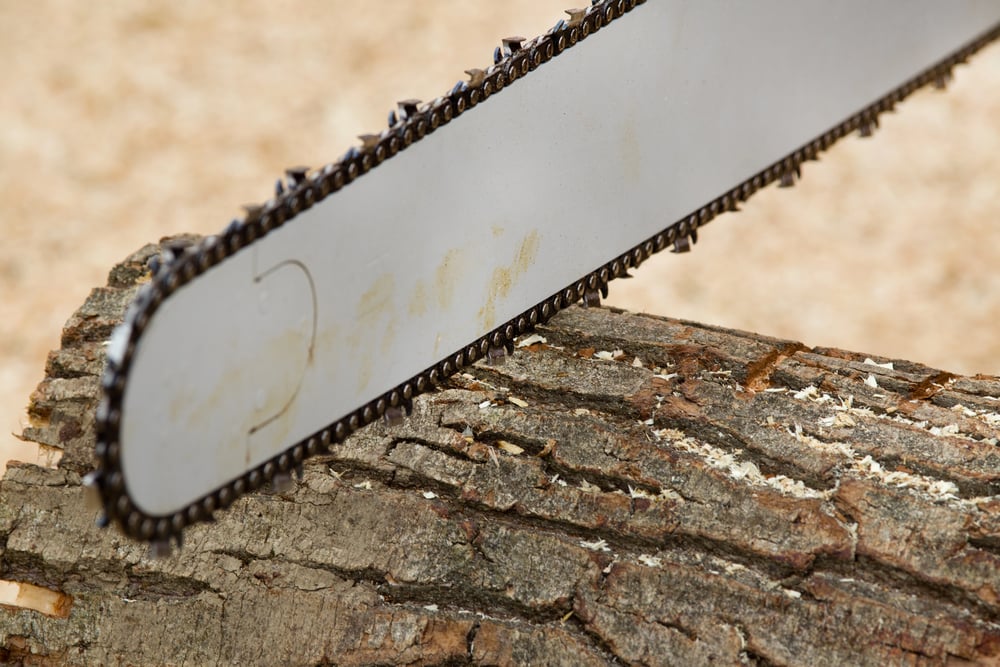
Ed Gein didn’t live in Texas and didn’t use a chainsaw, but he gave the world Leatherface anyway — or at least the raw material for him. The 1974 Tobe Hooper film drew from Gein’s crimes in Plainfield, Wisconsin: the grave robbing, the skin, the furniture made from human remains.
What Hooper understood was that the specifics mattered less than the feeling, and the feeling was that some people out there are simply beyond explaining.
Psycho
Norman Bates is one of the most iconic characters in cinema history, and he owes his existence almost entirely to Ed Gein. Alfred Hitchcock’s 1960 film borrowed Gein’s fixation on his deceased mother, his isolated farmhouse existence, and the discovery of preserved human remains — all real, all documented.
Gein’s case, which broke in 1957, apparently had enough material in it to inspire at least three separate classic horror villains, which is saying something.
The Silence of the Lambs
The FBI’s Behavioral Science Unit was real, the profiling methods were real, and the killer Buffalo Bill was assembled from the documented behaviors of multiple actual murderers. Ted Bundy’s charm and his fake injury routine made it into the film; J. Brudos’ obsession with women’s clothing did too; Gary Heidnik’s victims held captive in a basement provided the pit.
Jonathan Demme didn’t just adapt a Thomas Harris novel — he adapted an entire era of American forensic psychology.
The Conjuring
The Perron family moved into a farmhouse in Harrisville, Rhode Island in 1971 and spent the next decade reporting increasingly disturbing activity that they attributed to a malevolent presence. Ed and Lorraine Warren, the real paranormal investigators portrayed in the 2013 film, visited the property and documented their findings — though what they found, and how reliable their methods were, remains a matter of considerable debate.
The house is still there. Tours are available, if you’re feeling brave.
The Amityville Horror
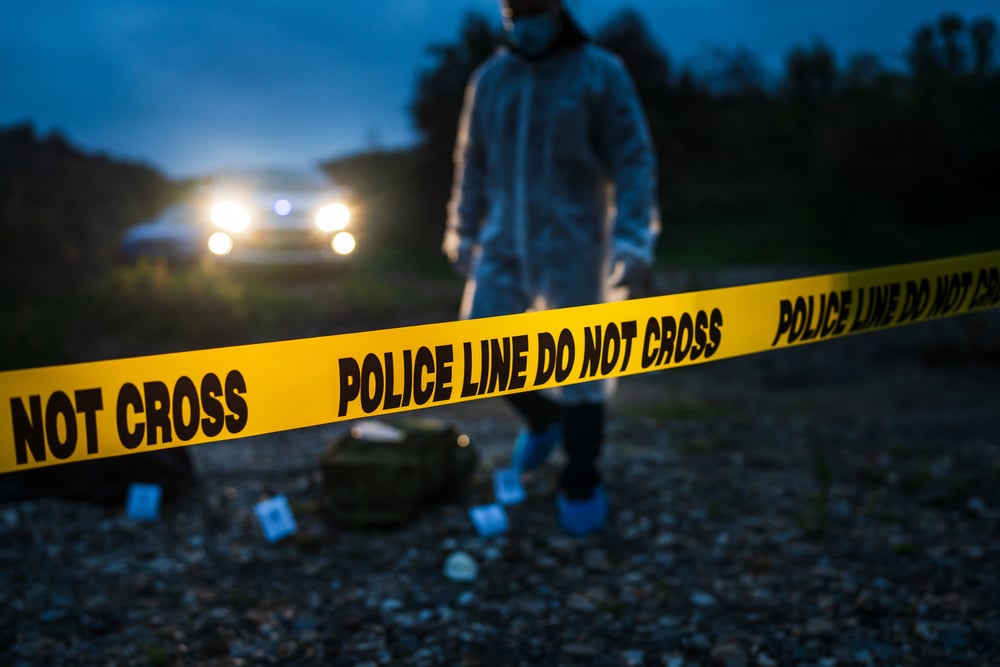
In November 1974, Ronald DeFeo Jr. shot and killed six members of his family inside a house on Ocean Avenue in Amityville, New York — that part is documented fact. What happened when the Lutz family moved in a year later is where the story fractures: their 28 days of reported paranormal terror became a bestselling book and then a 1979 film, but investigators and the family’s own attorney later suggested significant embellishment.
Still, DeFeo really did commit those murders, and the house really does exist, and that’s already more than enough.
Zodiac
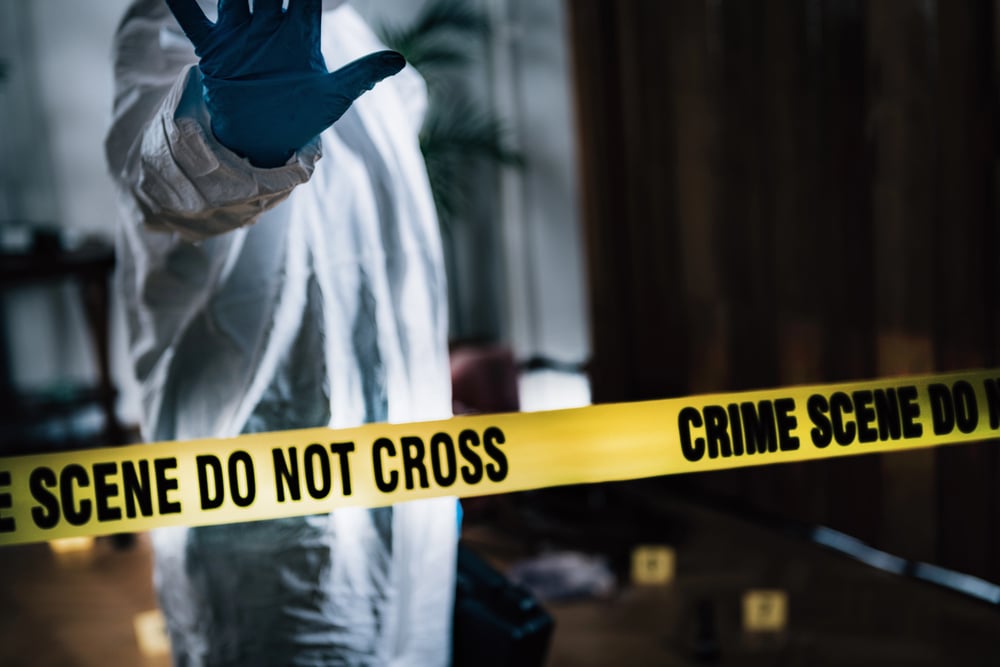
David Fincher’s 2007 film is probably the most meticulous true crime procedural ever made, reconstructing the Zodiac Killer’s Northern California murders from the late 1960s and early 1970s with an almost uncomfortable level of detail. The killer was never caught — and the film doesn’t pretend otherwise, which is what makes it so genuinely unsettling, like a puzzle left permanently unfinished on the table.
Jake Gyllenhaal’s Robert Graysmith doesn’t solve the case so much as lose himself to it, which turns out to be the most honest thing the film could have done.
Annabelle
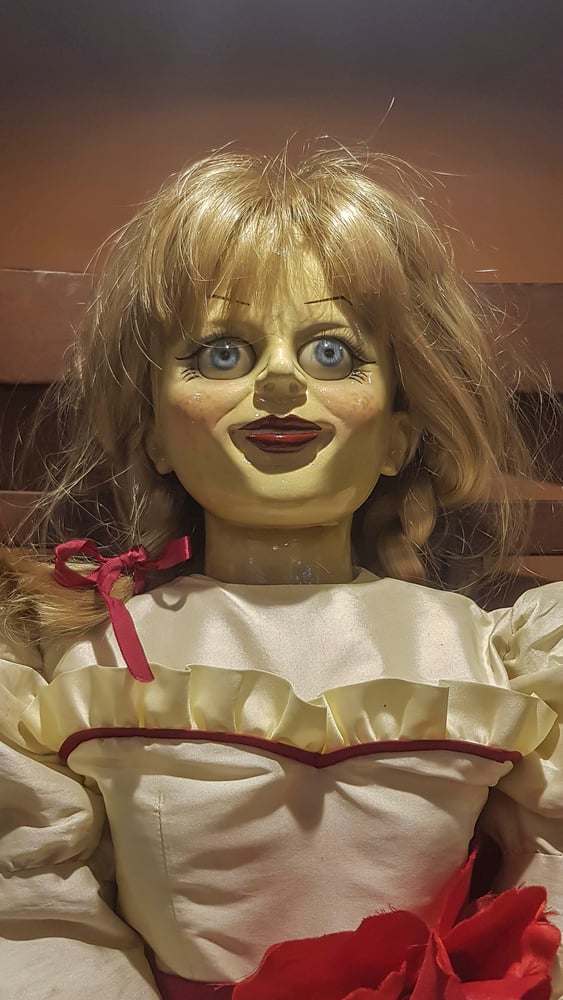
The real Annabelle is not a porcelain doll. She’s a Raggedy Ann doll, kept locked in a glass case at the Warren Occult Museum in Monroe, Connecticut, and the story attached to her involves a nursing student who believed the doll was being moved by a spirit named Annabelle Higgins.
The film dramatized and upgraded the doll’s appearance considerably — a Raggedy Ann probably wouldn’t sell tickets — but the case itself was documented and investigated by Ed and Lorraine Warren in the early 1970s.
The Girl Next Door

This 2007 film is one of the most genuinely difficult horror movies to watch, because the story it’s based on is one of the most genuinely difficult true crime cases in American history. Sylvia Likens was a 16-year-old girl tortured and murdered in Indianapolis in 1965 by Gertrude Baniszewski and a group of neighborhood children, over a period of months, in a residential house on East New York Street.
The film is disturbing not because it exaggerates — it barely has to.
Monster
Charlize Theron won the Academy Award for Best Actress for her portrayal of Aileen Wuornos, a Florida highway worker who killed seven men between 1989 and 1990. Wuornos claimed the killings were self-defense; prosecutors disagreed; she was executed in 2002 after firing her attorneys and requesting the death penalty.
The film, released in 2003, is horror in the oldest sense — not supernatural, not stylized, just a human being and the circumstances that produced her.
Open Water
Two American divers, Tom and Eileen Lonergan, were left behind by a scuba diving boat in the Coral Sea off Australia in 1998 — the crew miscounted. Their bodies were never recovered.
The 2003 film fictionalizes the names and some details but keeps the essential horror intact: two people, treading water, in the open ocean, watching the boat disappear on the horizon while sharks circle below. No rescue.
No twist ending.
The Exorcism of Emily Rose
Anneliese Michel was a young German woman who died in 1976 after undergoing 67 Catholic exorcism rites over a period of approximately ten months. She weighed 68 pounds at her death.
Her parents and two priests were convicted of negligent homicide. The 2005 film relocates the story to the American legal system and frames it as a courtroom drama with horror elements — a structure that lets audiences sit with the question of what actually happened rather than being told.
Wolf Creek
In 2005, director Greg Mclean drew loosely from two separate Australian murder cases: the 1992 disappearance of British tourists Joanne Lees and Peter Falconio (Falconio’s body was never found), and the crimes of Ivan Milat, a serial killer who murdered backpackers in the Belanglo State Forest during the early 1990s. The fictional Mick Taylor became one of horror cinema’s most memorable villains — and the Australian outback became significantly less appealing as a travel destination for a while.
The Haunting in Connecticut
In 1986, the Snedeker family rented a house in Southington, Connecticut that had previously operated as a funeral parlor. What they reported afterward — and what became a book, a TV documentary, and eventually a 2009 film — involved alleged supernatural occurrences that skeptics attributed to stress, trauma, and the family’s difficult personal circumstances at the time.
The house’s prior life as a mortuary is documented fact; everything else depends entirely on who you ask.
Borderland
Three American college students — Mark Kilroy, Bradley Moore, and Bill Huddleston — crossed into Matamoros, Mexico for spring break in 1989; Kilroy was abducted by a cult led by Adolfo Constanzo, a practitioner of a violent offshoot of Santeria, and murdered in a ritual killing. When Mexican authorities raided the cult’s ranch, they found 15 bodies.
The 2007 film fictionalized the victims but kept the cult and its documented rituals essentially intact.
The Strangers
The filmmakers cited the Manson Family murders and the Keddie Cabin murders as partial inspiration, but director Bryan Bertino also drew from childhood memories of a stranger coming to his door and asking for someone who didn’t live there. That’s almost quaint until you realize what the film does with it: three masked people, one isolated house, and no motivation beyond the line “because you were home.”
The 2008 film made the randomness feel like the actual point of horror.
Summer of Sam
Spike Lee’s 1999 film is less a straightforward portrait of David Berkowitz — the Son of Sam killer who terrorized New York City in 1976 and 1977 — than it is a portrait of what the city did to itself during those months of fear. Berkowitz shot 13 people, killing six, with a .44 caliber revolver; the investigation became one of the largest in NYPD history.
Lee was more interested in the neighborhood paranoia the case generated than in Berkowitz himself, which turned out to be the right instinct.
Compliance
In 2004, someone called a McDonald’s in Mount Washington, Kentucky, claimed to be a police officer, and talked the manager into conducting a strip search of a young female employee — a call that lasted hours and escalated into serious abuse. Similar calls had been made to fast food restaurants across the country for over a decade.
The 2012 film is almost unbearable to watch, not because of what the caller does, but because of how many people comply without question, each one stepping just slightly further than the last.
Snowtown

Australia’s worst serial killer case produced one of Australia’s best — and most punishing — films. John Bunting killed 11 people in South Australia between 1992 and 1999, often targeting those he deemed pedophiles or social undesirables, and recruited his partner and a young neighbor into the killings.
The 2011 film follows that neighbor, James Vlassakis, from childhood through his absorption into Bunting’s orbit — and it watches the process the way you’d watch a slow flood: inevitable, quiet, and completely destructive before you’ve quite registered that it’s begun.
The Town That Dreaded Sundown

A hooded killer attacked couples in Texarkana, Texas in 1946, killing five people and injuring three more across a ten-week span. He was never caught.
The 1976 film recreated the attacks with such granular detail — actual Texarkana locations, a largely unknown cast, docudrama narration — that it disturbed residents deeply upon release. Go figure: a town is not always thrilled to see its trauma turned into a theatrical release.
Henry: Portrait of a Serial Killer
Henry Lee Lucas confessed to hundreds of murders, most of which investigators couldn’t verify, but the documented cases tied to him and his associate Ottis Toole were enough. The 1986 film, made by John McNaughton for roughly $110,000, follows a fictionalized version of Lucas through a series of killings with a matter-of-fact blankness that most horror films would never risk — no dramatic scoring, no cathartic resolution.
It doesn’t let you look away, and it doesn’t apologize for that.
Deliver Us from Evil
Sarchie is real. Ralph Sarchie was a Bronx police officer who worked with Ed and Lorraine Warren and later wrote a memoir about the cases he believed involved demonic activity.
The 2014 film dramatized several of those cases and built a procedural horror structure around them. Whether the supernatural elements reflect anything that genuinely occurred is the sort of question that tends to follow Warren-adjacent films everywhere they go.
The Entity
In 1974, a Los Angeles woman named Doris Bither reported to parapsychologists at UCLA that she was being physically assaulted by an invisible entity in her home — repeatedly, over an extended period. Researchers who visited the house reportedly documented unexplained phenomena, though the case was never resolved.
The 1982 film starring Barbara Hershey treated the material with an almost clinical seriousness, which made it considerably more disturbing than a more stylized approach would have.
Primeval
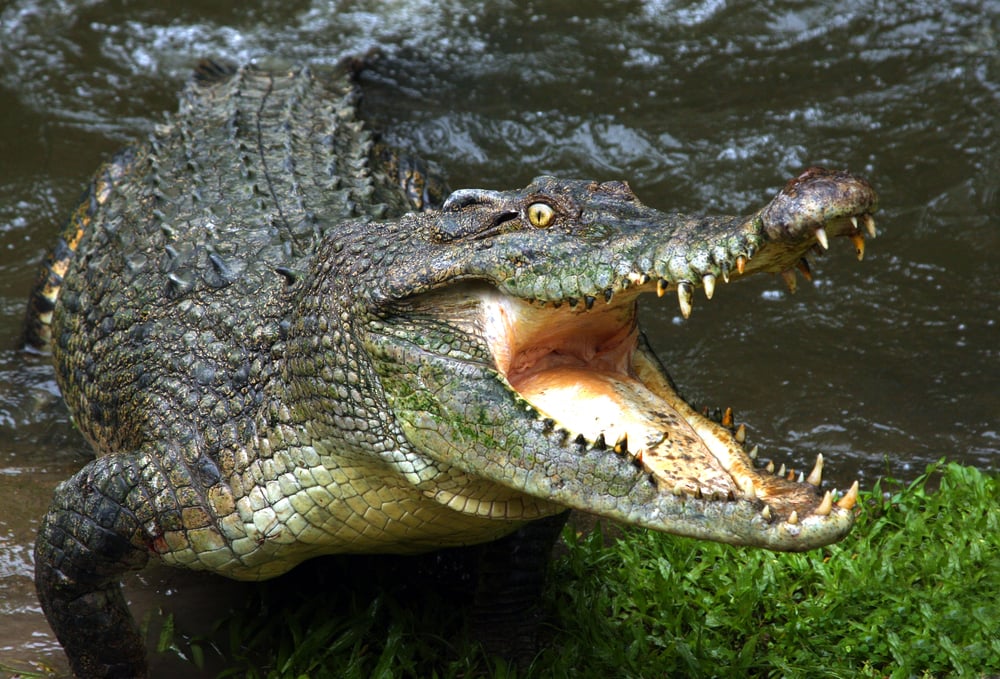
The hook for the 2007 film — a 25-foot crocodile named Gustave terrorizing a village in Burundi — is grounded in a genuine and remarkable animal. Gustave is a real Nile crocodile, reportedly over 60 years old and more than 18 feet in length, who has been blamed for killing dozens of people along the Ruzizi River and the northern shores of Lake Tanganyika.
The film adds a human villain and considerably overstates the crocodile’s size, but Gustave himself needs no exaggeration; the documented reports are already remarkable.
Requiem

Where The Exorcism of Emily Rose went for courtroom drama, the 2006 German film Requiem went for quiet psychological realism — following Anneliese Michel’s final year of life in a way that never quite commits to a supernatural explanation and never quite dismisses one either. Sandra Hüller’s performance is staggering in a film that treats Michel not as a case study but as a person, slowly collapsing under the weight of belief, illness, and the people around her who were certain they knew what she needed.
The Mothman Prophecies
In 1966 and 1967, residents of Point Pleasant, West Virginia reported seeing a large winged creature with glowing red eyes — the Mothman. On December 15, 1967, the Silver Bridge connecting Point Pleasant to Gallipolis, Ohio collapsed, killing 46 people.
John Keel wrote a book connecting the sightings to the disaster; Richard Gere starred in the 2002 film adaptation. Whether the Mothman was a warning, a harbinger, or an elaborate shared delusion, 46 people really did die in that collapse, and the town has carried that weight ever since.
When the Real World Is Scarier
The thing that these films share isn’t a budget or a genre or a release decade — it’s the stubborn fact underneath each of them that something actually happened. A family moved into a house.
A bridge fell. A person made a phone call.
Horror has always understood something that other genres resist: the imagination doesn’t need to work very hard when the world keeps providing source material. You don’t have to invent the monster.
Sometimes you just have to be paying attention.
More from Go2Tutors!

- The Romanov Crown Jewels and Their Tragic Fate
- 13 Historical Mysteries That Science Still Can’t Solve
- Famous Hoaxes That Fooled the World for Years
- 15 Child Stars with Tragic Adult Lives
- 16 Famous Jewelry Pieces in History
Like Go2Tutors’s content? Follow us on MSN.