28 National Dishes Locals Eat Completely Differently Than Tourists Expect
There’s a version of every country’s food that exists purely for export — simplified, softened, plated up in a way that travels well and offends nobody. Then there’s how people actually eat it.
The gap between those two things is where the most interesting stuff lives. A dish that looks straightforward on a tourist menu can have a whole shadow life: different cuts, different hours, different rules about what you pour on top and what you absolutely do not.
Traveling and eating the local version isn’t just about authenticity in the abstract sense — it’s about understanding that food is a set of habits, and habits don’t show up on laminated menus.
Pad Thai

Pad thai as tourists know it is sweet, peanut-heavy, and arrives as a complete dish. Locals treat it as a base — a blank canvas, almost — that only becomes itself after you’ve worked through the condiment tray sitting next to the plate: dried chili flakes, fish sauce, sugar, and crushed peanuts added individually, in ratios that belong entirely to the person eating.
The version that arrives finished and pre-seasoned in Western Thai restaurants is, to a regular Bangkok street eater, a little like being handed someone else’s homework.
Butter Chicken

Butter chicken is not actually the richest, heaviest dish on the Indian table — that’s a tourist reading of it. In Delhi, where it originated at Moti Mahal in the 1950s, it’s a relatively lighter tomato-cream preparation, eaten with torn roti and consumed quickly, not labored over.
The version that arrived in British Indian restaurants got quietly amplified: more cream, more butter, a sweetness dialed up to make it approachable to palates unfamiliar with the original.
Feijoada

Brazil’s national dish — a black bean stew built around pork — is almost always depicted as a hearty weekend centerpiece. And it is, but the tourist version tends to arrive as a tidy bowl with rice on the side, while the local reality is significantly more chaotic: collard greens, farofa (toasted cassava flour), sliced orange, and hot sauce all crowd the plate, and the meal typically stretches across a Saturday afternoon rather than fitting inside a restaurant sitting.
The orange isn’t decorative. It cuts the fat, and any Brazilian will look at you sideways if you push it to the edge.
Pho

Tourists order pho and receive a bowl of broth, noodles, and meat — which is correct, but only half the picture. The plate of herbs, bean sprouts, lime wedges, hoisin, and sriracha that arrives alongside is not a garnish situation; it’s the second half of the recipe, and how you use it separates someone who knows pho from someone who Googled it the night before.
In Hanoi specifically, locals tend to go lighter on the add-ins than their southern counterparts in Ho Chi Minh City, where a more maximalist approach — everything in, sauce stirred through — is perfectly standard.
Wiener Schnitzel

Wiener schnitzel is not served with lemon squeezed over it — at least not the way tourists habitually do it. The lemon wedge arrives on the plate as an option, something you might press gently over a corner, and Viennese diners treat it with restraint rather than drowning the breading before the first bite.
The schnitzel is also almost always eaten with either potato salad or parsley potatoes, not fries, which is a substitution that crept in when the dish traveled abroad and adapted to what diners were already comfortable ordering.
Ceviche

Peru’s ceviche is a morning dish. That’s the part that catches most visitors off guard — ceviche in Lima is typically eaten for lunch at the very latest, and the dedicated cevicherías shut their kitchens by mid-afternoon because the fish is fresh from the market that morning and freshness is non-negotiable.
The tourist experience of ordering ceviche at dinner in a Lima restaurant is technically possible in some places, but it reads as slightly wrong to anyone raised on the rhythm of how the dish actually moves through the day.
Kimchi
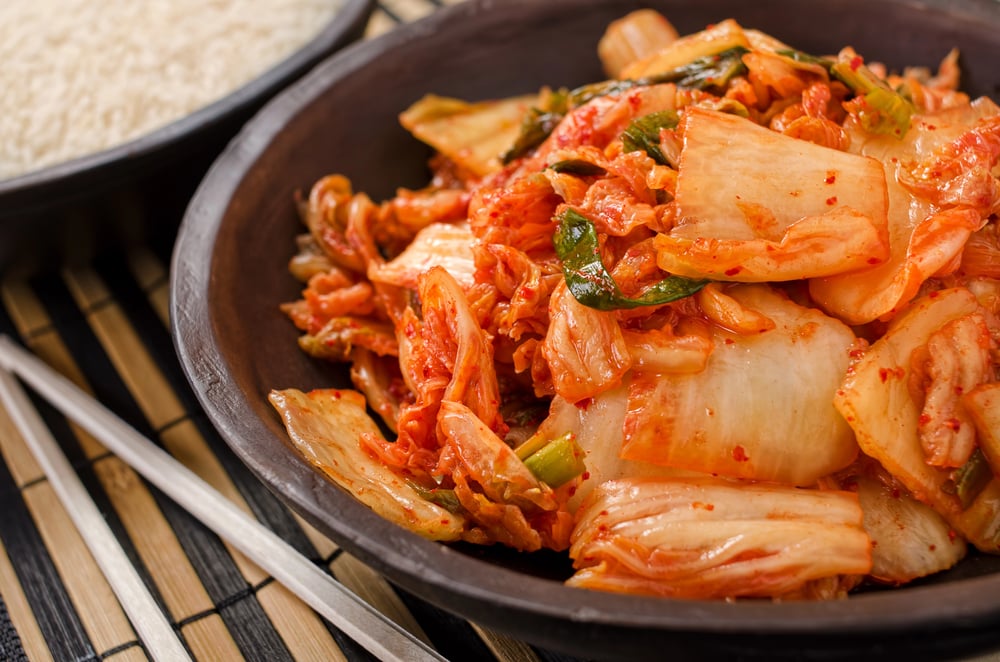
Kimchi isn’t a side dish in Korea — that framing is a tourist simplification that undersells what’s actually happening. It functions more like a condiment, a cooking ingredient, a soup base, a pancake filling, and a fried rice component all at once, depending on its age and fermentation stage, and a Korean kitchen without several varieties at different stages of ripeness is an unusual kitchen indeed.
Fresh kimchi and six-month-old kimchi are practically different foods, and locals navigate that spectrum with a familiarity that takes years to develop.
Moussaka
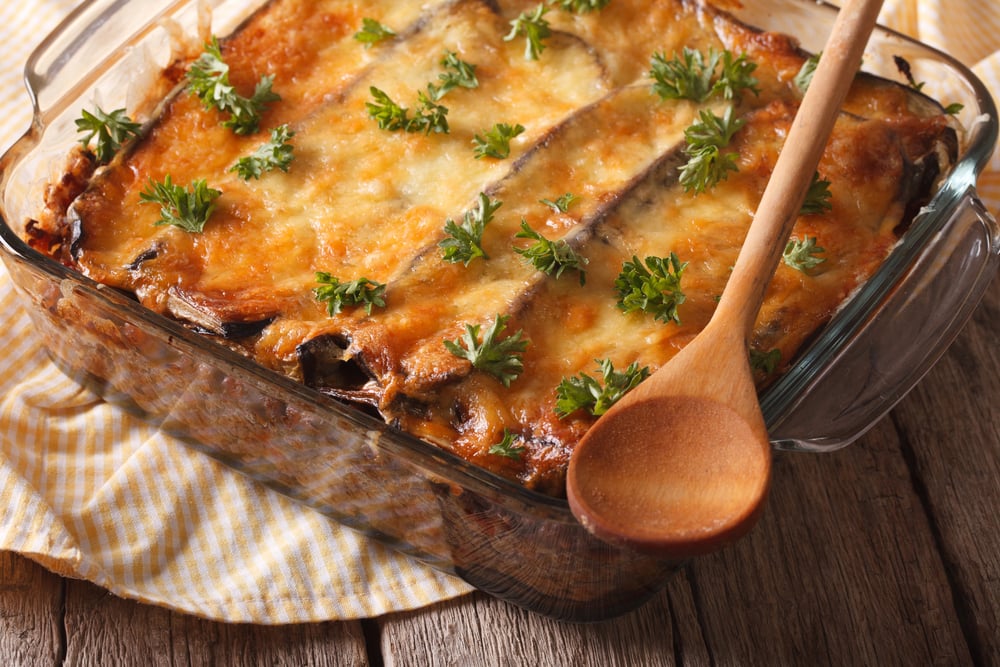
Greek moussaka, as tourists encounter it, is served as a hot, layered casserole — and that’s accurate, but the timing is off. Locals understand that moussaka is actually better once it’s had time to settle and cool slightly, which is why it’s often made in the morning and served at room temperature by early afternoon, when Greek lunch happens.
The piping hot, fresh-from-the-oven version is largely a restaurant accommodation made because foreign diners expect hot food to mean good food, and Greek cooks are polite enough not to argue about it.
Jerk Chicken

Jerk chicken in Jamaica is a roadside thing — cooked in a drum smoker made from a cut oil barrel, eaten off paper, and consumed standing up or in a plastic chair two feet from the grill. The version that emigrated to restaurant menus in New York and London kept the marinade (sometimes) and lost everything else: the smoke, the char, the specific wood (pimento wood, which is genuinely irreplaceable), and the unhurried process that takes hours.
What tourists usually eat is jerk-flavored. What Jamaicans eat is jerk.
Paella

Paella Valenciana — the original, the one that Valencians will defend with a quiet but absolute seriousness — contains chicken, rabbit, and sometimes snails, cooked in a wide flat pan over an open wood fire. Seafood paella exists, but it’s a different dish, and mixing seafood with meat in the same pan is, in Valencia, an error that produces visible discomfort in anyone nearby.
The tourist-menu version of paella — mixed seafood and chicken, damp in the center, served in a pan that’s never been near a wood fire — is a creation of somewhere else, dressed in borrowed clothes.
Borscht

Ukrainian borscht is not the thin, faintly sweet beetroot soup that arrives in ceramic bowls at Russian-themed restaurants in the United States. It’s built on a serious beef or pork bone stock, thick with cabbage, potato, and beans, and the beetroot is one player in an ensemble rather than the whole performance.
A spoonful of smetana (sour cream) goes in at the table, not stirred through in the kitchen, and the bread on the side is not decorative — it’s part of the meal.
Tagine

A tagine in Morocco is a slow, patient thing — cooked over charcoal in the conical clay vessel it’s named for, and eaten communally from the center of the pot, not plated individually. Tourists receive their own portion, usually transferred to a plate, which technically contains all the right ingredients but has lost the texture that comes from the steam cycling inside the cone for two or three hours.
The ritual of tearing bread and reaching into the shared pot is also, quietly, the whole point.
Sushi

The tourist version of sushi orbits around elaborate rolls, heavy sauces, and cream cheese — none of which are native to Japan. In Tokyo, the respect goes to nigiri: a small amount of seasoned rice, a single piece of fish, perhaps a brush of soy applied by the chef so you don’t need to dip anything.
You eat it in one or two bites, immediately, because the rice is at a specific temperature and the fish was placed a moment ago. Drowning nigiri in soy sauce is, to a Japanese sushi chef, roughly the equivalent of salting food before tasting it.
Poutine

Poutine belongs to the middle of the night. In Quebec, where it came from, it’s late-night food — eaten at a casse-croûte (a roadside snack shack) after everything else has closed, not presented as a gourmet showcase item on a restaurant menu with duck confit and truffle oil.
The tourist version has been relentlessly upscaled, when the original’s appeal is precisely its lack of pretension: fresh cheese curds (squeaky, not melted), hot gravy, and fries. The squeaky curds matter. They are not optional.
Injera with Doro Wat

Ethiopian food is communal — eaten by multiple people from a single large piece of injera laid flat, with the stews arranged on top, and everyone tearing from the edges. The tourist version often arrives as an individual plate, sometimes with a knife and fork nearby, which strips out the social architecture entirely.
Doro wat, the spiced chicken stew most associated with the cuisine, is also a dish with serious patience behind it: hours of slowly caramelizing onions before anything else is added, a process that gives the berbere its depth and that no shortcut version adequately replicates.
Fish and Chips

British fish and chips, eaten properly, comes wrapped in paper and consumed outdoors, possibly in the cold, vinegar soaking through the bottom layer. The sit-down restaurant version with a lemon wedge and tartar sauce in a ramekin is a hospitality-industry accommodation that most people from coastal English towns would recognize as slightly off.
Malt vinegar — shaken directly onto the chips while they’re still in the wrapper — is the move. Salt and vinegar, full stop.
Rendang

Indonesian rendang is not a curry. That categorization — applied by every Western menu that’s ever listed it — misses what rendang actually is: a dry-cooked, long-braised beef preparation where the coconut milk has been cooked down entirely and the meat is coated in a thick, deeply spiced paste rather than sitting in any kind of sauce.
Tourists who order rendang expecting a bowlful of liquid are occasionally confused by what arrives, which is, in fact, exactly correct.
Goulash

Hungarian goulash — gulyás — is a soup. Not a stew, not a thick braise, a soup: paprika-red, brothy, with beef and potato, eaten from a bowl with bread on the side.
What the rest of the world calls goulash — a thick, saucy meat stew — is a different preparation that Hungarian cooks know as pörkölt, and the two are not interchangeable, despite decades of confused menus insisting otherwise. Ordering gulyás in Budapest and expecting the stew version you grew up with is a reliable way to understand how far a dish can travel from itself.
Pierogi

In Poland, pierogi are not a novelty appetizer or a side dish — they are the meal, and the way you receive them depends entirely on when you’re eating and where you are. Boiled pierogi, finished in a pan with butter and onions until the skin goes just slightly golden: that’s the standard, and the ones stuffed with potato and farmer’s cheese (ruskie) are consumed in quantities that would surprise a North American diner accustomed to six-piece portions.
The fried-from-frozen versions common in the American Midwest are their own tradition at this point — but they are a different object.
Tom Yum

Tom yum goong — the hot and sour shrimp soup — is almost universally depicted as a clear or slightly cloudy broth-based soup, and that version does exist. But in Thailand, the creamy version (tom yum nam khon), made with evaporated milk or coconut milk stirred through the broth, is equally common and arguably more popular at the home table.
Most Western Thai restaurants settled on the clear version because it photographs better and seems more approachable, which means a huge portion of the dish’s character got quietly left behind somewhere on the way over.
Cacio e Pepe

Cacio e pepe has three ingredients — pasta, Pecorino Romano, and black pepper — and every Roman will tell you it’s the simplest dish in the world, right before explaining how almost everyone makes it wrong. The tourist version tends to arrive gummy, clumped, or with cream added (a Roman culinary crime), while the real technique involves emulsifying the cheese with pasta water at a very specific temperature until it coats rather than clumps.
The simplicity is a trap, and the trap has claimed many confident home cooks and not a few restaurant kitchens.
Mole

Mexican mole — particularly mole negro from Oaxaca — takes days to make properly: toasting dried chiles, charring vegetables, grinding everything on a stone metate, and building the sauce in stages that require attention across multiple cooking sessions. The jarred or powdered versions sold abroad, or the simplified restaurant interpretations, compress that process into something that retains the basic flavor profile while losing the specific depth that comes from each toasted-and-ground component interacting with the next.
Locals in Oaxaca make mole for weddings and feast days, not Tuesdays — which tells you something about the effort it actually demands.
Shakshuka

Shakshuka in Israel and across North Africa is a breakfast dish, eaten in the morning with bread for dipping, not a brunch centerpiece that arrives at noon with microgreens and a mimosa. The eggs are poached directly in a spiced tomato sauce and brought to the table in the pan — cast iron or beaten aluminum — still bubbling, still spitting slightly, the eggs just set at the whites but runny at the yolk.
The version that’s traveled to brunch menus in Brooklyn and London is well-made in many cases, but it’s arrived at a different time of day and developed opinions about garnish.
Haggis

Scotland’s haggis is not a prank or a novelty. It’s offal — sheep heart, liver, and lungs — mixed with oatmeal, onion, and suet, traditionally cooked in a sheep’s stomach, and it is a serious dish eaten on Burns Night (January 25th) with neeps and tatties (turnip and potato), sometimes with a whisky sauce.
The hesitation tourists bring to haggis is largely unfounded once they taste it: it’s savory, earthy, slightly peppery, and filling. The reluctance is about the ingredients on paper, not the dish in the bowl.
Nasi Goreng

Indonesian nasi goreng — fried rice — is a leftover dish in its original form, made from day-old rice that’s drier and fries properly without going mushy, seasoned with kecap manis (sweet soy), shrimp paste, and a fried egg placed directly on top. The tourist-menu version is often made from freshly cooked rice, which gets the texture wrong in a way that’s hard to explain until you’ve tasted both, and the kecap manis is sometimes replaced with regular soy sauce, which changes the entire flavor signature.
It’s a dish that depends on yesterday’s rice, and there’s no workaround.
Jollof Rice

The West African argument over whose jollof rice is better — Nigeria’s or Ghana’s — is real, ongoing, and has the energy of a sports rivalry. Nigerian jollof is known for its smoky bottom layer called “party jollof,” achieved by letting the rice catch slightly on the pot; Ghanaian jollof tends toward a more restrained, less smoky flavor profile.
What tourists typically encounter is a diplomatically inoffensive version of either, and the whole point of jollof — the hours of building the tomato and pepper base, the specific smoke, the gathering it implies — is compressed into something that fits a restaurant timeline.
Banh Mi

A banh mi in Vietnam is a street sandwich — bought quickly, eaten quickly, assembled fresh in about thirty seconds by someone who has done it ten thousand times. The baguette is airy and crisp-crusted, a legacy of French colonial baking adapted to local flour, and the fillings (pâté, cold cuts, pickled daikon and carrot, fresh chiles, cilantro, and mayonnaise) are layered in a specific order that matters for how each bite delivers.
Western banh mi shops often use a heavier, denser bread that can’t achieve the specific crunch, which fundamentally changes the structural experience of the sandwich — not wrong, exactly, but noticeably different.
Ackee and Saltfish

Jamaica’s national dish requires a specific sequence and a specific version of saltfish. The saltfish — salt-cured cod — is soaked overnight, boiled, then flaked and sautéed with ackee (a buttery, egg-yolk-colored fruit), onions, scotch bonnet pepper, and tomatoes, and eaten for breakfast or brunch, not dinner.
Tourists who encounter it at dinner are technically eating the right thing at the wrong time, and the versions outside Jamaica often use saltfish that hasn’t been soaked long enough, which leaves a salinity that overwhelms the delicate ackee. The balance is the whole dish, and the balance is fragile.
Different Versions of the Same Dish

What gets exported from every cuisine on this list isn’t the dish itself but a translation — simplified, stabilized, and adjusted for what a new audience already expects food to look and taste like. That process is inevitable and not always wrong; dishes change when they travel, and the changed versions can be excellent on their own terms.
But something real does get lost when the condiment tray disappears, or the hour shifts, or the communal pot becomes an individual plate. The most useful thing travel teaches about food is that a dish is never just its ingredients.
It’s when it gets eaten, who eats it together, what mood it belongs to, and what other things sit alongside it on the table. All of that is invisible on a laminated menu, which is precisely why the local version of any of these dishes will always taste slightly different from the one you thought you already knew.
More from Go2Tutors!

- The Romanov Crown Jewels and Their Tragic Fate
- 13 Historical Mysteries That Science Still Can’t Solve
- Famous Hoaxes That Fooled the World for Years
- 15 Child Stars with Tragic Adult Lives
- 16 Famous Jewelry Pieces in History
Like Go2Tutors’s content? Follow us on MSN.



