27 Schoolyard Rules Kids Enforced That No Teacher Ever Made Up
There’s a whole legal system running on playgrounds that no adult ever drafted, approved, or even fully understands. It has no written code, no elected officials, and no formal enforcement mechanism — just a collective agreement among children that certain things are simply the rules, and breaking them carries real consequences.
Teachers had their rules posted on laminated sheets above the whiteboard. Kids had their own set, passed down through word of mouth, enforced through peer pressure, and revised by whatever third-grader had the most social authority that week. Some of these were practical. Some were arbitrary. All of them were treated as though they’d been handed down from somewhere ancient and binding.
Calling Shotgun
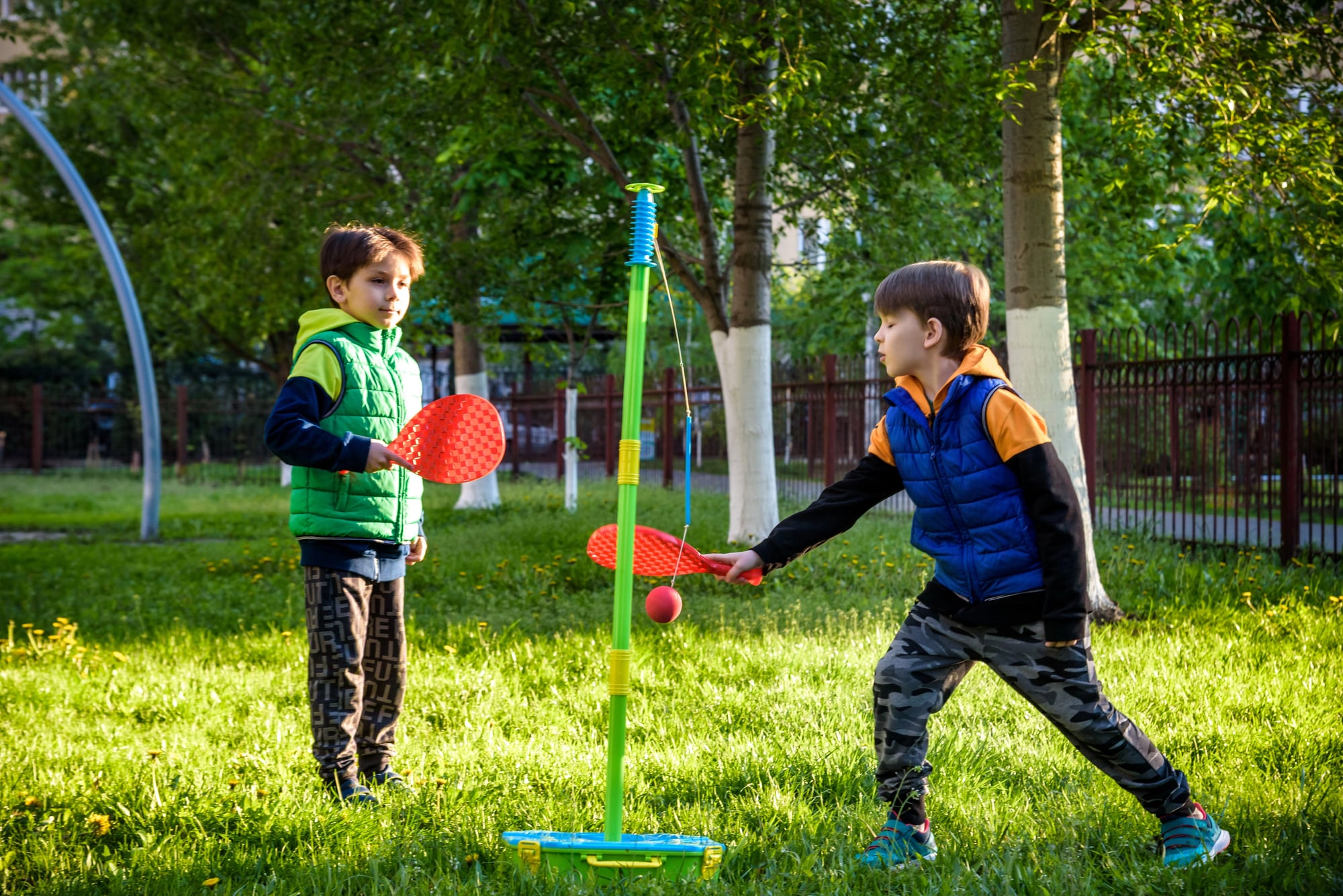
Calling shotgun works. Say it before you see the car, and the claim is void — everyone knows this. The rule has never been written anywhere, and yet it has probably prevented more childhood arguments than any adult-designed conflict resolution strategy in recorded history.
The Lava Game Floor Boundaries

Once someone declares the floor is lava, every object in the vicinity becomes a legitimate stepping stone — couch armrests, throw pillows, a single shoe left in the hallway. The rule isn’t just that you can’t touch the floor; it’s that everyone in earshot is automatically enrolled in the game whether they consented to it or not.
Refusal to participate was considered a social failure of the highest order.
No Tag-Backs

No tag-backs existed because without it, the whole game collapses into two kids just slapping each other’s shoulders indefinitely. It’s one of the few schoolyard rules that was genuinely load-bearing — a structural necessity disguised as a social contract. Remove it, and you don’t have a game anymore, you have chaos in sneakers.
Dibs

“Dibs” functioned like a verbal property deed — spoken aloud, witnessed by at least one peer, and binding until the item in question was either consumed, used, or voluntarily released. The fascinating thing about dibs is that it worked across every category: the last cookie, the window seat on the bus, the good swing.
It required no documentation and somehow held up under enormous social pressure.
Pinky Promises

A pinky promise sits somewhere between a handshake and a blood oath, occupying a category of commitment that regular promises simply cannot reach. Crossing one was not treated as a minor social infraction — it was treated as a betrayal, the kind that got remembered, brought up again at lunch, and quietly held against the offender for the remainder of the school year.
The pinky promise understood, somehow, that most promises need a physical anchor to feel real.
The “Called It” System

You called it. That’s it. That’s the whole rule. Whoever said it first — faster, louder, with more conviction — owned the thing, the seat, the last turn. There was no appeals process.
Finders Keepers
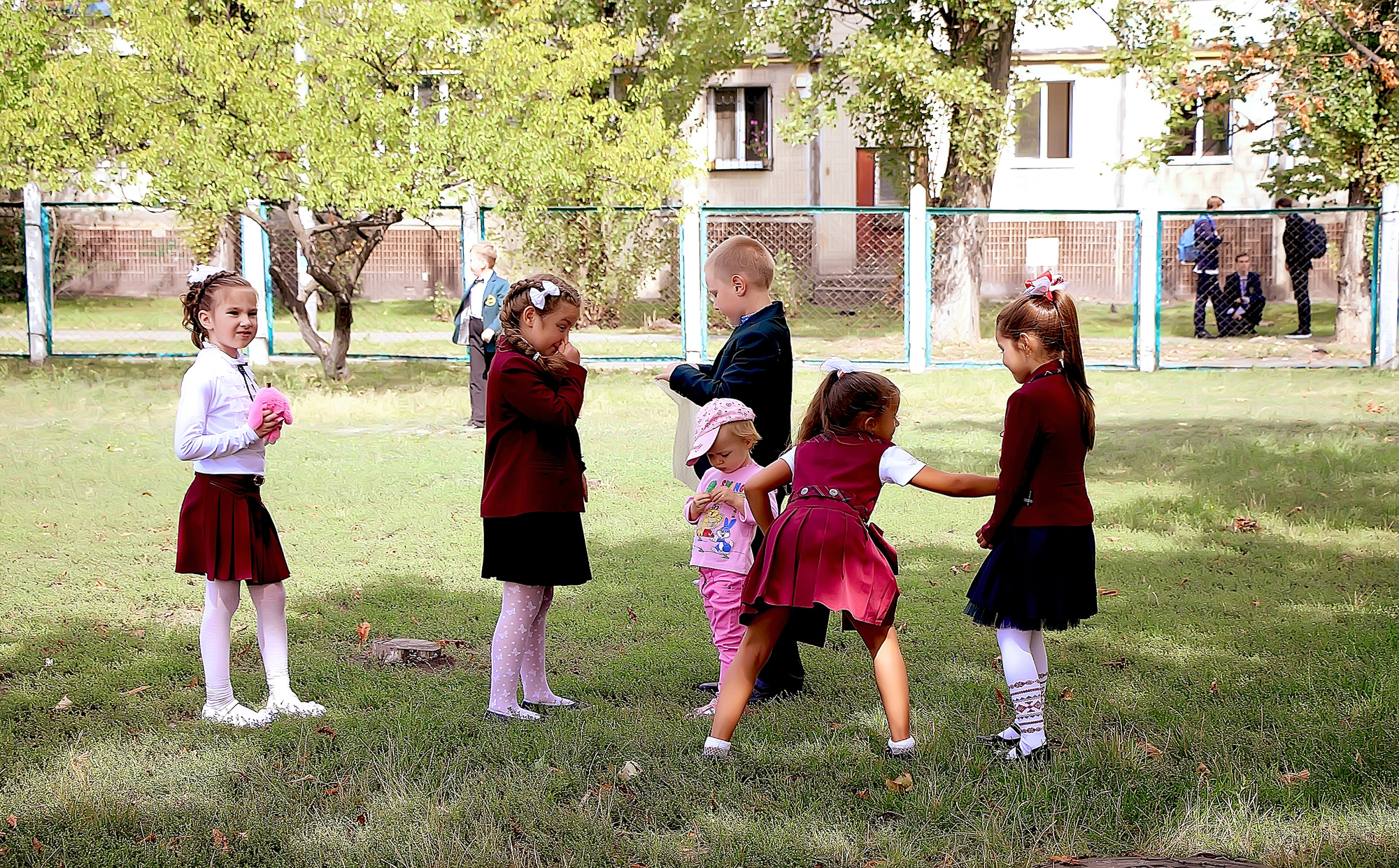
“Finders keepers, losers weepers” was recited with the confidence of constitutional law by children who had absolutely no legal training but a very strong interest in keeping whatever they’d just found on the ground. The rule conveniently ignored questions of ownership, intent, or how the item ended up on the floor in the first place — details that were beside the point when you’d just found a quarter near the water fountain.
To be fair, the person who lost it almost always knew the rule too, which is why they usually just walked away quietly.
Claiming the Best Seat First

The best seat on the bus, at the lunch table, in the back row of the classroom — these were governed by an unspoken law that whoever arrived first held permanent, unchallenged rights for the remainder of the year. It wasn’t squatting; it was claiming. The distinction mattered enormously to the people enforcing it.
The Gross Touch Chain

If someone touched something gross — a dead worm, a mystery substance on the playground, the kid who always smelled a little strange — the contamination was immediately transferable by physical contact, and the only relief was passing it along to someone else before they could pull away.
It was pure social thermodynamics: the grossness had to go somewhere. The game had no official end point and occasionally ran for an entire recess.
Infinity Shields

Declaring “infinity shields” or “infinity plus one” in any numerical argument was the nuclear option — invoked when someone had exhausted every other escalation and needed to end the debate permanently. The rule was that once someone said it, the round was over and no further numbers were meaningful.
Children instinctively understood mutually assured destruction long before they learned what it was called.
The Restart Rule in Video Games

There was never any genuine consensus about this rule, which is exactly what made it so contentious — but the general understanding was that if the game hadn’t reached a natural checkpoint, any interruption meant a full restart, and the person who caused the interruption was responsible for the lost progress. Someone walking in front of the screen during a difficult level was treated with roughly the same energy as deliberate sabotage.
The rule existed entirely to assign blame, which is also what most legal systems are for.
Trading Card Finality

A trade, once completed, was final. No returns, no buyer’s remorse, no “but I didn’t know it was holographic.” The exchange happened, hands changed, and the deal was sealed with the weight of something far older than childhood — the understanding that reneging on a trade was a character flaw, not just a rule violation.
Kids who tried to undo trades lost their reputation faster than almost anything else.
The Safe Zone

Every game of tag on every playground in America has had some version of a designated safe zone — a tree, a painted line, the steps near the door — where the runner was untouchable for a brief, negotiated window of time. The rules around how long you could stay in the safe zone, and whether you could re-enter it immediately after leaving, were always disputed and always different depending on which school, which grade, and which kid was currently “it.”
Not Being a Snitch

The no-snitching rule was the most seriously enforced social contract on any playground, and it operated with a rigidity that most adult institutions only aspire to. Telling a teacher about something that happened at recess was a reputation-ending move — the information might solve the immediate problem, but the social cost was carried indefinitely.
The rule didn’t distinguish between minor and major infractions, which was its primary flaw and also the reason it survived intact for decades.
Holding the Door

Letting a door close in someone’s face when they were clearly right behind you was considered not just rude but a specific kind of rudeness — deliberate, lazy, and slightly cowardly. Kids enforced this one with visible disgust, and the person who let the door swing shut while making eye contact with the person behind them was, briefly, a minor villain.
The rule required no adult instruction because the social feedback was immediate and unmistakable.
The Score Doesn’t Count If…

Any close game carried a shadow legal system of conditions under which the score simply did not count: if someone was distracted, if the sun was in their eyes, if they’d just eaten, if the teams were uneven, if someone had joined late. The conditions were always proposed by the losing side and always disputed by the winning one, and the negotiation sometimes lasted longer than the game itself.
Saying “Jinx”

The moment two people said the same word at the same time, the faster one had exactly one opportunity to say “jinx” and lock the other person into silence until their name was spoken aloud by someone else. The jinxed person’s compliance with this rule was always voluntary and always given — because breaking the jinx unilaterally was considered far worse than the mild inconvenience of staying quiet for a few minutes.
The Three-Second Rule

Dropped food was still edible if retrieved within three seconds, and this rule was applied with a seriousness that food safety professionals would find alarming. The interesting thing is that the three-second rule was never about hygiene — it was about not wasting something good, dressed up in scientific-sounding language to make it easier to defend.
Kids understood instinctively that the rule existed to justify a decision they’d already made.
Ghost Rider

In any racing game — bikes, running, go-karts — if a player had to sit out briefly and their spot was taken, the concept of “ghost rider” preserved their theoretical position in the race so they could re-enter without losing ground. The rule was enforced with uneven success and was almost always contested by whoever was currently in the position being reclaimed.
It persisted anyway, because fairness is a thing children feel before they can articulate it.
Calling Your Turn

In any situation involving a shared resource — one controller, one orb, one good stick — you called your turn in advance, and the queue was honored in the order established. Cutting the line was one of the oldest and most universally condemned violations in the schoolyard code, cutting being treated not as impolite but as a moral failure.
The child who cut was watched. Not forgotten.
Mirror Rules in Made-Up Games

Whenever a kid invented a game on the spot — and kids invented games constantly, furiously, with enormous confidence — the inventor also had the authority to revise the rules mid-play, which everyone tacitly accepted as the price of participation. The rule-maker’s edits were valid as long as they didn’t seem designed specifically to make the inventor win, at which point the entire group would revolt simultaneously without prior coordination.
It was a remarkably stable system for something with no constitution.
The Mercy Rule

When one side was so far ahead that continuing felt like theater, any player could call mercy — acknowledging the outcome without requiring the formality of finishing. Mercy was supposed to be compassionate, and sometimes it was; but it also functioned as the ultimate condescension, a way of saying the other side had already lost so thoroughly that playing out the clock was beneath everyone’s dignity.
The team that needed to call it knew exactly what they were conceding.
Rematch Entitlement

Losing a game granted exactly one automatic right: the right to call a rematch. The rematch had to be honored. Refusing a rematch after a win was treated as unsportsmanlike in a way that was almost more serious than the original loss, because it meant the winner was afraid of competition — and being called afraid, at that age, landed harder than most things.
Don’t Step on the Cracks

“Step on a crack, break your mother’s back” was enforced not as superstition but as social contract — once someone reminded the group of the rule, everyone was obligated to navigate the sidewalk accordingly, hopping and weaving past every crack with total commitment. Anyone who dismissed the rule and walked normally through the middle of a cracked section was watched with mild horror, as if they’d made a choice whose consequences they hadn’t fully thought through.
Asking “Can I Play?”

The protocol for joining an ongoing game required a specific verbal request — “can I play?” — and, crucially, required an answer before you simply inserted yourself. Joining without asking was a different kind of violation than being rude; it was an erasure of the social structure, an act that denied other kids the authority they’d been exercising over the game’s shape and membership.
Kids felt this instinctively even before they had words for what it violated.
Whoever Gets There First Wins the Swing

Swings operated on a first-come, first-served basis that was more seriously enforced than most adult property law. Standing near a swing while someone was on it and staring pointedly was accepted as a polite notice of desire, but not as a claim. The occupant could stay as long as they wanted — and the person waiting had no formal recourse, only patience and the vague social pressure of being watched.
It was, in its small way, a lesson in how most real estate disputes work.
Crossing Your Fingers

Crossing your fingers behind your back voided any promise made in the same moment, and every child over the age of six knew this, which made the technique both wildly popular and almost entirely useless. It survived anyway — because the loophole mattered less than the feeling of having one.
The crossed fingers weren’t really about escaping consequences; they were about having, quietly, some small corner of autonomy in a world run entirely by other people’s rules.
The Rules That Outlasted the Playground

What’s quietly remarkable about all of these rules is how functional most of them actually were. No adult designed the jinx. No teacher invented dibs. No principal drafted the no-tag-backs policy. And yet they spread across schools, cities, and generations with the kind of consistency that most formal institutions struggle to achieve.
Children, it turns out, are not waiting for adults to hand them a social order — they’re building one constantly, testing it, enforcing it, and passing it on. The playground was always its own civilization. The rules just proved it.
More from Go2Tutors!

- The Romanov Crown Jewels and Their Tragic Fate
- 13 Historical Mysteries That Science Still Can’t Solve
- Famous Hoaxes That Fooled the World for Years
- 15 Child Stars with Tragic Adult Lives
- 16 Famous Jewelry Pieces in History
Like Go2Tutors’s content? Follow us on MSN.