A Mislabeled Shipment Once Changed an Entire Industry Overnight
There’s a version of history where everything goes according to plan — where inventions are invented deliberately, discoveries are made by people who set out to find exactly what they found, and industries evolve in tidy, predictable steps. That version is mostly fiction.
The real record is full of wrong turns, spilled chemicals, and paperwork errors that accidentally rewrote the rules. One of the most dramatic examples involves something as mundane as a shipping label — and an entire industry that woke up on a Tuesday morning operating completely differently than it had on Monday.
The Shipment That Started It All

In the mid-nineteenth century, a consignment of mauveine — the first synthetic dye ever produced commercially — was mislabeled during transit across Europe. William Perkin had stumbled onto the compound in 1856 while attempting to synthesize quinine, and the dye trade was young, chaotic, and almost entirely unregulated.
The mislabeled shipment landed with buyers who had no idea what they were actually holding.
The Dye Industry Before Perkin

Natural dyes ran everything. Indigo from India, cochineal from Mexico, weld and woad from European fields — the textile world depended on agricultural supply chains that could be wiped out by drought, disease, or warfare, and merchants knew it.
The whole system was fragile by design, expensive by necessity, and controlled by whoever happened to grow the right plant in the right climate.
What Perkin Actually Discovered

Perkin wasn’t looking for purple. He was eighteen years old, working in a makeshift home laboratory, trying to find a cheaper way to produce quinine for malaria treatment — and instead he noticed that one of his failed experiments left a vivid violet residue at the bottom of a flask.
That residue, which he eventually called mauve, was the first synthetic dye ever made from coal tar, and it happened because a teenager didn’t quite know what he was doing, which turns out to be an underrated condition for discovery.
The Coal Tar Connection

Coal tar was a waste product. It came from the gasification of coal, it smelled terrible, and nobody wanted it — cities were practically drowning in the stuff as gas lighting expanded through the 1840s and 1850s.
The idea that this noxious industrial runoff could be refined into vivid, stable, commercially viable color was so improbable that the scientific establishment was slow to take it seriously, which is the establishment doing what it does best.
How a Label Error Spread the Formula
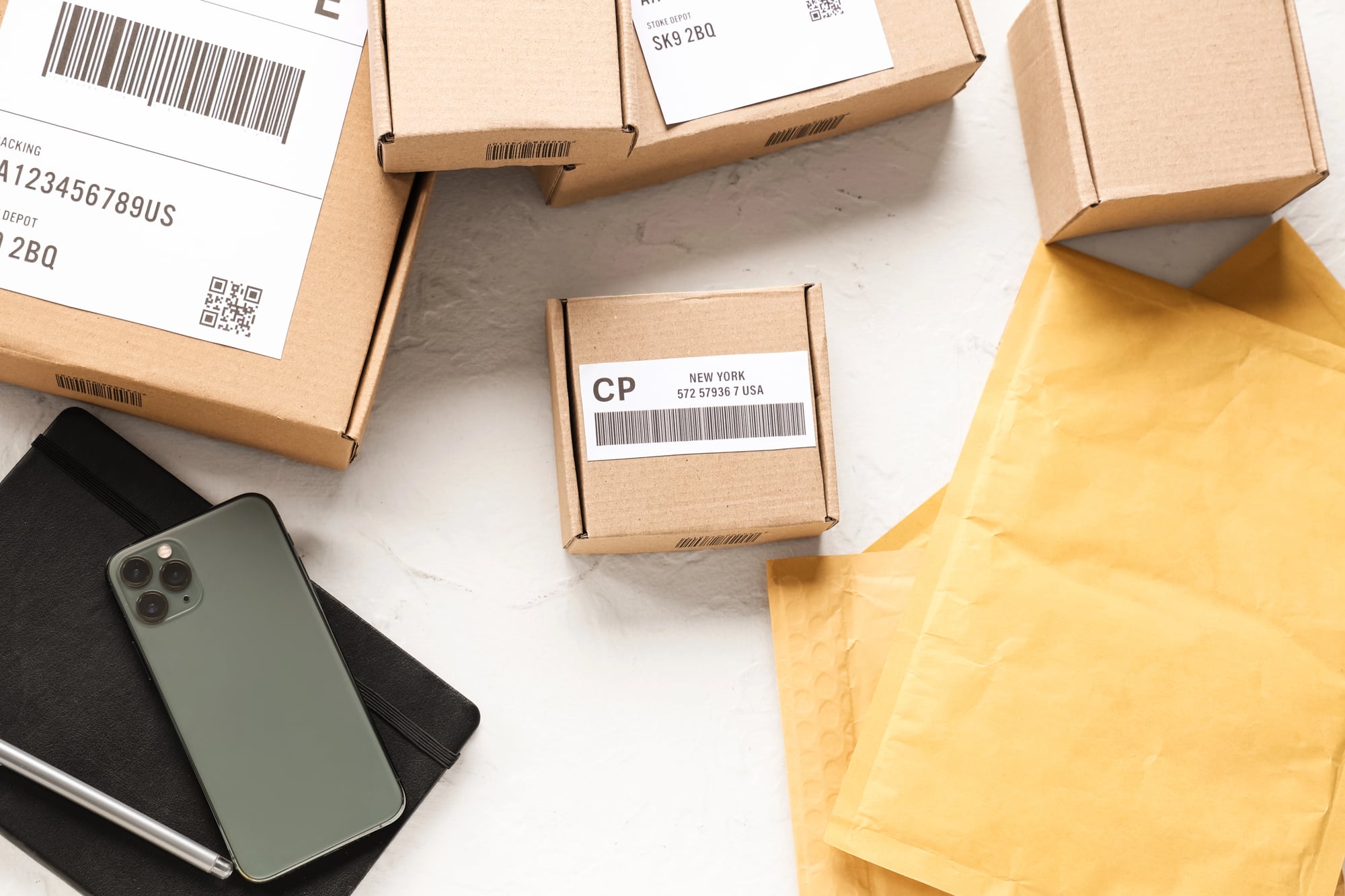
The mislabeled shipment created a moment of involuntary disclosure. Recipients who received incorrectly documented goods were forced to analyze what they’d actually been sent — and in doing so, reverse-engineered key aspects of the dyeing process.
It’s the kind of industrial accident that intellectual property law was eventually designed to prevent, but in 1857 and 1858, that framework barely existed, and what couldn’t be protected couldn’t be kept secret.
The German Response

Germany moved faster than anyone. German chemists, several of them trained in the same organic chemistry tradition that Perkin had studied under August Wilhelm von Hofmann at the Royal College of Chemistry in London, recognized the implications almost immediately — and the German chemical industry, which was better organized and better funded than its British counterpart, began scaling synthetic dye production within years.
By the 1870s, Germany had effectively captured the global synthetic dye market, a dominance that would last until the First World War forced a reckoning.
Britain’s Slower Reaction

Britain, the country where synthetic dye was invented, largely missed the moment. Perkin’s own factory in Greenford Green produced mauve commercially, and he made a reasonable fortune from it, but the broader British chemical industry was sluggish, conservative, and more comfortable with empirical craft traditions than with the kind of systematic organic chemistry that Germany was building entire university departments around.
So the country that handed the world a revolution in color essentially watched from a distance while someone else ran with it.
What Queen Victoria Had to Do With It

Mauve became fashionable with unusual speed, partly because Queen Victoria wore a mauve gown to the Royal Exhibition in 1862. Fashion at that level worked like an algorithm with a single input — what the monarch wore, the court wore, and what the court wore, everyone aspired to wear.
The timing was not coincidental: Perkin’s commercial production had made the color newly accessible at a price that wasn’t ruinous, and a royal endorsement turned accessibility into demand overnight.
The Textile Mills Reset Their Priorities

Textile mills across England and France had built their supply chains around natural dye sources, and the arrival of a reliable, reproducible synthetic color forced a fundamental rethink. Natural dyes varied batch to batch — the depth of an indigo vat depended on the quality of that year’s harvest, the temperature of the dye house, and the skill of the workers managing the process.
Synthetic dyes were comparatively stable, and stability in industrial production is not a minor advantage.
The Collapse of Natural Dye Markets

Indigo cultivation in India had supported entire regional economies for generations, and its collapse, which synthetic dye accelerated dramatically, left those economies without a foundation. The transition was not humane or gradual.
By the 1890s, synthetic indigo — produced by BASF following a method developed by Adolf von Baeyer — had broken the back of the Indian indigo trade, and the communities that had depended on it found themselves with no equivalent replacement.
The Rise of the Chemical Conglomerate

The synthetic dye industry didn’t stay in the dye business. The same chemistry that produced color also produced pharmaceuticals, explosives, fertilizers, and plastics — and the companies that built their infrastructure around synthetic dyes found themselves holding the foundation of the modern chemical industry.
BASF, Bayer, and Hoechst all emerged from this period, and all of them started as dye manufacturers. The leap from color to aspirin to explosives is not intuitive, but the underlying organic chemistry is the same.
The Accidental Patent Lesson

Perkin patented mauve, but the mislabeled shipment incident illustrated something that patent law couldn’t fully solve: once a product is in the world, determined competitors will find a way around the paperwork. The German chemists who analyzed the incorrectly documented consignments weren’t technically violating any patent — they were simply studying what arrived at their doors and drawing the obvious conclusions.
Turns out, the most valuable industrial secrets are the ones that never leave the building.
Aniline and the Broader Family of Dyes

Mauve was only the beginning. Perkin’s discovery opened the door to the aniline dye family — a vast range of synthetic colors derived from the same coal tar base — and chemists across Europe spent the next thirty years systematically exploring every compound they could extract from that source.
Magenta, aniline blue, alizarin crimson, synthetic indigo: each one arrived with its own commercial disruption, its own displaced industry, and its own set of winners and losers who hadn’t anticipated being either.
The Military Implications Nobody Saw Coming

The connection between synthetic dye chemistry and explosives was not obvious in 1858, but it became urgently obvious by 1914. Germany’s chemical industry, built on dye expertise, was able to pivot rapidly to munitions production when the war began — the same factories, the same chemists, the same supply chains, pointed at a different output.
Britain, which had let its chemical industry atrophy, found itself scrambling to import compounds it should have been manufacturing domestically, which is the kind of strategic oversight that tends to be very expensive.
The Mislabeling Incident as an Unintended Technology Transfer

The mislabeled shipment was, in effect, an involuntary transfer of industrial knowledge at exactly the moment when that knowledge was most consequential. It accelerated the diffusion of synthetic dye technology by years, possibly decades — moving it out of Perkin’s factory and into the hands of competitors who had the resources to scale it faster than its inventor could.
History has a particular fondness for this kind of accidental generosity.
The Regulatory Vacuum That Made It Possible

There were essentially no meaningful international trade regulations governing chemical products in the 1850s. Shipping documentation was inconsistent, enforcement was absent, and the idea of a standardized system for classifying and tracking industrial chemicals was still generations away.
The mislabeled shipment could only have caused what it caused in an environment that had no mechanism for catching or correcting the error — and the industry that emerged from that environment eventually built the regulatory frameworks specifically designed to prevent it from happening again.
How Modern Supply Chains Trace Back to This Moment

The international chemical supply chain — with its strict documentation requirements, hazardous materials classifications, and chain-of-custody protocols — is, in a real sense, a response to the chaos of the nineteenth-century dye trade. Every standardized shipping label on a chemical container today reflects a lesson that was learned painfully, slowly, and at enormous cost to the industries that suffered from the absence of those standards.
A mislabeled shipment in 1857 is, indirectly, why those labels now say exactly what they mean.
When Chaos Writes the Rules

Some industries are shaped by the best ideas of their era. This one was shaped by a wrong address on a shipping manifest, a teenager who couldn’t synthesize quinine, and a queen who liked purple.
The synthetic dye industry became the chemical industry, which became pharmaceuticals and fertilizers and plastics and the infrastructure of the modern world — and at the root of that chain is a clerical error that nobody corrected in time. The world is full of careful plans.
It’s the accidents, stubbornly persisting past the moment when they should have been caught, that tend to matter most.
More from Go2Tutors!

- The Romanov Crown Jewels and Their Tragic Fate
- 13 Historical Mysteries That Science Still Can’t Solve
- Famous Hoaxes That Fooled the World for Years
- 15 Child Stars with Tragic Adult Lives
- 16 Famous Jewelry Pieces in History
Like Go2Tutors’s content? Follow us on MSN.