Criminals Who Were Celebrated as Heroes Before Getting Caught
History is filled with figures who earned public admiration, respect, or even adoration before their criminal activities were exposed. Some charmed their communities through generosity and public relations.
Others built reputations as freedom fighters or renegades that eventually concealed darker realities. A few maintained double lives so convincing that those closest to them never suspected the crimes they committed.
What made these individuals exceptional wasn’t their criminality but their ability to sustain an appealing public image while committing serious crimes. When the truth finally emerged—often through patient investigation or unexpected accident—the gap between their reputation and their reality shocked both law enforcement and the public.
John Gotti
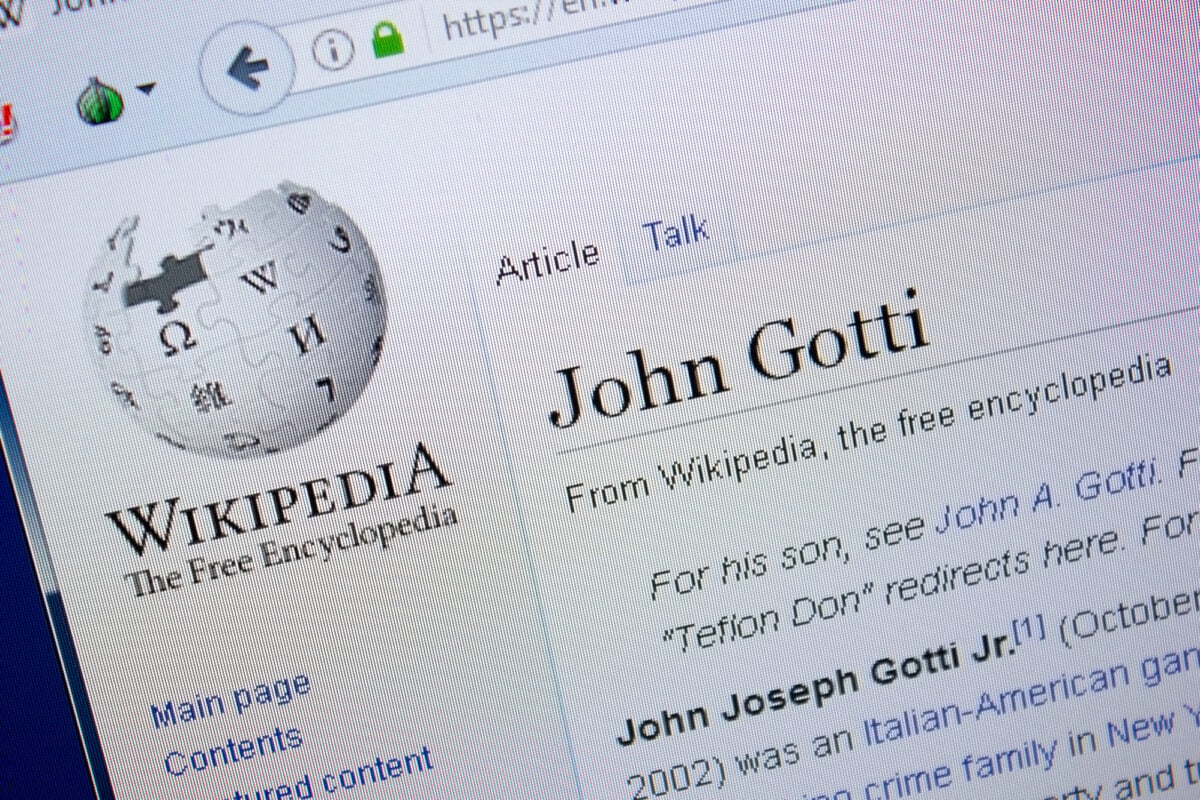
The “Dapper Don” was perhaps the most celebrated mobster in American history, earning admiration from working-class communities in New York during the 1980s and early 1990s. Gotti wore tailored Brioni suits, threw lavish July 4th barbecues with fireworks for his neighbors, and treated his community members generously.
Tabloid media dubbed him the “Teflon Don” after he was acquitted in three consecutive criminal trials. His courtroom victories drew crowds of cheering supporters, and photographs of him striding confidently out of courthouse doors played regularly in newspapers.
Gotti became a celebrity, gracing magazine covers and embodying the image of a rogue beating the system. His persona appealed to working-class sensibilities—the charming underdog outsmarting bureaucracy.
When the FBI finally secured his conviction in December 1990 using secretly recorded tapes and testimony from his own underboss, the public learned that the charismatic figure they’d cheered had orchestrated multiple murders and controlled organized crime operations across New York.
Christopher Paul Hasson

For years, this Coast Guard lieutenant commander cultivated a professional reputation as a dedicated military officer, responsible and trustworthy. Colleagues respected his service and his position granted him security clearance and access to government systems.
Then, in 2019, federal investigators discovered that Hasson had spent the prior months planning a mass casualty terrorist attack. His home contained weapons, explosives, and a detailed manifesto expressing violent extremist ideology.
The arrest revealed a stark duality—one identity was the uniformed officer who received commendations; the other was a domestic terrorist preparing for violence. The military institution that trusted him had no indication of his hidden radicalization.
Pedro López
In Colombia and Peru, where he operated during the 1970s and 1980s, López gained a fugitive’s mystique among some groups, viewed as an anti-establishment figure evading police. The romanticized narrative portrayed him as a man on the run from corrupt authorities.
The reality was profoundly different. López confessed to murdering more than 300 young women across South America, making him possibly the most prolific serial killer in human history.
When finally captured, the “folk figure” image evaporated, replaced by the documented reality of systematic predation and brutality. He remains incarcerated in Colombia after multiple releases and re-captures.
Whitey Bulger
For 16 years, James “Whitey” Bulger lived a fugitive’s life under assumed identities in California, yet during the same period, he maintained a mythic status among some in his native Boston. Bulger’s legend as a tough street operator who refused to submit to authority appealed to certain segments of the public.
The manhunt for him developed almost folk-hero qualities. When the FBI finally arrested him in 2011 at age 81, the public confrontation with reality shattered the mythology.
Bulger had murdered 19 people, operated rackets, and committed crimes far exceeding the romantic outlaw narrative that had grown around his fugitive years.
Bernie Madoff

For decades, Madoff cultivated an image of financial genius and philanthropic success. He served as chairman of NASDAQ and sat on advisory boards for major institutions.
Wealth and influence surrounded him. He donated generously to Jewish charities and maintained prestigious memberships in exclusive clubs.
Investors trusted him implicitly, seeing him as a reliable steward of their wealth and retirement funds. In 2008, his Ponzi scheme collapsed, revealing that he had defrauded investors of approximately $65 billion.
The trusted figure was revealed as a systematic con artist who stole retirement savings from thousands of ordinary people. His carefully constructed public persona of respectability and integrity crumbled under scrutiny, and he died in prison serving a 150-year sentence.
D.B. Cooper

The man who called himself Dan Cooper hijacked a commercial airplane in 1971, demanded $200,000, and parachuted into the Oregon night with his money. For decades, Cooper became an American folk legend—the only man to commit a commercial airline hijacking in the country and escape, the rogue who outsmarted the system.
Rather than being hunted down as a dangerous criminal, many saw him as a clever trickster beating bureaucracy. Bars, restaurants, and cultural references celebrated his audacity.
Numerous suspects emerged over the years, each claiming or being accused of being Cooper. The actual criminal action—extortion under threat of bombing—was transformed by public imagination into a picaresque adventure story, the criminal into a folk hero.
Dennis Rader

For decades, Rader lived an apparently impeccable life as a family man, a military veteran, and an active member of his church, serving as a council president and Cub Scout leader. His neighbors knew him as the reliable, respectable neighbor who maintained a tidy house and showed genuine interest in community affairs.
He was elected as a compliance officer, a position requiring community trust. Then, in 2005, DNA evidence linked him to ten murders committed between 1974 and 1991.
Rader, known as the BTK Killer (Bind, Torture, Kill), confessed to the killings and revealed that his institutional roles and community involvement had provided the perfect cover for a systematic predator. The devoted father and neighborhood presence had been murdering and torturing victims throughout his entire public life.
Ted Bundy

Handsome, charming, and articulate, Bundy cultivated a compelling public persona that worked in his favor during legal proceedings. During his televised 1979 trial—one of the first to be broadcast nationally—Bundy represented himself and charmed observers.
He developed fans and admirers, some of whom saw him as a wrongly accused victim of system overreach rather than a serial killer. His charisma and apparent intelligence convinced some segments of the public that this well-educated, sophisticated man couldn’t possibly be guilty of the brutality attributed to him.
Bundy welcomed interviews, boasted about the fans he’d created, and capitalized on media attention. This public persona of the articulate, intelligent young man obscured the documented reality of dozens of murders and assaults committed primarily against young women.
Frank Morris

During the 1970s, Morris gained notoriety as a bank robber and prison escape artist, earning an outlaw reputation among some who romanticized his rebelliousness. His escape from Alcatraz in 1962 became legendary—the break that proved escape from the supposedly inescapable prison was possible.
In popular culture, Morris’s escape story eclipsed his crimes, transforming a federal criminal into a folk legend of ingenuity and defiance. The escape overshadowed the robberies, and Morris became immortalized as the clever outlaw outsmarting authority rather than as a career criminal.
Christopher Anthony Wilder

This serial killer and rapist maintained a successful business persona as a photographer and fashion entrepreneur, traveling across America on modeling shoots. His public identity was that of a sophisticated, internationally-connected businessman.
He exploited this respectable facade to gain access to victims. Associates knew him as a professional man with legitimate business interests.
In 1984, his criminal spree was finally interrupted when he was arrested, revealing that beneath the entrepreneurial identity lay a sadistic predator responsible for multiple murders and assaults.
Aileen Wuornos

Initially portrayed by some as a victim of circumstance and abuse driven to self-defense, Wuornos gained a complicated public image during the late 1980s and early 1990s. Some feminist groups characterized her as a woman fighting back against predatory men.
Her narrative was shaped by advocates emphasizing her traumatic past and difficult circumstances. Though she confessed to multiple murders of men she claimed were attempting to assault her, the public discourse around her sometimes elevated her to a sympathetic, if tragic, figure.
When her case went to trial and detailed evidence of her crimes emerged, the reality proved more complicated than either the purely victim narrative or the purely criminal narrative—but she was convicted and executed despite some ongoing public sympathy.
Ralph “Bucky” Phillips
When Phillips escaped from Erie County jail in April 2006 for a parole violation, he eluded police for months, initially earning a Robin Hood-like reputation in certain circles. During his 155-day fugitive status, he achieved folk-hero status among some locals who saw him as an everyman outrunning unjust authority.
Media coverage and public discourse sometimes romanticized the manhunt. When Phillips was finally captured in September 2006, the reality reasserted itself—he was a career criminal with multiple violent felonies, not the sympathetic rebel that some cultural narratives had briefly constructed.
Gao Chengyong

In China, this serial killer evaded authorities for over a decade while committing brutal murders. During this period, in certain segments of society, narratives about his elusiveness developed that bordered on glorification of his ability to outsmart police.
The romanticization of criminals—even serial murderers—persists in some cultural contexts where the ability to evade authority itself becomes a marker of admiration. When Gao was finally captured in 2016 after murdering at least 11 women, the public was forced to confront the victims rather than continue celebrating the criminal’s evasion.
Clyde Barrow and Bonnie Parker
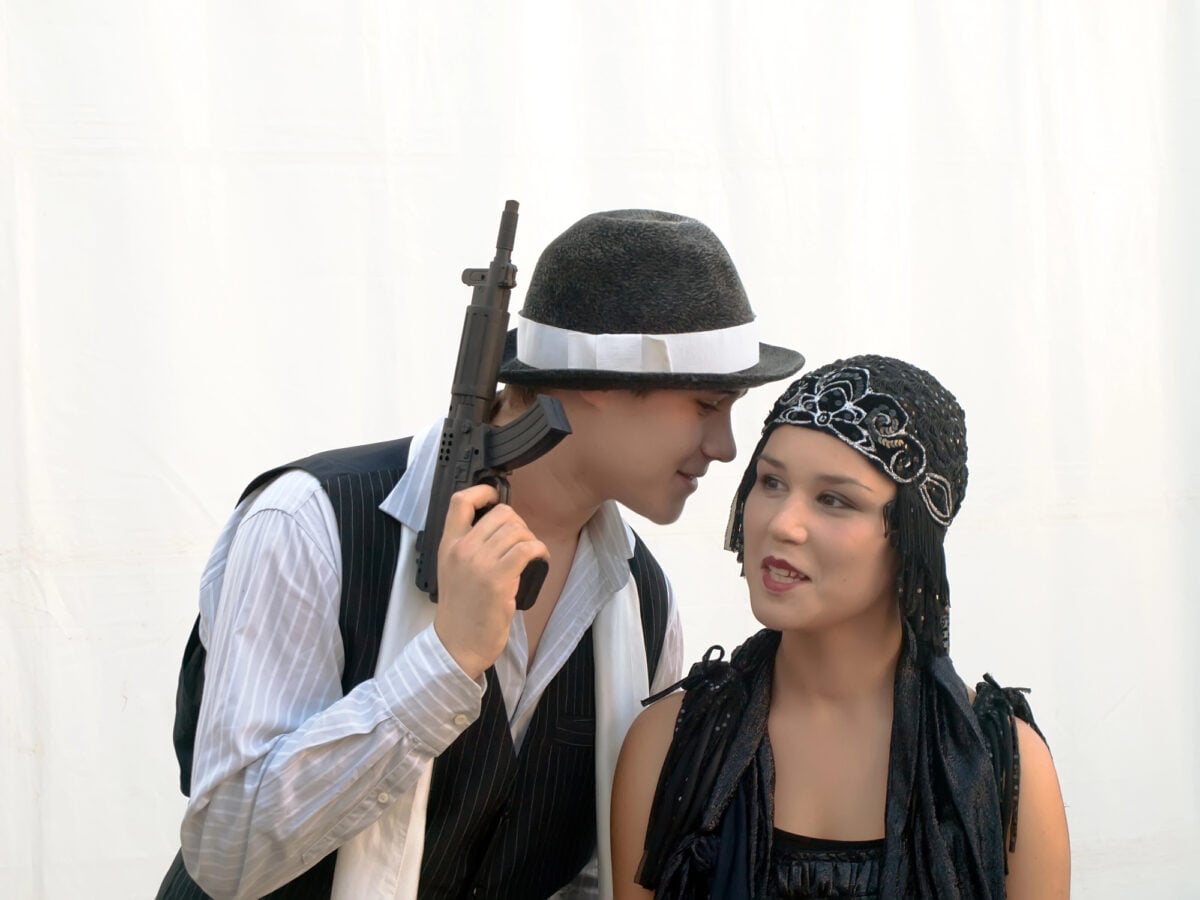
The Barrow Gang killed at least 13 people during their Depression-era crime spree from 1932 to 1934. Yet through newspaper sensationalism, popular fiction, and cultural mythology, Bonnie and Clyde were transformed into romantic outlaws—young lovers against the world, rebels against unjust economic systems.
The reality of their crimes—murder, robbery, and predation—became secondary to a narrative of youthful rebellion. Hollywood film adaptations, songs, and cultural references have since cemented their status as folk heroes or romantic figures rather than straightforward murderers and robbers.
The Darker Side of Celebration
What emerges from these cases is a persistent human tendency to mythologize criminals, especially those who evade capture or maintain compelling public personas. The charming mobster, the clever fugitive, the sophisticated predator—all exploit the gap between how they present themselves and what they actually do.
Sometimes this gap results from media sensationalism and public imagination rather than deliberate deception. Some criminals actively exploit public sympathy or narrative confusion about their crimes and identities.
In each case, reality eventually imposed itself, but not before public admiration had been earned or sustained for individuals later revealed to be serious criminals.
More from Go2Tutors!

- The Romanov Crown Jewels and Their Tragic Fate
- 13 Historical Mysteries That Science Still Can’t Solve
- Famous Hoaxes That Fooled the World for Years
- 15 Child Stars with Tragic Adult Lives
- 16 Famous Jewelry Pieces in History
Like Go2Tutors’s content? Follow us on MSN.