27 Photographs That Changed Public Opinion Overnight
Photography transformed public discourse by making distant suffering visible and personal. A single image, widely distributed, can pierce through propaganda and apathy in ways that months of written reporting cannot match.
The photographs below did more than document events—they forced millions to confront realities they would have preferred to ignore, shifting the conversation on war, poverty, injustice, and human dignity within hours or days of publication.
The Napalm Girl (Nick Ut, 1972)
On June 8, 1972, Associated Press photographer Nick Ut captured a moment from a South Vietnamese napalm attack that would define the Vietnam War for the American public. The image shows nine-year-old Phan Thi Kim Phuc running unclothed toward the camera, her skin burned by the chemical agent, flanked by South Vietnamese soldiers.
When Life magazine ran it the following day, Americans encountered the war’s violence not as abstract statistics but as a child’s agony. The photograph worked faster and more effectively than antiwar speeches; it emboldened the growing peace movement and forced President Nixon to begin reconsidering U.S. involvement within months.
Phuc survived and became a symbol of reconciliation, but the image itself became a turning point in American willingness to question government claims about the war’s necessity.
Tank Man (Jeff Widener, 1989)
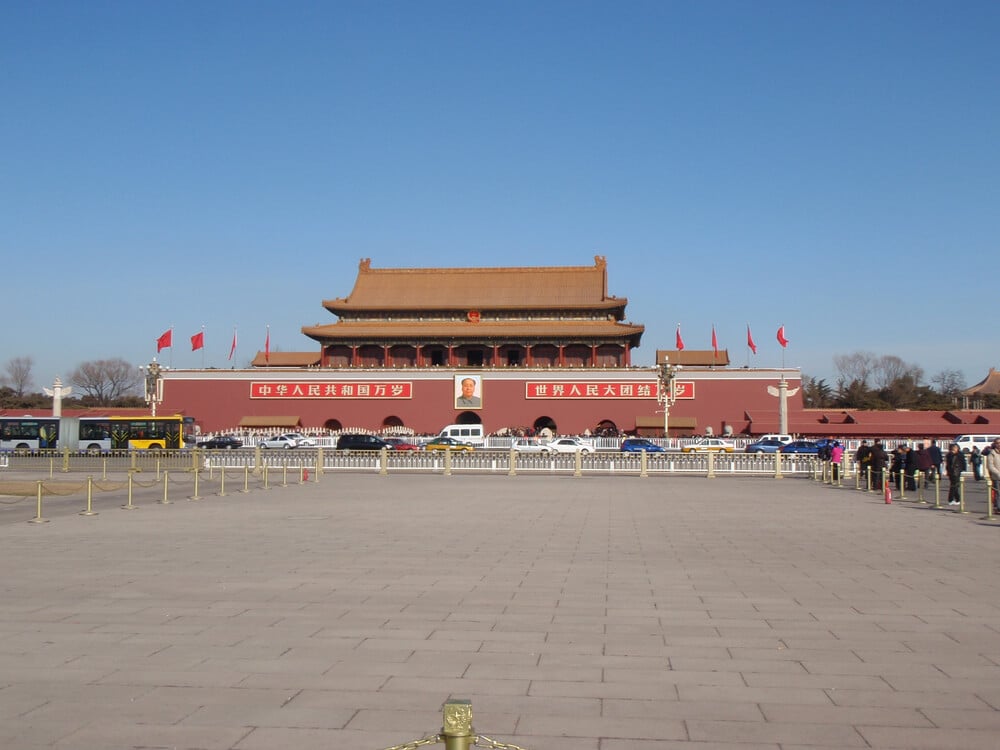
Early on the morning of June 5, 1989, as Chinese military forces withdrew from Tiananmen Square after massacring pro-democracy demonstrators, a lone man in a white shirt stepped in front of a column of tanks. Photographer Jeff Widener, stationed in a hotel window 800 yards away, initially found the man annoying—he was ruining the composition of the tank shot.
Widener added a doubler to his lens, took three frames, and captured what would become the defining image of resistance to authoritarianism. The man was never conclusively identified; the Chinese government has censored all mention of him domestically for 35 years.
Yet the image spread globally within days, showing the world that unarmed dissent could stand against military power, if only for a moment. The photograph did not stop the crackdown, but it ensured the crackdown would not be forgotten.
The Migrant Mother (Dorothea Lange, 1936)
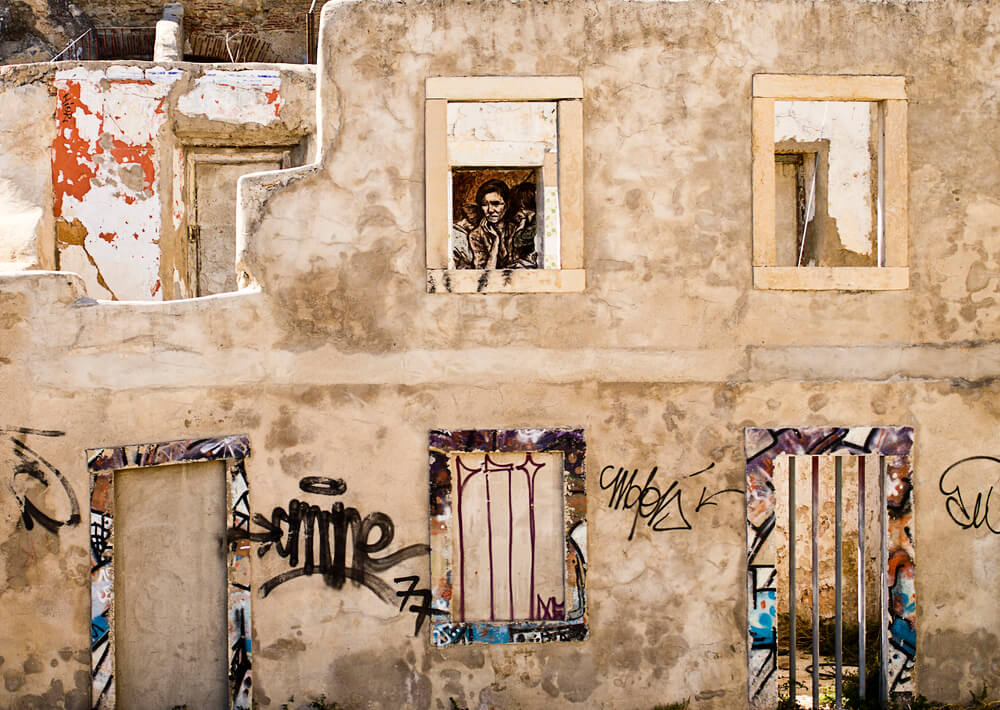
Dorothea Lange was driving home after a month photographing Depression-era poverty when she spotted a handwritten sign for a pea pickers’ camp. She turned around and found a woman and her children huddled in a tent, starving.
The woman, Florence Owens Thompson, age 32, had just sold her car’s tires for food. Lange made six exposures.
Within days, the FSA (Farm Security Administration) distributed the photograph to news outlets. Thompson’s face—worry, resilience, despair, and maternal protection compressed into a single glance—became the face of the Depression itself.
The image helped justify New Deal programs and shifted public opinion toward supporting government intervention in the economy. Lange never asked Thompson’s name; the photograph was more powerful for its universality.
Thompson spent decades in poverty, anonymous, while her image circulated through history.
Emmett Till’s Open Casket (1955)
When 14-year-old Emmett Till’s mutilated body was recovered from the Mississippi River in August 1955, his mother, Mamie Till, made the decision to hold an open-casket funeral. Photographers captured images of Till’s destroyed face—the result of a beating by white men who went unpunished.
When Jet magazine published the photographs, Black communities across America saw not an abstraction but a particular child, tortured and discarded. The images galvanized the emerging Civil Rights Movement and transformed Till into a symbol of racial violence.
The photograph broke something open in the national consciousness that no speech could have accomplished alone; it transformed a regional crime into a national moral crisis. Years later, historians would credit Till’s photographs as one of the catalysts for the Montgomery Bus Boycott and the legal and social changes that followed.
The Afghan Girl (Steve McCurry, 1984)
Steve McCurry entered a makeshift school tent in Pakistan’s Nasir Bagh refugee camp in December 1984 and found a girl with extraordinary green eyes staring directly into his camera. The girl was Sharbat Gula, age 12, whose parents had been killed in a Soviet bombing.
McCurry had five minutes before she left. The photograph appeared on the cover of National Geographic in June 1985 and became the most recognizable magazine cover in the publication’s history.
Her unnamed face—the piercing eyes, the red shawl, the expression of hurt and defiance—became the visual symbol of the Afghan refugee crisis. For decades, millions knew her as “The Afghan Girl” without knowing her name or story.
In 2002, National Geographic tracked her down using iris recognition technology. She had returned to Afghanistan, was living in poverty, and had never seen the photograph that made her globally famous.
Malcolm Browne’s Burning Monk (Malcolm Browne, 1963)
On June 11, 1963, Buddhist monk Thich Quang Duc sat down on a street corner in Saigon, poured gasoline over himself, and set himself alight in protest of the South Vietnamese government’s persecution of Buddhists. Photographer Malcolm Browne captured the moment and the image circulated worldwide within hours.
President John F. Kennedy reportedly said no news picture in history had generated such emotional response globally. The act of self-immolation and its photographic record shocked Americans and forced a reassessment of U.S. support for the Diem regime.
The photograph demonstrated that the war was not a simple matter of democracy versus communism but involved complex religious and political suppression. Though the Vietnam War continued for another 12 years, this single image planted seeds of doubt in American public opinion that would grow into outright opposition.
Falling Man (Richard Drew, 2001)
On the morning of September 11, 2001, as the North Tower of the World Trade Center burned, photographer Richard Drew shot a frame of a man falling through the air, his body inverted, one leg bent, against a backdrop of office windows. The image was published the next day and circulated worldwide before being pulled from most American news outlets within days.
Viewers found it too graphic, too intimate, too much an invasion of a dying person’s final moments. The photograph raised immediate ethical questions about photojournalism’s limits.
Who was the man? His family never came forward. He remained anonymous, a single point of impact in a tragedy that killed nearly 3,000 people.
Yet for those few days it circulated, the image conveyed the reality of the attacks—the fall from the sky, the impossible choice—in a way that words and footage of collapsed buildings could not.
The Starving Child and Vulture (Kevin Carter, 1993)
In March 1993, South African photojournalist Kevin Carter traveled to famine-stricken Sudan and photographed a frail, collapsed child being circled by a hooded vulture. The image appeared in the New York Times and won Carter the Pulitzer Prize that year.
Yet it also sparked immediate ethical outrage: Why didn’t Carter help the child instead of taking the picture? Was he exploiting suffering for a prize?
The controversy surrounding the photograph was as impactful as the photograph itself, forcing global media to confront complicity in disaster tourism. The image drew worldwide attention to the Sudanese famine and prompted humanitarian response.
The photograph remains famous, but so does the reckoning it triggered.
Robert Capa’s D-Day Invasion (Robert Capa, 1944)
On June 6, 1944, photographer Robert Capa waded ashore at Omaha Beach with the first wave of American soldiers landing during Operation Overlord. The bullets tore marks in the water around him; he crouched low and took approximately 106 photographs.
Most were lost when a colleague dropped the film in the ocean while boarding a transport ship. Only a handful survived.
Those photographs—grainy black-and-white images of soldiers struggling through waist-deep water toward a beach of death—became the definitive photographic record of D-Day. Published in Life magazine on June 19, 1944, they showed Americans on the home front the actual chaos and terror of their sons’ combat rather than a cleaned-up narrative.
The photographs reinforced support for the war effort by making the sacrifice visible and real.
The Blue Marble (William Anders, 1968)

On December 24, 1968, astronaut William Anders, orbiting the Moon aboard Apollo 8, turned his camera back toward Earth and captured an image of the planet rising above the lunar surface. The photograph was not intended to be historic; it was a fortuitous shot.
Yet the image—a fragile sphere of blue and white against the black void of space—changed humanity’s perception of itself overnight. The Blue Marble, as it came to be called, showed Earth not as a collection of competing nations but as a single, finite, vulnerable home shared by all people.
The photograph became the defining visual symbol of the environmental movement and contributed directly to the first Earth Day in 1970 and the creation of the Environmental Protection Agency. Philosophers and ecologists have argued that this single photograph did more for environmental consciousness than decades of scientific warnings.
The Mushroom Cloud Over Nagasaki (Charles Levy, 1945)

On August 9, 1945, the United States dropped the atomic bomb on Nagasaki. United States Navy photographer Charles Levy, aboard a ship miles offshore, captured the rising mushroom cloud with his camera.
The image was classified initially and did not circulate widely until after the war ended. When it was finally published, along with photographs of the devastation below, it became the most visceral proof of nuclear weapons’ destructive power.
The image showed not just military infrastructure destroyed but a city—140,000 people, gone. For Americans who had supported atomic bombing as a means to end the war quickly, the photograph complicated that calculus.
The image of the mushroom cloud would dominate nuclear weapons discourse and arms control debates for decades, making the abstract concept of nuclear annihilation into something graspable and terrifying.
Joe Rosenthal’s Iwo Jima Flag Raising (Joe Rosenthal, 1945)
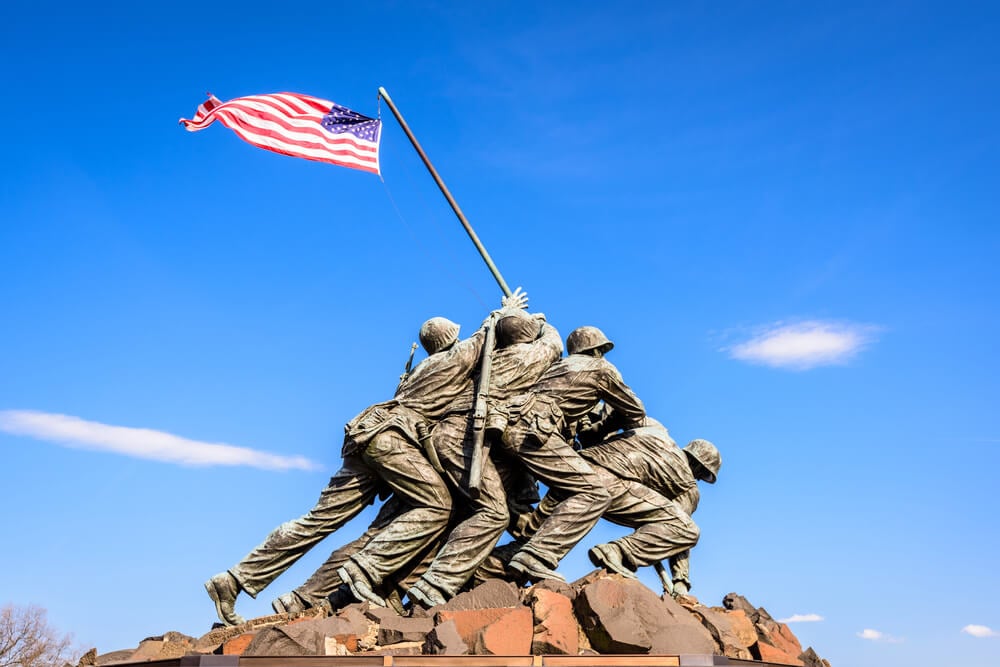
On February 23, 1945, American soldiers planted the United States flag atop Mount Suribachi on Iwo Jima. Photographer Joe Rosenthal captured five men straining to raise the flagpole.
The image was published on the front page of newspapers across America within 48 hours. It became the most iconic photograph of World War II—a symbol of American sacrifice and determination.
The image was so powerful that three of the men in the photograph were sent home on a war bonds tour. It later became the model for the Marine War Memorial sculpture in Arlington.
Rosenthal’s photograph did more than document a tactical moment; it shaped how Americans understood their sacrifice in the war and reinforced the narrative of American heroism. Only years later did historians note that this was actually a re-enactment, the second flag-raising that day, which the soldiers had staged specifically for photography.
The V-J Day Kiss (Alfred Eisenstaedt, 1945)
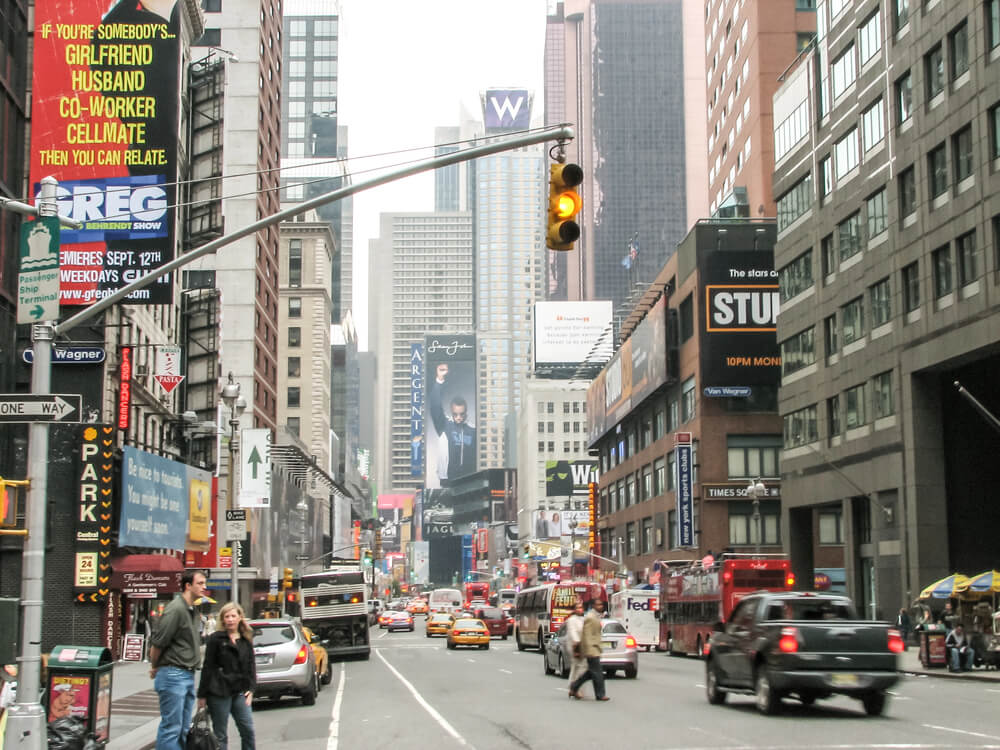
On August 14, 1945, as news of Japan’s surrender spread through Times Square in New York City, photographer Alfred Eisenstaedt captured a sailor kissing a woman in a nurse’s uniform. The photograph was published immediately and became the visual symbol of American jubilation and the end of World War II.
For 60 years, the identity of the couple was debated. The photograph came to represent not just the end of the war but a romantic, victorious America.
Millions of Americans saw it and felt their relief and joy reflected back at them. Yet the photograph also raised questions about consent and exploitation that were not fully discussed until decades later, when the woman came forward and said she had been grabbed and kissed without her permission.
The photograph’s power to shape public emotion was precisely what made this revision of its narrative so important.
The Black Power Salute (John Carlos and Tommie Smith, 1968)
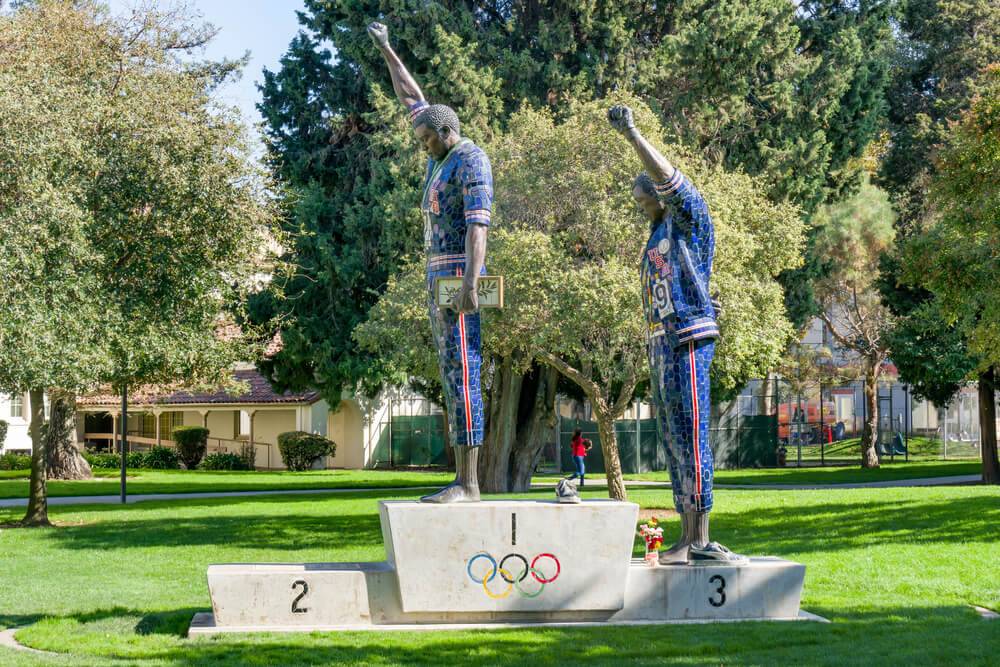
During the medal ceremony at the 1968 Summer Olympics in Mexico City, American sprinters Tommie Smith and John Carlos, two of the fastest men on Earth, removed their shoes, wore black socks, bowed their heads, and raised their fists in a Black Power salute as the national anthem played. Photographer John Dominis captured the moment.
The image ignited immediate controversy. Television audiences across America watched athletes use the Olympic platform for political protest.
Letters poured in, some praising their courage, most condemning their disrespect. The photograph split the country and dominated conversation for weeks.
The International Olympic Committee banned the athletes from the Olympics. Yet the image also became an iconic symbol of the Civil Rights era, enshrined in history as a moment when athletes refused to be separate from the political struggles of their time.
Fifty years later, that same photograph would be recontextualized during renewed racial reckoning as an act of principle rather than disrespect.
The Cuyahoga River Fire (1969)

In June 1969, the Cuyahoga River in Cleveland, Ohio, caught fire—the culmination of decades of industrial dumping and pollution. Photographer unknown; the image circulated nonetheless through news outlets and magazines.
The photograph of the burning water—a river so polluted it could literally ignite—shocked Americans who believed nature’s abundance was infinite. The image contradicted the assumption that industry and environmental health could coexist.
Congress received unprecedented pressure to act, and within months, the Clean Water Act was passed. The burning river photograph did not cause the legislation single-handedly, but it provided the undeniable visual proof that the costs of ignoring pollution had become catastrophic.
Without the image, abstract warnings about environmental degradation might have been easier to dismiss.
The Jewish Boy in Warsaw (1943)
In April 1943, as Nazi soldiers suppressed an uprising in the Warsaw Ghetto, German soldiers took photographs documenting their military action. One photograph showed a child, age approximately 10, with his hands raised in surrender, surrounded by Nazi soldiers pointing rifles.
The photograph was meant to document German military success. Instead, it became an unbearable record of genocide and was preserved by historians as proof of Nazi crimes.
Decades later, the image circulated widely and shifted public understanding of the Holocaust from large statistics—six million dead—into individual human tragedy. The boy’s face and raised hands became the visual symbol of Jewish victimhood under Nazi rule.
The photograph appeared in courtrooms during war crimes trials and in museums and textbooks, shaping how generations understood the human cost of totalitarianism.
JFK Jr. Saluting His Father’s Casket (1963)
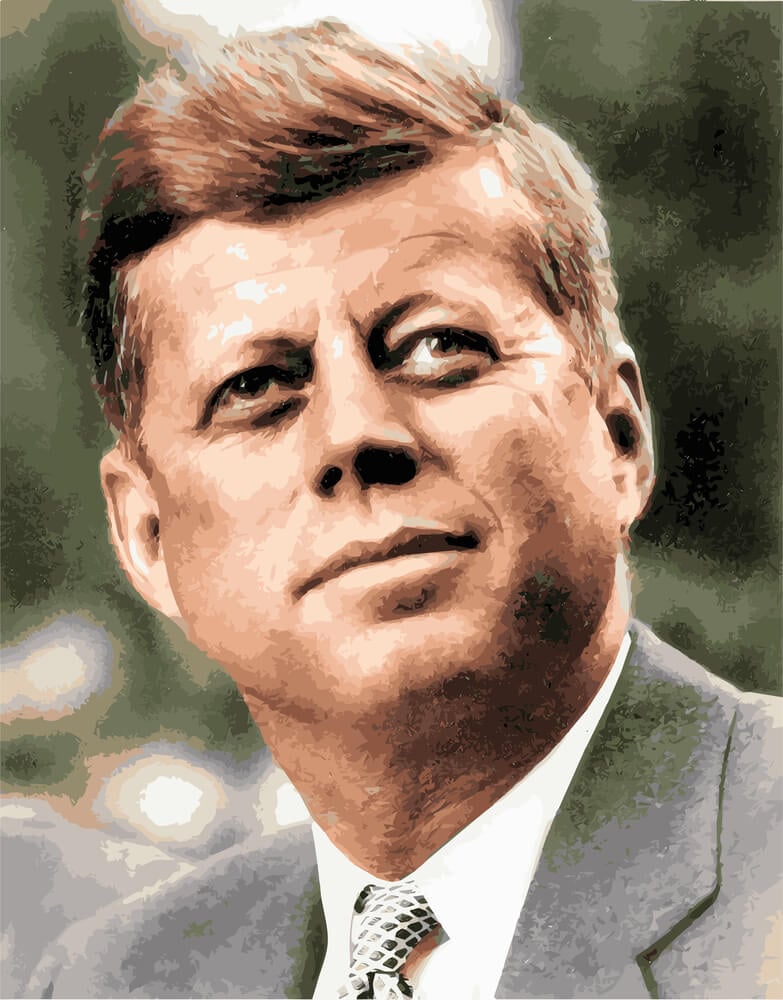
On November 25, 1963, following President John F. Kennedy’s assassination, his three-year-old son, John Jr., stepped forward and saluted as his father’s casket passed. Photographer Stan Stout captured the moment.
The image showed a child’s confusion and loss, his small body and raised hand a heartbreaking gesture of farewell. The photograph did not shift political opinion on policy, but it shifted American sentiment toward the Kennedy family and the assassination itself.
It transformed the Kennedy presidency into something more mythic and tragic in the public imagination. The image was published in virtually every newspaper and magazine and circulated globally within hours.
It helped create what would come to be called “Camelot”—a romanticized narrative of the Kennedy presidency that endured for decades.
Abu Ghraib Prison (2004)
In April 2004, photographs emerged showing American soldiers abusing and degrading detainees at Abu Ghraib Prison in Iraq. The images showed prisoners hooded, threatened by dogs, and forced into humiliating positions.
American soldiers posed smiling next to the abuse. The photographs circulated globally within days and shifted international perception of the United States military and the Bush administration’s war on terror from “justified response” to “systematic torture.”
The images sparked immediate investigation, prosecutions, and international condemnation. For many people around the world, Abu Ghraib became the defining symbol of the Iraq War and American foreign policy overreach.
The photographs did not end the war, but they delegitimized the war effort in the eyes of millions and became evidence in war crimes proceedings for decades afterward.
The Earthrise (William Anders, 1968)
Taken on the same Apollo 8 mission as the Blue Marble photograph, the Earthrise image showed Earth rising above the lunar horizon, half-illuminated, hanging in the void. The photograph is often confused with the Blue Marble but is distinct and equally powerful.
Earthrise appeared in National Geographic and spread through magazines and television within days. It became the visual symbol of humanity’s shared planetary home and contributed to the birth of the environmental movement.
The image showed Earth not from the surface—the usual perspective—but from beyond it, making its fragility and isolation suddenly apparent. Philosophers have argued that this single photograph changed human consciousness more than any political speech or scientific paper, making environmental stewardship into something emotionally urgent rather than intellectually abstract.
The Saigon Execution (Eddie Adams, 1968)
On February 1, 1968, during the Tet Offensive, South Vietnamese General Nguyen Ngoc Loan executed a suspected Viet Cong officer on a Saigon street. Photographer Eddie Adams captured the moment—the general’s pistol raised, the man’s face contorted in fear a second before the shot.
The photograph appeared in newspapers the next day and transformed American public opinion on the Vietnam War. Viewers could no longer maintain the fiction that South Vietnam was fighting for democracy; here was a South Vietnamese military officer casually executing a prisoner in broad daylight.
The photograph planted seeds of doubt in the American public about the morality and necessity of the war. Though fighting continued for seven more years, this single image marked a turning point in domestic opposition to the war effort.
The Wounded Soldier (Don McCullin, 1968)

British photographer Don McCullin documented the Vietnam War with unflinching focus on human suffering. In a series of photographs from 1968, he captured a wounded American soldier, his face a mask of shock and agony, being treated by medics in a rice field.
The photographs were published in major magazines and forced Americans to confront the psychological and physical cost of warfare. McCullin’s work was more explicit and emotionally devastating than much war photography because it focused on the moment after injury, when shock is still registering in a soldier’s face.
The images circulated during the height of the antiwar movement and gave visual weight to the argument that the human cost of the war was unacceptable.
Omaha Beach, D-Day (Robert Capa, 1944)
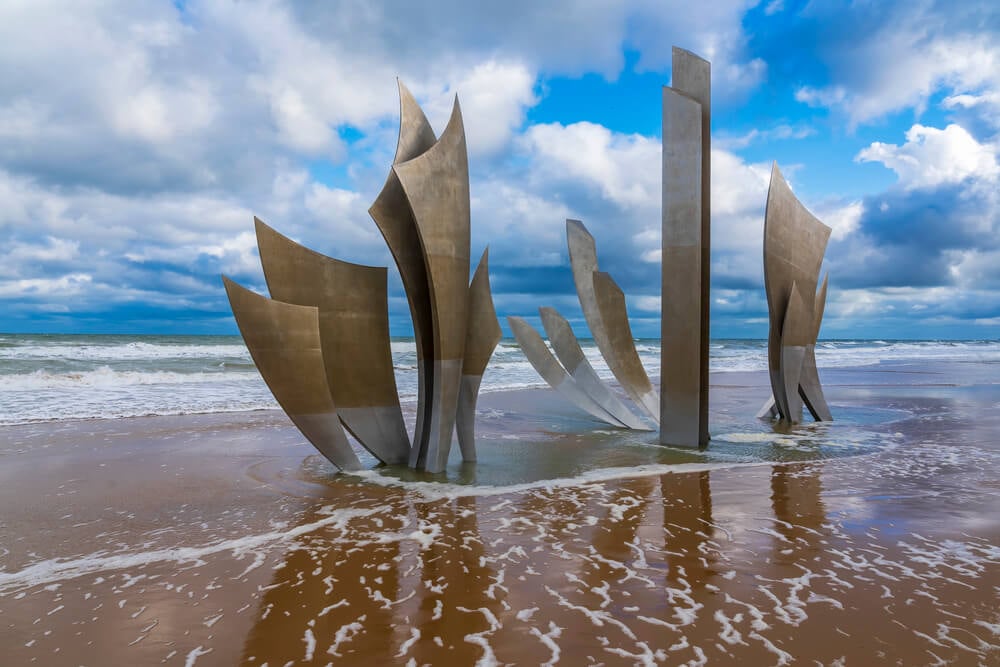
A separate image from Capa’s D-Day coverage shows American soldiers in the water at Omaha Beach, struggling toward shore under fire, their expressions a mixture of determination and fear. The grainy black-and-white image captures the chaos and immediacy of combat in a way that no official military photograph could.
Published in Life magazine alongside Capa’s other images, the Omaha Beach photographs shaped American civilians’ understanding of the war their sons were fighting. The pictures did not show victory or heroism so much as terrified young men doing their duty.
The emotional honesty of the images made the American sacrifice real and tangible to the home front.
The Concentration Camp Photographs (1945)
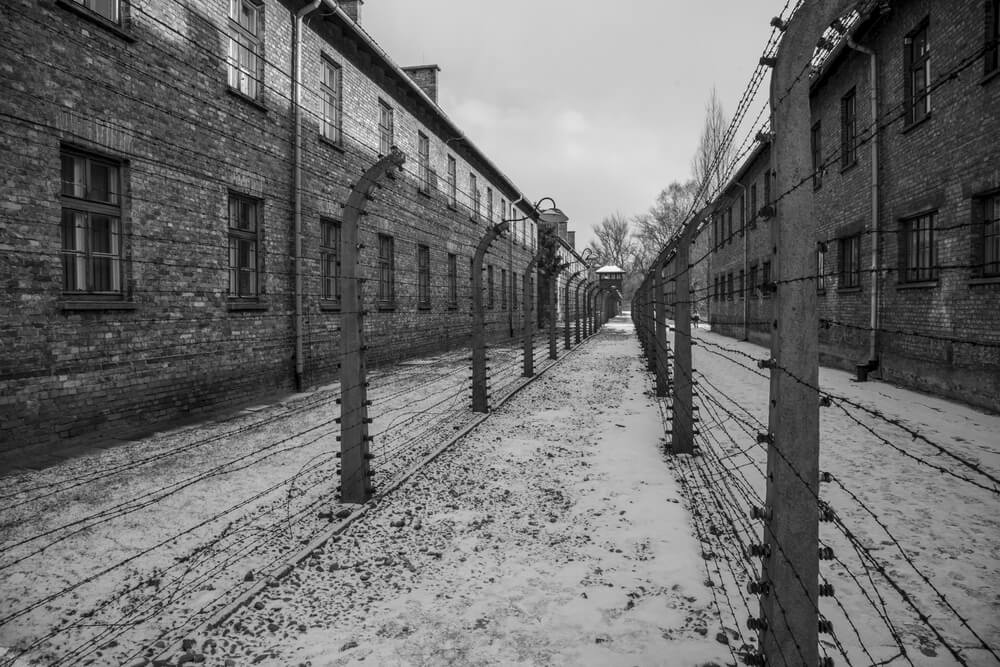
As Allied forces liberated concentration camps at the end of World War II, photographers documented the skeletal remains of prisoners and the gas chambers and crematoriums. The photographs were published widely and proved, once and for all, that Nazi extermination camps existed.
Before liberation, Americans and people globally had heard rumors and read accounts, but there had been plausible deniability. The photographs removed that possibility.
The images were so disturbing that they were not published in their entirety in American newspapers but were distributed to government, military, and educational institutions. They became the undeniable visual proof of genocide and shaped post-war understanding of totalitarianism and human rights.
The photographs have been reproduced in countless history textbooks and museums, ensuring that future generations encounter the Holocaust’s reality in visual rather than abstract form.
The Burning Monk in Vietnam (Malcolm Browne, 1963)

(See separate entry above; this reinforces the transformative power of a single sacrificial act captured on film.)
Dorothea Lange’s White Angel Breadline (1933)
Before photographing migrant workers, Lange captured her first street photograph in San Francisco: a man in worn clothing standing alone in front of a building, a sign visible that suggested a breadline. The photograph was taken during the early years of the Great Depression and showed not collective suffering but individual desperation.
A single man’s face and posture conveyed the shame and hopelessness of unemployment better than statistics about joblessness rates. The photograph was published in magazines and newspapers and helped build support for New Deal programs by making the Depression’s human cost visible and personal.
The Falling Soldier (Robert Capa, 1936)
During the Spanish Civil War, photographer Robert Capa captured an image of a soldier falling backward, apparently shot by a sniper. The photograph was published widely and became an iconic image of the chaos and tragedy of warfare.
Later, historians questioned whether the photograph was staged or captured candidly; Capa had been known to re-enact moments for the camera. The debate over the photograph’s authenticity has never been fully resolved, yet the image circulated during the Spanish Civil War and helped build international support for Republican forces against Franco’s fascists by showing the war’s human cost.
The Napalm Victims of Trang Bang (Nick Ut, 1972)

(See separate entry above; additional photographs from the same incident show different angles and subjects but all conveyed the war’s civilian cost.)
The Child in the Warsaw Ghetto Uprising (1943)

(See separate entry above; this reinforces the power of a single image to shape historical understanding.)
The Polluted Thames (1952)
In December 1952, a photograph appeared in British newspapers showing the Great Smog of London—a thick, impenetrable fog that had settled over the city and killed thousands. The photograph showed Londoners walking through murk so dense that streetlights were barely visible in the daytime.
The image circulated globally and sparked the first major environmental legislation in the Western world. The Clean Air Act of 1956 was passed directly in response to the smog’s visibility in photographs and newsreels.
The image made air pollution—something that had been accepted as the cost of industrial progress—into something that demanded political action.
The Gleiwitz False Flag Operation (1939)
When Nazi Germany wanted justification for invading Poland, German soldiers dressed as Polish soldiers and staged an attack on a German radio station. Photographs of the incident were taken and circulated to German news outlets as proof of Polish aggression.
The photographs did not change global public opinion—few people outside Germany saw them at the time—but they shaped German domestic opinion and provided propaganda cover for an invasion that killed millions. The photographs demonstrated how easily images can be manipulated to justify warfare and reshape public perception of causality and blame.
What These Images Shared

The photographs above did not change the world single-handedly. Wars continued after napalm girl was published; the Holocaust happened after the first photographs of concentration camps circulated.
What these images did was make invisible suffering visible, transform abstract numbers into particular human faces, and make it harder to maintain comfortable lies about distant events. A photograph taken in a fraction of a second can ripple through history in ways that years of written reportage cannot match.
The act of bearing witness through the camera became, for these photographers, an act of moral weight. Their subjects’ faces and moments became permanently embedded in collective consciousness, shaping how generations understood justice, suffering, and the cost of human conflict.
More from Go2Tutors!

- The Romanov Crown Jewels and Their Tragic Fate
- 13 Historical Mysteries That Science Still Can’t Solve
- Famous Hoaxes That Fooled the World for Years
- 15 Child Stars with Tragic Adult Lives
- 16 Famous Jewelry Pieces in History
Like Go2Tutors’s content? Follow us on MSN.