28 Board Games Families Played Nightly
Board games represented a reliable form of family entertainment before screens became the default evening activity. These games required nothing but the physical components, a table, and gathered players, creating moments of competition, cooperation, and conversation.
Many families built entire evenings around the ritual of pulling out a game box, establishing traditions that lasted decades.
Monopoly
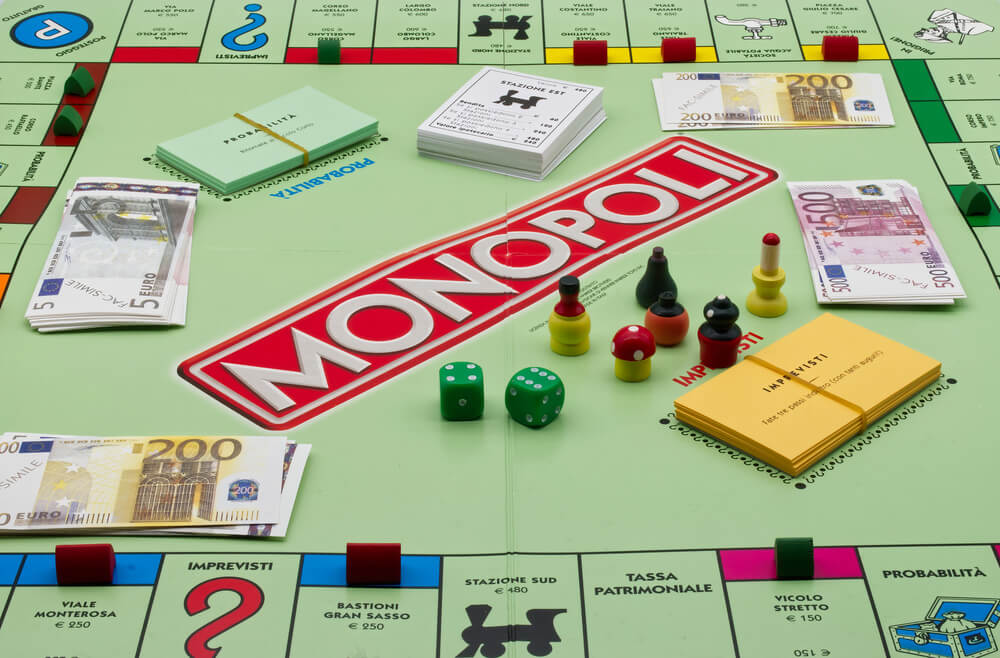
Monopoly was the quintessential family board game, designed to teach property acquisition and financial strategy while consuming entire evenings. The game’s length (often three to four hours) meant playing Monopoly was a commitment that structured family time.
Nearly every household owned a copy, and house rules varied so widely that no two families played identically.
Scrabble
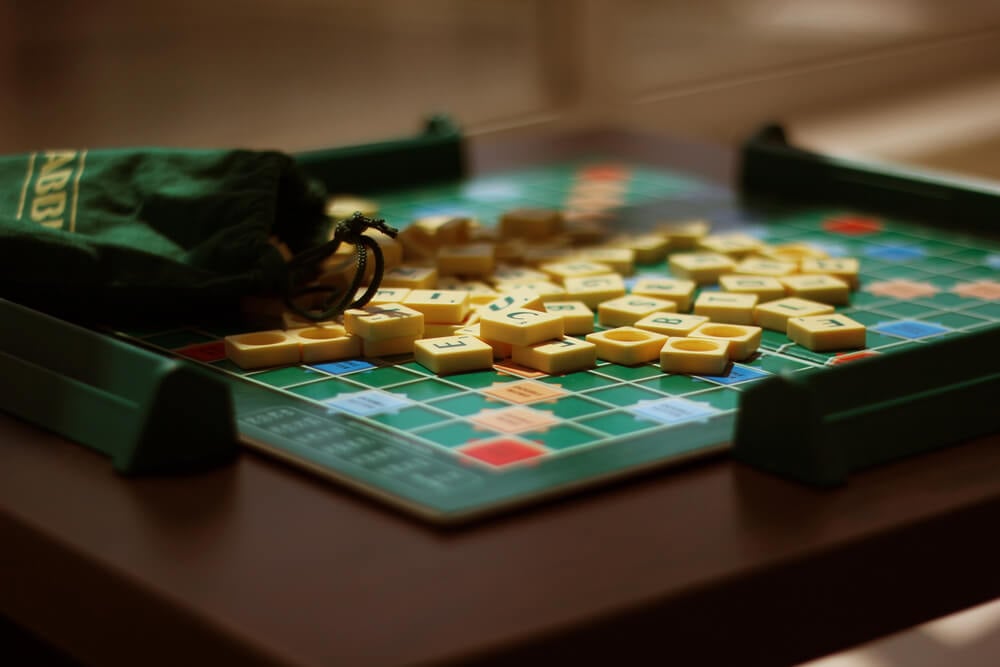
Scrabble combined vocabulary, strategy, and spatial reasoning into a competitive word game that appealed to multiple age groups simultaneously. The game’s simple rules masked deep strategic layers regarding tile placement and high-value letter positioning.
Families developed specific rituals around dictionary disputes and the handling of blank tiles.
Clue (Cluedo)
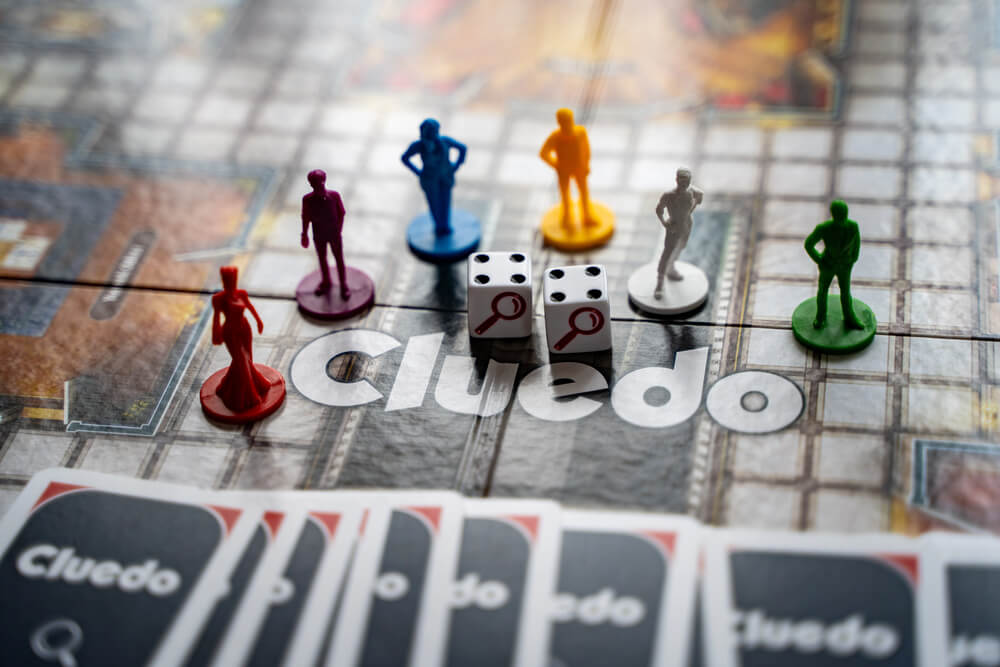
Clue transformed deductive reasoning into an entertainment format where players solved a fictional murder through systematic elimination. The game’s structure encouraged narrative thinking and logical process, with the satisfaction of determining the solution before other players.
Different game versions with updated weapons and room cards kept the game feeling fresh across decades.
Risk
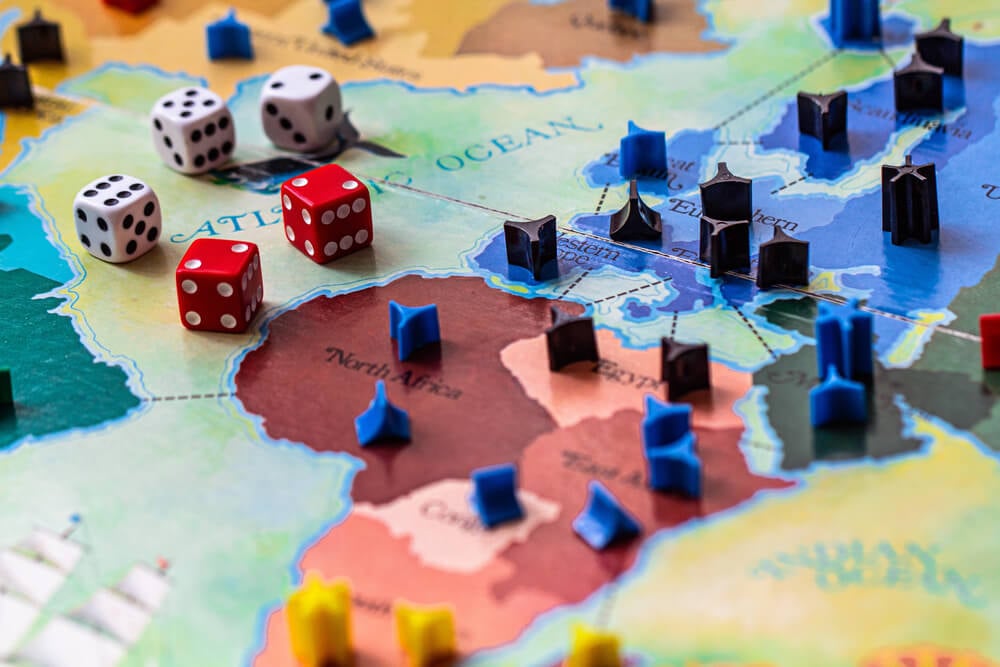
Risk was a strategic conquest game requiring territorial thinking and long-term planning across a map of the world. The game’s combination of luck and strategy created unpredictable outcomes despite careful planning.
Many families adopted house rules to shorten the game’s notorious length, a testament to its engaging but time-consuming design.
Battleship
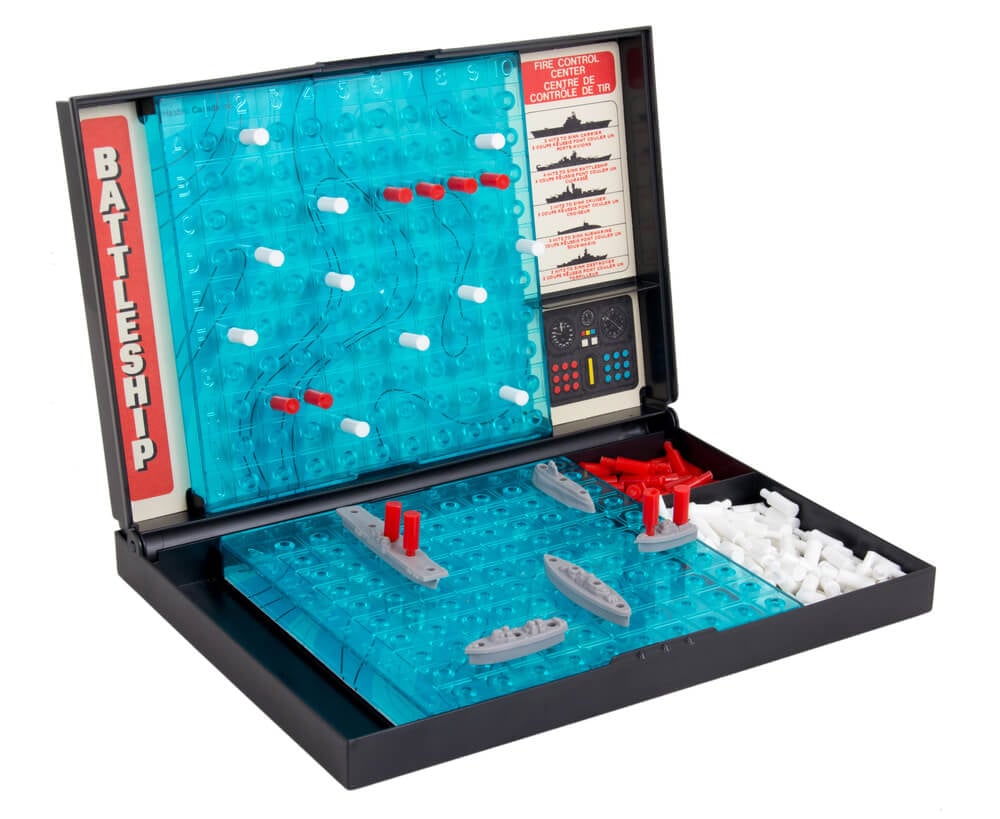
Battleship reduced naval warfare to a grid-based guessing game requiring memory and strategic positioning across dual game boards. The game’s simplicity meant children could play against adults with reasonable odds of victory.
The tactile satisfaction of sinking an opponent’s ship remained consistent across thousands of plays.
Candy Land
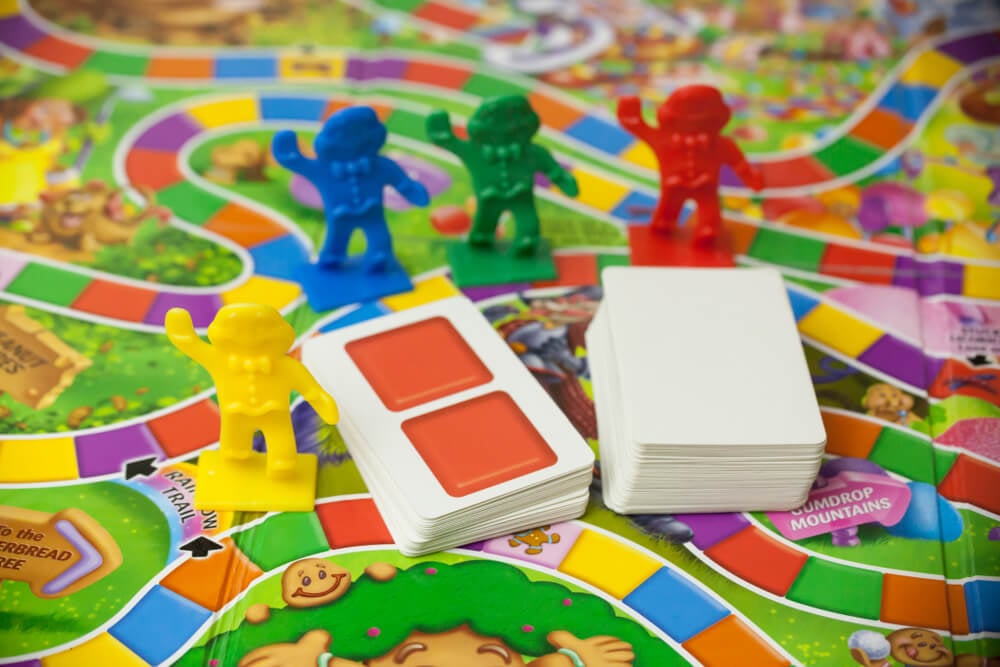
Candy Land was designed for young children, replacing dice-based movement with color-based card draws and a whimsical candy-themed board. The game required no strategy or reading skills, making it accessible to preschoolers and early readers.
Its simple design meant multiple plays could occur in a single evening without player fatigue.
Chutes and Ladders
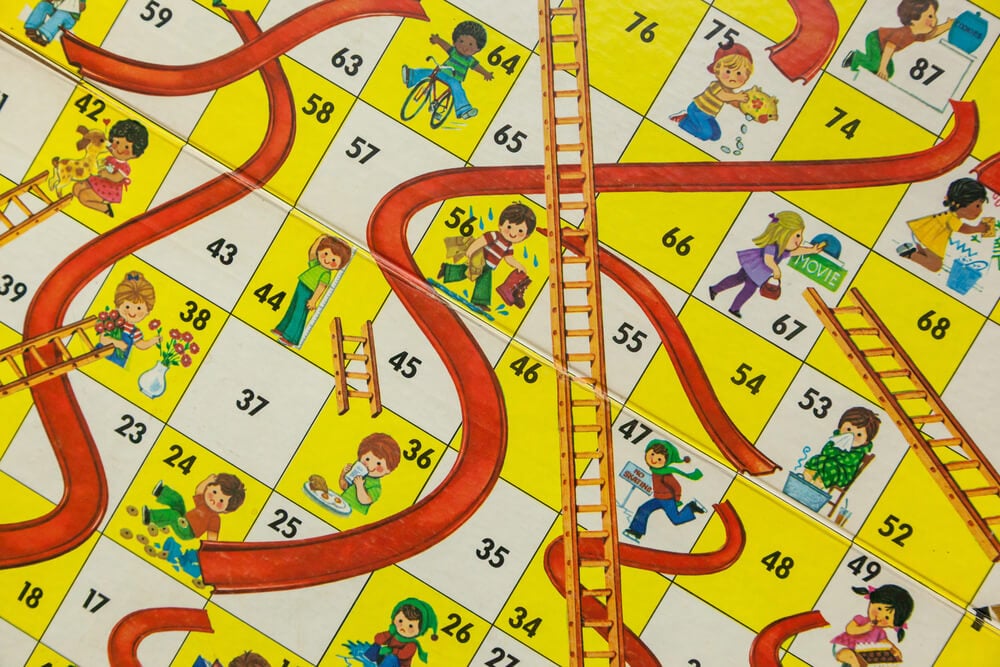
Chutes and Ladders (Snakes and Ladders internationally) taught probability and numerical counting through a simple grid-based game of climb and descent. The game was entirely luck-dependent, ensuring competitive balance regardless of age or skill.
Families often played multiple quick rounds in succession during a single sitting.
Sorry!
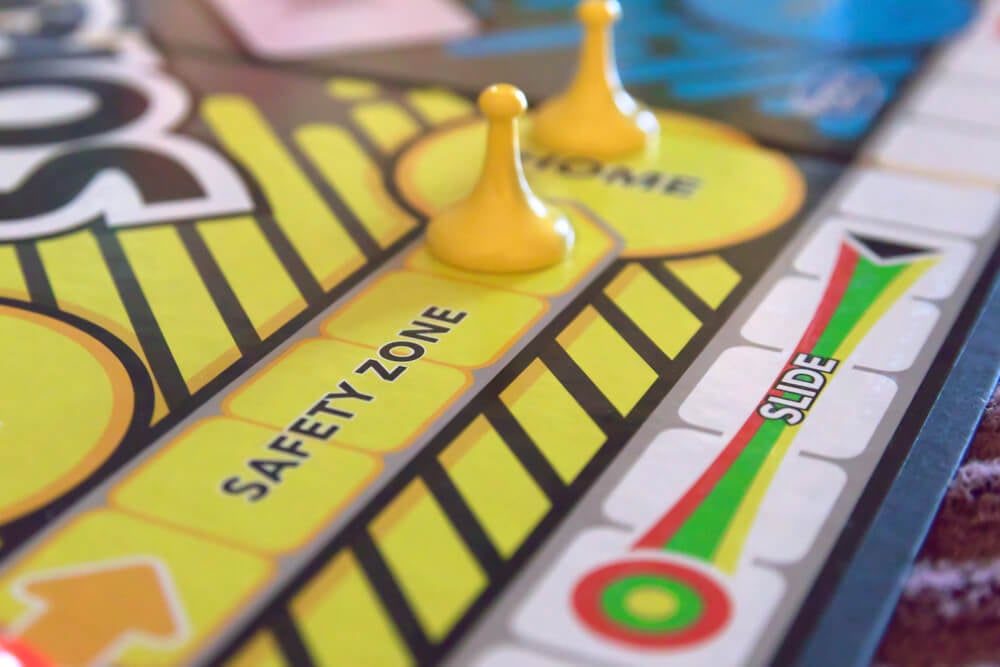
Sorry was a race game combining luck and strategy, where players moved pieces around a board while interrupting opponents’ progress. The game’s central “sorry” mechanic created moments of dramatic reversal and comedic conflict.
The combination of simple rules and unpredictable outcomes made Sorry accessible to wide age ranges.
Trouble (Pop-Matic)
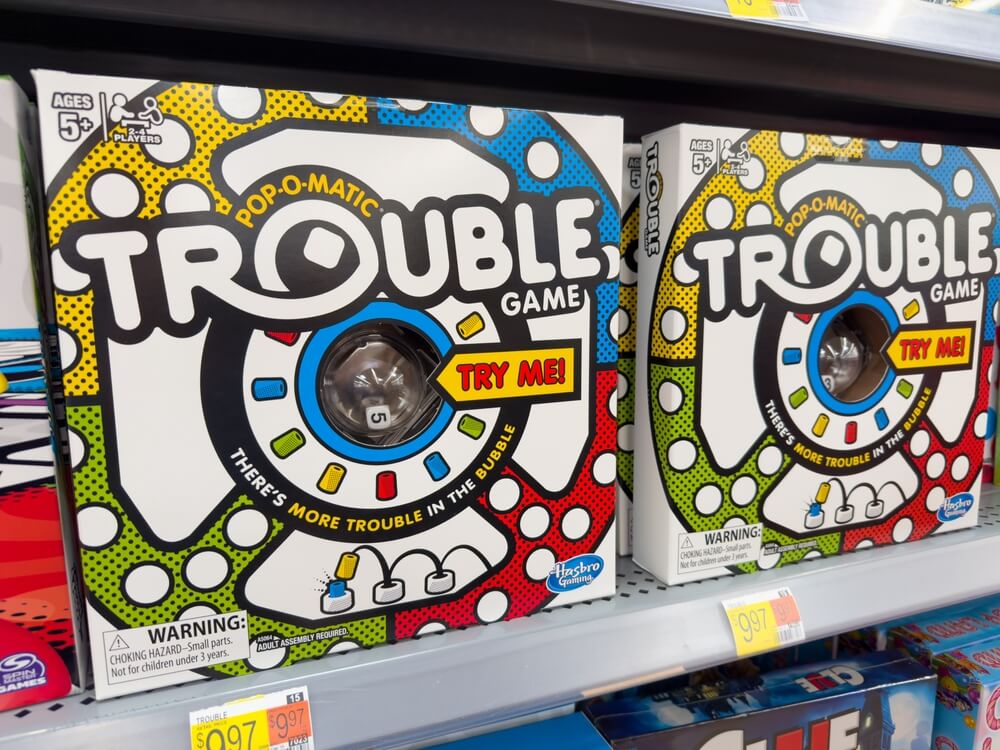
Trouble’s signature pop-dome bubble created a tactile gaming experience, with the sound of the bubble pop serving as an auditory cue replacing dice rolling. The game’s simplicity made it suitable for young children while the pop-bubble action created physical engagement.
The Trouble board layout required basic strategic positioning alongside luck-based movement.
Uno
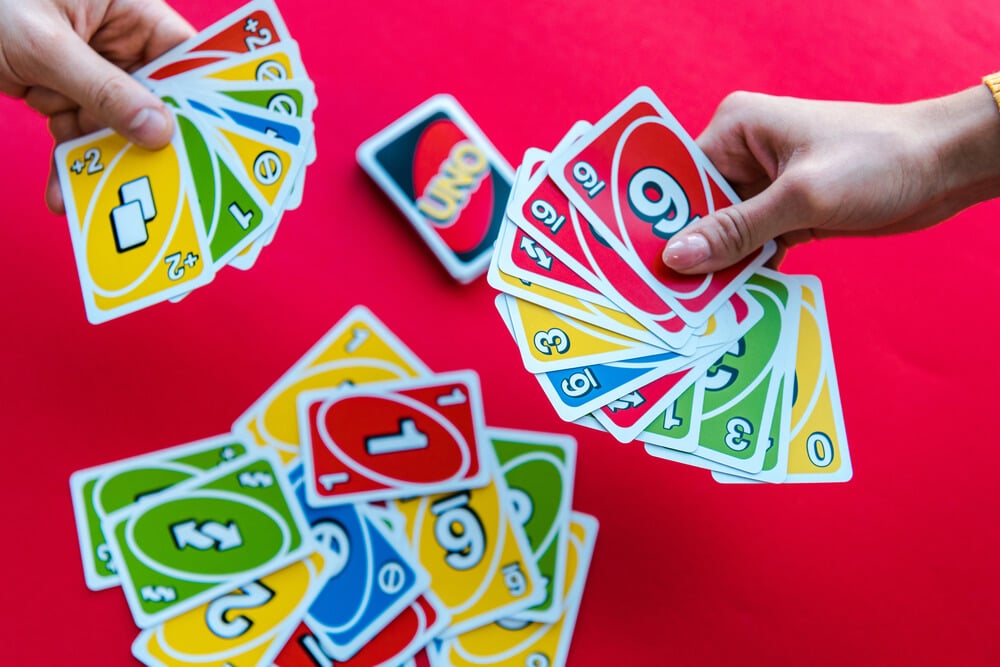
Uno was a card game simplified from rummy that used colored numbered cards and special action cards to create quick-playing competitive rounds. Games lasted fifteen to thirty minutes, making multiple rounds feasible in a single family game night.
House rules regarding stacking, jumping colors, and penalty card interpretations varied widely between families.
Connect Four
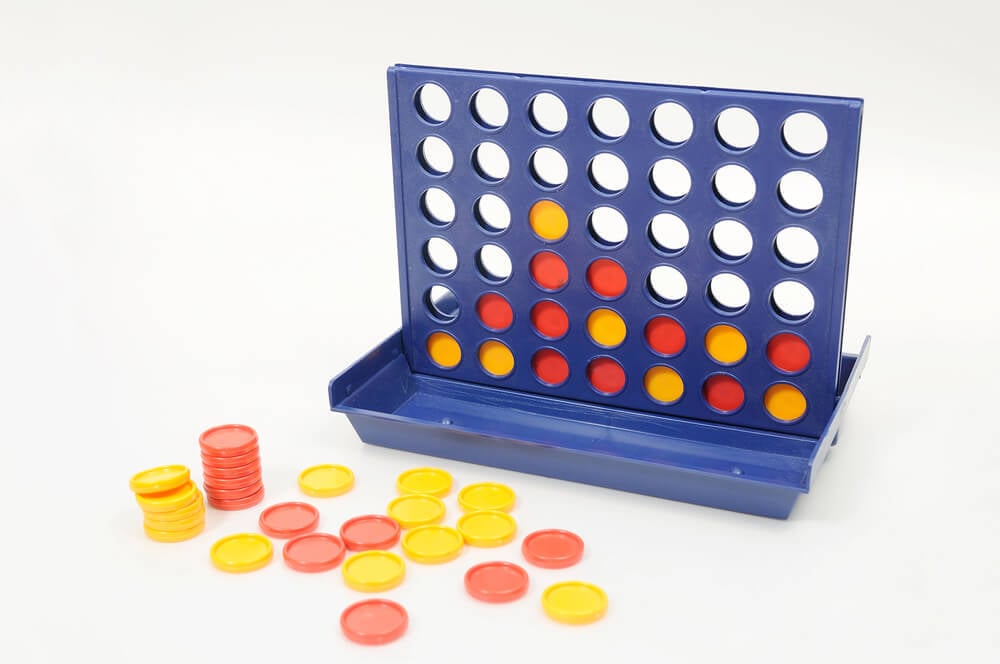
Connect Four reduced strategy to a vertical grid where players alternated dropping colored discs, aiming to form four in a row. The game’s simplicity meant children could compete effectively against adults, though veteran players developed unbeatable opening strategies.
The satisfying sound of discs dropping into the plastic grid became iconic.
Checkers
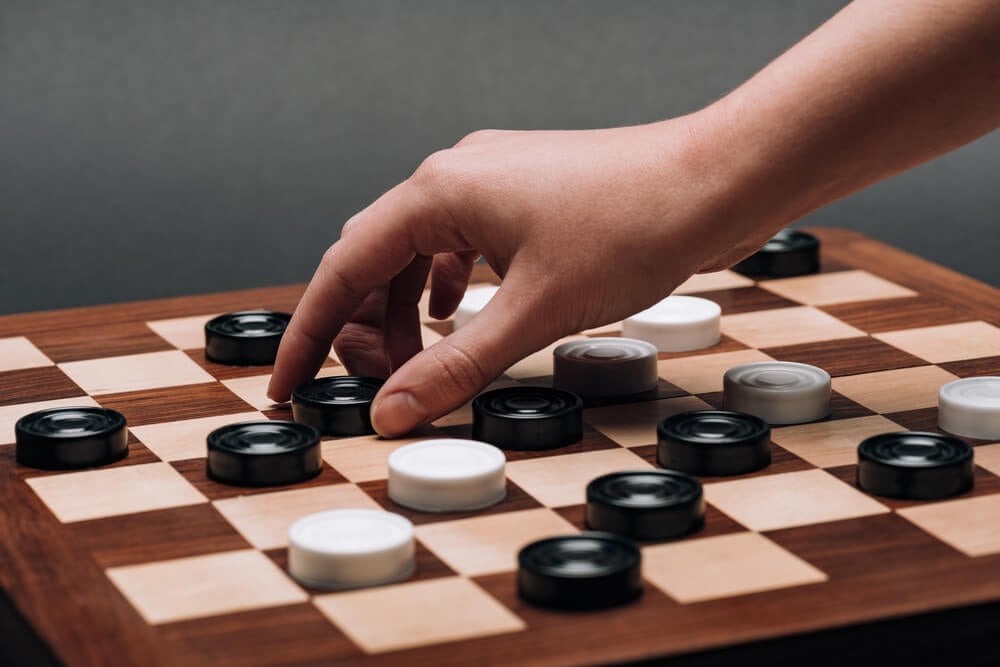
Checkers was a simplified version of chess using eight-by-eight board and identical pieces, reducing the learning curve while maintaining strategic depth. The game’s rules were simple enough for children to learn in minutes but complex enough to sustain decades of play.
Family tournaments could occur across multiple evenings with accumulated wins.
Chess
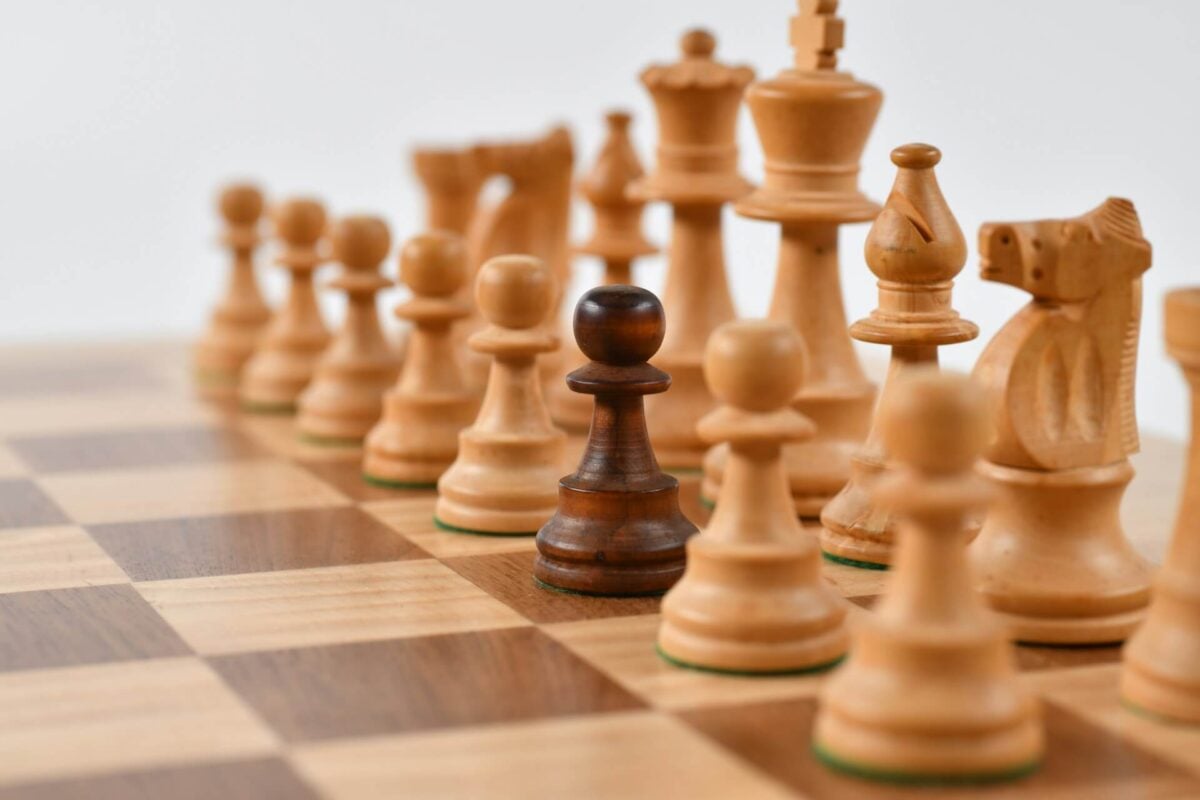
Chess was the ultimate strategic board game, offering infinite game variety despite simple piece movement rules. While requiring investment to learn well, chess created intellectual satisfaction and provided competitive challenge regardless of player age.
Families often maintained chess boards set up throughout the evening with players making moves across hours.
Stratego
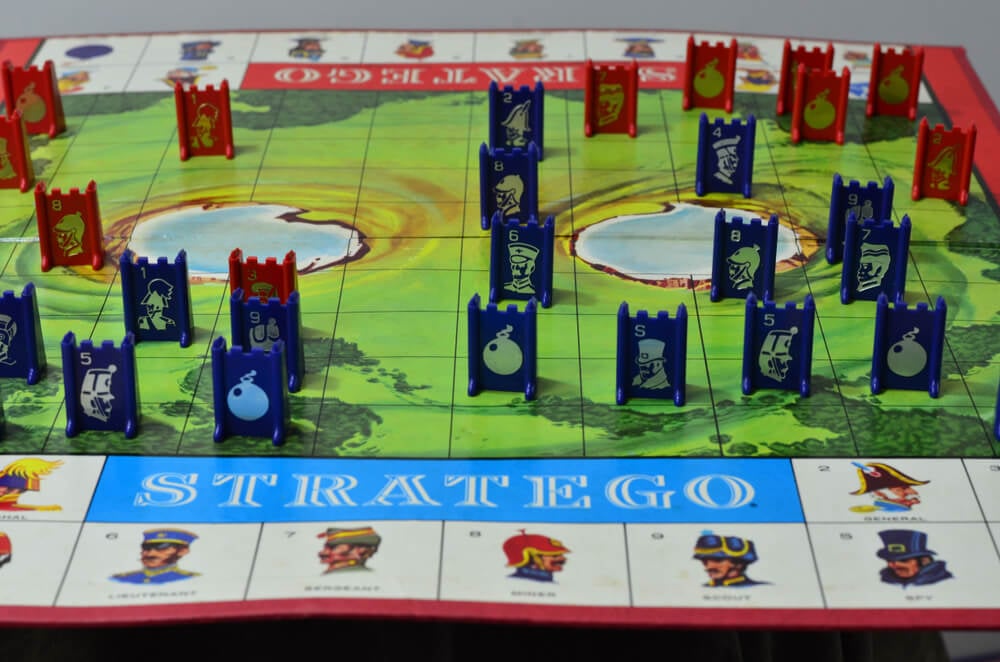
Stratego combined hidden information and spatial strategy, with players deploying military ranks across a board without revealing piece values. The game created moments of dramatic revelation when unknown pieces engaged in combat.
Hidden information changed the game’s dynamic compared to open-board strategies like chess.
Mastermind

Mastermind was a code-breaking game requiring deductive logic to identify a hidden four-colored peg sequence in a limited number of guesses. The game’s elegant simplicity made it accessible to children while offering strategic depth for adults.
Each game lasted fifteen to thirty minutes, making multiple rounds reasonable in a single evening.
Hungry Hungry Hippos
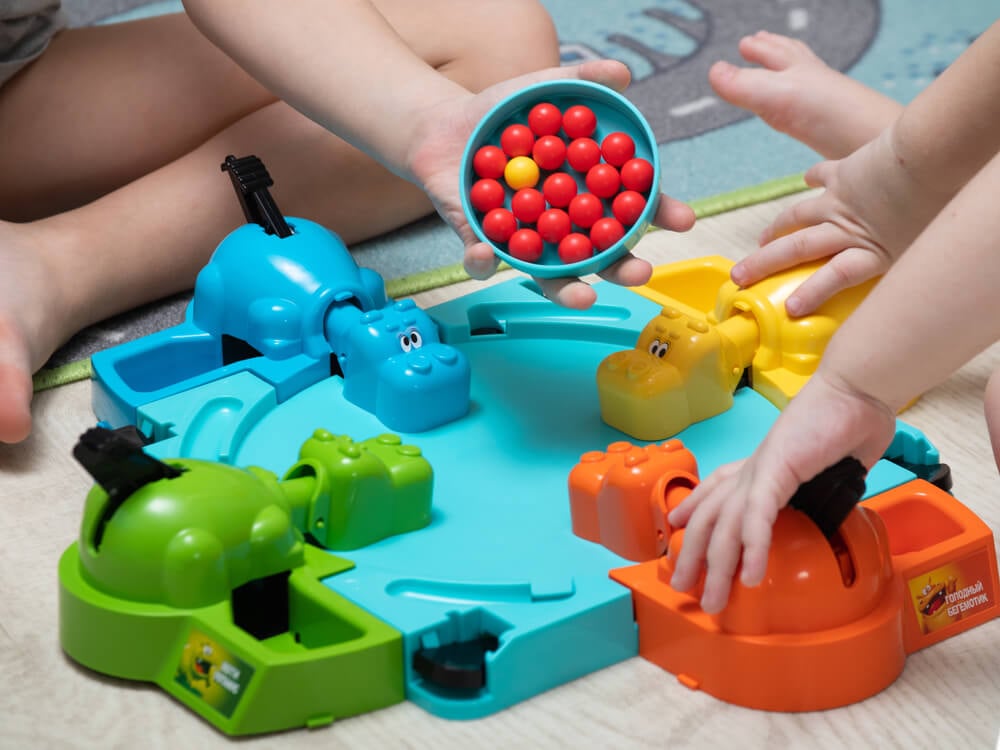
Hungry Hungry Hippos was a simultaneous action game where players controlled hippo pieces to consume marbles from a central arena. The game required no turns and no strategy, only fast reflexes and button-pressing speed.
The chaotic physical action appealed particularly to younger children and created exciting family moments.
Mouse Trap
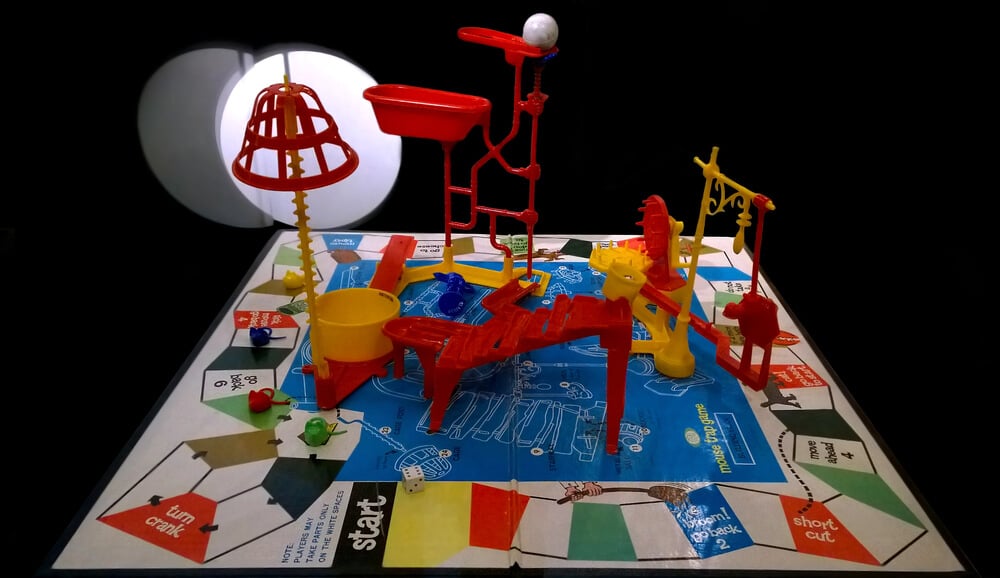
Mouse Trap combined board game movement with a physical trap-building mechanism, creating an elaborate Rube Goldberg apparatus across the board. The game prioritized the satisfaction of building and activating the trap over actual winning conditions.
The physical components made Mouse Trap bulkier to store but memorable to play.
Twister
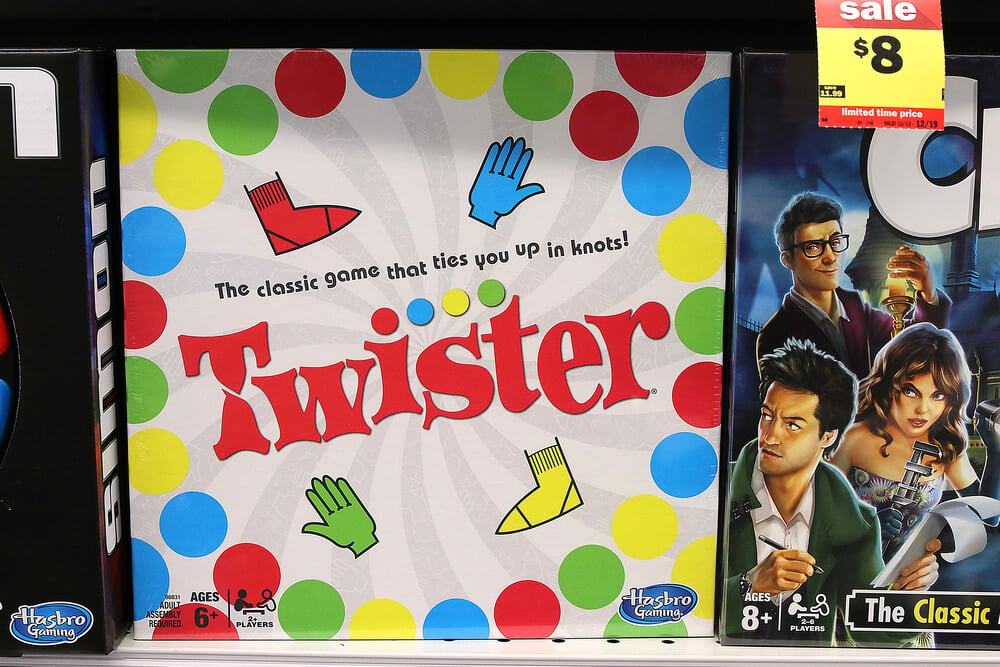
Twister transformed body positioning into a game where players placed hands and feet on colored circles on a large mat. The game eliminated the possibility of solo play and required a referee to spin the dial, making it inherently social.
Physical contact and awkward positioning created comedy and genuine moments of competition.
Jenga

Jenga was a dexterity game requiring players to remove blocks from a tower and place them on top, creating an increasingly unstable structure. The game combined skill with luck, as block placement difficulty varied dramatically.
The dramatic moment when the tower collapsed provided clear victory conditions and satisfying physical feedback.
Dominos (Tile Placement)
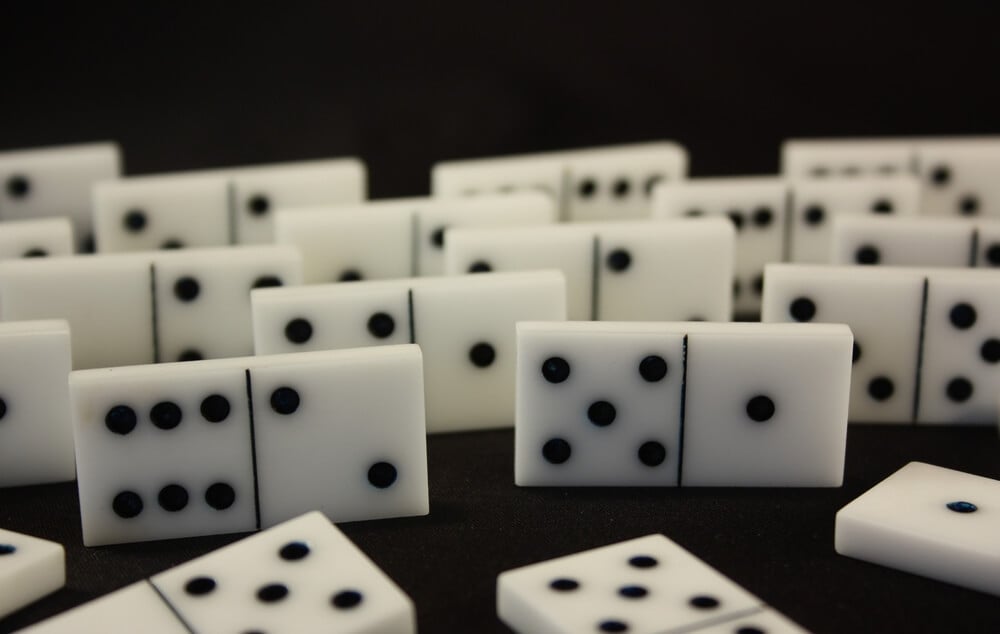
Dominoes were used both for structured games and for chain-reaction entertainment, where players arranged tiles in patterns to create visual displays. The games required spatial reasoning and number matching alongside strategic tile placement.
Multi-player domino games could sustain entire evenings of relaxed competition.
Parcheesi
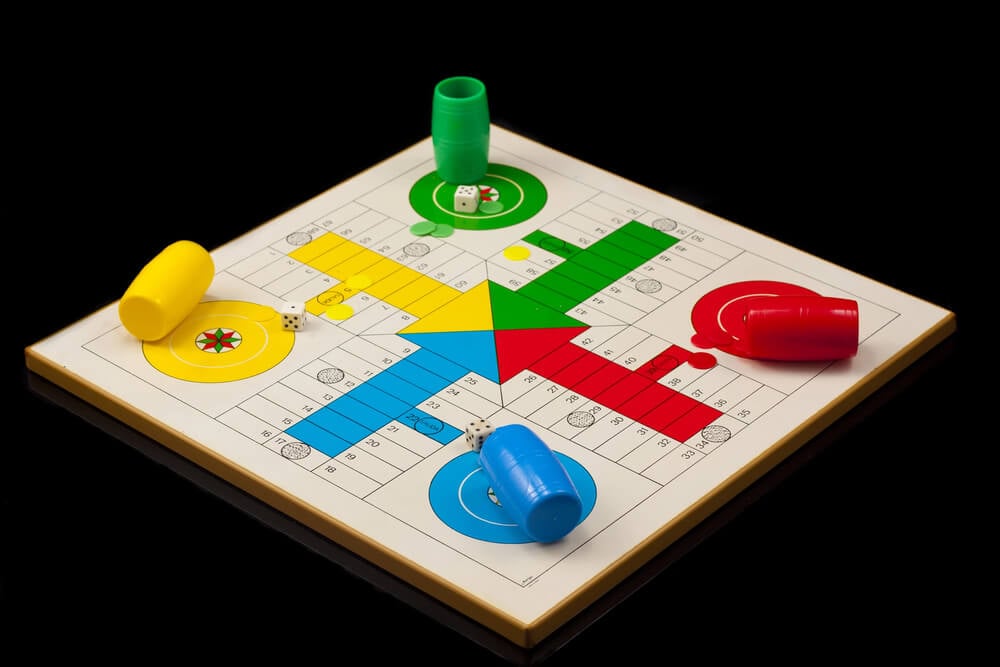
Parcheesi was a race game using dice-based movement and a circular track requiring players to move pieces around the board and home again. The game’s structure prevented severe lead advantages, keeping competition close throughout.
Families developed strong opinions about house rules regarding pieces landing on occupied spaces.
Ludo
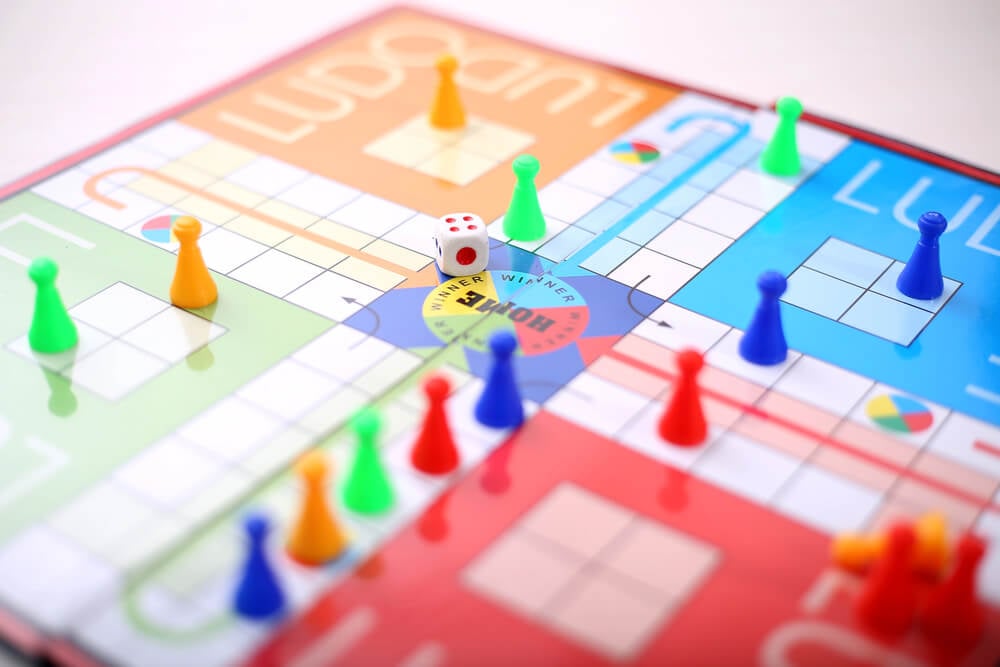
Ludo was similar to Parcheesi, using dice-based movement to race pieces around a cross-shaped board with home areas at each arm. The game’s simplicity made it accessible to very young players while remaining engaging for adults. The combination of luck and minor strategy created balanced competition.
Bingo
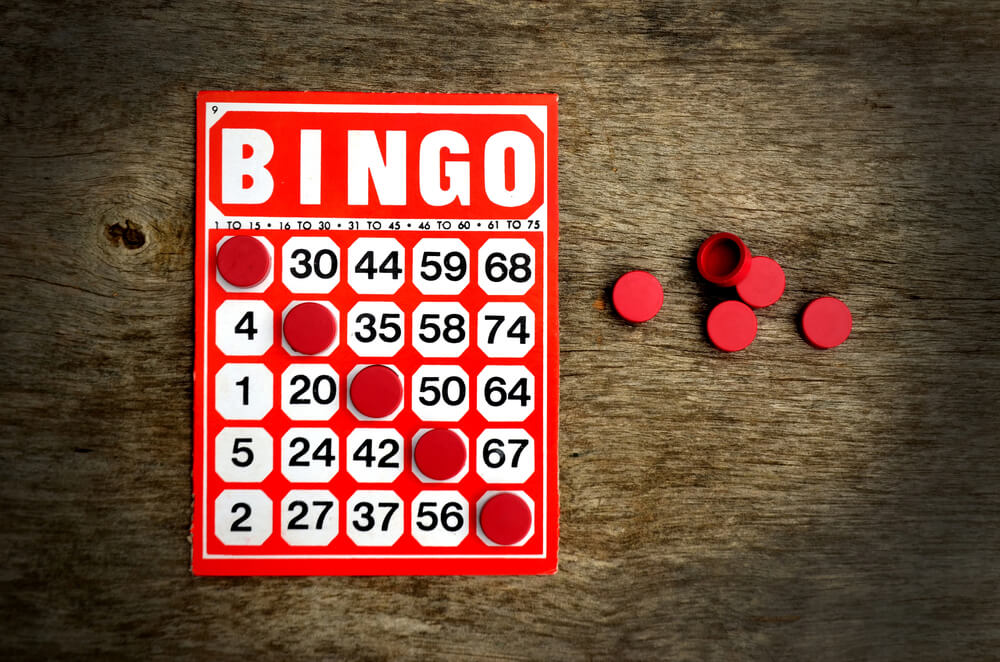
Bingo was either a casual family game using cards and drawn numbers or an elaborate event game with special patterns and prizes. Family bingo nights often included small stakes or prize arrangements, elevating the competition.
The game’s simplicity made it accessible to all ages and abilities.
Boggle

Boggle was a word-finding game using a grid of letter cubes that tumbled in a plastic dome to create random letter arrangements. Players had three minutes to find words within the letter grid, competing on vocabulary size and speed.
The game rewarded linguistic knowledge and spatial perception simultaneously.
Yahtzee
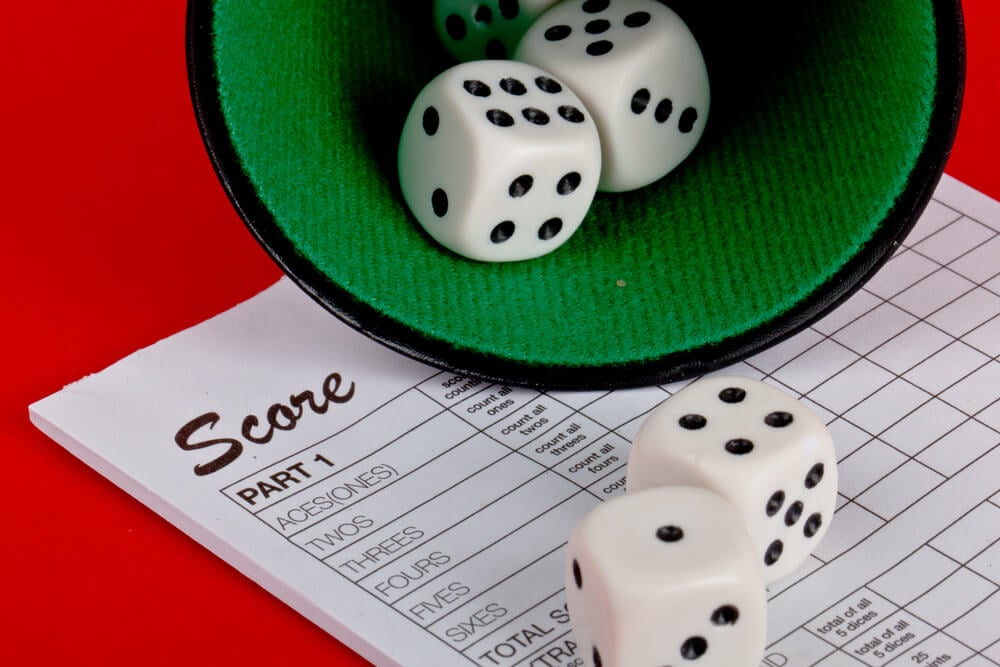
Yahtzee combined dice rolling, probability calculation, and pattern recognition into a game of strategic dice selection. Players rolled dice multiple times per turn, deciding which combinations to keep for scoring categories.
The game’s score sheet tracking across multiple rounds created ongoing competition and strategy.
Croquet

Croquet was an outdoor lawn game using wickets and mallets, requiring players to navigate a course while striking opponents’ orbs away from the path. The game combined physical skill with strategic positioning.
Family croquet tournaments could span entire afternoons.
Cornhole
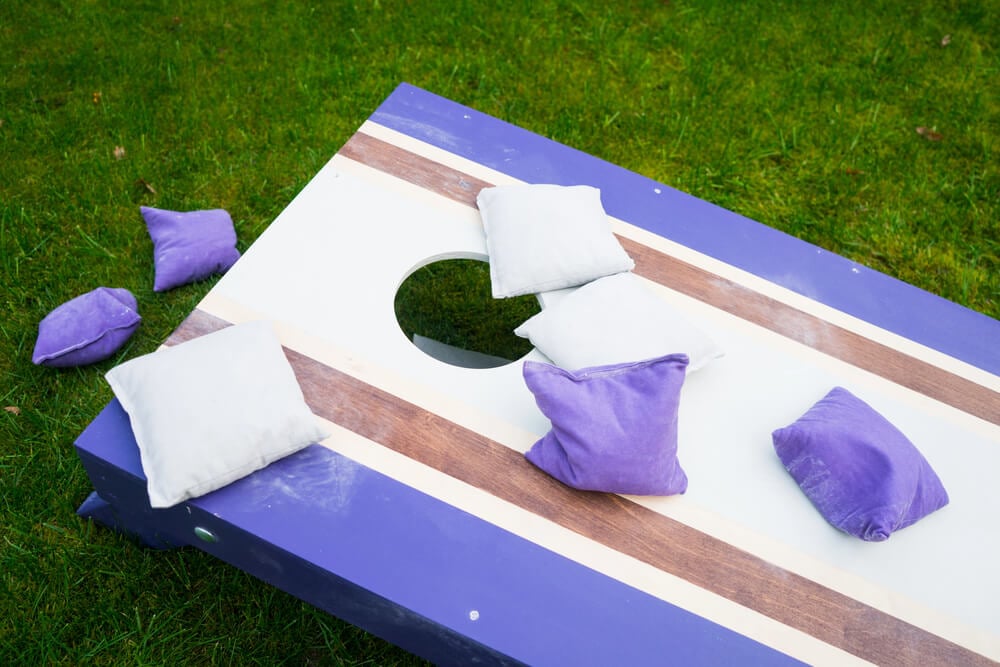
Cornhole (bean bag toss) was a lawn game requiring players to toss weighted bags toward boards with round cutouts, scoring based on landing position. The game was simple enough for casual play while permitting serious competitive tournaments.
Evening cornhole games became staples of family gatherings.
Lawn Darts
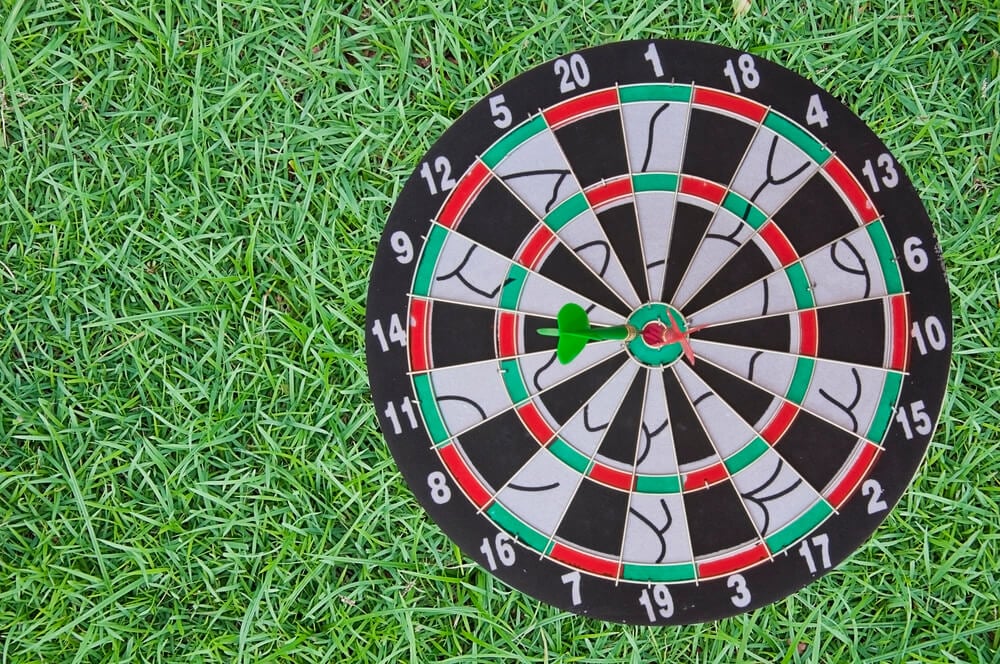
Lawn darts were large weighted projectiles thrown at circular targets on a lawn, combining distance accuracy with competitive scoring. The game required open space and steady hands but minimal equipment beyond the darts themselves.
Families measured distances meticulously to maintain fair competitive boundaries.
The Evening Ritual
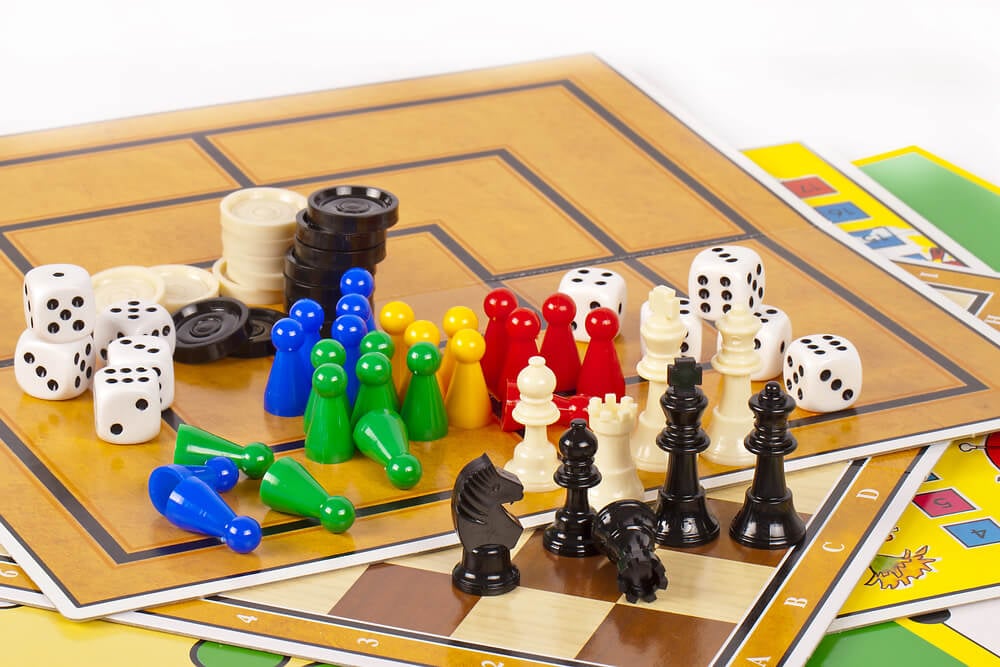
These 28 games represent a specific era when family entertainment meant physical gathering around shared activities with no digital mediation. The ritual of pulling out a board game required deliberate choice and time commitment, creating protected family moments.
Modern families access entertainment individually through screens more often than they gather around game boards, representing a shift in how households structure leisure time together.
More from Go2Tutors!

- 16 Historical Figures Who Were Nothing Like You Think
- 12 Things Sold in the 80s That Are Now Illegal
- 15 VHS Tapes That Could Be Worth Thousands
- 17 Historical “What Ifs” That Would Have Changed Everything
- 18 TV Shows That Vanished Without a Finale
Like Go2Tutors’s content? Follow us on MSN.



