12 Game Shows Caught Cheating Their Contestants
Game shows have always promised fairness, excitement, and the chance for regular people to win big prizes. But behind the glittering lights and enthusiastic hosts, some productions have pulled the wool over viewers’ eyes with rigged outcomes, planted contestants, and manipulated results. These scandals have rocked the entertainment industry and forever changed how we watch television.
The following cases expose the dark side of game show production. Here is a list of 12 game shows that were caught red-handed cheating their contestants.
Twenty-One

The mother of all game show scandals erupted when contestant Herb Stempel was coached by producer Dan Enright to allow his opponent, Charles Van Doren, to win the game. Stempel had been on the show for six weeks and had already won around $70,000 before being told to take a dive.
A year later, Stempel told the New York Journal-American’s Jack O’Brian that his winning run as champion on the series had been choreographed to his advantage, and that the show’s producer then ordered him to purposely lose his championship to Van Doren. This revelation would eventually lead to congressional hearings and new laws regulating television content.
Dotto

The unraveling of game show integrity began with Dotto, where sharp-eyed viewers noticed something fishy. A contestant’s notebook was spotted with answers written down before the questions were asked on air.
This discovery provided the proof that investigators needed to expose the broader conspiracy plaguing quiz shows of the 1950s.
Like Go2Tutors’s content? Follow us on MSN.
The $64,000 Question

This show started the big-money quiz craze, but it also helped pioneer the art of manipulation. Producers would give certain contestants easier questions while making others face impossible challenges.
The show’s format made it easy to control outcomes since contestants were isolated in soundproof booths, making it simple to feed them answers through hidden communication devices.
The $64,000 Challenge

As the spinoff of The $64,000 Question, this show continued the tradition of rigged results. Contestants were often selected based on their entertainment value rather than their knowledge, and producers would manipulate the difficulty of questions to create desired storylines.
The show’s downfall came when former contestants began speaking out about the coaching they received.
Tic-Tac-Dough

This seemingly innocent game became another casualty of the 1950s quiz show investigations. Producers would arrange for popular contestants to stay on longer by giving them advance knowledge of questions.
The show’s simple format made it easy to manipulate, as producers could control both the questions and the strategy advice given to contestants.
Like Go2Tutors’s content? Follow us on MSN.
The Price is Right (1950s Version)

Even game shows focused on guessing prices weren’t immune to scandal. The original version of this show faced allegations that contestants were given hints about product prices backstage.
Some contestants reported being told approximate price ranges for items before going on air, giving them an unfair advantage over truly unprepared participants.
Press Your Luck

In his 1984 appearance on Press Your Luck, contestant Michael Larson won $110,237, a snail boat, and vacations to the Bahamas and Hawaii — all because he had realized the game board’s seemingly random cursor actually followed five patterns that he then memorized. While Larson didn’t technically cheat, his discovery exposed a major flaw in the show’s design that producers had overlooked.
Some at CBS had wanted to quash the episode entirely, and afterwards made the decision that it would never be aired again, even including that requirement with their broadcast syndication contracts.
Super Password

This word-guessing game faced controversy when it was revealed that some celebrity guests were given advance knowledge of passwords. The show’s format relied on celebrities giving clues to civilian contestants, but when the celebrities knew the answers beforehand, it created an unfair playing field.
Several former contestants came forward with stories about suspicious interactions with celebrity partners.
Like Go2Tutors’s content? Follow us on MSN.
Card Sharks

The card-guessing game show encountered problems when contestants noticed that certain cards appeared more frequently than statistical probability would suggest. Internal investigations revealed that some decks had been manipulated to favor specific outcomes.
The show’s reliance on seemingly random card draws made it particularly vulnerable to this type of manipulation.
Family Feud
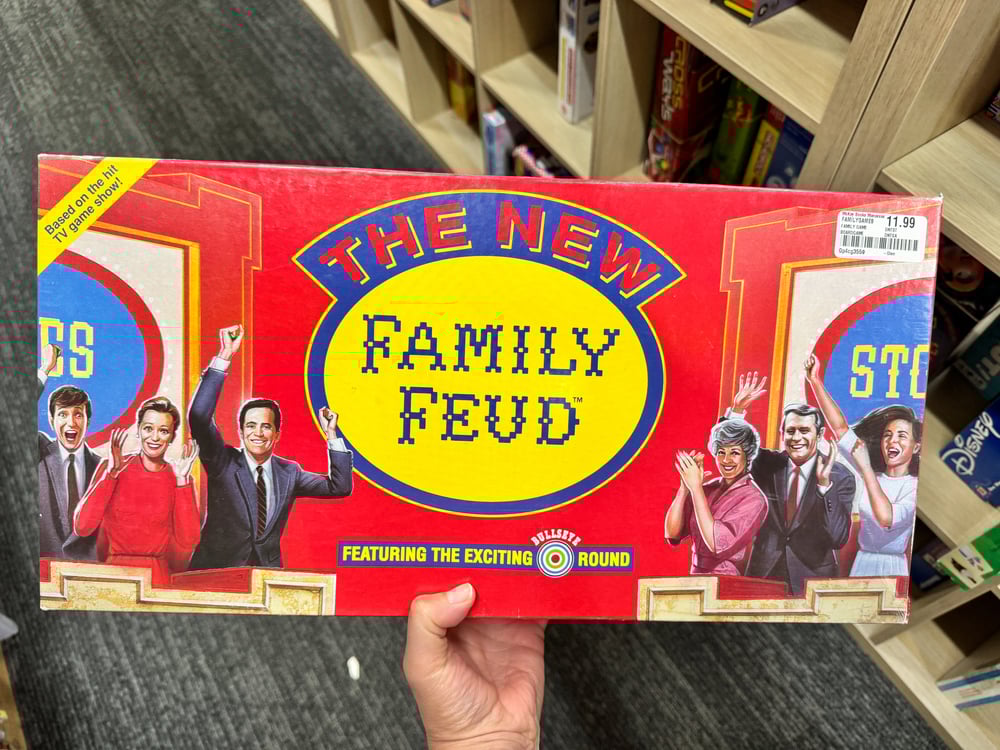
Survey says… this show had issues with predetermined answers. Some contestants reported being coached on which responses to give, even when those answers weren’t actually the most popular survey responses.
Producers would sometimes manipulate the survey results to create more exciting gameplay or to favor certain families over others.
Wheel of Fortune

On Wheel of Fortune if you radically adjust your spin to either avoid bankruptcies/lost turns or go ‘glitter mining’, the producers have a basis to throw you off. Beyond spin manipulation, there were allegations that some contestants received hints about puzzles during commercial breaks.
The show’s long-running success made it a target for scrutiny about whether outcomes were influenced by production decisions.
Like Go2Tutors’s content? Follow us on MSN.
Who Wants to Be a Millionaire

Khaled El-Katateny actually ‘cheated’ to win $100,000 on Millionaire Hot Seat is debatable, but he certainly used a strategy that was not intended by the show’s producers and could therefore be seen as cheating. Various international versions of the show have faced accusations of planted contestants and manipulated phone-a-friend calls.
Some former contestants have claimed they were given subtle hints by producers when they appeared to be struggling.
The Trust Factor Today

These scandals fundamentally changed how game shows operate and how audiences perceive them. In response to the scandals, the government was widely pressured to impose stricter regulations on broadcasters.
As a direct consequence, Congress amended the Communications Act of 1934 to prohibit networks from prearranging the outcomes. Modern game shows now operate under strict oversight with independent observers and detailed documentation of all procedures.
While the golden age of quiz show corruption may be behind us, these historical cases serve as a reminder that not everything we see on television is as honest as it appears.
More from Go2Tutors!

- 16 Historical Figures Who Were Nothing Like You Think
- 12 Things Sold in the 80s That Are Now Illegal
- 15 VHS Tapes That Could Be Worth Thousands
- 17 Historical “What Ifs” That Would Have Changed Everything
- 18 TV Shows That Vanished Without a Finale
Like Go2Tutors’s content? Follow us on MSN.