25 Laws Once Enforced That Sound Impossible Today
Legal codes are supposed to reflect a society’s values, which is exactly why old ones are so revealing. Flip through municipal ledgers, colonial statutes, and national archives and a pattern emerges: lawmakers spent centuries regulating things that now seem trivial, absurd, or flatly unenforceable.
The following laws were not urban legends. They were written down, enforced, and in some cases stayed on the books for generations.
England’s Law Against Wearing Armor in Parliament

In 1313, King Edward II issued a proclamation barring members of Parliament from showing up armed or armored to sessions in Westminster. The rule was a direct response to nobles who treated legislative disputes as an extension of the battlefield, arriving with swords and mail to intimidate rivals.
Versions of the restriction lingered in English law for centuries afterward.
The Byzantine Ban on Blue and Green Chariot Colors Mixing Households
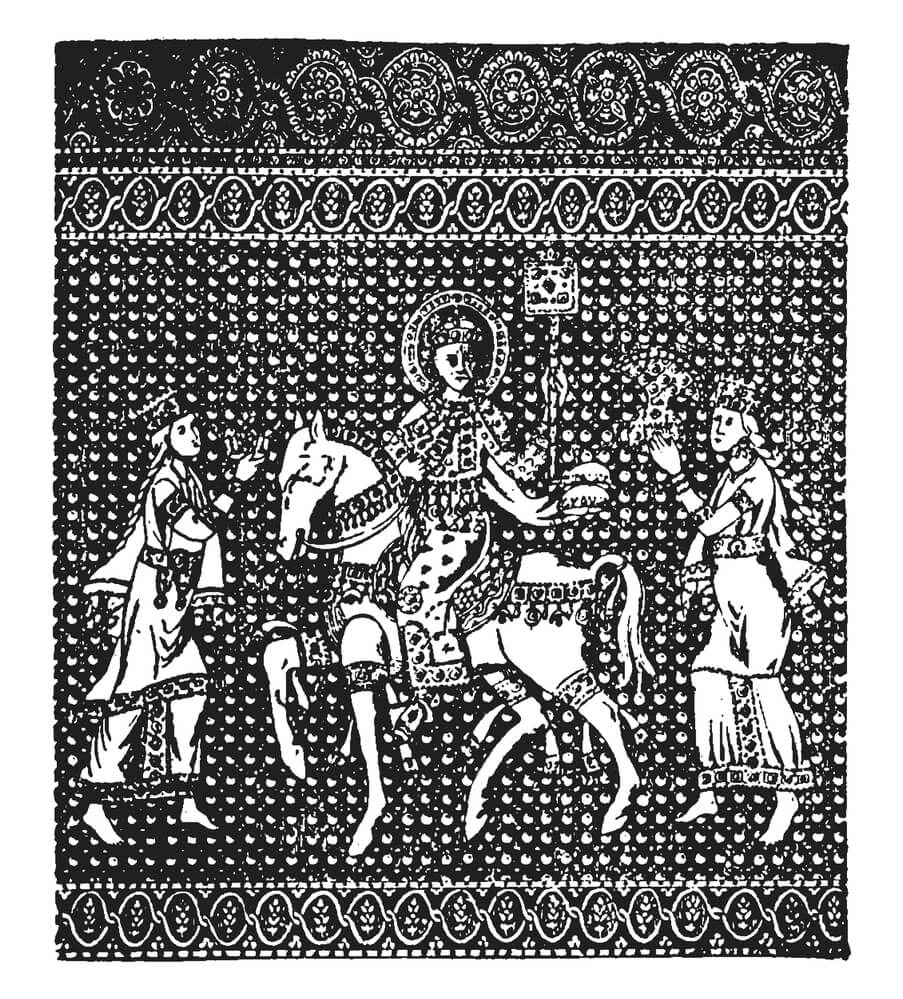
Roman and Byzantine authorities at various points restricted which chariot-racing faction colors a household could publicly display, since Blue and Green fan rivalries regularly erupted into citywide riots. The most infamous eruption, the Nika riots of 532 CE in Constantinople, killed tens of thousands and nearly toppled Emperor Justinian.
Faction affiliation was treated less like sports fandom and more like a political and security risk.
Connecticut’s Colonial Law Against Unnecessary Travel on Sunday

Puritan New England enforced “Blue Laws” that made unnecessary travel, work, or recreation illegal on Sundays. Connecticut’s version, part of a broader code first compiled in the 1650s, allowed exceptions only for religious services or genuine emergencies.
Violators faced fines or public punishment, and similar Sunday-travel restrictions persisted in parts of New England well into the 19th century.
Milan’s Sumptuary Law Capping Wedding Guest Lists

Renaissance Milan, like many Italian city-states, passed sumptuary laws restricting how lavish weddings, funerals, and banquets could be, including limits on the number of guests and courses served. The goal was to curb competitive spending among merchant families and preserve social hierarchy.
Officials called “sumptuary magistrates” were tasked with policing violations at private celebrations.
France’s Law Requiring a License to Wear Trousers

Paris police intermittently enforced regulations against women wearing trousers, with enforcement evolving from revolutionary-era anxieties about gender-coded clothing. Rather than a single formal ordinance, various mayors applied and relaxed restrictions inconsistently over two centuries, until Paris formally revoked all such ordinances in 2013 to align with French equality law.
Massachusetts’s Law Against Idle Persons

Colonial Massachusetts criminalized simply being an “idle person,” a vague statute used to prosecute anyone without visible employment or means of support. Constables could compel the accused to explain their livelihood in court, and those found guilty could be bound over to forced labor.
The law reflected a Puritan worldview in which unemployment itself was treated as a moral and civic offense.
Prussia’s Law Dictating Which Crops Peasants Could Plant
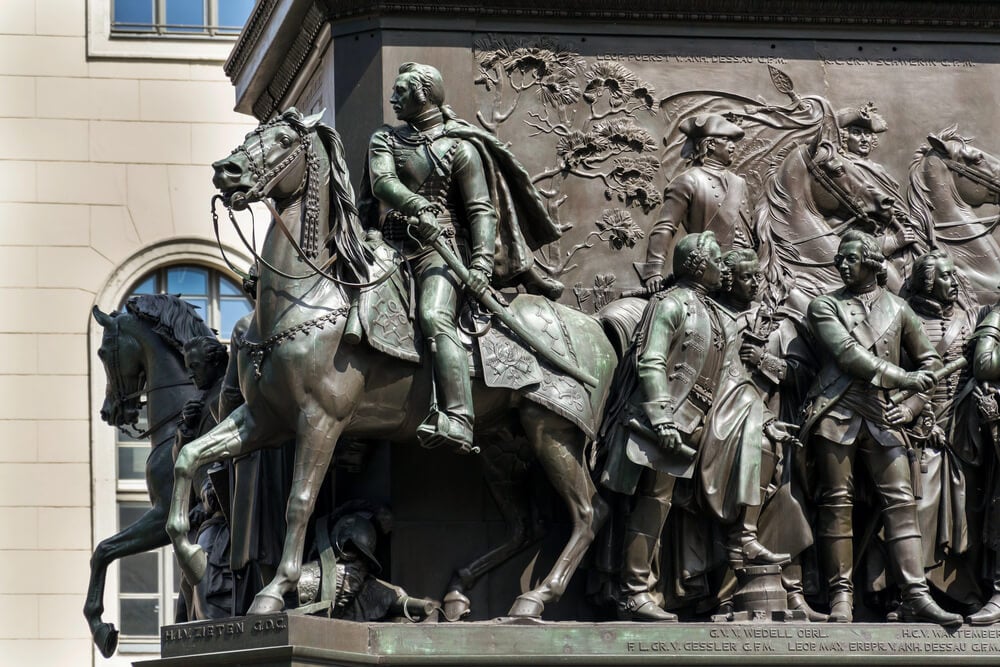
Frederick the Great’s 18th-century agricultural edicts went so far as to mandate that Prussian peasants plant potatoes on a portion of their land, since the crop resisted famine better than grain. Enforcement included soldiers monitoring fields and, according to court records, penalties for landowners who refused.
The policy is part of why the potato later became a staple across Central Europe.
Singapore’s Colonial-Era Ban on Chewing Gum Import

Singapore’s modern gum ban, formalized in 1992, has roots in colonial-style public order regulation and was justified on grounds that discarded gum was gumming up train doors and public housing elevators. Importing gum became a fineable offense, with limited exceptions later carved out for therapeutic gum sold through pharmacies.
The law remains one of the most cited examples of Singapore’s strict public-cleanliness enforcement.
England’s Law Requiring Men to Practice Archery Every Sunday

The Unlawful Games Act of 1541, passed under Henry VIII, required able-bodied English men to own a bow and practice archery on Sundays and holy days, while simultaneously banning popular pastimes like football, bowls, and dice as distracting time-wasters. The law was a direct response to declining archery skill at a time England still relied on longbowmen for warfare.
Local constables were authorized to confiscate gaming equipment used in violation of the ban.
Switzerland’s Law Requiring Livestock Companionship

A Swiss animal welfare provision, formalized in the 2008 Animal Protection Act, made it illegal to keep certain social animals, including guinea pigs, alone, since isolation was deemed a welfare violation. Pet stores responded by offering rental companion guinea pigs for owners whose pet died, so a survivor would not be alone before a replacement was found.
Inspectors have cited owners under the law.
England’s Law Against Handling Salmon Under Suspicious Circumstances

The UK’s Salmon Act of 1986 makes it a specific criminal offense to “handle salmon in suspicious circumstances,” a deliberately broad provision designed to prosecute the trafficking of poached fish without requiring prosecutors to prove exactly how the salmon was stolen. The law remains active and has been used in real fraud and poaching cases.
It is frequently cited by British lawmakers as an example of oddly specific but still-functioning legislation.
Boston’s Colonial Law Against Unnecessary Visiting on the Sabbath

Massachusetts Bay Colony’s 1646 laws prohibited “unnecessary” social visiting on the Sabbath, empowering tithingmen to patrol streets and homes checking for violators. Neighbors could be fined for hosting guests without a recognized religious or medical justification.
The role of tithingman, an early form of moral enforcement officer, existed specifically to carry out this kind of surveillance.
Georgia’s Colonial Ban on Lawyers

The original 1735 charter for the colony of Georgia banned practicing attorneys from the territory entirely, a provision pushed by founder who distrusted the legal profession and wanted disputes settled directly by magistrates. The ban held for roughly two decades before colonial administrators reversed course as the settlement grew more complex.
Georgia now hosts one of the busiest court systems in the American South.
Milan’s Law Against Frowning

A widely enforced medieval Milanese ordinance required citizens to smile in public, with limited exceptions for people attending funerals, visiting the sick, or performing certain trades like undertaking. Its more colorful modern retelling has been exaggerated online, but municipal decorum codes from the period genuinely restricted visible public displeasure as disruptive to civic order.
Similar decorum statutes existed in other Italian city-states.
Britain’s Law Against Dying in the Houses of Parliament

Because the Palace of Westminster sits on land technically belonging to the Crown, and anyone who dies within a royal palace is traditionally entitled to a state funeral, British parliamentary tradition holds that dying inside the building is against the rules. No formal statute has ever been enforced against a dying MP, and the claim functions more as long-standing constitutional folklore than active law, but it is repeated by parliamentary officials as fact.
Ancient Rome’s Law Restricting Purple Togas

Roman sumptuary law reserved Tyrian purple dye, at the time one of the most expensive substances in the ancient world, exclusively for magistrates and later emperors, making unauthorized purple clothing a punishable offense. The dye required thousands of crushed sea snails per garment, which kept its price astronomical and its color politically loaded.
Wearing it without rank could be treated as a claim to power.
Indiana’s Attempted Law Redefining Pi

In 1897, the Indiana General Assembly considered House Bill 246, a proposal that would have codified an incorrect mathematical value for pi based on the claims of an amateur mathematician. The bill passed the Indiana House unanimously before a Purdue University professor happened to be in the statehouse, recognized the error, and lobbied the Senate to table it indefinitely.
It never became law, but it advanced further through a legislature than almost any joke bill in American history.
Byzantine Law Regulating the Height of Women’s Hairstyles in Church

Church and civil authorities in the late Byzantine Empire issued restrictions on elaborate hairstyles and headdresses worn by women attending services, citing concerns that towering arrangements blocked the view of worshippers behind them. Clergy were empowered to turn away women whose styling violated the guidance.
The rule sat alongside broader sumptuary restrictions on jewelry and dress inside churches.
New Jersey’s Old Law Against Slurping Soup in Restaurants

An often-cited New Jersey municipal ordinance criminalized making loud noises while eating soup in a public restaurant, part of a wave of early-20th-century local decorum laws aimed at regulating dining etiquette. Enforcement was inconsistent and largely symbolic, but the law appeared on municipal code lists for decades.
Similar noise-based dining ordinances turned up in several other American towns during the same period.
Colonial Virginia’s Law Requiring Church Attendance

Virginia’s 1610 legal code, known as Lawes Divine, Morall and Martiall, made missing Sunday church services a punishable offense, with penalties escalating from loss of rations to death for repeated absence. The code was drafted by colonial governor Thomas Dale to impose military-style discipline on the struggling Jamestown settlement.
It is considered one of the harshest legal documents in early American colonial history.
China’s Tang Dynasty Law Regulating Horse Speed in City Streets

The Tang Code, compiled in 653 CE, included specific traffic-style provisions penalizing riders who galloped horses or drove carts recklessly through crowded city streets, with harsher punishment if the recklessness caused injury. Officials could levy corporal punishment measured in strokes of a cane, scaled to the severity of the incident.
Legal historians regard it as one of the earliest comprehensive traffic codes anywhere in the world.
Britain’s Law Against Being Drunk in a Pub

Section 12 of the Licensing Act 1872 in England and Wales makes it a specific offense to be found drunk on licensed premises, meaning a person can technically be prosecuted for being intoxicated inside the very pub that served them. The law is rarely enforced today but has never been repealed, and legal commentators periodically point to it as one of Britain’s strangest surviving statutes.
Publicans, rather than patrons, are more commonly the ones fined for serving already-intoxicated customers.
Massachusetts’s Colonial Law Fining Bachelors

Several New England colonies, including Massachusetts and Connecticut, imposed special taxes or fines on unmarried men past a certain age, reflecting the Puritan view that bachelorhood strained community structure. Some towns required unmarried men to live in an established household rather than alone.
The practice waned by the 18th century as colonial population pressures eased.
Japan’s Edo-Period Sumptuary Laws on Merchant Clothing

The Tokugawa shogunate issued repeated sumptuary edicts restricting merchants, who were near the bottom of the era’s rigid social hierarchy despite often being wealthy, from wearing silk, gold thread, or other luxury fabrics associated with the samurai class. Merchants responded by lining plain outer garments with expensive silk linings, visible only when the fabric moved.
The laws were reissued multiple times because they were so widely and creatively evaded.
Ohio’s Old Law Against Getting a Fish Drunk

An oft-repeated Ohio municipal statute made it illegal to intentionally intoxicate a fish, a rule traced back to circus and carnival sideshow acts that used alcohol to sedate fish for novelty displays. Local officials cited animal cruelty concerns rather than pure absurdity as the underlying rationale.
The ordinance surfaces regularly in roundups of unusual but genuinely enacted American local laws.
What Old Statutes Reveal About Present Anxiety

None of these laws were written as jokes. Each responded to a genuine fear that lawmakers believed threatened public order, whether that was chariot-faction riots, famine, or the erosion of a rigid social hierarchy.
Reading them now says less about the eccentricity of the past than about how confidently every era legislates its own temporary panics as timeless common sense.
The laws that look most ridiculous in hindsight are usually the ones that tried hardest to control something ordinary: what people wore, when they could travel, how they behaved in private. Future generations will likely find plenty in today’s statute books just as puzzling, which is worth remembering the next time a law feels self-evidently permanent.
More from Go2Tutors!

- The Romanov Crown Jewels and Their Tragic Fate
- 13 Historical Mysteries That Science Still Can’t Solve
- Famous Hoaxes That Fooled the World for Years
- 15 Child Stars with Tragic Adult Lives
- 16 Famous Jewelry Pieces in History
Like Go2Tutors’s content? Follow us on MSN.