27 Laws From the Past That Sound Impossible Today
Legal history is full of statutes that made perfect sense to the people who wrote them and almost none to everyone who came after. Reading through old law books turns up rules about clothing, gambling, marriage, and money that governed daily life for generations before being repealed, often only after decades of enforcement that seems bewildering by modern standards.
Sumptuary Laws Restricting Clothing by Class

Medieval and early modern England, along with much of continental Europe, enforced sumptuary laws that dictated what fabrics, furs, and colors a person could wear based on their social rank. A merchant’s wife caught wearing silk or ermine reserved for nobility could be fined, and England’s laws on the subject remained on the books in various forms until the reign of James I in the early seventeenth century.
The laws aimed as much at protecting domestic textile industries from imported luxury goods as at preserving visible class distinctions.
Massachusetts’s Ban on Christmas

The Puritan-controlled Massachusetts Bay Colony banned the celebration of Christmas outright in 1659, fining anyone caught feasting or taking the day off work five shillings, on the grounds that the holiday had no scriptural basis and encouraged rowdy behavior. The law remained in effect for over twenty years before being repealed in 1681.
Christmas did not become widely celebrated again in New England until well into the nineteenth century.
England’s Medieval Football Ban

King Edward III banned football in London in 1314, calling it a disturbance that distracted young men from archery practice needed for national defense, and later English monarchs reissued similar bans for centuries. The unruly, often violent street version of the game regularly caused property damage and injuries, giving authorities repeated cause to outlaw it.
Organized, rule-based football did not reemerge as a socially accepted pastime until the nineteenth century.
Russia’s Beard Tax
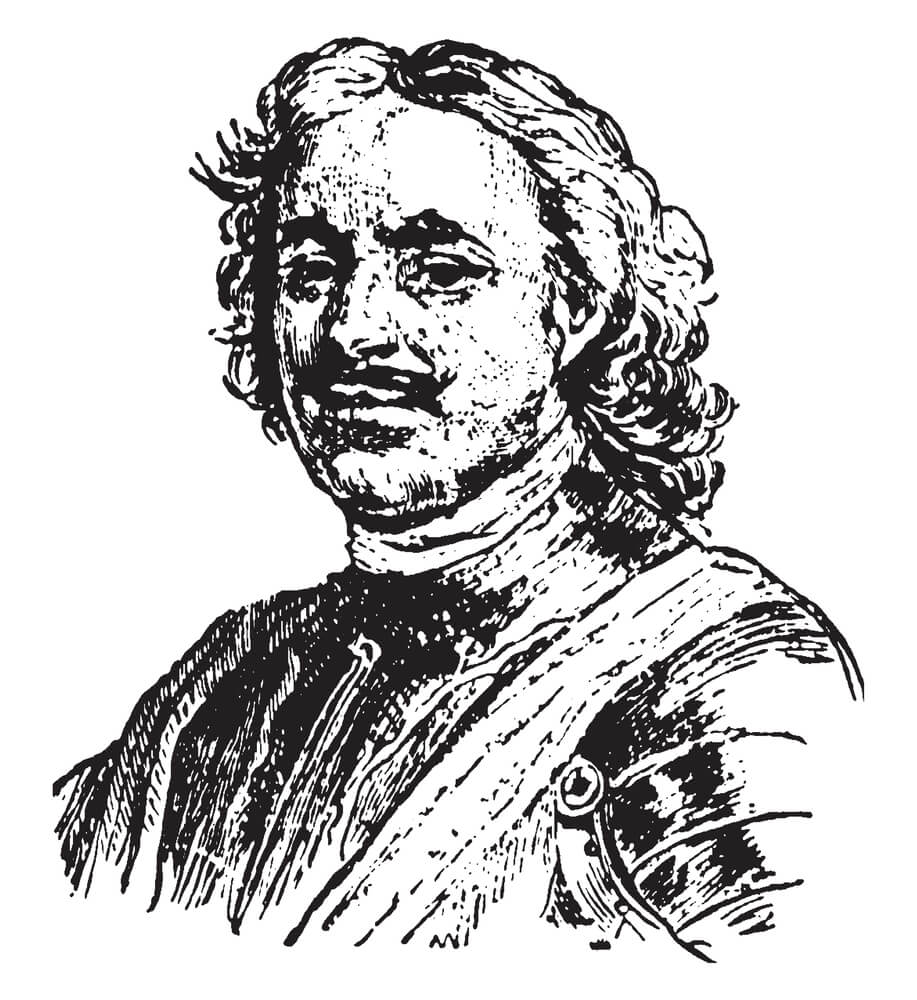
Tsar Peter the Great imposed a tax on beards in 1698 as part of a broader push to modernize Russia along Western European lines, requiring men who wished to keep their facial hair to carry a bronze token proving they had paid. Those caught with an unpaid-for beard could be forcibly shaved on the spot by tax officials.
The tax remained in various forms for decades before falling out of enforcement later in the eighteenth century.
Britain’s Window Tax

The British government taxed houses based on the number of windows they had starting in 1696, prompting homeowners to brick up windows to avoid the charge, a practice still visible on older buildings in Britain today. The tax lasted for a hundred and fifty-five years before Parliament repealed it in 1851 amid public health concerns that it discouraged proper ventilation.
Some historians credit the tax with the origin of the phrase “daylight robbery.”
The Comstock Act’s Mail Restrictions
Passed by the United States Congress in 1873, the Comstock Act banned mailing information about contraception, along with a wide range of other material the law’s author, Anthony Comstock, considered obscene. The law empowered postal inspectors to open and seize private mail suspected of violating its terms for decades.
Portions of the law remained technically on the books, largely unenforced, well into the twentieth century before courts narrowed its reach.
Prohibition of Alcohol

The Eighteenth Amendment to the United States Constitution banned the manufacture, sale, and transport of alcoholic beverages nationwide starting in 1920, giving rise to organized bootlegging operations and speakeasies across the country. Enforcement proved so difficult and the black market so lucrative that Congress repealed the amendment entirely in 1933 through the Twenty-First Amendment, the only constitutional amendment ever passed specifically to undo an earlier one.
The thirteen-year experiment remains one of the most studied examples of a law that generated more crime than it prevented.
Gold Ownership Restrictions

President Franklin Roosevelt’s Executive Order 6102, issued in 1933, made it illegal for most American citizens to own gold coins, bullion, or certificates above a small threshold, requiring citizens to sell their holdings to the government at a fixed price. The restriction was part of an effort to combat Depression-era hoarding and stabilize the currency.
It remained in effect for over four decades until President Gerald Ford signed legislation restoring private gold ownership rights in 1974.
Blue Laws Restricting Sunday Commerce

Many American states and municipalities enforced so-called blue laws that banned or restricted retail business on Sundays, some dating back to colonial-era religious observance requirements and lasting well into the twentieth century. Connecticut’s early blue laws reportedly restricted a range of ordinary Sunday activities beyond commerce alone.
Many blue laws affecting car sales and alcohol purchases remained enforced in parts of the United States into the twenty-first century, with some states only repealing the last of them in recent years.
The Witchcraft Act

Britain’s Witchcraft Act of 1735 made it a crime to claim to possess magical powers or to practice witchcraft, treating such claims primarily as fraud rather than genuine sorcery, a shift from earlier laws that had executed people for supposed witchcraft itself. The act remained in force for over two hundred years and was used as recently as the Second World War to prosecute a medium accused of falsely claiming psychic contact with the dead.
Parliament finally repealed it in 1951, replacing it with more narrowly focused fraud legislation.
Married Women’s Property Restrictions

Under English common law and its American derivatives, a married woman’s property, wages, and even legal identity were generally absorbed into her husband’s under a doctrine known as coverture, leaving her unable to independently own property, sign contracts, or keep her own earnings in most circumstances. Married Women’s Property Acts passed in various American states and in Britain during the second half of the nineteenth century gradually dismantled the doctrine.
Some vestiges of coverture-influenced banking and credit practices persisted informally for women well into the twentieth century.
Bans on Interracial Marriage

Anti-miscegenation laws banning marriage between people of different races were enforced in a majority of American states at various points, with some dating back to the colonial era. The United States Supreme Court struck down the remaining state bans nationwide in the 1967 case Loving v. Virginia, though Alabama did not formally remove its unenforceable ban from the state constitution until a public vote in 2000.
The laws are now widely regarded by historians as among the clearest examples of discriminatory legislation in American history.
Restrictions on Women Opening Bank Accounts

In the United States, women, particularly married women, often could not open a bank account or obtain a line of credit in their own name without a husband’s cosignature well into the twentieth century, a practice that varied by bank and state but was widespread. The Equal Credit Opportunity Act of 1974 formally banned discrimination in lending based on gender or marital status.
Before that law, some women reported being denied credit cards entirely regardless of their individual income.
Georgia’s Margarine Color Laws

Several American states, including Georgia, restricted the sale of yellow-colored margarine for decades starting in the late nineteenth century, requiring it to be sold white or dyed pink to avoid being confused with butter, largely at the urging of the dairy industry. Consumers sometimes had to buy a separate yellow dye packet to mix into white margarine themselves at home.
The last of these state-level color restrictions were not repealed until the 1960s and 1970s.
England’s Duel Prohibition and Its Predecessor

Dueling was technically illegal under English common law for centuries before it fell out of practice, yet it remained a widely tolerated method of settling disputes among gentlemen well into the early nineteenth century despite the law on the books. Formal prosecutions were rare, and the practice only truly ended through changing social attitudes rather than stricter enforcement.
Several American states passed explicit anti-dueling statutes around the same period, some of which remain technically unrepealed today.
Massachusetts’s Ban on Fortune Telling

Numerous American states and cities passed laws in the nineteenth and twentieth centuries criminalizing fortune telling and palm reading as a form of fraud, with penalties including fines or jail time for anyone caught charging money to predict a client’s future. Some of these laws remained enforced sporadically for decades, targeting storefront psychics in particular.
Courts in later decades increasingly struck the laws down or narrowed them on free-speech grounds.
The Stamp Act’s Colonial Taxation

Britain’s Parliament imposed the Stamp Act on its American colonies in 1765, requiring a tax stamp on virtually all printed materials, from newspapers to playing cards to legal documents, without any colonial representation in the decision. Colonial boycotts and protests proved so effective that Parliament repealed the act less than a year later, in 1766.
The episode is widely cited by historians as a foundational grievance leading toward the American Revolution a decade later.
England’s Hat Tax

Britain taxed hats starting in 1784, requiring licensed hatters to display a certificate and affix a stamped label inside every hat sold, with counterfeiting the stamp punishable by death under the law as originally written. The tax proved difficult to enforce as hatmakers found workarounds, and Parliament repealed it in 1811.
The law is often cited alongside the window tax as an example of eighteenth-century Britain’s fondness for taxing everyday objects.
Bans on Women Wearing Trousers

Several American cities maintained ordinances into the twentieth century restricting women from wearing trousers or other “men’s clothing” in public, with some laws remaining technically on the books far longer than they were actively enforced. Actress and pants-wearing pioneer Katharine Hepburn is frequently cited in discussions of the social, if not always strictly legal, pressure against the practice in earlier decades.
Most such ordinances fell out of use by the mid-twentieth century as fashion norms shifted.
The Black Act’s Expanded Death Penalty
Britain’s Parliament passed the Black Act in 1723, dramatically expanding the number of offenses punishable by death to include activities like poaching deer or fish while in disguise, largely in response to unrest among rural communities. Legal historians have described it as one of the most expansive death-penalty statutes in English legal history at the time of its passage.
The act remained partly in force for over a century before Parliament repealed most of its provisions in the 1820s.
Connecticut’s So-Called Blue Law Restrictions on Public Affection

Among the various restrictions attributed to early Connecticut’s colonial-era blue laws was a rule limiting certain public displays of affection between married couples on the Sabbath, part of a broader set of Puritan-era Sunday observance rules. Historians note that some specific claims about these laws have been exaggerated or embellished over the centuries in retellings.
Regardless of the exact original scope, the broader category of Sunday observance restrictions persisted in various New England statutes for generations.
Restrictions on Playing Cards and Dice

Several American colonies and early states passed laws restricting or heavily taxing playing cards and dice, treating them as instruments of gambling that authorities wished to discourage among the general population. Virginia and other colonies imposed licensing fees on card manufacturers and importers specifically to curb their spread.
Most of these restrictions faded from enforcement by the nineteenth century as attitudes toward recreational card games relaxed.
Britain’s Wig Powder Tax

Britain taxed hair powder, commonly used to whiten the elaborate wigs fashionable among the upper classes, starting in 1795, requiring anyone who wanted to use it to purchase an annual license. The tax coincided with changing fashions away from powdered wigs, and revenue from the license dropped sharply within just a few years of its introduction.
Parliament eventually let the tax lapse as the fashion it targeted largely disappeared on its own.
The Kennesaw Gun Ownership Mandate

The city of Kennesaw, Georgia, passed an ordinance in 1982 requiring heads of households to maintain a firearm and ammunition in their home, with certain exemptions including religious objectors and convicted felons, largely as a symbolic response to a nearby town’s gun restriction. The law included broad exemptions and was never actively enforced through prosecution, but it remained on the city’s books for decades.
Kennesaw officials and residents have periodically pointed to a low crime rate as evidence of the ordinance’s deterrent effect, though researchers have disputed any direct causal link.
Bans on Selling Books That Criticized the Government
Several early American states maintained seditious libel laws that criminalized published criticism of government officials, a legal legacy of English common law that persisted after independence despite the First Amendment’s protections. The federal Sedition Act of 1798 briefly made it a crime to publish “false, scandalous, and malicious” statements against the government, leading to the prosecution of several newspaper editors before the law expired in 1801.
The episode is frequently cited in later First Amendment case law as a cautionary example.
The Real ID and Its Predecessor Restrictions on Travel Documents

Long before modern identification requirements, several American states in the early twentieth century required internal travel permits or documentation for certain categories of residents, particularly in the context of vagrancy laws that could result in arrest for travelers unable to prove employment or residence. These vagrancy statutes, common across the country, gave local authorities broad discretion to detain people simply for appearing to lack a fixed home or job.
Most such laws were struck down or repealed by the mid-to-late twentieth century on due process grounds.
Laws Enforcing the Statute of Laborers Wage Caps

Following the Black Death’s labor shortages in fourteenth-century England, the Statute of Laborers fixed maximum wages at pre-plague levels and made it illegal for workers to demand more or for employers to pay more, an attempt to prevent surviving laborers from using their new bargaining power. Violators faced fines or imprisonment, and enforcement continued for generations despite widespread evasion.
Historians consider the statute one of the earliest examples of formal wage-control legislation in English law.
When the Statute Outlives the Reason

Almost every law on this list made a kind of sense to the government that passed it, whether the goal was protecting a domestic industry, enforcing a moral code, or managing a crisis that has long since ended. What looks absurd in hindsight was, in its own moment, someone’s earnest attempt to solve a real problem with the tools available.
The gap between then and now is not really about how foolish earlier lawmakers were, but about how quickly consensus can shift once the original justification disappears. Most of these laws did not fall because a court struck them down in a single dramatic ruling.
They fell because, eventually, almost no one could remember why they were there.
More from Go2Tutors!

- The Romanov Crown Jewels and Their Tragic Fate
- 13 Historical Mysteries That Science Still Can’t Solve
- Famous Hoaxes That Fooled the World for Years
- 15 Child Stars with Tragic Adult Lives
- 16 Famous Jewelry Pieces in History
Like Go2Tutors’s content? Follow us on MSN.