32 Laws From History That Sound Unbelievable Now
Every law made sense to someone at the time it was passed. A tax on windows raised money, a rule about beards pushed a country toward modernity, and a ban on dogs seemed like sound public health policy.
Viewed from a distance, many of these rules look absurd, cruel or simply baffling. They are also surprisingly revealing, because each one captures what a society feared, valued or wanted to control.
Russia’s Beard Tax

Peter the Great returned from his tour of Western Europe in 1698 determined to modernize Russia, and beards were one of his targets. He reportedly shaved some of his nobles himself. He then introduced a tax on beards, with the amount varying by social class, so that wealthy merchants paid far more than peasants.
Men who paid received a copper or silver token, sometimes stamped with a picture of a beard, that had to be carried as proof. Peasants could keep their beards in the countryside but were charged when entering towns. The tax was abolished in 1772.
England’s Window Tax

England introduced a tax in 1696 based on the number of windows in a house, replacing an earlier tax on hearths that required inspectors to go inside homes. Windows could be counted from the street.
Property owners responded by bricking up windows, and bricked-up openings can still be seen on older buildings across Britain. Critics argued the tax harmed public health by reducing light and ventilation, particularly in crowded tenements.
It was also said to have inspired the phrase daylight robbery, though that origin is debated. The tax was finally repealed in 1851.
Taxing Hats in Georgian Britain

From 1784 to 1811, Britain taxed men’s hats. Hatters needed a license, and each hat had to carry a stamp inside the lining showing the tax had been paid, with the amount rising with the price of the hat. Forging a hat stamp was a capital crime, meaning a counterfeiter could be sentenced to death.
Retailers tried to avoid the tax by calling their products something other than hats, so the law was amended to cover any headwear. The tax raised modest sums compared with the effort needed to enforce it, and its abolition in 1811 attracted little protest.
Brick Tax and Bigger Bricks

Britain introduced a tax on bricks in 1784 to help pay for the American War of Independence. It was charged per brick, so manufacturers began making larger bricks to reduce the number needed for a building.
The government responded by charging double on bricks above a certain size. Builders also turned to timber cladding and other materials in some regions.
Historians and building surveyors use the unusual brick sizes from this period to help date old houses. The tax was abolished in 1850, a year before the better-known window tax disappeared.
Hair Powder Tax

Prime Minister William Pitt the Younger introduced a tax on hair powder in 1795 to help pay for the war with France. Anyone who wanted to use the powder, then fashionable on wigs and natural hair, had to buy an annual certificate costing one guinea.
People who paid were mockingly nicknamed guinea pigs. Many people stopped using powder to avoid the charge, and the fashion faded quickly, helped along by political symbolism, since Whig supporters conspicuously went unpowdered.
The tax remained on the books long after powder had gone out of style and was repealed in 1869.
Wallpaper Tax

From 1712, Britain taxed printed, painted and stained paper used for hanging on walls. Manufacturers had to stamp the back of each length to prove the duty had been paid. To avoid it, some people bought plain paper and painted or stenciled patterns onto it themselves.
The tax was one reason wallpaper remained a luxury item for much of the 18th century. Forging the duty stamps was a serious offense.
The tax was abolished in 1836, and wallpaper quickly became much cheaper, eventually becoming common in ordinary homes as machine printing improved.
Red Flag Act for Motor Cars

Britain’s Locomotive Act of 1865, known as the Red Flag Act, required self-propelled vehicles on British roads to have a crew of at least three, one of whom had to walk about 60 yards ahead carrying a red flag. Speed limits were set at four miles per hour in the country and two in towns.
The law was written with steam traction engines in mind, but it applied to early automobiles as well. When it was repealed in 1896, motorists celebrated with a drive from London to Brighton, an event still commemorated each year by a run of veteran cars.
Animals Put on Trial

Medieval and early modern European courts sometimes put animals on trial for crimes. In 1386, a sow in Falaise, Normandy, was tried for killing a child, found guilty and executed in public, reportedly dressed in clothing.
Pigs were the most common defendants, but there are records of trials involving rats, insects and other creatures, some of which were assigned defense lawyers. In one case in the 1500s, a French lawyer named Barthelemy de Chasseneuz defended rats by arguing they could not safely attend court because of cats along the way.
Lex Oppia Limiting Women’s Gold

During the Second Punic War, in 215 BC, Rome passed the Lex Oppia, which limited how much gold a woman could own to half an ounce. It also banned multicolored clothing and restricted women from riding in carriages in the city except for religious ceremonies.
The law was meant to direct wealth toward the war effort against Hannibal. After the war ended, women protested publicly and blocked access to the Forum to demand repeal.
Despite strong opposition from the statesman Cato the Elder, the law was repealed in 195 BC.
Christmas Banned in Massachusetts

Puritan lawmakers in the Massachusetts Bay Colony passed a law in 1659 fining anyone caught celebrating Christmas five shillings. Puritans argued that December 25 had no basis in scripture and that the holiday was associated with drinking, gambling and rowdy behavior.
The law was repealed in 1681 under pressure from England, but disapproval of the holiday lingered in New England for generations. Christmas did not become a legal holiday in Massachusetts until 1856.
Even then, some schools and businesses stayed open on December 25 well into the late 19th century.
Bachelor Tax Under the Marriage Duty Act

England’s Marriage Duty Act of 1695 imposed charges on births, marriages and burials in England to raise money for war with France. It also included an annual tax on bachelors over the age of 25 and on childless widowers.
The amount varied with social rank, so a duke paid much more than a laborer. The tax also created detailed records that have proved valuable to historians studying population.
It lapsed in 1706. Other bachelor taxes appeared elsewhere in later centuries, including in fascist Italy in the 1920s.
Vespasian’s Urine Tax

Vespasian, the Roman emperor who ruled from AD 69 to 79, taxed the collection of urine from public latrines. Urine was valuable because tanners used it to soften leather and launderers used its ammonia to clean togas.
According to the historian Suetonius, Vespasian’s son Titus objected to the tax as undignified. The emperor held a coin under his son’s nose and asked if it smelled bad, and when Titus said no, he pointed out that it came from urine.
The exchange gave rise to the Latin saying that money does not smell. Public urinals in France and Italy are still named after him.
Armor Banned in Parliament
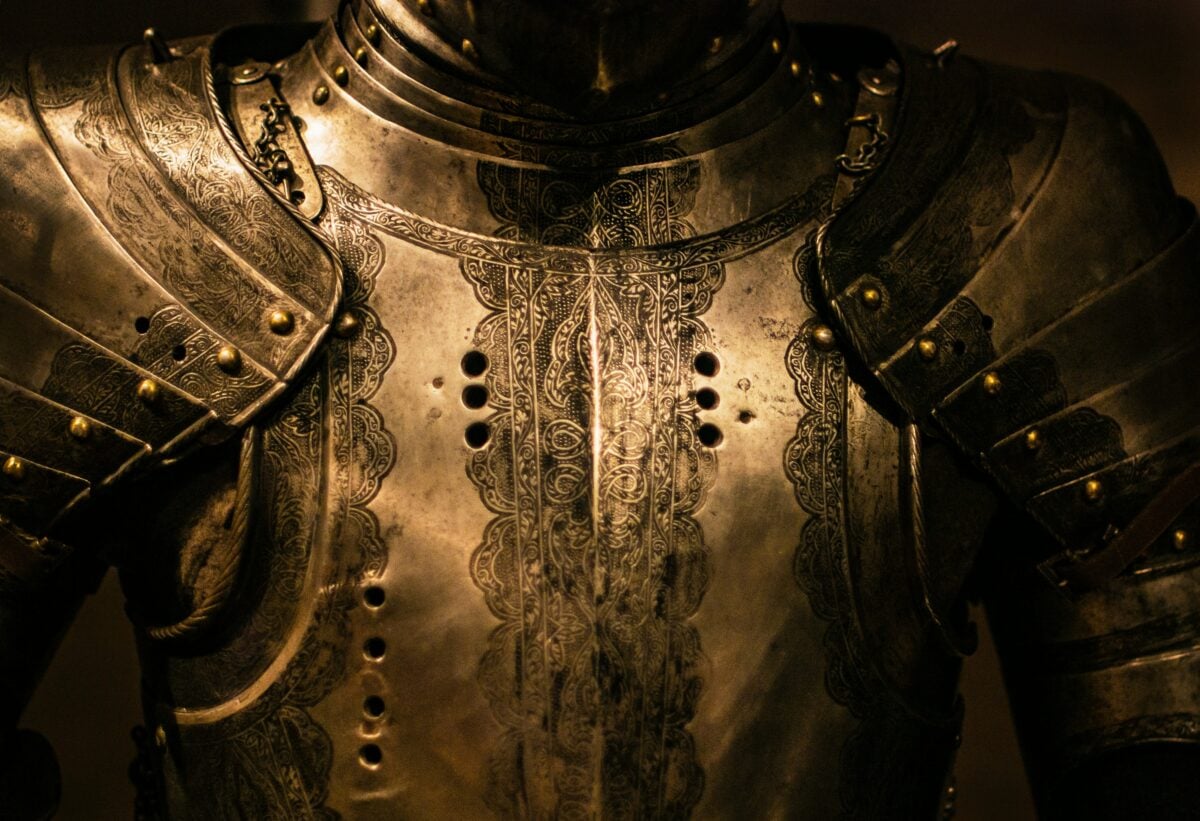
A statute from 1313 prohibits anyone from wearing armor in the Houses of Parliament. It was passed during a period of tension between the king and his barons, when armed nobles were a real threat to proceedings.
The law has never been repealed. The Law Commission has occasionally cited it as an example of legislation that remains on the books long after its original purpose disappeared.
No one appears to have been prosecuted under it in modern times, but in principle it still applies at Westminster.
Tokugawa Tsunayoshi’s Dog Edicts

Tokugawa Tsunayoshi, shogun of Japan from 1680 to 1709, issued a series of laws known as the Edicts on Compassion for Living Things. They protected many animals, but dogs received special attention, perhaps because the shogun was born in the Year of the Dog.
Harming a dog could lead to severe punishment. The government built large kennels on the outskirts of Edo to house stray dogs, reportedly holding tens of thousands and feeding them at public expense.
The laws earned Tsunayoshi the nickname the dog shogun, and his successor repealed most of them soon after his death.
Qing Queue Order

After the Manchus took Beijing in 1644 and established the Qing dynasty, they ordered Han Chinese men to adopt the Manchu hairstyle. This meant shaving the front of the head and wearing the remaining hair in a long braid, known in English as a queue.
The order was enforced with a slogan warning that men could keep their hair or keep their heads, but not both. Resistance was met with executions.
The queue remained a legal requirement for more than 250 years and was widely abandoned only after the dynasty fell in 1912.
Venice’s Black Gondola Decree

Venetian authorities passed a sumptuary law in 1562 requiring gondolas to be painted black. Wealthy families had been competing to outdo each other with gilded, brightly painted and elaborately decorated boats, and the authorities wanted to curb the display of wealth.
Some rich Venetians reportedly paid the fines rather than give up their decorated boats. The rule stuck.
Nearly all gondolas in Venice are still black today, and a traditional gondola is made from about 280 pieces of wood, finished with several coats of black lacquer.
Chicago’s Ugly Law

Chicago passed an ordinance in 1881 banning any person who was diseased, maimed, mutilated or in any way deformed so as to be an unsightly or disgusting object from appearing in public. Similar laws were passed in San Francisco, New Orleans, Portland and other American cities during the late 1800s.
They were used mainly against disabled people who begged on the streets. Chicago’s ordinance was not repealed until 1974.
Disability rights advocates later pointed to these ugly laws as evidence of how deeply discrimination had been built into American public life.
Married Women Unable to Own Property

Under the English common law doctrine of coverture, a married woman’s legal identity was absorbed into her husband’s. She could not own property in her own name, sign contracts or keep her own wages, and anything she brought into the marriage became his.
Divorce was also difficult to obtain. The Married Women’s Property Act of 1870 allowed wives to keep their earnings, and a broader act in 1882 finally let married women own and control property.
Similar laws were passed state by state in the United States over the course of the 19th century.
Royal Fish Belong to the Crown

A statute from the early 1300s, still in force, declares whales and sturgeon caught in English waters to be royal fish, belonging to the monarch. The rule originally allowed the Crown to claim valuable products like whale oil and caviar.
In practice, the right is rarely exercised today. When a sturgeon was caught off the coast of Wales in 2004, the fisherman offered it to the queen, and the palace reportedly told him to do with it as he saw fit.
Stranded whales and dolphins in England are still technically considered royal fish and are recorded by the Natural History Museum.
New York City’s Cabaret Law

New York City passed a law in 1926 requiring any establishment that served food or drink and allowed three or more people to dance to hold a cabaret license. The rules were initially aimed at Prohibition-era speakeasies, and for decades, jazz musicians also needed cabaret cards to perform, which police could revoke.
Billie Holiday and Thelonious Monk were among those who lost theirs. Licenses were expensive and hard to get, so most bars simply banned dancing. The law remained on the books until 2017, when the City Council voted to repeal it.
Measuring Bathing Suits on the Beach

In the early 1920s, several American beaches enforced rules about how much skin swimmers could show. Beach officers carried measuring tapes to check that women’s swimsuits did not end too far above the knee.
One famous photograph from around 1922 shows an inspector measuring the distance between a woman’s knee and her bathing suit at a beach in Washington, D.C. Women who wore suits that were too revealing could be fined or ordered to leave. By the 1930s, standards had relaxed considerably, and within a few decades, the swimsuit was on sale.
Silk Banned for Roman Men

According to the historian Tacitus, the Roman Senate decreed in AD 16, under the emperor Tiberius, that men should not disgrace themselves by wearing silk garments. Silk was imported at great expense from the East along long trade routes, and Roman moralists worried that it was both extravagant and effeminate.
The historian Pliny the Elder later complained about the enormous amounts of money flowing out of the empire to pay for luxury goods like silk. The decree did little to change behavior, and silk remained highly desirable among wealthy Romans for centuries.
London’s Theaters Closed

As the English Civil War began in September 1642, Parliament issued an order closing all theaters in London. The Puritans who dominated Parliament considered plays sinful and disruptive, and they worried that public gatherings could fuel unrest.
Later ordinances allowed soldiers to tear down theater buildings, and actors who performed could be arrested. Some performances continued in secret or in private houses.
Theaters did not reopen legally until 1660, after the monarchy was restored, and women were soon allowed to perform on the English stage for the first time.
Swearing Fines by Social Rank

The Profane Oaths Act of 1745 set fines for swearing in England according to the offender’s status. A day laborer, common soldier or seaman paid one shilling per oath, anyone below the rank of gentleman paid two shillings, and gentlemen and those above paid five shillings.
The idea was that wealthier people should pay more for the same offense. Repeat offenders faced higher fines, and anyone who could not pay could be sent to a house of correction.
The act also required clergy to read it aloud in church several times a year, and it lingered on the books until 1967.
Duty Stamp on the Ace of Spades

Britain taxed playing cards from the late 1500s until 1960. From 1765, the Stamp Office printed the ace of spades itself, and card makers had to buy these official aces to complete their packs, which is why the card became so ornate.
Forging the ace was a capital offense. In 1805, a card maker named Richard Harding was hanged after investigators bought 90 of his packs and found forged aces in every one.
The tax system changed in 1862, but many makers kept an elaborate ace of spades, and card designs around the world still follow that habit.
Hammurabi’s Rule for Builders

The Code of Hammurabi, inscribed in Babylon around 1754 BC, set out punishments for many offenses, and some of them applied to construction. If a builder put up a house that collapsed and killed the owner, the builder was to be put to death.
If the collapse killed the owner’s son, the builder’s son was to be killed instead. If it killed a slave, the builder had to provide another slave.
The laws are carved on a basalt stele now in the Louvre, and they are often cited as one of the earliest examples of building regulation.
Draco’s Death Penalty for Petty Theft

Around 621 BC, the Athenian lawmaker Draco wrote down laws that were so harsh that the word draconian still means excessively severe. According to Plutarch, nearly all offenses were punished by death, including stealing fruit or vegetables and idleness.
When asked why, Draco supposedly explained that small crimes deserved death and he could find no greater penalty for larger ones. The orator Demades later said the laws were written in blood rather than ink.
Most of Draco’s laws were repealed by Solon about 30 years later, except those dealing with homicide.
Trial by Ordeal

In medieval Europe, courts sometimes left the question of guilt to God through trial by ordeal. In the ordeal of hot iron, the accused carried a piece of red-hot iron for several steps, and the wound was bandaged and inspected days later.
If it was healing cleanly, the person was innocent. In the ordeal of cold water, the accused was bound and lowered into water, and sinking was taken as a sign of innocence. The practice declined after 1215, when the Fourth Lateran Council prohibited clergy from taking part, making the ordeals effectively impossible to hold.
Elizabeth’s Compulsory Wool Caps

An English statute of 1571, known as the Cap Act, required nearly everyone over the age of six, with exemptions for nobles, gentlewomen and certain officials, to wear a woolen cap made in England on Sundays and holy days. Anyone caught without one could be fined three shillings and four pence for each day of the offense.
The aim was to support English cap makers and the domestic wool trade, which had suffered as felt hats became more fashionable. The law was difficult to enforce and deeply unpopular, and it was repealed in 1597, after just over a quarter of a century.
Aethelberht’s Price List for Injuries

Written around AD 600, the laws of Aethelberht of Kent are the oldest surviving legal code in the English language. Much of the code is a detailed schedule of compensation payments for injuries, with different amounts owed for damage to different parts of the body.
Losing a thumb, a finger, an eye or a front tooth each had its own fixed price, as did injuries to ears and toes. The system was meant to prevent blood feuds by setting clear payments.
The code survives only in a 12th-century copy, the Textus Roffensis, kept at Rochester.
Reykjavik’s 60-Year Dog Ban

In 1924, Reykjavik banned dog ownership within city limits. Officials cited public health concerns, including the risk of tapeworm infections passing from dogs to people, along with overcrowded housing in the growing capital.
Dogs were still allowed on farms in the countryside. The ban was increasingly flouted in the 1970s and 1980s, and Albert Gudmundsson, a minister of finance, famously kept a dog and refused to pay the fines.
Reykjavik lifted the ban in 1984, but dog owners still needed special permission until 2006, which is partly why cats remain so visible on city streets.
Rome’s Law on Dividing Debtors

The Twelve Tables, Rome’s earliest written code from about 450 BC, laid out harsh treatment for people who could not pay their debts. After a judgment, a debtor could be held in chains by the creditor, and if the debt remained unpaid, he could be sold into slavery abroad.
One provision even appears to allow multiple creditors to cut the debtor’s body into pieces and divide it among themselves. Later Roman writers insisted the rule was never actually enforced, and scholars still debate its meaning.
Debt bondage itself was abolished around 326 BC.
Every Era Writes Its Own Absurdities

It is easy to laugh at laws against beards, dogs and colorful boats. Most of them, however, were written by people trying to solve real problems with the information and values they had.
The absurdity often only becomes clear once circumstances change. That is worth remembering when looking at the present.
Some of today’s laws will almost certainly sound just as strange to people a few centuries from now. The rules may change, but the human instinct to regulate, tax and control what others do seems remarkably durable.
More from Go2Tutors!

- The Romanov Crown Jewels and Their Tragic Fate
- 13 Historical Mysteries That Science Still Can’t Solve
- Famous Hoaxes That Fooled the World for Years
- 15 Child Stars with Tragic Adult Lives
- 16 Famous Jewelry Pieces in History
Like Go2Tutors’s content? Follow us on MSN.