31 Record Albums Worth Pulling From the Attic
Somewhere in a box marked “old stuff” sits a stack of LPs that nobody has played since the console stereo went to the curb. Most of those records are worth a few dollars at best.
A handful are worth a used car, and the difference often comes down to a label color, a misprinted song list or a sleeve that was pulled from shelves within days.
Collectors read records like detectives read fingerprints. The run-out groove, the address on the label and the paper stock of the jacket can separate a 20 dollar reissue from a first pressing worth thousands.
Beatles Yesterday and Today With the Butcher Cover
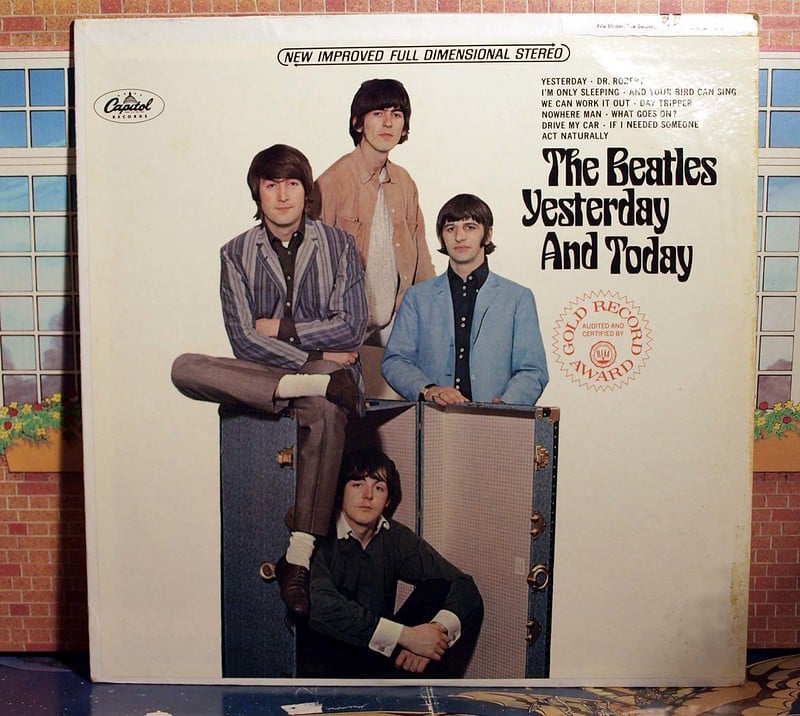
Capitol shipped this 1966 LP with a photo of the band in white smocks draped with raw meat and broken doll parts. Retailers and radio stations recoiled, so the label recalled the jackets and pasted a bland trunk photo over the original image.
Copies that were never pasted over, known as first state, are the prize, while paste-over copies with a faint outline of the old photo showing through are far more common. A paste-over mono copy often sells for several hundred dollars.
Unpeeled stereo first-state examples can reach five figures, though any tearing, ghosting from bad peeling or seam splits drags the price down sharply.
Please Please Me on the Gold and Black Parlophone Label
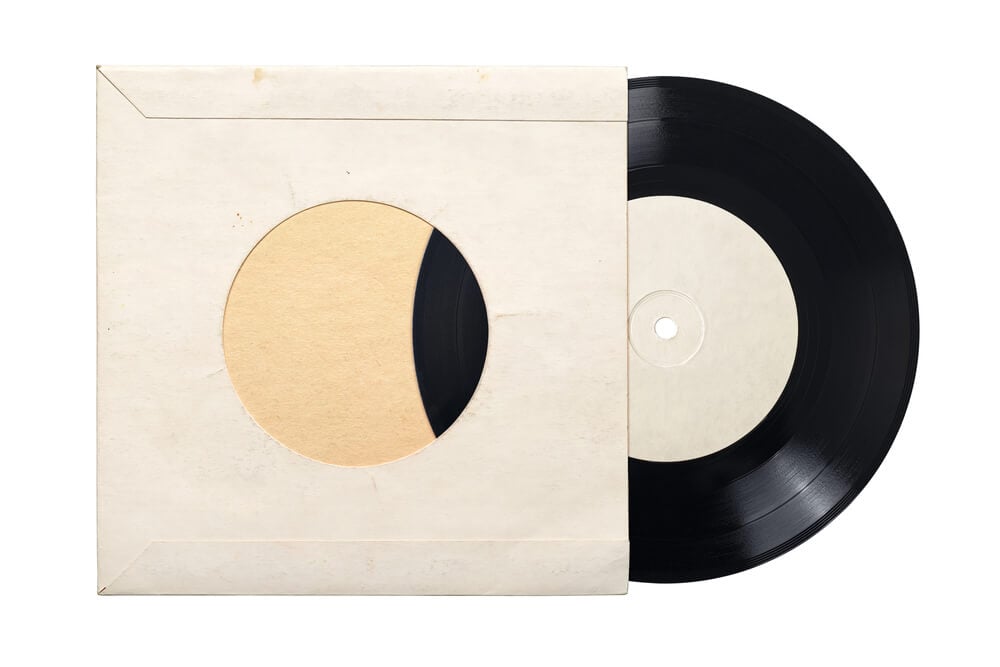
Released in 1963, the Beatles’ first UK album appeared on Parlophone’s gold-and-black label, a design EMI replaced with yellow-and-black within months. That short window makes first pressings scarce.
The stereo version is the real find, since British buyers in 1963 overwhelmingly owned mono players and stereo copies were pressed in small numbers. Clean stereo gold-label copies reach four figures, and mono gold-label copies for several hundred and up.
Collectors check the publishing credit printed under the song titles, because early variations in that small line of text separate the most desirable copies from the merely old ones.
Numbered Copies of the White Album

Issued in 1968, the Beatles’ double album came in a plain white sleeve with an individual serial number stamped on the front, an idea from artist Richard Hamilton meant to mimic a limited art edition. Low numbers became collectibles in their own right.
Ringo Starr’s own copy, No. 0000001, sold for 790,000 dollars at Julien’s Auctions in December 2015, a record for a commercially released album at the time. Ordinary early copies with the four color portrait inserts and poster intact usually sell for a few hundred dollars.
Numbers with lots of zeros attract far more, and a yellowed, dog-eared jacket with missing inserts cuts value fast.
Introducing the Beatles on Vee-Jay Records
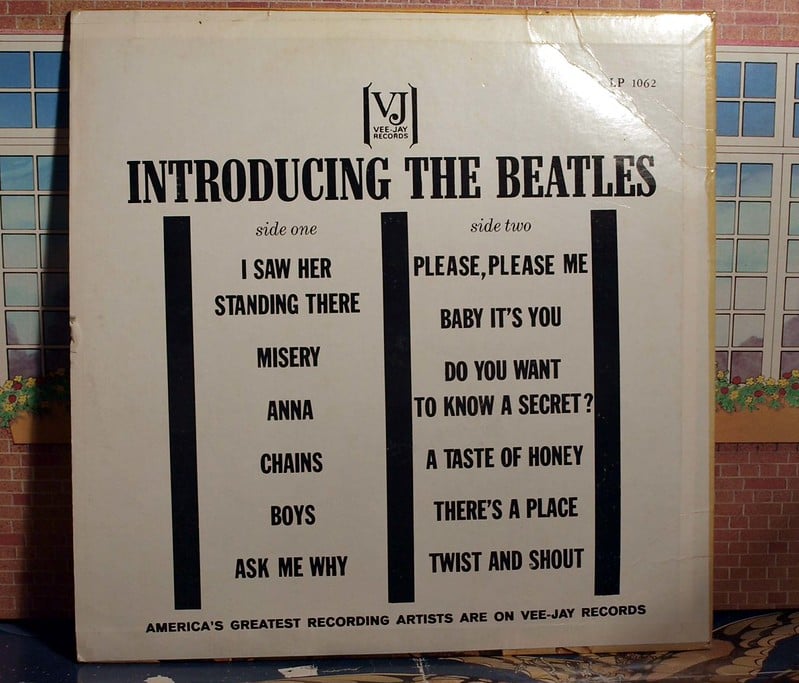
Before Capitol took the Beatles seriously, the small Chicago label Vee-Jay issued this LP in January 1964. Early pressings carried two songs that were soon swapped out for licensing reasons, giving collectors a clear first version to hunt.
The album was also one of the most counterfeited records of the 1960s, so fakes outnumber genuine copies in many attic boxes. Authentic mono copies typically bring a few hundred dollars, and genuine stereo copies more.
Experts look at label printing, the back cover layout and the vinyl itself, because a counterfeit in perfect shape is still worth almost nothing.
Freewheelin’ Bob Dylan With Four Withdrawn Songs
Columbia released Bob Dylan’s second album in 1963, but a handful of early copies contained four songs that were pulled at the last minute, including the satirical Talkin’ John Birch Paranoid Blues. The replacements included Masters of War and Girl From the North Country.
Because the label and jacket often list the replacement tracks, collectors check the matrix numbers etched in the dead wax, where codes ending in 1A signal the withdrawn lineup. Mono copies have brought thousands of dollars, and the far rarer stereo version has reached six figures at auction.
Heavy surface noise or a cracked edge cuts those figures dramatically.
Velvet Underground and Nico With the Peelable Banana
Andy Warhol designed the 1967 Verve cover with a yellow banana sticker that could be peeled back to reveal a pink fruit underneath. Early copies also carried a back cover photo that included actor Eric Emerson, who objected, and the label responded by covering or airbrushing the image.
Those early back-cover states help date a copy. An unpeeled banana in good shape is worth several times a peeled one, and first pressings range from the hundreds into four figures. Stains, a sticker lifted at the corner or tape repairs all count heavily against a copy.
Elvis Presley’s Debut LP on RCA Victor
RCA catalog number LPM-1254 arrived in March 1956 and became the first rock and roll album to top the Billboard album chart. The cover, with its pink and green lettering and a photo of Elvis mid-strum, has been copied by other artists for decades.
Millions of copies were pressed over the years, so value depends on proving an early pressing through label details and jacket printing. Early copies in strong shape typically bring a few hundred dollars.
Ring wear on the cover, writing on the back and scuffed grooves make most surviving copies worth far less than owners hope.
Elvis’ Christmas Album and Its Gift Sticker
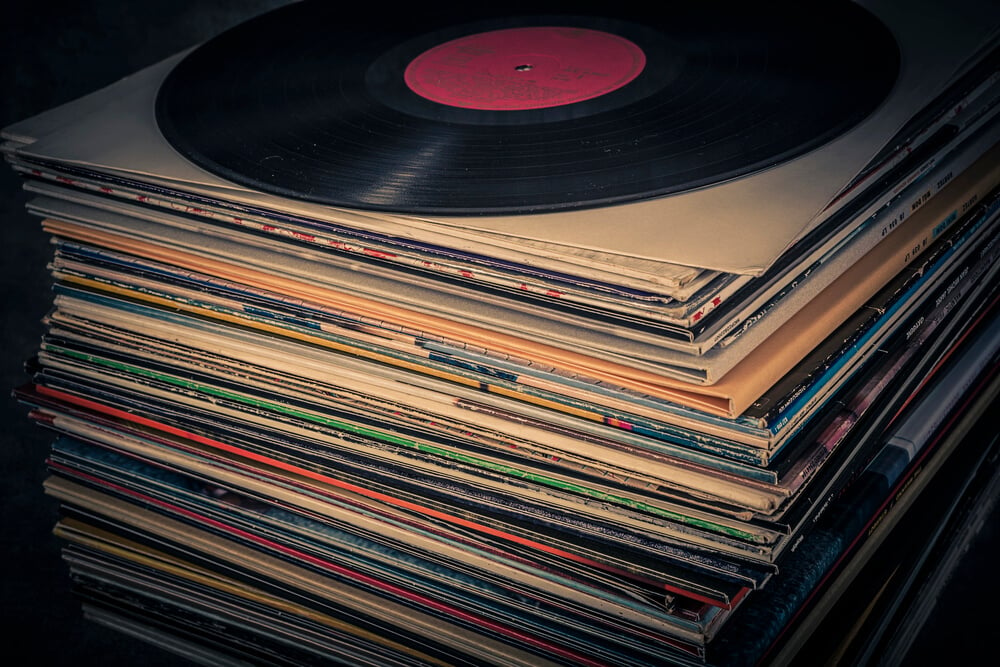
Pressed in 1957, the original came in a deluxe gatefold with a bound booklet of photos and a gold sticker reading “To” and “From” so it could be given as a present. Many families did exactly that and filled in the names, which actually lowers value for collectors.
A complete copy with the booklet attached and the sticker blank can sell for several hundred to more than a thousand dollars. Missing pages, a detached booklet or a signed sticker quickly turn a premium copy into an ordinary one.
Later reissues used a simpler single sleeve, so the gatefold format itself is the first clue.
Johnny Cash With His Hot and Blue Guitar
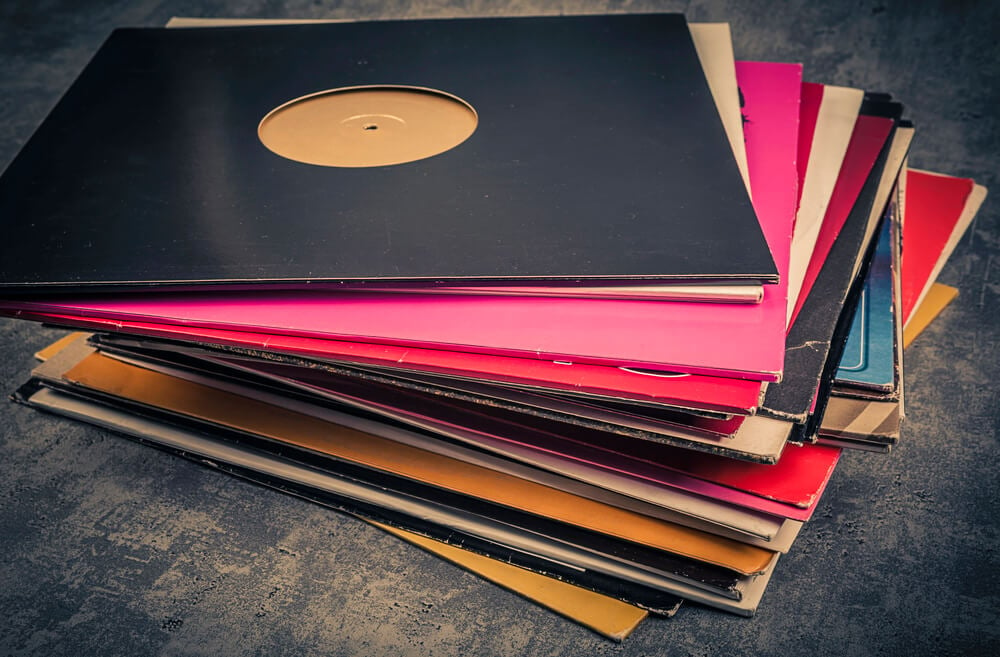
Sun Records of Memphis released this in 1957, and it was the first long-playing album the label ever issued. Sun was built on singles, and Sam Phillips mostly packaged existing hits such as Folsom Prison Blues onto the LP.
Original copies carry the Sun name on the label and a front cover photo of a young Cash holding his guitar. Clean originals usually bring a few hundred dollars and occasionally more.
Seam splits and heavy scratches are common, because these records were played hard at parties and on country radio.
The “Chirping” Crickets on Brunswick
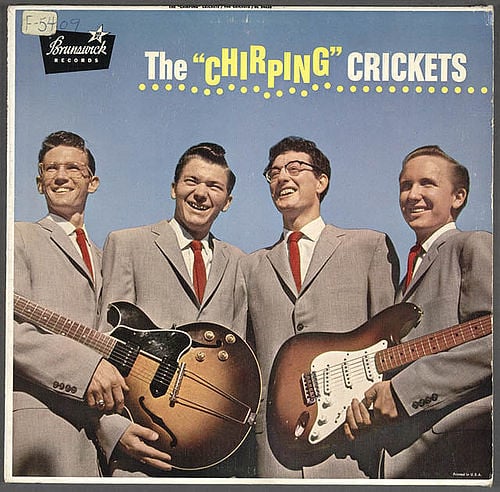
Buddy Holly and the Crickets released this LP in 1957 on Brunswick, collecting That’ll Be the Day, Oh, Boy and Not Fade Away. It was the only album the group issued while Holly was alive and fully part of the lineup.
The cover shows the four members in matching suits holding guitars, and original pressings carry Brunswick’s own label rather than the Coral imprint used for Holly’s solo work. Clean first pressings typically bring several hundred dollars, sometimes more.
Graders pay close attention to the vinyl’s surface noise, since early rock records rarely survived decades of teenage handling without wear.
Kind of Blue With the Six-Eye Columbia Label
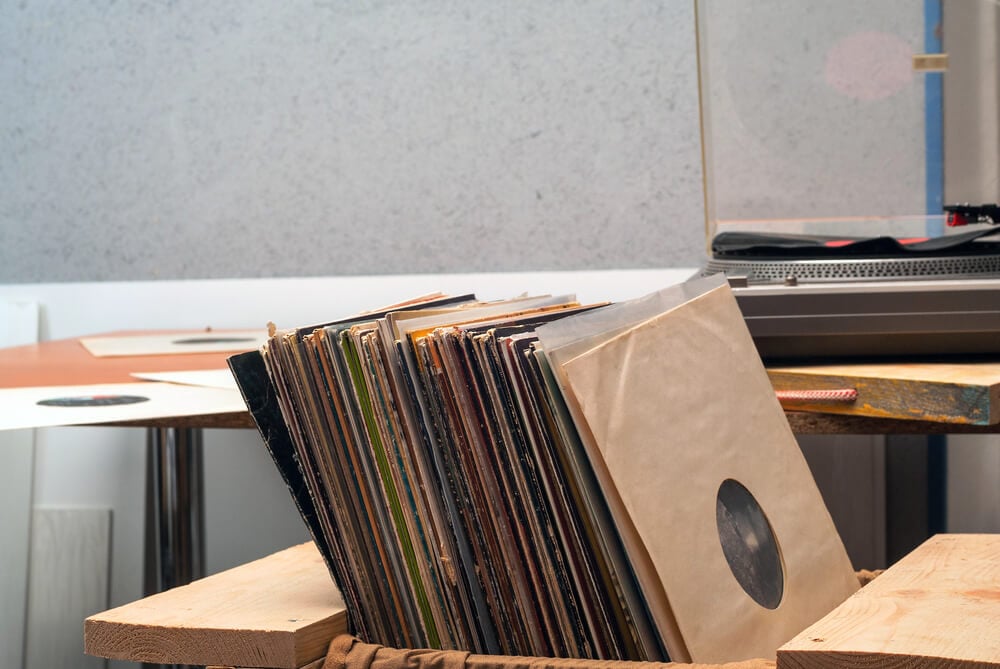
Miles Davis recorded this album in 1959, and early Columbia pressings carry the “six-eye” label, named for the small logos ringing the center. Side one of the original master was cut slightly fast, so early copies play a touch sharp in pitch, a flaw corrected on later reissues.
Some early labels also reversed the titles of two side-two tracks. A first-pressing stereo copy in excellent shape often sells for well over a thousand dollars, while mono first pressings bring somewhat less.
Collectors check for the deep groove pressed into the label area and any warping before paying up.
Hank Mobley on Blue Note 1568
Saxophonist Hank Mobley’s 1957 self-titled LP, catalog BLP 1568, is among the most sought-after originals in the entire Blue Note catalog. Pressings were small, and the record sold modestly when new, so very few clean copies survive.
Collectors look for the original New York label address, the deep groove and an etched “ear” symbol in the run-out area. First pressings in strong condition regularly reach five figures.
A copy with surface noise or a worn jacket still brings serious money, but grade separates a solid payday from an extraordinary one.
John Coltrane’s Blue Train on Blue Note
Recorded in September 1957 at Rudy Van Gelder’s studio in Hackensack, New Jersey, this was Coltrane’s only album as a leader for Blue Note. Original mono pressings list the label address as 47 West 63rd Street, New York, and have a deep groove ring pressed into the label.
Later copies changed the address and lost the groove. Original mono copies often sell for several thousand dollars, and early stereo copies for less.
Collectors examine the vinyl under strong light, because hairline scratches and groove wear that a casual buyer misses will cut the price in half.
Led Zeppelin’s Debut With Turquoise Lettering
Earliest UK copies of Led Zeppelin’s 1969 debut on Atlantic printed the band name and the Atlantic logo on the front in turquoise. The color was quickly changed to orange on later printings.
Turquoise sleeves therefore mark a genuine first run, and they typically sell for a few thousand dollars when paired with the correct early labels and matrix numbers. Restored or color-touched sleeves do turn up, so buyers inspect the printing closely.
A worn jacket with the right lettering still holds value, but splits and water damage cut deeply.
Pink Floyd’s Piper at the Gates of Dawn in Mono
Pink Floyd’s first album came out in August 1967 on EMI’s Columbia label in the UK, with Syd Barrett writing most of the songs. The mono mix differs noticeably from the stereo version, and mono pressings were phased out within a few years, which makes original mono copies the target.
Clean first-pressing mono copies typically sell for one to several thousand dollars. The front cover, a kaleidoscope-style photo of the band, is laminated on early UK copies, and peeling lamination is a common flaw that collectors factor in.
Dark Side of the Moon With the Solid Blue Triangle
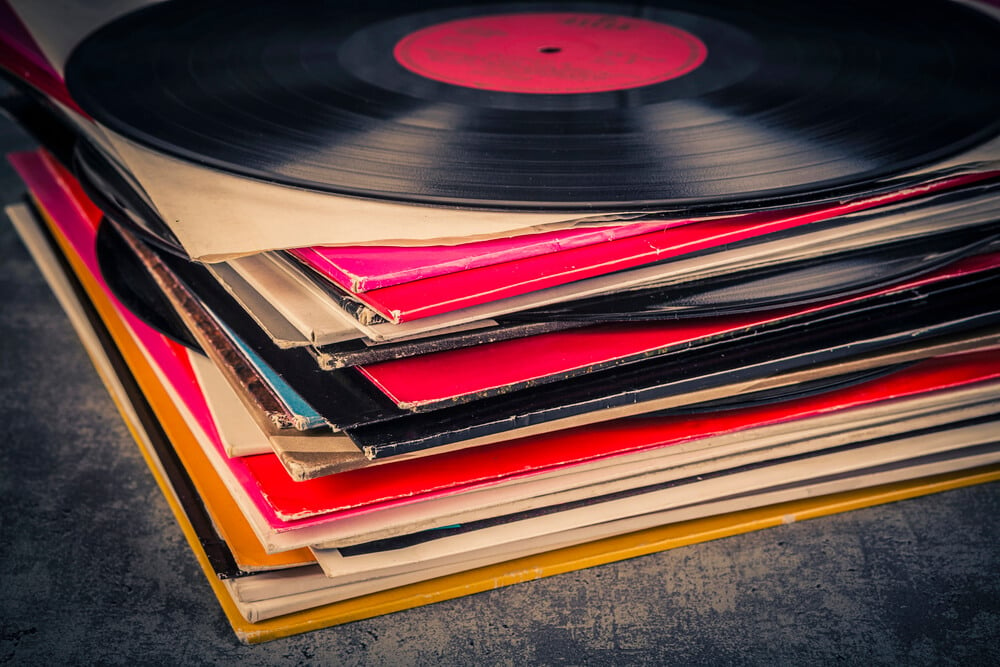
Pink Floyd’s best-selling album exists in countless pressings, but the first UK Harvest copies from 1973 have a solid light-blue triangle on the label, without the black outline added later. Complete copies also include two posters and two stickers tucked inside the gatefold sleeve designed by the studio Hipgnosis.
With all inserts present and in clean shape, first pressings typically sell for several hundred to more than a thousand dollars. A missing sticker or a torn poster lowers value significantly, and fresh copies with no wear are rarer than the album’s sales figures might suggest.
Black Sabbath’s Debut on the Vertigo Swirl Label
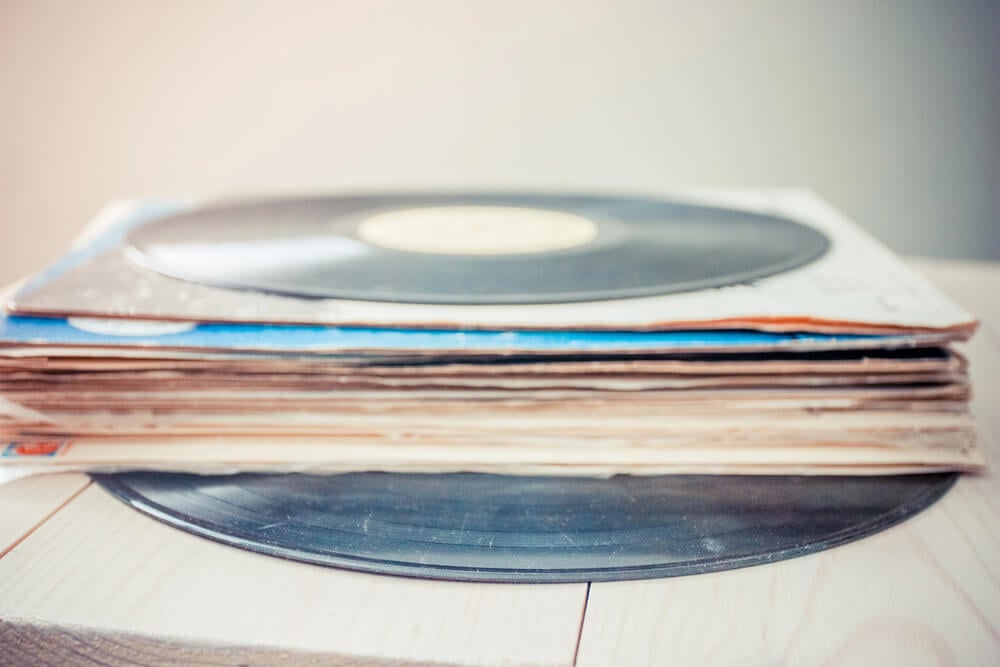
Black Sabbath’s first album arrived in February 1970 on Vertigo, a Philips subsidiary whose early labels featured a hypnotic black-and-white spiral. First UK pressings come in a gatefold with an eerie inverted cross printed inside.
Later pressings switched to a spaceship-style label design, so the swirl itself is the first test. Clean early copies typically bring a few hundred to a few thousand dollars, depending on matrix numbers and sleeve details.
Owners often find these records heavily played, and audible groove wear is the most common reason a swirl copy disappoints at sale.
Nick Drake’s Five Leaves Left on the Pink Island Label
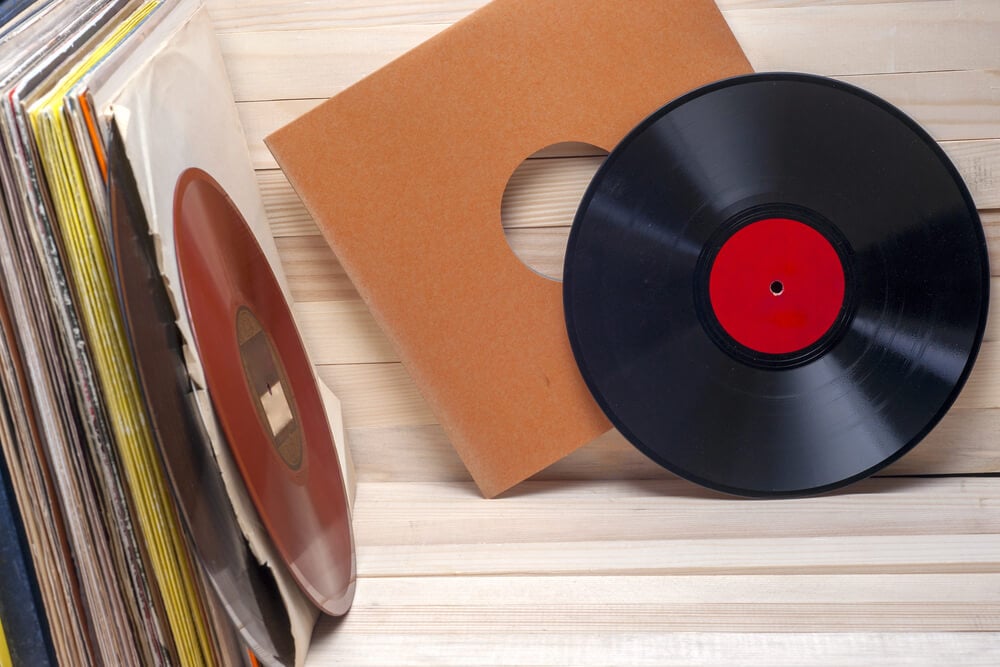
Nick Drake released this debut in 1969 on Island Records, and it sold poorly during his short life. Early UK copies carry Island’s pink label with a black and orange logo, a design used on only a limited run before the label changed.
Drake’s reputation grew enormously after his death in 1974, and original pressings followed. Clean first pressings typically sell for a few thousand dollars.
Jacket condition matters as much as the vinyl here, since the sleeve shows rubbing and staining easily. Drake recorded only three studio albums before his death, and none sold well while he was alive.
Vashti Bunyan’s Just Another Diamond Day
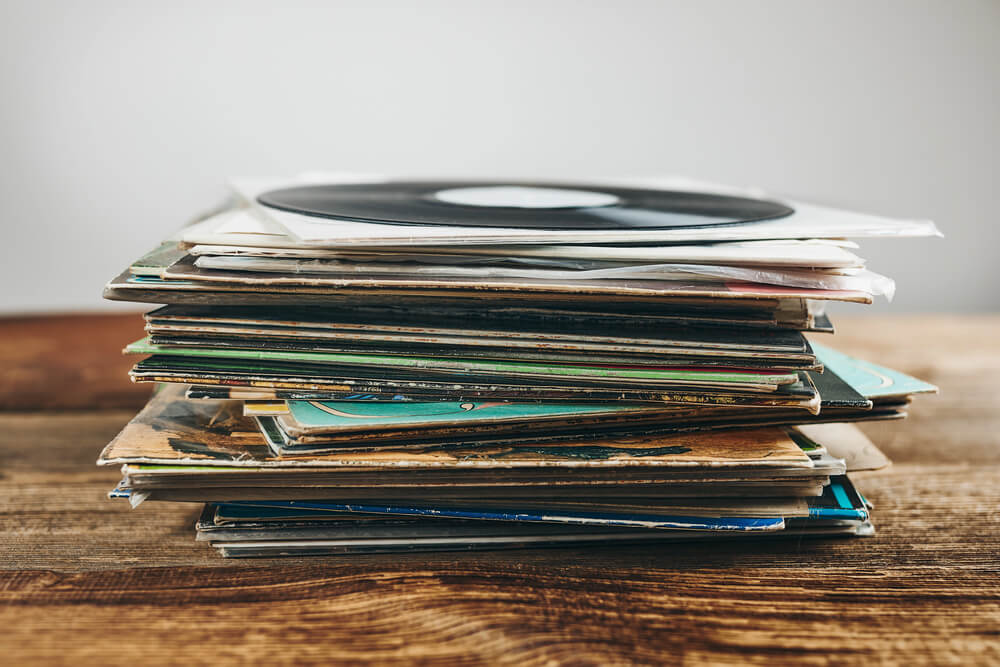
This gentle folk album appeared on Philips in 1970 and sold so few copies that Vashti Bunyan stepped away from music for decades. Original pressings came with a booklet and are now among the scarcest British folk LPs of the era.
A reissue in 2000 revived interest, and she went on to record again in the 2000s. Originals in clean shape change hands in four figures among folk collectors.
The booklet is essential, and buyers verify the original Philips pressing because later reissues use similar artwork.
Kinks Village Green Preservation Society in Twelve Tracks
Ray Davies first sequenced this 1968 Kinks album with 12 songs, and that version was briefly issued in parts of Europe and New Zealand before he expanded it to 15 tracks. Because the switch came so quickly, the shorter lineup survives mainly through those overseas pressings.
Copies typically sell for a few thousand dollars when the vinyl plays cleanly. The album itself flopped on release and only later gained recognition as one of the decade’s finest.
Authenticity checks matter, since counterfeit versions of rare Kinks pressings exist.
Psychedelic Sounds of the 13th Floor Elevators
Recorded by an Austin band, this 1966 debut came out on International Artists, a small label based in Houston, and is often credited with helping define psychedelic rock. Roky Erickson sang lead, and Tommy Hall played an amplified electric jug that gave the record its strange burbling sound.
Original copies typically sell for several hundred to a couple of thousand dollars. Several reissues and counterfeits copied the label closely, so collectors compare label typography and run-out markings.
Warps and groove distortion are common on these lightly built early pressings.
The Doors on the Early Gold Elektra Label
Elektra issued the Doors’ 1967 debut on its early gold-tan label, a design the company dropped within a couple of years. Mono copies are the rarer of the two formats, since stereo was quickly becoming the norm and mono runs were small.
The album version of the band’s breakthrough hit runs about seven minutes, far longer than the edited single that topped the Billboard chart that summer. Clean early mono copies reach the mid hundreds and beyond.
Small label variations matter, so experts compare them against known first pressings before trusting a seller’s description.
Catch a Fire in the Hinged Lighter Sleeve
Bob Marley and the Wailers’ 1973 Island album first came in a sleeve shaped like a giant lighter, with a hinged top that actually flipped open and was held by a metal rivet. The design was expensive to produce, and Island soon replaced it with a standard cover featuring a photo of Marley.
Original lighter sleeves typically sell for several hundred dollars, more when the hinge and rivet are fully intact. Torn hinges and missing rivets are common, since curious hands opened and closed the lid countless times.
Bowie’s Man Who Sold the World With the Dress Cover
Mercury’s first UK edition, issued in 1971, shows David Bowie reclining on a chaise in a flowing dress designed by Michael Fish. The American release used a cartoon cover instead, and later UK editions switched to different artwork.
Original dress-cover copies are among the most collectible Bowie records. Prices typically run from the high hundreds well into four figures depending on jacket wear and the presence of the correct inner sleeve.
Collectors watch for fading on the front image, which is easily damaged by light.
Born to Run With the Script Lettering Proofs
Bruce Springsteen’s 1975 breakthrough has one of the best-known covers in rock, but some early proofs used a script typeface for the album title before the design was finalized. A small number of those script-lettering covers escaped and ended up on copies sold or given out.
They are rare enough that collectors pay thousands of dollars for authentic examples. Fakes exist, so buyers rely on experts who know the printing details.
A worn or damaged script cover is still valuable, though crisp corners and a clean back raise the price.
Rush’s Debut on Moon Records
Before Mercury signed them, Rush issued their self-titled 1974 debut on their own Canadian label, Moon Records, in a run of about 3,500 copies. The album gained traction after a Cleveland radio station began playing Working Man, which led to a major-label deal.
Original Moon pressings usually sit comfortably in the four figures, with the correct label and jacket details. Counterfeits exist, so buyers verify the label printing and run-out markings.
Water damage and ring wear are common problems on jackets that spent decades in basements.
Prince’s Black Album, Pulled in 1987
Prince canceled this album in December 1987, about a week before its scheduled release, and Warner Bros. ordered copies destroyed. A small number of promotional copies survived, and the album circulated widely as a bootleg before an official release in 1994.
Genuine 1987 pressings have sold for five-figure sums, and sealed examples rank among the most expensive records ever traded on the Discogs marketplace.
Authenticity is everything here, and the market is full of bootlegs and counterfeits. A verified original with a clear provenance stands in an entirely different price bracket.
Nirvana’s Bleach on White Vinyl
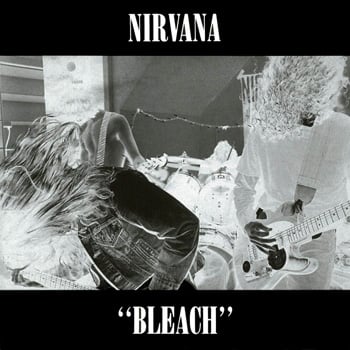
Sub Pop released Nirvana’s debut in 1989, and the first 1,000 copies were pressed on white vinyl. The band had recorded it for about 600 dollars, a figure often cited as one of the great bargains in rock history.
White-vinyl first pressings typically sell for several thousand dollars. Later colored pressings and reissues are common, so the run-out markings and label details matter.
Scuffs show plainly on white vinyl, which makes a clean surface especially important to buyers. Kurt Cobain was still largely unknown outside the Pacific Northwest when the record appeared, and few early buyers expected it to become an heirloom.
Their Satanic Majesties Request With the 3D Cover
Released in 1967, the Rolling Stones’ album came with a lenticular 3D image on the cover, photographed by Michael Cooper, who also shot the Sgt. Pepper cover the same year. The faces of the band members shift as the cover is tilted.
Early UK Decca mono copies are the most sought-after version. Clean first pressings typically sell for several hundred dollars and up.
The lenticular panel scratches and peels easily, and a damaged 3D image lowers value more than almost any other flaw on this record. The album was the band’s psychedelic detour, and critics at the time were not kind to it.
Joy Division’s Unknown Pleasures on Factory
Joy Division’s 1979 debut on Manchester’s Factory Records came in a sleeve designed by Peter Saville, featuring a plot of radio pulses from a pulsar. The first pressing used a textured, rough-surfaced sleeve that later reissues smoothed out.
That tactile difference is the easiest way to spot an early copy. First pressings bring a few hundred dollars, more with a crisp sleeve. Since the cover is mostly black, fingerprints and scuffing show clearly, and collectors check for both.
The pulsar image has since been printed on countless T-shirts, many worn by people who have never heard the album.
The Who’s First UK LP on Brunswick
Brunswick issued the Who’s 1965 UK debut in mono only, and it contained the band’s anthem about youth and rebellion. Legal disputes with producer Shel Talmy kept the album out of print in its original form for decades, which kept original copies in demand.
Clean first pressings typically sell for several hundred to a couple of thousand dollars. The cover shows the band in front of fuel drums, and the jacket’s laminated front often peels.
Vinyl condition still matters most, and heavily played copies with crackle and groove wear sell for a fraction of clean ones.
Vinyl Never Quite Went Away
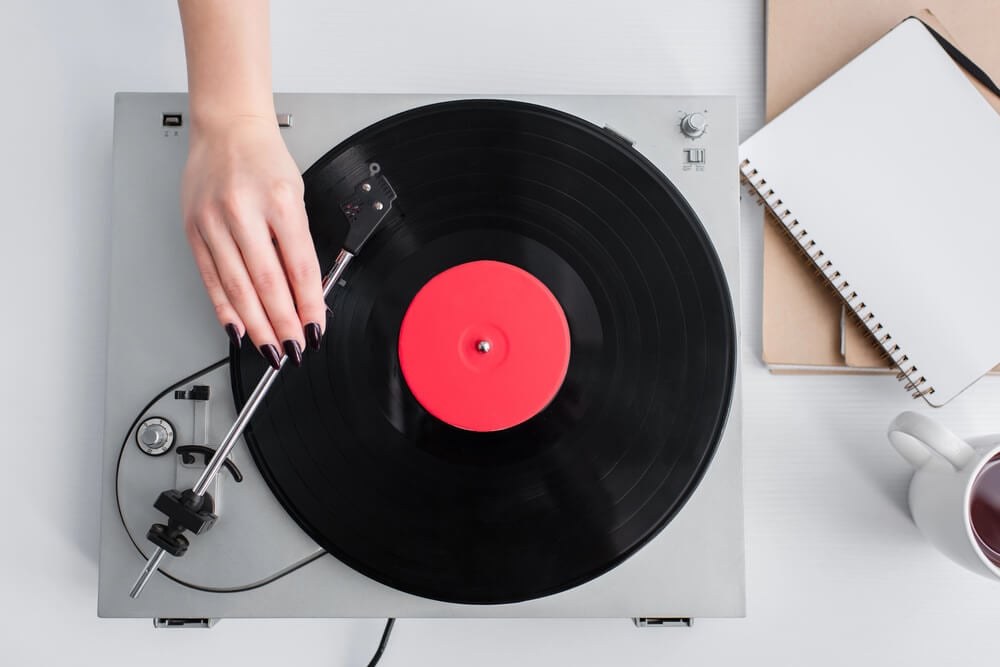
The records that matter most are rarely the ones that sold best. They are the ones that went wrong in some small way, whether a recalled cover, a pulled song or a sleeve too expensive to keep printing.
Those accidents created scarcity that no marketing plan could have engineered. The original owners almost never knew they were holding anything unusual.
That is why the attic box deserves a careful look before the yard sale. Labels, dead wax codes and jacket details take minutes to check and can separate a few dollars from a few thousand.
Condition will still decide the final number. But the first step is simply knowing which questions to ask.
More from Go2Tutors!

- The Romanov Crown Jewels and Their Tragic Fate
- 13 Historical Mysteries That Science Still Can’t Solve
- Famous Hoaxes That Fooled the World for Years
- 15 Child Stars with Tragic Adult Lives
- 16 Famous Jewelry Pieces in History
Like Go2Tutors’s content? Follow us on MSN.