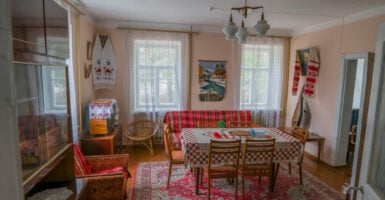
29 Things Found in a ’70s Living Room
The American living room of the 1970s had a texture problem, and it solved that problem by adding more texture. Floors were deep, walls were brown, and nearly every surface was either woven, tufted, veined or woodgrained.
Most of it was bought on purpose and with pride. A surprising amount of it also came with a designer’s name, a patent or a corporate chemistry lab behind it.
Shag Carpet Deep Enough to Need a Rake

Wall-to-wall shag was the decade’s default floor, with a pile so long that stores sold plastic carpet rakes to stand the fibers back up after vacuuming. Most of it was nylon or polyester tufted in and around Dalton, Georgia, the town that still calls itself the carpet capital of the world.
Colors ran to rust, gold, burnt orange and a green that matched the kitchen appliances. The long loops hid dirt well, which was a selling point and also the problem, since they hid pet hair, dropped earrings and stray game pieces just as efficiently.
Many of those floors were later pulled up to reveal perfectly good hardwood underneath.
Woodgrain Paneling From Floor to Ceiling
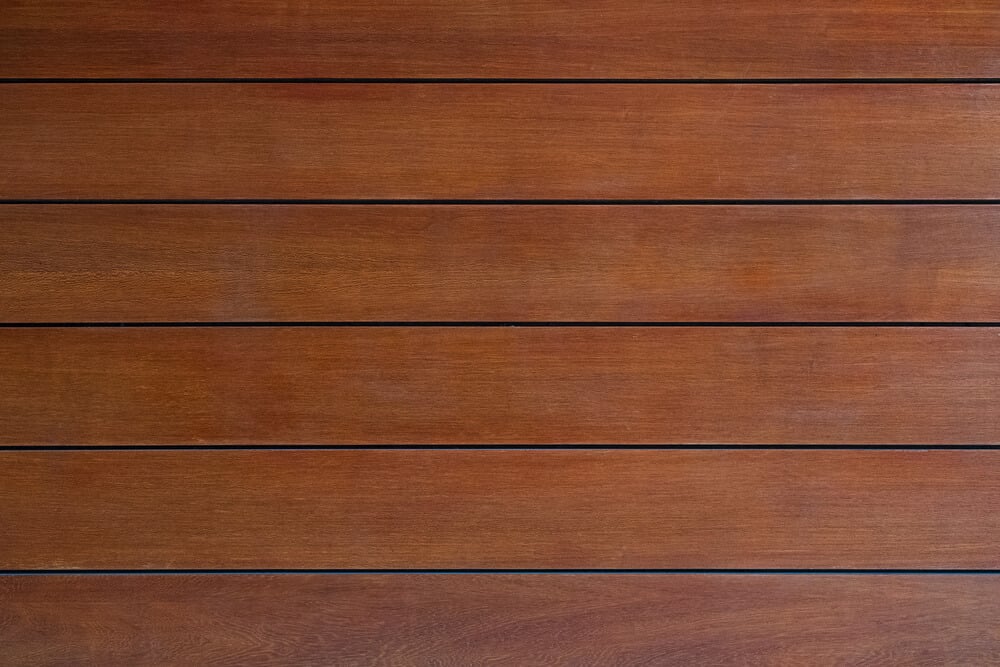
Paneling came in four-by-eight-foot sheets that a homeowner could nail up over plaster in a weekend, and millions did. The cheaper grades were thin plywood or hardboard with a woodgrain pattern printed on the face, complete with dark grooves meant to imitate individual planks.
Georgia-Pacific was among the big suppliers, and lumberyards sold the sheets for a few dollars apiece. The appeal was practical as much as visual, because paneling covered cracks, needed no paint and wiped clean.
It also absorbed nearly all the light in a room, which helps explain why so many family photos from the decade look as if they were taken in a cabin.
Sunken Conversation Pits
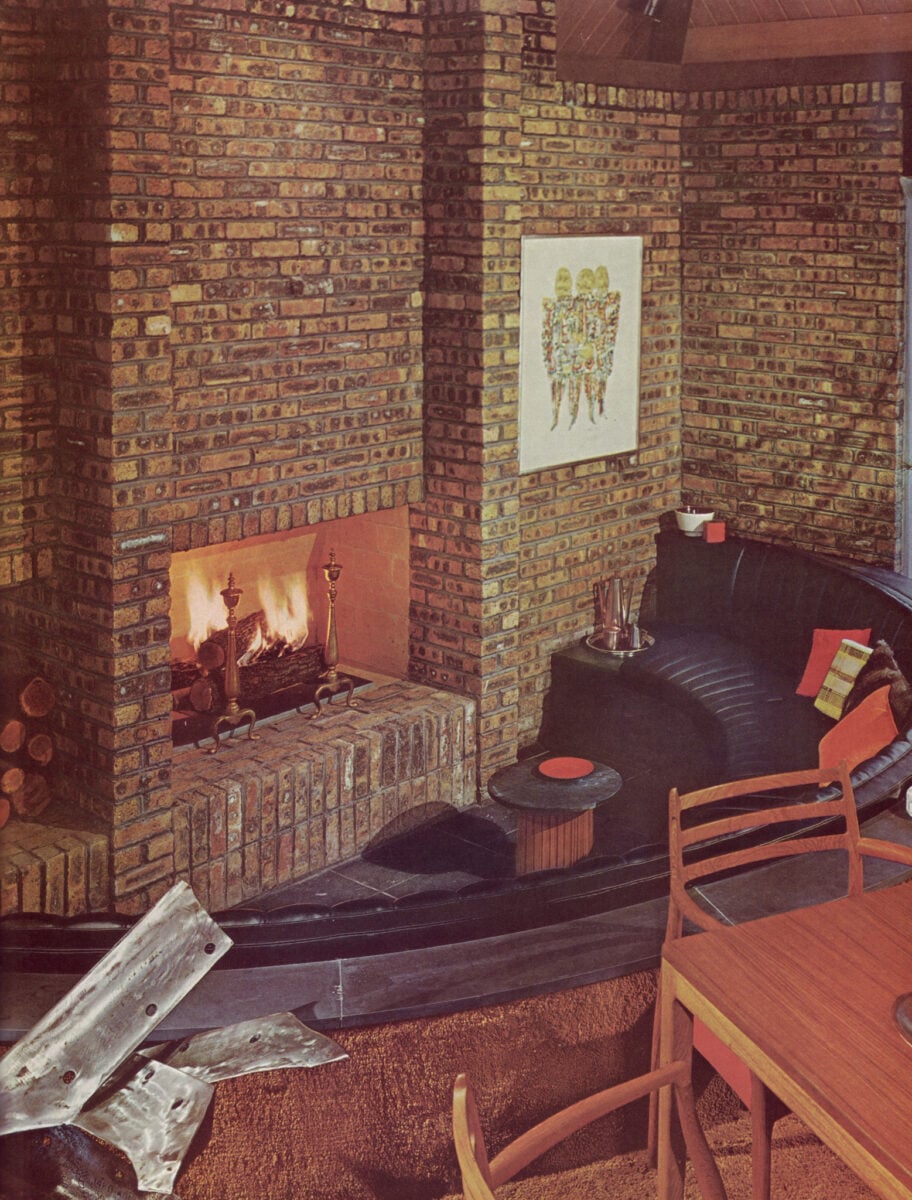
A step or two down from the main floor sat the conversation pit, a recessed square lined with built-in cushions. The best-known early example belongs to the Miller House in Columbus, Indiana, completed in 1957 by architect Eero Saarinen with interiors by Alexander Girard, who changed the pillows with the seasons.
By the 1970s the idea had filtered into split-levels and ranch houses, usually carpeted in the same shag as everything around it. Pits were good for parties and bad for anyone carrying a tray in dim light.
Plenty of later owners filled them in with lumber and plywood to get a flat floor back.
Zenith Console Televisions
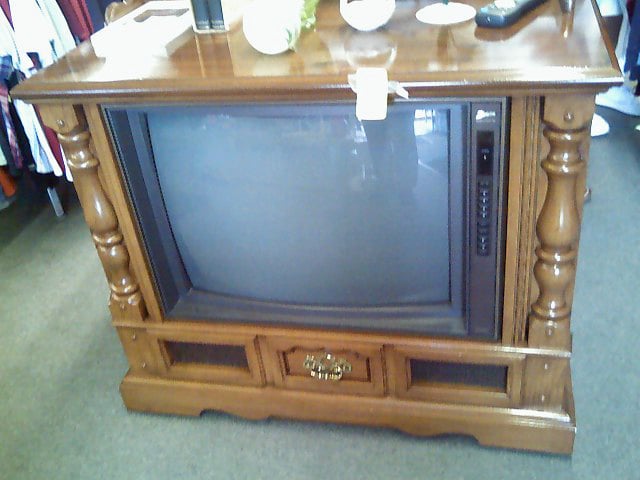
Before a television was an appliance, it was furniture. Zenith, RCA and Magnavox sold color sets built into wooden cabinets styled as Mediterranean, Early American or Danish Modern, often with a top wide enough for framed school pictures and a doily.
Zenith advertised with the line “The quality goes in before the name goes on” and had offered its Space Command wireless remote, developed by engineer Robert Adler, since 1956. That remote used ultrasonic tones produced by small aluminum rods, so it needed no batteries and made an audible click.
A console could weigh well over 100 pounds, and many families kept a dead one as a stand for its replacement.
Rabbit-Ear Antennas Wrapped in Foil

Reception was a hands-on activity. The two-rod indoor antenna known as rabbit ears is credited to Marvin Middlemark, a New York inventor who introduced his version in 1953, and by the 1970s nearly every set without a rooftop aerial wore a pair.
A separate loop handled UHF stations, which federal law had required new televisions to receive since 1964. Getting a clean picture meant tilting the rods a few degrees, stepping back, and tilting them again.
Aluminum foil crimped onto the tips was a common home remedy, and so was a family member ordered to stand in one exact spot until the program ended.
Eight-Track Tape Players
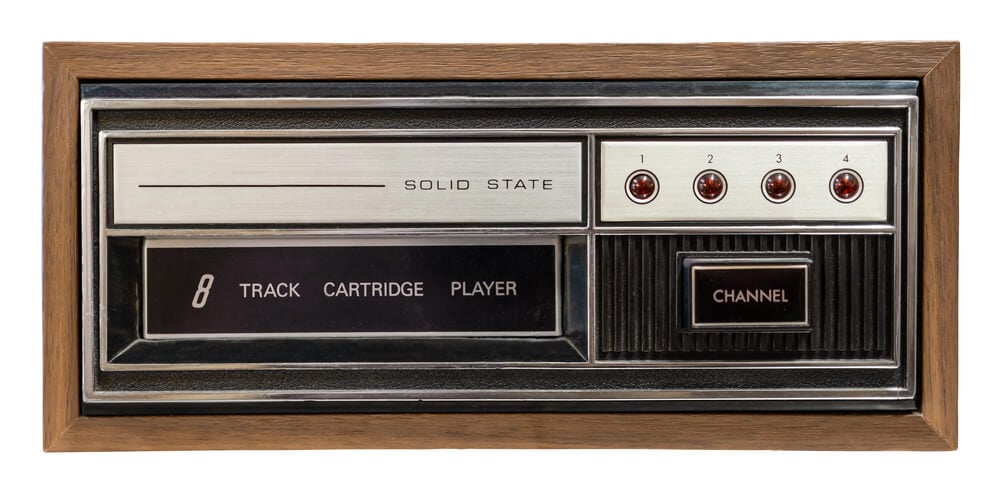
The eight-track cartridge was built for cars and wandered indoors. Bill Lear of Lear Jet fame developed the format in the mid-1960s, and Ford offered factory players as an option on its 1966 models, which gave the tapes an instant audience.
Home decks followed, often built into a receiver or a console. The tape ran in an endless loop divided into four stereo programs, and the player changed programs with a loud mechanical clunk that frequently landed in the middle of a song.
Record labels wound down new eight-track releases in the early 1980s as cassettes took over, leaving shoeboxes of cartridges in closets across the country.
Silver-Faced Component Stereo Systems
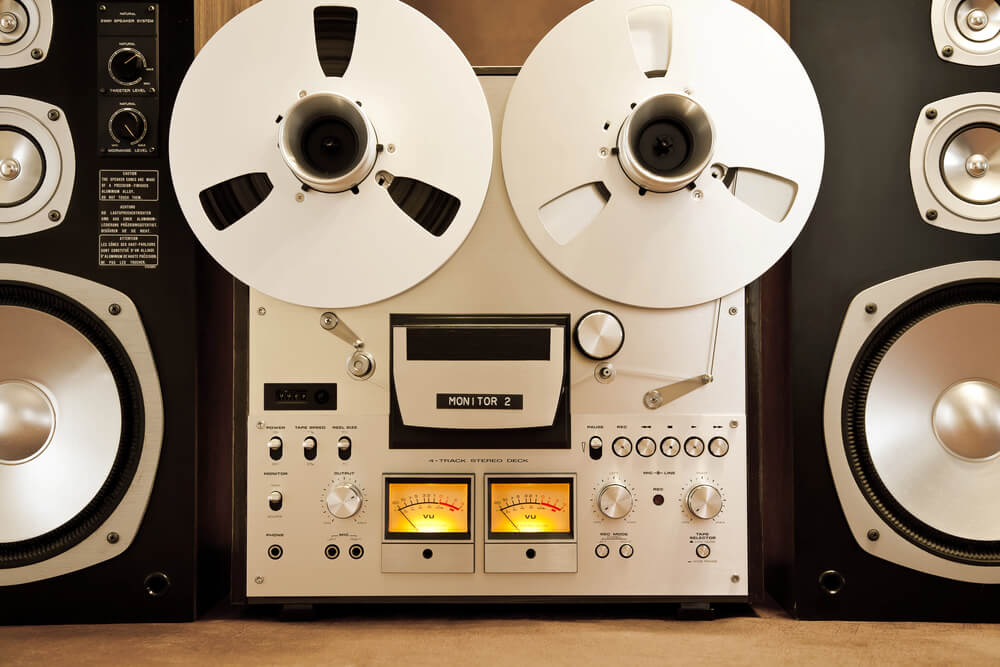
Serious listeners skipped the all-in-one console and bought separates. A receiver, a turntable and a pair of floor speakers from brands such as Pioneer, Marantz, Sansui and Kenwood filled a shelf with brushed aluminum, glowing dials and heavy tuning knobs.
Manufacturers spent the middle of the decade competing over amplifier power, and Pioneer’s SX-1250 receiver of 1976 was rated at 160 watts per channel, far more than a suburban den could use. The equipment was often set on boards and cinder blocks or in a wall unit beside rows of albums.
Many of those receivers still work, and restored ones sell briskly to a generation that never owned them new.
Macrame Plant Hangers and Owls

Knotted cord was everywhere, and most of it was made at home. Macrame uses a small vocabulary of knots, chiefly the square knot and the half hitch, that sailors had long used for decorative ropework aboard ships.
Craft stores in the 1970s sold jute and cotton cord by the spool along with pattern booklets, wooden beads and brass rings. The two standard projects were a hanger that cradled a potted plant from a ceiling hook and a wall-mounted owl with beads for eyes and a stick of driftwood for a perch.
Jute shed fibers and faded in sunny windows, so few of the originals survived in good shape.
Spider Plants and Boston Ferns

Houseplants crowded windowsills, shelves and corners to a degree that earlier decades would have found odd. The spider plant, Chlorophytum comosum, was the favorite because it tolerated neglect and sent out trailing shoots with baby plants that could be snipped off and given away.
Boston ferns filled the hanging baskets. The enthusiasm had a bestseller behind it: The Secret Life of Plants, published in 1973 by Peter Tompkins and Christopher Bird, claimed that plants responded to human emotion and music.
Scientists were unimpressed, but plenty of owners began talking to their ferns anyway, and Stevie Wonder recorded a soundtrack album for the 1979 documentary based on the book.
Lava Lamps Glowing on the End Table
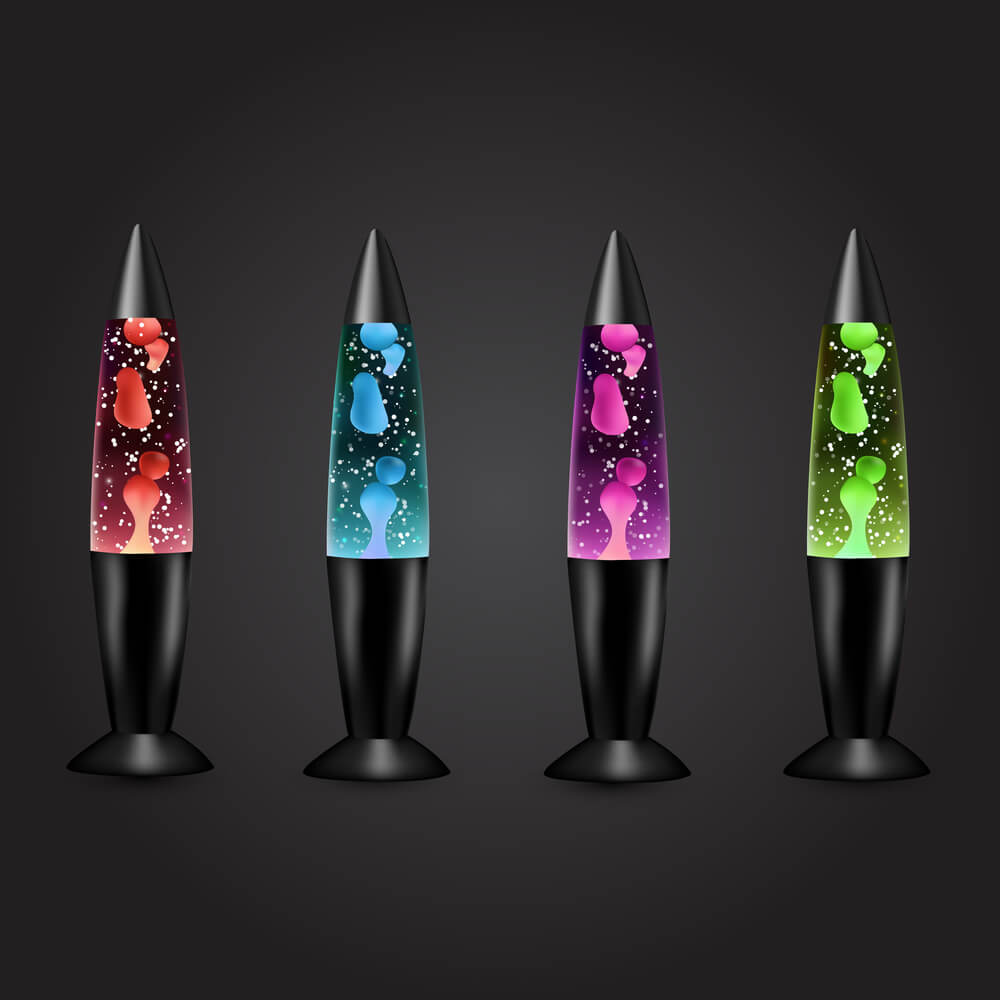
British inventor Edward Craven Walker launched the Astro lamp in 1963, and a Chicago company acquired the American rights two years later and sold it as the Lava Lite. The mechanism is simple.
A bulb in the base heats a waxy compound until it becomes lighter than the surrounding liquid and rises, then the blob cools near the top and sinks again. A cold lamp could take an hour or more to get moving.
Sales peaked around the turn of the 1970s and then fell off sharply as tastes shifted, though a 1990s revival put the lamp back in stores, and it remains in production.
Rain Lamps With Dripping Oil

Few objects say 1970s as clearly as the rain lamp. Inside a cylinder of clear filament strands stood a small statue, very often a classical goddess surrounded by plastic greenery, and a hidden pump lifted mineral oil to the top so that droplets slid slowly down each strand.
Lit from above, the effect resembled a steady shower that never got anything wet. Creators Inc. of Chicago was one of the companies that produced them, in tabletop and hanging versions.
The pumps hummed, the oil collected dust, and a tipped lamp could ruin a carpet. Working examples now draw steady interest from collectors of lighting from the period.
Arc Floor Lamps Over the Sofa
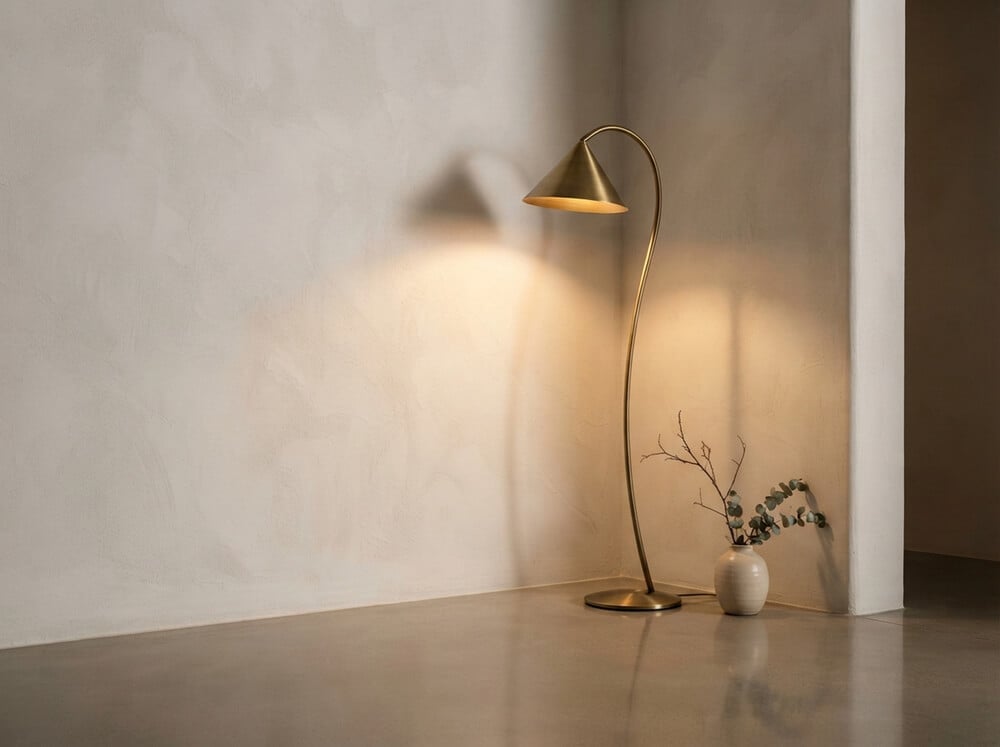
An arc lamp solved a real problem, which was how to put light over the middle of a room without wiring the ceiling. The model for all of them was the Arco, designed in 1962 by Achille and Pier Giacomo Castiglioni for the Italian firm Flos.
Its long stainless steel arm swept out from a block of Carrara marble, and the designers bored an opening through the stone so that two people could carry it with a broom handle. Department stores sold cheaper versions throughout the 1970s, often with several chrome arms and globe shades sprouting from one weighted base.
Flos still makes the original, at a price far above the copies.
Bean Bag Chairs
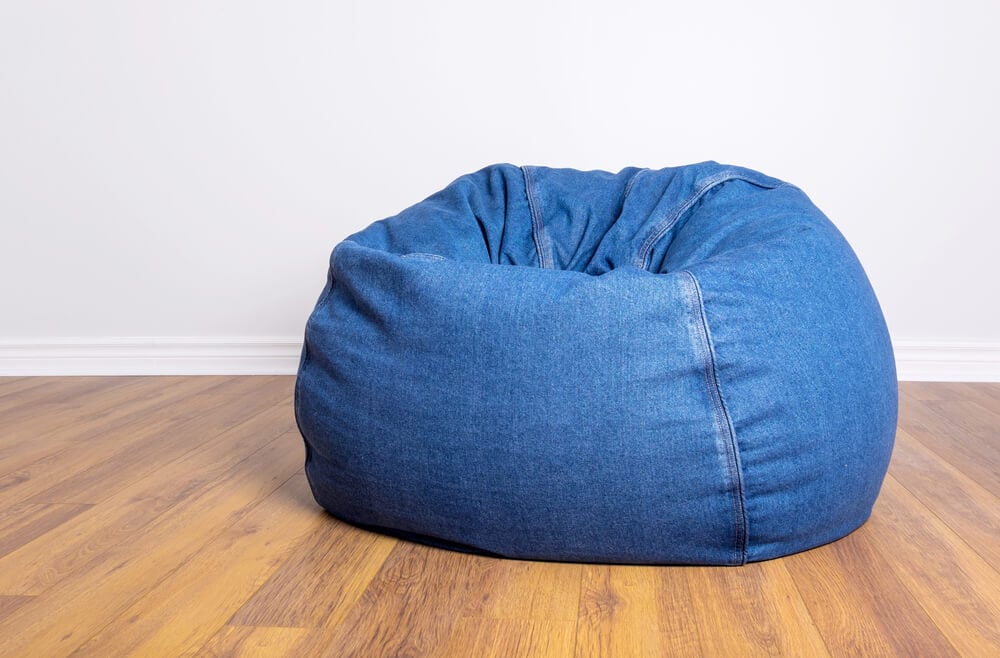
The shapeless chair had a pedigree. Italian designers Piero Gatti, Cesare Paolini and Franco Teodoro created the Sacco for the furniture maker Zanotta in 1968, a pear-shaped sack filled with polystyrene pellets that molded itself to whoever dropped into it.
American manufacturers quickly turned the idea into vinyl versions in orange, yellow and brown that sold for a small fraction of the price. Kids loved them, and adults discovered that getting out of one required planning.
The seams were the weak point, and a split bag released thousands of static-charged white beads that clung to the shag for months. Zanotta continues to produce the Sacco today.
La-Z-Boy Recliners
Dad’s chair was usually a recliner, and the name on the tag was usually La-Z-Boy. Cousins Edward Knabusch and Edwin Shoemaker founded the business in Monroe, Michigan, in 1927 and built their first reclining chair out of wooden slats for porch use before upholstering it.
The company’s Reclina-Rocker, introduced in 1961, combined a rocking chair with a pop-up footrest and became its signature product. In the 1970s the chairs were covered in vinyl, tweed or plaid and positioned with a clear line of sight to the television.
Other family members sat in it only when its owner was out of the house, and gave it up without being asked.
Plaid Herculon Sofas
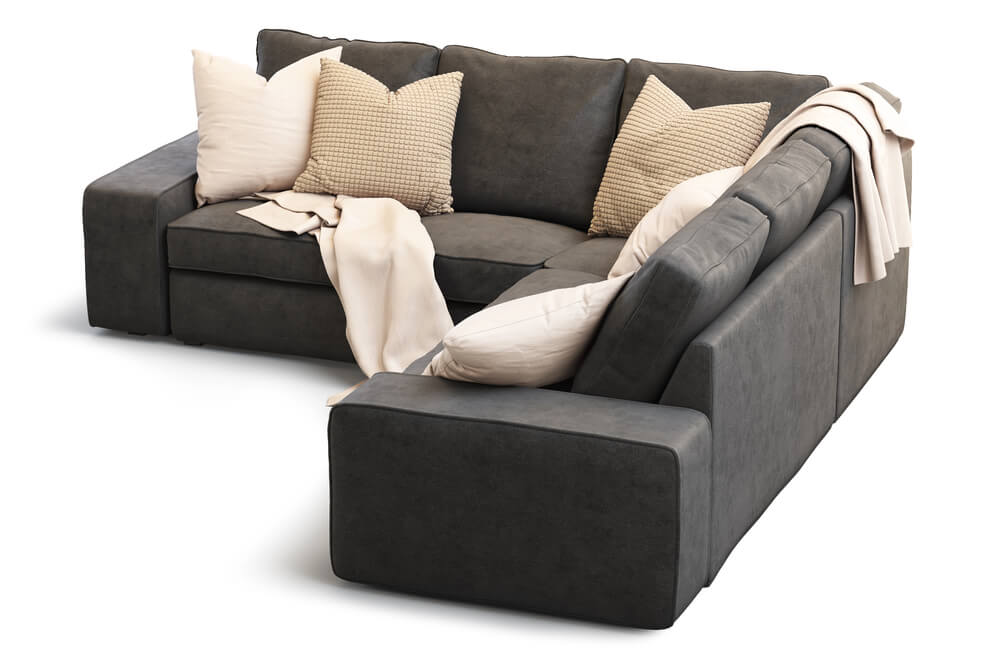
Indestructible is a fair word for the plaid sofa that anchored many family rooms. The fabric was frequently Herculon, a trade name for olefin fiber made by Hercules Inc. of Wilmington, Delaware, a chemical company better known until then for explosives.
Advertisements promised that spills would wipe off, and they largely did, because the fiber absorbed almost no moisture. It was also scratchy against bare legs and prone to melting if something hot touched it.
Typical color combinations were brown, rust and gold, often on a frame with exposed wooden arms. A great many of these sofas spent a second career in basements, cabins and college apartments.
Crocheted Granny-Square Afghans
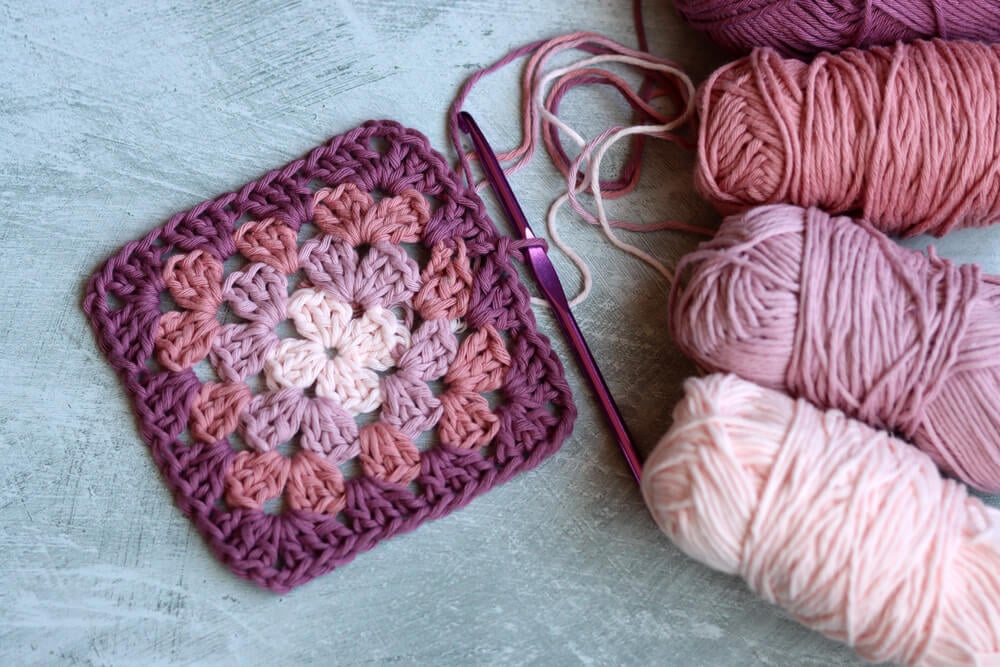
Draped over the back of the sofa was an afghan made by a grandmother, an aunt or a determined teenager. The granny square, worked outward in rounds from the center, was the standard pattern because each square was small enough to finish in an evening and scraps of any color could be used.
Squares were then joined, traditionally with black borders that made the brighter colors stand out. Acrylic yarn such as Red Heart, sold by Coats and Clark, had largely replaced wool for the job since it was inexpensive and could go in the washing machine.
That durability is why so many of them are still in use.
Folding TV Tray Tables
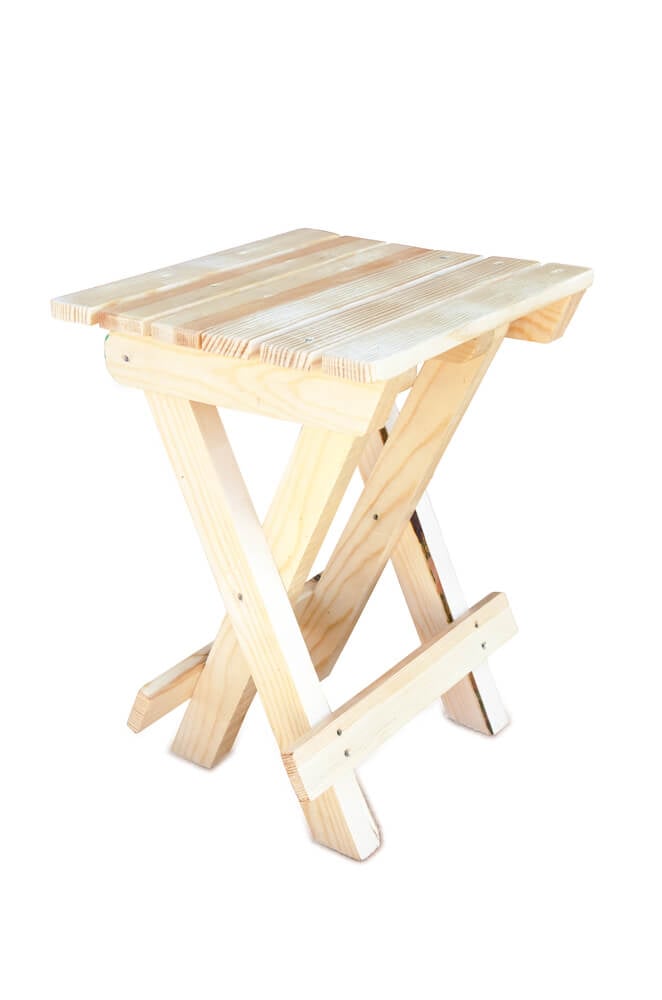
Sets of four metal trays on folding legs, stored on a rolling rack in the corner, let a family eat in front of the television without balancing plates on their knees. The tables appeared in the early 1950s, at roughly the same moment as Swanson’s frozen TV dinner, and the two products grew up together.
By the 1970s the tray tops were printed with florals, fake woodgrain or autumn leaves, and the legs snapped into clips underneath with a distinctive metallic click. They were never very stable.
One bump from a passing dog could send a full dinner sliding toward the carpet.
Velvet Paintings

Paint on black velvet made colors appear to glow, and the 1970s bought the effect by the truckload. The American father of the form is generally said to be Edgar Leeteg, who worked in Tahiti from the 1930s until his death in 1953 and sold portraits of islanders through a Honolulu gallery.
The later boom was industrial, centered on workshops in Mexican border cities such as Tijuana and Ciudad Juarez where teams of painters produced the same subjects over and over. Matadors, tigers, sad clowns and Elvis Presley were dependable sellers.
Art critics treated the genre as a punch line, which did nothing to slow sales at roadside stands.
Big-Eyed Keane Prints

Waifs with enormous, dark, saucer-shaped eyes stared out from walls across the country, usually as inexpensive prints. For years the pictures were sold under the name of Walter Keane, a San Francisco promoter who took public credit for them.
The actual painter was his wife, Margaret Keane, who revealed the truth in 1970 after their divorce. The dispute ended in a Honolulu federal courtroom in 1986, when the judge asked both to paint in front of the jury.
Margaret finished a big-eyed child in under an hour, while Walter declined, citing a sore shoulder. Tim Burton told the story in the 2014 film Big Eyes.
Sunburst Wall Clocks
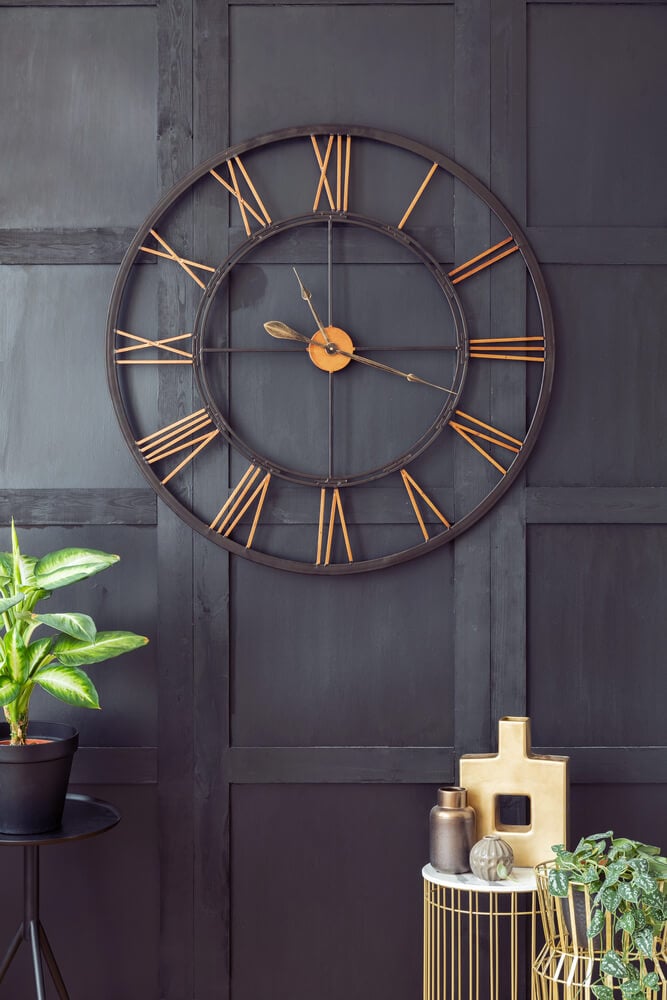
Radiating spikes of metal or wood around a small dial made the sunburst clock the standard thing to hang over a sofa. The style traces to George Nelson Associates, which began designing wall clocks for the Howard Miller Clock Company of Zeeland, Michigan, in the late 1940s.
Those originals were costly, so most living rooms had a lookalike. Syroco of Syracuse, New York, molded ornate versions from plastic finished to resemble gilded wood, and brands such as Elgin and Welby sold their own.
By the 1970s most of them ran on a single battery tucked behind the face. When it died, the clock often stayed up for years showing the same time.
String Art on Felt Boards

Hundreds of small nails hammered into a board, with colored thread wound between them in straight lines, produced curves that looked far more complicated than they were. The technique goes back to Mary Everest Boole, an English educator who used what she called curve stitching to teach children geometry around the turn of the twentieth century.
Seventies craft companies packaged the idea as kits with a printed pattern, a bag of nails and spools of metallic thread. Clipper ships, owls, suspension bridges and abstract starbursts were the usual subjects, normally mounted on black or brown felt.
The finished piece went on the wall beside the paneling it matched.
Chrome and Smoked Glass Etageres
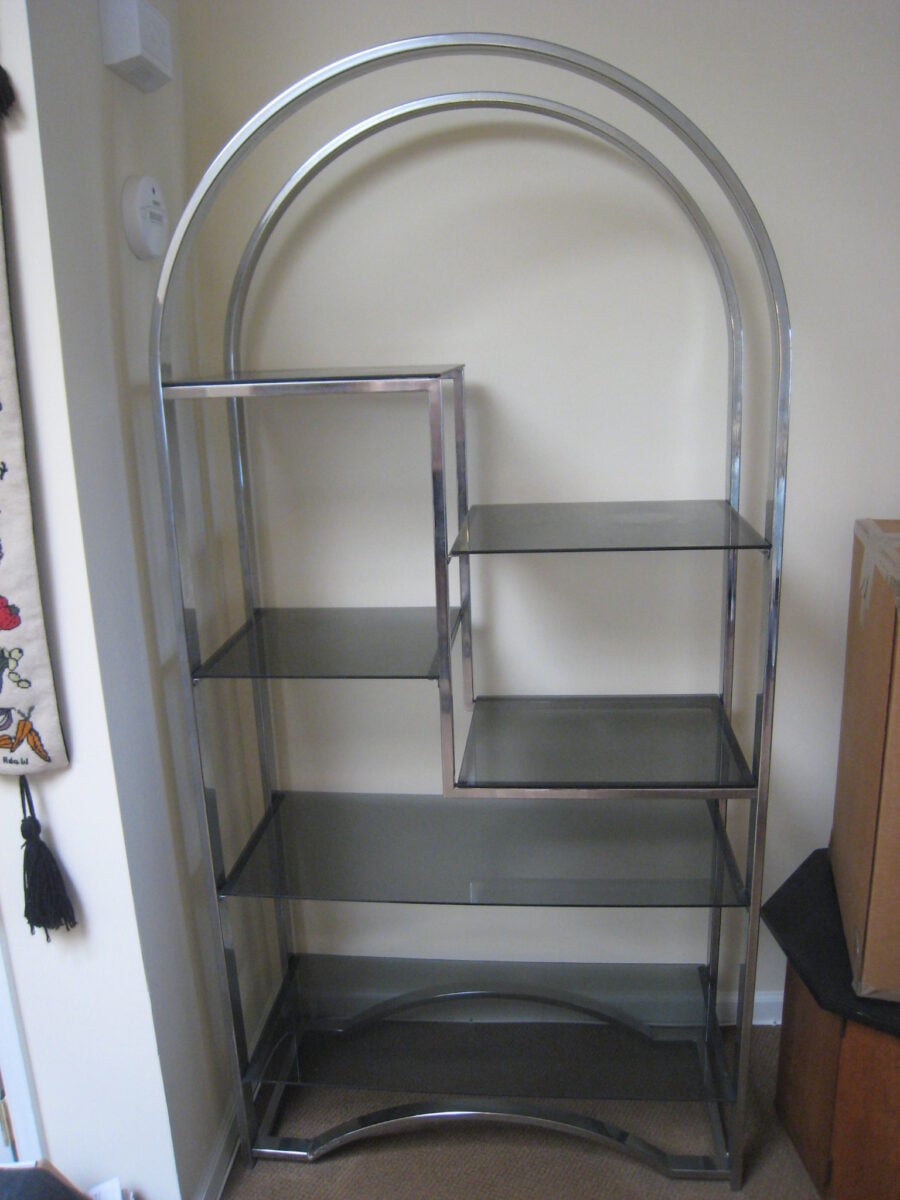
Not every room was brown and fuzzy. The sleeker households of the decade favored open shelving units called etageres, built from chrome-plated steel tubing with shelves of gray-tinted glass.
The look owed a great deal to Milo Baughman, the designer whose long partnership with Thayer Coggin of High Point, North Carolina, began in 1953 and helped make polished metal frames a mainstream American style. Mass-market copies were sold flat-packed and assembled with a hex key.
The shelves displayed a stereo, a few plants and anything brass, and they showed every fingerprint. Dusting one properly meant removing every object and cleaning both sides of the glass.
Wicker Peacock Chairs
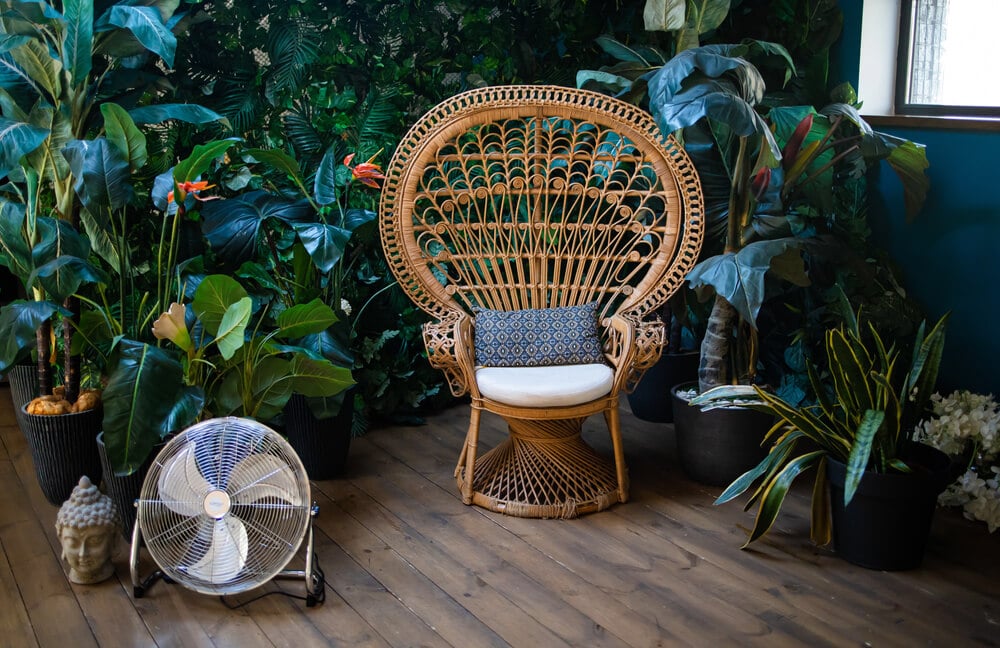
With a woven back flaring up and outward like a fan, the peacock chair turned whoever sat in it into a portrait subject. The form is associated with the Philippines, where rattan and wicker furniture had been made for export for decades.
It gained a political edge in 1967, when Black Panther cofounder Huey Newton was photographed seated in one, and it became a staple prop for album covers and school portraits afterward. Import chains such as Pier 1 put the chairs within reach of ordinary buyers.
In most living rooms it sat in a corner beside a fern and was admired far more often than it was used.
Malm Freestanding Fireplaces
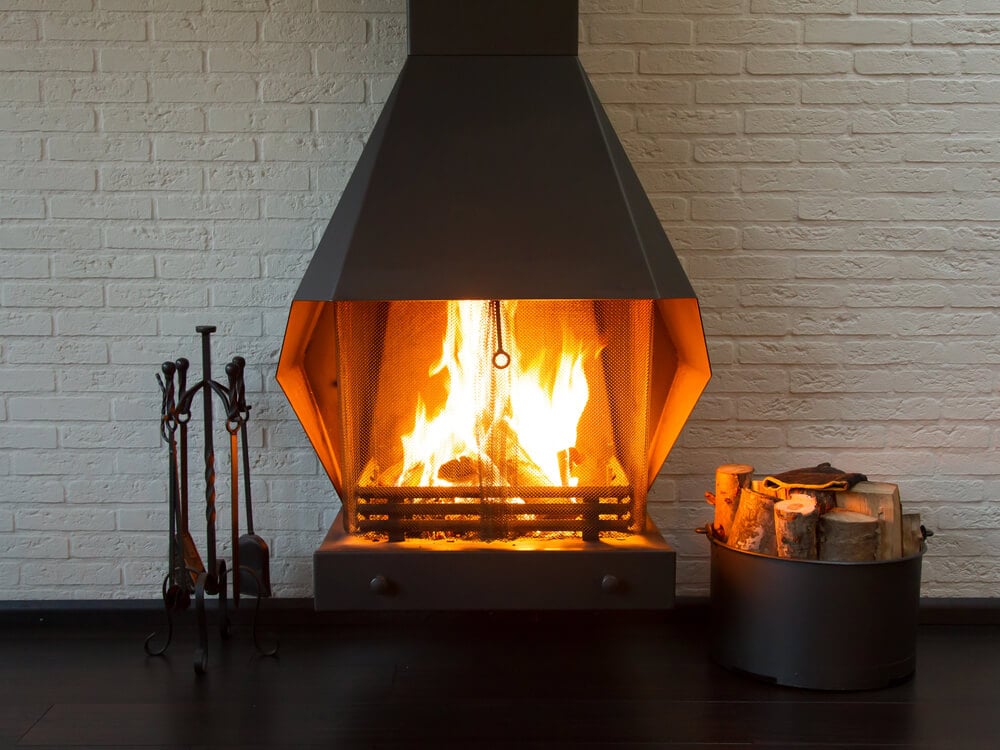
Shaped like a funnel turned upside down, the freestanding cone fireplace could be installed almost anywhere a flue could reach the roof. Malm Fireplaces of Santa Rosa, California, which entered the business around 1960, became the name most closely tied to the type.
The steel bodies were finished in porcelain enamel, and the color chart included bright orange, red, yellow and matte black. Because the firebox was open on the front or all the way around, people could gather on every side, often on floor cushions.
The units threw less heat than a masonry hearth with a proper mantel. Malm still manufactures them in Northern California.
Home Organs With Automatic Rhythm
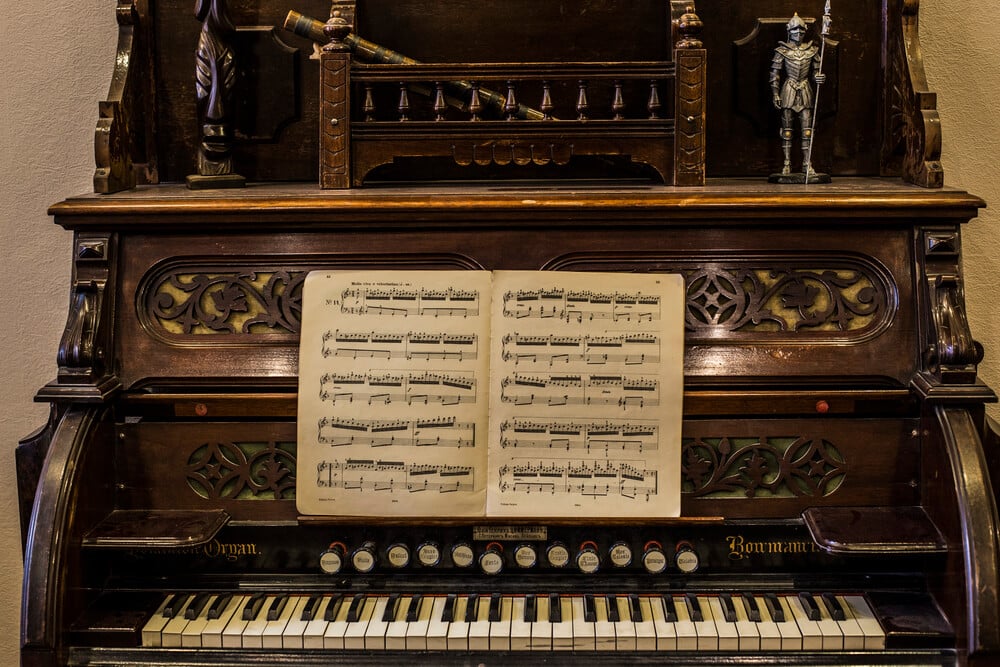
A surprising number of living rooms held an electronic organ that almost nobody could play. Laurens Hammond had introduced his electric organ in 1935, and by the 1970s Hammond, Lowrey, Wurlitzer and others were selling home models through showrooms in shopping malls.
The pitch was that no lessons were required. Buttons supplied drum patterns labeled waltz, bossa nova and rock, and one-finger chord features filled in the accompaniment while the owner picked out a melody from a color-coded songbook.
Salesmen demonstrated them brilliantly. At home the bench filled with sheet music, the top collected framed photographs, and the instrument was played mostly during holidays.
Home Pong Consoles
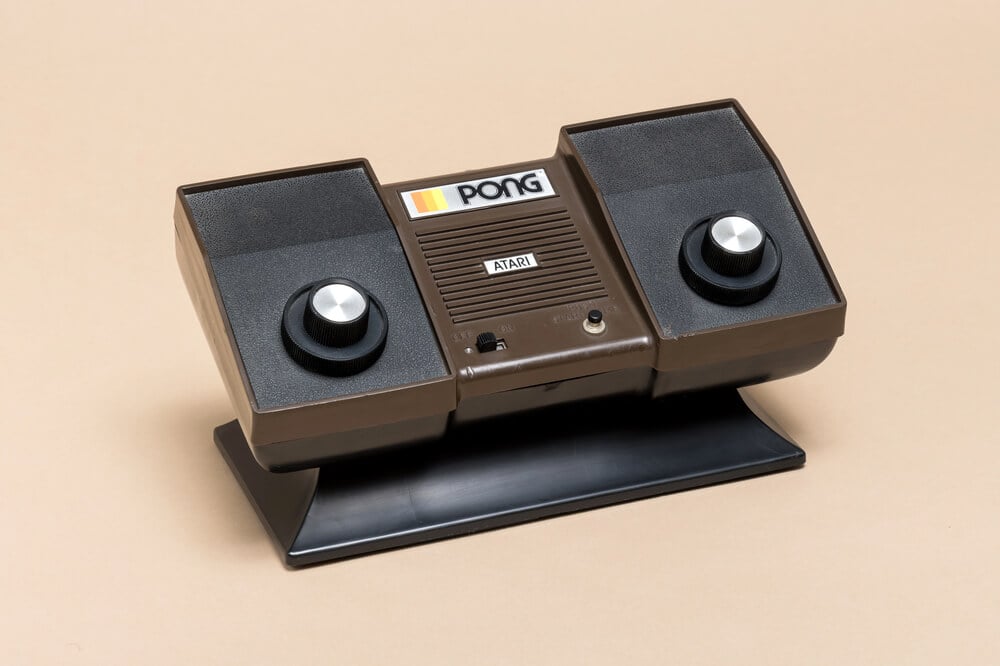
Television became something to play with in the middle of the decade. Atari’s Pong had been a coin-operated hit since 1972, and for Christmas 1975 the company sold a home version through Sears under the retailer’s Tele-Games label.
The console hooked to the antenna terminals of the family set and displayed two paddles, a square dot and a score. Each player turned a single knob.
The Magnavox Odyssey, based on the work of engineer Ralph Baer, had reached stores first in 1972 but sold modestly. Pong’s success brought a flood of imitators, and by 1977 discount stores were clearing out dozens of nearly identical paddle games.
Atari Video Computer System
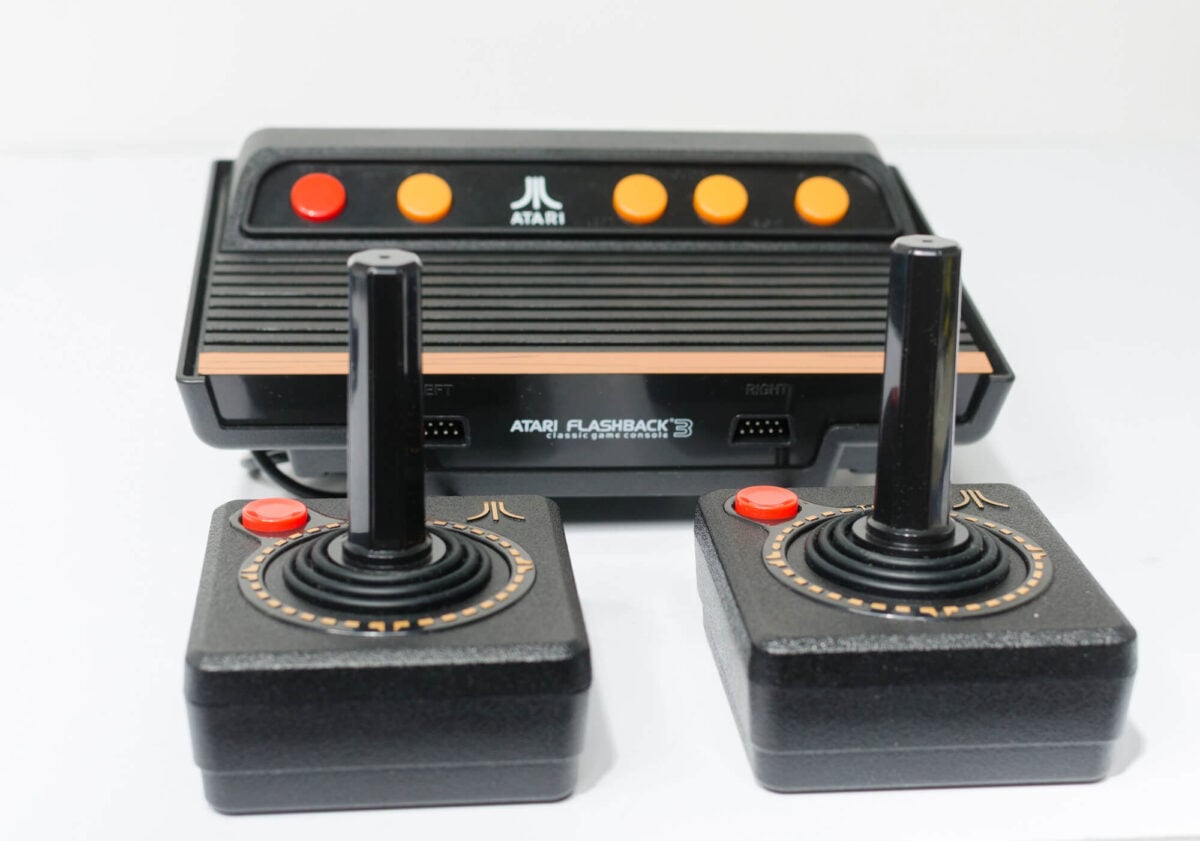
Arriving in the fall of 1977 at just under 200 dollars, the Atari Video Computer System replaced built-in games with interchangeable cartridges. The console came with two joysticks, a pair of paddle controllers and a Combat cartridge featuring tanks and biplanes.
Its front panel was trimmed in fake woodgrain, which let it blend in with the television cabinet and the paneling behind it. Sales were slow at first and took off after a home version of Space Invaders arrived in 1980.
Atari renamed the machine the 2600 in 1982. The cartridges tended to pile up in a shoebox near the set, labels worn from handling.
Betamax and VHS Recorders
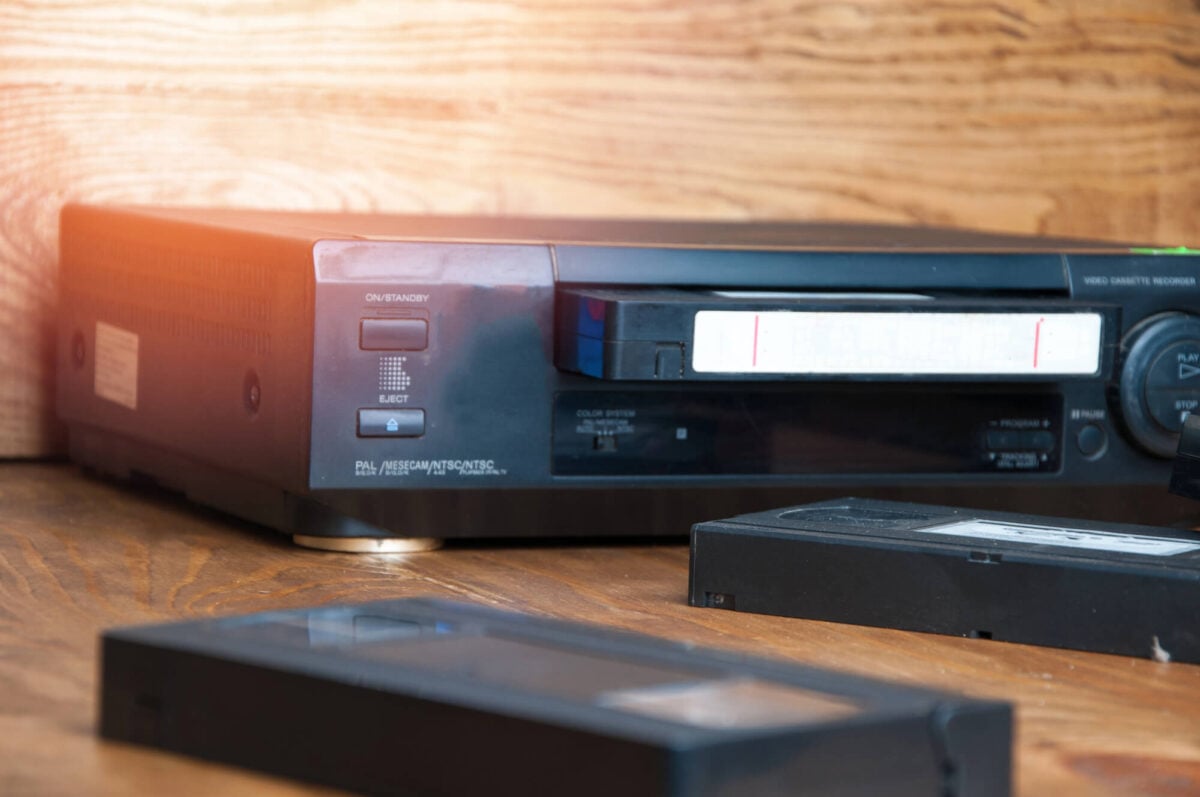
Watching a show at a time other than its broadcast hour was a new idea, and an expensive one. Sony brought Betamax to the American market in 1975, first as part of a console that included a Trinitron television, and JVC’s rival VHS format followed in 1977 with RCA selling a machine that could record for four hours.
Early decks were heavy, top-loading boxes with mechanical piano-style keys and a clock that had to be set by hand. Prices ran around 1,000 dollars or more.
Hollywood studios sued Sony over home taping, and the Supreme Court ruled in the company’s favor in 1984.
Home Interiors Wall Groupings
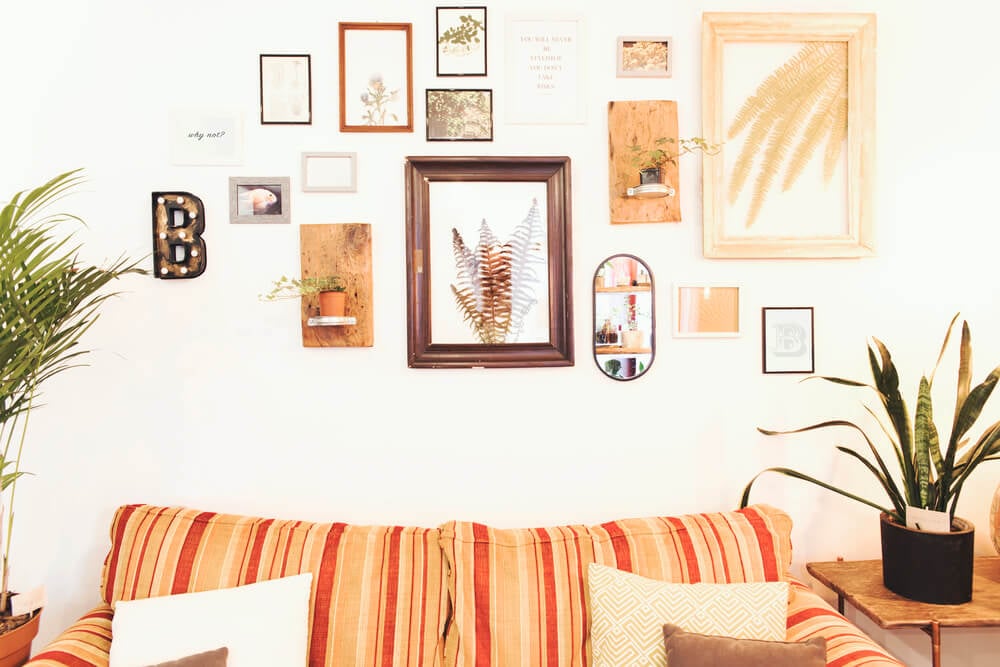
Above many sofas hung a carefully balanced arrangement of framed prints, brass-tone sconces with votive cups and small wooden shelves. Much of it came from Home Interiors and Gifts, the Dallas-area company Mary Crowley founded in 1957.
The merchandise was sold at parties in private homes, where a company representative called a displayer showed a hostess and her friends how to compose a wall. Guests ordered from a catalog, and the hostess earned free pieces.
Popular items included pictures of deer, barns and praying hands. The company grew into one of the largest direct sellers in the country before filing for bankruptcy in 2008 and being folded into a rival.
Avocado, Gold and the Confidence of Brown
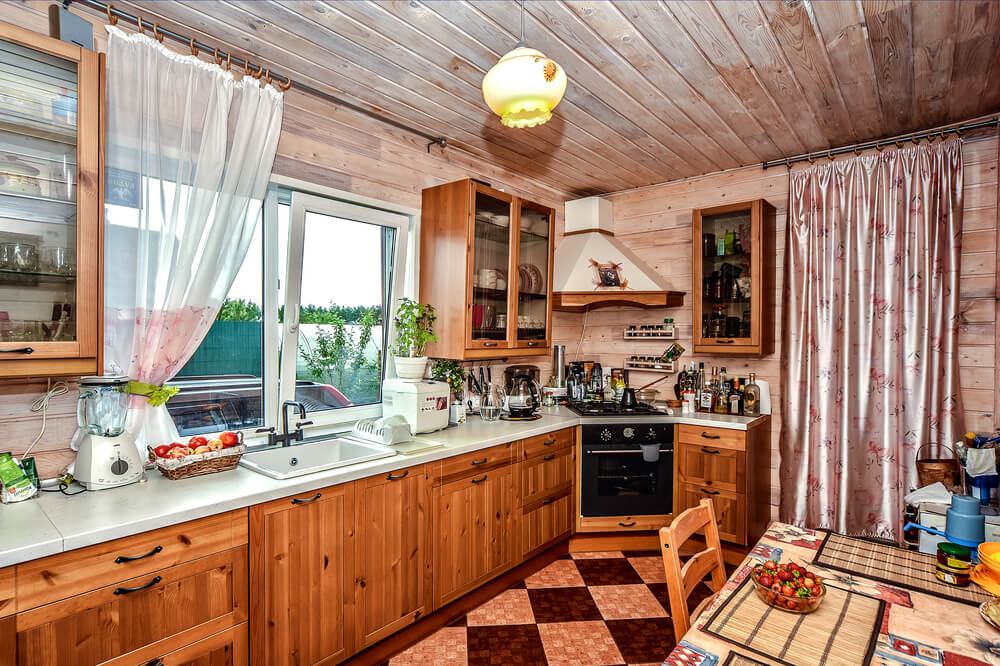
Seen in old snapshots, these rooms can look like a dare. The colors were dark, the surfaces were busy, and nearly every object asked to be touched, wound, watered, adjusted or plugged in.
Yet the people who furnished them were making deliberate choices, often with new materials and new technology that had only just become affordable. That may be the most interesting thing about the decade’s decor.
A living room held a designer lamp idea from Milan, a fiber from a Delaware chemical plant, a craft kit from the hobby shop and a video game from California, all on the same carpet. Later generations stripped most of it out and painted the walls white.
The rooms got brighter, and arguably a little less sure of themselves.
More from Go2Tutors!

- The Romanov Crown Jewels and Their Tragic Fate
- 13 Historical Mysteries That Science Still Can’t Solve
- Famous Hoaxes That Fooled the World for Years
- 15 Child Stars with Tragic Adult Lives
- 16 Famous Jewelry Pieces in History
Like Go2Tutors’s content? Follow us on MSN.