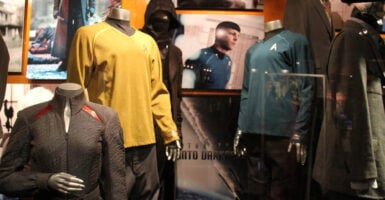
Star Trek Collectibles Worth a Fortune
The original Star Trek ran for just three seasons, yet the objects left over from its production have turned into serious money. Auction houses now treat phasers, uniforms and ship models from the franchise the way they treat fine art, and bidders have blown past estimates by a factor of five or more.
Not every valuable piece is a screen-used relic. Toys, comics and lunch boxes made for children have their own market, and the surviving examples can surprise anyone who still has one in an attic.
Captain Kirk’s Long-Lost Phaser
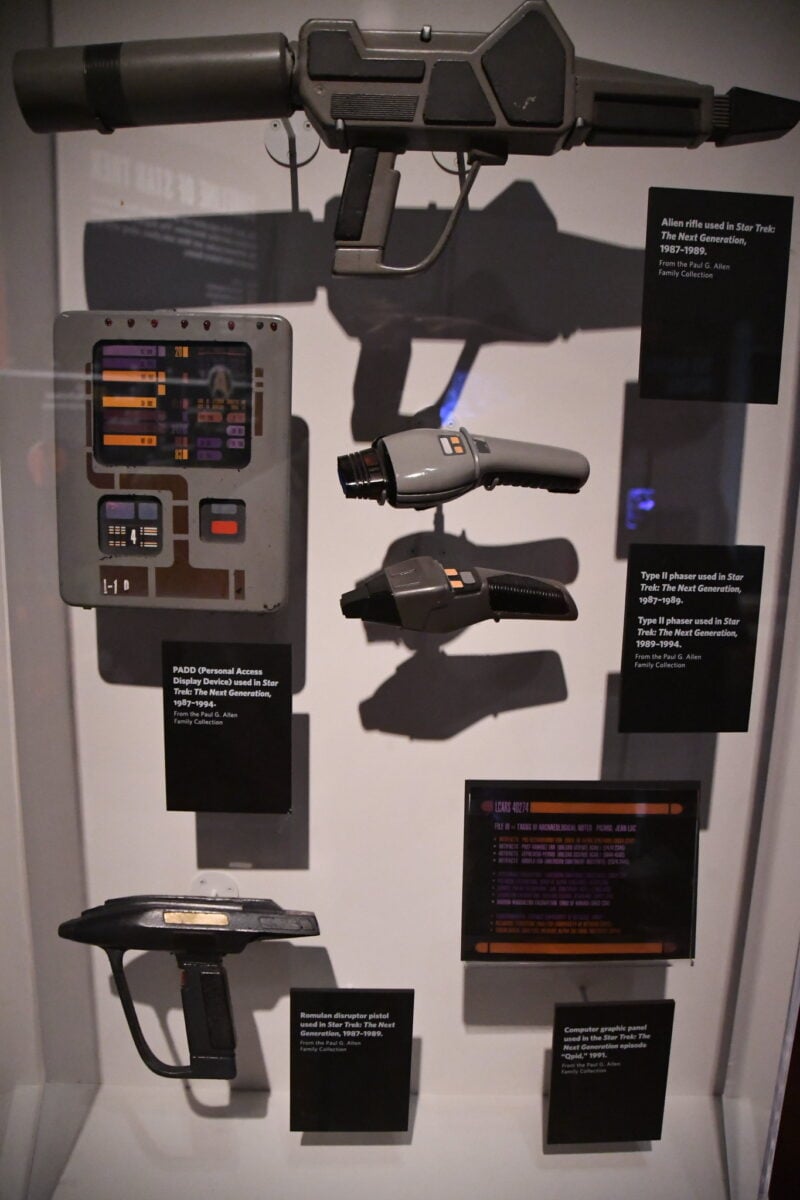
A phaser used by William Shatner as Captain James T. Kirk sold for $910,000 at Julien’s Auctions in November 2024, the highest price ever paid for a Star Trek prop at auction. The estimate had been $100,000, so the final figure landed at roughly nine times expectations.
The prop disappeared for more than fifty years before resurfacing, and the auction house said it can be seen in episodes including “The Gamesters of Triskelion” and “The Cloud Minders.” Its original owner was a veteran of Hollywood’s prop industry who is believed to have obtained it from a Paramount employee.
Kirk’s Spinning-Dial Communicator
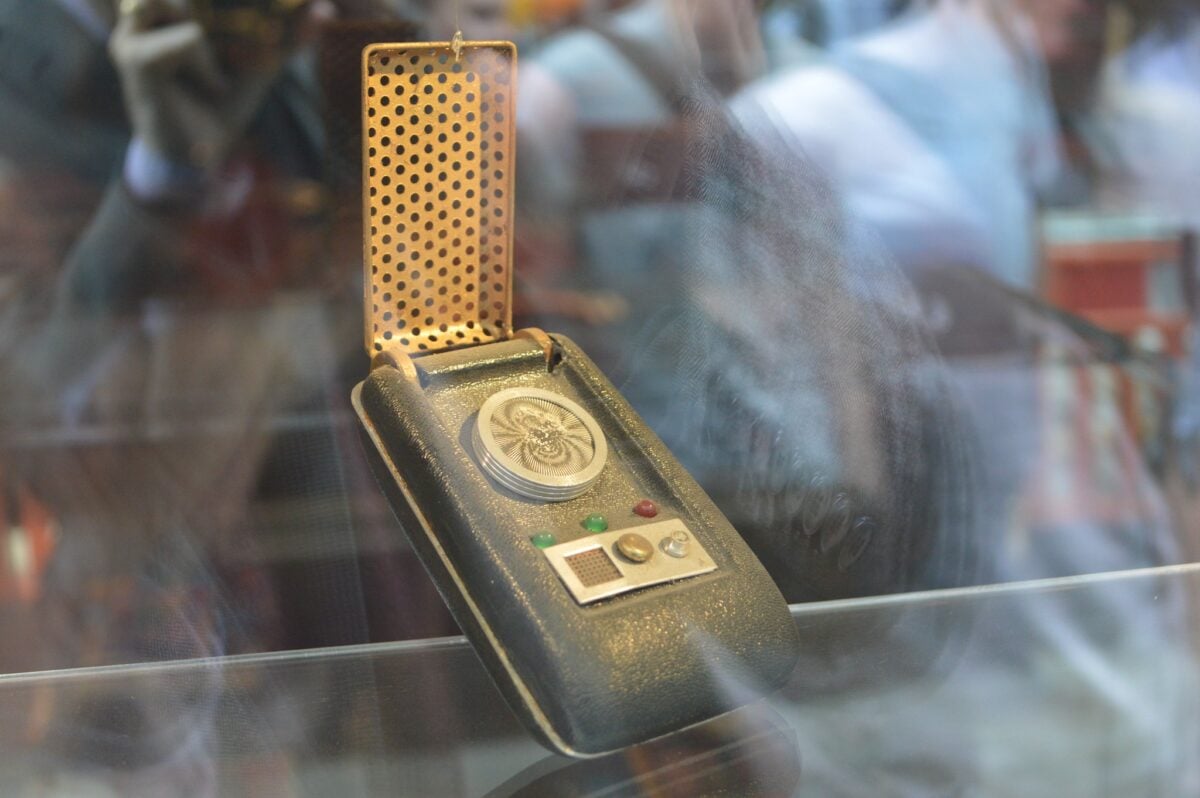
The same Julien’s sale produced $780,000 for a communicator used by Kirk, nearly eight times its $100,000 estimate. The spinning dial on this particular prop can be spotted in “Catspaw,” “Friday’s Child” and “Day of the Dove.”
Together with the phaser, it accounted for nearly half of the event’s $3.6 million total across more than 200 lots.
The Phaser Rifle From the Second Pilot
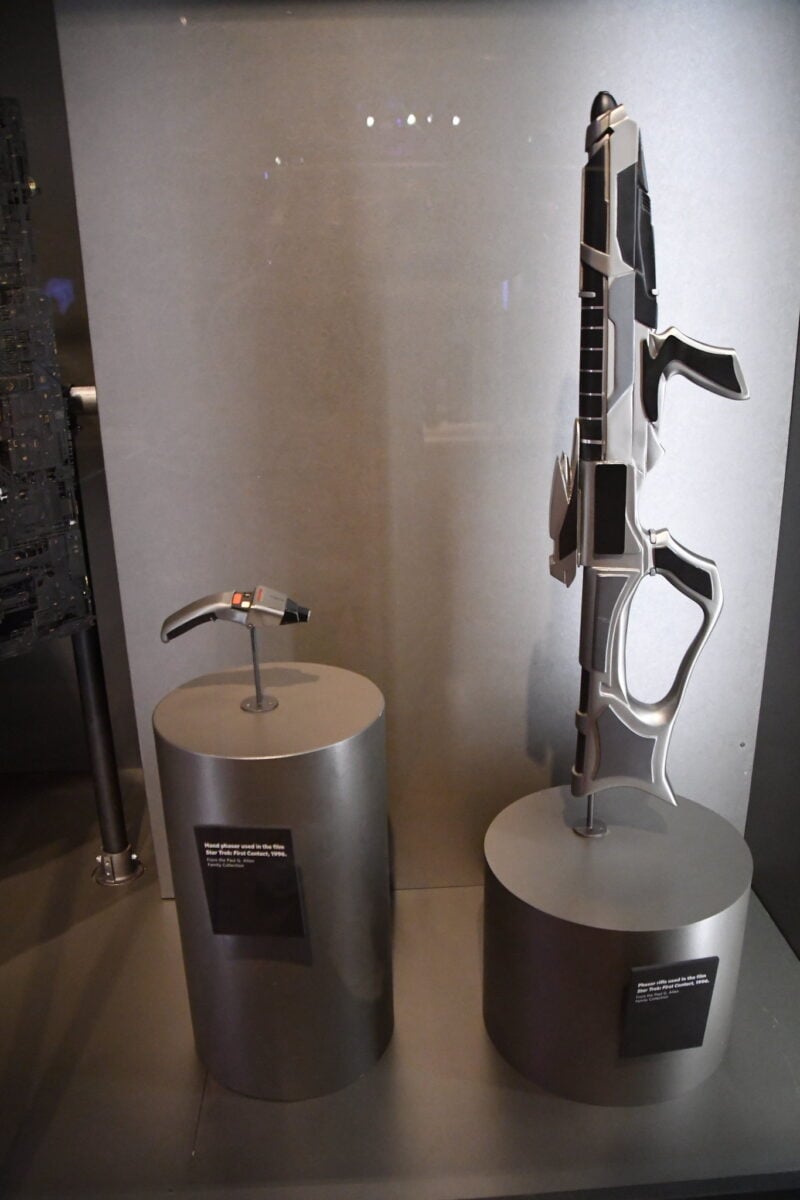
Kirk’s phaser rifle from “Where No Man Has Gone Before” sold for $231,000 at a Julien’s auction in 2013, a record for a Star Trek prop at the time. Only one was ever made, and it appeared in just one episode, which collector Alec Peters considers the single most important Star Trek prop.
The rifle was designed for Gene Roddenberry by toy designer Reuben Klamer, who held onto it until that 2013 sale. In 2021 it came back to auction and brought $615,000, more than double its earlier price.
The Enterprise-D Studio Model
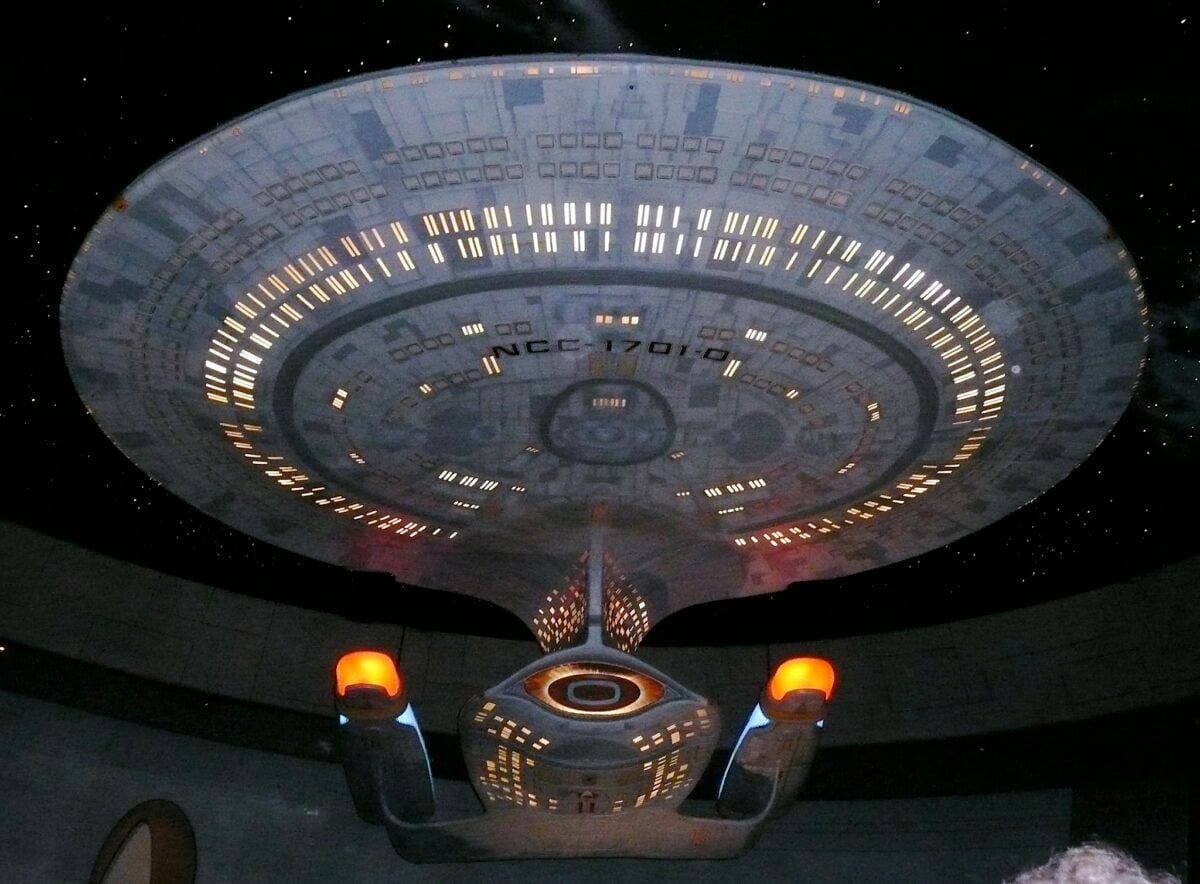
A 78-inch model of the Enterprise-D, built by Industrial Light and Magic, sold for $576,000 at Christie’s in October 2006. It debuted in 1987 in the episode “Encounter at Farpoint” and went on to appear in many later episodes and in the film Star Trek Generations.
The estimate had been just $25,000 to $35,000, so the final price was more than sixteen times the high end. The sale of more than 1,000 lots brought in $7.1 million overall, and this single model was the top seller.
Kirk’s Burnt Yellow Velour Tunic
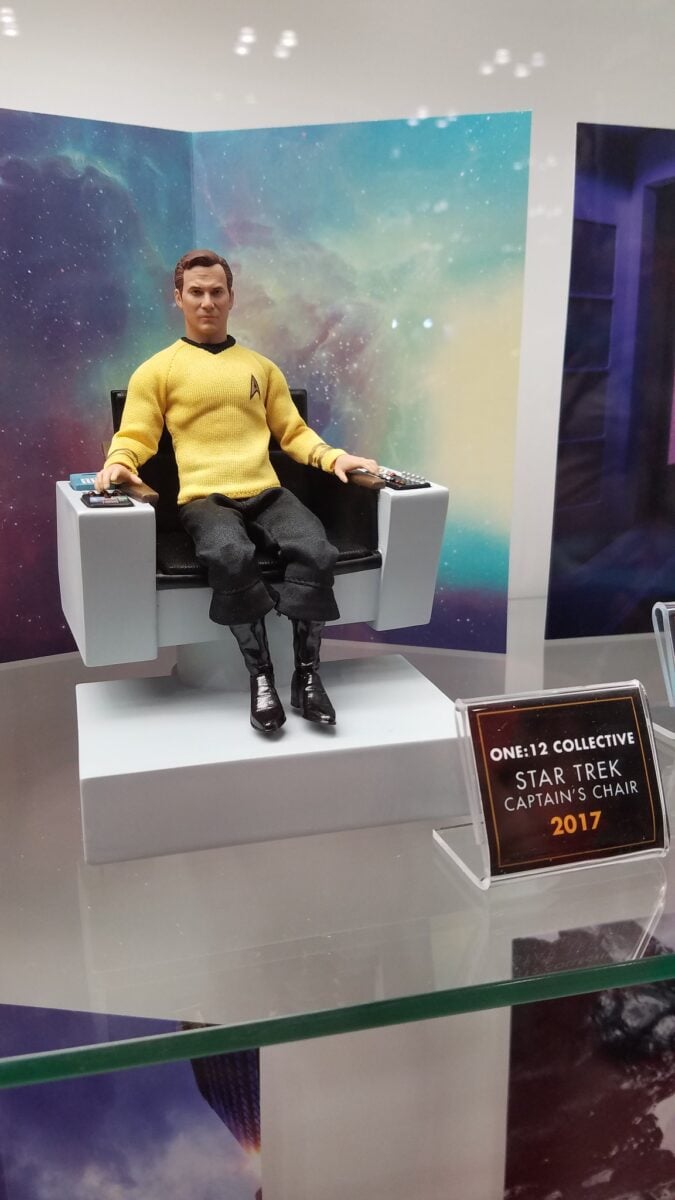
The yellow velour tunic and Starfleet Command bridge trousers that Shatner wore in the first season of the original series sold for $455,000 at Julien’s in 2024. Bidders pushed the price to seven times the $65,000 estimate.
The lot included both the tunic and the trousers, which means the buyer received the full outfit rather than a single garment.
Picard’s Ressikan Flute
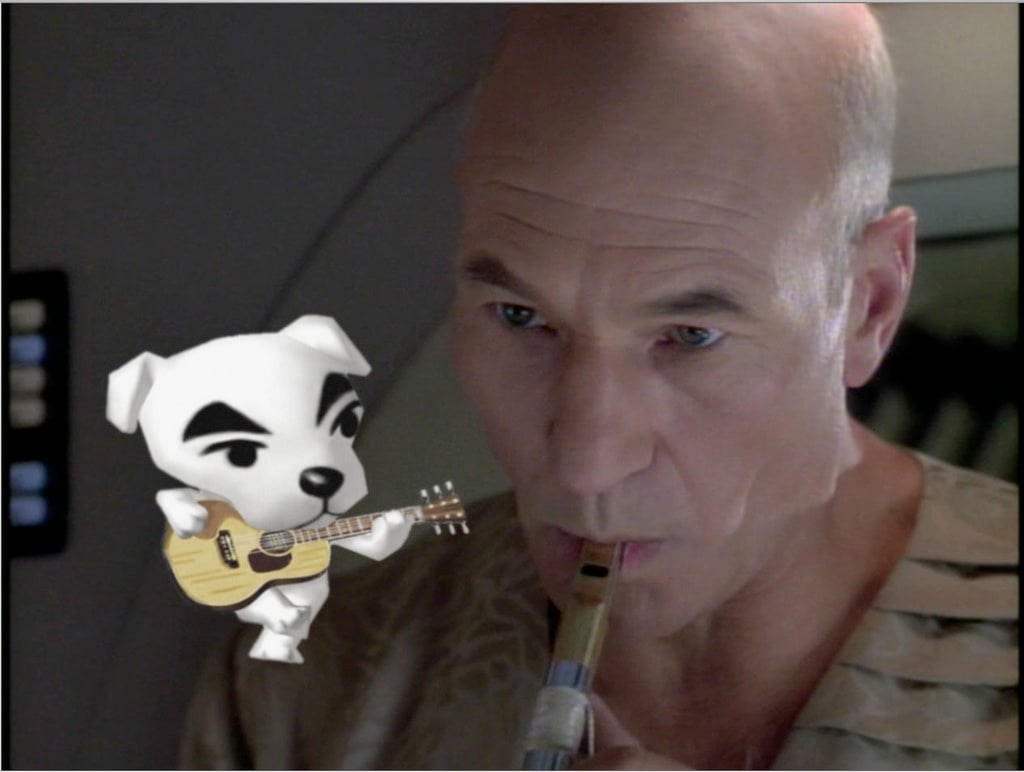
The flute from the Next Generation episode “The Inner Light” sold for $48,000 at Christie’s in 2006, then for $237,000 through Propstore in 2021 against an estimate of $50,000 to $70,000. In September 2025 it sold again through Propstore, this time for $403,200 together with its screen-matched box and a costume continuity script.
The flute does not produce musical notes, a fact that Patrick Stewart found amusing, and a musician sat just out of frame to supply Picard’s fingering in a later episode.
The Klingon Bird-of-Prey Model
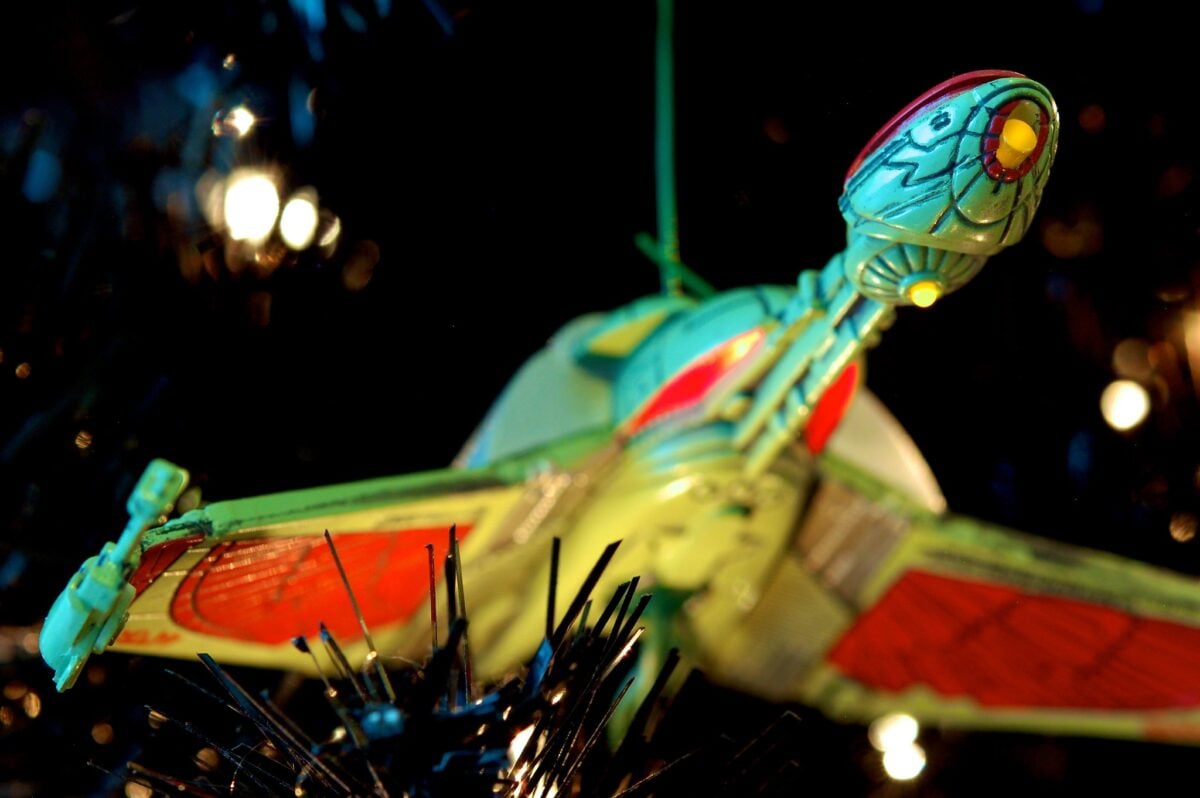
The original studio model of the Klingon Bird-of-Prey sold for $307,200 at the 2006 Christie’s sale. An enlarged wing that was built for close-up shots in Star Trek V: The Final Frontier sold separately for $8,400.
The gap shows how much a complete, recognizable ship adds to the price compared with even a screen-used fragment of one.
The Enterprise-A Model
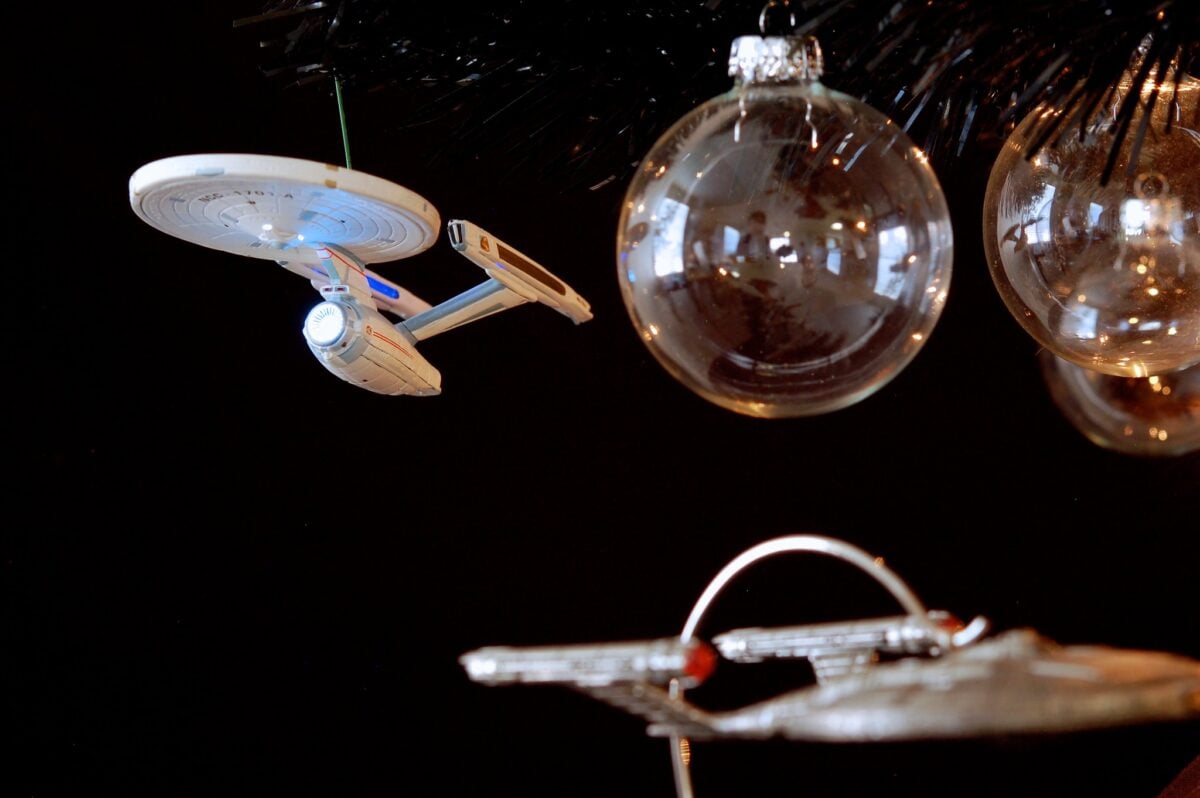
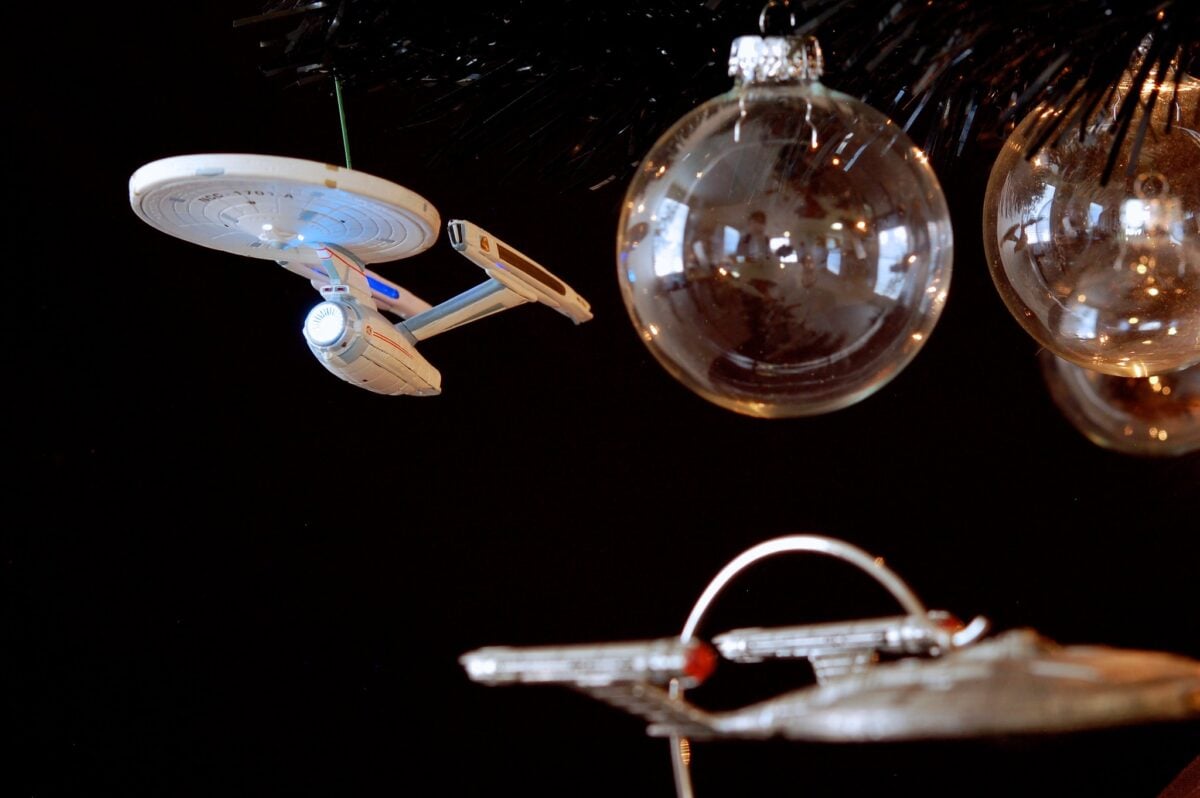
The Enterprise-A model brought $284,800 at the same 2006 Christie’s sale. The studio model of the original 1960s Enterprise is out of reach for collectors, since it sits in the Smithsonian’s National Air and Space Museum.
At 11 feet long, that original is nearly the size of some of the aircraft around it.
The Enterprise Helm and Navigation Console
The helm and navigation console from the original Enterprise bridge, associated with Lieutenant Hikaru Sulu, sold for $260,000 at Julien’s in 2024. That was about five times the low end of its $50,000 to $70,000 estimate.
By contrast, bridge control panels from the same ship sold at that auction for $19,050, so a prop that carried identifiable screen time was worth many times a generic panel.
The Deep Space Nine Station Miniature
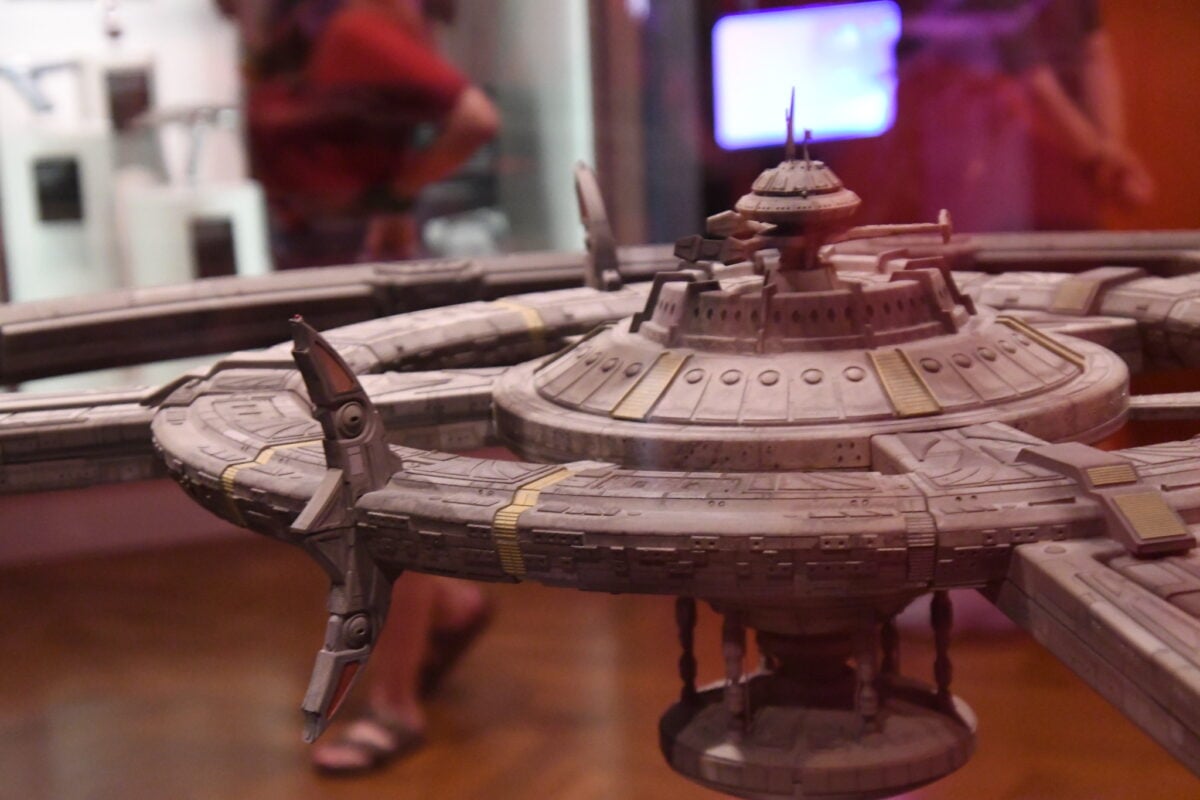
An original production miniature of the Deep Space Nine space station fetched $254,000 at Julien’s, about five times its $50,000 estimate. It stood out in an auction dominated by original-series material, which shows that the later spinoffs carry real weight with bidders.
The sale was held in Hollywood in November 2024.
Dr. McCoy’s Spacesuit From “The Tholian Web”
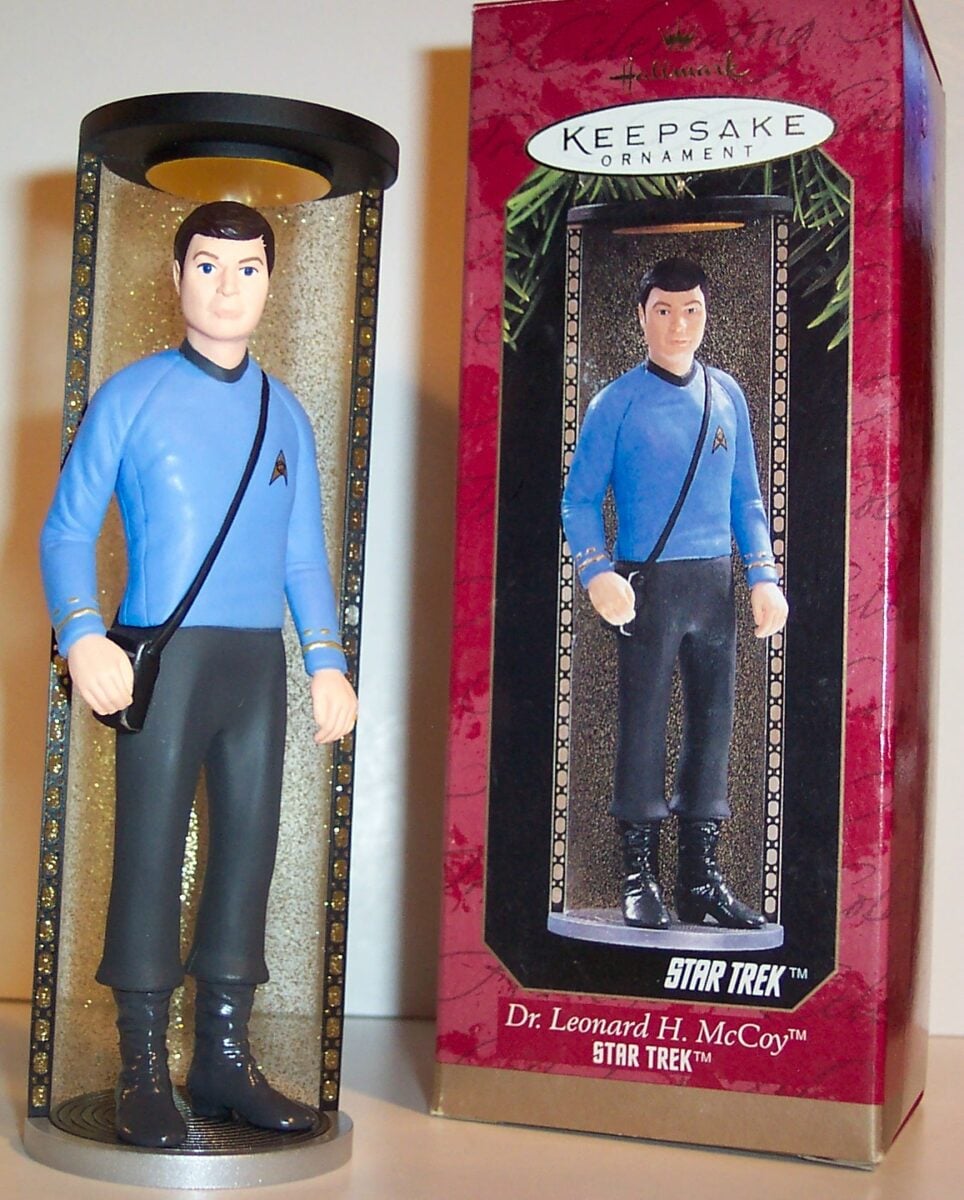
Dr. McCoy’s spacesuit from the original series episode “The Tholian Web” sold for $144,000 at Christie’s in 2006. That sale was unusual in that 904 of the 999 lots that sold went above their high estimates.
A suit tied to a main character in a single episode drew a price well beyond what the estimate had suggested.
The USS Voyager Model
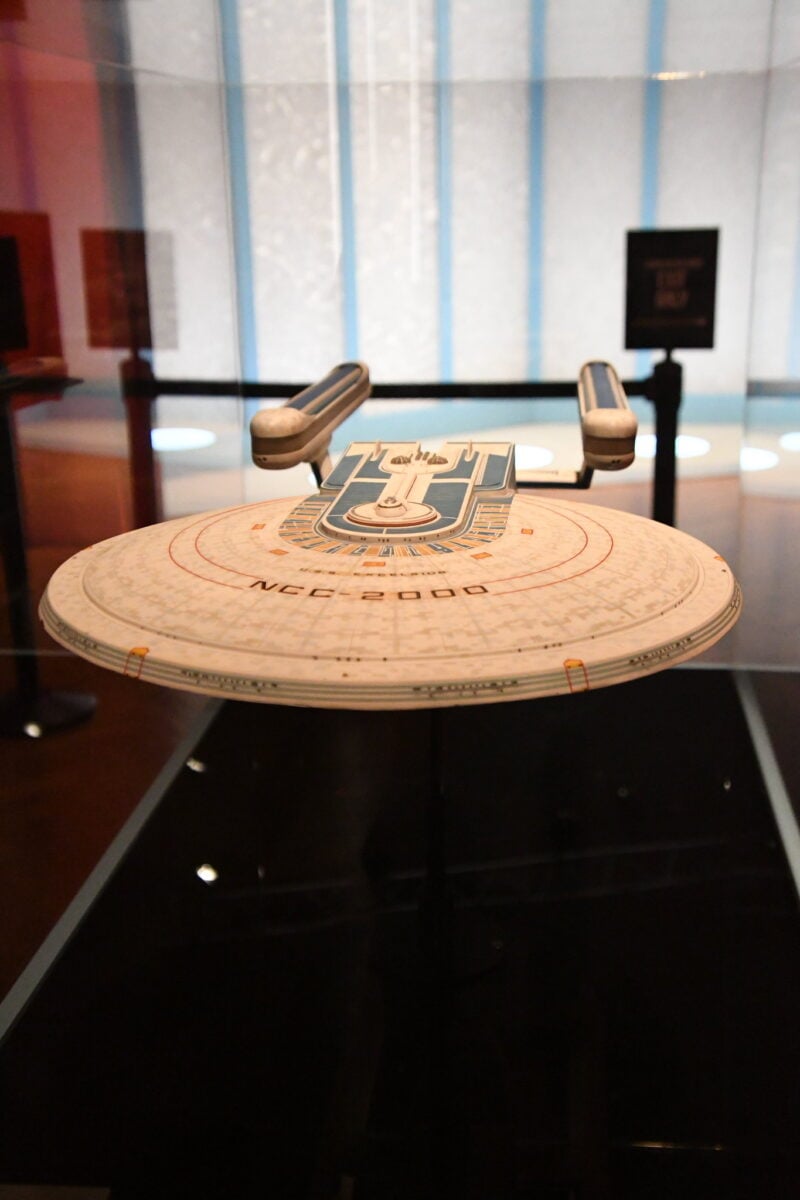
A model of the USS Voyager sold for $132,000 at the 2006 Christie’s auction. It was one of the few big-ticket items sold in the room rather than to the phone and online bidders who took most of the top lots, and the buyer was Adrian Hancock of England.
The result shows that a ship from the 1990s could attract serious money even in a sale built around the original series.
The Red Velour Engineering Uniform

A generic female engineering duty uniform in red velour, which may have been intended for Nichelle Nichols, sold for $114,300 at Julien’s in 2024. Auction staff had expected it to bring between $3,000 and $5,000, so the final price was more than twenty times the high estimate.
The speculation that it may have been meant for Nichols was noted alongside the lot.
The Klingon Battle Cruiser Models
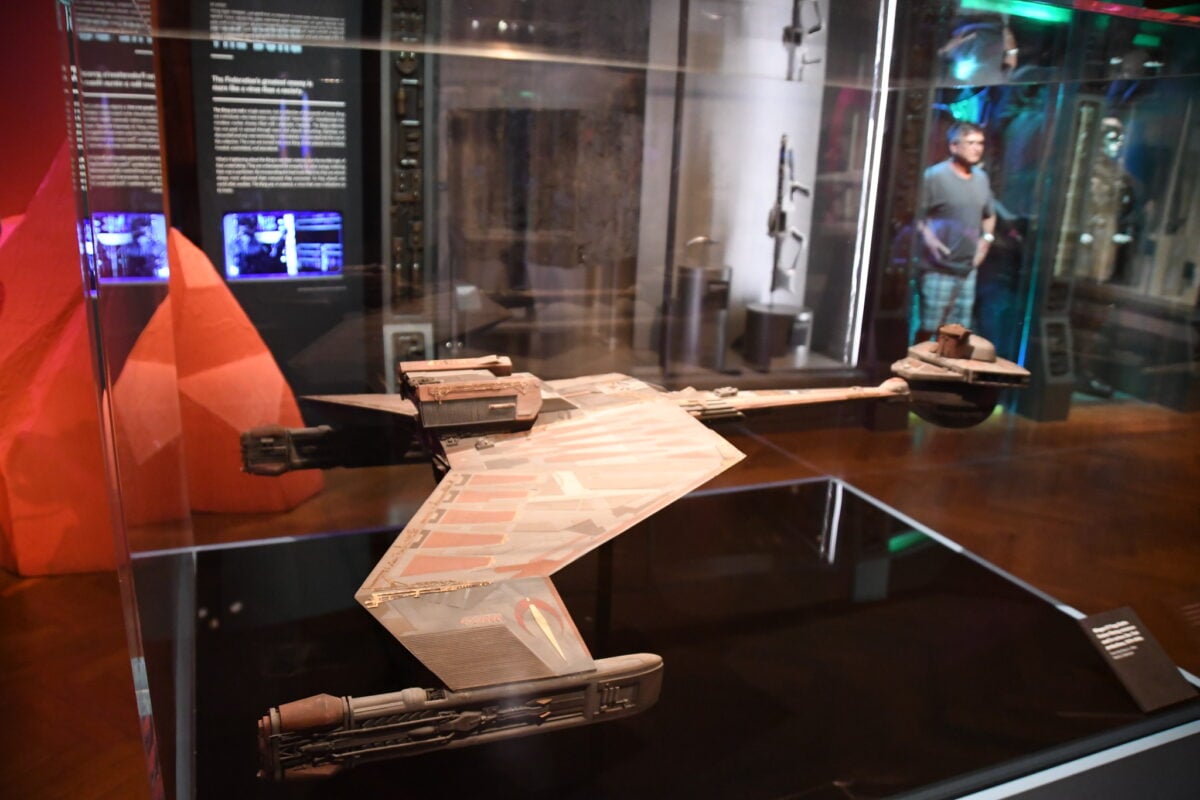
The larger K’t’inga-class battle cruiser model used in the Star Trek films sold for $102,000 at the 2006 Christie’s auction. The original D7 filming model is far smaller at roughly 30 inches long and now belongs to the Smithsonian.
A second D7, built as the tooling master for AMT model kits, sold for $11,500 in 1998, then for $35,000 six months later, and again for $64,900 in 2004.
Picard’s Enterprise-E Captain’s Chair
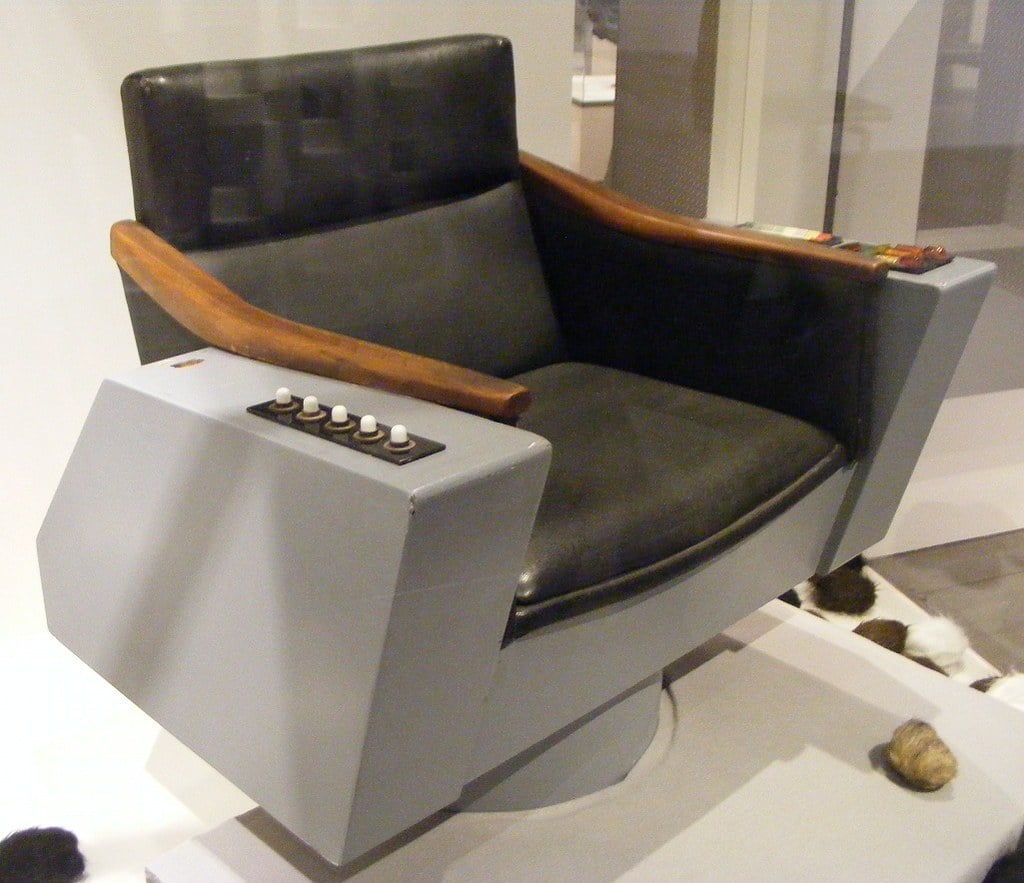
Jean-Luc Picard’s captain’s chair from the Enterprise-E reached a gavel price of $52,000 at Christie’s in 2006, far above a presale estimate of $9,000. With fees, the buyer paid $62,400.
The chair is covered in burgundy-dyed imitation leather and has simulated control panels in the armrests, which is hardly high-end furniture, but that did not slow down fans who filled the Manhattan salesroom.
The Replica Chair That Outsold the Original
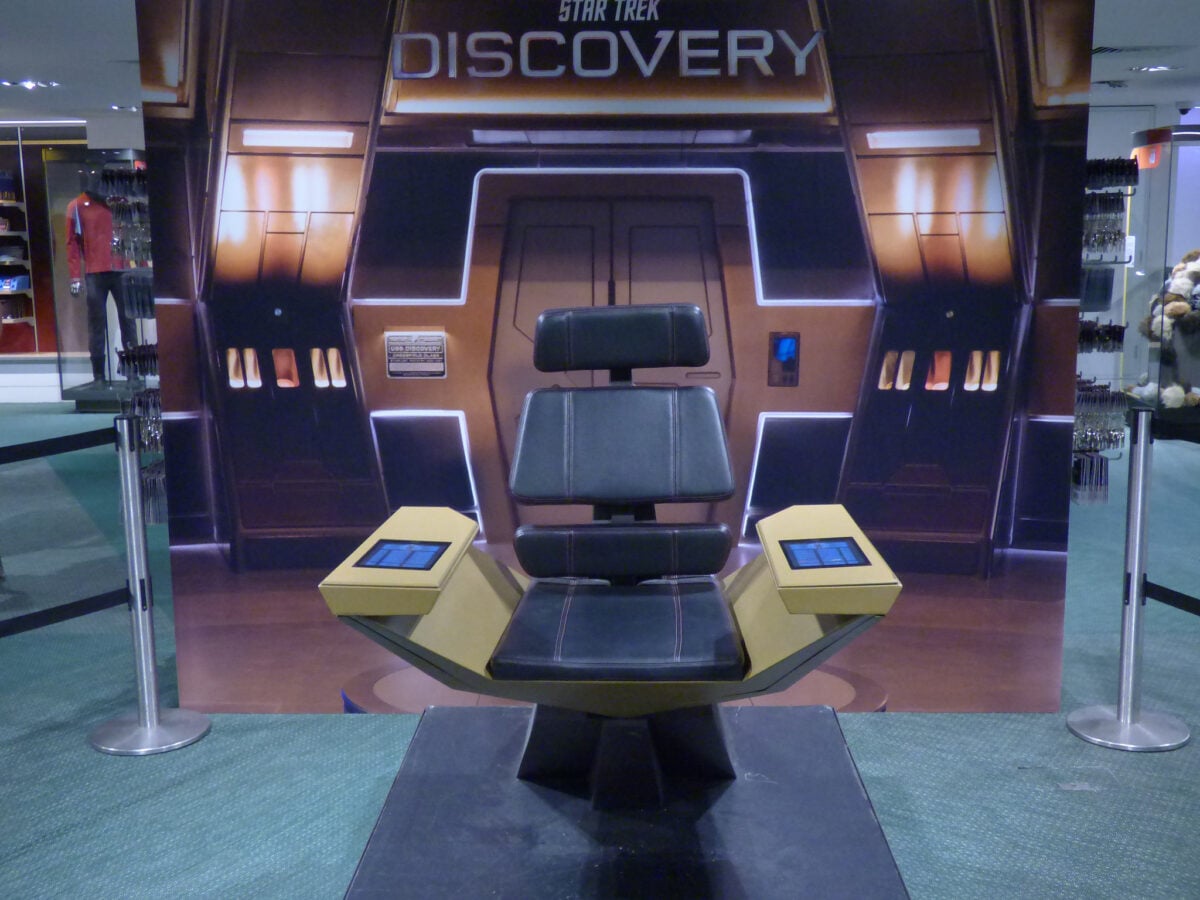
A painted wood re-creation of Kirk’s command chair, built for a 1996 episode of Deep Space Nine that mixed new scenes with old footage, sold for $62,400 at Christie’s in 2006. The original bridge chair used on the set of the 1960s Enterprise sold for $44,450 at Julien’s in 2024.
A stand-in built decades later outsold the real thing, though the two sales took place nearly two decades apart.
Kirk’s and Spock’s Matching Tunics
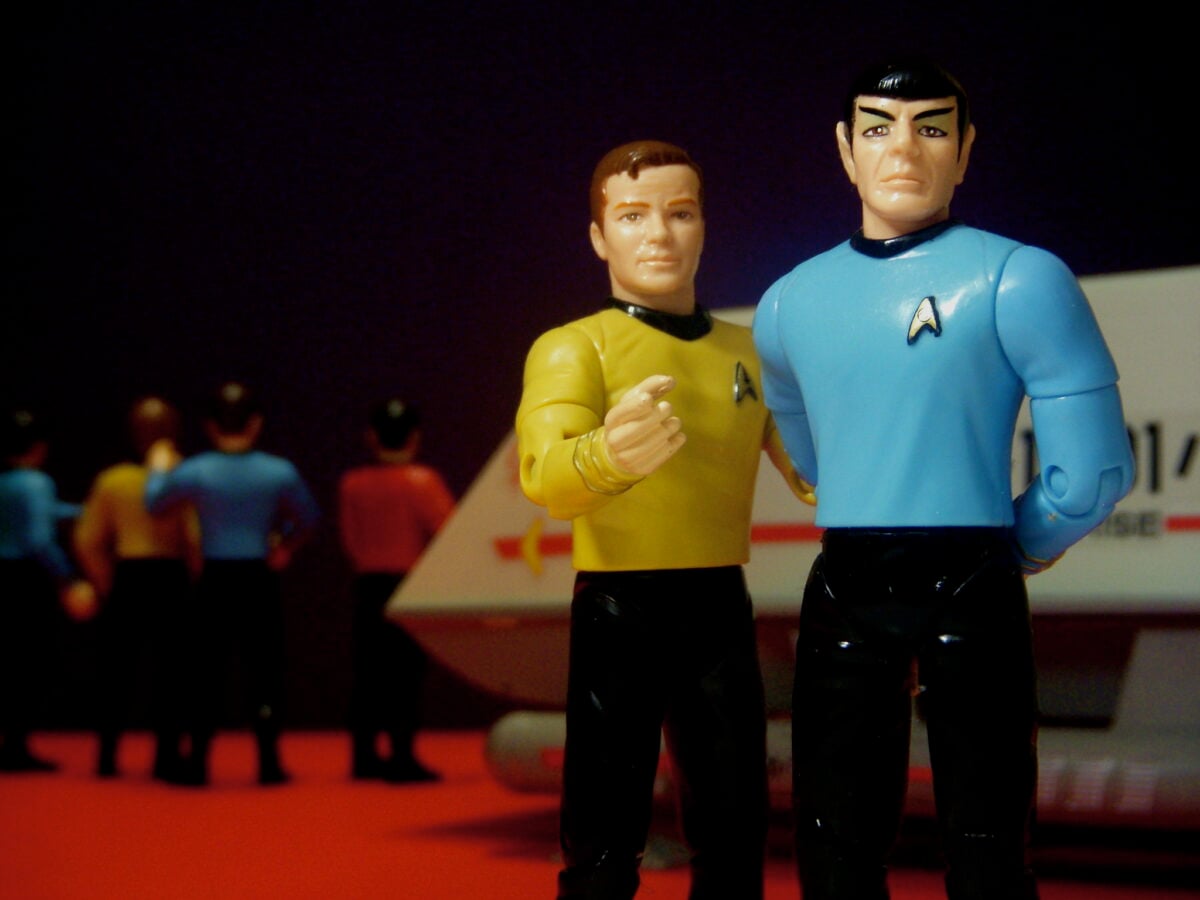
At a 2016 Profiles in History auction, the tunics worn by Captain Kirk and Mr. Spock each sold for $60,000 after a single bid apiece. Bidding on an earlier lot had been fierce, with the uniform worn by Walter Koenig as Chekov, expected to bring $12,000 to $15,000, ending at $42,500.
Uniforms worn by Nichelle Nichols as Uhura and Majel Barrett as Nurse Chapel brought the same $42,500.
Scotty’s Tunic
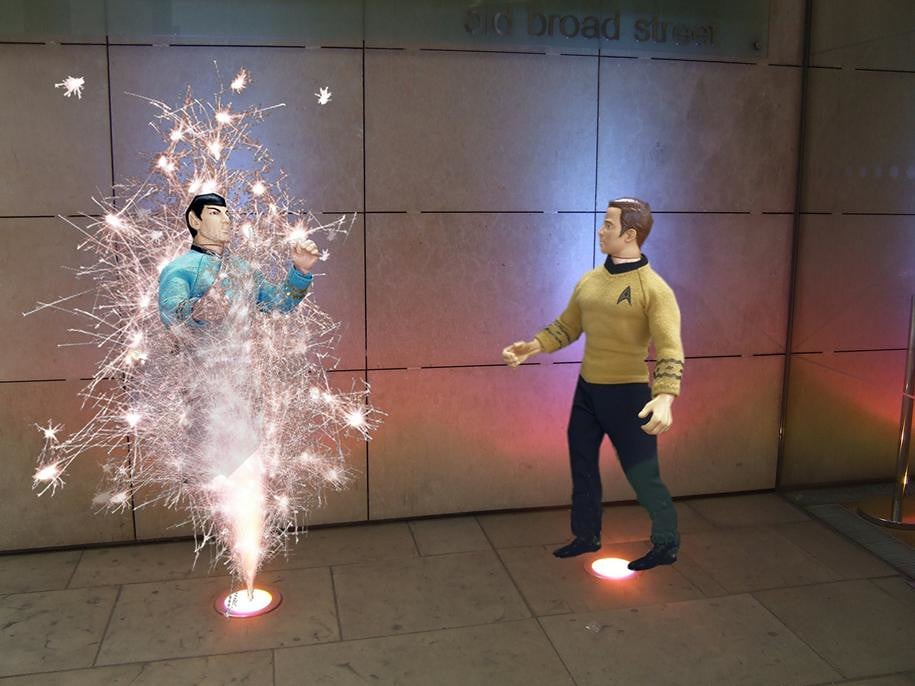
The tunic worn by James Doohan as Montgomery Scott sold for $50,800 at Julien’s in 2024, packaged with a DVD. The auction house had projected between $25,000 and $30,000, so the price came in well above the high estimate.
The DVD tag-along is an odd addition to a lot that was valued mainly for the garment itself.
The First Star Trek Comic Book
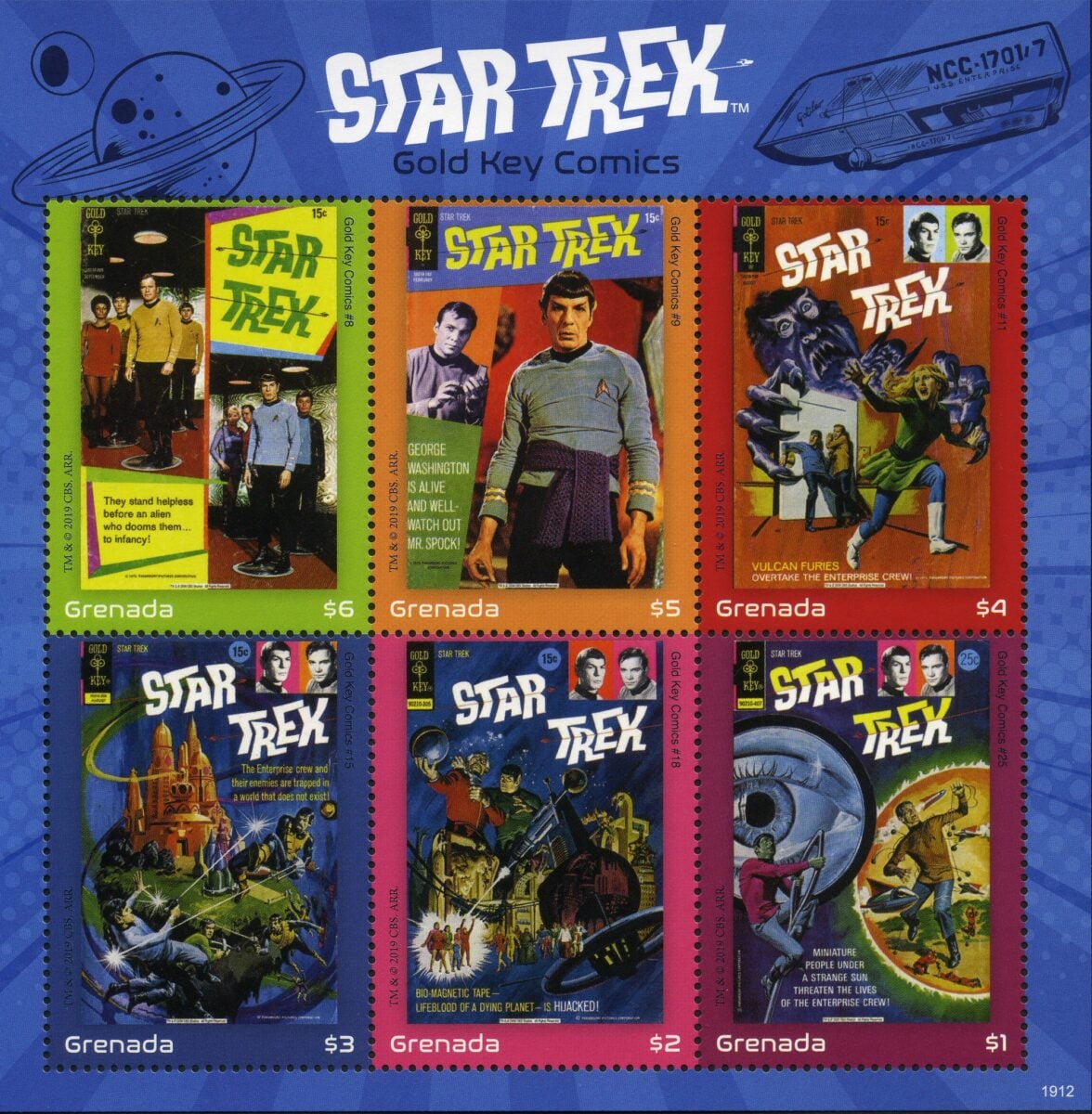
Star Trek No. 1 from Gold Key, published in July 1967 with Spock, Kirk and Sulu on the cover, sold for $46,500 at Heritage Auctions on November 3. The copy was graded 9.6 by CGC, one of only five at that grade, and just one copy had been graded higher.
The price more than doubled the earlier record for that grade, which was set in 2019. Condition drives the market, and copies in lower grades have been listed for a few hundred dollars.
Spock’s Voyage Home Robe
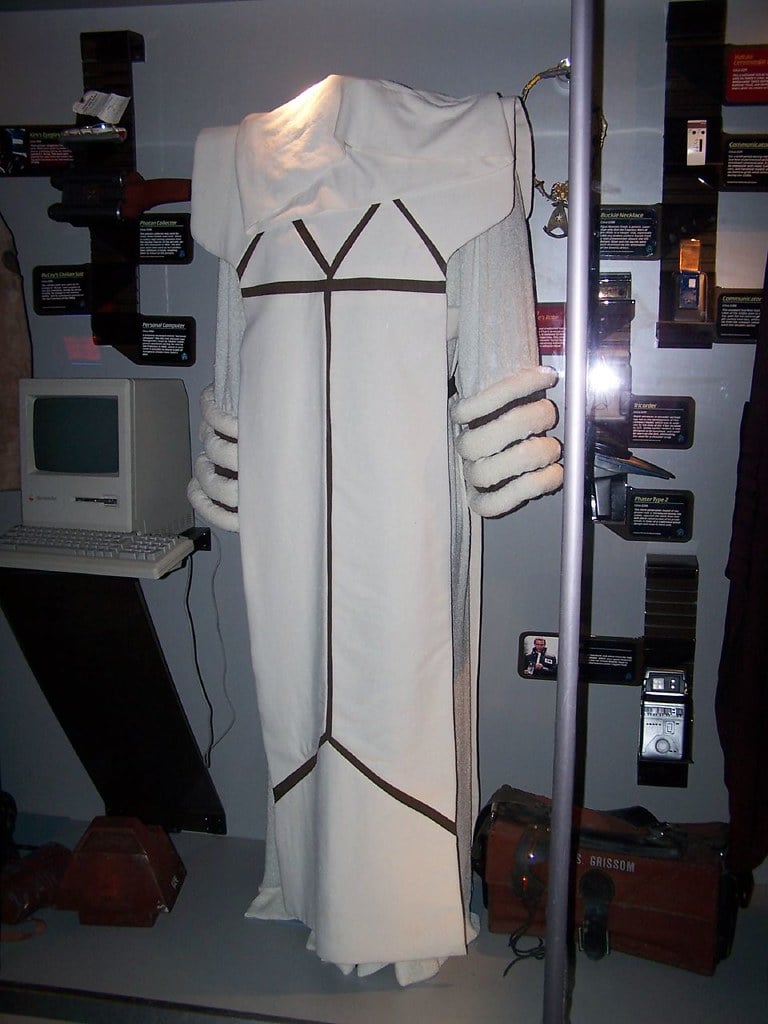
The robe and headband worn by Leonard Nimoy as Spock in the 1986 film Star Trek IV: The Voyage Home sold for $45,500 at Julien’s in 2024. That was more than four times the $10,000 estimate.
The outfit sold in the same sale as Kirk’s phaser and communicator.
A Vulcan Weapon From “Amok Time”
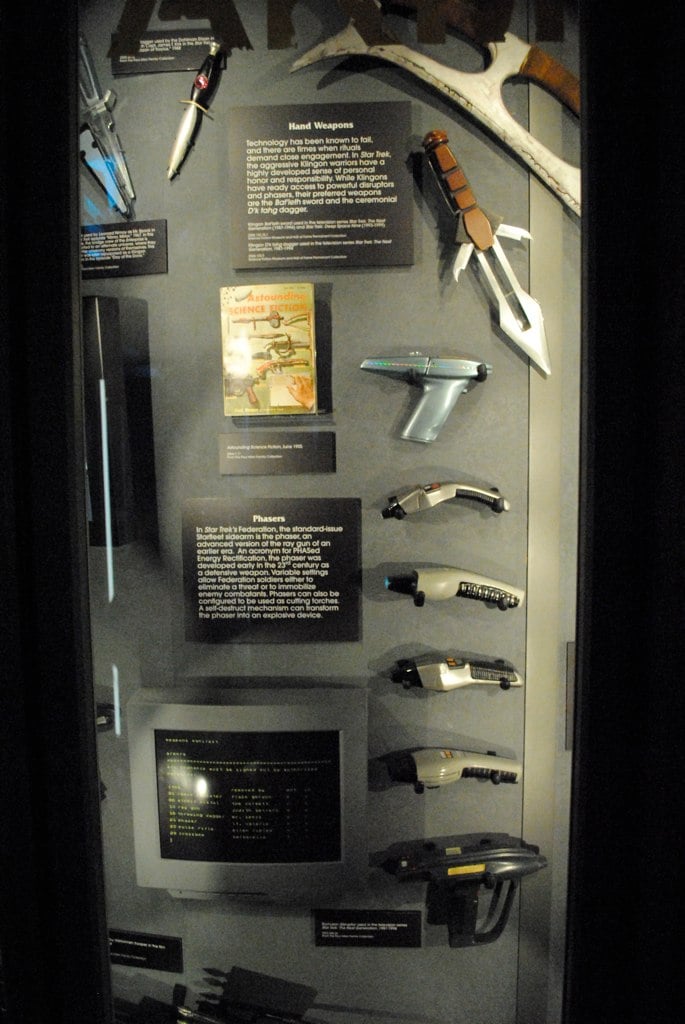
A Vulcan weapon prop from the original series episode “Amok Time,” in which Spock and Kirk fight, sold for $42,500 at the 2016 Profiles in History auction. At the same sale, a sonic wrench used by Scotty brought just $3,750.
The gap between the two shows how heavily prices lean on the importance of the scene a prop appears in.
Janeway’s Command Chair
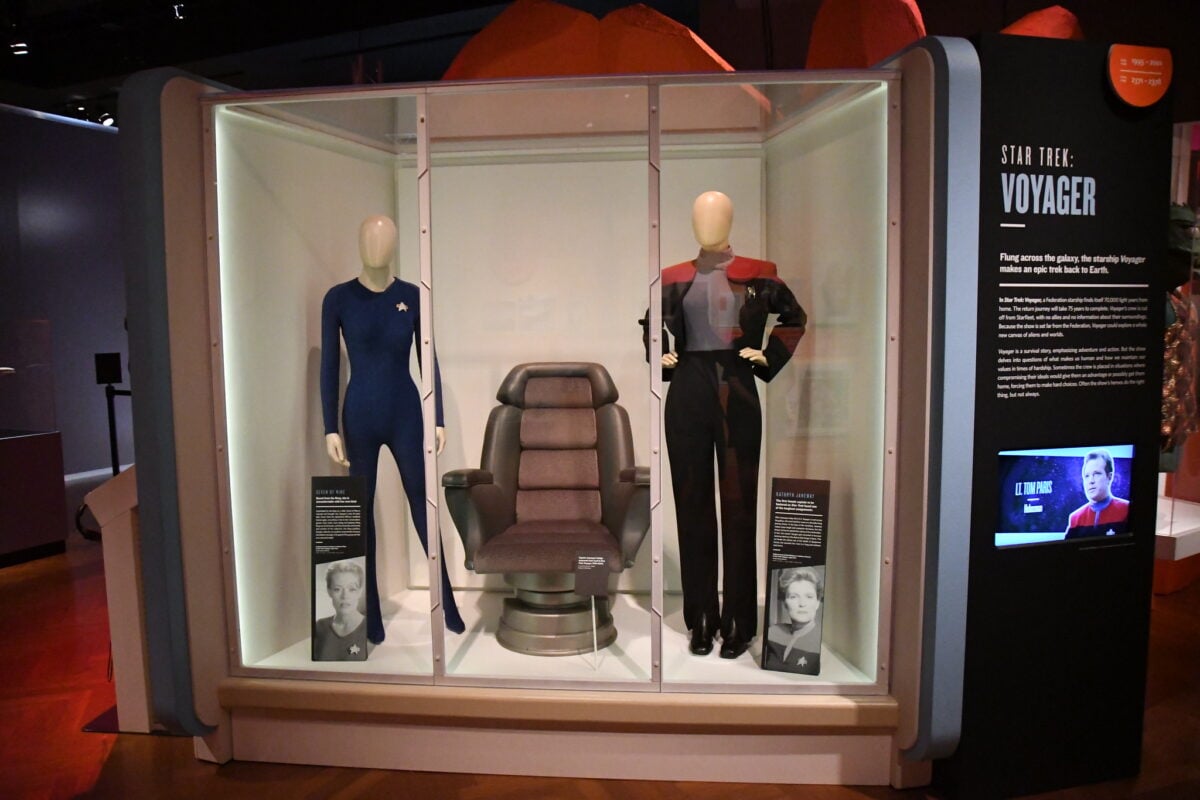
Kate Mulgrew’s command chair from Star Trek: Voyager sold for about $41,000 at Julien’s in 2024, nearly seven times its estimate. The result beat expectations by a wide margin even though the chair belongs to a later series.
It sold in the same auction as the original-series phaser and communicator.
Two Bottles of Chateau Picard

A pair of prop wine bottles labeled Chateau Picard, estimated to sell for $500 to $700, went for $5,500 on the first day of the 2006 Christie’s auction. The bottles are tied to Picard’s family vineyard in the Next Generation.
A decorative prop that serves as set dressing earned roughly eight times the high estimate because of its connection to a beloved character.
Tribble Props
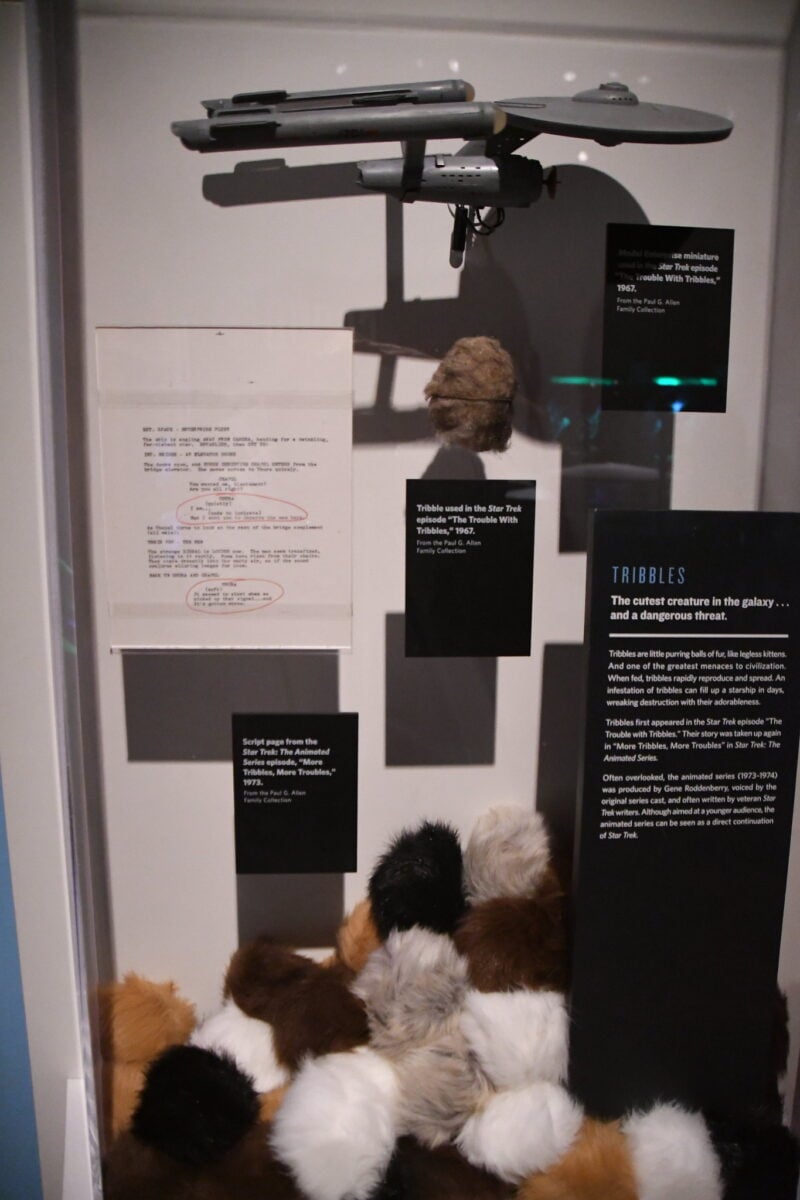
A tribble prop sold for $5,000 at the 2016 Profiles in History auction, while a tribble used for the Deep Space Nine episode “Trials and Tribble-ations” went for $1,300 at Julien’s in 2024. Those figures place tribbles among the more affordable ways to own a piece of screen-used Star Trek.
The gap between the two prices is large even though both are the same kind of prop.
Spock’s Prosthetic Ears

A set of prosthetic ears worn by Leonard Nimoy during the original series sold for $10,000 at Bonhams in 2008, and another pair brought $3,000 from Propworx in 2010. A pair from Nimoy’s own collection, made for Star Trek Into Darkness, was offered in 2021 with the proceeds going to UCLA’s chronic obstructive pulmonary disease research.
The spread between prices shows how much provenance matters for a small piece of latex.
The 1968 Aladdin Lunch Box
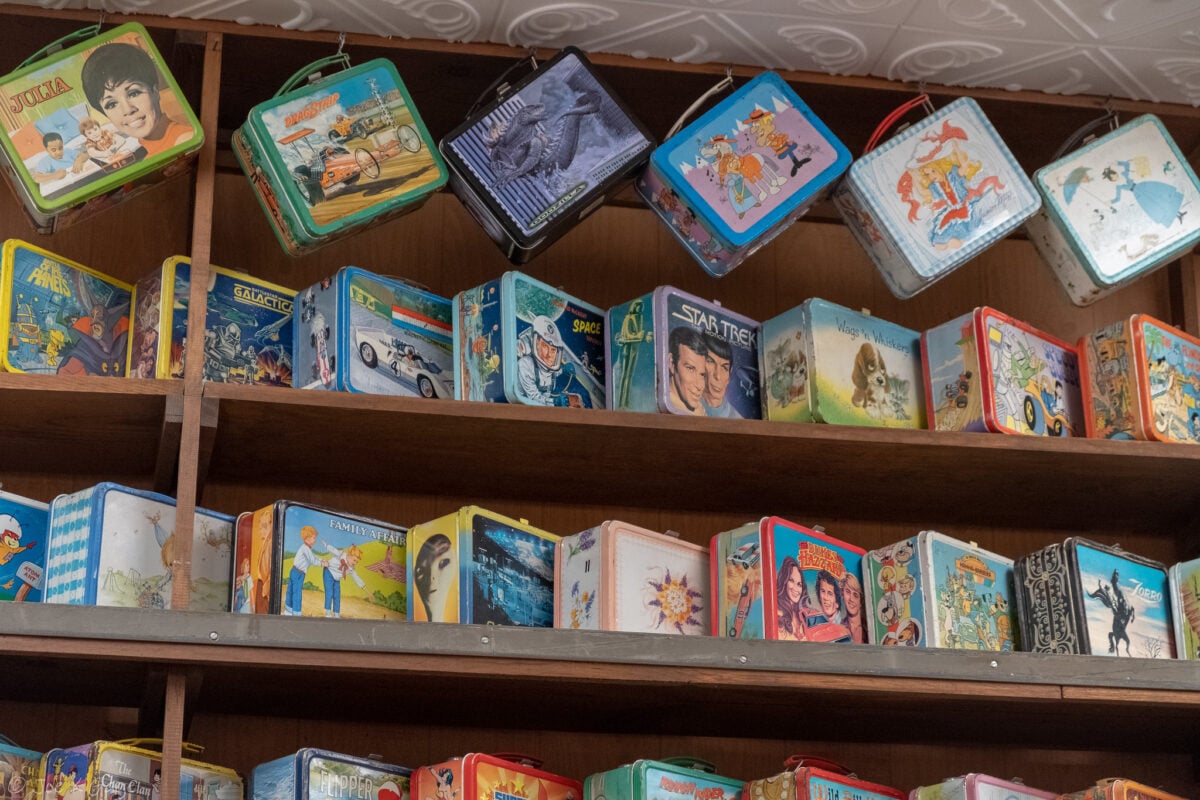
The Aladdin Industries lunch box from 1968, made in Nashville, is one of the few officially licensed Star Trek products sold during the show’s original run. A mint lunch box and Thermos set usually sells for upwards of $500, but has gone for nearly $1,500, and the lunch box alone has reportedly reached $1,600.
Condition decides everything with metal lunch boxes, since dents and damage lower the price while a matching Thermos raises it.
What Bidders Are Really Buying

Almost none of these objects did anything real. The flute makes no sound, the replica chair is painted wood, and the communicator only had to look convincing on a television screen.
What carries the price is the link to a story that people have kept watching for decades. That link also explains the swings in value.
A genuine item from one scene can sell for a fraction of a convincing copy, or for many times its estimate, depending on who is in the room and how closely a fan can tie it to a favorite episode. Anyone sizing up a piece should weigh provenance and condition ahead of the franchise name alone
More from Go2Tutors!

- The Romanov Crown Jewels and Their Tragic Fate
- 13 Historical Mysteries That Science Still Can’t Solve
- Famous Hoaxes That Fooled the World for Years
- 15 Child Stars with Tragic Adult Lives
- 16 Famous Jewelry Pieces in History
Like Go2Tutors’s content? Follow us on MSN.