18 Fascinating Football Facts
What looks like just tackles and touchdowns runs deeper. Shaped not only by plays but also by how rules shifted over time.
A timeout here, a fashion trend there – each left its mark quietly. Moments nobody expected often changed everything slowly.
Behind the noise of crowds and ads are odd choices fans never hear about. Inventions crept in without announcements. Some truths seem fake at first glance – until they do not.
What lies behind the lines on the pitch explains far more than just size – traditions often grow from forgotten experiments. Though broadcasts rarely show it, subtle shifts shape play across amateur and pro fields alike.
Behind each rule tweak sits years of trial, error, sometimes pure accident. Little things – whistle timing, boundary width – steer decisions players barely notice.
Change sneaks in slowly, then sticks without announcement. What feels natural now once felt strange to someone long ago.
Here’s a closer look at 18 lesser-known facts that reveal how American football became the sport it is today.
The Field Was Designed Backward

A hundred-yard stretch makes up a typical football field, though end zones came into play afterward. Back then, players cared just about territory between the goals – scoring spots tagged on loosely, not laid out clearly.
Once those boundary sections got official status, nobody touched the overall measurement. The full span stayed fixed.
A choice like that sticks around forever. Inside the game, groups move across a set hundred-yard space, yet points come from actions just outside it – this builds pressure right at the edge.
What you get is a contest where tiny distances decide everything when things reach the boundary.
The Hash Marks Have Changed More Than Once

Hash marks were not always where they are now. In earlier eras, they were placed much closer to the sidelines, which created extreme field angles for offenses. Plays near the edge often became awkward or nearly impossible to execute.
Over time, the hash marks were moved inward to balance gameplay and encourage more open offensive schemes. That single adjustment quietly transformed passing strategies and field spacing.
Forward Passes Were Once Illegal
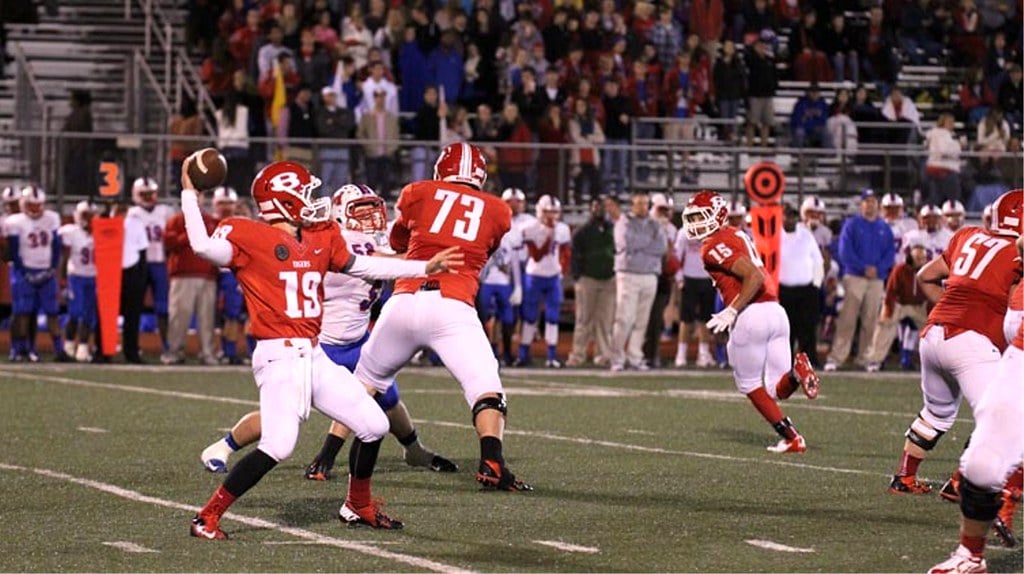
Early football looked far more like rugby than the modern game. The forward pass was banned for years, and offenses relied almost entirely on running plays and lateral movement.
Games were low-scoring and physically punishing. The forward pass was legalized in the early twentieth century to reduce dangerous pileups and open the field.
What began as a safety measure became the foundation of today’s passing-heavy offenses.
The Football Is Not Perfectly Symmetrical

A football’s pointed shape was not chosen for grip or aerodynamics. It evolved from earlier orbs used in rugby-style games, which were shaped by animal bladders rather than design plans.
Consistency came later. Even today, the football’s shape creates unpredictability.
Bounces are irregular, spins vary, and recovery often depends on luck as much as skill.
Numbers on Jerseys Were About Officiating

Jersey numbers were introduced primarily to help officials identify players, not fans. As rosters expanded and substitutions increased, tracking individuals became difficult during live play.
Only later did numbers become associated with positions and player identity. The system stuck because it solved a practical problem before becoming part of football culture.
The Two-Minute Warning Was About Timing

The two-minute warning exists to help officials manage game time, not to create drama. Early stadium clocks were unreliable, and referees needed a consistent checkpoint to confirm the remaining time.
The pause eventually became a strategic moment, but its origin was purely logistical. What now feels theatrical began as a workaround.
Helmets Were Optional at First

Early players often competed without head protection or wore soft leather caps. The idea of a rigid helmet was initially resisted, partly due to discomfort and tradition.
As injuries mounted, helmet design improved and eventually became mandatory. Modern helmets are the result of decades of incremental changes rather than a single invention.
Playbooks Were Once Simple Enough to Memorize

Early playbooks were thin and repetitive, focusing on a small number of formations. Teams relied on execution rather than deception, running the same concepts repeatedly.
As defensive schemes grew more complex, playbooks expanded. Today’s systems can contain hundreds of variations built on a few core ideas.
Overtime Was Added Reluctantly

For many years, ties were considered acceptable outcomes. League officials worried that overtime would extend games too long or increase injury risk.
Eventually, pressure from fans and broadcasters pushed the league to adopt overtime rules. Even now, those rules continue to evolve.
Sideline Headsets Are a Recent Addition

Coaches once relied on runners to deliver plays from the sideline. This created delays and occasional confusion, especially in loud stadiums.
Wireless communication streamlined play-calling and reduced errors. It also shifted more control to coaches, changing how offenses are managed in real time.
Weather Can Change the Orb Itself

Temperature affects the air pressure inside a football. Cold conditions make the football firmer and harder to grip, while heat can soften it slightly.
Equipment staff routinely adjust preparation routines based on forecast conditions. Small physical changes can influence passing accuracy and handling.
The Super Bowl Was Not Always Dominant
The first championship games did not carry the cultural weight they do now. Early matchups struggled for attention and were not immediately seen as major events.
Over time, television exposure transformed the game into a national spectacle. Its rise mirrors the growth of broadcast media itself.
Goalposts Once Sat on the Goal Line

Goalposts were originally placed directly on the goal line, creating dangerous obstacles for players. Collisions were common and often severe.
Moving them to the back of the end zone improved safety and changed kicking angles. The adjustment remains one of the sport’s most practical improvements.
Defensive Formations Were Once Rarely Named

Early defenses relied on basic alignment rather than specialized schemes. Players adjusted instinctively rather than following structured systems.
Named formations emerged as offenses grew more complex. Defensive strategy became a chess match rather than a reaction.
Coaches Did Not Always Call Plays

In the early days, players often decided to play themselves on the field. Quarterbacks acted more as facilitators than commanders.
As coaching strategies matured, sideline control increased. Modern play-calling reflects decades of tactical refinement.
The Draft Was Created to Promote Balance

The draft was introduced to prevent dominant teams from stockpiling talent. By assigning new players to weaker teams first, leagues hoped to maintain competitiveness.
This system reshaped roster building and long-term planning. Balance became a structural goal rather than a coincidence.
Instant Replay Faced Heavy Resistance

Replay review was initially controversial. Critics feared it would slow games and undermine officials.
Over time, technology improved and acceptance grew. Replay became a tool for correction rather than disruption.
Football Keeps Reinventing Itself
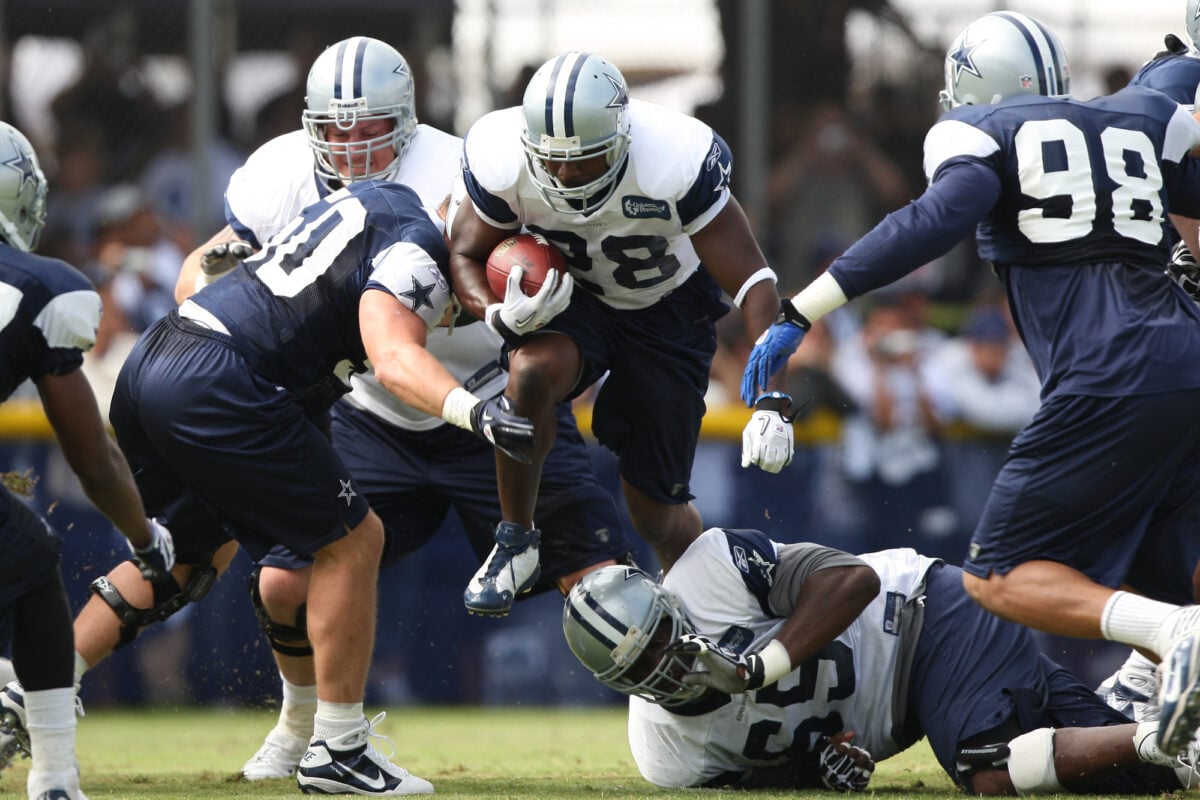
Despite its traditions, football has never stopped evolving. Rule changes, equipment updates, and strategic shifts continue to reshape the game.
Each generation plays a slightly different version, built on the same framework but refined by new priorities and understanding.
Why These Details Still Matter

Out of nowhere, American football grabs attention with flash – yet what lasts is built on choices piling up across 100 years. Not one single blueprint shaped it; instead, each rule grew from older problems needing fixes.
Moments shift, yet patterns hold because responses are repeated, adjusted, stuck. Week by week, the field tells a story shaped by quiet truths.
Hidden threads of the past pull through, making moments deeper without announcement. A game changes without shouting about it.
This slow shift, not flash or fame, holds its place across seasons.
More from Go2Tutors!

- The Romanov Crown Jewels and Their Tragic Fate
- 13 Historical Mysteries That Science Still Can’t Solve
- Famous Hoaxes That Fooled the World for Years
- 15 Child Stars with Tragic Adult Lives
- 16 Famous Jewelry Pieces in History
Like Go2Tutors’s content? Follow us on MSN



