Inca Engineering Feats Still Standing
The Inca built stone cities on ridgelines and sent roads across some of the harshest terrain on Earth, and they did it without wheeled carts or a written language. Centuries later, many of those works are still in use, and a few are still maintained by the descendants of the people who first made them.
Some of these structures have come through conquest, earthquakes, and heavy Andean rain with little more than their own design to protect them. What follows is a tour of the ones that make the case.
Machu Picchu and Its Hidden Drainage
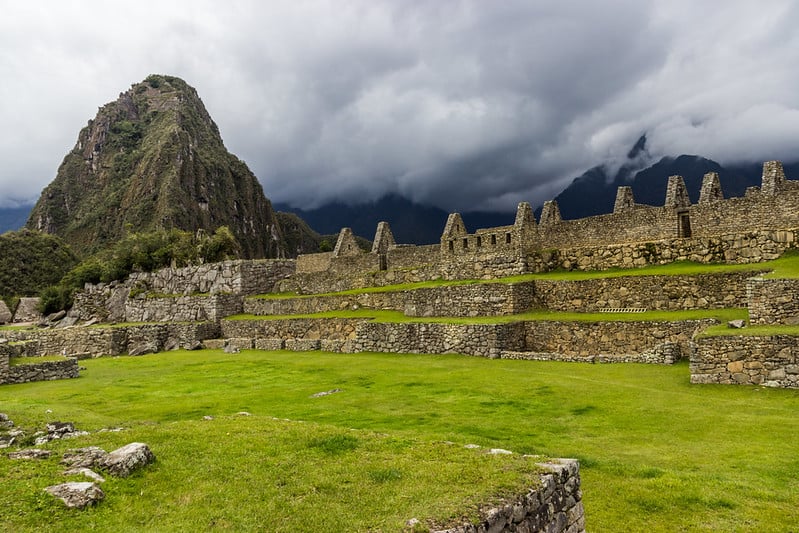
Machu Picchu is famous for its views, but much of its genius lies underground. Beneath the agricultural terraces, layers of stone and gravel carry rainwater away from the walls before it can soften the slope. Without that buried plumbing, the mountainside would likely have shrugged the citadel off long ago.
The terraces look like scenery, yet they work as retaining walls, farm plots, and drains at the same time.
Sacsayhuaman and Its Zigzag Ramparts
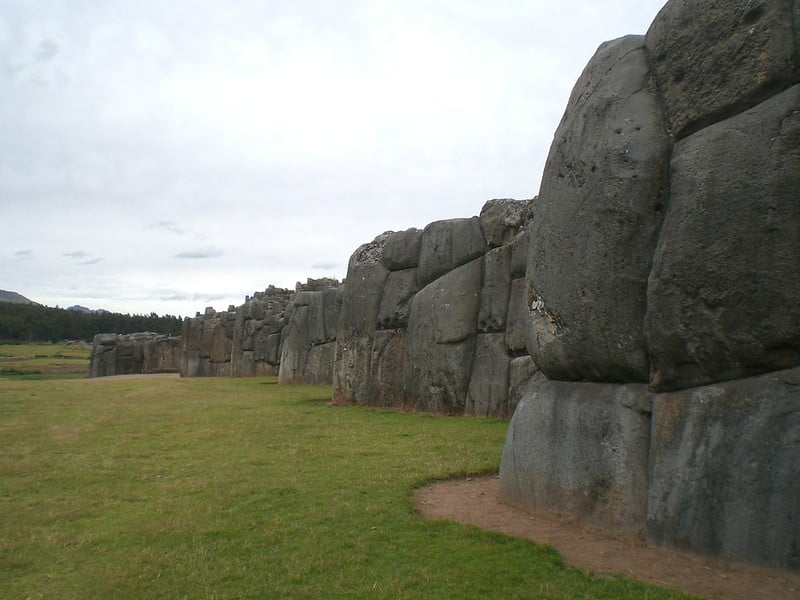
Above Cusco, the fortress of Sacsayhuaman is defended by tiers of zigzagging walls built from enormous stone blocks. The blocks were shaped to lock against their neighbors so closely that a blade struggles to slide between them.
The zigzag plan, with its sharp projecting angles, gave defenders overlapping lines of fire and may also help the walls ride out tremors. The walls have stood above the city through centuries of shaking and are still there.
Ollantaytambo and Its Imported Monoliths
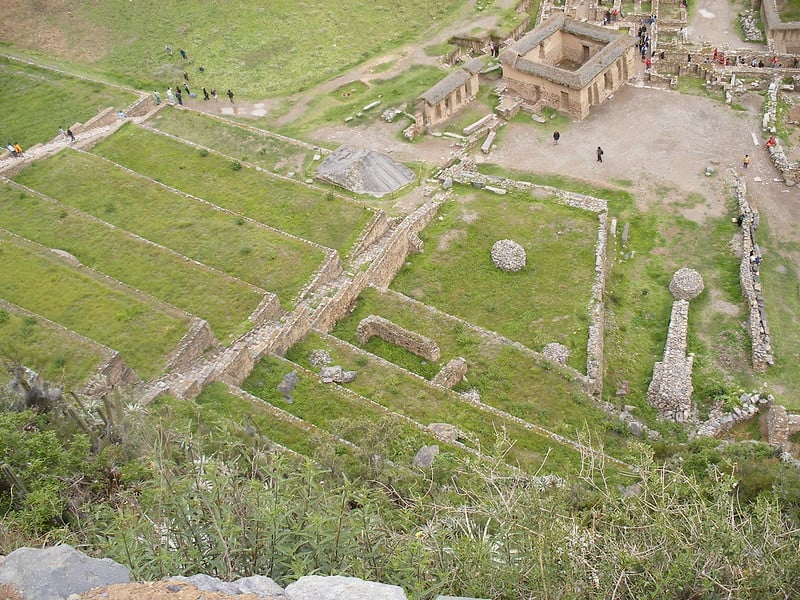
At Ollantaytambo, the unfinished Temple of the Sun is built around huge slabs of rose-colored stone, set upright and fitted edge to edge. The stone came from a quarry across the valley, so crews had to haul it down one mountainside and up another to reach the terraces.
Several abandoned blocks still lie along the route, frozen in place where the work stopped. The town below keeps its original Inca street grid and canals, and water still runs through them today.
Qhapaq Nan and the Road That Tied an Empire Together
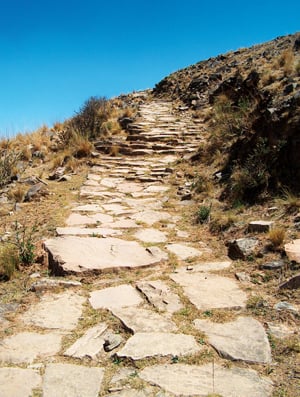
Qhapaq Nan was the spine of the empire, a network of roads that linked Cusco with distant provinces across the Andes. UNESCO recognized the Andean Road System as a World Heritage Site in 2014, covering routes shared by several South American countries.
Builders paved, stepped, and walled the road where the slope demanded it, and added drainage channels so that rain would not wash out the surface. Runners and llama caravans used it for centuries, and sections are still walked today.
Q’eswachaka and the Bridge Rewoven Every Year
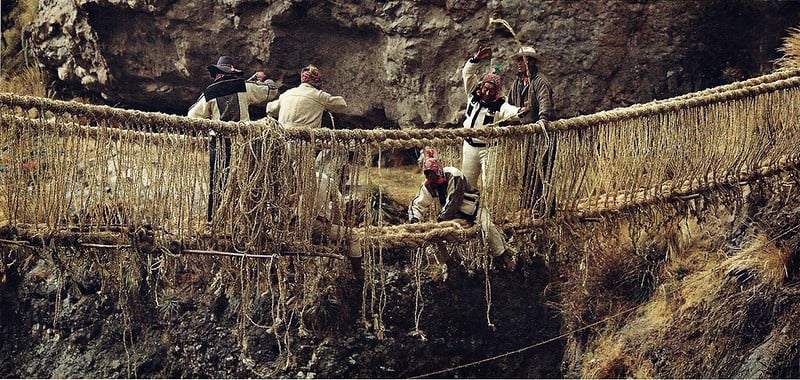
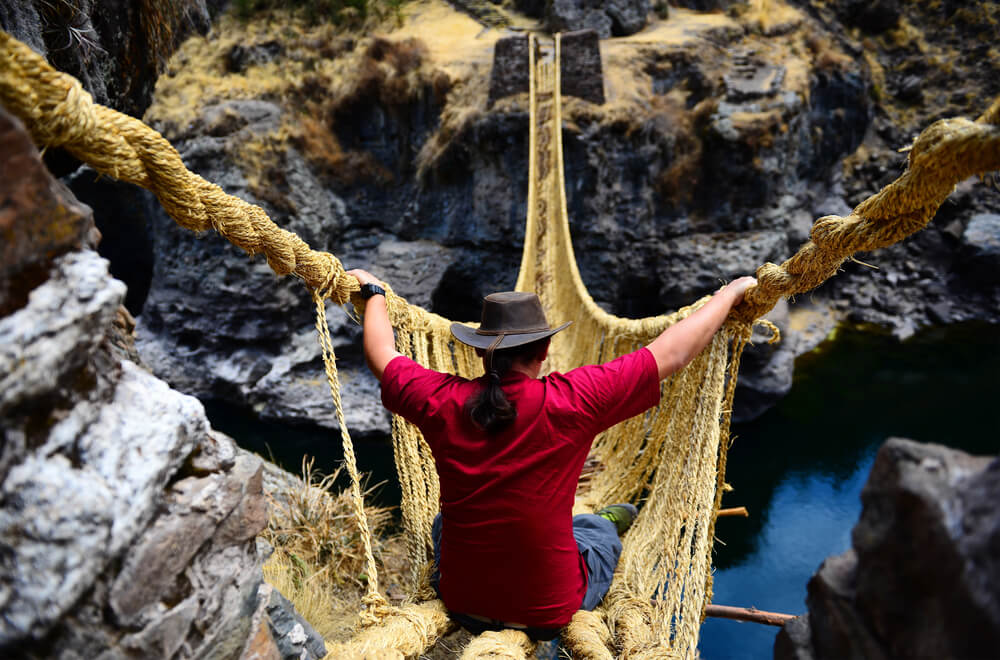
Spanning the Apurimac River in southern Peru, Q’eswachaka is a suspension bridge of braided grass that is rebuilt by hand each year. Families from nearby communities twist grass into small cords, then into thick ropes, then lash them across the canyon in a ceremony that blends engineering with ritual.
The old bridge is cut away and allowed to drop into the water once the new one is ready. It is often described as the last bridge of its kind, and it survives only because the work is passed from one generation to the next.
Moray and Its Sunken Farming Laboratory
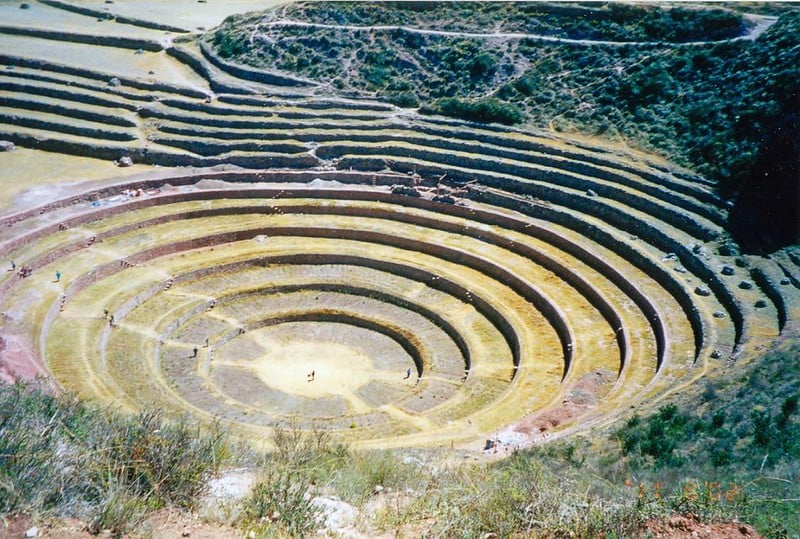
Near the town of Maras, Moray is a set of enormous circular depressions lined with concentric stone terraces. Each ring sits at a different depth, which creates a slightly different microclimate from one level to the next, and many researchers see the site as an agricultural experiment station.
Crops could be tested at different levels without leaving the same field. Stone steps built into the walls let workers climb between the rings without damaging the terraces.
Tipon and Its Still-Running Water Gardens
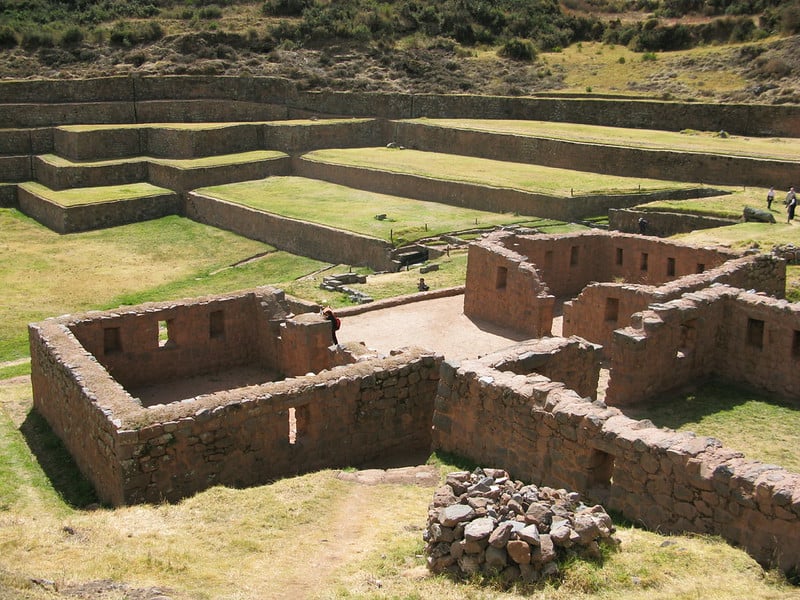
Southeast of Cusco, Tipon is a series of terraces fed by stone-lined channels that carry spring water from level to level and through small fountains. The system continues to run, and the American Society of Civil Engineers has recognized the site as a historic landmark of civil engineering.
The water is directed with such care that it appears to flow evenly across the length of the hillside. Tipon is generally thought to have served as an estate for Inca nobility, and its terraces show how water was moved downhill without pumps.
Pisac and Its Curving Mountain Terraces
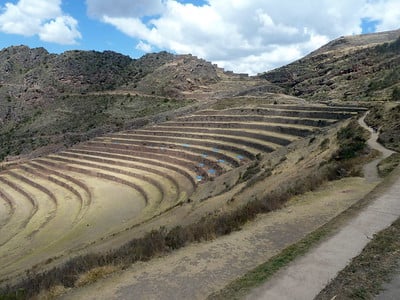
Above the town of Pisac, farming terraces sweep around a spur of the mountain in great curved bands, supported by retaining walls that follow the contour of the slope. Higher up, a fortified ceremonial complex holds the Intihuatana, a carved stone linked to astronomical observation, along with temples built with finely fitted masonry.
Across the gorge, the cliff face is dotted with burial chambers, reachable only by narrow ledges. The terraces are still farmed, and the layout shows how one slope could serve food, worship, defense, and burial at once.
Choquequirao and the Cradle of Gold
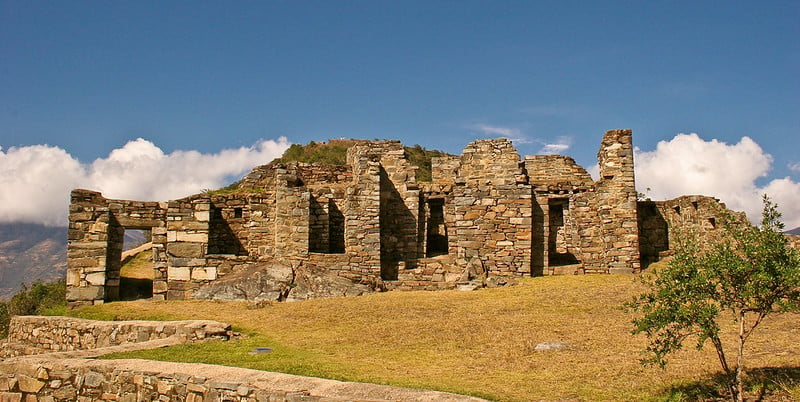
Perched above the Apurimac canyon, Choquequirao is reachable only on foot, and its remoteness has kept much of it quiet. The complex is known for terraces decorated with llama figures made of white stone set into the dark wall faces.
Its builders cut and leveled entire ridgelines to create plazas, houses, and channels for water. Archaeologists continue to clear and study it, and it is often compared with Machu Picchu in ambition.
Qorikancha and the Walls That Outlasted the Church
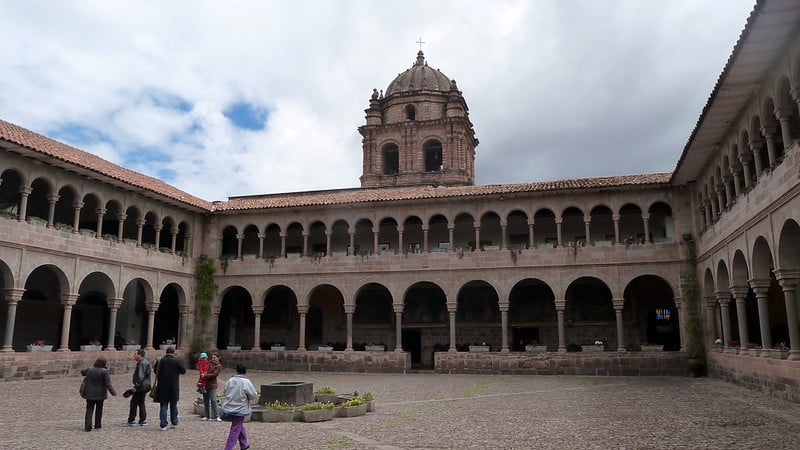
Qorikancha was among the most sacred temples in Cusco, and the Spanish built the Church and Convent of Santo Domingo directly on top of its surviving walls. The Inca stonework is made of carefully shaped blocks with trapezoidal doorways and niches, a form that spreads weight and resists shaking.
When earthquakes struck Cusco, the colonial superstructure tended to suffer far more than the Inca base beneath it. Visitors can still walk through rooms where the original masonry meets the later Spanish construction at the same seam.
The Twelve-Angled Stone of Hatunrumiyoc
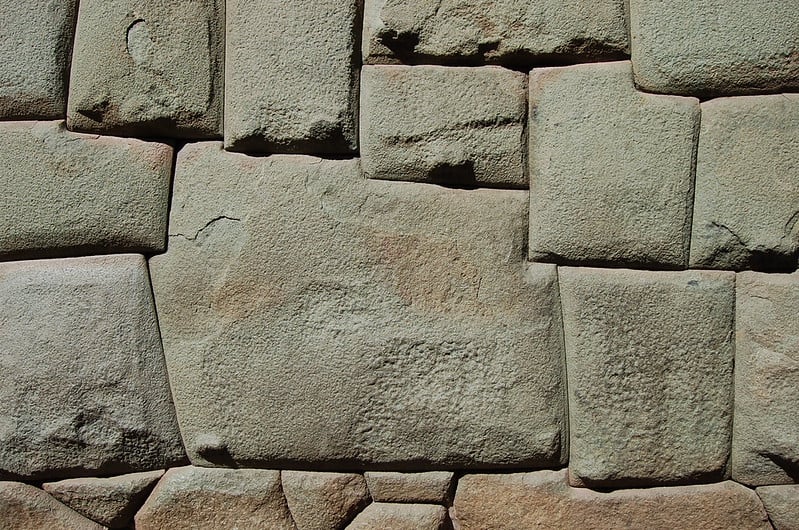
Along the narrow lane called Hatunrumiyoc in Cusco, a single block of dark stone in an Inca wall has twelve distinct angles, each cut to lock against its neighbors. Its carvers had to shape and test it repeatedly so the joints would close without any mortar.
The wall is part of the street today, and passersby run their hands along it as they walk. The stone has become one of the city’s best known sights, and it is a reminder that fitting a block is a matter of patience more than power.
Tambomachay and the Spring That Never Stops
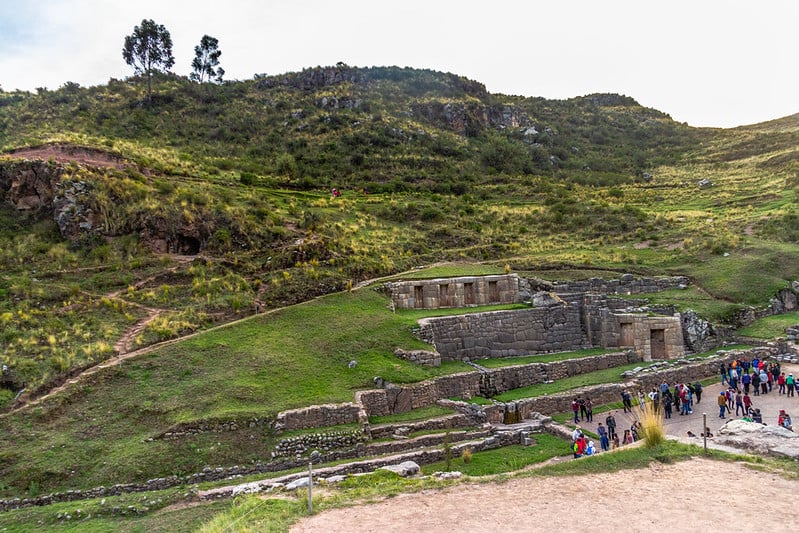
Tambomachay sits on a hillside just outside Cusco, and its stone-lined fountains carry water from a spring through finely cut channels and small waterfalls. The water continues to flow today, and the sound of it fills the terraced enclosure.
The structure is often described as a ritual bath or a shrine to water, which was central to Inca belief. The fitted terraces behind the fountains show that the builders cared about how water looked and sounded as much as how it behaved.
Raqchi and the Temple of Viracocha
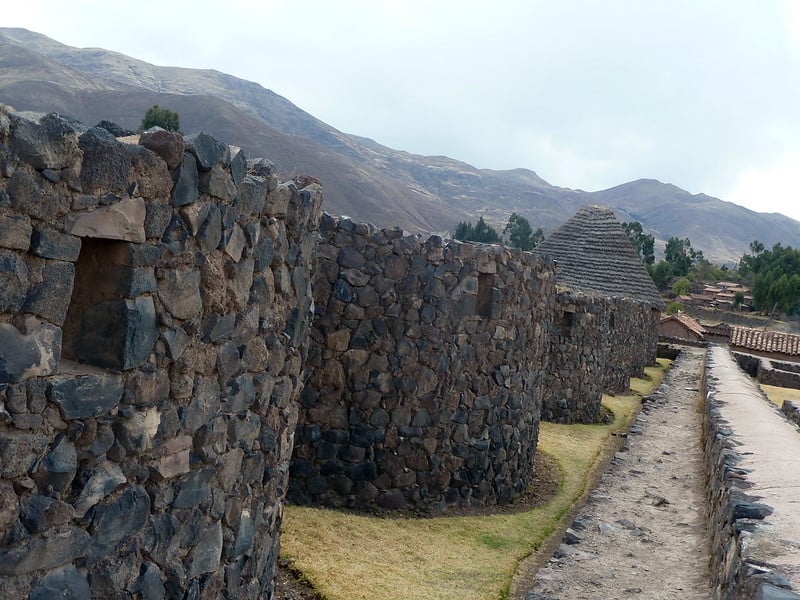
At Raqchi, south of Cusco, the Temple of Viracocha was built with a long central wall of adobe on a stone base, supported by rows of columns on either side. The roof that once covered the space was among the largest the Inca ever attempted.
Adobe usually performs poorly in rainy highlands, but the stone foundation lifted it above moisture and kept it from dissolving into mud. The wall still stands in the open, with the surrounding storehouses laid out in neat rows nearby.
Ingapirca and the Elliptical Sun Temple
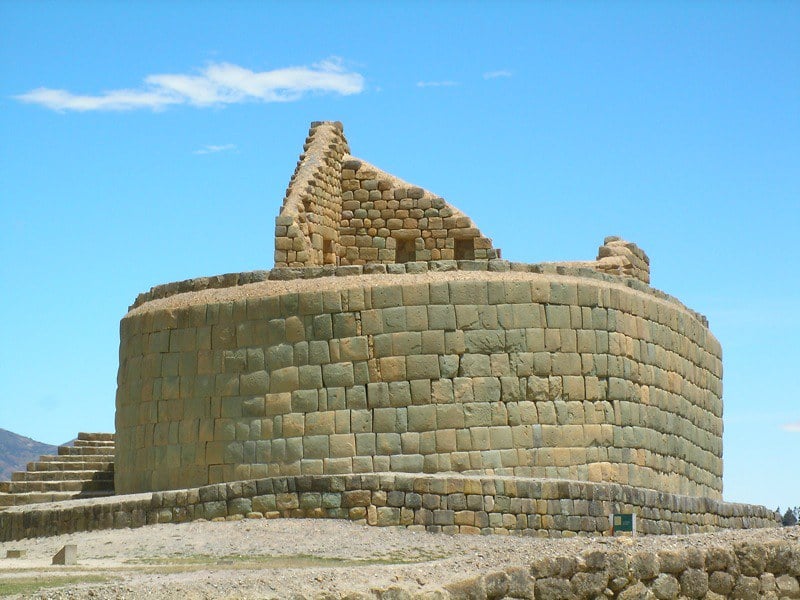
In the highlands of Ecuador, Ingapirca is one of the most important Inca sites in the country, and it stands on ground that earlier belonged to the Canari people. Its centerpiece is an oval temple, usually called the Temple of the Sun, with well-fitted walls that curve gently instead of meeting at right angles.
Inca builders took over a sacred site, then blended their own masonry with local tradition. The combination is a clear example of how the empire grew by absorbing places that already mattered.
Chinchero and the Church on an Inca Foundation
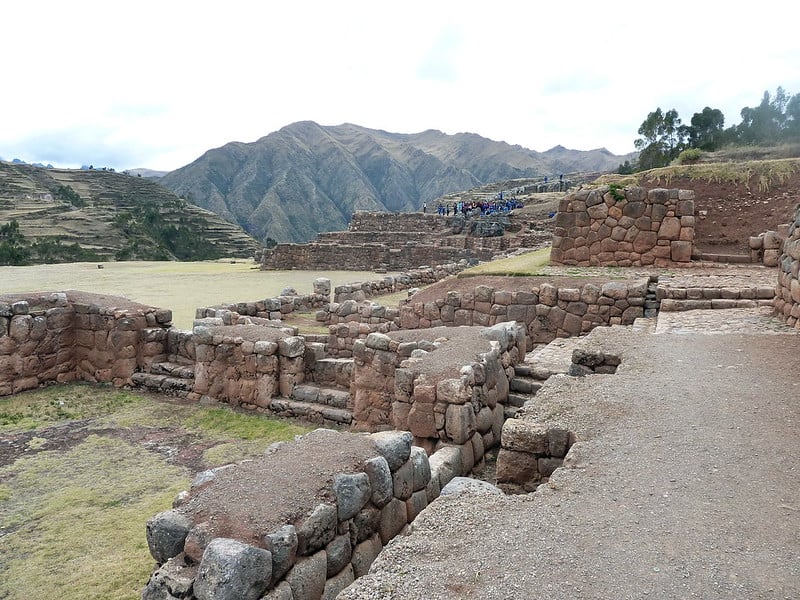
The village of Chinchero, above the Sacred Valley, was developed as a country estate for Inca royalty. Spanish builders later raised a colonial church directly on top of Inca walls, and the lower courses still show the original stonework with its niches.
A long sequence of agricultural terraces drops from the village across the slope and is still planted by local farmers. Visitors can see how a single place carries Inca engineering and Spanish architecture stacked one on the other.
The Inca Bridge Carved into the Cliff
Close to Machu Picchu, a narrow path was cut directly into a sheer rock face, ending at a gap that the Inca crossed with removable wooden logs. The design was a defense as much as a convenience, since pulling the logs away left anyone approaching with nothing but a long drop.
Stone retaining walls hold the path to the cliff for much of its length. The cut is still visible from the trail leading to it, and the drop beside it makes the effort plain.
Winay Wayna and Its Staircase of Terraces
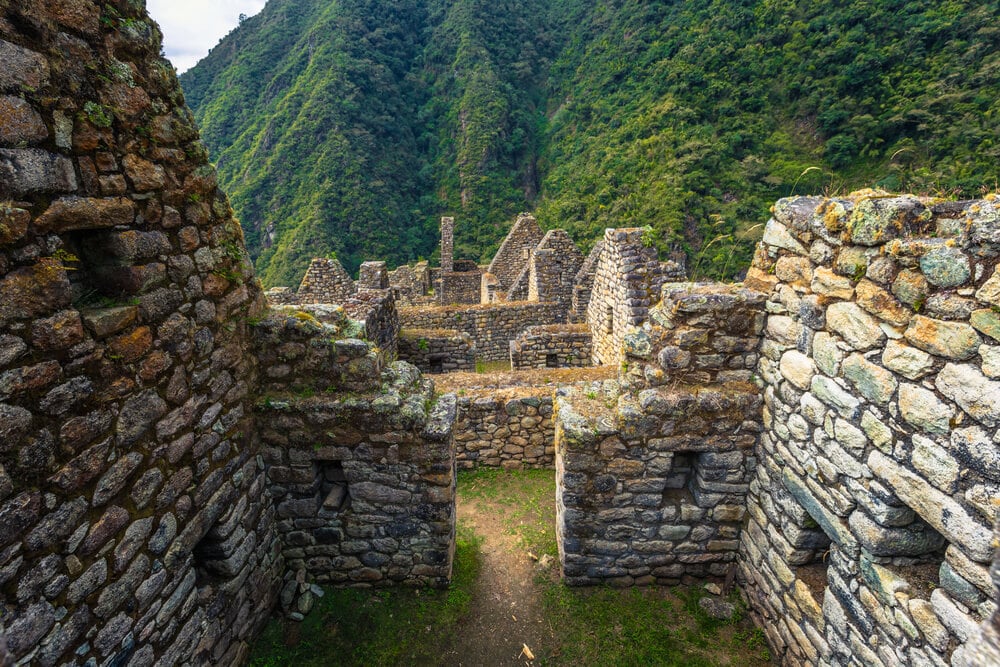
Winay Wayna, on the Inca Trail near Machu Picchu, is a hillside settlement where terraces step down the mountain in a long, graceful sweep. The name is Quechua for forever young.
A line of stone fountains runs down the site, each carrying water to the next, and the ritual baths are fed by mountain springs. Its position high above the river valley makes the engineering of the terraces especially noticeable.
Pumamarka and Its Curved Mountain Fortress
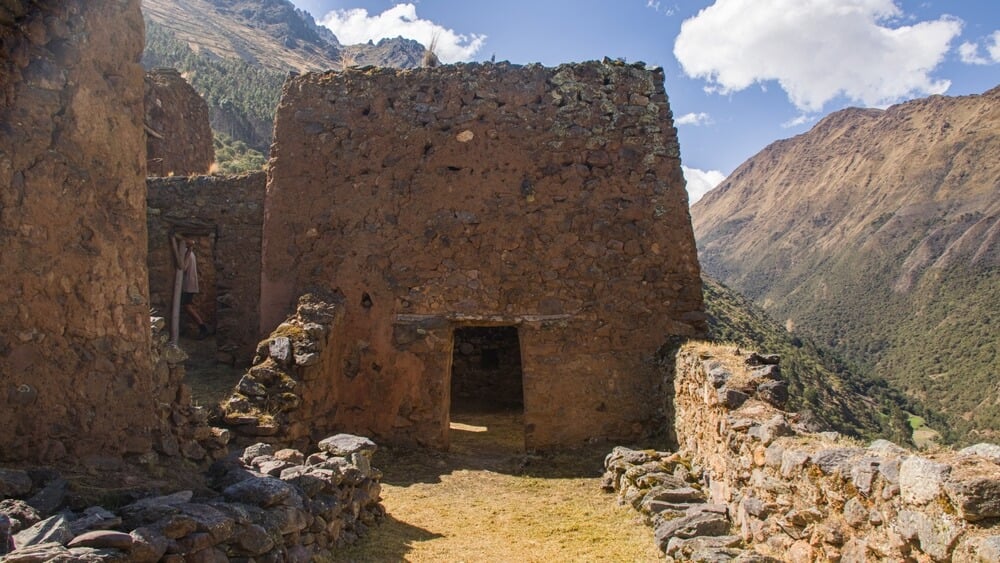
Above Ollantaytambo, Pumamarka is a small fortress whose walls follow the shape of the ridge it occupies, curving with the terrain and not cutting across it. The name is usually translated as town of the puma, and the outline is said to resemble that animal when seen from above.
Its position gave a clear view up and down the valley, making it useful as a lookout and a checkpoint. Local farmers still use the area, and the walls still define where the ridge ends.
Vilcashuaman and Its Ceremonial Platform
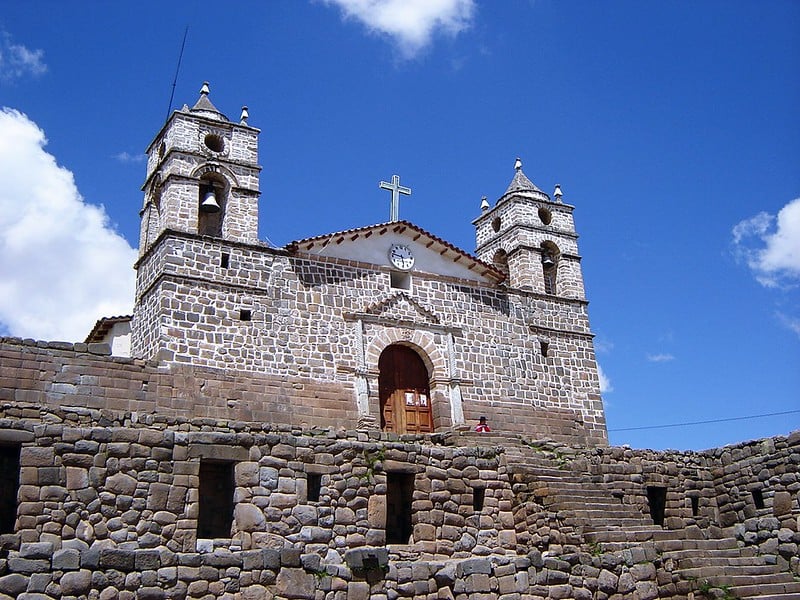
Vilcashuaman, in the Ayacucho region, was a major Inca provincial center, and its stepped usnu platform is the most striking surviving structure. The usnu was a ritual platform where rulers and officials oversaw ceremonies and offerings.
Near it stand the remains of a temple and a large plaza that hosted gatherings from the surrounding territory. The site shows how the Inca stamped a familiar civic design on faraway lands to make them feel like Cusco.
Phuyupatamarka and the Town Above the Clouds
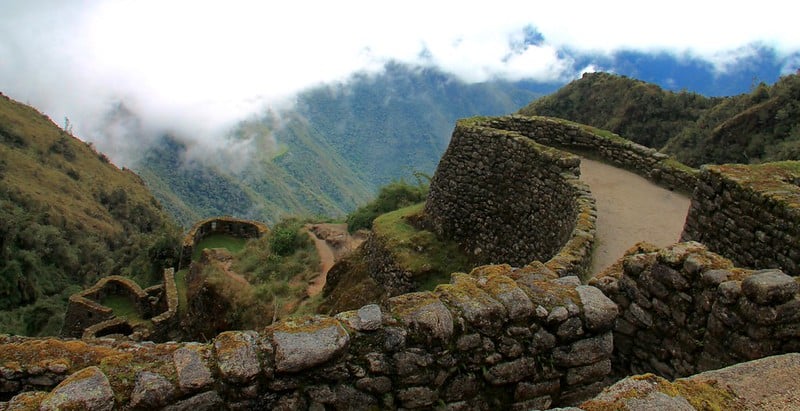
On the Inca Trail, Phuyupatamarka is a mountaintop site whose name means town above the clouds. A staircase of ritual baths runs down the hillside, with each basin fed by a channel carved into the stone.
Builders cut and fitted the stairs, platforms, and terraces to follow a narrow ridge. Hikers often arrive in thick mist, and the water still moves through the carved channels as designed.
The Quiet Genius of Making Do
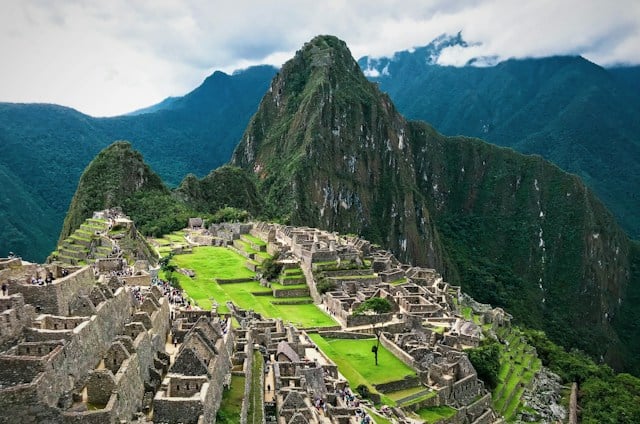
What these works share is a deep respect for the ground beneath them. The Inca did not fight the Andes so much as work with its slopes, springs, and fault lines, building drainage under terraces, curves into walls, and bridges that could be replaced each year.
That approach gave them structures that bend, drain, and settle instead of cracking under stress.
Plenty of modern buildings are not expected to last that long, and the Inca did all of this without iron tools or writing. Their legacy is not only in the stone but in the habit of maintenance, from a rope bridge rewoven each year to terraces that are still planted.
The lesson is simple: a structure lasts when the people around it keep caring for it.
More from Go2Tutors!

- The Romanov Crown Jewels and Their Tragic Fate
- 13 Historical Mysteries That Science Still Can’t Solve
- Famous Hoaxes That Fooled the World for Years
- 15 Child Stars with Tragic Adult Lives
- 16 Famous Jewelry Pieces in History
Like Go2Tutors’s content? Follow us on MSN.