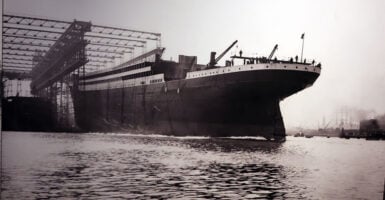
Photos of Ocean Liners From the Golden Age
Before jet engines shrank the Atlantic to a long afternoon, crossing it meant days aboard a floating city. Photographers lined piers, dry docks, and shipyards to capture these vessels, and the best frames still carry the swagger of an era that treated speed and scale as national pride.
The pictures below come from museum archives, press agencies, and one amateur with a camera and an unusually generous uncle. Some show triumphs. Others show the exact moment a story turned.
Francis Browne’s Last Look at Titanic Afloat
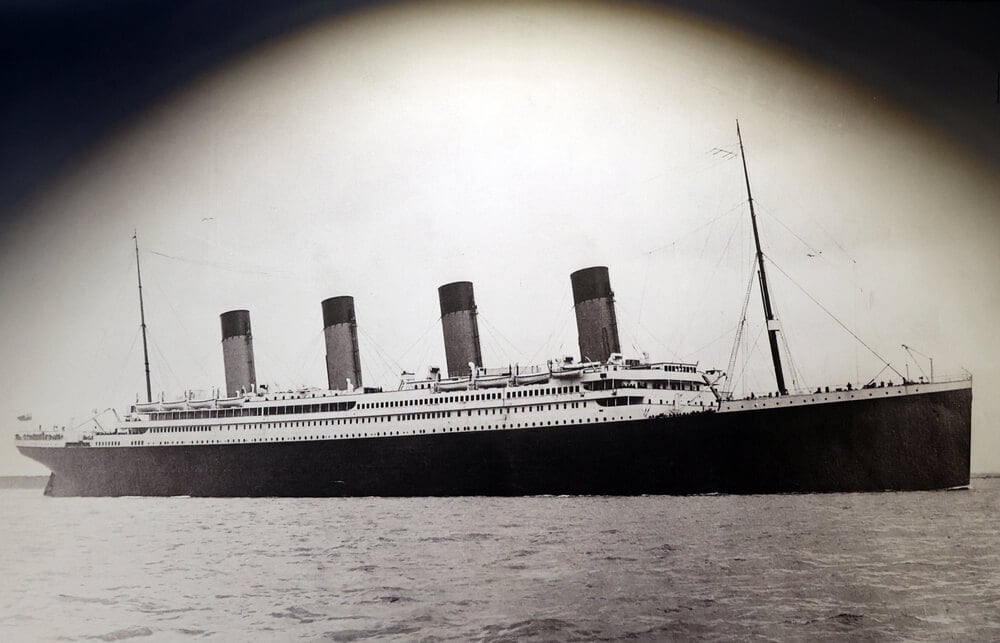
Francis Browne was a young Irish Jesuit trainee who sailed on Titanic from Southampton to Queenstown in April 1912, courtesy of a ticket from his uncle. He photographed the decks, the passengers, and the Marconi room before stepping off at Queenstown.
A telegram from his superior ordered him to leave the ship, an instruction that likely saved his life. His negatives became the last photographs of Titanic afloat, and he lived to publish them.
Mauretania in the Mersey, November 1907
The Royal Museums Greenwich holds a photograph of the steamship Mauretania in the Mersey in November 1907, the month she set out on her first voyage. Cunard had built her to challenge the German express liners, and the gamble paid off when she later took the Blue Riband for fastest Atlantic crossing.
The image catches her at the start of that run, before anyone knew how long it would last.
An Album of Mauretania’s First Voyage
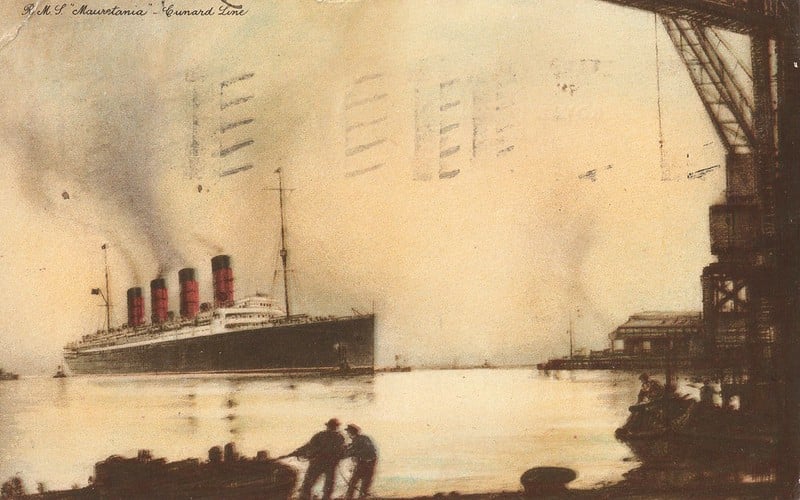
National Museums Liverpool tells the story of the Mauretania’s maiden voyage, a departure that drew crowds to the river. Snapshot albums from such trips are rare survivors, because passengers seldom kept their pictures once a ship left the headlines.
Pages like these show how ordinary travelers, not only press photographers, documented a ship that Cunard marketed as a national achievement.
Olympic in Wartime Dazzle
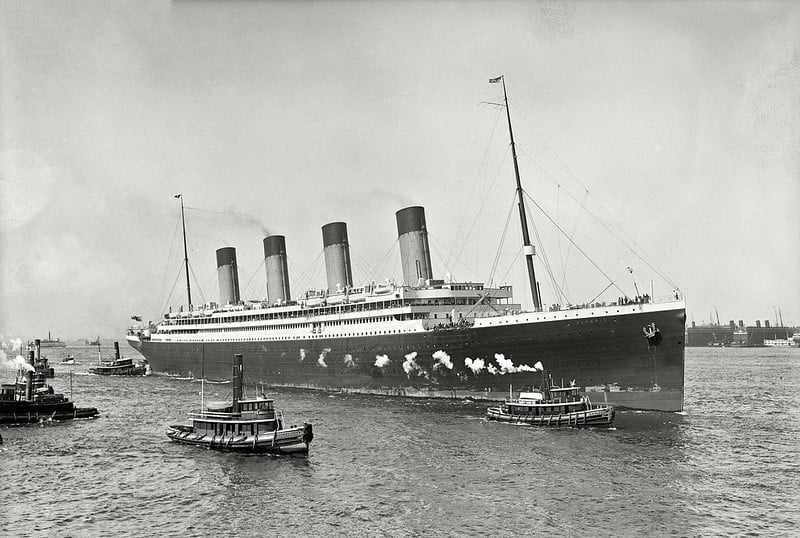
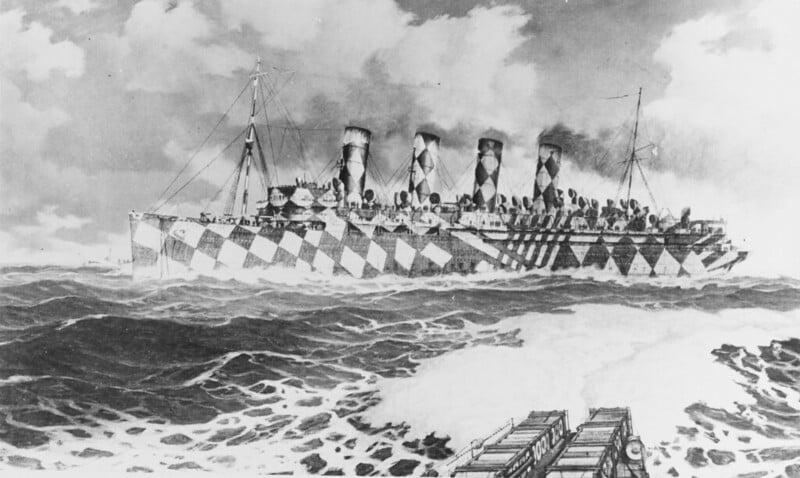
Photographs of RMS Olympic, later styled HMT Olympic, show the White Star liner in the disruptive camouflage of 1918. The jagged patterns were meant to confuse a submarine commander’s estimate of her speed and heading rather than hide her.
Olympic served as a troopship, and she rammed and sank the German submarine U-103. The paint scheme made one of the Titanic’s sister ships look like a cubist painting at sea.
Queen Mary’s Bow Rising at Clydebank
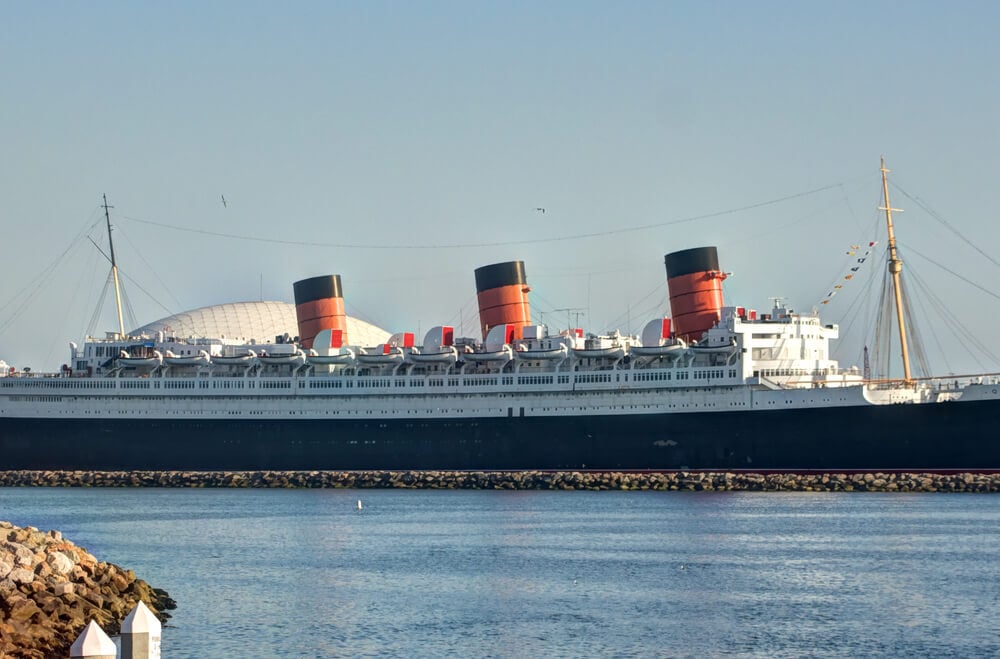
Photographs of the fore end of the Cunard liner Queen Mary, taken at John Brown’s yard on the Clyde, show a bow that dwarfed the workers scattered around it. Construction was halted when the Depression stripped away funding, leaving a rusting hull on the slip for months of silence.
Work resumed in 1934, and these images belong to the pages of that comeback.
Workmen Greasing the Way for Queen Mary
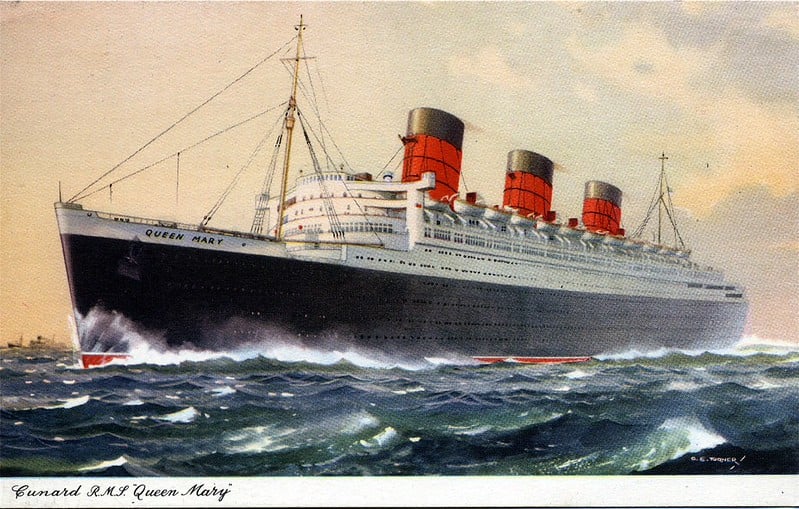
Photographs survive of workmen preparing the launching ways of Queen Mary. Launching a hull that heavy requires tons of tallow and careful engineering, because the ship must slide down the slip without stalling or tearing the cradle apart.
Queen Mary herself launched the ship on September 26, 1934. The images capture the unglamorous labor behind a ceremony the newsreels made famous.
Normandie Alongside the New York Pier
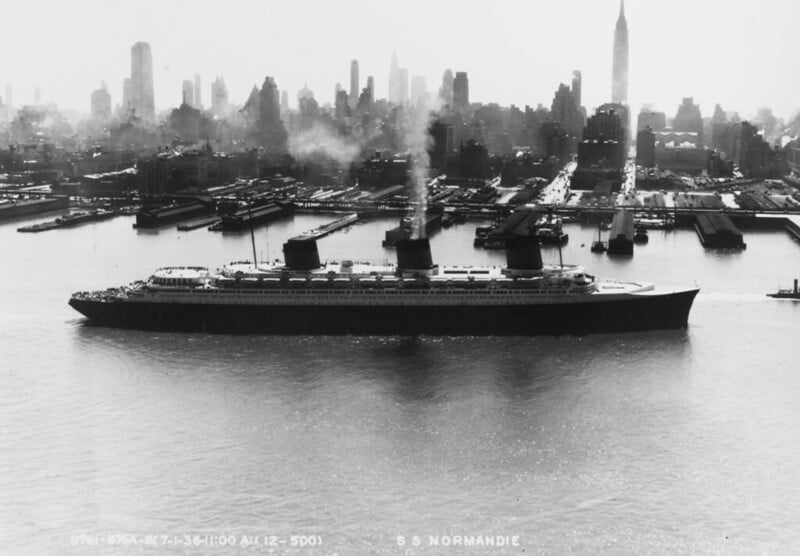
Photographs of the French Line’s Normandie in her Manhattan berth show a ship whose sheer length made the Hudson River piers look cramped. She entered service in 1935, and French designers filled her with Art Deco interiors that made her a floating showcase of the style.
The pictures show how thoroughly the city adopted her as an attraction rather than just a visitor.
A Sailor on Guard Beside the Doomed Normandie
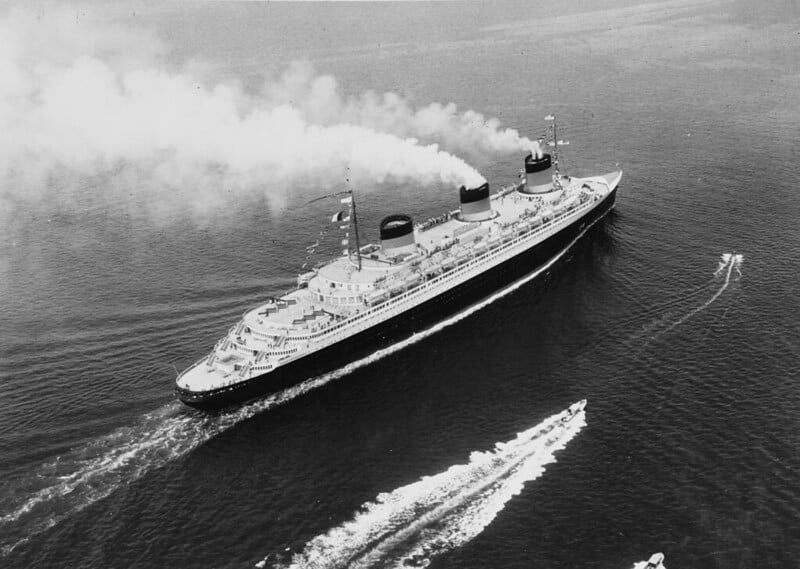
A press photograph shows a U.S. sailor standing guard at the pier slip where the Normandie lay. The United States had seized the French liner and was converting her into the troopship USS Lafayette when fire broke out on February 9, 1942.
Firefighting water collected inside the upper decks, and she capsized at her berth. The guard in the photograph looks small beside a wreck that salvage crews would later struggle to right.
SS United States Wears the Blue Riband
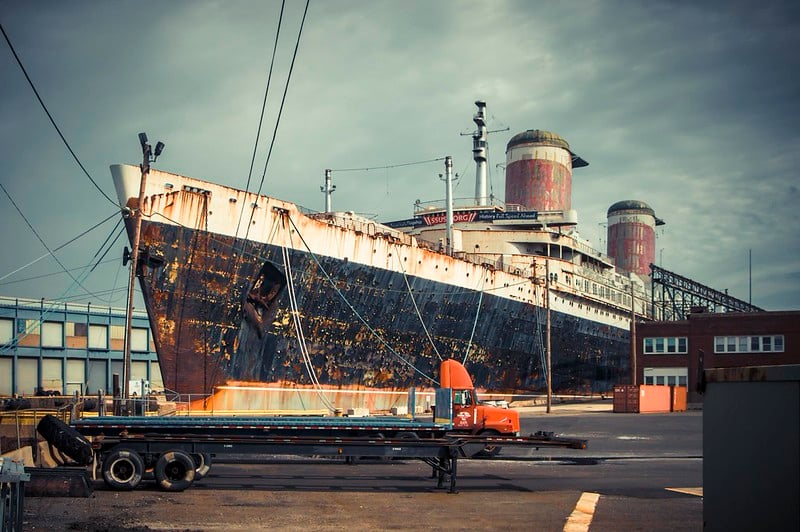
Photographs of the SS United States show the new holder of the Blue Riband after her record-breaking 1952 crossing. Naval architect William Francis Gibbs designed her for speed, and the Atlantic record she set on her maiden voyage stood as a point of national pride.
The ship looks lean and purposeful in these pictures, closer to a warship than to the ornate liners of earlier decades.
Harry Trask Photographs the Andrea Doria Going Down
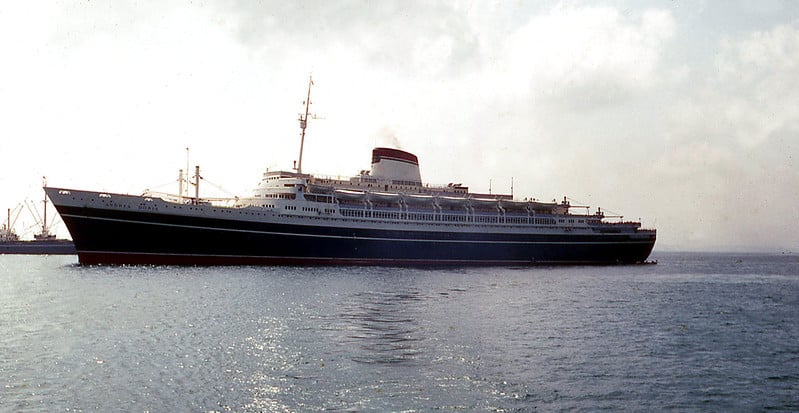
Boston Traveler photographer Harry A. Trask won the Pulitzer Prize for photography for his images of the sinking Andrea Doria. The Italian liner collided with the Swedish ship Stockholm off Nantucket in July 1956 and went down the next morning.
Most of those aboard survived, but lives were lost as a result of the collision. Trask’s pictures of the listing hull in morning light became the defining record of the disaster.
Aquitania in the Morse Collection
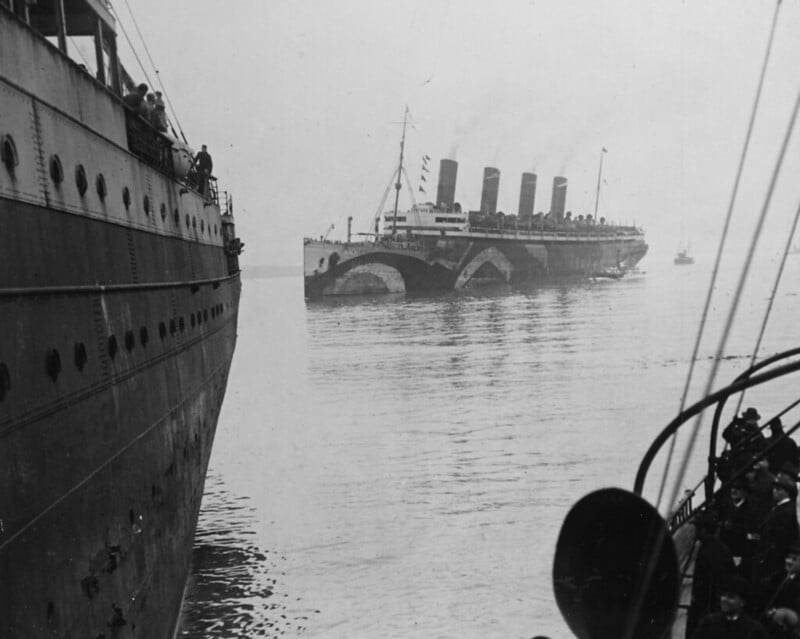
The Morse Collection at the University of Southern Maine preserves photographs of the Cunard liner Aquitania, which entered service in 1914. She went on to serve as an armed merchant cruiser, hospital ship, and troopship in the First World War.
Few ships of her size earned a longer career, and the images catch her in the peacetime elegance that sailors later associated with her name.
Aquitania Escorted by Destroyers
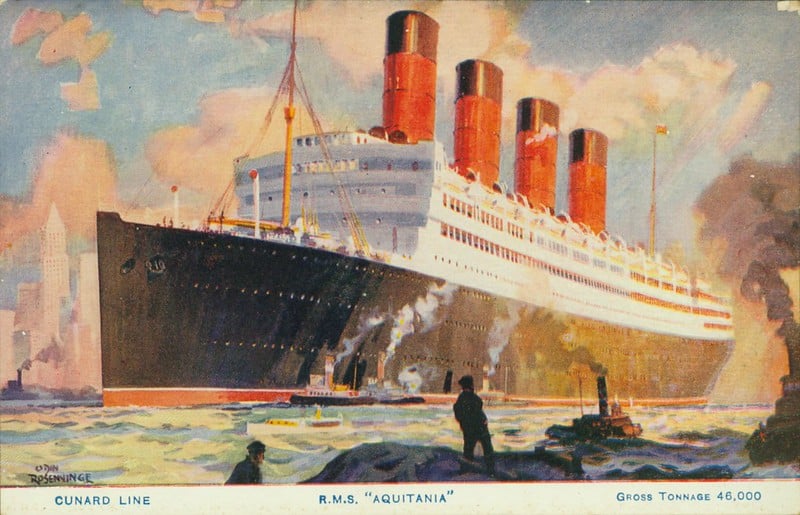
A photograph shows Aquitania in the First World War, accompanied by destroyers. Cunard’s newest liner was requisitioned within weeks of the war’s outbreak, stripped of her luxury fittings, and turned to military duty. The destroyers in the frame show how valuable the Admiralty considered a ship that could carry thousands of soldiers.
Peacetime glamour gave way to gray paint and armed escorts almost overnight.
Majestic Beyond the Southampton Docks
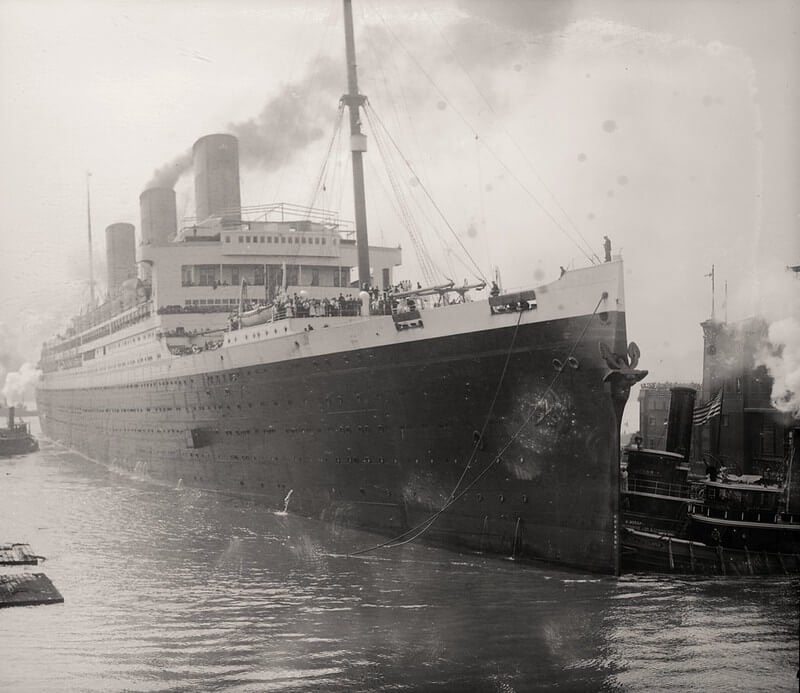
A 1930s view of Southampton Docks shows the White Star liner Majestic in the background. She began life as the German Bismarck and passed to Britain after the First World War.
White Star operated her as a flagship, and the Royal Navy later converted her into a training ship named HMS Caledonia, which gave a German-built giant a second British career.
What the Cameras Knew
Look across these frames and the common thread is anticipation. Photographers knew they were recording objects that mattered, whether a liner in dazzle paint or a bow rising over a stalled shipyard.
The camera found its best subjects at the edges of a voyage, where hulls met piers, wind, and wartime paint.
The golden age ended quietly, outflown by airliners and outpriced by fuel and labor. What remains is an archive of working ships, photographed by people who understood that size and speed were only part of the story.
The rest was the crowd on the pier and the sailor on guard.
More from Go2Tutors!

- The Romanov Crown Jewels and Their Tragic Fate
- 13 Historical Mysteries That Science Still Can’t Solve
- Famous Hoaxes That Fooled the World for Years
- 15 Child Stars with Tragic Adult Lives
- 16 Famous Jewelry Pieces in History
Like Go2Tutors’s content? Follow us on MSN.