29 Battery-Powered Robots Collectors Rescue from Toy Boxes
Somewhere in an attic, a tin robot with a dead battery and a faded litho chest is waiting for someone to open the right cardboard box. Vintage battery-operated robots from the 1950s and 1960s turn up in estate sales and family closets more often than most people expect.
The difference between a play-worn toy and a serious find usually comes down to condition, completeness, and one stubborn detail: whether the thing still moves. Every robot below ran on batteries rather than a wind-up key, and every one rewards a careful look before any power goes in.
Corroded battery compartments, missing remotes, and flaking paint decide value fast. The makers and models that follow show why collectors keep hunting for them.
Nomura Mechanized Robot, the Toy That Borrowed a Movie Star

Japanese maker Nomura produced a battery-operated tin robot in the mid-1950s that collectors call Robby, after the mechanical star of the 1956 film Forbidden Planet. The Victoria and Albert Museum holds an example, and the toy has crossed the auction block many times in boxed and unboxed form.
The original box matters enormously here, since the printed artwork is often scarcer than the robot itself. Examples with working lights and motion, intact litho, and clean battery compartments sit far above tired survivors.
Robby the Robot With a Road Construction Roller
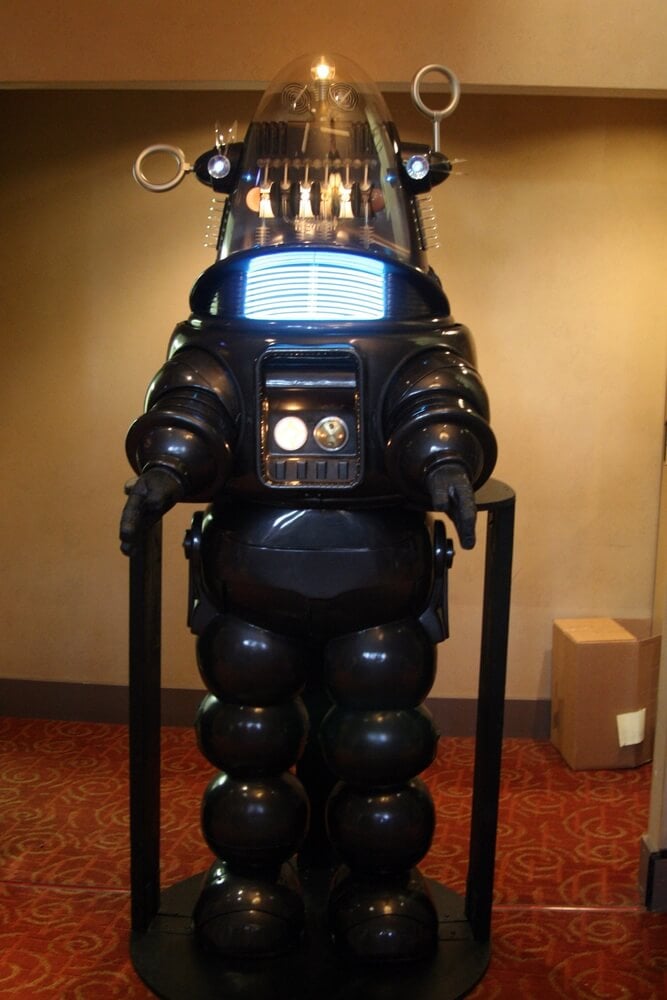
Not every Robby toy simply walked. A boxed battery-operated version of the character working a road construction roller has been offered at Hake’s, proof that the licensing machine found more than one job for the tin robot.
Vehicle toys like this depend on complete parts, because a missing roller or damaged litho can sharply cut interest. A crisp, unfaded box tends to add far more to the value than the toy alone.
Masudaya Machine Man From About 1962

Masudaya’s Machine Man, dated to about 1962, is among the most celebrated Japanese robots, and collectors group it with a set known as the Gang of Five. A boxed example brought a world auction record of $160,000 at Morphy Auctions, while a one-owner example sold earlier at the same house for $86,100.
That gap of tens of thousands of dollars is a clear lesson in what an original box can add. Even without a box, a robot with bright paint and a mechanism that still works draws serious bidding.
Linemar and Masudaya R-35 From 1955
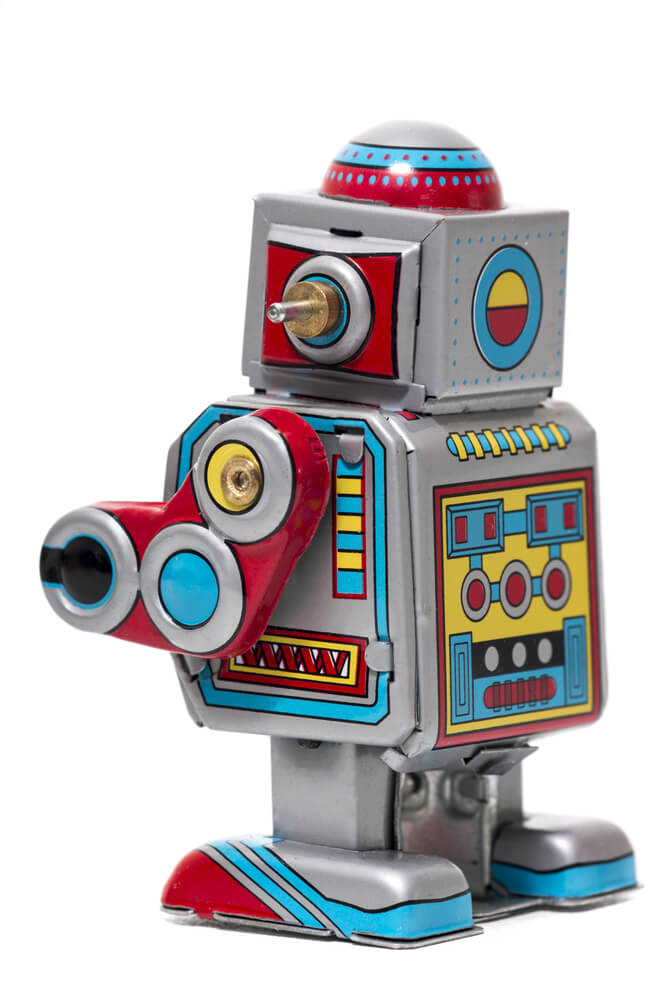
The R-35 robot dates to 1955 and was sold under the Linemar name as well as Masudaya, which is why listings carry both labels. Hake’s has offered a loose example, and battery-operated versions appear in antiques dealers’ catalogs.
As an early Japanese tin robot, it carries a historical premium that later plastic toys lack. Loose figures with scuffed litho sell for far less than clean examples with their packaging.
Masudaya Modern Toys Non-Stop Robot, Circa 1959
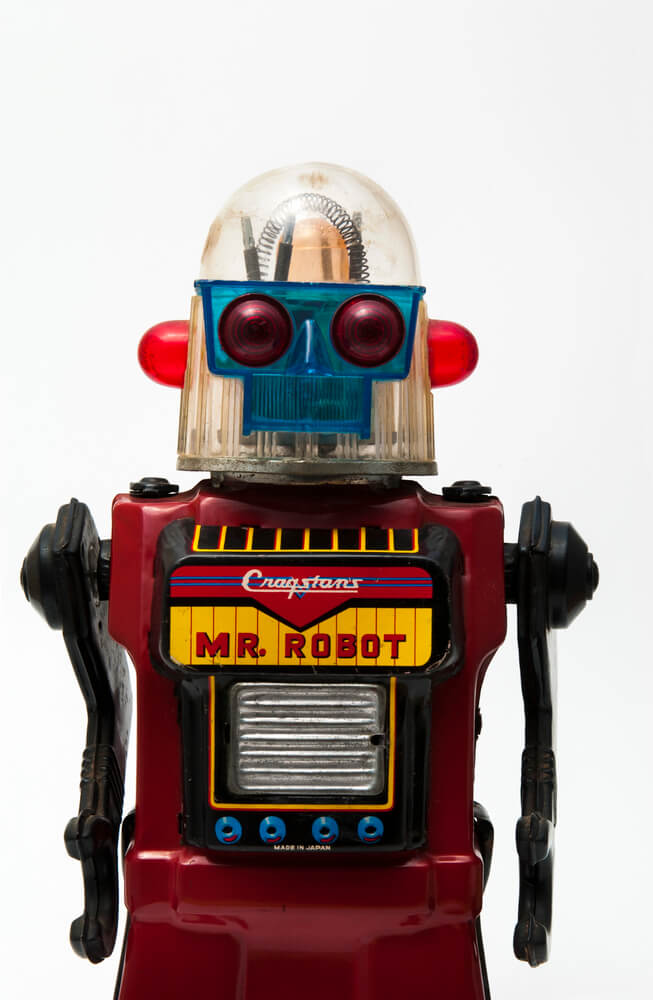
A lavender Non-Stop robot from Modern Toys of Japan, dated to around 1959, was offered at an Australian auction as a rare example of the line. The color is part of the appeal, since variations in finish can separate an ordinary toy from a standout.
Tin from this period shows its age in rubbed edges and lifted litho. Intact color with no battery damage inside the case makes the biggest difference to a bidder.
Horikawa Attacking Martian With the Oversized Head
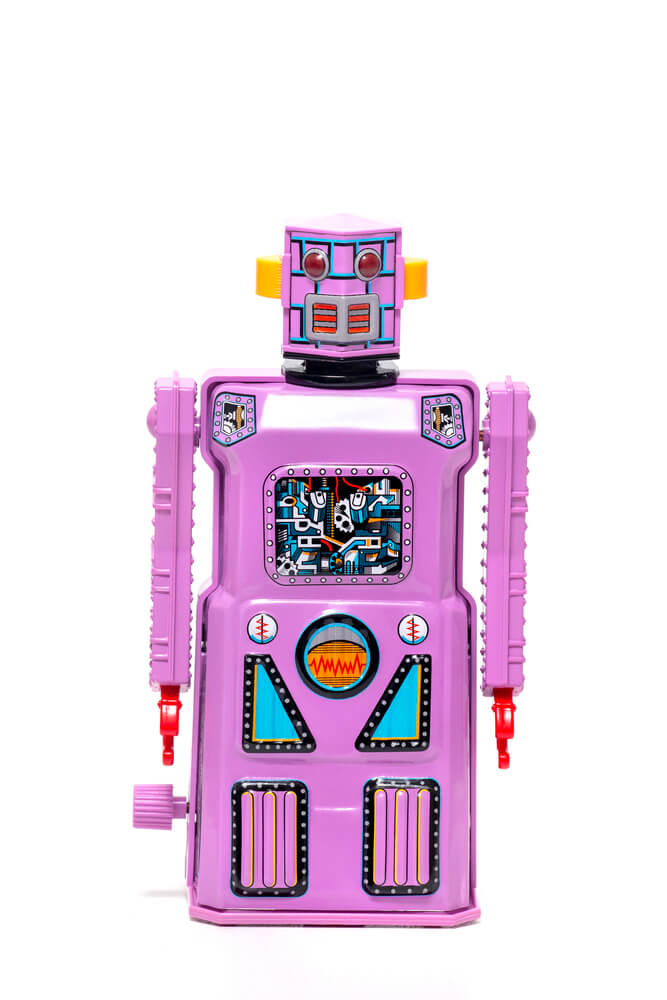
Horikawa’s Attacking Martian is a battery-operated walking tin robot, and the Science Museum Group in Britain keeps several examples, including a big-head version. That oversized head is a quirk collectors look for when comparing variations of the same toy.
Because walking mechanisms can fail with age, working examples are valued above display-only ones. Boxed Attacking Martians typically draw stronger competition than loose figures.
Horikawa Swivel-O-Matic Attacking Robot
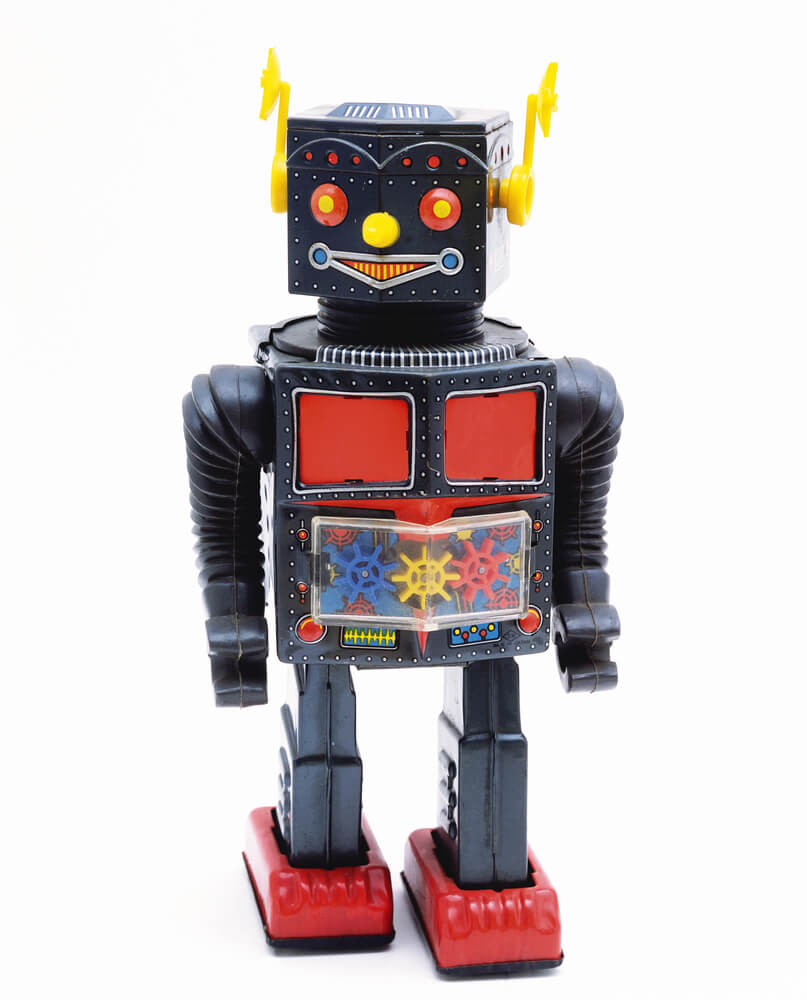
Dated to around 1967 in European listings, this Horikawa robot adds a swiveling action to the usual walking routine. Boxed battery-operated examples show up on the market there, where buyers weigh the original packaging and the condition of the electrical contacts.
Battery corrosion is the usual enemy, so a clean compartment is a selling point. Loose examples with scratched paint still find buyers, though at a noticeably lower level.
Horikawa Fighting Robot in Its Original Box

Catawiki has offered a Horikawa battery-operated Fighting Robot as a boxed tin toy from Japan, and the box is a big part of the attraction. Space-age cover art from this period is prized in its own right, and crushed corners or torn flaps reduce appeal quickly.
Inside, the litho should show crisp color without rust at the seams. A functioning example with its box can bring many times what the same robot fetches loose.
Horikawa Sky Robot

Sky Robot is a battery-operated Horikawa toy that has been cataloged in collector price guides alongside the maker’s other space figures. Its name matches the era’s fascination with anything that sounded like it belonged in orbit.
As with other Horikawa pieces, the lights and walking motion are the first things to fail. Collectors tend to pay more for examples that still run and still have their cardboard.
Horikawa Rotate-O-Matic Super Giant Robot

The Rotate-O-Matic Super Giant Robot is a battery-operated Horikawa tin toy that turns up in different sizes, with listings describing both a 12-inch and a 16-inch version. The scale is the draw, since a larger robot makes a bigger shelf statement than the usual small tin figure.
Size also makes shipping damage and box wear more common. A new-in-box example sits at the top of the range, while a loose figure with faded paint sits well below it.
Horikawa Space Patrol Robot

A Danish auction house has sold an SH-Horikawa Space Patrol battery-powered robot from the 1960s, a reminder that these Japanese toys were exported widely. The SH mark identifies Horikawa as the maker.
Collectors check that the original paint remains and that no battery has leaked into the housing. An example that still walks and keeps its box is more desirable than a bare figure.
Ideal Robert the Robot and Its Gun-Shaped Controller

Ideal released Robert the Robot in 1954, making it one of the earliest mass-market robots in America. The toy was steered through a wired controller shaped like a pistol, a detail documented in the Science Museum Group collection.
Hake’s has sold boxed examples, and a controller that survives with intact wiring is a significant factor. A missing or replaced controller can pull the value down noticeably.
Ideal Robot Commando From 1961

Robot Commando arrived from Ideal in 1961 and remains one of the best-known toy robots of the early space age. Collectors still hunt for complete examples, since small accessories were easy to lose in a toy chest.
Sun-faded plastic and battery leakage are the common faults. An intact original box is a major plus, and a complete, working robot commands a premium over an incomplete one.
Ideal Zeroids and Zerak the Destroyer

Zerak the Destroyer belongs to the Zeroids line from Ideal, which ran from 1968 to 1970. Dealers have listed Zerak together with its case, and the case is a prized extra because it rarely survived childhood.
Cracked plastic and corroded battery contacts are the usual problems. A complete robot that still rolls is worth more than one found loose in a toy box.
Remco Lost in Space Motorized Robot

Remco produced a motorized robot in 1966 tied to the television series Lost in Space, and boxed examples are regular entries at Hake’s and Heritage auctions. The toy came in more than one color, and a rare color variety has been sold as its own distinct lot.
Collectors check the battery compartment for corrosion and the plastic for yellowing. Boxed, working examples are valued well above loose ones, and the rarer colors push the price higher still.
Remco Rudy the Robot From 1968

Rudy the Robot arrived from Remco in 1968 and has turned up in estate-sale auctions, where a vintage 1968 example drew its own listing. Its friendly look separates it from the grim space warriors of the same decade.
Collectors look for intact paint, undamaged plastic, and a battery compartment free of leakage. A boxed Rudy is far harder to find than a loose one, and priced accordingly.
Remco Wizard of Oz Tin Man Motorized Robot

Remco put the Tin Man from The Wizard of Oz into a motorized robot in 1969, a licensing crossover that blurred the line between storybook character and space-age toy. Enthusiasts of old robots have cataloged it alongside the better-known tin pieces.
Loose figures often show paint wear and clouded plastic. A clean example with its packaging is the version most collectors hope to find.
Remco Mister Brain, the Tru-Smoke Robot
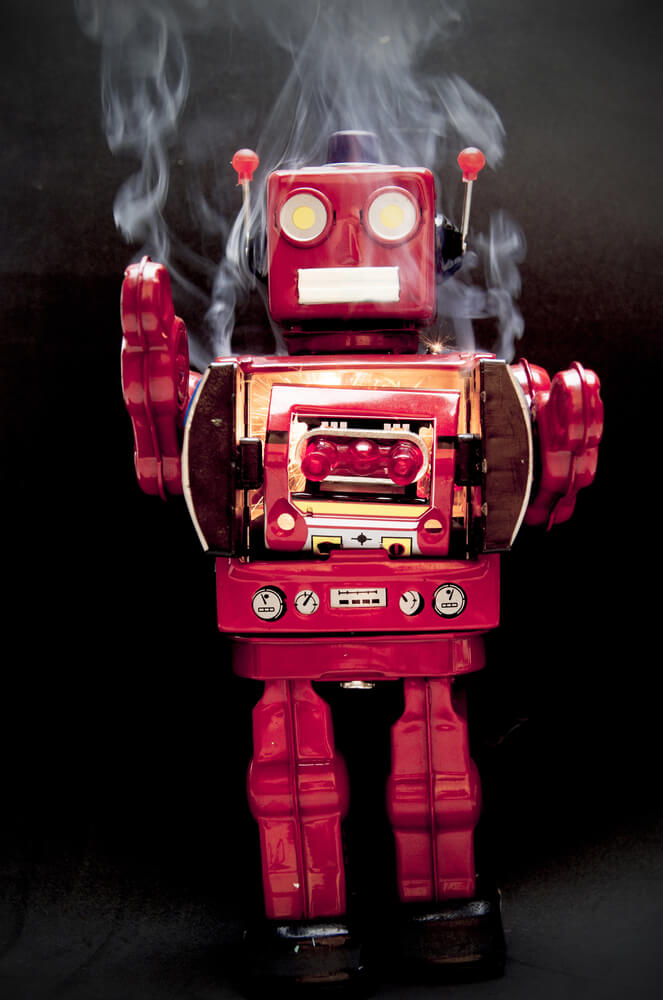
Remco’s Mister Brain, from 1970, was marketed as the Tru-Smoke robot, which points to a feature that sent smoke from the toy. Smoke-emitting robots depend on a mechanism that is easy to damage, so a unit that still works is a notable find.
Residue and battery damage inside the housing are common. Examples with the original box and a working smoke feature stand well above bare ones.
Cragstan Mr. Atomic, the Thinking Robot
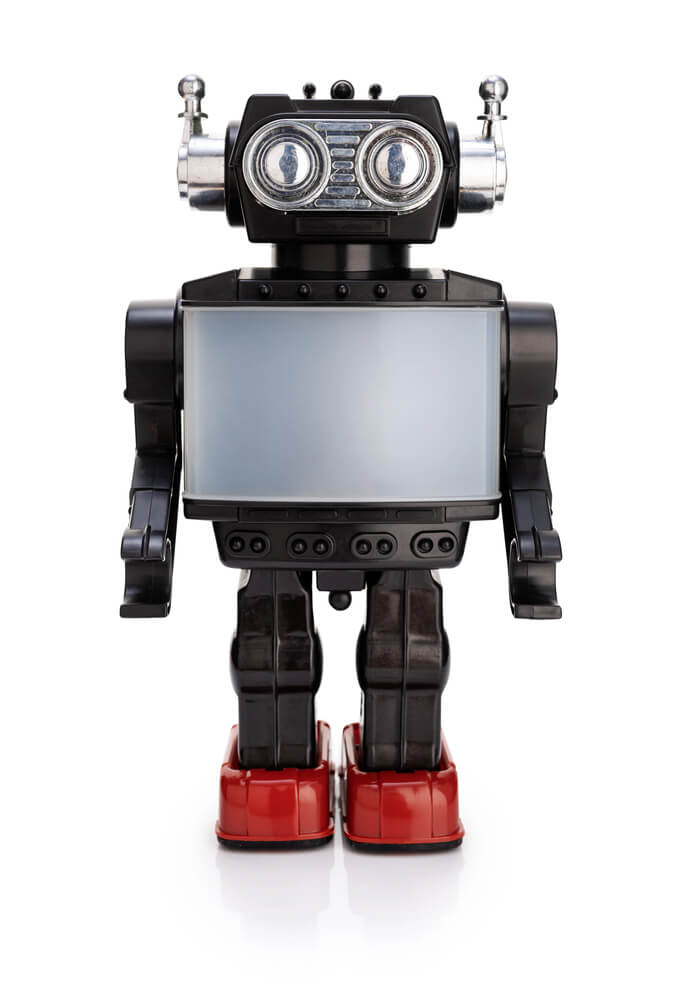
Cragstan, the importer behind many Japanese tin toys sold in America, marketed Mr. Atomic as a battery-operated thinking robot. Auction houses in the United States and Britain have offered examples from the 1950s, including boxed ones.
The robot depends on delicate litho and moving parts, so wear on the paint and a seized mechanism both affect desirability. Reproductions of this style exist, which makes checking original markings an important step.
Yoshiya Chief Robotman From 1962
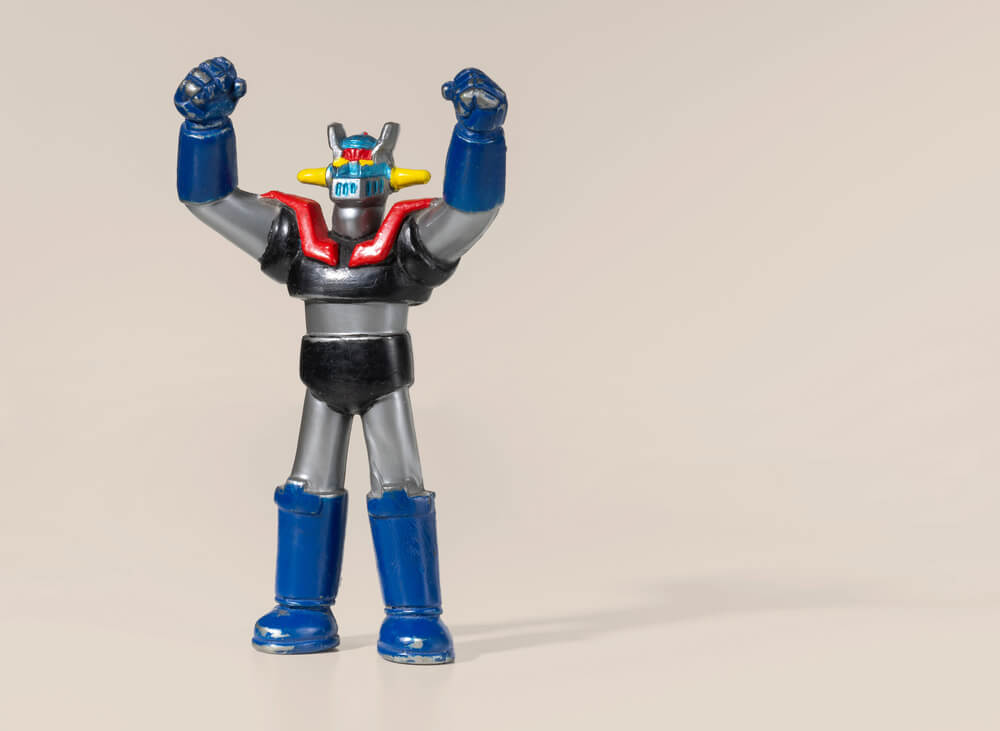
Chief Robotman, made by Yoshiya in Japan around 1962, is a battery-operated tin robot that European dealers have listed in boxed and unboxed condition. Its look was distinctive enough that later copies appeared, so collectors compare the litho against known originals.
Working lights and movement matter, as does an absence of battery leakage inside the case. A boxed original in strong color is the version that generates the most excitement.
Mr. Chief Smoky and the Problem of Reproductions
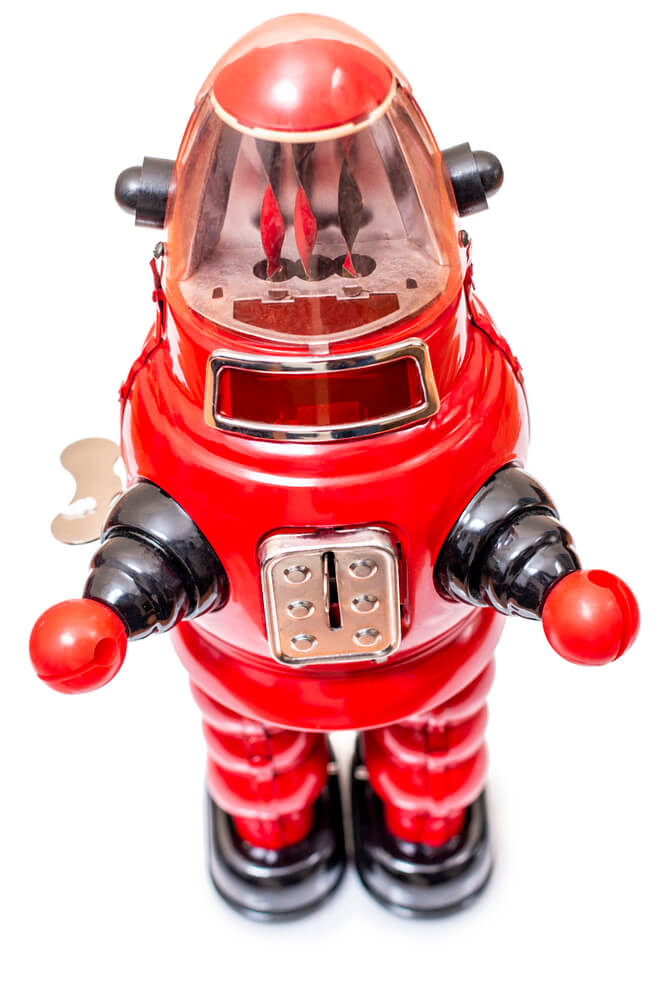
Chief Smoky is a battery-operated tin robot that lights up, moves, and emits smoke, which makes it one of the more theatrical toys on the market. It is also the kind of robot that has been reproduced, so listings often distinguish between vintage pieces and later copies.
Anyone buying should look at the litho, the battery compartment, and the box artwork to confirm age. A genuine, working, well-preserved example is worth far more than a repro.
Nomura Radar Robot
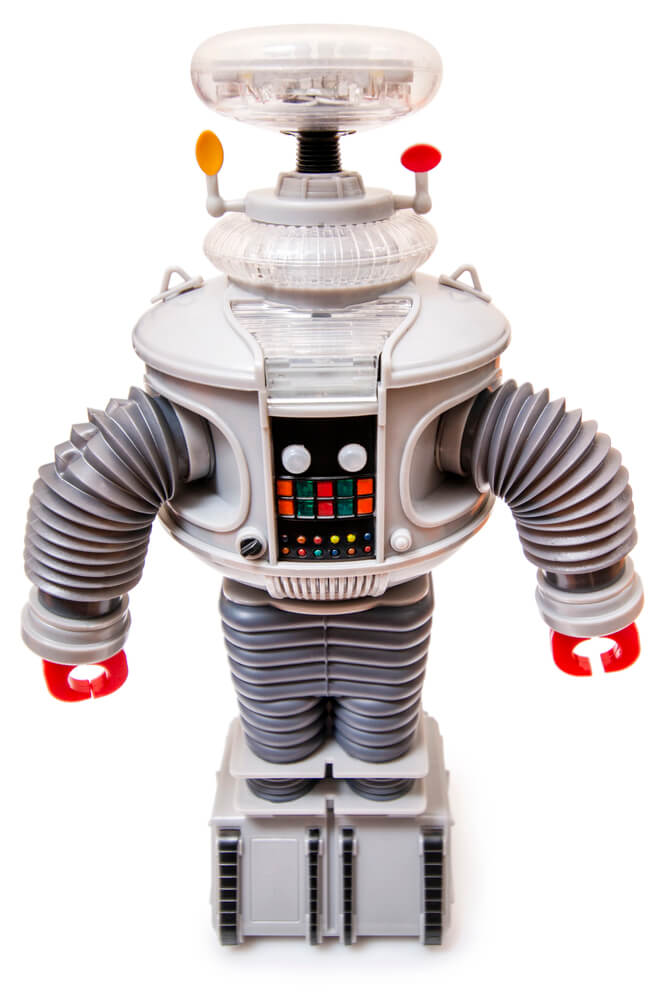
The Victoria and Albert Museum lists a Radar Robot by Nomura in its collection, placing the toy alongside the maker’s more famous Robby. Its name reflects the era’s love of anything that sounded like a technical instrument.
Original paint and an intact radar-style top are the points collectors check first. A box and a mechanism that still works lift an example well above a play-worn one.
Tin Litho Target Robot
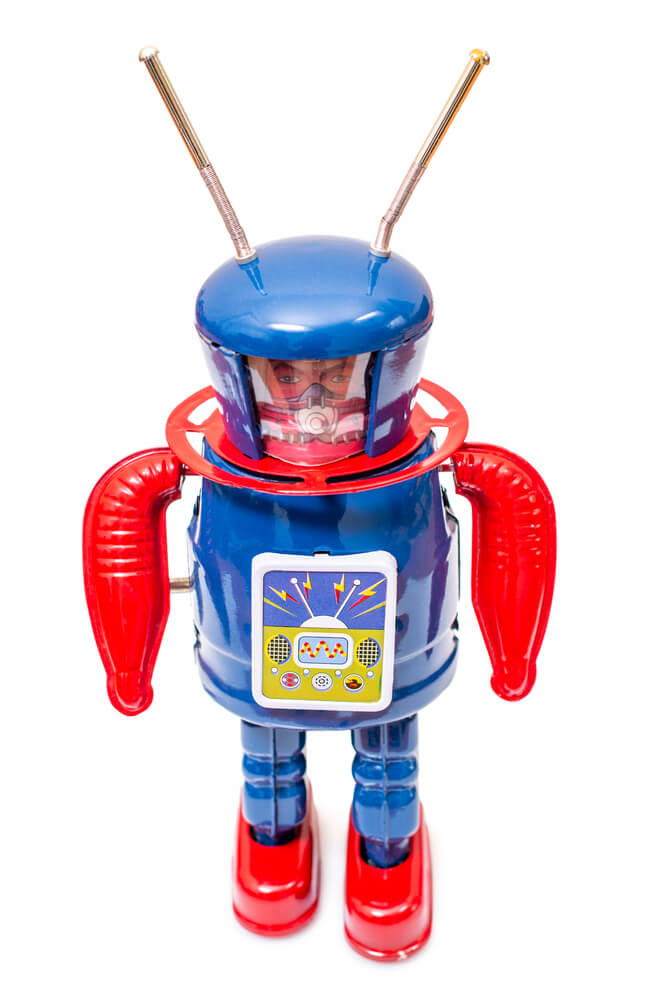
A tin litho Target Robot, described in dealer catalogs as battery-operated, is a toy whose name comes from the bullseye-style graphics on the robot itself. The litho is the entire attraction, so scratches and rust shorten the list of interested buyers.
Battery corrosion inside the body is the other common flaw. A bright, clean example with a box outranks one that spent decades in a basement.
Alps Revolving Flashing Robot
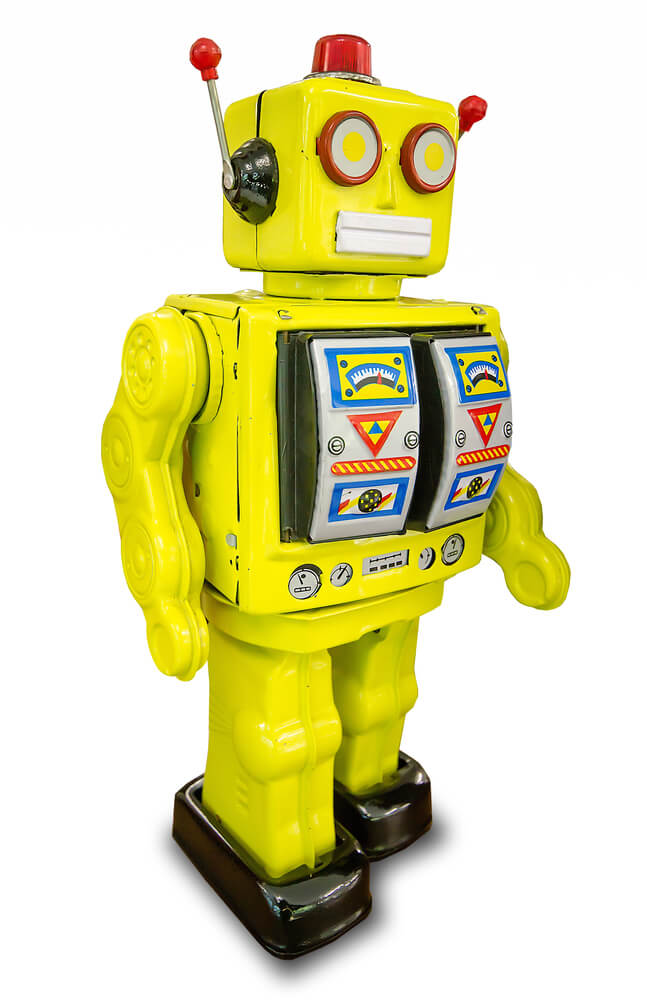
Antiquetoys.com sold an Alps tin lithographed battery-operated robot that revolves and flashes, described as complete with its box. Alps was among the busier Japanese tin toy makers, and its robots often combined several actions in one body.
Flashing lights depend on small bulbs and contacts that corrode easily. A boxed example with working lights stands far above a dim, silent one.
Blink-A-Gear Battery-Operated Robot
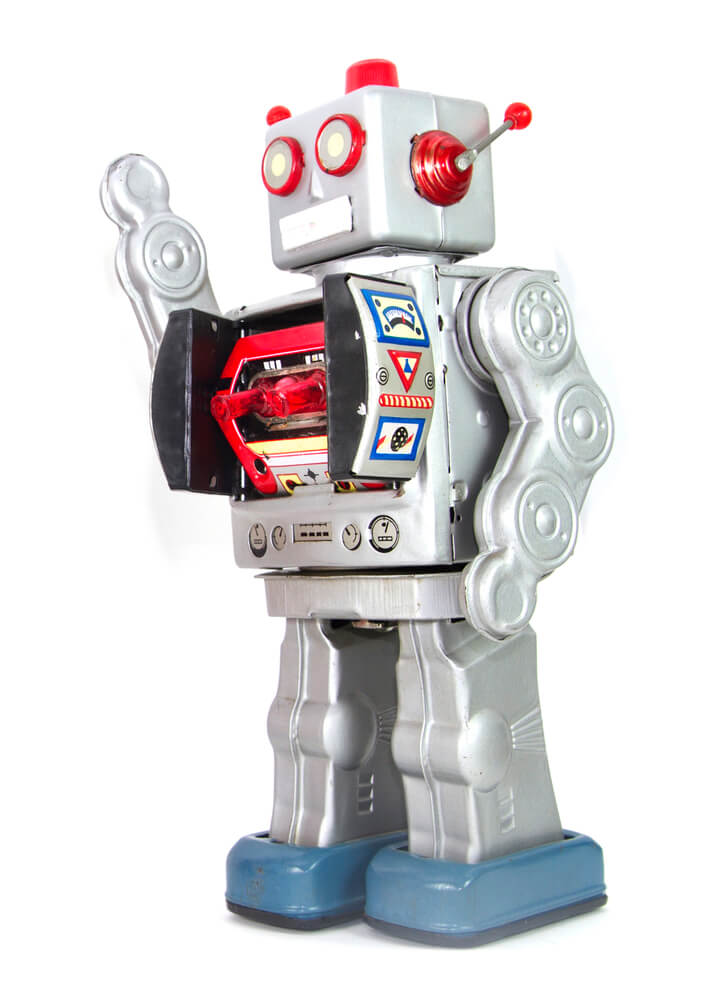
The Blink-A-Gear robot is a tin litho toy whose name describes its party trick, and dealers have cataloged it as battery-operated. Gears and blinking parts are the first features to jam when old batteries leak.
Collectors inspect the contacts under the battery door before anything else. A robot that still blinks and keeps bright litho is the kind that rises above the pack.
Playwell Space Commander Robot
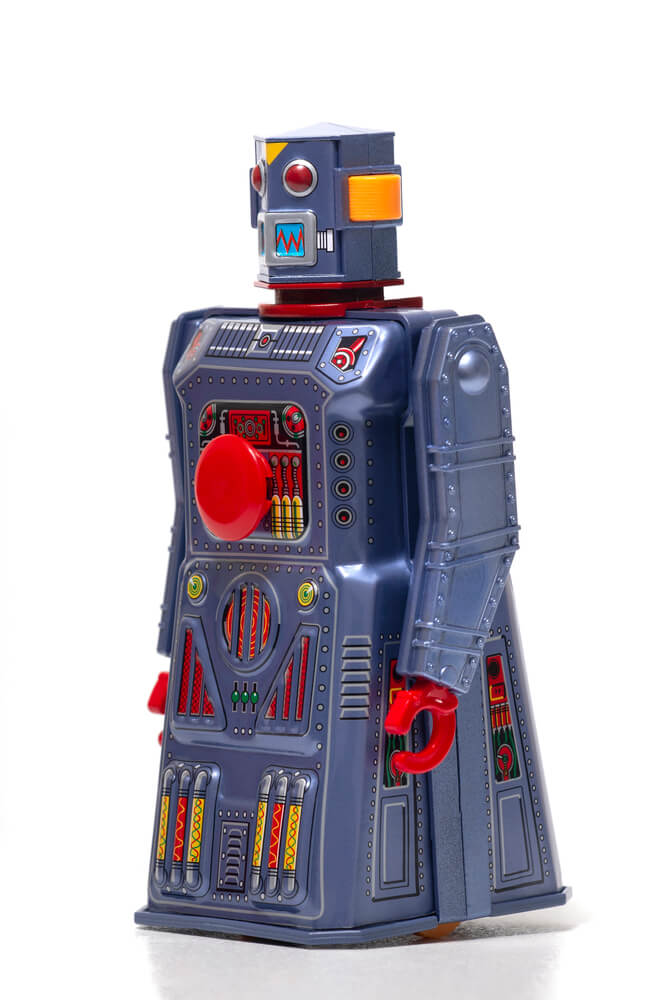
The Playwell Space Commander is a battery-operated robot that has surfaced in dealer auction listings. It sits with the many smaller makers that filled toy shelves beside the famous brands. Lesser-known names can be undervalued, which gives careful buyers a chance to pick up a bargain.
Condition still rules, and a boxed example with working action outdoes a loose, faded one.
Robot Warrior From Woolworth and Hong Kong
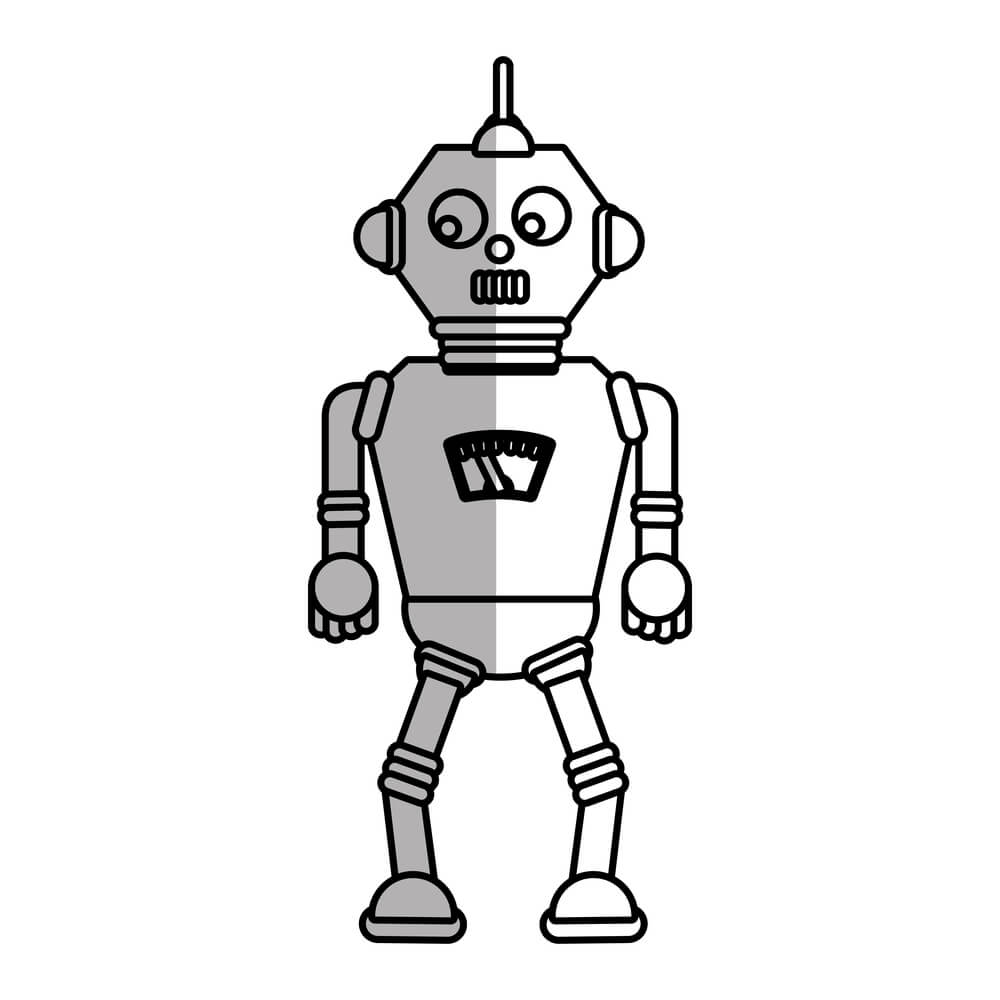
Robot Warrior is a battery-operated robot made in Hong Kong and sold through Woolworth, a reminder that the genre did not belong to Japan alone. A boxed new example appeared in a German online listing, which suggests how widely such toys traveled.
Plastic and thin tin from this class of toy age differently from the heavy Japanese litho pieces. A sealed or complete box adds more than any cosmetic restoration could.
Battery-Operated Moon Explorer Robot
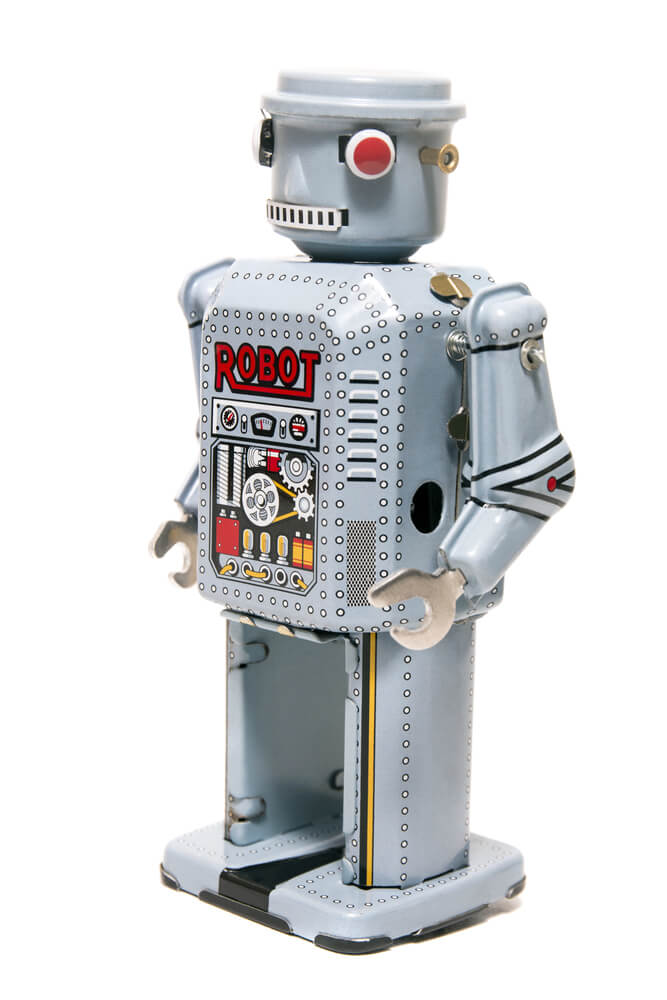
A Moon Explorer robot is cataloged in a collector price guide as battery-operated, giving the lunar program its own place in the robot aisle. The name reflects the space-race marketing that sold toys by the millions.
Lights and motion are the features that fail, and the box art often carries as much appeal as the figure. A working example with its packaging beats a loose one by a wide margin.
Acrobat Robot, Battery Operated
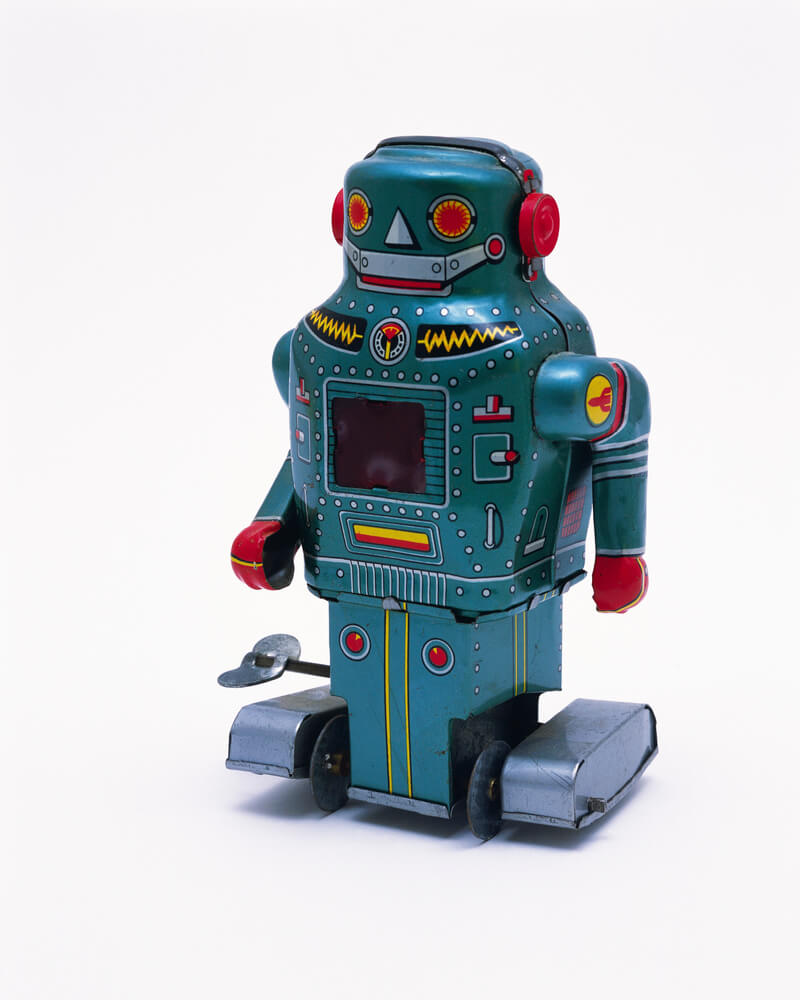
Collectors Weekly features an Acrobat Robot, listed as battery-operated, a toy whose name suggests the flips and tumbles it was built to perform. Acrobatic action puts stress on small parts, so many survivors are broken or missing pieces.
A robot that still performs its stunt is notably rare. Complete examples with clean battery compartments and original packaging hold the best prospects.
When a Dead Toy Becomes a Time Capsule

Battery-powered robots belong to a short window when cheap Japanese manufacturing, space-race excitement, and television tie-ins collided. Each model here represents a different answer to the same question of how to make a metal man seem alive.
Collectors who rescue them are often preserving the cardboard, the litho, and the small details of packaging as much as the toy itself. The market keeps rewarding the same virtues: original boxes, working motion, bright paint, and clean battery compartments.
A robot that has lost its remote or leaked acid across its contacts can still be saved, but its value follows the damage. Anyone opening an old toy chest would do well to check the battery bay before anything else.
More from Go2Tutors!

- 27 Silver Dollars and Half Dollars Worth Keeping
- 28 Restaurant Menu Items Nobody Orders Anymore
- 17 Places Built in Seemingly Impossible Spots
- 27 Vintage Rings Worth More Than They Look
- 25 Restricted Sites Tourists Can’t Enter
Like Go2Tutors’s content? Follow us on MSN.