25 Movie Tie-In Merchandise Beyond Action Figures
Every blockbuster eventually gets a plastic hero with movable arms, but the real story of movie merchandising lives in the odd corners of the toy aisle. Lunch boxes, drinking glasses, cereal-box-sized board games, and even an empty cardboard mailer all carried film logos into millions of homes.
Some of these items outsold the movies that inspired them, and a few ended up in museum collections. Others flopped so badly that collectors now hunt them down for exactly that reason. As with all vintage collectibles, value depends heavily on condition, completeness, and original packaging.
Star Wars Early Bird Certificate Package
Kenner missed the 1977 holiday season because the figures were not ready, so the company sold a cardboard mailer containing no toys at all. Inside was a certificate that could be redeemed by mail for four figures: Luke Skywalker, Princess Leia, Chewbacca, and R2-D2. The package also included a display stand, stickers, and a fan club membership card, and the figures themselves arrived in early 1978. Sealed and complete examples are prized, and prices swing widely based on condition.
Star Wars Metal Lunch Box With Thermos Bottle

The 1977 Star Wars lunch box paired a lithographed metal box with a matching Thermos-brand bottle, and it became a fixture of school cafeterias that fall. The Smithsonian’s National Museum of American History holds one in its collection, which says plenty about the box’s cultural footprint. Lithographed tin tends to dent, scratch, and rust at the seams, so clean examples with an intact bottle command the highest prices.
Kenner’s Escape From Death Star Board Game
Kenner released Escape from Death Star in 1977, and it stayed on shelves into 1980, an unusually long run for a licensed board game. Copies now sit in the collections of The Henry Ford in Michigan and the V&A in London. The box art, the playing pieces, and the original packaging all affect pricing, and complete copies with every part intact are far scarcer than loose boards.
Ben Cooper Star Wars Halloween Costumes
In the fall of 1977, demand for Star Wars costumes outran supply so badly that the shortage became a news story, and many children went trick-or-treating in homemade versions. The licensed costumes from Ben Cooper paired a thin vinyl smock with a molded plastic mask, and characters included Darth Vader and R2-D2. The boxes featured a window so shoppers could see the mask. Surviving sets with intact boxes bring considerably more than loose masks, though condition governs the final price.
The Game of Jaws by Ideal
Ideal brought out The Game of Jaws in 1975, the same year the film arrived in theaters and kept beachgoers out of the water. Players fish junk out of a plastic shark, with the threat of snapping jaws hanging over every turn. A board game built around a PG-rated movie about a man-eating shark struck some parents as grim, but it sold anyway. Surviving copies rarely include every piece, so completeness drives the price along with box condition.
Corgi Toys James Bond Aston Martin DB5
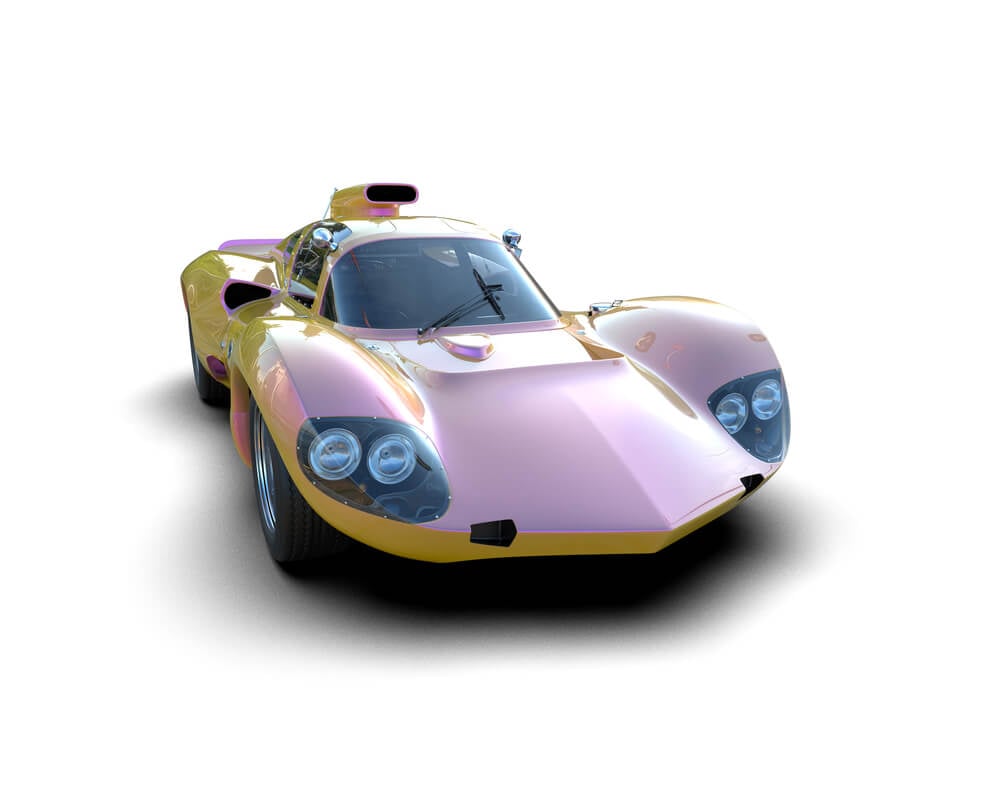
Corgi’s die-cast DB5 followed the 1964 film Goldfinger and gave children a working ejector seat that launched a tiny figure out through the roof. It also featured a pop-up bullet shield and extending bumper overriders, and the model sold in the millions. The original boxes came with a spare villain figure that was easy to lose. Mint boxed examples with all of their accessories can bring serious money, while playworn cars sell for far less.
Quaker Oats and the Wonka Bar

Willy Wonka & the Chocolate Factory exists in large part because Quaker Oats financed the film in 1971 to promote a new line of Wonka candy. That commercial purpose explains why the movie carries the Wonka name rather than the title of Roald Dahl’s book, Charlie and the Chocolate Factory. The real Wonka Bars reached stores around the film’s release but never matched the on-screen fantasy. Wrappers from that era are collected today, with condition and legibility deciding their worth.
Midway’s Tron Arcade Cabinet
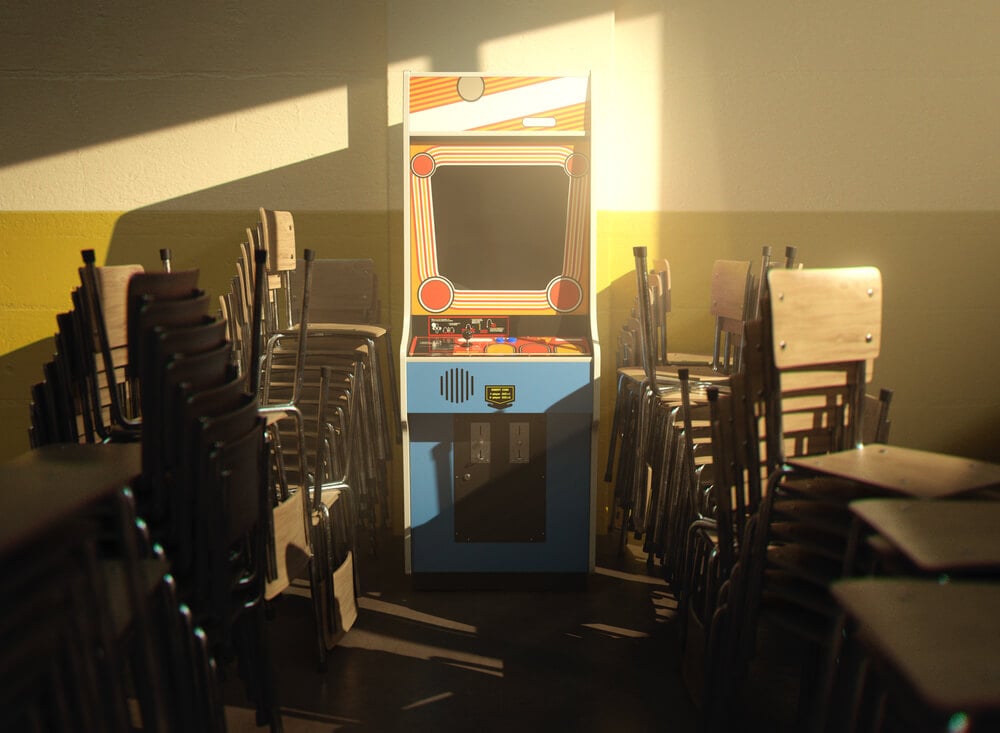
Disney’s Tron had a modest box office run in 1982, yet the arcade game from Midway reportedly earned more than the film did. The cabinet bundled several distinct stages, including Light Cycles and a battle involving the Master Control Program’s cone. Working cabinets are heavy, temperamental machines, so condition of the screen, artwork, and electronics sets the price for collectors.
Ideal’s Shirley Temple Doll
Ideal introduced its Shirley Temple doll in 1934, when the child star was a box office draw, and the doll came dressed in outfits patterned after her screen costumes. The Henry Ford holds an example from the 1934 to 1939 production run, and the dolls were sold in several sizes. Early composition dolls are fragile, and crazing of the face and missing original clothing can slash value. Complete examples in good shape are still sought by doll collectors.
Atari’s E.T. the Extra-Terrestrial Cartridge
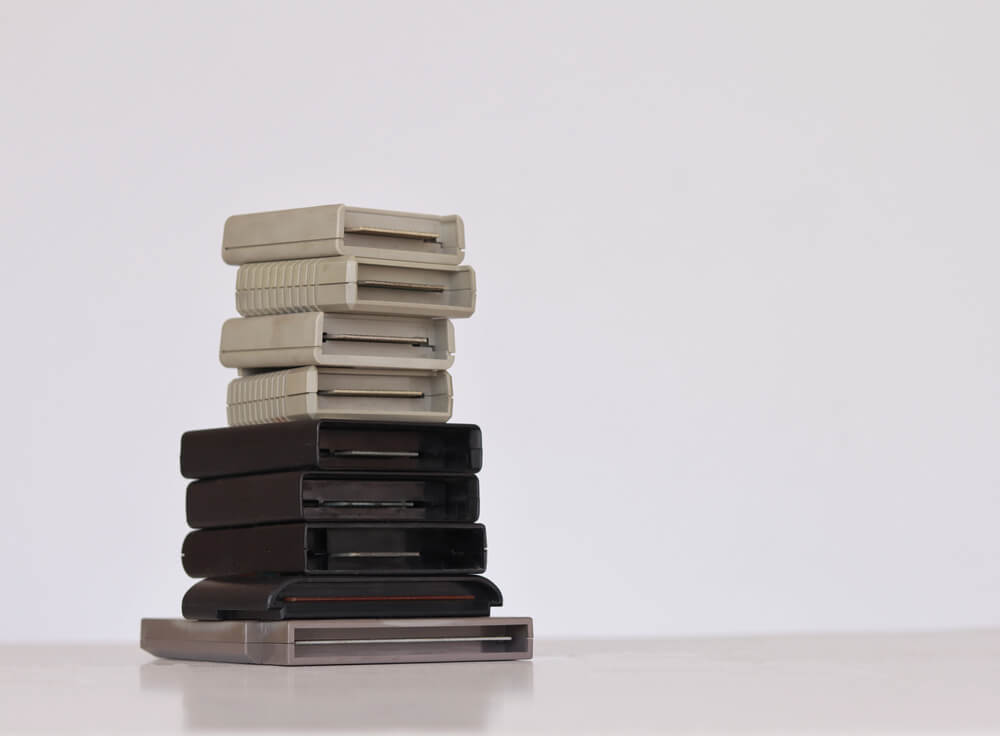
Atari rushed its E.T. game for the 1982 holidays, with designer Howard Scott Warshaw reportedly given only about five weeks to finish it. Unsold cartridges were buried in a landfill in Alamogordo, New Mexico, in 1983, and a 2014 excavation recovered around 1,300 of them. One of the recovered cartridges was later added to the collection of The Henry Ford. Value depends on whether a copy is a landfill recovery with documentation, a boxed retail copy, or a loose cartridge.
Burger King and Coca-Cola Empire Strikes Back Glasses

For the 1980 release of The Empire Strikes Back, Burger King and Coca-Cola distributed tall tumblers decorated with characters, including a pairing of Darth Vader and Boba Fett and another of R2-D2 and C-3PO. Many were washed daily, so the printed graphics rarely survived unscathed. Glasses with bright, unfaded art and no chips are far more valuable than heavily used ones.
The Story of Star Wars on Vinyl

In 1977, 20th Century Records released The Story of Star Wars, an LP that retold the film using actual dialogue, sound effects, and music from the soundtrack. Actor Roscoe Lee Browne narrated, linking the scenes for listeners who could not see the movie again. Children could replay the entire plot at home years before video rentals existed. Record condition and sleeve wear strongly affect what a copy sells for today.
Lego Star Wars Sets
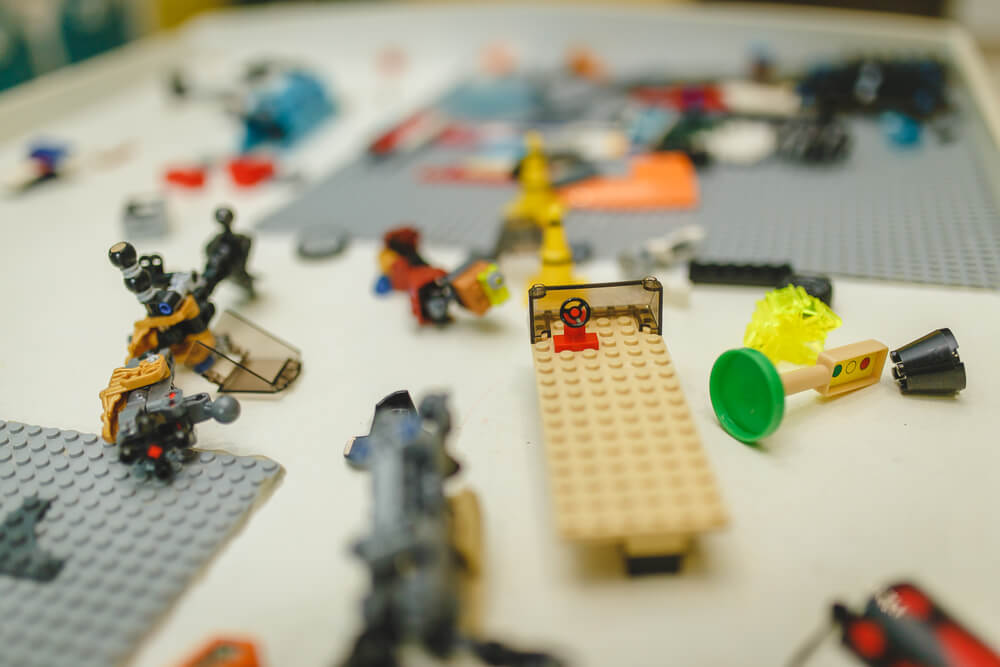
Lego launched its Star Wars line in 1999 to coincide with The Phantom Menace, even though the company had long resisted licensed themes. The first wave mixed vehicles from the new film with ships from the original trilogy. The line grew into one of the company’s best-selling themes and spawned its own series of video games. Sealed original sets from the first wave can be valuable, with box condition and completeness the key factors.
Topps Star Wars Trading Cards
Topps released five series of Star Wars cards across 1977 and 1978, and the first series offered 66 cards and 11 stickers with a stick of gum in each wax pack. The photos and captions let children relive scenes without a VCR, which hardly existed in homes yet. Unopened wax packs and high-grade cards bring premium prices, while worn, creased cards are worth only a fraction.
Mattel’s Back to the Future Part II Hoverboard
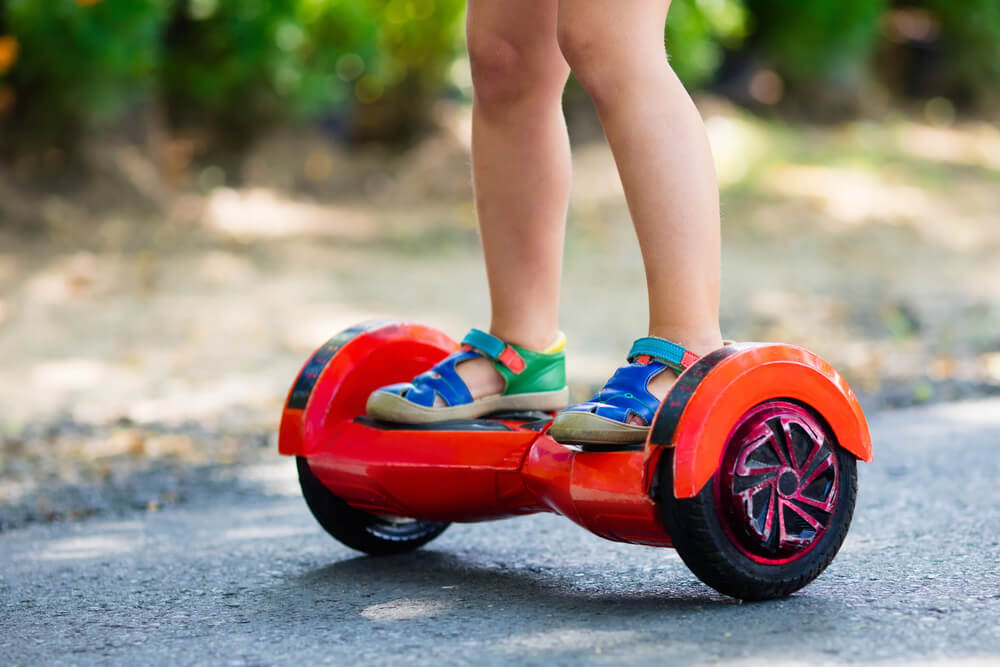
When Back to the Future Part II showed Marty McFly gliding above the street in 1989, Mattel produced a pink toy hoverboard that bore a close resemblance to the film’s prop. The toy rolled on wheels and did not hover, which disappointed anyone who had believed the movie’s mythology. Intact boards with original packaging attract collectors, and sun-faded or broken examples sell for much less.
Corgi’s Yellow Submarine
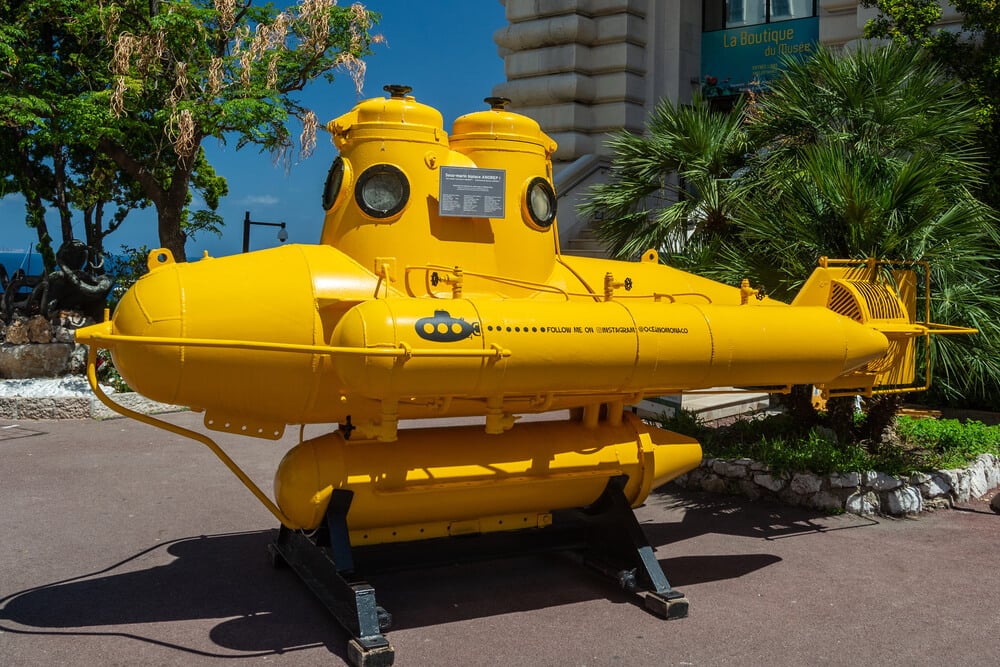
Corgi released a die-cast Yellow Submarine in 1968 to coincide with the Beatles animated film. The model featured opening hatches and figures of the band, and the Victoria and Albert Museum in London keeps one in its collection. Corgi reissued the item decades later as a nostalgia piece. Original 1960s boxed examples carry the highest value, particularly if the paint is chip-free and all the figures are present.
Corgi’s Chitty Chitty Bang Bang Car
Corgi also tied in with Chitty Chitty Bang Bang in 1968, producing a die-cast version of the film’s flying car with folding wings. Figures of the family rode inside, and the model is catalogued by collectors as Corgi 266. The thin wings and tiny passengers were easy to break or lose. Complete examples in their original boxes are far more desirable than loose cars.
Jelly Belly’s Bertie Bott’s Every Flavor Beans

Bertie Bott’s Every Flavor Beans first appeared in a Harry Potter novel, so the candy began as fiction before Jelly Belly turned it into a real product tied to the 2001 film. The company produced beans in unnerving flavors such as earwax. The idea of a candy designed to taste awful made it unusual among movie tie-ins. Unopened vintage boxes occasionally surface among collectors, and condition and freshness of packaging matter more than the contents.
Kenner’s Millennium Falcon Spaceship
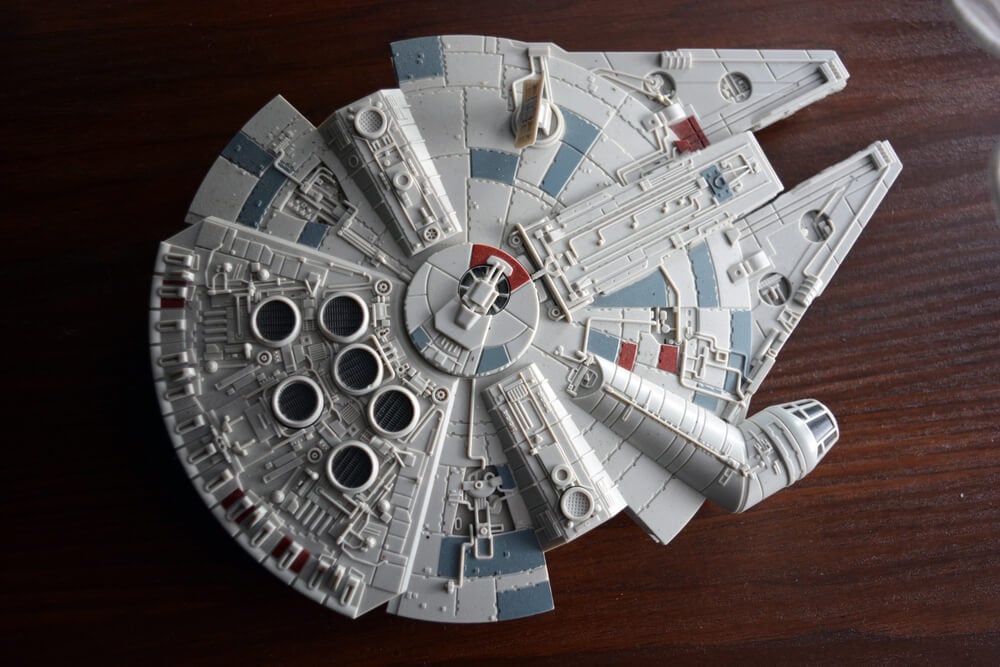
Kenner released its Millennium Falcon toy around 1979, and The Henry Ford has one in its collection. The ship was scaled so the company’s small figures could sit in the cockpit and gunner seats, which made it a favorite among children who owned the figures. The toy was a large plastic vehicle and not a figure itself. Complete examples with working parts and the original box are rare, and condition has a huge effect on price.
Snow White and the Seven Dwarfs Paper Goods
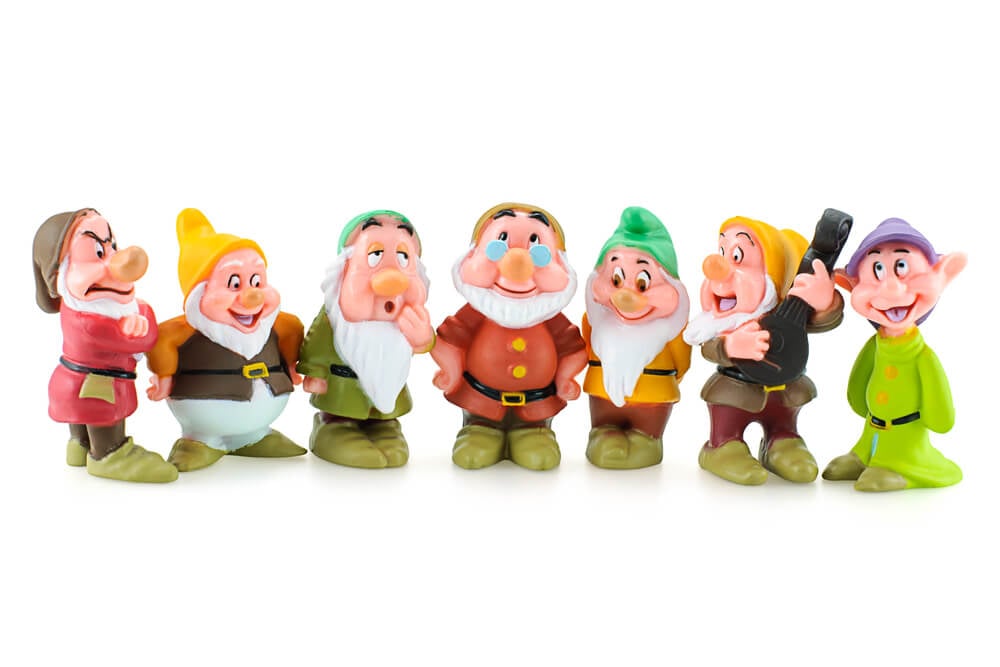
The first wave of merchandise for Snow White and the Seven Dwarfs included paper items such as a 1938 cut-out book and a 1938 valentine, both of which are now held in the collection of The Henry Ford. They came just after the film’s December 1937 premiere, when the studio was selling the characters to families everywhere. Paper ephemera is delicate, and uncut, unmarked examples in good condition are the most sought after.
Bradley’s Star Wars Watches
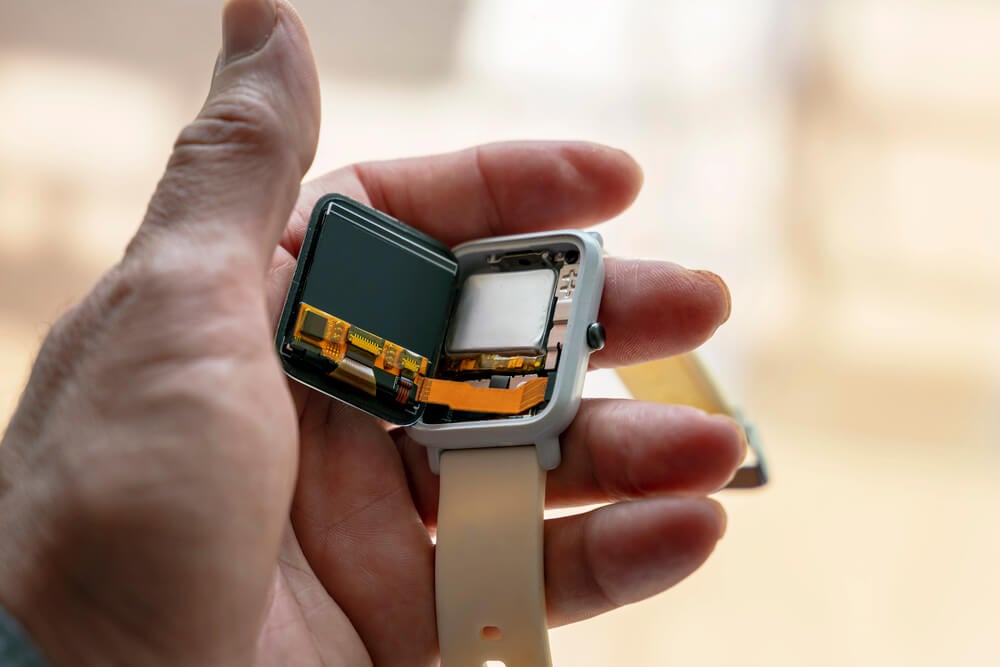
Bradley Time, the company known for Mickey Mouse character watches, produced Star Wars watches for 20th Century Fox with R2-D2 and C-3PO on the dial. The first examples appeared in the late 1970s, and later versions added quartz LCD displays around 1980. Original boxes and working movements are essential for collectors, and scratched crystals or corroded cases lower the price.
Kenner’s Alien Board Game

Alien was rated R in 1979, yet Kenner produced a board game and a large figure for the film, aiming them at a young audience. The decision has been described as a misguided move in retrospective articles on the toy line. The game remains one of the oddest examples of marketing a horror film to children. Complete boxed copies are collectible, and any wear to the box or missing pieces reduces value.
Star Wars Bedding From 1977
Shortly after the film became a hit in 1977, licensed bedding appeared, including twin sheet sets and pillowcases, some sold under the Bibb name. Children could literally sleep inside the movie’s imagery, though those sheets were designed for hard use rather than preservation. Fading, staining, and wear are common, so mint examples with original packaging bring the biggest premiums.
Kenner’s Raiders of the Lost Ark Board Game

Kenner issued a Raiders of the Lost Ark board game in 1981, and Parker Brothers followed with a separate Indiana Jones game in 1982. Two companies producing different games within about a year shows how quickly the film’s success spread through the toy industry. Complete copies with all pieces are the most desirable, and box wear is the main factor in pricing.
Topps Superman: The Movie Cards

Topps issued a trading card set for Superman: The Movie in 1978, using still photos of Christopher Reeve and his co-stars. The set arrived at a time when Topps was already enjoying huge success with its Star Wars cards. Gum-stained or off-center cards are common, so high-grade examples and sealed wax packs earn the highest prices.
What the Aisle Remembers

Each item here proves that a film’s reach extends far beyond the theater. Children slept under it, ate lunch with it, drank from it, and played games built around it. Some of these products were rushed, some were strange, and a few reversed the usual order by driving the movie instead of following it.
Collectors prize these relics because they are physical proof of how a story felt at the moment it took over a culture. A lunch box with a chipped corner or a glass with faded art tells that story better than a mint package ever could. In the end, the most lasting tie-ins were the ones that got used.
More from Go2Tutors!

- 27 Silver Dollars and Half Dollars Worth Keeping
- 28 Restaurant Menu Items Nobody Orders Anymore
- 17 Places Built in Seemingly Impossible Spots
- 27 Vintage Rings Worth More Than They Look
- 25 Restricted Sites Tourists Can’t Enter
Like Go2Tutors’s content? Follow us on MSN.