Strange Connection Between Music and Mathematics
Most people think of music as the language of emotion and mathematics as the language of logic. They seem like opposites — one all feeling, the other all formulas.
But peel back the surface and something curious appears. These two disciplines share a foundation so deep that ancient philosophers built entire worldviews around it.
The connection runs through everything from the strings on a guitar to the algorithms that power your streaming service. Here’s a closer look at how math and music have been dancing together for thousands of years.
When Pythagoras Experimented With Strings
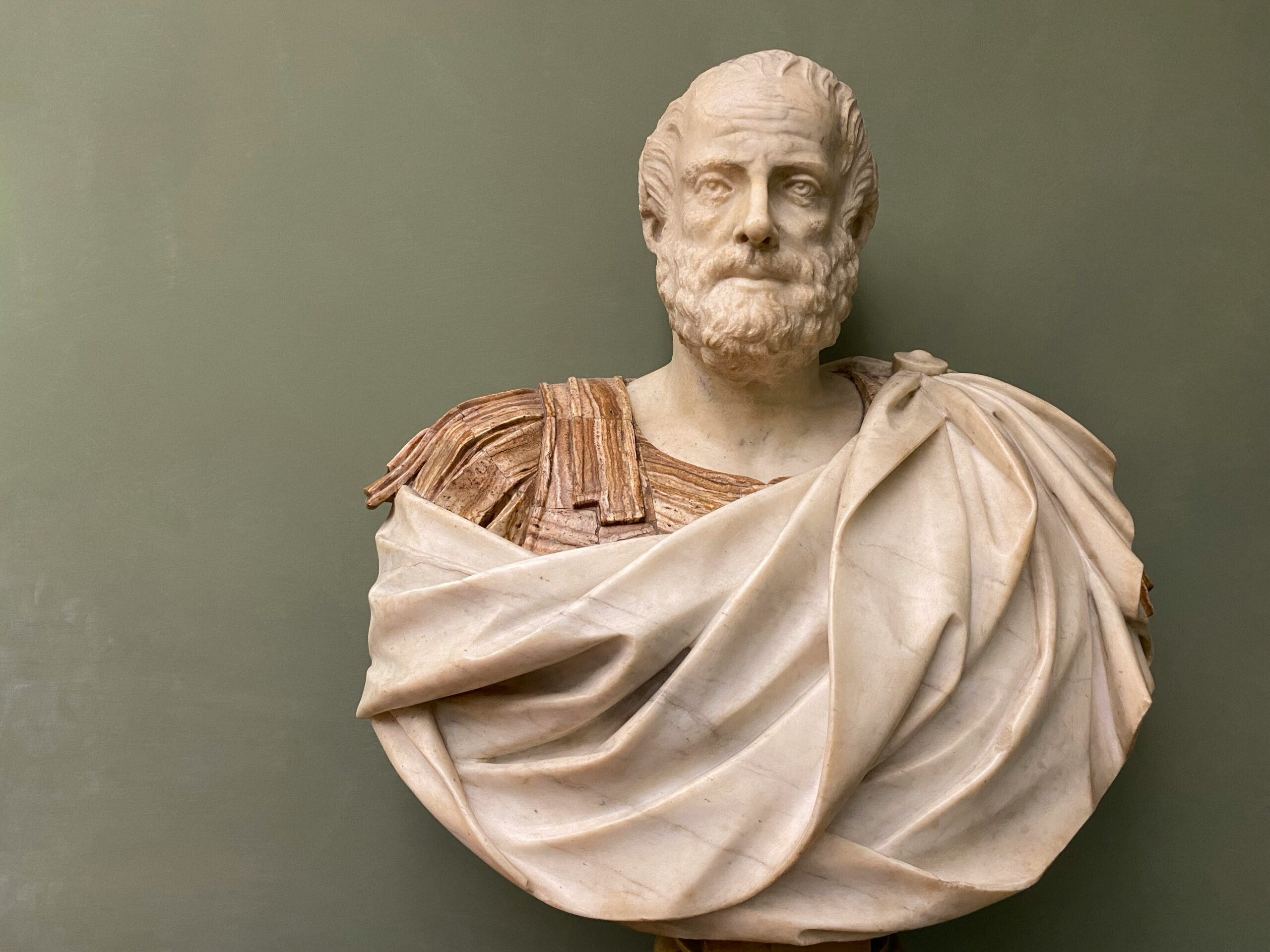
Legend says that around 500 BCE, the Greek philosopher Pythagoras was walking past a blacksmith’s workshop when he noticed harmonious sounds from hammers striking anvils. It’s a great story, but almost certainly fiction.
What Pythagoras and his followers actually did was experiment with a monochord — a simple instrument with a single string stretched over a wooden soundboard. By dividing the string at specific points, they discovered something remarkable.
A string half the original length produced a note one octave higher — a 2:1 ratio. At two-thirds length, they heard a perfect fifth — a 3:2 ratio.
Three-quarters length gave them a perfect fourth — 4:3. These whole number ratios became the foundation of what musicians now call just intonation, a tuning system based on pure mathematical intervals.
For Pythagoras, the discovery represented something cosmic. He believed the universe itself operated according to mathematical principles, and music was proof.
He even theorized that planets and stars moved according to these same ratios, creating an inaudible ‘harmony of the spheres.’ Wild as that sounds, it reveals how profound the music-math connection seemed to ancient thinkers.
The Frequencies Behind Every Note
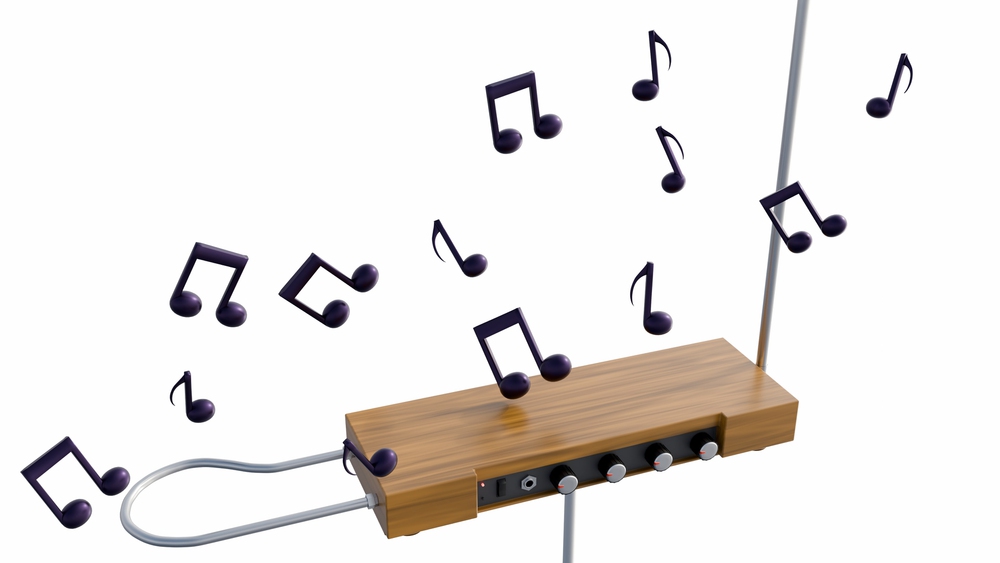
Fast forward to modern physics and the connection gets even clearer. Every musical note is just a sound wave vibrating at a specific frequency, measured in Hertz.
When one tone vibrates at exactly twice the frequency of another — say 220 Hz versus 110 Hz — our brains perceive them as essentially the same note, just higher or lower. That’s an octave, and it’s so fundamental that some research suggests even certain primates and cats can recognize this relationship.
The simpler the mathematical ratio between two frequencies, the more harmonious they sound together. An octave is 2:1.
A perfect fifth is 3:2. A perfect fourth is 4:3. These ratios aren’t cultural preferences — they’re rooted in physics.
Different musical traditions developed different approaches to dividing the octave. The ancient Chinese independently developed the pentatonic system and later the 12-lü system, which approached pitch organization differently from Greek theory, though both recognized similar mathematical principles.
What makes this even stranger is that every single note you hear contains hidden mathematics within it. When you pluck a guitar string, it doesn’t just vibrate at one frequency.
It simultaneously creates a series of higher frequencies called overtones — roughly integer multiples of the fundamental frequency. If the main note is 100 Hz, the overtones ring out near 200 Hz, 300 Hz, 400 Hz, and so on.
Real instruments produce slightly inharmonic overtones due to string stiffness, but the pattern approximates these whole number multiples. Your brain blends these together, which is why a trumpet sounds different from a piano even when they play the same note.
The mathematics of those overtones creates what musicians call timbre.
Rhythm As Organized Fractions
Pitch gets all the attention, but rhythm might be where music’s mathematical nature becomes most obvious. Time signatures are essentially fractions.
A 4/4 time signature means there are four quarter notes per measure. The bottom number tells you what type of note gets one beat, and the top number tells you how many beats fill each measure.
Each note duration relates to others through simple fractions. An eighth note is half of a quarter note.
Four sixteenth notes equal one quarter note. When composers write complex rhythms, they’re creating mathematical equations that add up to complete measures.
That half-measure rest in your favorite song? It’s literally a fraction holding space. Some modern composers use irregular meters like 7/4 or 15/8 to create specific rhythmic feels that can’t be captured with simpler time signatures.
These unusual meters show up in progressive rock, jazz fusion, and contemporary classical music. The band Tool built much of their reputation on complex polyrhythmic patterns and frequently changing meters that create mathematical puzzles for listeners to unravel.
Rhythm creates patterns that the brain recognizes and predicts. Those patterns follow mathematical sequences, creating expectations that composers can either fulfill or subvert for emotional effect.
The tension you feel when a beat drops in an unexpected place? That’s your brain processing mathematical patterns.
The Problem Pythagoras Couldn’t Solve
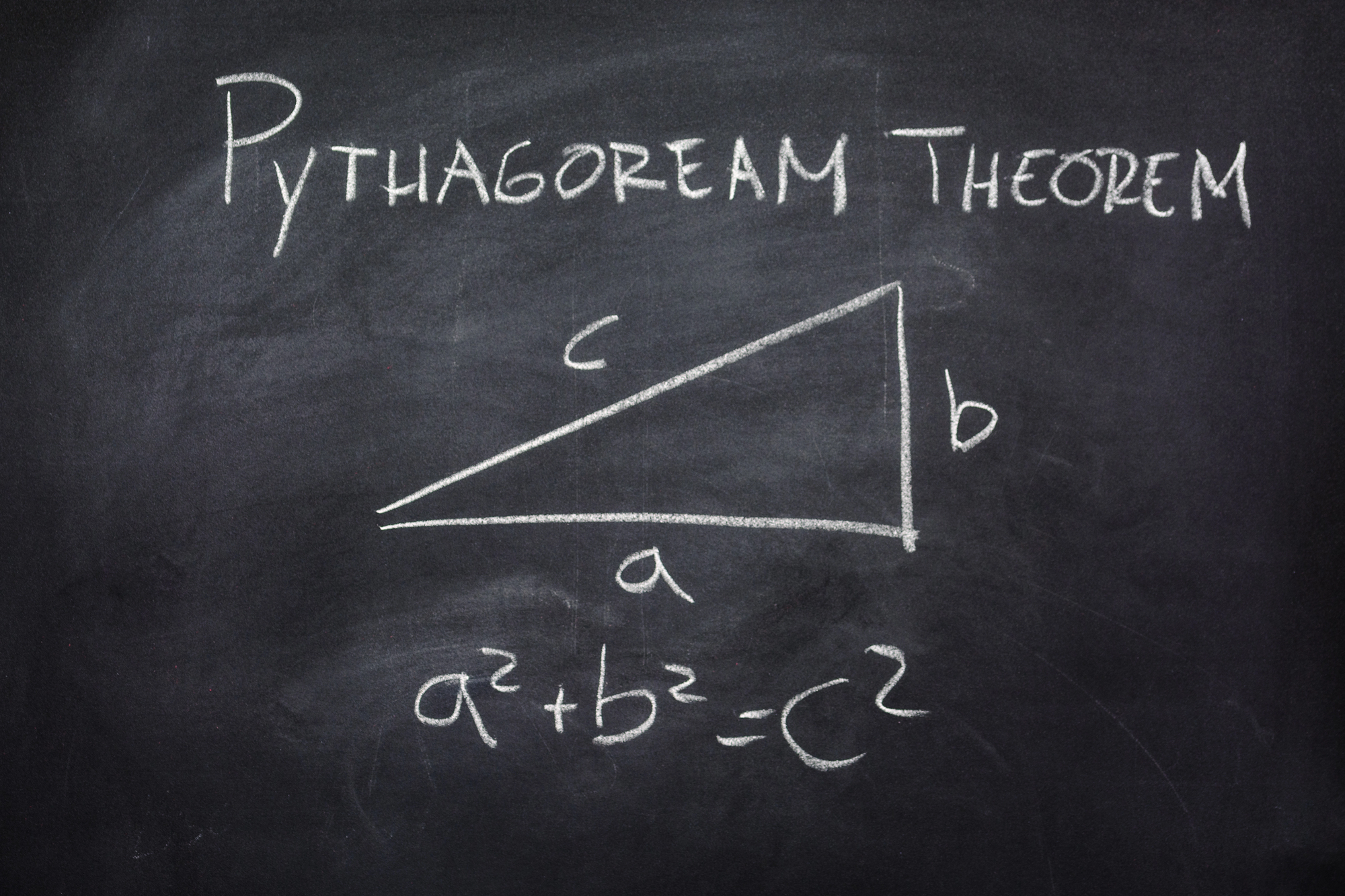
Here’s where things get weird. Pythagoras believed in perfect ratios, but there was a problem lurking in his beautiful system.
If you stack twelve perfect fifths (3:2 ratios) on top of each other, you should theoretically return to your starting note seven octaves higher. Except you don’t — you overshoot by about 23.46 cents, roughly a quarter of a semitone.
This tiny discrepancy is called the Pythagorean comma. When musicians tried to tune keyboards using pure perfect fifths for all twelve notes in an octave, one interval inevitably sounded horribly out of tune — so bad that musicians called it a ‘wolf interval.’
You could build a keyboard that played beautifully in one key but sounded awful in another. That’s a serious problem if you want music that can change keys freely.
The solution emerged gradually between the 16th and 19th centuries as equal temperament tuning spread across Europe. Chinese mathematician and music theorist Zhu Zaiyu published the mathematical derivation in 1584, predating European formulations by decades.
Instead of using pure whole number ratios for intervals, equal temperament divides the octave into twelve perfectly equal steps. The interval between any two adjacent notes became the twelfth root of two — approximately 1.059463, an irrational number.
Pythagoras would have hated it, but it works. Nearly every modern piano is tuned this way.
On the other hand, some musicians never fully accepted the compromise. Contemporary composers still experiment with alternative tuning systems based on pure ratios, exploring what they call microtonal music.
Artists like Harry Partch and La Monte Young built entire careers around rediscovering these ancient mathematical relationships in new contexts.
Digital Audio and the Fourier Transform

When music went digital, mathematics became unavoidable. Every digital audio file is a discretized signal — sound waves chopped into thousands of samples per second.
Standard CD-quality audio samples at 44.1 kHz, capturing 44,100 measurements of sound pressure every second. To analyze these signals, engineers rely on something called the Discrete Fourier Transform, a mathematical tool that breaks complex sounds into their individual frequency components.
The concept traces back to French mathematician Jean-Baptiste Fourier in 1822, but it found new life in the digital age. The Fourier Transform essentially deconstructs music from the time domain into the frequency domain, revealing which specific pitches and overtones are present at each moment.
This reveals the mathematical fingerprint of every instrument and voice. That’s how apps like Shazam can identify songs, how Auto-Tune corrects pitch, and how audio compression formats like MP3 work.
The Fast Fourier Transform algorithm, formalized by Cooley and Tukey in 1965, fundamentally changed digital signal processing by making these calculations thousands of times faster. What would have taken hours now happens in fractions of a second.
Everything from music streaming to speech recognition depends on it. Musicians and theorists now use Fourier analysis not just for playback and processing, but for composition itself.
Synthesizers, digital effects, and computer-generated music all rely on manipulating the mathematical properties of sound waves. When an electronic music producer designs a bass drop, they’re sculpting frequencies according to mathematical principles.
How Your Brain Processes Both
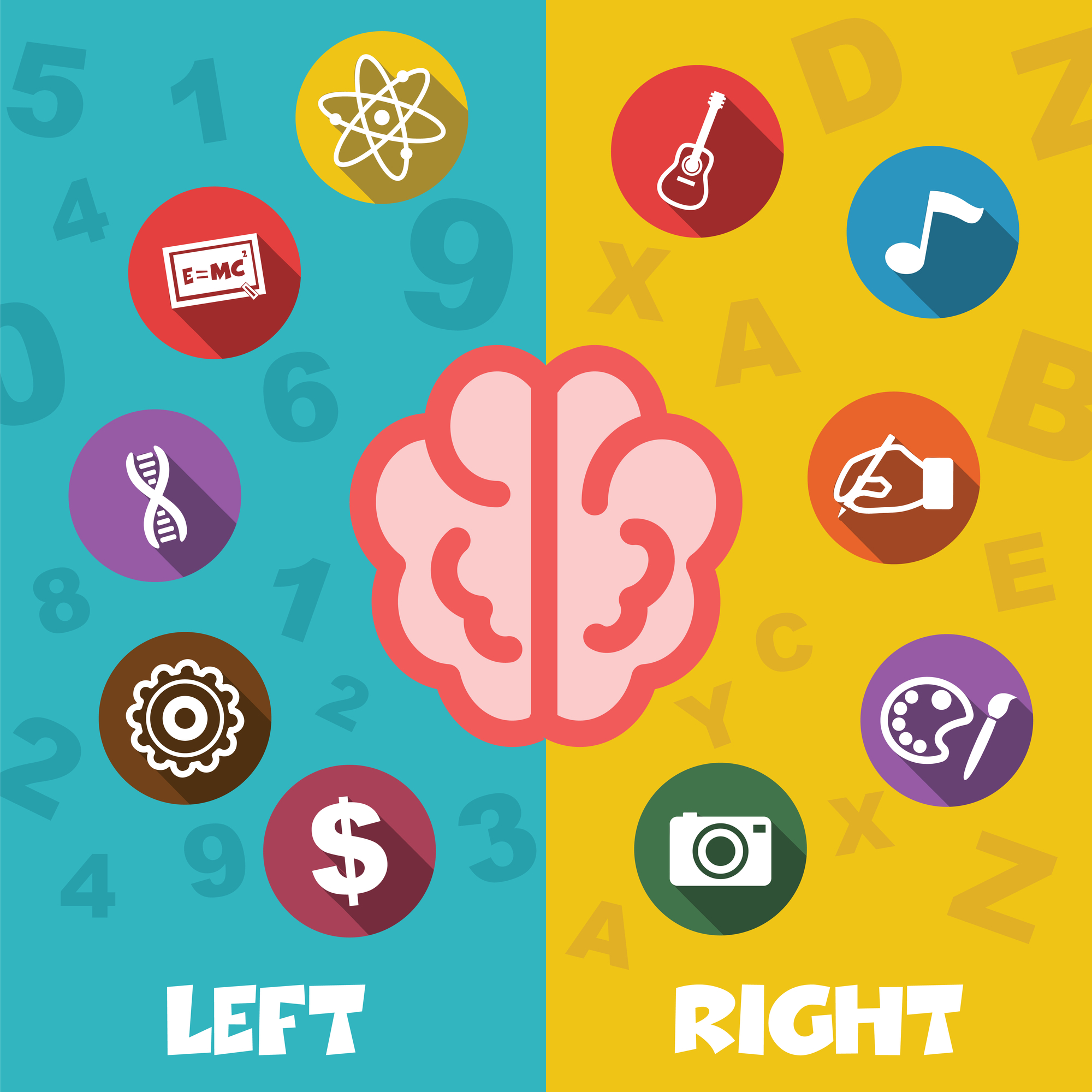
The connection between music and math isn’t just in the external world — it’s built into your brain’s wiring. Neuroscience research using magnetoencephalography has shown that when trained musicians perform mathematical calculations and musical tasks involving working memory, overlapping brain regions activate.
Both disciplines engage areas in the frontal, temporal, and parietal cortex involved in pattern recognition and sequential processing. Brain imaging studies reveal that processing musical syntax and linguistic syntax activates nearly identical brain areas.
When you understand a chord progression or follow a musical phrase, you’re using some of the same neural circuitry that processes language and mathematical logic. Research at University College London by Zeki and colleagues in 2014 found that mathematicians viewing beautiful equations activate the same brain region — the medial orbitofrontal cortex — that others activate when viewing great art or listening to music.
The experience of mathematical beauty and musical beauty may actually be neurologically similar. Both involve finding elegant patterns, symmetry, and what the Greeks would have called harmony.
That said, the relationship between musical training and mathematical ability remains hotly debated. Large-scale meta-analyses show small to moderate correlations between music achievement and math achievement, even after controlling for factors like income and education level.
The effect sizes are real but modest, and correlation doesn’t prove causation. The connection exists, but we’re still figuring out exactly how deep it goes.
Why This Still Matters
The marriage between music and mathematics isn’t just an interesting historical footnote. Modern acoustic engineering, instrument design, audio processing software, and music production all depend on deep mathematical understanding of sound.
The principles that Pythagoras discovered 2,500 years ago now shape billion-dollar industries. More broadly, the connection challenges our tendency to split the world into ‘creative’ and ‘analytical’ types.
Music reveals that creativity operates within structure, that emotion can be expressed through mathematical relationships, and that beauty often emerges from pattern and proportion. The artist and the mathematician aren’t working in different worlds — they’re both searching for elegant solutions to complex problems.
From Pythagorean ratios to Fourier transforms, mathematics provides the framework for understanding music’s intricate beauty. Yet music also reminds us that math isn’t just about calculation — it’s about finding order, creating meaning, and sometimes revealing truths that numbers alone can’t express.
When you hear a perfect harmony or feel a rhythm sync with your heartbeat, you’re experiencing mathematics as something alive. That strange connection isn’t just between two academic subjects.
It’s between the structure of the universe and the structure of human experience. And that might be the strangest thing of all.
More from Go2Tutors!

- The Romanov Crown Jewels and Their Tragic Fate
- 17 Halloween Costumes Once Considered Taboo
- Famous Hoaxes That Fooled the World for Years
- 15 Child Stars with Tragic Adult Lives
- 16 Famous Jewelry Pieces in History
Like Go2Tutors’s content? Follow us on MSN.