Most Expensive Paintings Sold at Auction
Art prices make headlines when they break records, but the numbers alone don’t tell you why someone pays that much. Behind each sale sits a collision of factors: the artist’s reputation, the painting’s history, the buyers competing in the room, and timing that may never align the same way again.
Salvator Mundi by Leonardo da Vinci
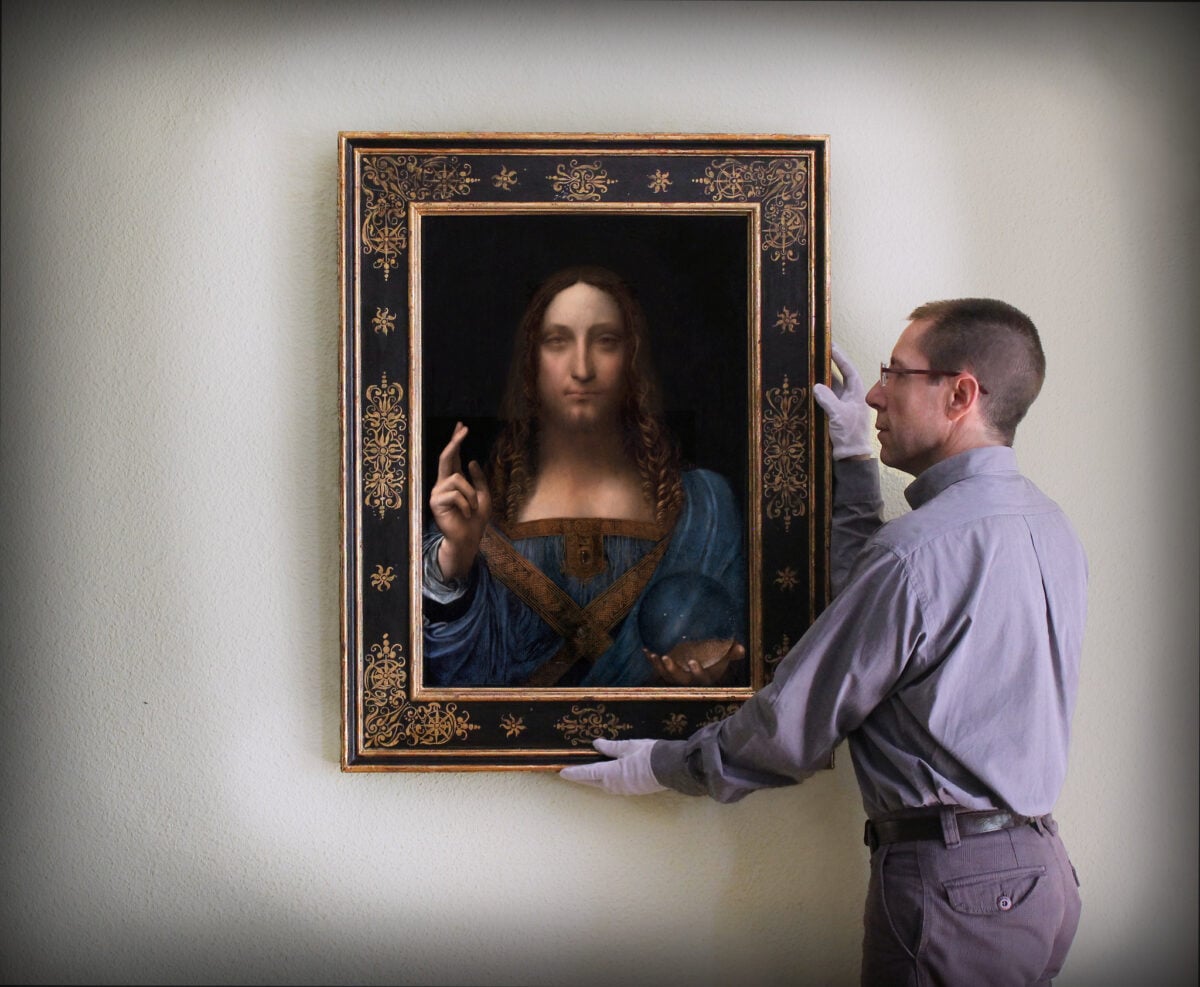
In November 2017, this painting sold for $450.3 million at Christie’s in New York. That’s the highest price ever paid for any artwork at auction, and it’s not even close.
The second-highest sale sits nearly $200 million below. Leonardo da Vinci painted fewer than 20 works that survive today.
This one showed Christ holding a crystal orb, rendered with the master’s characteristic attention to light and shadow. Some scholars argue about whether Leonardo actually painted all of it, or whether students finished parts after he started it.
The painting disappeared for centuries. It showed up in England in 1958, severely damaged and misattributed to a Leonardo follower.
Someone bought it for £45. After years of restoration and authentication debates, it emerged as potentially the last da Vinci in private hands.
That rarity drove the price into another stratosphere entirely. The buyer remained anonymous, though reports later suggested Saudi Crown Prince Mohammed bin Salman acquired it through an intermediary.
The painting hasn’t been seen publicly since the sale. Its current location remains unknown, adding another layer of mystery to an already controversial work.
Les Femmes d’Alger by Pablo Picasso
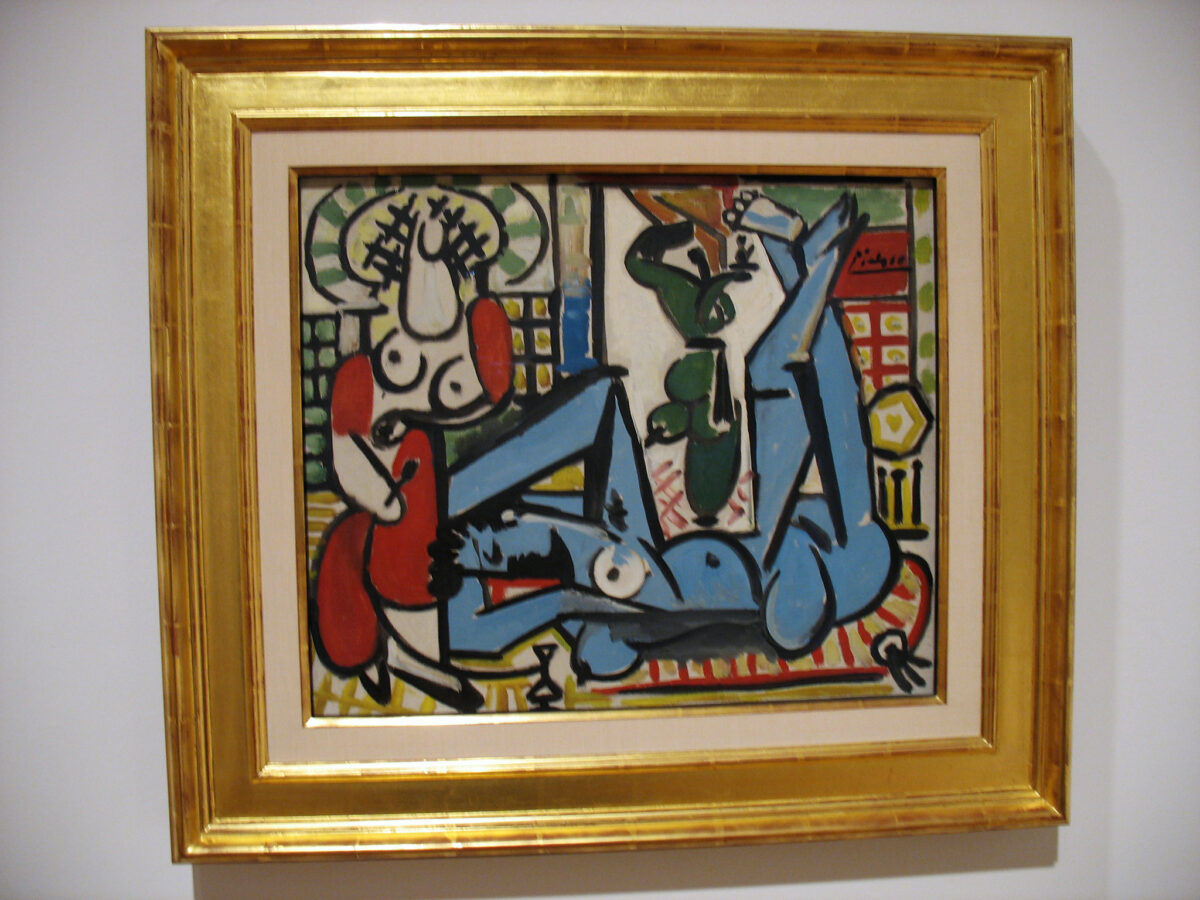
Christie’s sold this vibrant, cubist painting in May 2015 for $179.4 million. Picasso created the work in 1955 as part of a 15-painting series inspired by Eugène Delacroix’s 19th-century painting of the same name.
The colors explode across the canvas. Reds, yellows, blues, and greens fragment the female figures into geometric shapes that somehow still convey sensuality and movement. Picasso painted it during his relationship with Jacqueline Roque, who would become his second wife.
You can feel the energy of that period in every brushstroke. The painting passed through several prominent collections before landing at auction. Its exhibition history added to its value.
Major museums had displayed it. Art history books reproduced it. When you bought this Picasso, you bought a piece that already occupied an established place in the modernist canon.
Former Qatari Prime Minister Hamad bin Jassim bin Jaber Al Thani reportedly bought it. The sale represented the peak of a period when Middle Eastern buyers dominated the highest end of the art market, reshaping where the world’s most valuable cultural objects physically reside.
Nu Couché by Amedeo Modigliani
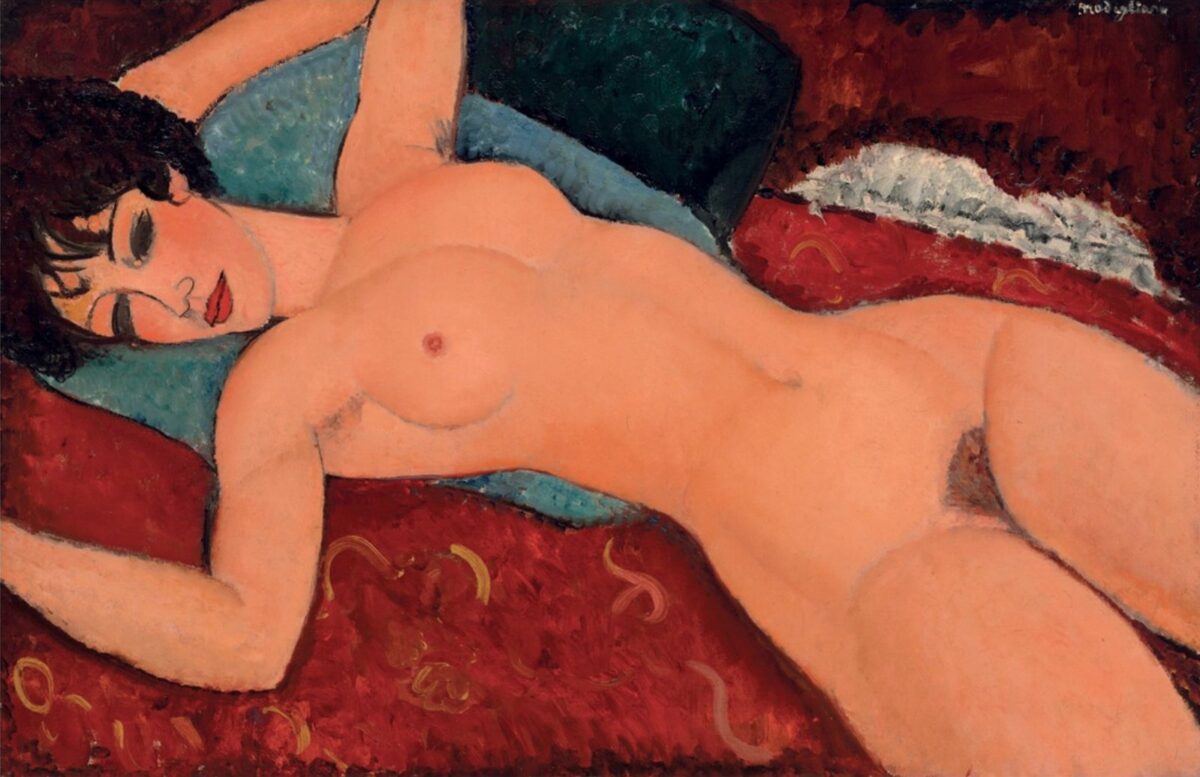
Christie’s November 2015 auction saw this painting sell for $170.4 million. Modigliani painted it in 1917, during a brief period when he created some of his most sensual and controversial works.
The painting shows an unclothed woman lying on red cushions against a deep blue background. The figure’s elongated form and almond eyes mark it distinctly as Modigliani’s style.
When these were first exhibited in Paris, police shut down the show for indecency. The scandal helped cement their place in art history.
Modigliani lived in poverty and died at 35. He never saw financial success during his lifetime.
The irony of his works now selling for hundreds of millions underscores how unpredictably the art market values creativity. The market judges differently than the artist’s own era.
This particular painting had belonged to a single family collection for 60 years before the auction. That kind of provenance matters.
Collectors want paintings with clean, documented histories and prestigious previous owners. This one checked all those requirements.
Portrait of an Artist (Pool with Two Figures) by David Hockney
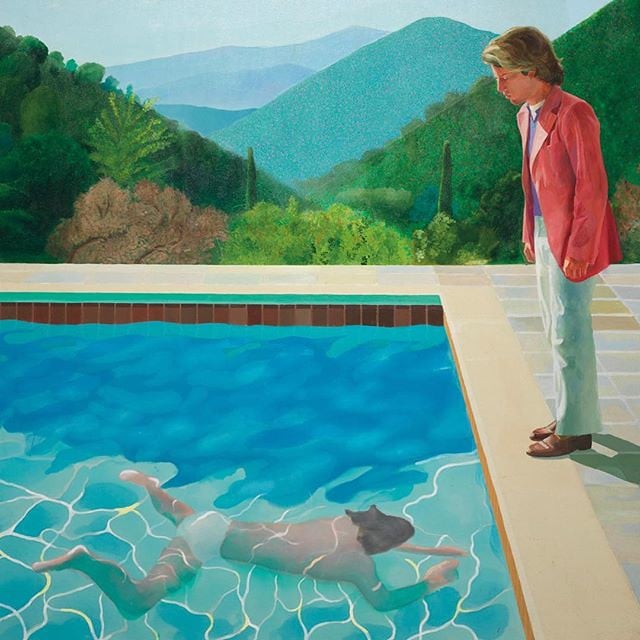
In November 2018, Christie’s sold this painting for $90.3 million, making Hockney the most expensive living artist at auction. The record was held until 2019 when Jeff Koons briefly took the title.
The painting combines two separate compositions that Hockney had worked on. A clothed figure stands at the poolside, looking down at another figure swimming underwater.
The California light gives everything a dreamlike quality, though something about the scene feels tense, incomplete. Hockney painted it in 1972, during his most celebrated period depicting Los Angeles life.
Those swimming pool paintings defined a moment in art history when the West Coast emerged as a legitimate rival to New York’s dominance. The painting’s estimate was $80 million, and it sold for slightly more.
That predictability actually matters in the auction world. When a painting sells close to its estimate, it suggests the market accurately valued it.
When something goes wildly over estimate, it sometimes indicates a bidding war between two specific buyers rather than broad market consensus.
Shot Sage Blue Marilyn by Andy Warhol
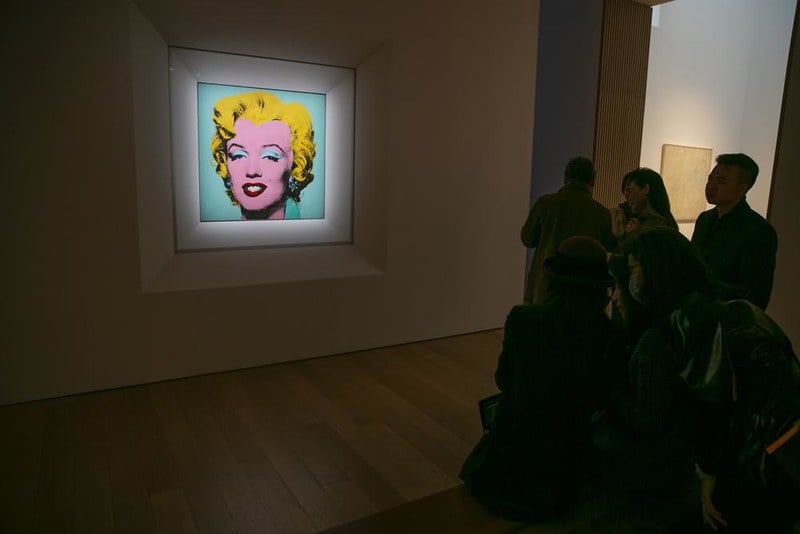
Christie’s May 2022 sale of this Marilyn Monroe portrait brought $195 million, setting a new record for American artwork at auction. Warhol created it in 1964, one of five identical portraits using different background colors.
The image itself is iconic: Marilyn’s face in bright colors against a sage blue background, cropped tight so her expression dominates. Warhol screen-printed it from a publicity photo, then added the garish coloring that made mundane celebrity glamour into something simultaneously shallow and profound.
The painting gets its “Shot” name from an incident where a visitor to Warhol’s studio actually shot a bullet through the stack of portraits. This one survived with minor damage that was repaired.
That story adds to its mythology in a way collectors value. The Thomas and Doris Ammann Foundation owned it and pledged proceeds to support children’s healthcare and education programs.
The philanthropic angle gave the sale a positive narrative, though the buyer still paid market rate regardless of where the money eventually went.
Green Leaves and Bust by Pablo Picasso
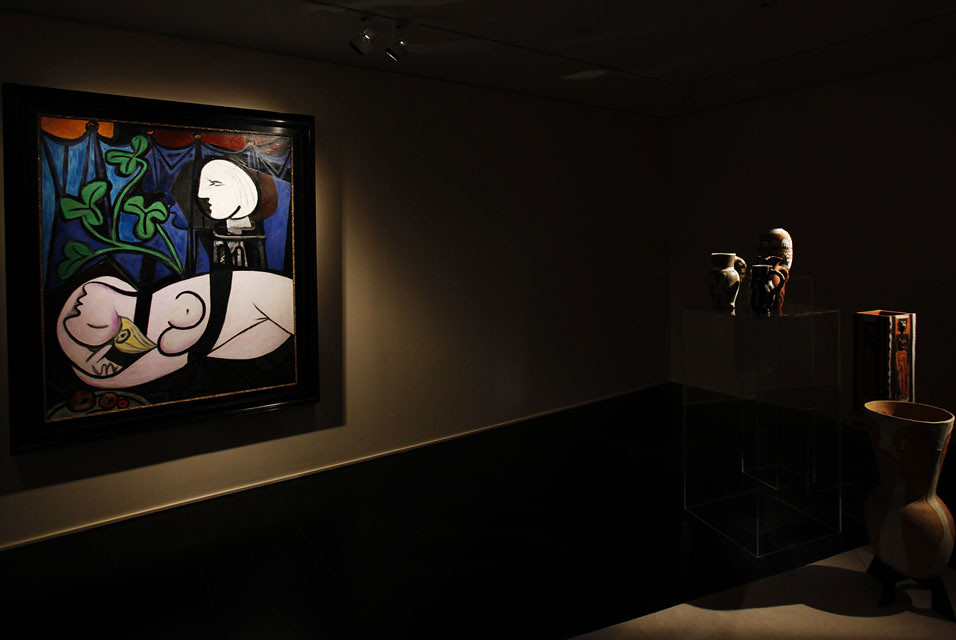
Christie’s sold this 1932 painting in May 2010 for $106.5 million. At the time, it set a new record for any artwork at auction.
The record has since been broken multiple times, but for a moment, this was the peak. Picasso painted his lover Marie-Thérèse Walter in this work, created during a single day in March 1932.
The painting radiates with sensuality and energy, capturing the intensity of their affair. The green leaves and classical bust in the background add symbolic layers that art historians debate.
The composition balances organic curves with angular geometric forms. The colors seem to vibrate against each other.
Everything about it screams Picasso at his creative peak, working fast and fearlessly. The painting came from the estate of philanthropist Frances Lasker Brody and hadn’t been seen publicly in decades.
That kind of freshness to the market matters. Collectors tire of seeing the same works circulate.
When something emerges from a private collection, it generates excitement that translates to higher bids.
No. 6 (Violet, Green and Red) by Mark Rothko
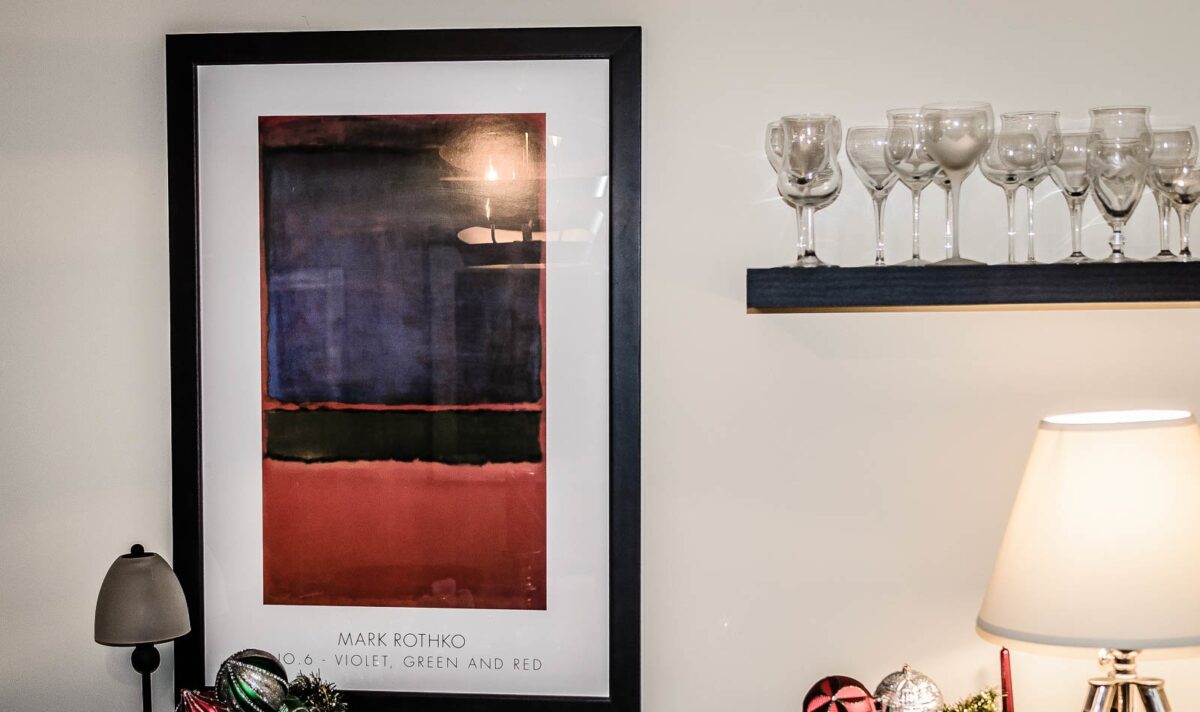
Sotheby’s sold this abstract expressionist work in August 2014 for $186 million in a private sale that later became public knowledge. Rothko painted it in 1951, during the period when he developed his signature style of floating rectangular color fields.
The painting consists of three horizontal bands of color: violet at the top, green in the middle, and red at the bottom. No figures, no recognizable objects, just color and space.
Yet standing in front of a Rothko triggers emotional responses that figurative art often can’t match. Rothko believed his paintings functioned as emotional landscapes.
He wanted viewers to stand close, to feel overwhelmed by the scale and intensity of the colors. Museums that display Rothko often create special rooms just for his work, recognizing how the environment affects the experience.
The painting belonged to the estate of collector David Rockefeller. That name alone guarantees serious attention.
When artworks from legendary collections hit the market, they carry prestige that anonymous ownership never provides. Buyers pay premiums for that association.
Meules by Claude Monet
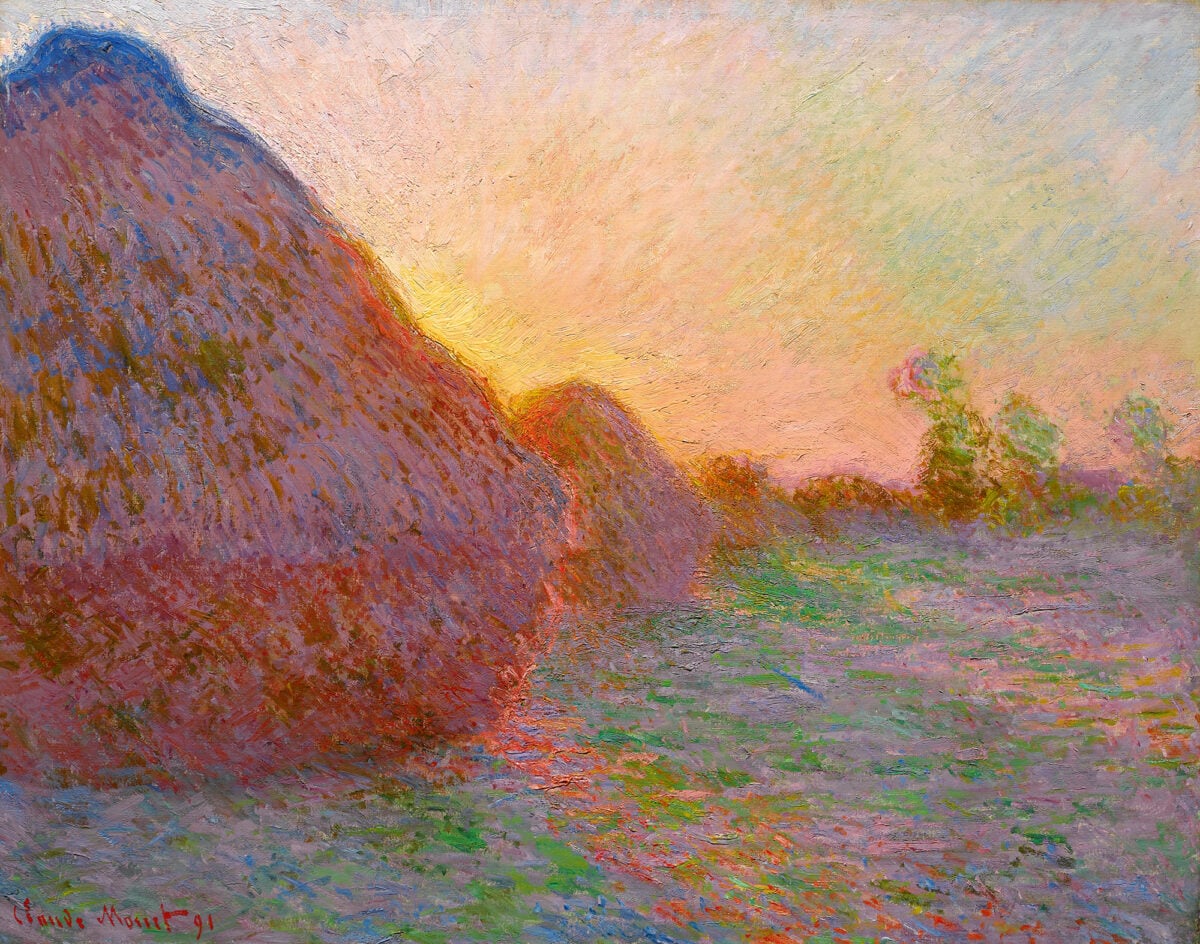
Sotheby’s May 2019 auction saw this haystack painting sell for $110.7 million, setting a record for Impressionist art. Monet painted it in 1890 as part of his groundbreaking haystacks series, where he depicted the same subject under different light and weather conditions.
The series represented a radical idea: that light and atmosphere mattered more than the subject itself. The haystack served merely as an excuse to explore how evening sun transforms ordinary objects into something luminous and temporary.
This particular painting shows the haystack at sunset, glowing orange and pink against a purple shadowed field. The colors border on unnatural, yet they capture something true about how light works at that specific moment of day.
Monet’s influence on modern art runs deep. The haystacks series helped establish the idea that a single subject could generate multiple equally valid representations.
That conceptual breakthrough matters as much as the paintings’ visual beauty. You don’t just buy the image when you buy a haystack painting.
You buy a piece of the foundation of modern art.
Pendant Portraits by Rembrandt van Rijn
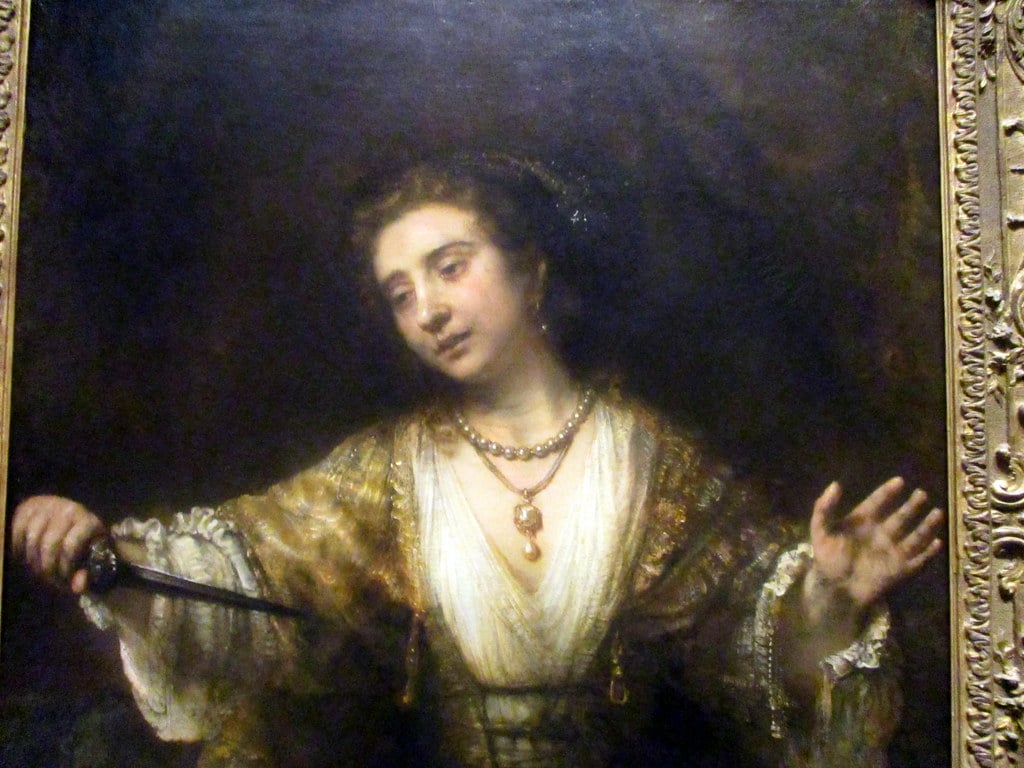
In September 2015, the Louvre and Rothschild family jointly purchased matching portraits by Rembrandt for 160 million euros (about $180 million at the time). While technically a private sale rather than an auction, the price places it among the most expensive painting transactions ever recorded.
Rembrandt painted these portraits in 1634, showing Dutch merchant Marten Soolmans and his wife Oopjen Coppit in elaborate wedding attire. The full-length portraits capture the couple’s wealth and status with Rembrandt’s characteristic attention to light, texture, and psychological depth.
The paintings had remained in the same family’s private collection for generations. When they came up for potential sale, the French government intervened because they’d been promised to the Louvre.
The Dutch government wanted them too. The compromise involved a joint purchase and alternating display between Paris and Amsterdam.
The diplomatic negotiations around these paintings illustrate how great artworks function as more than just aesthetic objects. They become cultural property, national treasures, pieces of heritage that governments fight to control.
The price reflects not just artistic quality but symbolic importance.
The Massacre of the Innocents by Peter Paul Rubens
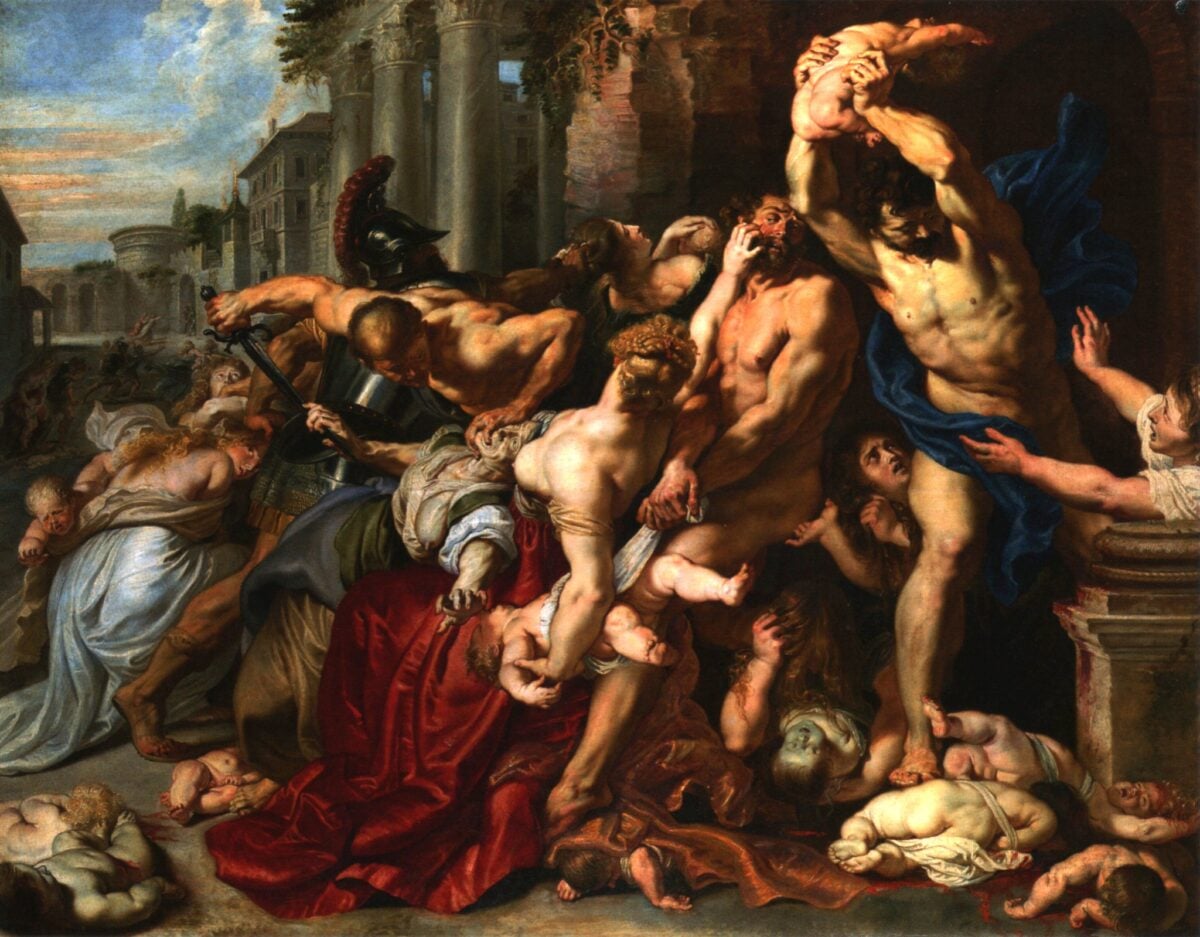
Sotheby’s sold this dramatic baroque painting in July 2002 for $76.7 million. At the time, that represented a record for an Old Master painting.
Adjusted for inflation, it would be over $130 million today. Rubens painted it around 1611-1612, depicting the biblical story of King Herod ordering the murder of infant boys in Bethlehem.
The violence and emotion of the scene explode across the canvas in characteristic Rubens fashion—muscular figures, twisted compositions, anguished expressions. For centuries, experts believed the painting was a copy by an unknown artist.
Scientific analysis in the early 2000s revealed it as a genuine Rubens. That authentication transformed it from a curious historical piece into a masterwork, and the price reflected that revelation.
The buyer was reportedly billionaire Kenneth Thomson. The painting now hangs in the Art Gallery of Ontario.
Its journey from misattributed copy to record-breaking auction lot demonstrates how fragile artistic reputations can be, how much expert opinion drives value.
Number 17A by Jackson Pollock
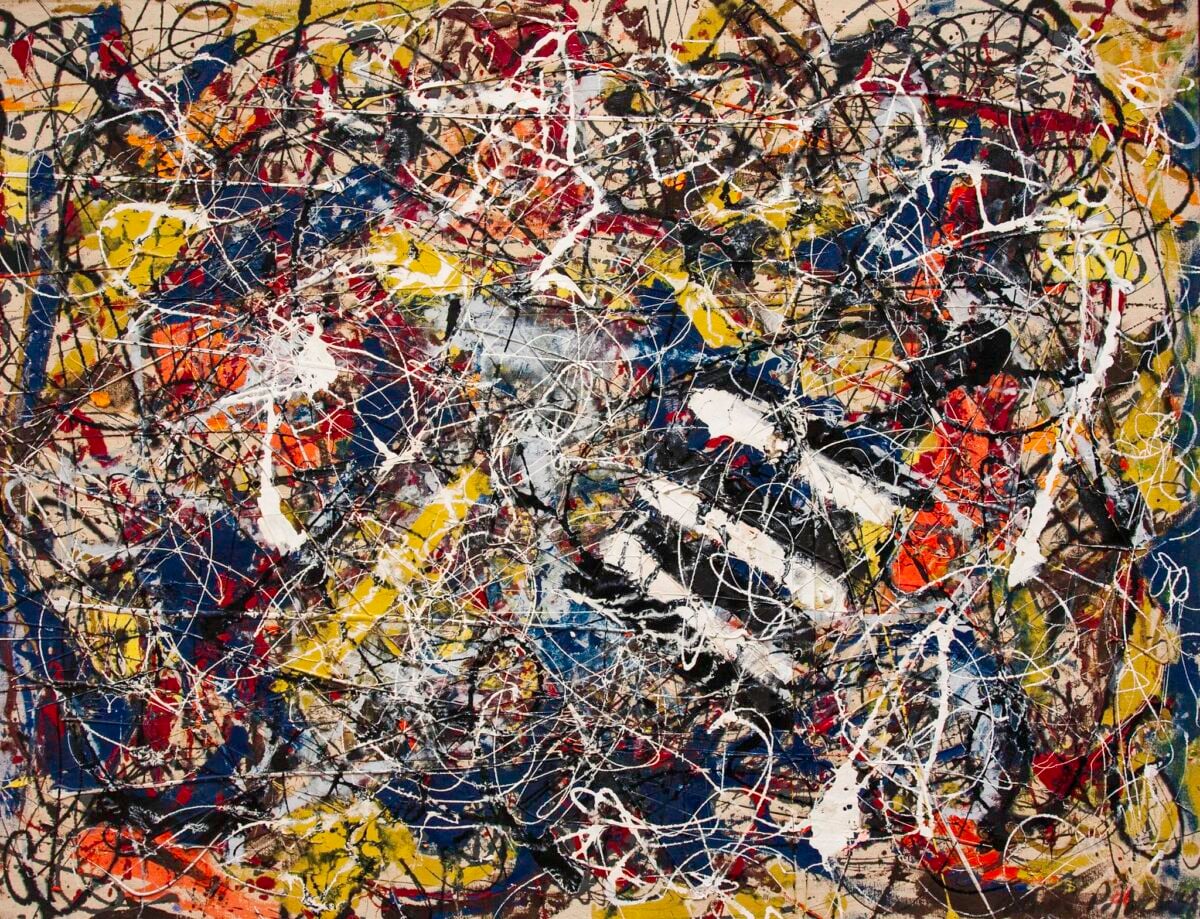
Billionaire Kenneth Griffin purchased this drip painting in a September 2015 private sale for approximately $200 million. Pollock created it in 1948, during the period when he pioneered his revolutionary technique of dripping and pouring paint onto canvases laid on the floor.
The painting measures over eight feet wide, a chaotic dance of black, white, gray, and yellow paint layered and interwoven. No recognizable images emerge, yet the composition feels balanced.
That’s the paradox of Pollock: the paintings look random but reveal careful control when you study them closely. Pollock’s technique scandalized critics who questioned whether random dripping constituted real art.
Decades later, scientific analysis revealed sophisticated patterns in his work that align with principles found in nature. The drips weren’t random at all.
They followed intuitive rhythms that Pollock felt rather than calculated. The painting’s size matters in experiencing it.
You can’t take it all in at once. Your eye has to travel across the surface, following different paint trails, discovering new details with each viewing.
That immersive quality makes Pollock paintings surprisingly effective in person compared to reproductions.
Three Studies of Lucian Freud by Francis Bacon
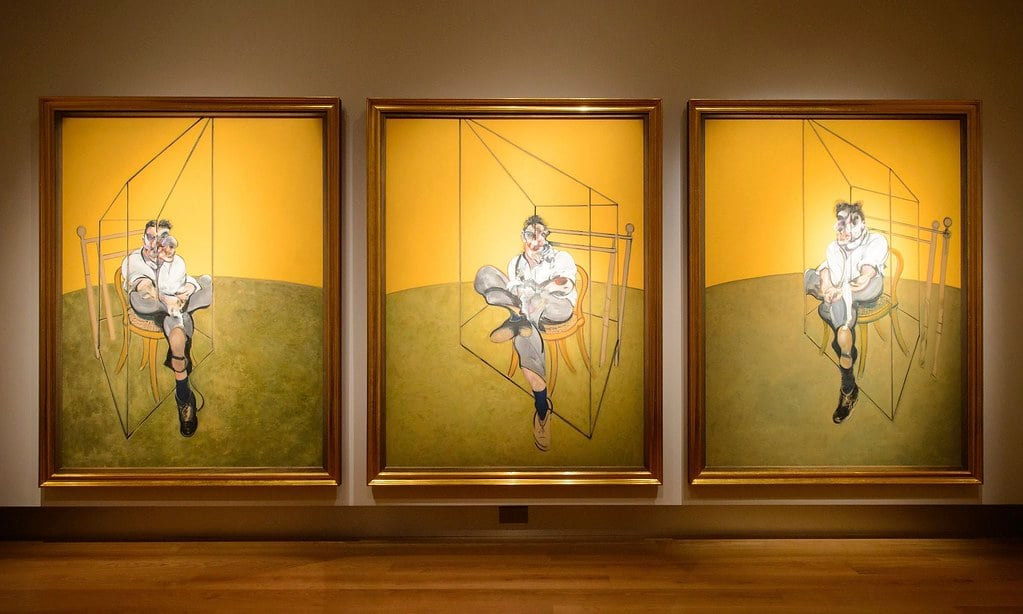
Christie’s November 2013 auction saw this triptych sell for $142.4 million, setting a record for any artwork at auction that held until the Leonardo sale four years later. Bacon painted it in 1969, capturing three perspectives of fellow artist Lucian Freud seated in a chair.
Bacon’s distorted, anguished figures challenge conventional beauty. The portraits show Freud’s face twisted and blurred, as if seen through turbulent water.
Yet they capture something essential about their subject that straightforward representation couldn’t achieve. The three panels work together as a single piece but also function independently.
That triptych format echoes religious altarpieces, giving the secular portraits an unexpected spiritual dimension. Bacon used this format repeatedly throughout his career, and collectors prefer acquiring all three panels together.
The painting spent decades in a private collection before the auction. Its excellent condition added to its value—Bacon’s surfaces are notoriously fragile.
The buyer remained anonymous, as is common at this price level. You buy privacy along with the artwork.
When Paint Becomes Currency

Paintings aren’t priced by how much they took to make, nor by some fixed value – art might not have one anyway. What matters is what someone decides to spend, on a given day, when mood, timing, and desire happen to match.
A name on the auction tag can shift things. Timing plays its part, too.
Other bidders in the room change the air. A well-known past owner adds weight.
Years hidden away count more than you’d think. What counts is if big books feature it.
Exhibits in museums make a difference too. A painting might mean nothing – or everything.
Some collectors chase beauty, others see value tucked inside brushstrokes. Love pulls them in just as much as numbers on a balance sheet.
Newspapers mention their names when auctions close – quiet pride settles in after headlines fade. Should you face one of those paintings someday, the cost begins to align with what stands on canvas.
Five hundred years gone, yet the woman painted by Leonardo holds attention through her quiet expression. Energy lives inside Picasso’s broken shapes, sharp even now.
Rothko built color into something felt deep, beyond speech. Paying millions feels less strange once sight meets creation – those rare sparks of making that ignore eras, reaching forward only if eyes stay open long enough.
More from Go2Tutors!

- 16 Historical Figures Who Were Nothing Like You Think
- 12 Things Sold in the 80s That Are Now Illegal
- 15 VHS Tapes That Could Be Worth Thousands
- 17 Historical “What Ifs” That Would Have Changed Everything
- 18 TV Shows That Vanished Without a Finale
Like Go2Tutors’s content? Follow us on MSN.