Classic Toy Designs That Inspired Generations
Walking into a toy store today means facing walls of electronic gadgets, app-connected devices, and toys that need batteries just to function. But the toys that truly stood the test of time required nothing more than imagination and a pair of hands.
These classic designs shaped childhoods across decades, passing from grandparents to parents to kids, creating memories that lasted far longer than any trending fad. Let’s look at the toys that became legends, the ones that defined playtime for millions of children around the world.
LEGO bricks

Those little plastic bricks with the bumps on top changed everything about construction toys when they arrived in 1958. LEGO figured out how to make pieces that snap together perfectly every time, hold their shape, and pull apart without breaking.
Kids could build a castle one day, tear it down, and create a spaceship the next. The genius lay in the simplicity: eight standard LEGO bricks can combine in over 915 million ways.
Generations grew up with these bricks, and adults still buy them today, proving that good design never gets old.
Barbie doll

Ruth Handler watched her daughter playing with paper dolls and noticed something important: the girl gave them adult roles and careers, not baby roles. This observation led to Barbie’s creation in 1959, the first mass-produced toy doll with an adult body.
Critics initially worried parents wouldn’t buy it, but kids loved having a doll that could be anything from an astronaut to a doctor. Barbie’s design allowed for endless outfit changes and accessories, making each doll a blank canvas for imagination.
More than a billion Barbies have been sold worldwide, making her one of the most successful toy designs ever.
Slinky

An engineer named Richard James accidentally knocked a tension spring off a shelf in 1943 and watched it ‘walk’ down instead of just falling. That happy accident became the Slinky, a toy that does something mesmerizing with nothing but gravity and physics.
Kids spent hours making it walk down stairs, flip between hands, and create those satisfying metallic sounds. The design hasn’t changed in over 80 years because it doesn’t need to.
A Slinky costs less than a fancy coffee but provides entertainment that electronics can’t match.
Etch A Sketch

The red frame with two white knobs became an instant classic when it launched in 1960. André Cassagnes invented this drawing toy using aluminum powder and a stylus controlled by those iconic knobs, creating a screen that could be shaken clean for a fresh start.
Kids learned patience and hand-eye coordination while trying to draw circles, which the toy makes surprisingly difficult. Artists eventually pushed the Etch A Sketch to incredible levels, creating detailed portraits and landscapes.
The satisfying shake-to-erase feature meant no wasted paper and infinite do-overs, teaching kids that mistakes could simply disappear.
Mr. Potato Head

George Lerner’s idea seemed odd at first: sell kids plastic parts to stick into real potatoes and other vegetables. When Mr. Potato Head launched in 1952, he became the first toy advertised on television, changing how companies marketed to children.
The original version required families to supply their own potato, but eventually the toy came with a plastic body after parents complained about rotting vegetables. Kids learned about faces, expressions, and body parts while creating countless silly combinations.
The simple act of pushing pieces into a potato taught fine motor skills disguised as pure fun.
Frisbee

College students in the 1940s discovered that Frisbie Pie Company tins flew remarkably well when tossed. The Wham-O company refined the design, added plastic, and created the Frisbee in 1957.
That flat disc with the curved edges became a staple of parks, beaches, and backyards everywhere. The design works because of aerodynamics: the curved top and flat bottom create lift, while the spinning motion provides stability.
Families could play catch, dogs could chase them, and athletes eventually created ultimate frisbee as a competitive sport.
Play-Doh

The colorful modeling compound started life as a wallpaper cleaner in the 1930s before someone realized kids loved playing with it. Play-Doh launched as a toy in 1956, giving children a safe, non-toxic way to sculpt anything they imagined.
The compound stays soft, doesn’t dry out quickly, and feels satisfying to squish between fingers. Kids developed hand strength and creativity while making snakes, cookies, and whatever else came to mind.
That distinctive smell became so iconic that the company trademarked it, proving scent can be as important as design.
Hot Wheels

Elliot Handler wanted to create toy cars that actually looked fast and cool, not like the chunky, slow-rolling cars on the market. Hot Wheels launched in 1968 with low-friction wheels, flashy paint jobs, and designs based on real custom cars.
Kids could race them down bright orange tracks at impressive speeds, creating competitions and stunts. The cars cost about a dollar each, making them affordable collectibles that kids could actually play with.
Designers created thousands of different models over the years, and adult collectors now pay serious money for rare vintage editions.
Rubik’s Cube

Ernő Rubik designed his color-matching puzzle in 1974 to teach his students about three-dimensional geometry. The cube became a worldwide phenomenon in the 1980s, frustrating and delighting people who tried to solve it.
Each of the 43 quintillion possible combinations can technically be solved in 20 moves or fewer, though most people never figure that out. Kids learned perseverance, spatial reasoning, and pattern recognition while twisting those colorful squares.
Speed-cubing eventually became a competitive sport, with champions solving the puzzle in under five seconds.
Yo-Yo

This simple toy dates back thousands of years, but Duncan popularized it in America during the 1920s with clever marketing and competitions. A yo-yo consists of just two connected discs and a string, yet skilled users can perform hundreds of different tricks.
The toy taught kids about physics concepts like gravity, momentum, and rotational energy without them even realizing it. Duncan created different models for beginners and experts, making the yo-yo accessible to everyone.
Yo-yo crazes swept through schools repeatedly over the decades, with each generation discovering the same simple pleasure.
Lincoln Logs

John Lloyd Wright, son of famous architect Frank Lloyd Wright, invented these interlocking wooden logs in 1916. The notched pieces stack together to create cabins, forts, and buildings without glue or tools.
Kids learned basic engineering principles while building structures that actually stood up. The toy’s design mimicked real log cabin construction, teaching history alongside spatial skills.
Sets came in metal canisters that doubled as storage, and those logs rarely broke, meaning sets passed down through families for generations.
Hula Hoop

Wham-O took an ancient toy concept and created a fitness craze in 1958 with a simple plastic hoop. Kids spun the hoops around their waists, arms, and legs, competing to see who could keep them going longest.
The design required nothing but a circle of plastic tubing, yet it sold 25 million units in four months. Schools eventually banned them because kids got too distracted, which only made them more popular.
The hoop taught rhythm, coordination, and core strength while kids thought they were just playing.
View-Master

This stereoscopic viewer turned vacation slides into a toy experience when it launched in 1939. Kids clicked through colorful reels showing everything from cartoon characters to world landmarks in 3D.
The design used two slightly offset images to create depth perception, the same principle behind human vision. Each reel held seven image pairs, telling simple stories or showcasing different views of popular destinations.
Families bought countless reels over the years, and the familiar click of advancing to the next image became instantly recognizable.
Matchbox Cars
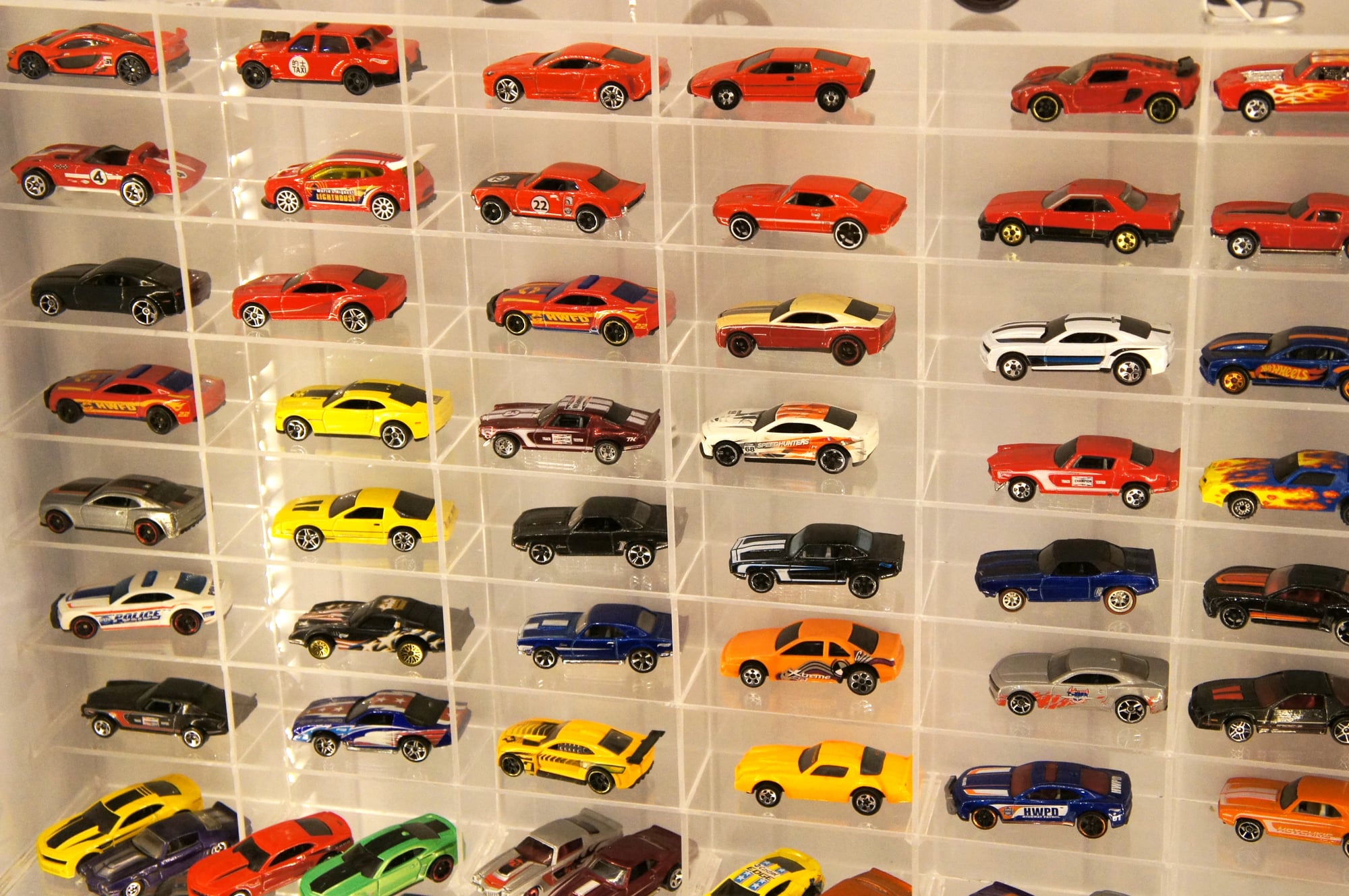
Lesney Products started making these little metal cars back in 1957 – tiny enough to slip into a matchbox, perfect for slipping into a kid’s pocket. Instead of flashy gimmicks, they stood out thanks to real touches like working doors, rollable wheels, plus colors that matched actual vehicles.
While some children gathered only a few, others built up piles – sometimes even hundreds – turning carpets into highways and homes from imagination. Being compact kept costs low; because they were made of strong stuff, bumps didn’t wreck them fast.
Nowadays, certain old versions sell big online, yet plenty still recall zipping them past sofas during lazy afternoons.
Silly Putty

This odd material came out of botched tries to make fake rubber back in WWII. Since engineers had no real job for it, folks just played around – bouncing it, pulling it thin, using it to lift ink from newspapers, or smashing it flat with a hammer.
By 1950, they started selling it inside bright little plastic eggs, which made it a go-to for Easter gifts. Children tested every possible thing you could do with it, always finding something new.
Even astronauts brought some along on missions – to hold gadgets steady where there’s no gravity – and that showed how handy such a silly goo could really be.
Radio Flyer wagon
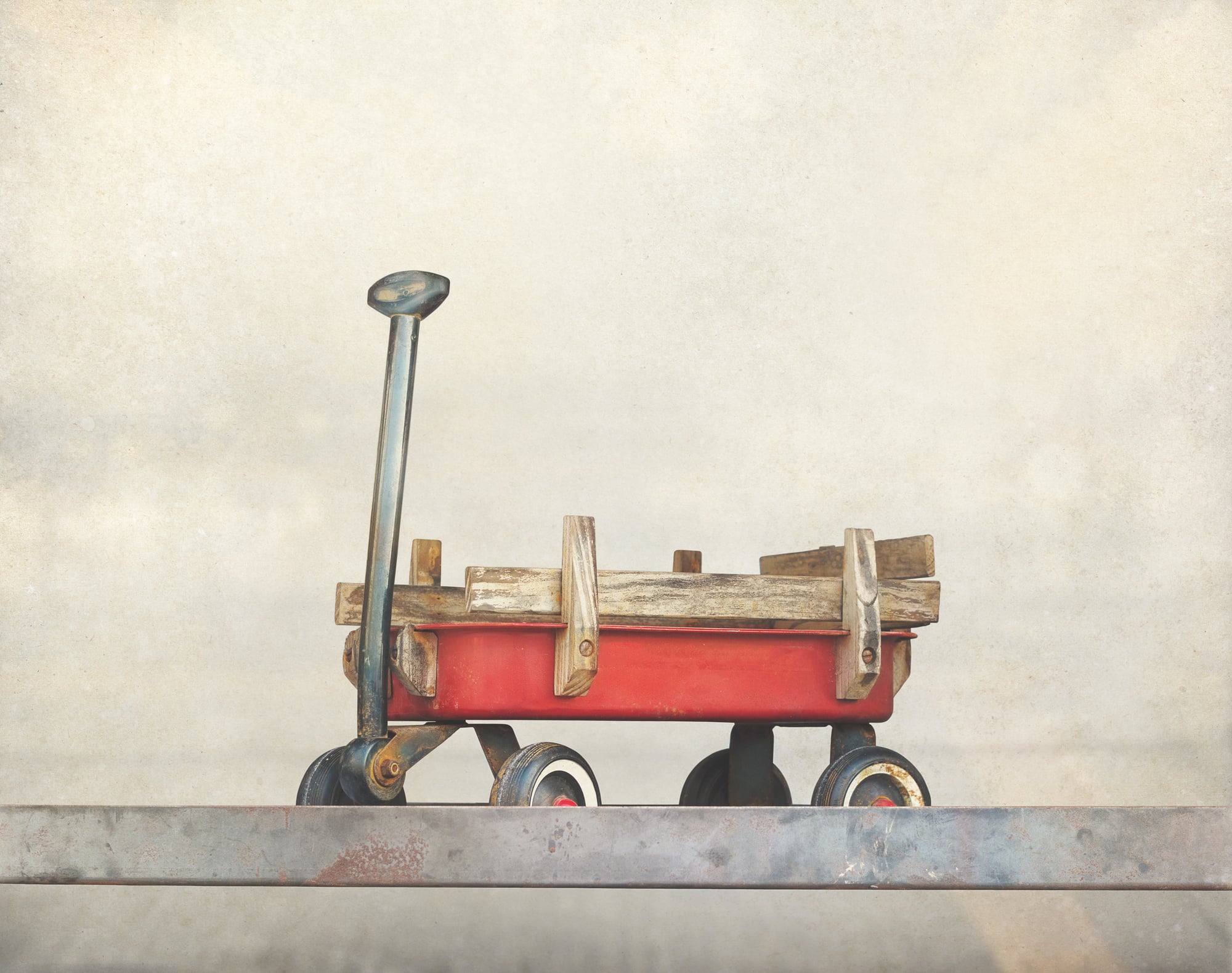
Antonio Pasin began crafting wooden wagons back in 1917; however, it was his 1930 steel Radio Flyer model that truly stuck around. That vivid red cart with bold white letters showed up in tons of homes across the country.
Children put them to work doing just about anything – hauling playthings, pulling siblings along, turning them into pretend parade floats, or even racing down hills. Thanks to strong metal parts, these wagons kept going for years, handling generation after generation without slowing down.
The look stayed mostly untouched since there wasn’t much need to fix what already worked so well – a pair of handles, four wheels, plus space enough for every wild idea a kid could imagine.
Transformers

In 1984, Hasbro shook up action figures by bringing in Japanese toys that turned from cars into robots. Because of this, children got hooked on solving the puzzle behind each transformation.
Not only did it mix construction fun with creative storytelling, but it also kept them engaged longer. While some changes weren’t easy at first, practicing made kids feel accomplished.
Since every figure came with its own cartoon traits, players felt like they knew them personally. Instead of just moving metal around, little hands built dexterity and thinking skills without realizing it.
Still Playing Today

These toys stuck around since they got one thing right about playing – children don’t require blinking lights or fancy tech to enjoy themselves. Instead, what works are things that fuel make-believe, shapes that test skills but don’t cause rage, stuff tough enough to survive wild action.
Today’s creators might pick up useful tips by checking how a plain block of wood, a colored ring made of plastic, or a bouncy wire stayed big hits for half a century or longer. Top-notch playthings help little ones dream up their own stories, and that idea stays fresh forever – even when gadgets keep evolving.
More from Go2Tutors!

- The Romanov Crown Jewels and Their Tragic Fate
- 13 Historical Mysteries That Science Still Can’t Solve
- Famous Hoaxes That Fooled the World for Years
- 15 Child Stars with Tragic Adult Lives
- 16 Famous Jewelry Pieces in History
Like Go2Tutors’s content? Follow us on MSN.



