Dance Traditions That Surprise The World
When you think about dance, your mind probably goes to ballet, hip-hop, or maybe that awkward wedding shuffle everyone pretends not to remember. But scattered across the globe are dance traditions so unexpected, so beautifully strange, that they stop you mid-scroll and make you wonder how humans came up with something so magnificent.
These aren’t the dances you learned in school or saw on television growing up — they’re the ones that emerge from specific places, specific moments in history, carrying stories that refuse to fit into neat categories.
Morris Dancing
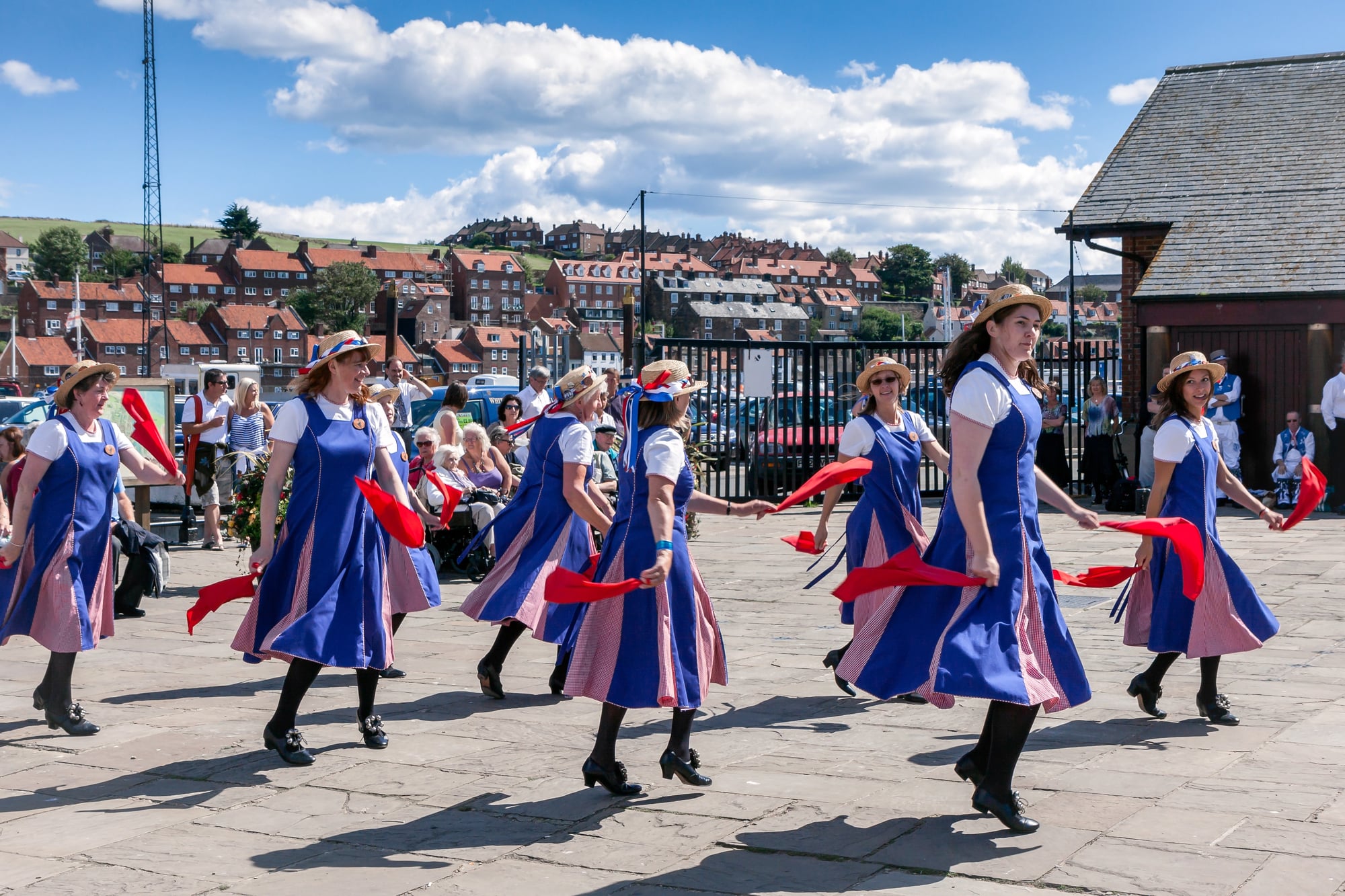
Morris dancing looks like medieval LARPing gone wrong until you watch it for more than thirty seconds. Then something clicks.
English folk tradition at its most unapologetic — bells strapped to shins, handkerchiefs waving, sticks clashing in patterns that somehow make sense once you stop trying to categorize them as anything other than what they are.
The fact that it survived this long says something about stubbornness disguised as cultural preservation. Men (traditionally, though that’s changing) gather in village squares and pub courtyards, performing dances with names like “Constant Billy” and “Shepherd’s Hey,” and the whole thing feels both ridiculous and necessary at the same time.
Sardana
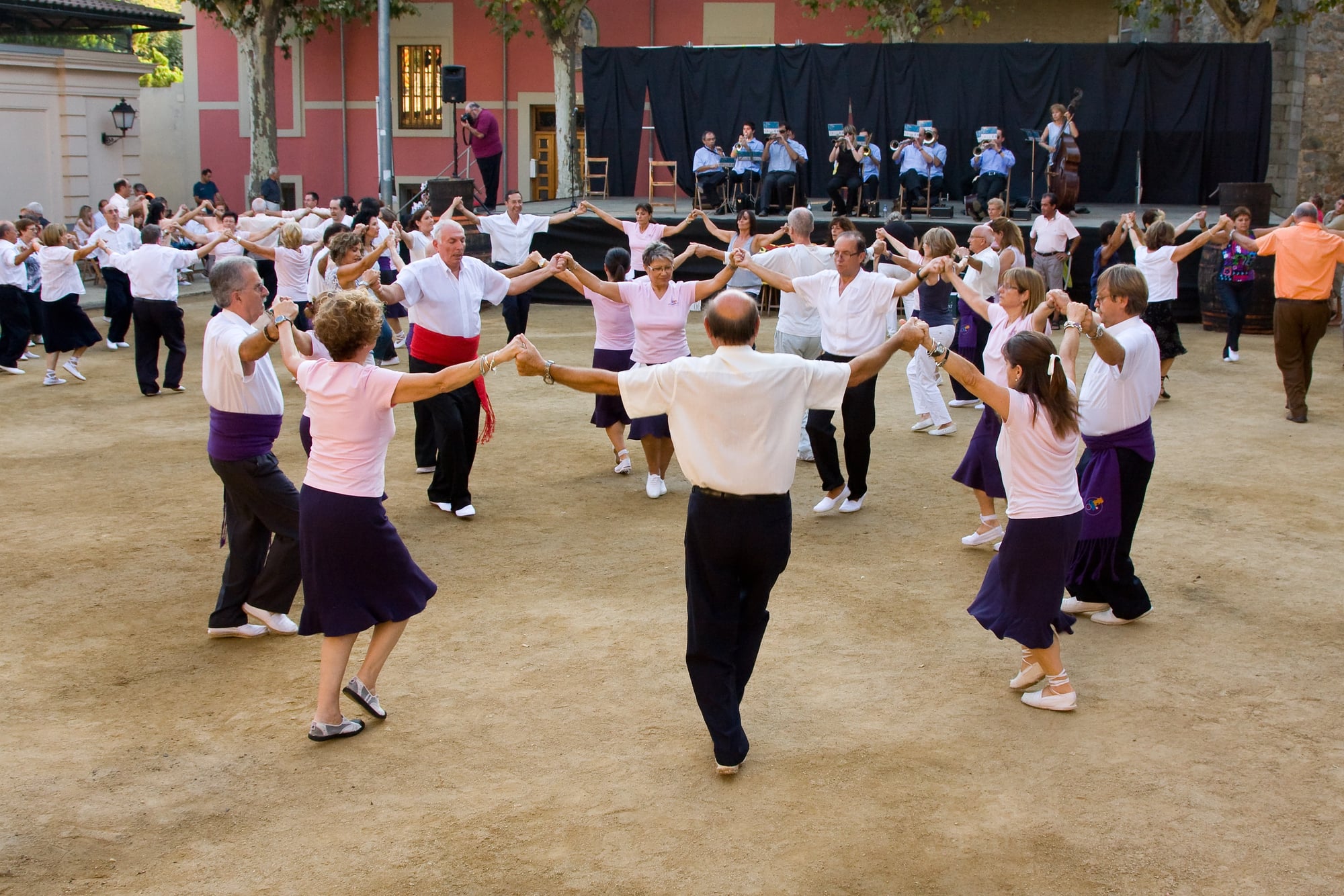
The Sardana turns group dancing into a quiet act of resistance — which makes sense, given its history in Catalonia (Spain, though Catalans might argue with that parenthetical), where dancing your own dance while someone else controls your government becomes a statement whether you intend it or not, and this particular dance has been making that statement for centuries, hands joined in a circle that expands and contracts like breathing, feet following patterns so intricate they require the kind of collective memory that gets passed down through generations rather than learned from YouTube tutorials.
But here’s the thing about collective memory: it’s stubborn. So when Franco banned the Sardana (along with the Catalan language and most other expressions of regional identity), people kept dancing it anyway — in basements, in hidden courtyards, wherever circles could form and feet could remember what hands had been forbidden to write down.
And the music — the cobla ensemble with its strange double-reed instruments that sound like nothing else in European folk music — creates this hypnotic backdrop that pulls you in whether you understand the steps or not.
The whole thing moves like a meditation that happens to require twelve people and a brass band.
Kathakali
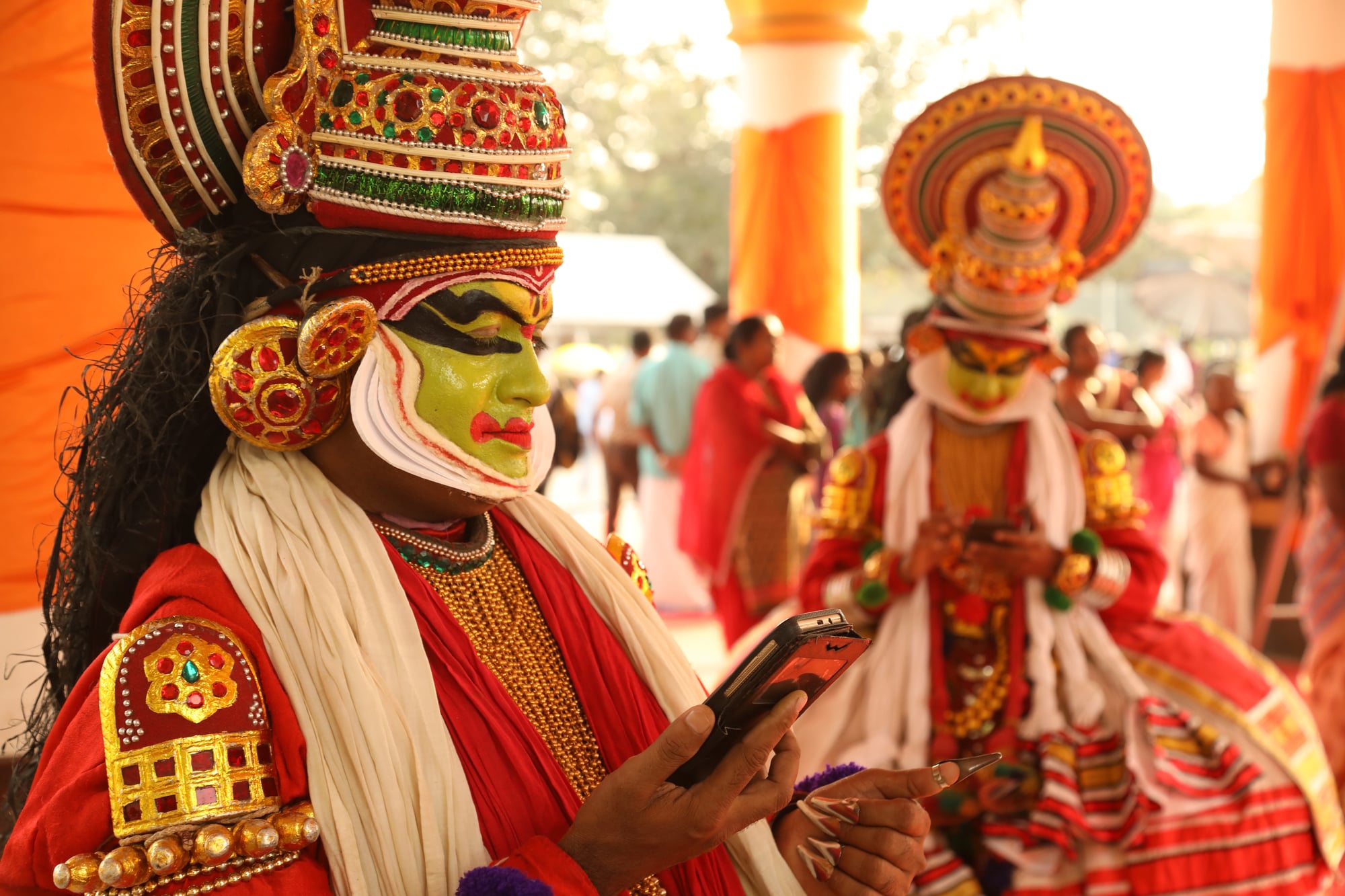
Watching Kathakali feels like stumbling into a fever dream where theater and dance decided to have an argument, and both won. This is Indian classical dance as high art and athletic endurance test rolled into one — performers spend years learning to control individual facial muscles, to make their eyes tell stories their bodies are already narrating through gestures so specific they function as a complete language.
The makeup alone takes hours. Layers of colored rice paste and paper, transforming human faces into living masks that represent gods, demons, heroes, and the complicated figures who exist somewhere between all three categories.
And then there’s the stamina required — these performances can last all night, with dancers maintaining impossible precision while wearing costumes that weigh more than most people’s luggage.
It’s exhausting just to watch, which is exactly the point. Kathakali doesn’t want your casual attention.
Cossack Dancing
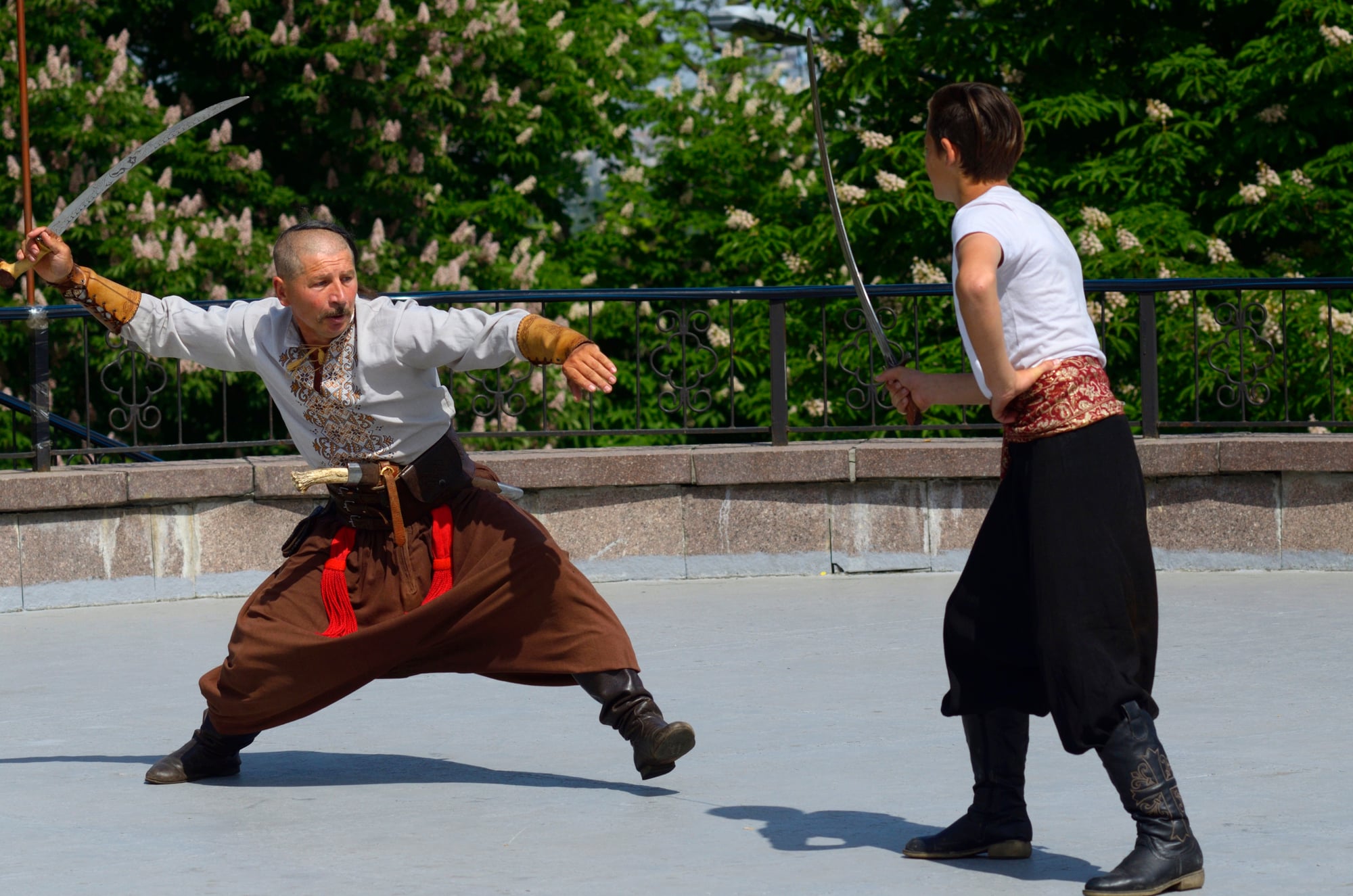
Cossack dancing proves that showing off can become an art form if you commit hard enough to the showing off. Those impossible squats, the spinning kicks, the way dancers drop to the ground and bounce back up like gravity forgot to apply — it’s athletic prowess disguised as folk tradition, or maybe the other way around.
The Hopak, Ukraine’s version, turns competitive spirit into choreography. Dancers try to out-impossible each other, and somehow this becomes beautiful rather than ridiculous.
Probably because the music refuses to let anyone take themselves too seriously, even while they’re defying basic principles of human joint limitations.
And there’s something deeply satisfying about watching people do things that look impossible until they do them, at which point they look inevitable.
Flamenco
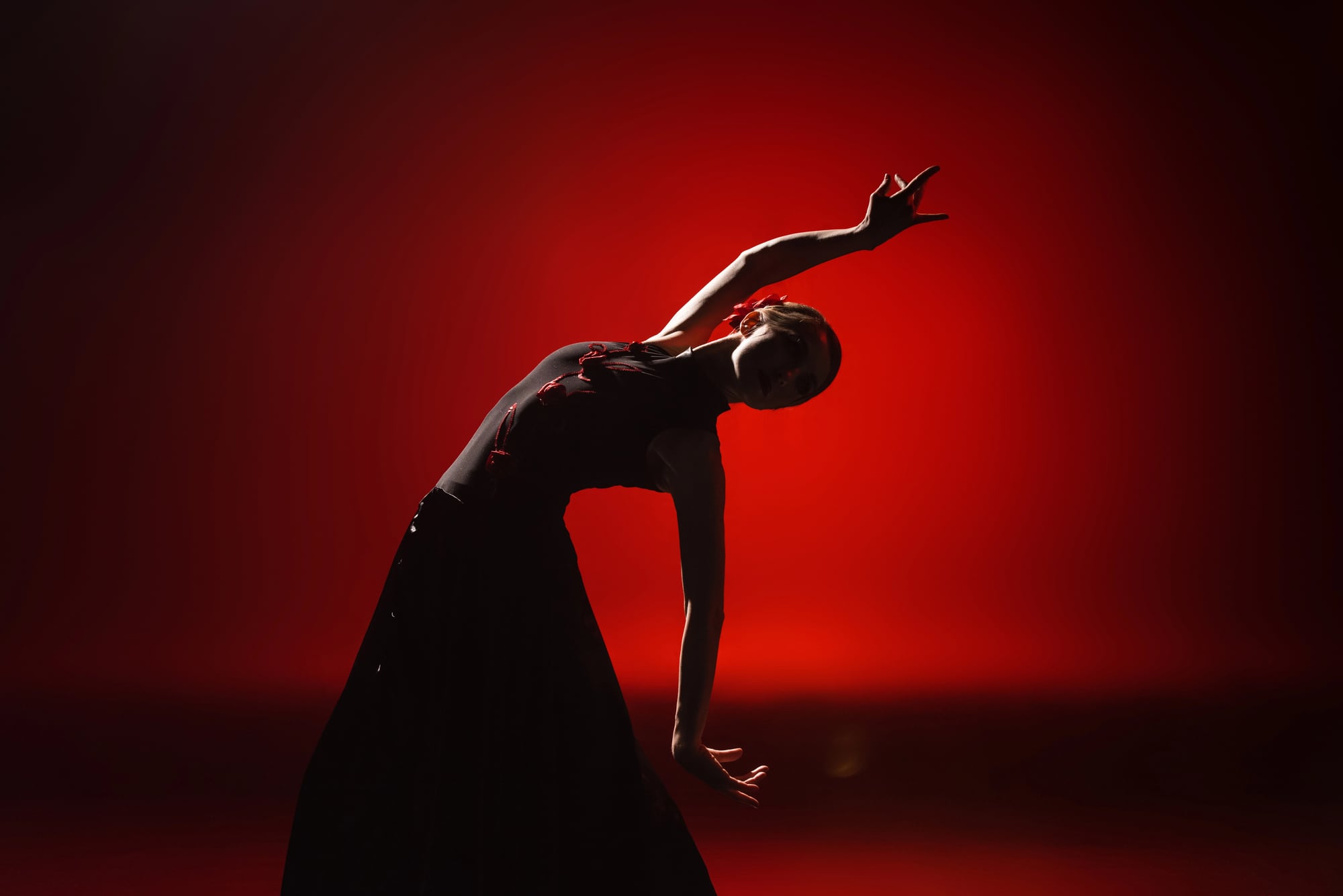
Everyone thinks they know flamenco until they see it done properly, and then they realize they’ve been watching tourist shows and calling them authentic — which is like saying you understand jazz because you’ve heard elevator music, but that comparison doesn’t quite capture the intensity of real flamenco, where the dancer and guitarist and singer (if there is one) are having a conversation in a language that consists entirely of rhythm and controlled fury, and every stomp of the heel against the floor is both a question and an answer, and the whole thing builds toward moments of such precise emotional release that audiences forget to breathe.
So you sit there, probably in some small venue where the stage is close enough to feel the heat coming off the performers, and you watch someone turn personal anguish into geometric patterns made of sound and movement.
And it works — not just as performance, but as a kind of alchemy that transforms whatever the dancer brought to the floor that night into something the audience can witness without fully understanding.
The guitar doesn’t accompany flamenco so much as argue with it. Productively.
Irish Step Dancing
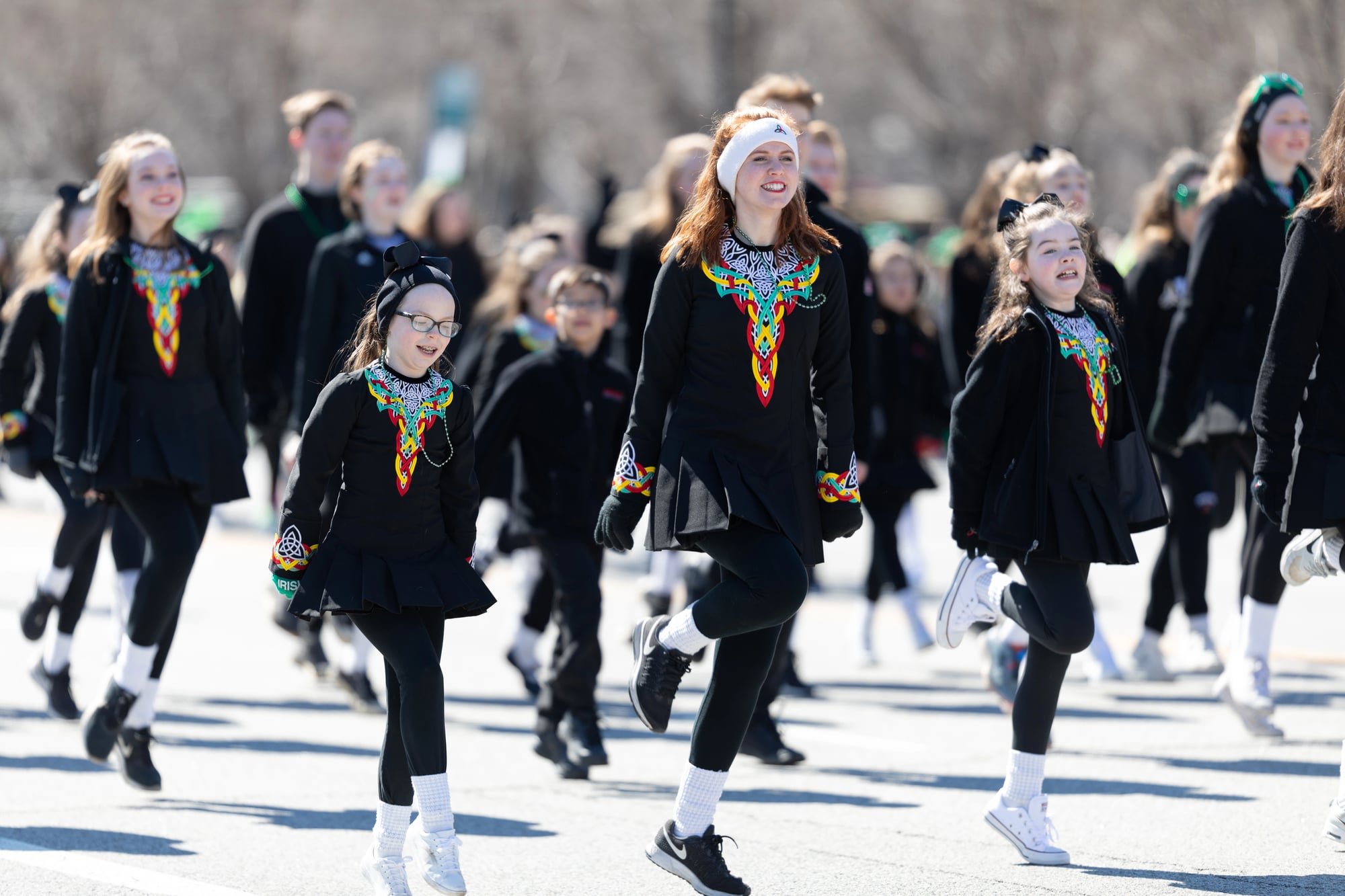
Irish step dancing took traditional folk movement and turned it into a precision instrument. Those rigid upper bodies, the feet moving in patterns so complex they blur together — it’s like watching someone type a very important message with their toes while balancing a book on their head.
Riverdance made it famous, but that’s the Broadway version. The real thing happens in small venues where you can hear every tap, every shuffle, every moment where rhythm becomes something you feel in your chest rather than just hear with your ears.
Competitive step dancing turns this precision into sport, with dancers performing solos that require the kind of muscle memory usually reserved for concert pianists.
And there’s something deeply satisfying about watching anything done with that level of technical perfection, especially when it looks effortless and impossible at the same time.
Bharatanatyam
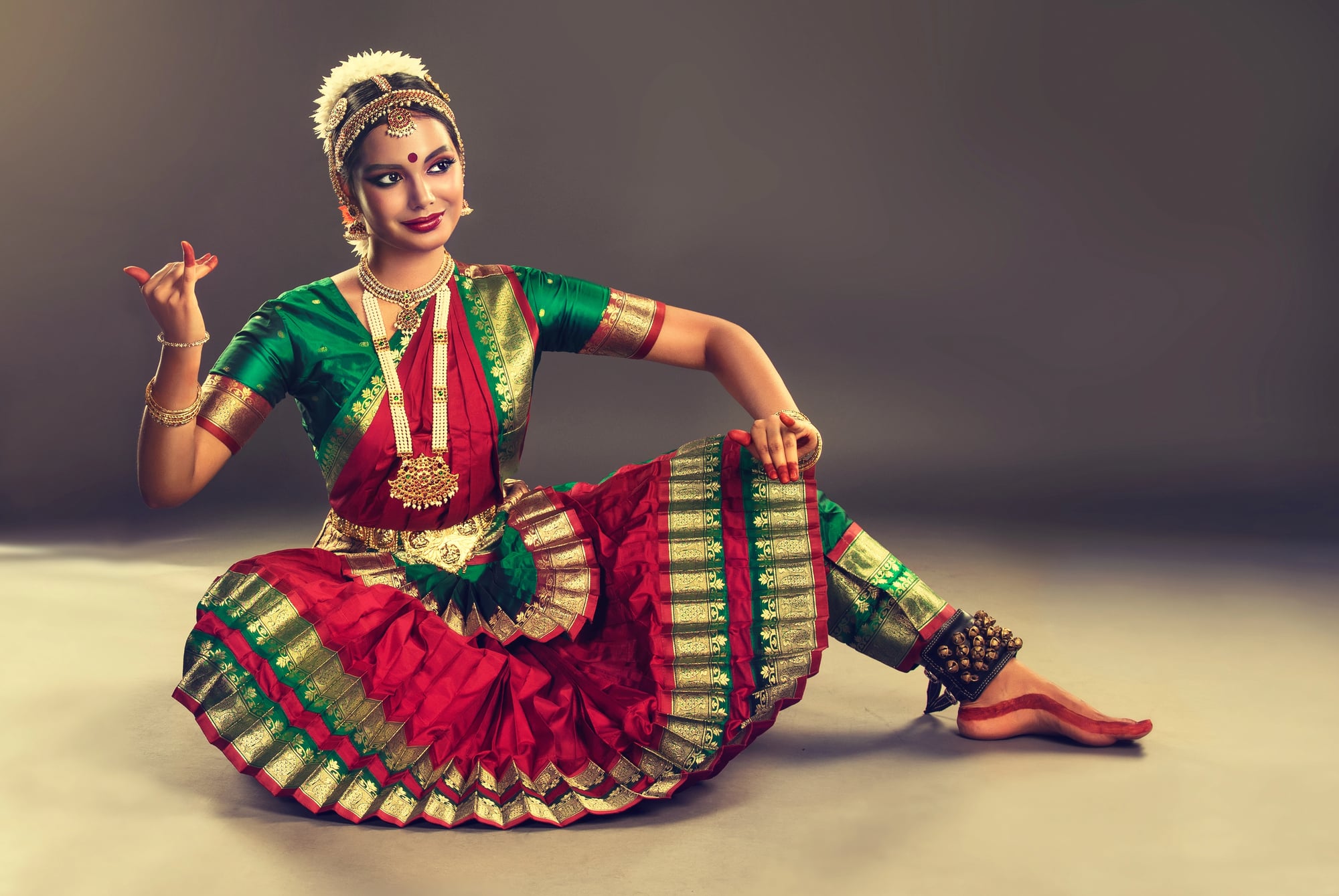
Bharatanatyam treats the human body like a text that can be read, if you know the language — which most people don’t, but that doesn’t stop the communication from happening, because this classical Indian dance form operates on multiple levels simultaneously, telling stories through precise hand gestures (mudras) while the feet maintain complex rhythmic patterns and the face conveys emotions so specific there are names for the exact way eyebrows should move to express devotion tinged with melancholy.
The training takes decades, not years. Dancers learn to isolate muscle groups most people don’t know they have, to make their spines curve in ways that seem anatomically unlikely, to turn their entire being into a living sculpture that moves through space with mathematical precision.
And then there are the costumes — silk saris pleated so precisely that they form perfect fans when the dancer spins, jewelry that catches light and throws it back, makeup that transforms the performer into a living representation of divine figures.
The whole thing operates as spiritual practice disguised as performance art, or maybe the reverse.
Butoh
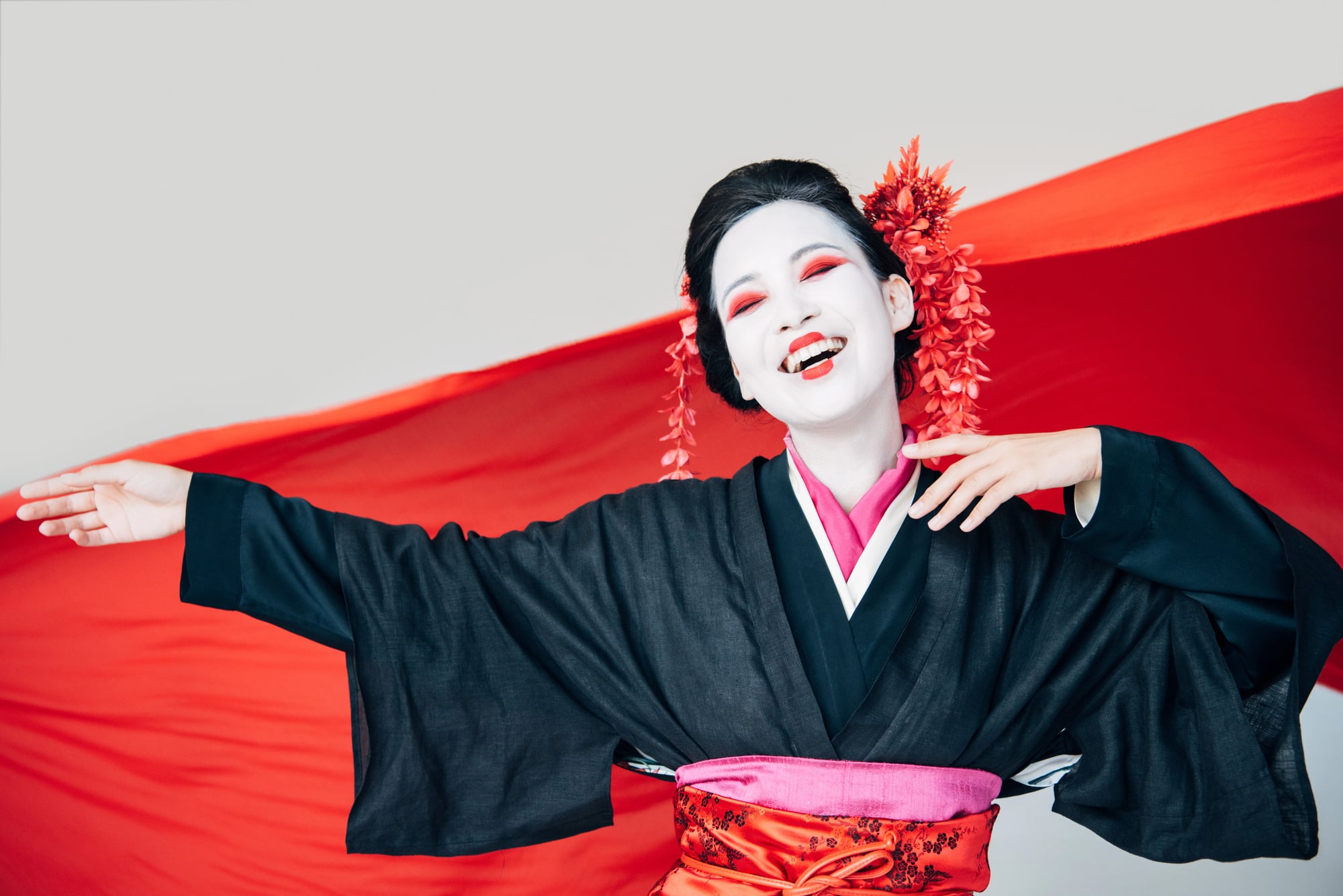
Butoh makes people uncomfortable, which is precisely the point. This Japanese dance form emerged from post-war trauma and decided that prettiness was no longer an option — instead, it embraces the grotesque, the slow, the deliberately unsettling, creating performances that feel more like rituals designed to exorcise something unnameable.
Dancers move like they’re underwater, or dreaming, or dying very slowly. Bodies contort in ways that suggest pain without depicting it directly.
The whole thing operates according to its own logic, where traditional concepts of grace and beauty have been replaced by something more honest about what it means to inhabit a human body in a world that regularly breaks those bodies.
It’s not entertainment in any conventional sense. It’s more like witnessing someone work through something too complex for words, using movement instead.
Capoeira
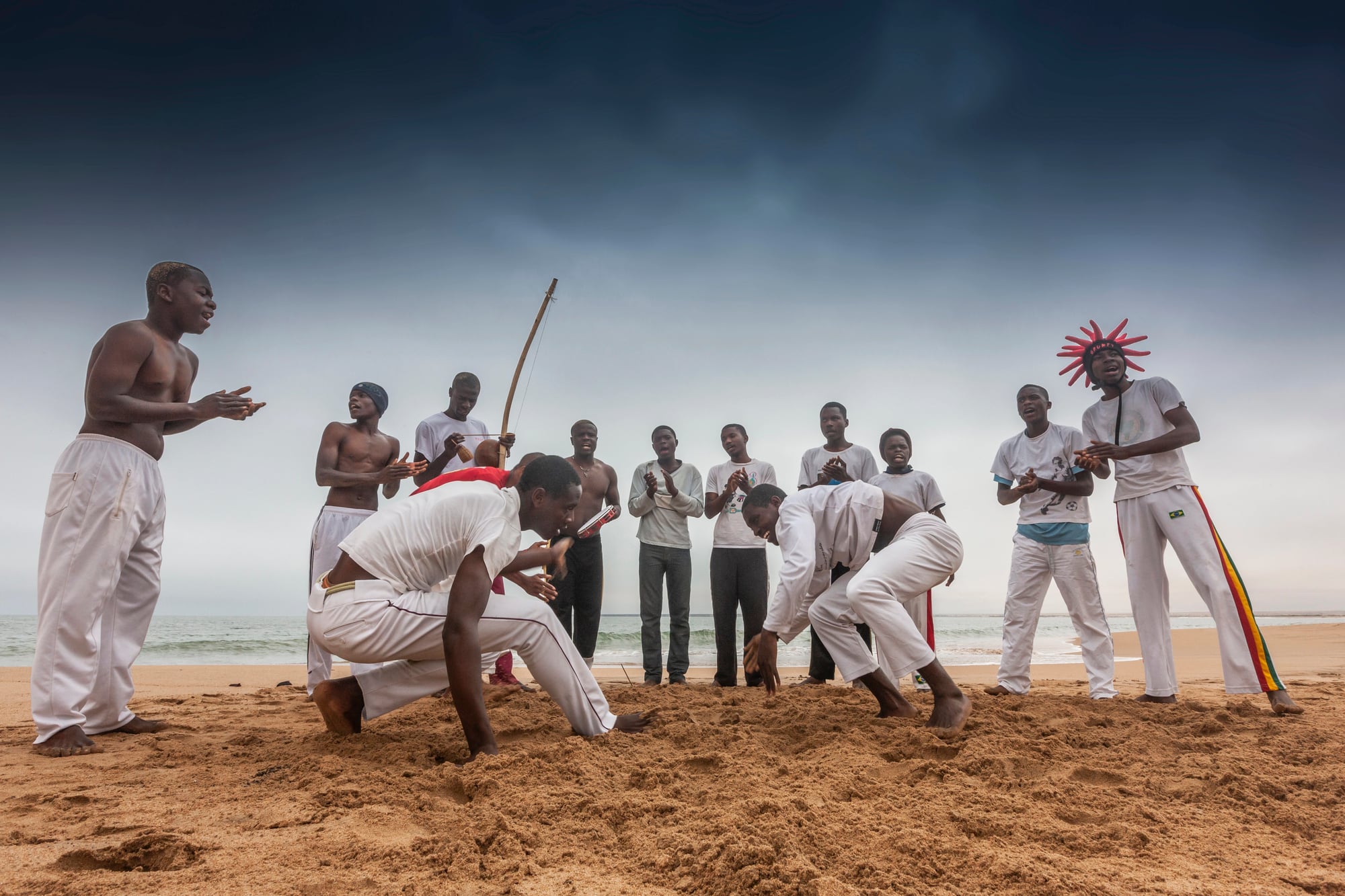
Capoeira refuses to stay in one category. Martial art disguised as dance, or dance disguised as martial art — the distinction becomes irrelevant when you watch practitioners move in that slow circle, trading movements that could be attacks or could be choreography, depending on intent and context.
Brazilian slaves developed it as a way to practice fighting techniques under the guise of entertainment, which means deception was built into its DNA from the beginning.
And that duality still exists — the berimbau’s single-string rhythm creates a hypnotic backdrop for movements that flow like water but could snap into violence if the game shifted from playful to serious.
The roda (circle) creates its own world, with its own rules, where showing off and showing respect become the same gesture performed with different intentions.
Belly Dance
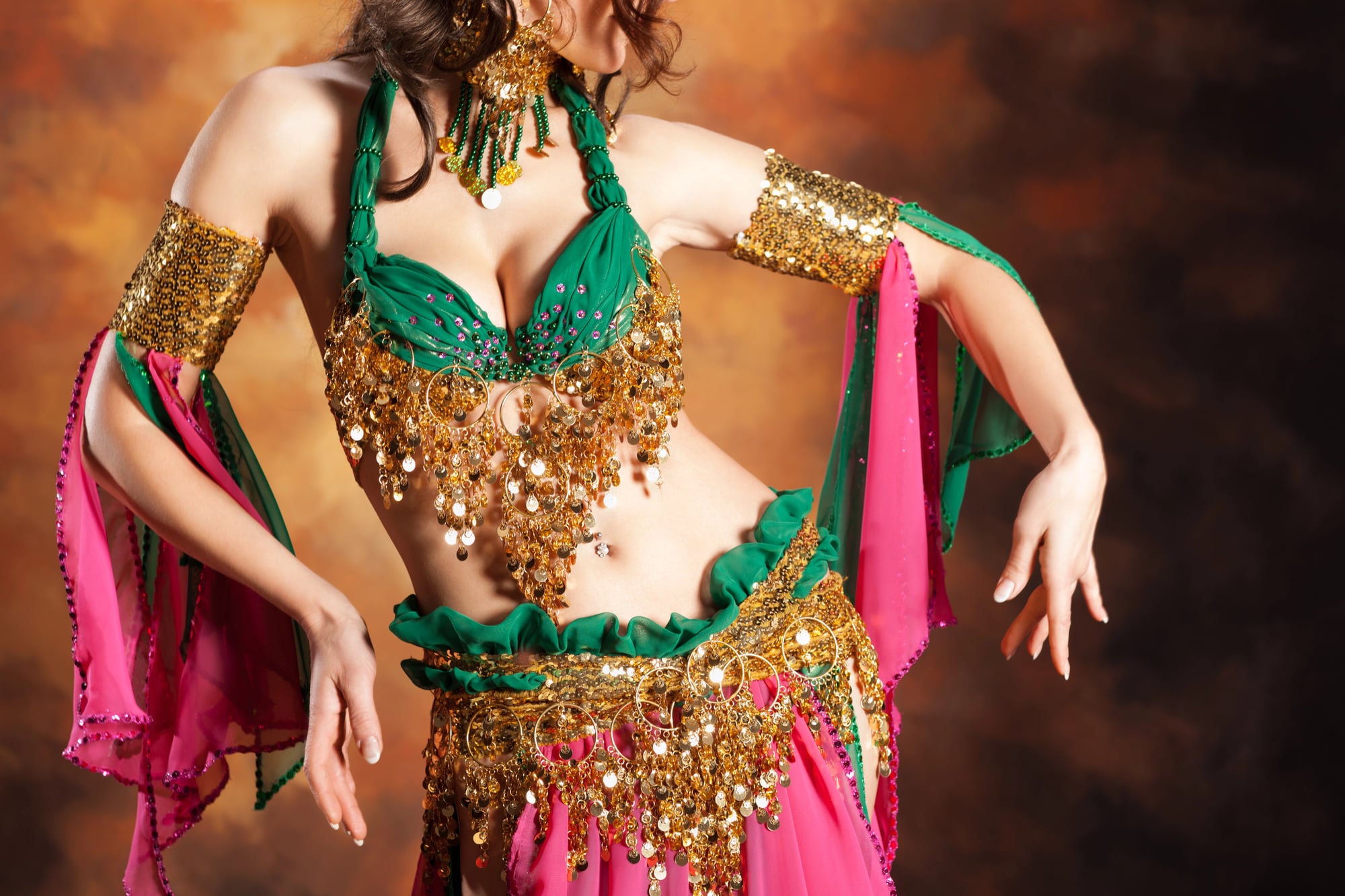
The Western world spent decades misunderstanding belly dance, turning it into costume parties and bachelorette entertainment, which is roughly equivalent to reducing opera to karaoke night — technically the same ingredients, completely different intention and execution, and the difference matters more than anyone who’s never seen the real thing might think.
Middle Eastern dance, when performed by someone who understands its vocabulary, becomes a conversation between music and movement where every isolation, every shimmy, every undulation serves a specific purpose in a larger narrative that might be joyful or mournful or something more complex than either.
And the technical skill required is absurd — dancers learn to move individual muscle groups while keeping others perfectly still, to make their ribcage float independently of their hips, to turn the torso into a percussion instrument that responds to rhythms most Western ears don’t even notice.
The costumes people associate with belly dance are mostly Hollywood invention. Traditional styles vary wildly across different regions and historical periods, but they all share a focus on allowing movement rather than restricting it.
Poi Dancing
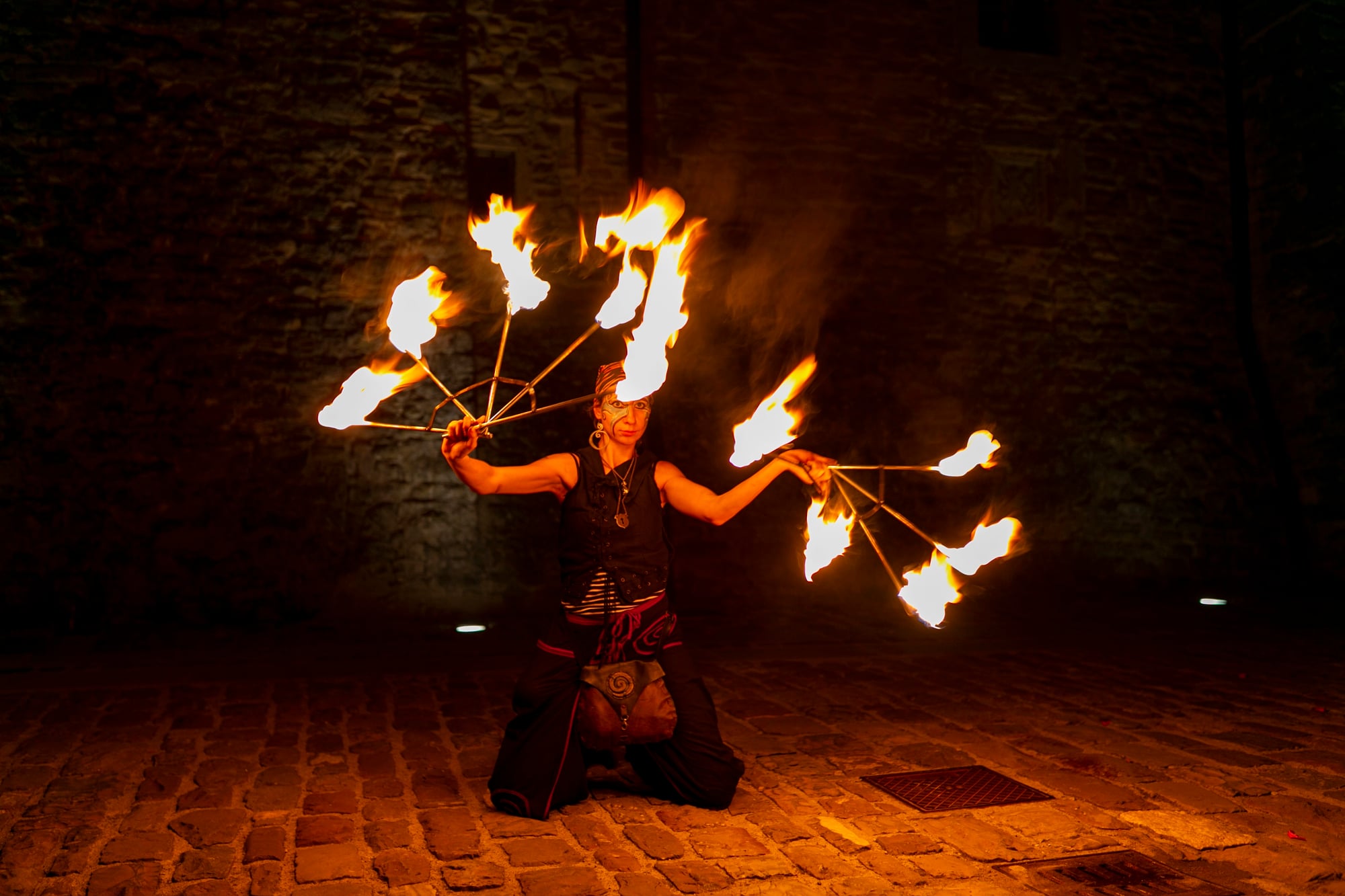
Poi dancing started in New Zealand as Māori cultural practice and somehow became a global phenomenon that spans fire spinning, LED light shows, and meditative movement practice. Weighted orbs on strings, spun in patterns that create geometric shapes in the air — it sounds simple until you try it and realize you’ve just tangled yourself in knots while the person demonstrating makes it look like controlled magic.
The physics are straightforward. The execution requires a kind of spatial intelligence that most people don’t develop naturally.
And somewhere in between the learning curve and the muscle memory, it becomes addictive — partly because of the visual patterns, partly because of the way it occupies your entire attention without requiring you to think about anything else.
Fire poi takes this meditative quality and adds the element of genuine danger, which changes everything about how your brain processes the movement.
Whirling Dervishes
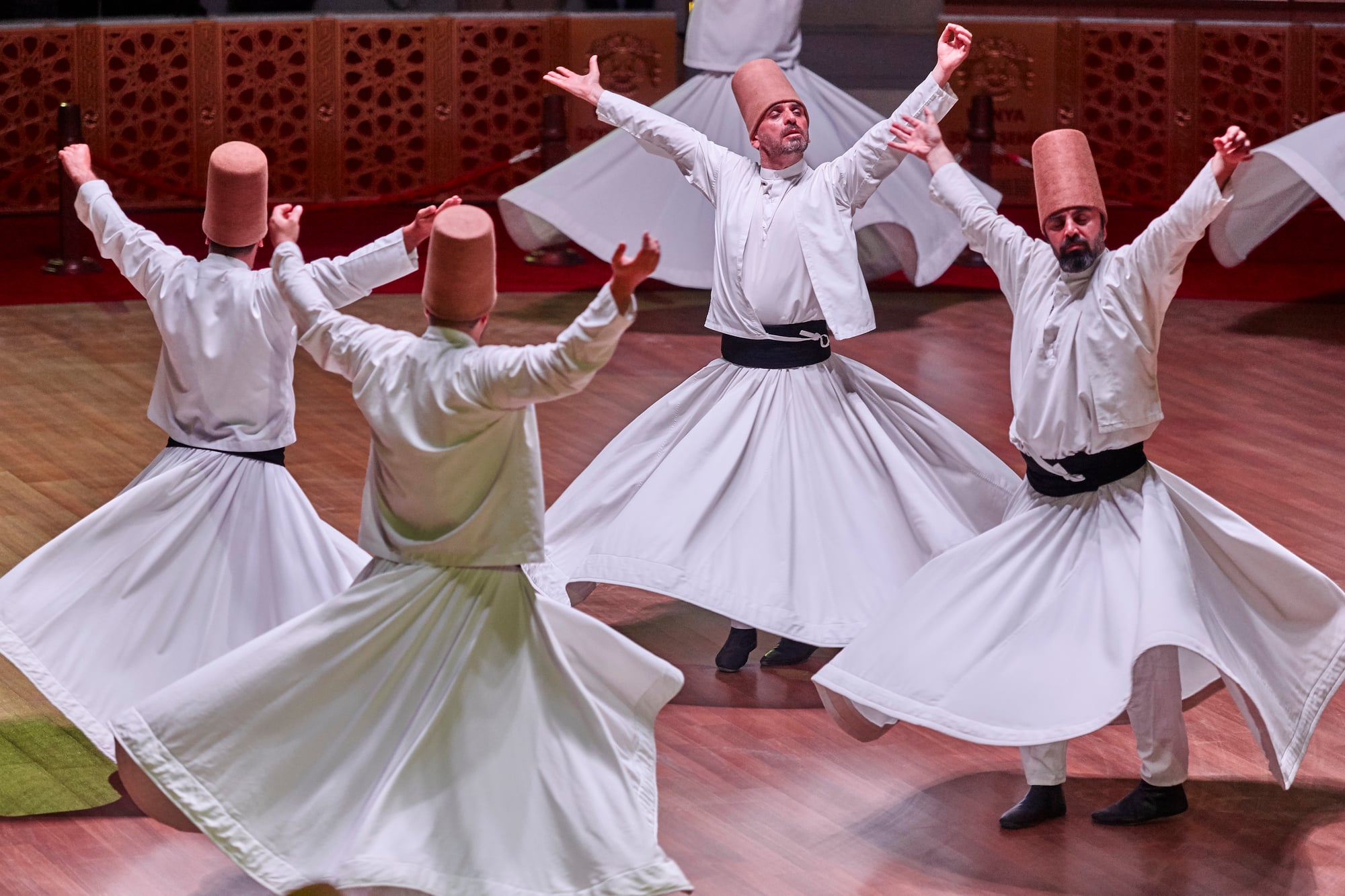
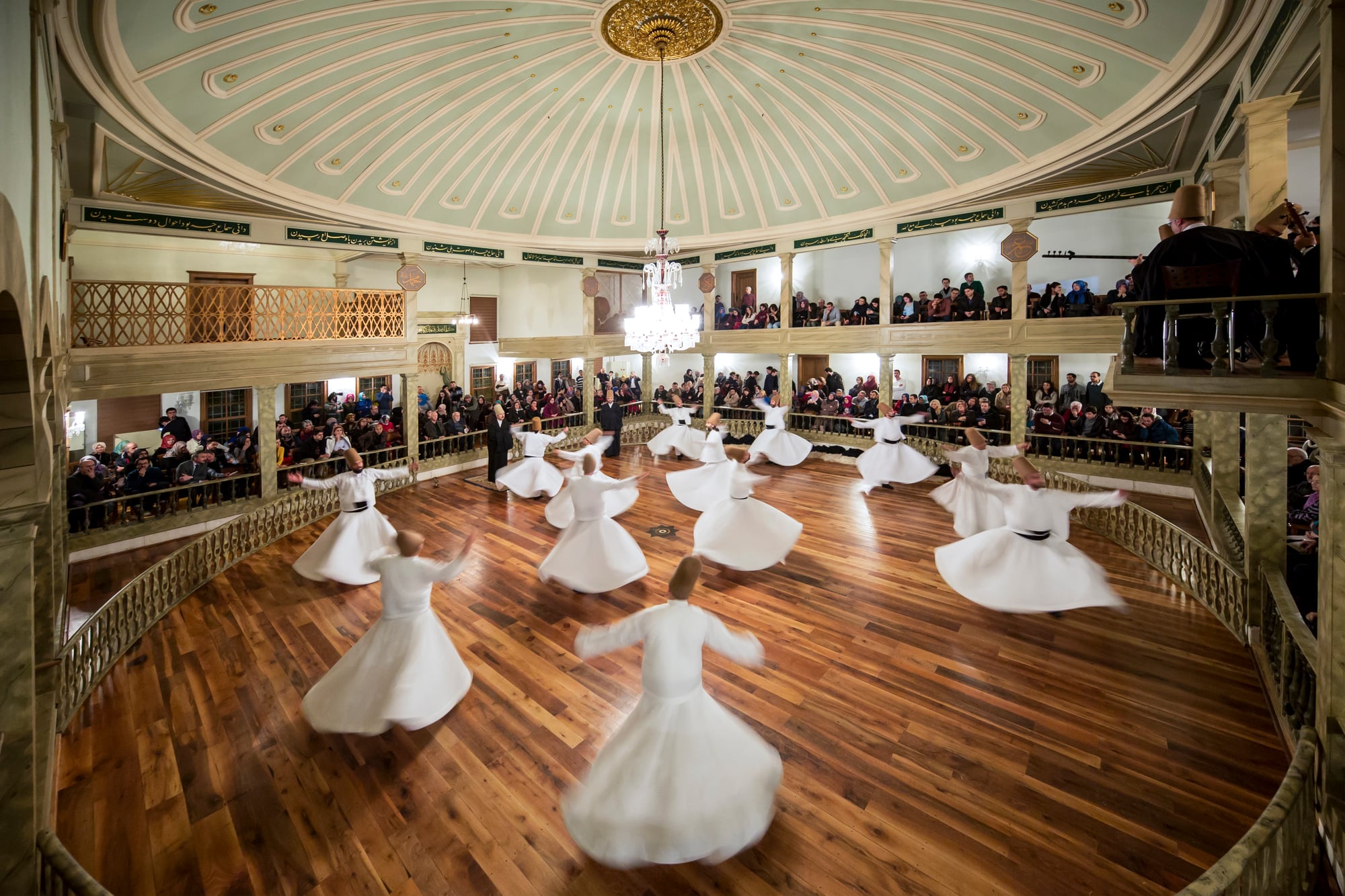
Sufi whirling turns dizziness into spiritual practice, which sounds like the kind of thing people say to make unusual behavior sound profound until you watch it happen and realize something genuinely transformative is taking place — not just for the whirler, but for anyone paying close attention to what happens when human movement becomes prayer and prayer becomes movement, and the distinction dissolves somewhere around the tenth minute of continuous spinning.
The white robes flare into perfect circles, arms positioned to receive blessings from above and distribute them below, and the whole thing operates according to principles that have nothing to do with performance and everything to do with achieving altered states of consciousness through controlled physical repetition.
And somehow, impossibly, the dervishes don’t fall down. They spin for twenty, thirty, forty minutes, maintaining perfect balance while accessing whatever lies beyond ordinary awareness.
The music — ney flutes and frame drums — provides a sonic landscape that supports this journey without directing it.
Haka

The haka transforms intimidation into art form — though calling it intimidation misses the point, because this Māori dance from New Zealand operates as communication that bypasses rational thought and goes straight to something more primal, more honest about what it means for humans to share space and acknowledge each other’s presence with complete sincerity.
Rugby teams made it famous, but that’s like saying tourist shows represent flamenco. The real thing carries genealogies, stories, challenges, welcomes — entire conversations compressed into synchronized movement that includes facial expressions so specific they function as a separate language.
Tongues extended, eyes widened, voices raised in unison create a presence that fills whatever space contains it.
And it works on multiple levels simultaneously — spiritual practice, physical workout, cultural preservation, and pure emotional release, all happening at once.
Moving Beyond The Expected
These dances exist in the spaces between what we think we know about movement and music and cultural expression. They remind us that humans have been finding ways to turn bodies into instruments, stories into choreography, and ordinary time into something transcendent for as long as we’ve been gathering in groups large enough to need rituals that bind us together.
Each tradition carries its own logic, its own relationship to beauty and meaning and the question of what dance can accomplish beyond entertainment.
And perhaps that’s what makes them surprising — not their specific techniques or costumes or music, but their insistence that movement can be a language, a prayer, a weapon, a conversation, a meditation, all depending on who’s dancing and why.
More from Go2Tutors!

- The Romanov Crown Jewels and Their Tragic Fate
- 13 Historical Mysteries That Science Still Can’t Solve
- Famous Hoaxes That Fooled the World for Years
- 15 Child Stars with Tragic Adult Lives
- 16 Famous Jewelry Pieces in History
Like Go2Tutors’s content? Follow us on MSN.



