Interesting Facts About the Mysterious Antikythera
Picture this: You’re exploring ancient Greek ruins, and someone tells you the Greeks had computers 2,000 years ago. You’d probably think they were pulling your leg, right? Well, prepare to have your mind blown.
The Antikythera mechanism is exactly that – an ancient computer that’s been baffling scientists for over a century. This incredible bronze device was essentially the iPhone of ancient Greece, packed with technology so advanced that it took humanity over a millennium to catch up.
Think of it as stumbling upon a smartphone in a medieval castle – that’s how shocking this discovery has been to our understanding of ancient civilizations. Here’s a list of 12 mind-bending facts about this mysterious ancient machine that will completely change how you think about our ancestors’ capabilities.
The Divers Who Found ‘Dead People’

In 1900, Greek sponge diver Elias Stadiatis surfaced from the Mediterranean waters shaking with fear, mumbling about ‘a heap of dead people’ on the ocean floor. What he’d actually stumbled upon were marble statues scattered across an ancient shipwreck near the tiny island of Antikythera.
This discovery prompted the first major underwater archaeological dig in history. Sometimes the greatest discoveries come from the most unexpected moments of terror.
World’s First Analog Computer

The Antikythera mechanism holds the prestigious title of being the world’s oldest known analog computer. Dating to around 100 BCE, give or take 30 years, this bronze marvel could predict astronomical positions and eclipses decades in advance.
Think of it as Google Calendar for ancient astronomers, but infinitely more impressive considering they built it without electricity or modern tools.
Shoebox-Sized Genius

Originally housed in a wooden case about the size of a shoebox, this compact device packed more technological sophistication than anything else from the ancient world. The mechanism measured approximately 33 cm (13 inches) high, 17 cm (6.75 inches) wide, and 9 cm (3.5 inches) thick.
Imagine carrying around that much computing power in ancient Greece – you’d probably be considered a wizard.
Bronze Precision Engineering

When radiographic images revealed that the mechanism contained at least 30 gears (modern studies suggest 37 or more), researchers were stunned. No other geared mechanism of such complexity is known from the ancient world, or indeed until medieval cathedral clocks were built a millennium later.
The precision gears bore teeth about a millimeter long, demonstrating an incredible level of craftsmanship that rivals modern manufacturing.
The Olympic Games Calculator

Here’s something that would make any sports fan excited: the mechanism could track the four-year cycle of athletic games similar to an olympiad, including the ancient Olympic Games. One of the small dials even recorded the four-year Olympic Games cycle.
Ancient Greeks didn’t just watch the Olympics – they had a computer to tell them exactly when the next games would start.
Like Go2Tutors’s content? Follow us on MSN.
Eclipse Prediction Marvel

The large lower dial had a four-turn spiral with symbols to show months in which there was a likelihood of a solar or lunar eclipse, based on the 18.2-year Saros eclipse cycle. Imagine the awe of ancient people when this machine accurately predicted when the sun would disappear from the sky.
It must have seemed like pure magic – and in many ways, it was.
Crashed and Forgotten for Centuries
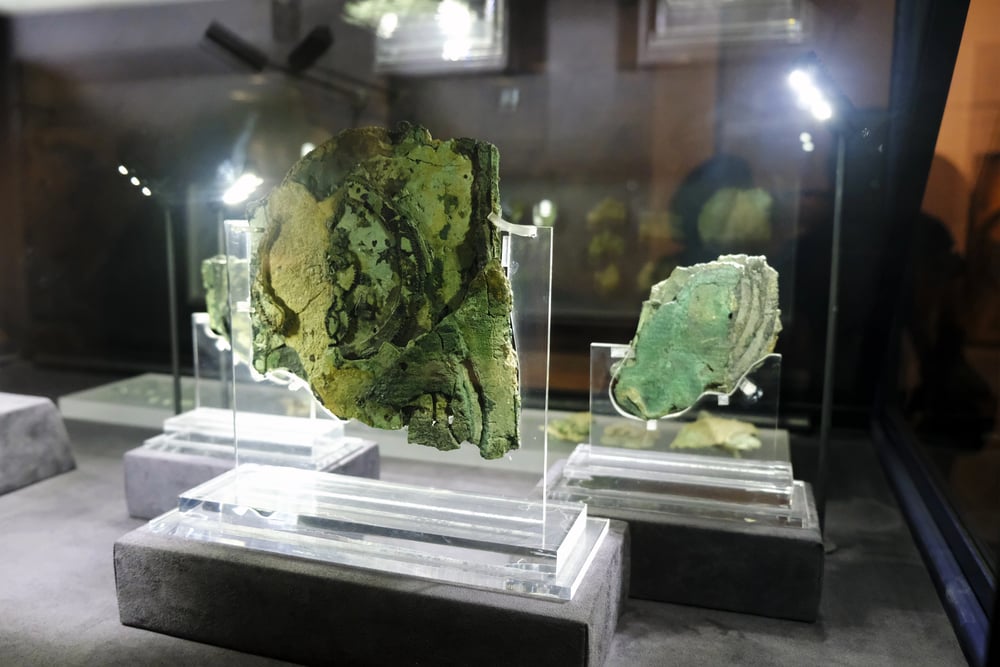
The device numbered among the items on a merchant ship that sank in a storm in the first century BC, en route to Rome from Asia Minor. Based on other artifacts salvaged from the remains, the shipwreck is believed to have sunk in approximately 67 BCE.
One storm changed the course of technological history, burying this marvel beneath the waves for nearly 2,000 years.
A Gear Spotted by Chance

In May 1902, archaeologist Valerios Stais was examining what appeared to be a corroded lump when he noticed it contained a gear wheel. This was the first recognition that the object was some kind of mechanism.
Sometimes the most important discoveries happen when someone takes a second look at something everyone else dismissed as junk.
More Accurate Than Babylon

In 2016, researchers discovered the numbers 462 and 442 inscribed on the mechanism, representing more accurate period relations for Venus and Saturn than even the sophisticated Babylonian astronomers had calculated. The ancient Greeks weren’t just copying older civilizations – they were improving upon them with remarkable precision.
Google Celebrated Its Discovery

Google commemorated the 115th anniversary of the mechanism’s discovery with a Google Doodle on May 17, 2017. It’s not often that an ancient artifact gets its own Google Doodle, but this discovery fundamentally changed how we view ancient technology.
Even tech giants recognize game-changing innovation when they see it.
Archimedes Connection
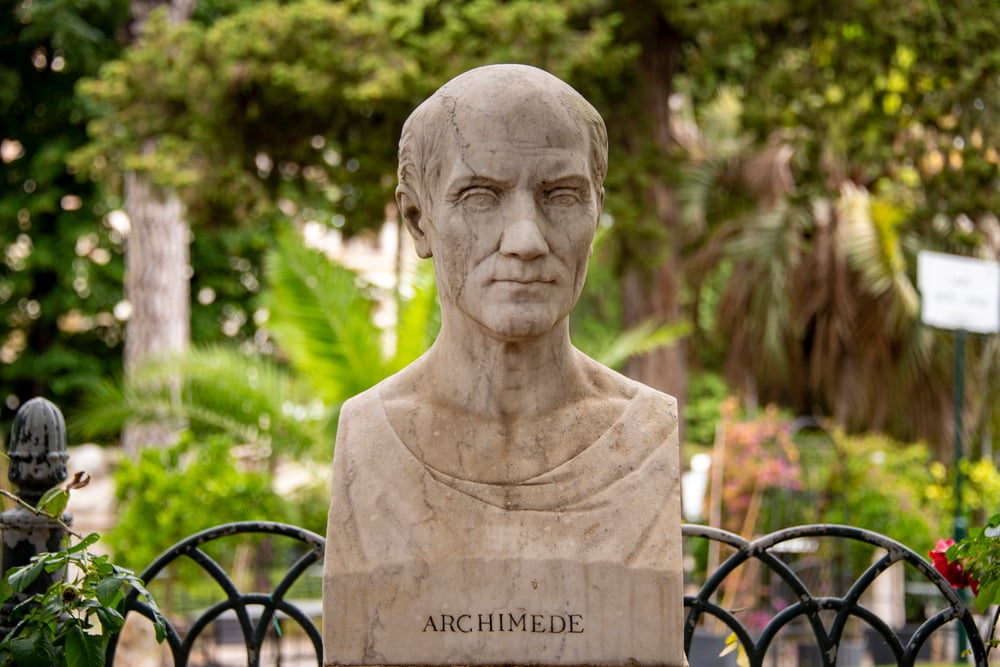
Roman politician Cicero described a machine made by the famous mathematician Archimedes that could represent ‘the motions of the sun and moon and of those five stars which are called wanderers … by a single device.’ This machine sounds remarkably similar to the Antikythera mechanism, suggesting Archimedes might have founded the tradition that led to this device.
Talk about standing on the shoulders of giants.
Bronze Was Too Valuable to Preserve

Why haven’t archaeologists uncovered more such mechanisms? Bronze was a very valuable metal, and when an object like this stopped working, it probably would have been melted down for its materials.The Antikythera mechanism survived only because it went down with a ship and was preserved under the sea.
We may never know how many similar devices were lost to recycling throughout history.
Technology’s Ancient Roots

The Antikythera mechanism proves that human ingenuity has always pushed boundaries, even without modern tools or electricity. This creation combined cycles from Babylonian astronomy, mathematics from Plato’s Academy, and ancient Greek astronomical theories into a single, functioning device.
It reminds us that innovation isn’t about having the latest technology – it’s about human creativity, determination, and the endless desire to understand our universe. Our ancestors weren’t primitive people stumbling around in the dark.
They were brilliant engineers, mathematicians, and astronomers who created technology so advanced it took us 1,400 years to match it. The next time someone talks about how ‘primitive’ ancient civilizations were, you can tell them about the Greeks who built a computer before the fall of Rome.
More from Go2Tutors!

- The Romanov Crown Jewels and Their Tragic Fate
- 13 Historical Mysteries That Science Still Can’t Solve
- Famous Hoaxes That Fooled the World for Years
- 15 Child Stars with Tragic Adult Lives
- 16 Famous Jewelry Pieces in History
Like Go2Tutors’s content? Follow us on MSN.



