Facts About the Earliest Science Fiction Films
You know how every genre has to start somewhere? Science fiction on film began way back when movies themselves were still figuring out what they wanted to be. We’re talking about an era when a film running longer than two minutes felt like an epic, and the idea of showing someone a rocket ship hitting the moon in the face was pure wizardry.
These early filmmakers weren’t working with green screens or CGI. They had cameras that jammed, film stock that cost a fortune, and audiences who’d never seen anything like what they were attempting.
But they did something remarkable – they took the impossible and made you believe in things you’d never seen before. Here’s what makes those first science fiction films so fascinating.
A Trip to the Moon was made by a French magician in 1902

Georges Méliès wasn’t even supposed to be a filmmaker. The guy ran a theater in Paris and performed magic shows for a living.
When he saw the Lumière brothers demonstrate their cinematograph in 1895, he built the first film studio in Europe and started making movies that treated film like an extension of stage magic. His 1902 film A Trip to the Moon runs about 14 minutes, which doesn’t sound like much until you realize most films back then lasted one or two minutes tops.
The story follows astronomers who fire themselves at the moon via giant cannon, meet goblin-like moon inhabitants, and crash back to Earth. That iconic image of the rocket embedded in the moon’s eye became so famous that people who’ve never seen the full film still recognize it instantly.
Méliès discovered stop-motion photography through a camera malfunction

During a shoot, Méliès’s camera jammed. When he got the footage developed, people and objects appeared to vanish or transform instantly.
Being a magician, he immediately saw the potential and made this his signature trick. He used substitution splicing extensively – the camera operator would stop long enough for something to be added or removed from frame.
For A Trip to the Moon, moon aliens would disappear in puffs of smoke and objects changed size through these techniques. Double exposure created ghostly effects while miniature models combined with painted backgrounds suggested vast scales.
A Trip to the Moon cost 10,000 francs to produce

To put this in perspective, most films cost a fraction of such an amount. Méliès needed elaborate sets, custom costumes for the moon creatures, painted backdrops, miniature models, and three months of work. Black and white prints sold for 560 francs while hand-colored versions went for 1,000 francs.
Some versions were painstakingly painted frame by frame on an assembly line, with workers adding color to each individual frame of film. Méliès created six different variations of the movie with different color tints and even alternative endings.
American studios pirated A Trip to the Moon mercilessly

Copyright protection for foreign films barely existed in the United States at the time. A Trip to the Moon became one of the most extensively pirated works of early cinema, with American distributors making copies and showing them without paying Méliès a cent.
The film made him famous worldwide, but the financial returns never matched his investment or the movie’s success. Edwin S. Porter called the movie “the film that saved the movie industry,” yet Méliès saw little profit from American screenings. The widespread piracy contributed to his eventual financial ruin.
Frankenstein in 1910 introduced the first mad scientist

Edison Studios produced the first film adaptation of Mary Shelley’s novel, running about 14 minutes and directed by J. Searle Dawley. To appease religious groups complaining about the supposed immorality of motion pictures, the studio framed the story as a moral tale within a dream.
Thomas Edison himself didn’t want to paint science in a negative light, so instead of scientific experimentation, the monster gets created through alchemy in a big cauldron. The creation scene used reverse photography – filming the monster’s destruction and playing the footage backward.
Charles Ogle played the monster as an unkempt figure, and the film was believed lost until its rediscovery in the early 1960s.
The 1916 version of 20,000 Leagues Under the Sea pioneered underwater filming

This adaptation of Jules Verne’s novel became one of the first feature-length science fiction films. The production incorporated elements from multiple Verne novels, including The Mysterious Island, and followed Captain Nemo seeking vengeance while commanding the submarine Nautilus.
What made the film groundbreaking was the actual underwater photography – filmmakers shot real underwater sequences in the Bahamas using specially designed equipment. The technical achievement of filming beneath the ocean surface inspired future filmmakers to push boundaries.
The movie demonstrated that science fiction could work at feature length, not just as short novelties.
Dr. Jekyll and Mr. Hyde became a silent era favorite

The 1920 version starring John Barrymore became the most famous adaptation of Robert Louis Stevenson’s novella. The transformation scene – achieved through careful makeup application and lighting changes during a single take – remains iconic even now.
Barrymore delivered memorable performances in both the titular roles, showcasing his range as an actor. The film demonstrated how science fiction and horror could blend seamlessly, creating a template for future genre-mixing.
Multiple versions got made during the silent era alone, showing how popular the story was with early audiences.
Metropolis took 17 months to film and cost over five million Reichsmarks
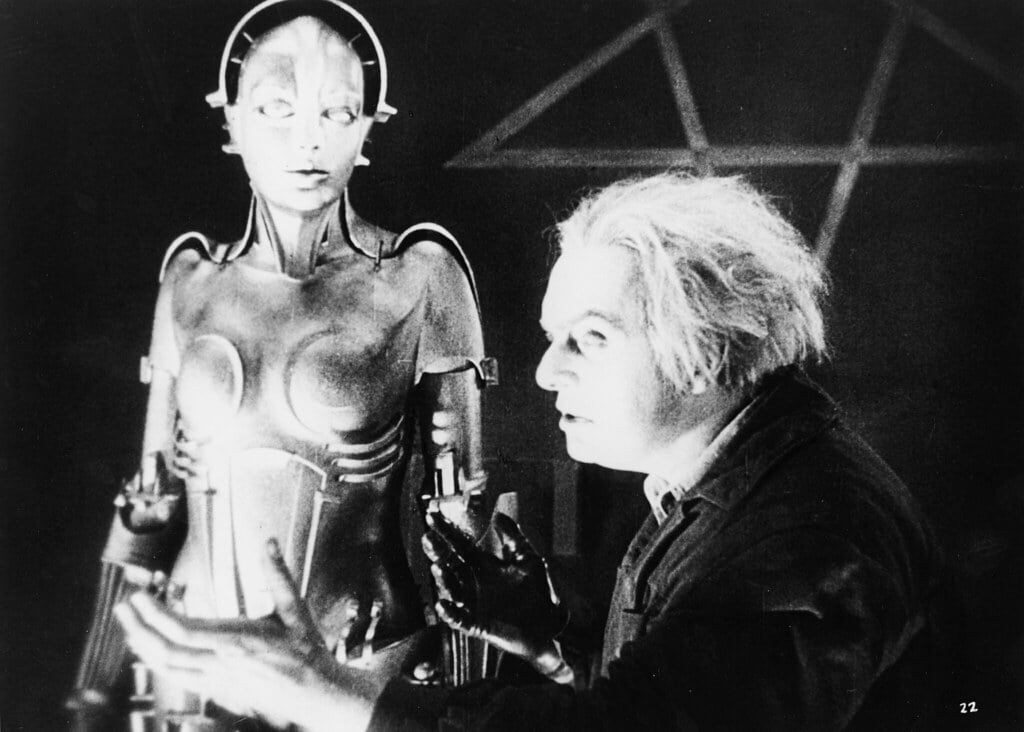
Fritz Lang’s 1927 masterpiece remains the most ambitious science fiction film of the silent era. The production consumed 310 days of shooting, 60 nights, and employed 37,000 extras – roughly equivalent to 21 million euros in modern money.
Brigitte Helm, the film’s star, called production “the worst experience I ever had,” recalling how one night shoot sequence lasted three weeks. She fainted during the transformation scene where her character gets clamped in wooden armor because the shot took so long she couldn’t get enough air.
Lang had visited New York City in 1924 and the sight of skyscrapers inspired his vision of a futuristic city with vast class divisions.
Metropolis got severely cut after its Berlin premiere
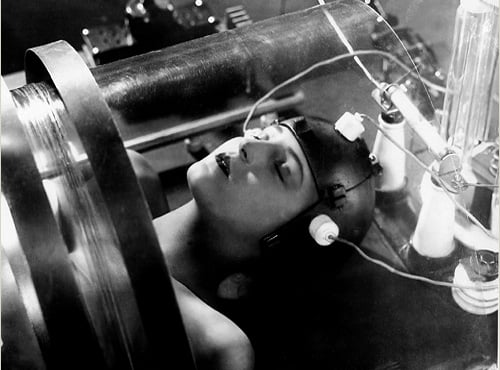
When Metropolis premiered on January 10, 1927, Fritz Lang knew he’d created something extraordinary. Then financial reality hit as Ufa, the studio that produced the film, faced dire financial straits due to Lang’s budget overruns.
Paramount hired playwright Channing Pollock at an extraordinary $1,000 per day to reconfigure the film from 16 reels down to nine. The original ran about two and a half hours but the American version got cut to one hour and forty-seven minutes.
Lang later said they “had slashed my film so cruelly that I dared not see the thing.” The original version was thought lost forever until a nearly complete print turned up in Buenos Aires in 2008.
The Lost World in 1925 brought dinosaurs to life through stop-motion
Willis O’Brien developed groundbreaking stop-motion animation techniques for this adaptation of Arthur Conan Doyle’s novel. The film featured prehistoric creatures moving and fighting in ways audiences had never seen before.
O’Brien’s painstaking work – moving models incrementally and photographing each tiny adjustment – created the illusion of living, breathing dinosaurs. These same skills and techniques later brought King Kong to life in 1933.
The Lost World proved that science fiction could create entire worlds of extinct creatures, expanding what the genre could achieve visually.
Woman in the Moon introduced the countdown to rocket launches

Fritz Lang’s 1929 film came as the silent era was ending and featured the first rocket launch countdown in cinema history. The movie depicted two-stage rockets powered by liquid fuel, showing a surprisingly technical approach to space travel.
Lang consulted with rocket scientists to make the space travel sequences more realistic than previous films. The countdown concept – counting backward to a rocket launch – became so ingrained in popular culture that NASA adopted the practice for actual space missions.
The film demonstrated how science fiction could blend entertainment with speculative science based on real research.
The Mechanical Man in 1921 featured the first evil robot

This early Italian science fiction film introduced audiences to killer robots and robot battles. A scientist creates a robot only to have the robot stolen from him, ending up in the hands of a woman named Mado who commits crimes by robot proxy.
Eventually a duplicate robot gets created, leading to a robot battle – pretty advanced stuff for 1921. Unfortunately, like many films of this era, a great deal has been lost, with only about half an hour remaining of the original footage.
The surviving fragments show impressive use of color schemes to indicate dark, light, and even fire.
Aelita Queen of Mars combined Soviet revolution themes with space travel

This 1924 Soviet film featured a young engineer in Moscow who dreams of traveling to Mars after receiving a mysterious radio signal. The red planet gets shown as a desperately unequal society where aristocrats are waited on by mistreated slaves.
When the engineer and his companion arrive on Mars, the companion encourages the Martian underclass to rise up against their oppressors. The message was clear – solidarity extends across borders and even between planets.
The film became far more celebrated for its bizarre and brilliant constructivist sets and costume design, which influenced Fritz Lang when he made Metropolis.
German Expressionism created the visual language of sci-fi

The German film industry in the 1920s developed a distinctive visual style with distorted scenery, dramatic lighting contrasts, and intense performances. Fritz Lang’s work exemplified this approach, with Metropolis featuring elaborate sets showing both the luxurious upper city and the industrial hell below.
The gothic architecture mixed with futuristic technology created a template for countless dystopian visions. When Lang and other German filmmakers fled to Hollywood in the 1930s, they brought this aesthetic with them.
Film noir borrowed heavily from Expressionist lighting and composition, while science fiction absorbed the dramatic visual contrasts and sense of alienation.
Where we’re left standing

These films exist now as more than historical curiosities. You watch A Trip to the Moon and feel the audacity of showing audiences something they’d never imagined.
You see Metropolis and recognize shots that directors are still stealing over 90 years later. They worked without precedent, inventing techniques as they went. Every science fiction film made since owes something to these experiments.
Sometimes looking backward shows you how far we’ve come, and how much remains unchanged.
More from Go2Tutors!

- The Romanov Crown Jewels and Their Tragic Fate
- 17 Halloween Costumes Once Considered Taboo
- Famous Hoaxes That Fooled the World for Years
- 15 Child Stars with Tragic Adult Lives
- 16 Famous Jewelry Pieces in History
Like Go2Tutors’s content? Follow us on MSN.



