Fruits With Strange Origins
Most people eat fruit without thinking much about where it came from. A banana is just a banana. An orange is just an orange.
But behind almost every familiar fruit in your kitchen is a story that’s stranger than you’d expect — centuries of accidents, obsessive crossbreeding, trade route chaos, and the occasional botanical mystery.
The Banana You Know Doesn’t Really Exist Anymore

The banana on grocery store shelves today is called the Cavendish, and it only became the standard because the previous variety — the Gros Michel — was almost completely wiped out by a fungal disease in the 1950s. The Gros Michel was reportedly creamier and more flavourful, and if you’ve ever wondered why banana-flavoured candy tastes so different from actual bananas, that’s why.
Artificial banana flavouring was developed to mimic the Gros Michel, not the Cavendish. The Cavendish wasn’t chosen because it was the best option.
It was chosen because it survived. And right now, it faces the same threat from a new strain of the same disease.
Oranges Were Never Orange

The orange as a fruit predates the colour name in English, which is strange enough on its own. But more surprising is that oranges in their natural, tropical habitat are actually green.
They only turn orange in cooler climates, where cold temperatures trigger the breakdown of chlorophyll in the skin. In countries like Thailand, Vietnam, and Brazil, you’ll still find fully ripe, sweet oranges that are completely green on the outside.
The orange you picture is essentially a climate-adjusted version of the original.
Strawberries Are Not Berries (But Bananas Are)
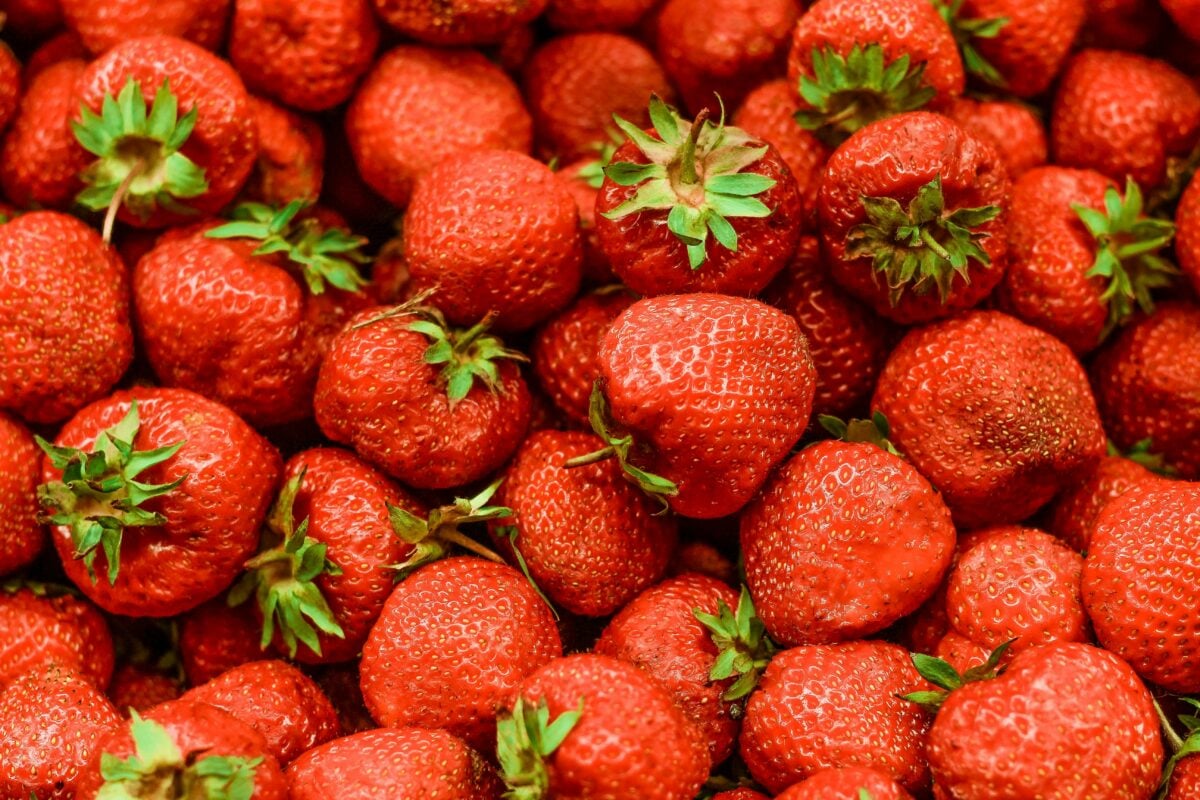
Botanically speaking, a strawberry isn’t a berry at all. The fleshy red part you eat is actually an enlarged receptacle — the part of the plant that holds the flower.
The actual fruits are the tiny seed-like dots covering the outside, each one technically its own separate fruit. Meanwhile, bananas, kiwis, and even avocados qualify as true berries under botanical definitions.
So do tomatoes and cucumbers. The word “berry” in everyday language has almost nothing to do with the scientific category.
Grapefruit Is an Accident

Grapefruit didn’t exist before the 18th century. It appeared on the island of Barbados around 1750 as an unplanned hybrid between a sweet orange and a pomelo, a large citrus fruit brought to the Caribbean from Southeast Asia.
Nobody cultivated it on purpose. It got its name because the fruit grows in clusters on the tree, hanging together like grapes.
Early records called it the “forbidden fruit,” and it took over a century before it moved from curiosity to a commercial crop.
The Pineapple Spent Centuries as a Status Symbol

Pineapples are native to South America, and when European explorers brought them back in the 1490s, they became objects of obsession. They were nearly impossible to grow in European climates, so they were traded, displayed at parties as centrepieces, and rented out by the day to wealthy hosts who wanted to impress guests.
In 18th-century Britain, a single pineapple could cost the equivalent of thousands of pounds today. People built pineapple-shaped architecture to signal prosperity.
The fruit itself was almost beside the point — it was the statement that mattered.
Watermelon Came From the Desert

You’d never guess that one of the most water-rich fruits on earth originated in the Kalahari Desert in southern Africa. Ancient watermelons weren’t sweet at all — they were bitter or bland, but packed with water, which made them useful as portable hydration in dry environments.
Over thousands of years, humans selected sweeter varieties, and the fruit spread through North Africa into the Mediterranean and eventually the rest of the world. Seeds have been found in Egyptian tombs dating back 5,000 years.
By the time watermelon reached the Americas, it had already been cultivated for millennia.
Peaches Are Chinese, Not Georgian

In the American South, Georgia is synonymous with peaches, but the fruit itself has nothing to do with the Americas. Peaches originated in China, where they’ve been cultivated for at least 8,000 years.
They were considered sacred, associated with longevity and immortality in Chinese mythology. They spread westward along trade routes, reaching Persia (now Iran), and from there to Europe.
The Romans thought peaches came from Persia, so they called them “Persian apples” — the scientific name Prunus persica reflects that misconception to this day.
Tomatoes Were Feared in Europe

Tomatoes came from the Andes in South America, where Indigenous peoples cultivated them long before European contact. When Spanish explorers brought tomatoes back in the 16th century, much of Europe was deeply suspicious of them.
Because tomatoes belong to the nightshade family — alongside genuinely poisonous plants — many Europeans believed them to be toxic. Wealthy people in particular avoided eating them for centuries, partly because acidic tomatoes would leach lead from pewter plates, causing actual lead poisoning.
The tomato itself was fine. The tableware was the problem.
The Avocado Relied on Animals That Are Extinct

Avocados produce a seed so large that almost nothing alive today can swallow it whole and disperse it. The fruit evolved to be eaten by megafauna — giant ground sloths, gomphotheres (an extinct elephant relative), and other massive mammals that once lived across the Americas.
When those animals went extinct roughly 10,000 to 13,000 years ago, the avocado lost its primary means of seed dispersal. It survived only because humans started cultivating it.
In the wild, without human intervention, avocados would have a very hard time spreading at all.
Almonds Were Once Deadly
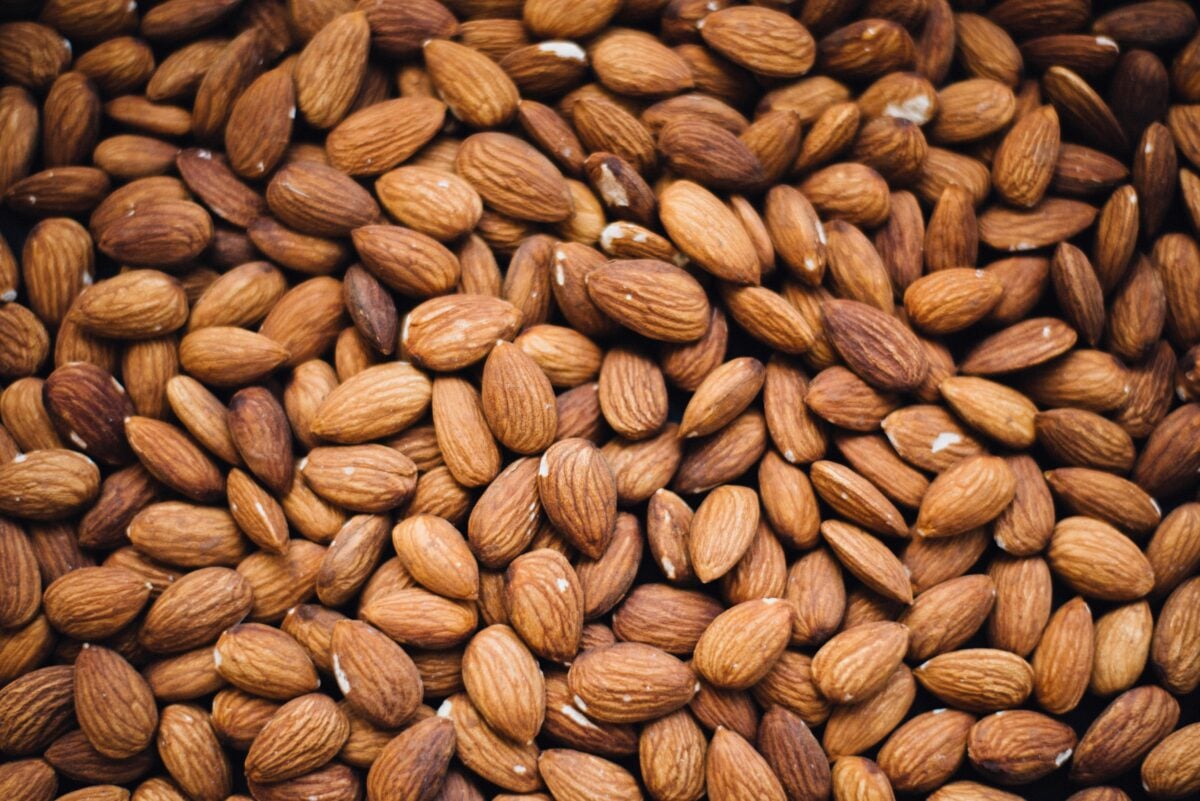
Wild almonds contain amygdalin, which breaks down into hydrogen cyanide when metabolised. Eating enough wild almonds would kill you.
The domesticated sweet almond we eat today results from a single genetic mutation, likely spotted and selectively cultivated by early farmers thousands of years ago. Nobody knows exactly when or where this happened, but the switch from bitter to sweet almonds is one of the earliest known examples of deliberate crop selection.
The almond started as a potentially lethal wild nut and ended up in your afternoon snack.
Seedless Grapes Are Genetic Accidents That Couldn’t Survive Alone

Seedless grapes don’t occur naturally in the wild. They’re the result of a condition called stenospermocarpy, where seeds begin to develop but abort early, leaving only a tiny, soft remnant inside the fruit.
Without viable seeds, seedless grape vines can’t reproduce on their own. Every seedless grape you eat comes from a vine propagated through cuttings — clones of clones of clones going back generations.
The entire global seedless grape industry depends on humans stepping in to continue what the plant can’t do for itself.
Kiwi Fruit Was Rebranded to Avoid Trade Tariffs

The kiwi fruit originates in China, where it’s known as the Chinese gooseberry. New Zealand growers started cultivating it commercially in the 20th century and became major exporters.
But in the 1950s and 1960s, American importers faced high tariffs on berries and gooseberries. So New Zealand exporters simply renamed the fruit “kiwifruit” — after the kiwi bird, the country’s national symbol — classifying it differently for trade purposes.
A geopolitical pricing decision is the reason the fruit has a completely different name in most of the world than it does in China.
Corn Looks Nothing Like Its Ancestor
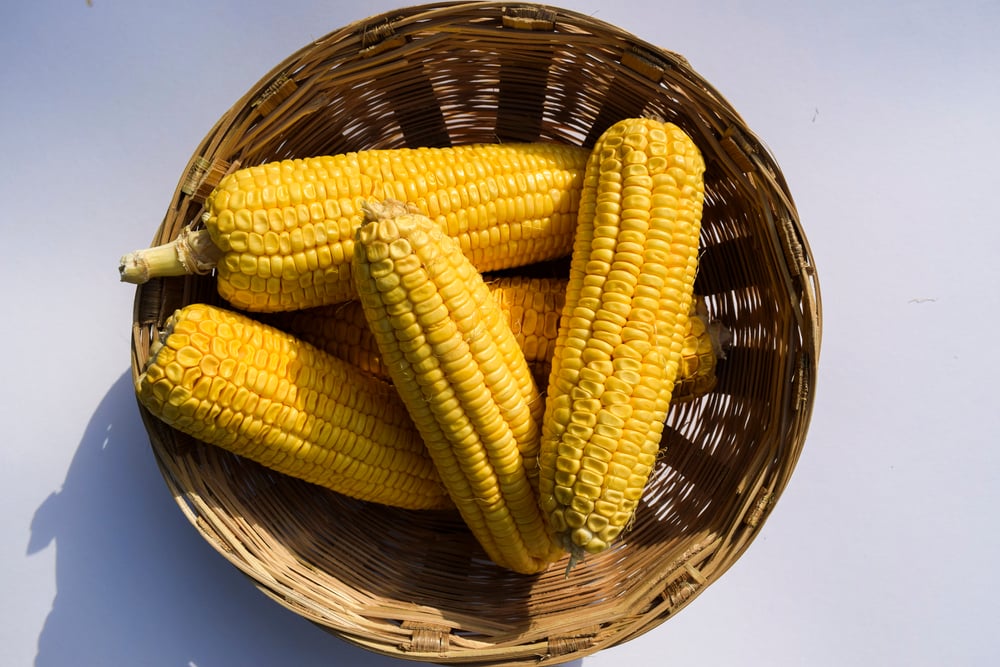
Modern corn (maize) is so far removed from its wild ancestor that botanists debated for decades over what plant it actually came from. The answer turned out to be teosinte, a wild grass native to Mexico that produces small, hard, starchy kernels enclosed in a tough shell — barely recognisable as corn.
Through roughly 9,000 years of selective breeding by Indigenous farmers in Mesoamerica, teosinte became the large, soft, sweet cob we know today. The transformation is so dramatic that scientists in the 20th century initially refused to believe the two plants were related.
The Shape of Things Great That Was Here

Most of what sits on your plate didn’t come straight from wild soil. Behind each bite lies a long trail of decisions, debates, and even fears.
Not one fruit arrived exactly as it started. People bargained over them, gave them new names, and moved them across lands.
Over time, small pushes turned them familiar. What you eat was grown not only by the sun but also by choice.
Almost gone, the avocado lingered after the beasts who spread it disappeared. Luck saved the banana when everything else failed.
For ages, no one knew the true shade of the orange. Inside your bowl, each piece holds whispers of old choices – which ones caught eyes, earned care, got carried forward.
More from Go2Tutors!

- The Romanov Crown Jewels and Their Tragic Fate
- 13 Historical Mysteries That Science Still Can’t Solve
- Famous Hoaxes That Fooled the World for Years
- 15 Child Stars with Tragic Adult Lives
- 16 Famous Jewelry Pieces in History
Like Go2Tutors’s content? Follow us on MSN.